

Last Updated on 26 January 2026 by Cycloscope
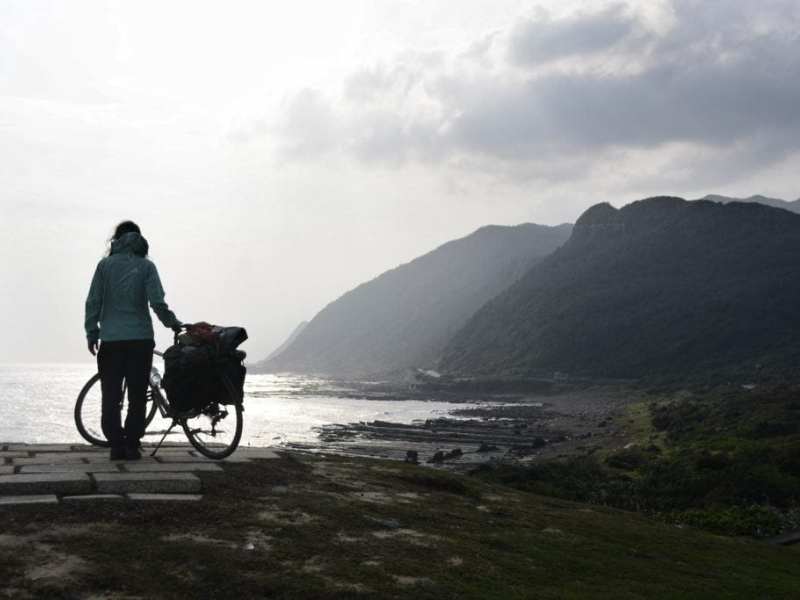
Cycling Taiwan: all you need to know to plan your Taiwan bike tour. Free camping, accommodation, roads, bikepacking itineraries, weather, and packing list to travel to Taiwan by bicycle on a budget.
Cycling is a big thing in Taiwan; there’s no other Asian country where cycling and cycle touring are so widespread and even institutionalized.
Disclosure: Some of our articles contain affiliate links. This comes at no additional cost for you and helps us keep this website up and running. (as Amazon Associates we earn commission from qualifying purchases)

Everything in Taiwan is focused on cycling, and bicycles are almost worshipped as the prime means of exploring the island, as well as by the government and tourism board.
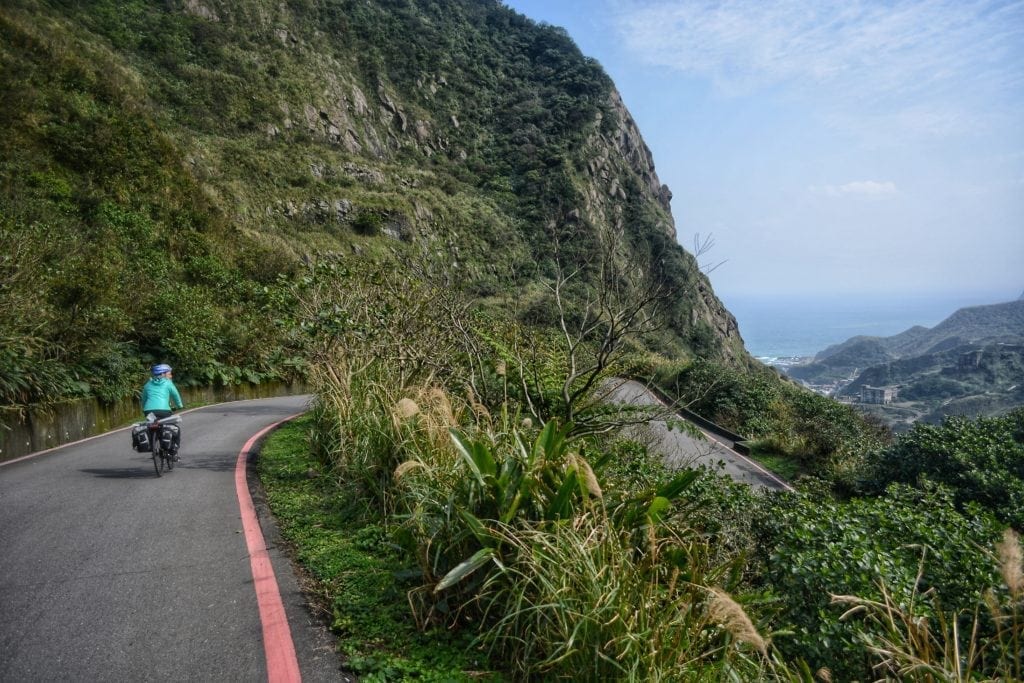
There are plenty of cycling paths, dedicated cycling lanes almost everywhere, and several routes to cycle all around the island and even across its mountainous interiors. Bikepacking is undoubtedly the best way to explore Taiwan, whose territory is very varied and constantly scenic.
Taiwanese people are fond of cycling, and you will see many along the coastal roads, some just on a day ride, and some cycle touring longer distances, with panniers on their Giant bikes (almost just Giant here).
Where to cycle touring in Taiwan
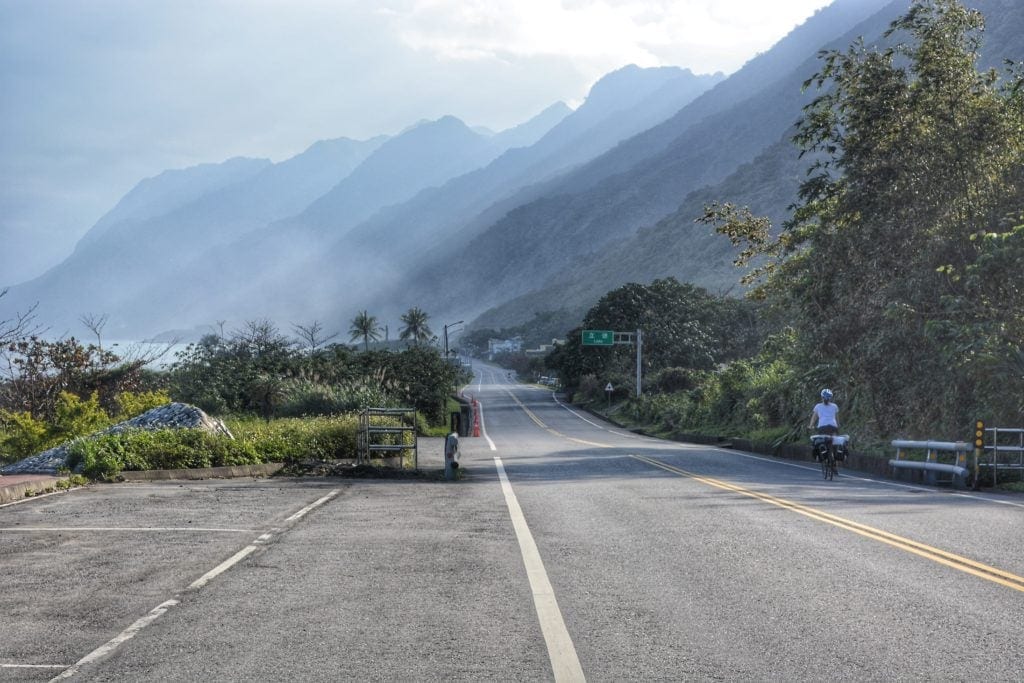
Being an oblong island shaped like a seed, Taiwan has basically two coasts: the east and west coasts. The northern coast is very short but worth cycling in its easternmost part. There’s no southern coast, just a cape.
Besides the lush and mountainous interiors, which are really challenging to cycle, there’s no doubt that the best of Taiwan is to be found along the east coast.
Its northern part is made up of steep mountains that drop dramatically into the sea, covered in grass, which looks like anything else we saw in Asia, reminding us a bit of western Ireland.
Riding south, crossing the Tropic of Cancer, the landscape changes completely, becoming covered in thick tropical jungle. There are still mountains, but they get further away from the coast.
The southernmost area is fantastic and really worth riding. Be sure not to miss the east shore of Kenting National Park; don’t go to the silly southernmost tip of Taiwan, one of the most useless hikes we’ve ever done. One and a half hours of our trip were lost to a crappy concrete monument.
Taiwan Cycling Itinerary in a Nutshell
- Day 1/2 – Taipei and Beitou Hot Spring area
- Day 3 – the north coast to Keelung
- Day 4 – Jiufeng and the nearby mountain area
- Day 5 – Shimen, Jinshan, and Yehliu Geopark
- Day 6 – Northwest area, overnight in Toucheng Township or Yilan
- Day 7 – Cycling to Hualien
- Day 8 – Taroko Gorge and back
- Day 9 – Shitiping, Sanxiantai, and Xiaoyeliu
- Day 10 – bike touring Jiupeng Desert and Nanren Shore
- Day 11 – getting lost in Manzhou aboriginal area
- Day 12 – Kenting or Hengchun: Fengchuisha, Longpan Park, Kenting beaches, and White Sand Bay
- Day 13 – Back to Taipei by train
Camping in Taiwan
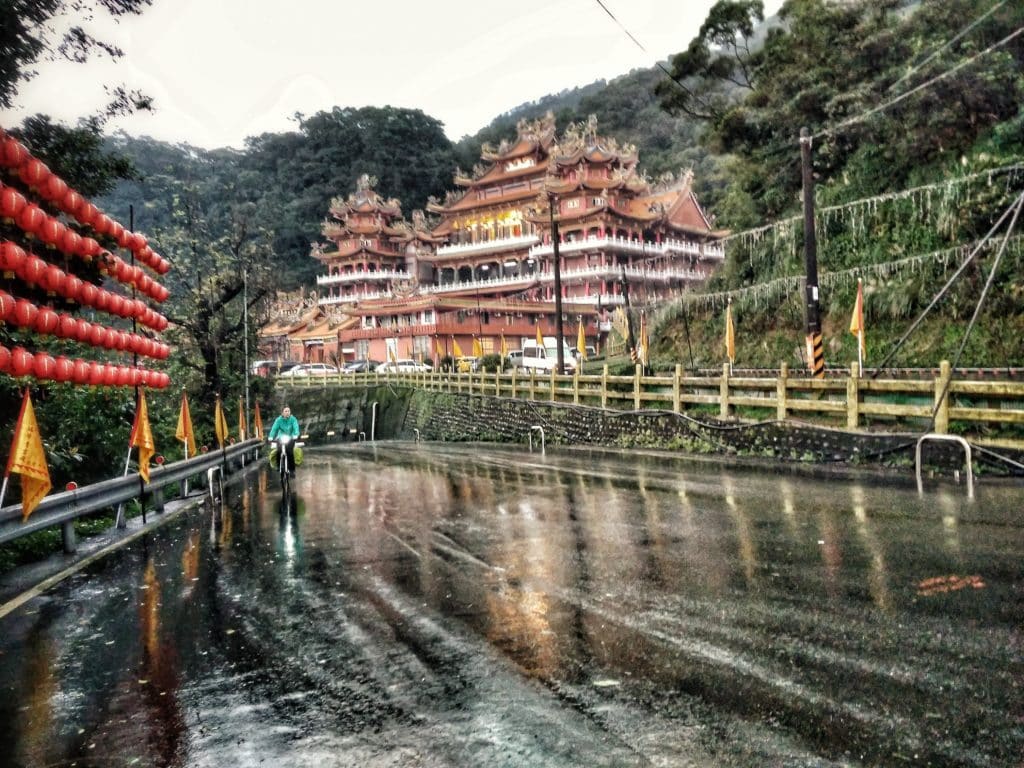
When cycling in Taiwan, camping is undoubtedly the way to go. Free camping is legal in Taiwan, and there are hundreds of great spots to pitch your tent, whether along the coast, in the mountains, or even inside the cities. Gazebos for resting are literally everywhere, and they make great camping locations, especially when the weather is not friendly.
When on a Taiwan cycling tour, it’s also very easy to find proper campgrounds, not all of which are free (like in South Korea), but they are mostly cheap. There are official campgrounds near many of Taiwan’s tourist highlights, such as Taroko Gorge and Yehliu Geopark.
Accommodation in Taiwan
If camping is not your thing, you can stick to hotels and motels. Finding accommodation when bike touring in Taiwan is not always easy and rarely very cheap.
Some stretches of the east coast road lack accommodation for several kilometers. Always check your GPS or map for the next accommodation, and keep in mind that there may be only expensive options. Booking in advance is often a good idea in Taiwan.
A hotel might be considered cheap in Taiwan when priced below 45/50 USD per night (double room); the only places where you’ll find more affordable accommodation are in most tourist cities. Often, there is a pretty big difference in quality between $40 rooms and $50/55 rooms.
The cost of traveling to Taiwan by bicycle greatly varies in function of the type of accommodation you choose; it can be absurdly cheap if you camp all the way, while it becomes more expensive if you wish to have a proper roof over your head.
Couchsurfing and other hospitality networks in Taiwan
There is a large Couchsurfing community in Taiwan and one of the largest Warmshowers networks in Asia. Try contacting the hosts in advance, and remember to write considerate requests.
Check also our article about the best hospitality networks online
Cycling Taiwan roads and bike paths
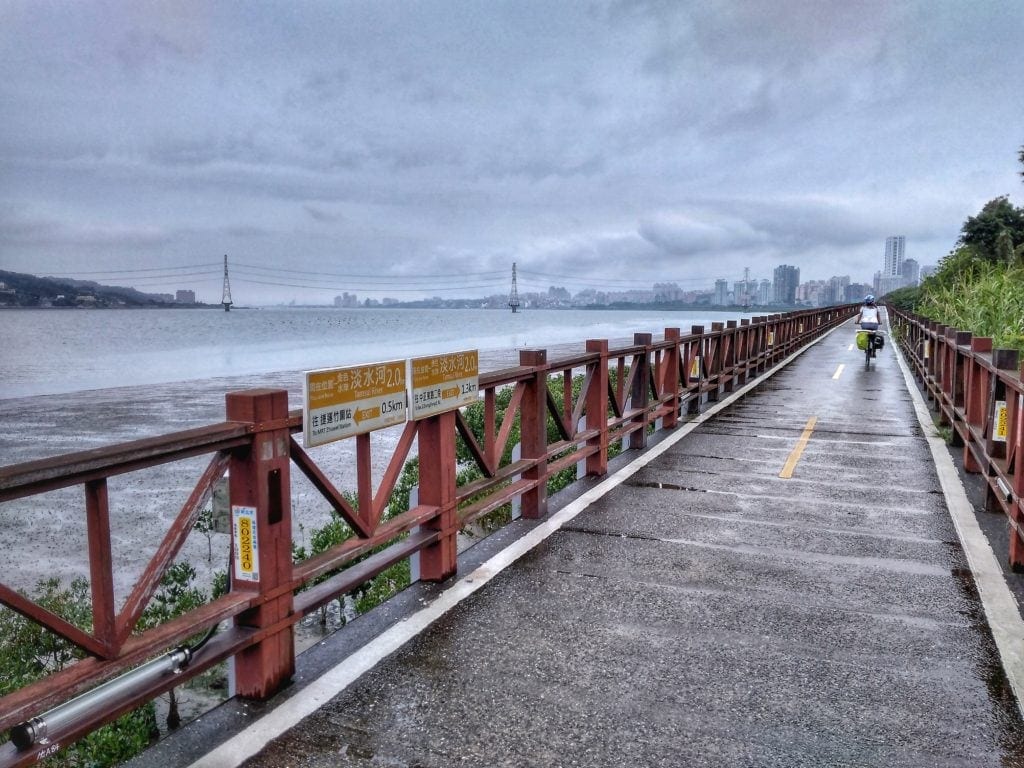
We can be confident in saying that almost all roads in Taiwan are sealed; the only dirt tracks you might find probably lead nowhere. There are cycling lanes along every coastal highway, but there is no proper dedicated bike path. Bike paths are prevalent in urban areas; there’s always one on every side of each river.
That said, it’s not all just sunshine and rainbows. The west coast is pretty horrible to cycle; it’s one seamless urban area from north to south, not really worth cycling in that part of Taiwan, in my opinion. Still, it has some very interesting cities worth visiting, like Kaohsiung.
Also, some parts of the coastal road on the east coast are not very cycling-friendly, especially Highway 9 south of Taitung, where the three main roads from the north converge, bringing heavy traffic.
Cycle Touring Taiwan Interiors
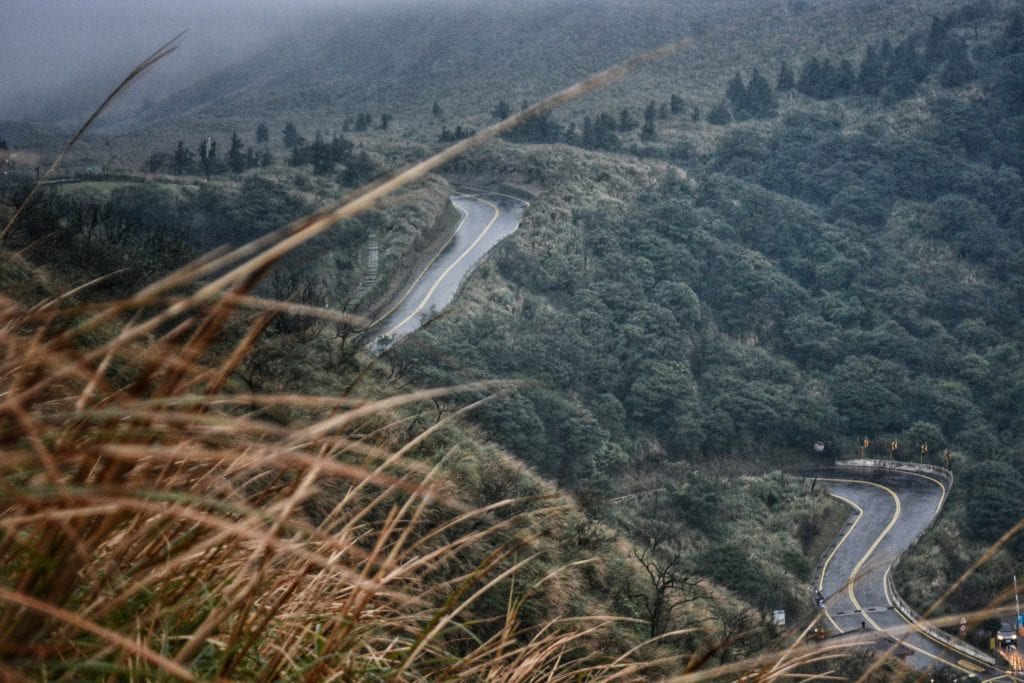
As easy as it is to cycle along the coast in Taiwan, it becomes more challenging when heading into the interior. Central Taiwan is very mountainous, with its highest peak, Mt Yushan, at 3,952 meters. Climbing those mountains by bike is not for the faint-hearted, although it certainly is gratifying in terms of landscape and personal achievement.
- Like cycling in the East? Check Also
- Cycling in China – the Ultimate Guide
- Everything about Cycle Touring in Japan
- South Korea on a Bike – Beyond the 4-Rivers Bike Path
- Cycling Thailand – Tips, Advice, and Itinerary
Bike Rental in Taiwan
One of the things that makes Taiwan one of the easiest cycling destinations is that you don’t even need to bring your own bicycle! There is a capillary network of Giant Stores across the island that provides bike rental services for basic trekking bicycles, with panniers, multi-tools, lights, cycle computers, and pumps. The great thing is that you can pick up a bike at one shop, tour the island, and drop it off at another shop.
The rental costs NT 1500 for the first three days and NT 200for each additional day. Typically, you will be asked for your credit card data, and the booking should be made two weeks in advance with exact dates, though we found this is not as rigid.
If you want a more flexible bike rental, we advise you to contact the guys at Mathew Bike in Taipei’s Shilin district. They have a good choice of bikes, and no credit card is needed. Moreover, they are an adorable couple whose work is worth sustaining. We went with them, and we didn’t regret it. They will also provide you with helmets, unlike Giant stores. The only downside is that you have to return the bikes to Taipei.
Learn more about
How to rent a bicycle in Taiwan (complete list of bike rental shops, with contact information)
Can you take your bike on trains or buses in Taiwan?
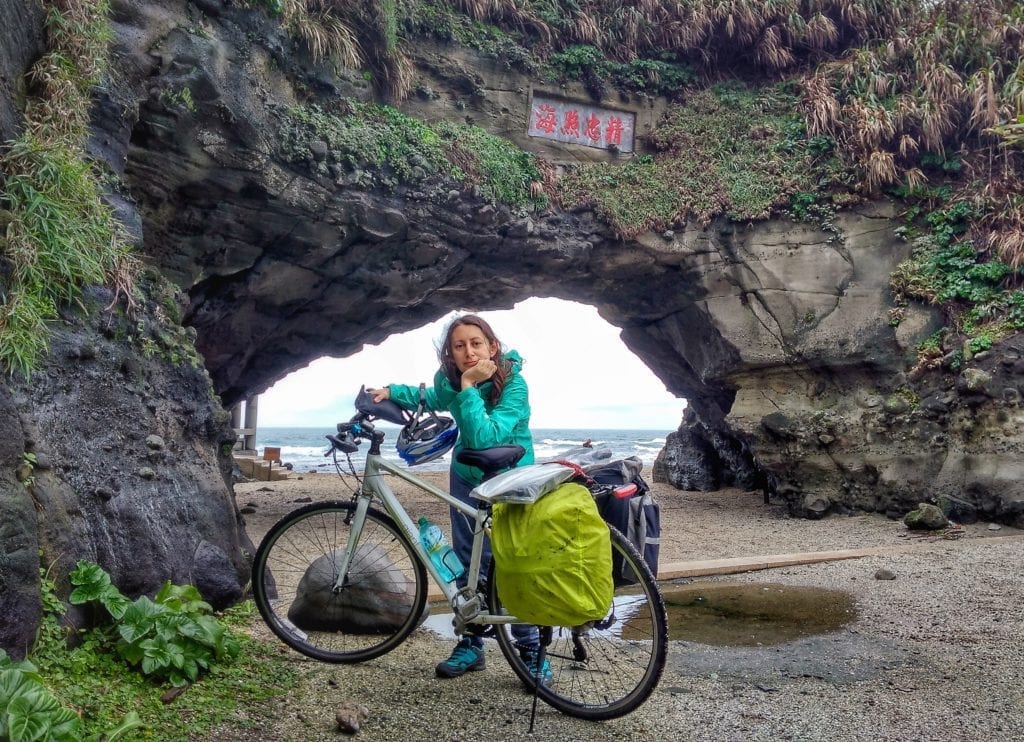
Well, here comes the less friendly part. As we sadly discovered, bicycles are allowed only on a few local trains each day. These trains are very slow, and you need to make many transfers to get far. It took us two whole days to get back to Taipei from Kaohsiung. The bike fee is about half the price of a regular ticket.
They try to justify themselves by saying that you can carry folding bikes and bikes stored in bags on every train, but that is just normal luggage; no place in the world forbids carrying a bag on a train.
Moreover, the information desk at Kaohsiung station was very unfriendly, on the edge of racism, didn’t provide correct information, and refused to write down the names of the stations in English (I mean in the Latin alphabet). No such problems in other train stations, fortunately.
Another weird thing about Taiwan’s railway system is that it seems to be stuck in the 80s. Employees still look for trains in paper books, and you have to register your bike at a desk where they’ll write down stuff with a pen on paper. Quite weird for such a developed country.
About bicycles on long-distance buses, there is no specific rule; they will let you carry it if there is space in the luggage trunk. Moreover, not all long-distance buses have big trunks, which adds to the gamble.

You can carry your bike on the Taipei subway network, but onlyon weekends and holidays.
Getting food and water when cycling in Taiwan
Tap water is not drinkable everywhere in Taiwan; the government advises boiling it first. Ask your hostel or guesthouse, or just some locals. Buying bottled water is never a problem, but it’s not super cheap.
Taiwan is another convenience store country (like South Korea and Japan), and 7-Eleven and Family Mart are in every town, by definition. Here you can find the usual choice of junk food, drinks, and canned black coffee. Some have toilets and ATMs, all have microwaves and boiled water, and WiFi is available upon registration.
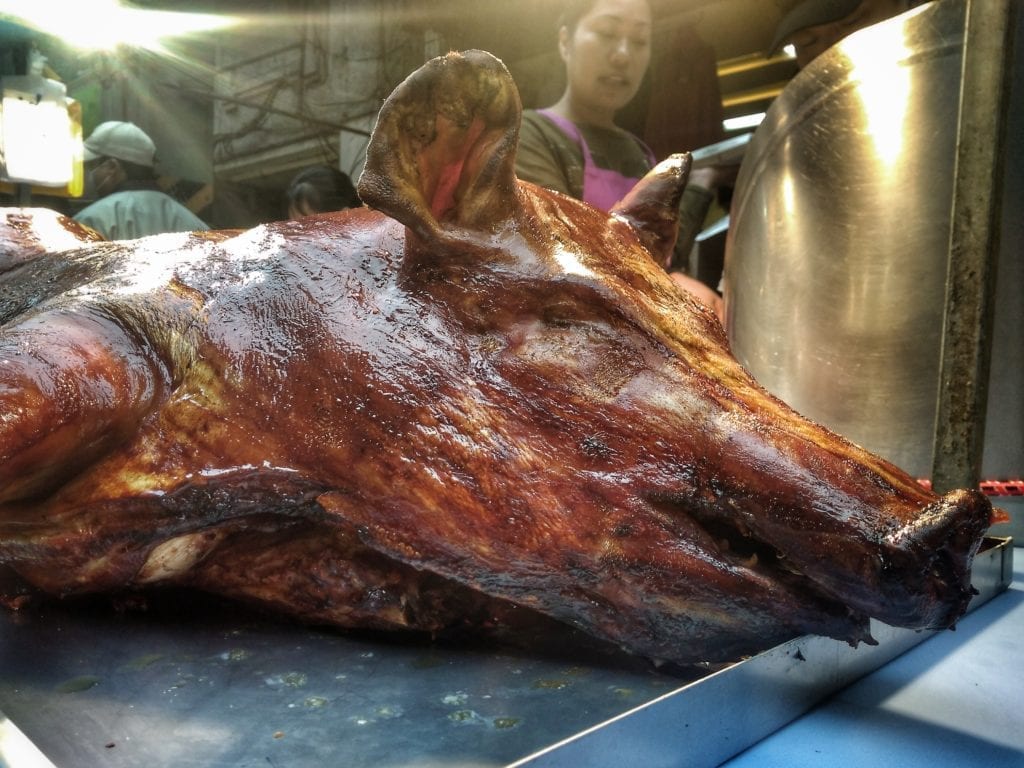
Taiwan is famous for street food, but it is not so easy to find food stalls along the East Coast, except, of course, in the cities. What you’ll mostly see is noodle soup restaurants whose quality honestly pales in comparison with Chinese soups, guys. In the deep south, where Taiwan really gets tropical, and the aboriginal natives are a majority, food stalls are more frequent, but the variety is not great.
The notorious Taiwanese night markets are pretty cool; you can find more than one in each city, and sometimes even in small towns. Google Maps knows all of them. The night market in Hualien is excellent, but the best of the best is in Keelung, where we finally found out why Taiwanese food is so famous!
How to get in and out of Taiwan with a bicycle
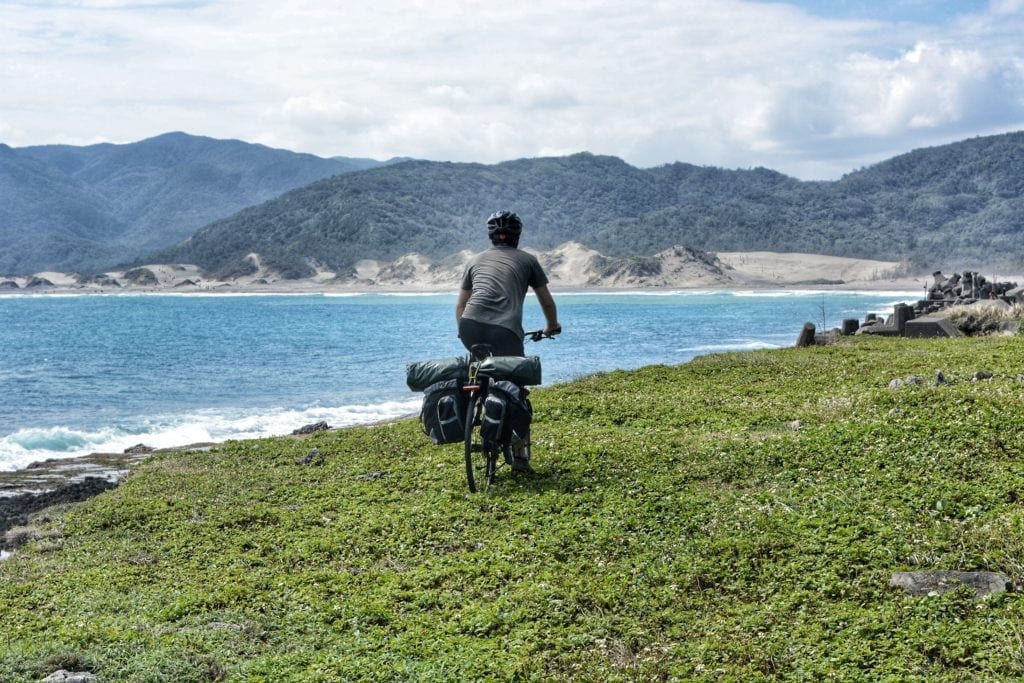
If you don’t want to cycle tour Taiwan on a Giant bike but want to bring your beloved bike with you, check the most bicycle-friendly airlines here.Cosco Ferry operates passenger ships from China to Taiwan, one ship per week from Xiamen to Keelung, and one from Fuzhou to Taichung. This is undoubtedly the cheapest and most bike-friendly option to get to Taiwan from China. Indeed, bikes go free on Cosco!
When to go cycling in Taiwan: weather and climate
Taiwan is crossed by the Tropic of Cancer, which roughly divides it in half; the northern part lies in the subtropical climate zone, while the southern part is appropriately tropical. Winters are warm, and summers are hot and wet, with typhoons and thunderstorms; anyway, there’s a lot of rainfall throughout the year. We got considerably wet during our bike tour of Taiwan.
The best time to cycle is from October to April, when temperatures are milder, we went in February and experienced quite a cold weather in the north, but 2018 was a peculiar year. When we reached the southern part, the weather was very warm, and we could even take a couple of swims in the sea.
Language and connectivity
Among the countries of Eastern Asia, Taiwan probably ranks best for English speakers. Don’t expect to be understood, like you’re in a native-speaking country. Speak slowly and use simple sentences.
You can buy SIM cards or rent WiFi routers with data at Taoyuan airport to access the internet in Taiwan. Check out the price plans for SIM cards and WiFi routers on Go! Taiwan website. WiFi is also available in all hotels and at major convenience stores (upon registration).
What to bring on a Taiwan cycling tour
First of all, rain gear. Camping equipment is a great way to save money and enjoy beautiful scenery. Mild-weather cycling clothes are enough, even if it gets colder.
The basic cycling tools and spares are a must, but there will always be a bike shop in the next central town, so don’t overload. As already mentioned, the roads are good and sealed, so you literally can cycle tour Taiwan with any bike: we saw many Taiwanese cycling with suspension forks, absolutely no sense.
Check also
Some more cycling in Asia?