

Last Updated on 1 February 2026 by Cycloscope

Cycling China – All the info from local expats!
Bicycle touring across China or a short bikepacking holiday?
Here are Itineraries, advice & tips to Cycle through China
Ever thought of doing some cycling in China? A short cycling holiday? Or maybe bike touring across China along the Silk Road? Or an off-road bikepacking adventure?
Disclosure: Some of our articles contain affiliate links. This comes at no additional cost for you and helps us keep this website up and running. (as Amazon Associates we earn commission from qualifying purchases)

China is an immense and wonderful country with cultural and geographical diversity not found anywhere else, and there’s no better way to really explore and understand it than by cycling through it.
Traveling with your own means of transport is not easy in China, but with a bicycle, you can go almost anywhere you want with no additional paperwork.
Unfortunately, China in the West is seen only as a polluted country full of skyscrapers and gray concrete blocks, but nothing could be further from the truth.
China is many countries in one, and if it is true that the east coast is characterized by the wild building boom, you’ll also have to leave the big cities behind you to find the authentic atmosphere of the Chinese countryside.
Furthermore, the west, south, and north of China are still huge areas rich in wild nature, nomadic cultures, and slow rhythms.
Cycling, Traveling, and Working in China: Our Experience
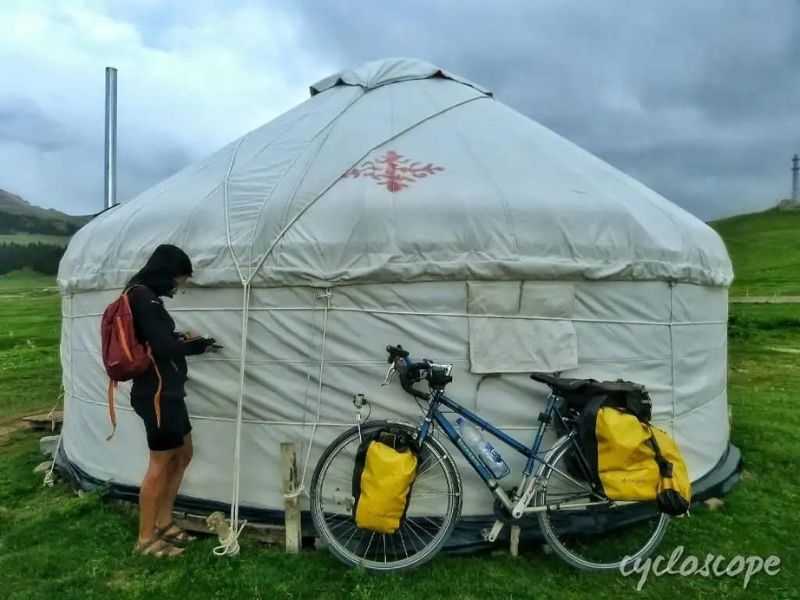
We lived in China for two years, traveling and working. The first time we arrived by bicycle from Kazakhstan, we entered the Xinjiang region and went south, through Gansu and Qinghai.
Here, we had some misadventures, and we took a train to Eastern China, Qingdao, from where we went to South Korea.
After traveling in Eastern Asia and Southeast Asia, we returned to China in 2017, always by bicycle.
From the Vietnamese border, we arrived in Kunming, then worked for a year and a half: first in the beautiful Hangzhou, then in Sanmen, using every weekend, holiday, or vacation to travel and cycle through China, trying to see as much as possible.
At that time, we traveled mainly to Zhejiang, Fujian, and Shandong. We also explored Taiwan by bicycle. From Fujian, it is very easy and economical to reach Taiwan by ship or plane.
Besides being rich in culture and landscapes of all kinds, China is also a very safe country; camping is free, and people are very helpful and hospitable.
In this article, we will provide you with all the useful information to organize a bicycle trip in or through China: how to obtain and extend your visa, where to sleep, culinary specialties not to be missed, and possible itineraries.
We will, of course, talk about the paths we have taken, but the general information is applicable to any region of China you decide to visit (Tibet and Xinjiang being “a bit” different).

Planning a bike trip in Eastern Asia?
China in a Nutshell
- Population: 1.4 billion
- Climate: vast climatic differences, see the climate section below
- Visa: tourist, 30-day extendable, to be obtained before arriving in China
- Currency: Yuan, 1$ ca. 7¥
- Languages: Mandarin Chinese (universal), Cantonese & thousands of dialects
- Mandatory vaccines: none
1-Month Bike Touring Itineraries in China (in Pills)
China is huge and has a very developed, extensive road network; the options for creating a cycling itinerary in China are infinite. Here are some recommendations that we’ll describe in more detail at the end of this blog post.
- Silk Road – Mountains and deserts of the West: the most complicated
[Xinjiang, Gansu, Qinghai, Sichuan, Shaanxi (finishing in Xi’an)] - Tibetan culture and Southern wilderness: the toughest uphills
[Sichuan, Yunnan, Guizhou, Guangxi (Guilin)] - Central China and the Avatar Mountains: off-the-beaten-path
[Hunan, Jiangxi, Fujian, Zhejiang (finishing in Hangzhou or Shanghai)
Bicycle culture in China
The bicycle was introduced in China in 1860. Brought from the West, this new invention initially failed to fascinate the Chinese, who mocked Westerners pedaling through the streets of Shanghai.
Sweating and struggling were not really part of Chinese culture, especially if they had the money to get carried by porters.
During the 1920s, however, when the 6-day working week became common in cities and people had free time, enthusiasm for cycling increased. In inland China, the bicycle was widely accepted only in the 1930s and 1940s.
The bicycle industry in China began in the 1930s when the assembly plants for foreign-made bicycles were founded. But Chinese-made bicycles began to appear only a decade later, in the 1940s.
The creation of the People’s Republic of China in 1949 was a turning point for the bicycle industry. The Communist Party decided to promote the bicycle as a popular mode of transportation and launched a massive production initiative.
Bicycles were considered in urban planning, and those who used them to travel to and from work received additional benefits. Apparently, the lack of a public transport system has been solved for the moment.
China’s first five-year plan actually included a 60 percent growth in the bicycle sector, and in 1958, China produced more than one million bicycles a year.
Today, China is the world’s leading bicycle manufacturer, accounting for almost 60 percent of global bicycle sales.
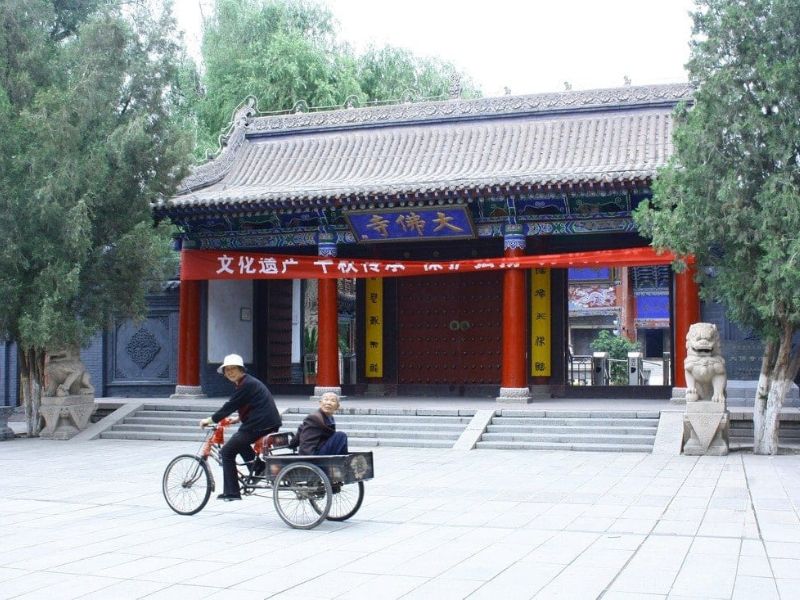
During your bicycle trip in China, you will see old bikes carrying portable ovens where people bake bread or sweet potatoes to sell to passersby, large tricycles used as taxis or to collect garbage, or simple bikes used by farmers.
Then there is modern China, in all the cities, you will see hundreds of bikes around that can be unlocked by scanning the QR code from the company app; there are several of those, in fierce competition.
Renting a bike costs a few cents and is ideal for both citizens who ride from the metro to their workplaces and tourists who want to explore the cities by blending into the bike crowd.
In recent years, daily bike use has declined; people are wealthier and prefer to get around by car.
Then there are also a lot of “Sunday cyclists”, road bikers, MTB addicts, and plenty of cycle tourers. Leisure cycling is a phenomenon of rapid growth in China, also thanks to several cycling races across the country.
Bike gear for a cycling trip across China
If you do not intend to go to very remote areas, keep in mind that the hotels are very cheap. You could avoid bringing any camping gear for your bike trip if you wish to travel light.
If instead you want to travel between deserts and remote mountains, a tent could prove very useful if not indispensable. You can also find some truly epic camping spots in China’s wilderness (See more about camping in China later).
Even the cooking equipment, if you want to be lighter, can be left at home. Food in China is very good, and it often costs less to eat a plate of noodles in a restaurant than to buy the ingredients to cook them at home.
If you have tried Chinese cuisine (in China, of course) and don’t like it, then stoves and pots will be a good investment. Moreover, hot water is widely available (in hotels, on trains, in restaurants, at stations), so in an emergency, instant noodles and coffee are always easy to make.
Depending on the season and the area of China you visit, you will need to bring rain or windproof clothing. Most of China can get pretty cold in winter and at high elevations.
What bike should you use to Cycle in China?
The type of bike you travel with is a very personal topic. Let’s start by saying that a bike trip can also be done with a scrap, but if you want to be more comfortable, you can choose from a wide range of travel bikes.
You will have to choose the bike based on the route. Do you want to cycle mostly on dirt roads, or will you travel on smooth Chinese asphalt? Will you climb 4,000-meter mountain passes or stick to flat roads? And so on.
Tourist visa for China

Let’s start with the bureaucratic matters: the visa for China can be easy or difficult to obtain, depending on your nationality and the country from which you will apply. For some country is now possible to get a 15-day Visa on arrival.
In general, if you depart from your home country by plane and your destination is China, you will need to apply for a visa from the Chinese Embassy or Consulate in your home country.
Getting a Visa beforehand is always advisable, but remember you’ll only have 3 months to enter China from the day of issuance. If you’re cycling to China from Europe, that is probably not enough.
Alternatively, you can contact an agency; if you live far from the Embassy, it might be convenient (check if you are eligible to do it through an agency). We recommend using iVisa.
We asked for our first Chinese visa in Kazakhstan. In Kyrgyzstan, it was no longer possible to obtain it at the time of our passage, but the rules change often, so it is not possible to give definitive information.
From the countries of Central Asia, it is generally more complicated to obtain a visa, especially for those who want to cross the border by land, because from there you can only enter Xinjiang, a region that belongs to China but inhabited for the most part by the Uygur people, of Turkish origin and of Muslim religion, who claim independence with the name of Turkestan.
In this region, the presence of Chinese occupation is everywhere and oppressive; people are under constant control, and there are several concentration camps, or as the Chinese call them, rehabilitation centers.
Let’s say, therefore, that in general, the government does not like people who roam autonomously in this region. That said, if you get a visa in Europe or elsewhere and arrive at the Xinjiang border, there should be no problem.
However, we know of people who have been rejected or told they could not enter without a local guide.
The situation could change, so always check for the latest news. We got the second Chinese visa in Laos, and it was pretty simple.
The third Chinese visa we obtained was a work visa in Hangzhou after passing through HK, but that would require a separate article. In short, there are no guarantees or fixed rules over time on the best places to get a tourist visa for China.
The situation can change abruptly depending on the change in relations between China and the country from which you will make the request, or with the country from which you come. For example, it is very difficult to obtain a tourist visa if you are a Turkish citizen.
In general, you will be asked to declare your itinerary. We presented a completely false but realistic one, citing several unexpected tourist destinations such as national parks, Xi’an, the Terracotta Army, and Beijing.
They could also request a hotel reservation and proof of booking for an entry and exit from China.
If you are in a country on the border, it will be less taxing, especially if there are trains or buses to China; you may not need an air ticket.
In Laos, the agency that handled our visa made an air reservation for us that we presented to the embassy, but it was canceled. It is not forbidden to enter by land, but some embassies still require a plane ticket.
Another document you could request is an account statement proving you have at least $100 a day for the duration of your stay in China.
Where to sleep in China

Camping in China
Camping in China is very safe, and we have never had any problems, especially in western China. On the East Coast, it could be more difficult due to population density.
Keep in mind that the rural countryside is incredibly dense with crops and cultivated fields, so it might not be easy to find a spot to camp.
Asking people works pretty smoothly. In general, people are very welcoming, and if you have difficulty finding a place to sleep, they will definitely help you.
In two years, we have never seen a really organized campsite; surely there are in the national parks, but do not count on that. On the other hand, a room costs so very little, especially in the countryside.
Hotels in China
Hotels in China are excellent, even if simple, and very affordable. From 5 to 16$ per room for a cheap but decent hotel. In general, they cost less in the West and the Southwest and are more expensive in cities on the East Coast.
The only problem is that sometimes hotels in China don’t accept foreigners. To do this, they need a government permit and should pay a fee, which many do not, especially in areas where foreign tourists are scarce. Often, the only hotels that accept foreigners are the most expensive in the city.
This problem occurred to us several times in different regions of China. But in the end, we always found a place to sleep.
If you don’t want to spend hours knocking on every hotel in the city, you can book through Ctrip (now known as Trip.com globally). Ctrip is the most popular app in China, similar to Booking.com (which exists in China but doesn’t work very well).
If the hotel does not accept foreigners, the customer service team will contact you immediately and find an alternative.
Transportation: Take a train or a bus with your bike in China
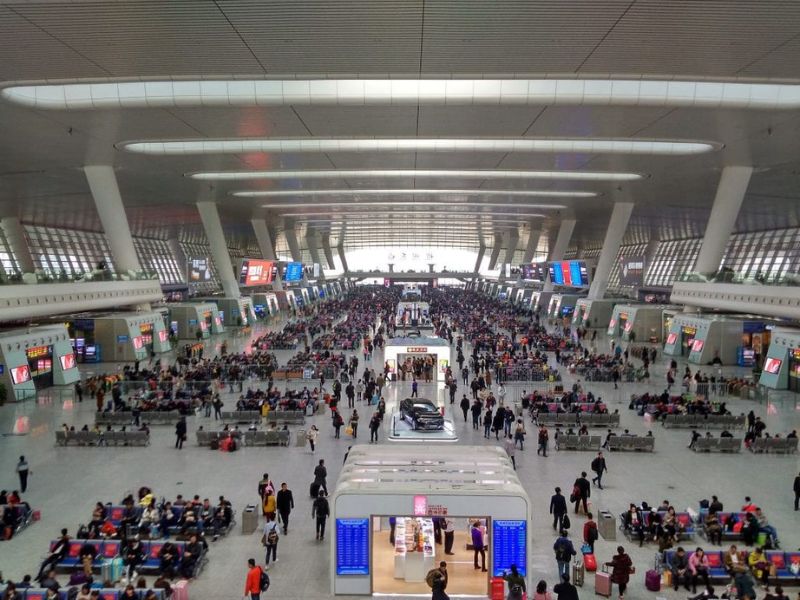
Since China is a huge country and you only have 30/60 days, it might be wise to take the train to skip some boring parts and have more time to explore the real marvels. We skipped a part of the Taklamakan Desert in Gansu, for example.
Taking the train with a bike is very simple and pretty cheap. At each train station, you will see, next to the ticket office, an office called CRE. Trains and other modes of transport can also be booked through Trip.com.
Go there with your bike, tell them where you want to go, and they will tell you how much it costs and give you a receipt for picking up the bike at your destination.
The CRE workers will take the bike and luggage and handle everything. Buy a train ticket, and get to your destination without having to struggle to load the bike on the train. At the station of arrival, you will go to collect your rig at the corresponding CRE office.
The bike could travel on its own train or on another train’s cargo train, so it could arrive a little later. There’s a remote chance your bike could get lost, but be confident: those guys know their job (more or less).
If your destination is not reachable by train, you can also load the bike onto long-distance buses; the problem is that if the luggage compartment is full, they will try to stow it anyway, usually mistreating it.
Sometimes a driver will request a bribe, especially if you take the bus outside the stations.
Food and Supermarkets in China

China offers an immense variety of food that varies from city to city. Wherever you are, except perhaps the Inner Mongolia region, you will find plenty of fruits and vegetables, pasta, legumes, rice, and all kinds of meat.
In short, food will be the least of your problems when cycling in China.
Often, it’s better to eat at one of the many restaurants around (usually with a green plastic tent). It’s sometimes cheaper than cooking at home, and it’s worth trying the local specialties.
The cost varies, but for 1.5$ you can eat a bowl of noodle soup everywhere (and they are delicious, especially in the West).
Every restaurant specializes in something. There are small restaurants where you only eat noodle soup and fried rice, usually frequented for a quick lunch.
Then there are restaurants with the classic round table where you go with friends or family for dinner… and yes, eat to infinity.
Then you will see restaurants with an open fridge, where you can choose what you want cooked for you. The contents of the fridge depend on where you are, but there are always vegetables and meat, and, if you are close to the sea, fish and seafood.
Then there is street food that would require a separate chapter. One of the things we liked the most was the bread cooked in street ovens, usually by Muslims.
There are dozens of types stuffed with vegetables, minced meat, or sausage. Roadside barbecues are ubiquitous in cities and towns
Apart from remote areas of nomadic shepherds, where meat is the master, it is very easy to be a vegetarian in China. I have never had any problem finding different dishes every day.
The Chinese eat lots of vegetables, vegetarian noodles, and tofu in thousands of forms; you certainly won’t have to eat the same thing every day as in other countries.
There are also plenty of Buddhist restaurants that are 100% vegan.
Chinese cuisine is indubitably one of the best in the world; you should enjoy as much as you can here and not be afraid to try new things. If you’ll love it as much as we did, why not try your hand at it with a Chinese cookbook?
Getting Water (and alcohol) when cycling in China

Do not drink tap water, even where they say it is drinkable. The water situation in China is catastrophic, and no one seems to trust the government’s statements about water quality. The situation is probably different in the mountains.
The advice, however, is to drink bottled, boiled, or filtered water. Often, houses and hotels are equipped with water filters and always have a kettle available. Many hotels have a drinking water dispenser or have bottles available.
Chinese people like to drink. In supermarkets, you will find imported wine and Chinese wine, which is the new fashion and is not even that bad, at least the red one.
Locals drink beer and baijiu, which you find in 1$ bottles or loose in restaurants. The most classic is the one flavored with hawthorn berries, but there are also kiwis or other fruits. Industrial baijiu is pretty terrible, but a homemade one can be quite good.
Beer could be hot or served with ice, and not because of a lack of refrigerators or electricity, but simply because the Chinese generally don’t drink cold things. Even water is almost always served hot.
Best Apps and VPNs to download for a trip to China
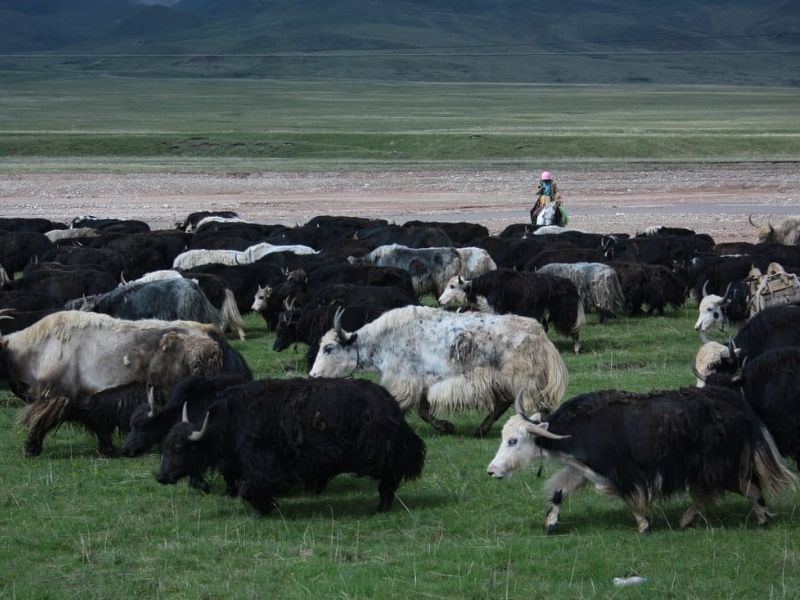
We are not here to discuss the implications and control systems of the Chinese government, but if you want to read something before downloading one of these apps, you can do your own research.
You should download the apps before entering China since Google Play will not be accessible. You will have to download them via VPN or use a Chinese app store, which might not be so straightforward.
Best VPNs for China
To access most of the internet in China, you’ll need a VPN (Virtual Private Network) app. Most of the biggest websites are banned in China, including:
- all Google products (even Gmail)
- and many others
The best VPNs are Express and Astrill. We have used Express VPN for a couple of years and have never had any major problems. It is absolutely recommended and worth the price.
There are also numerous free VPNs, but many do not work or are only available for a limited time each day, usually an hour.

WeChat is an application similar to WhatsApp (but much more evolved) that ALL Chinese people use.

It has a chat with a translation function (very useful), you can make video calls and audio calls, book taxis, pay anything by reading the QRcode (but you will need a card from a Chinese bank), find a job, get spied on by the government, and so on.
In reality, it is not essential if you do not live in China, but if you want to keep in touch with Chinese people, this app is practically the only option.
Baidu Translate
Similar to Google Translate, you don’t need a VPN to use it. If you don’t speak Chinese, it will probably be the application you’ll use the most.
Remember to download the Chinese keyboard so the other person can reply in writing.
Learn Chinese – ChineseSkill
If you want to learn a little Chinese, this is a very simple app to get some basic vocabulary and practice pronouncing words in a more or less understandable way.
DiDi
Didi is the Chinese version of Uber; it is a very cheap way to get around in China, even for medium- to long-distance trips.
The only problem is that once the taxi is called, the driver will contact you to ask for your location, and in 99.9% of cases, he/she will only speak Chinese.
You can still ask some passersby to talk to the driver and give him directions. The Chinese are among the most helpful people you will ever meet and will help you for sure.
Trip.com
As mentioned before, Trip.com is the best app for booking hotels and flights in China; it is the English version of Ctrip. You will need to have a Chinese phone number to register.
Paying in advance is not always required. Customer service is great, and they will contact you immediately if there are any problems. Great to find some great hotel deals while cycling through China.
Baidu map
Without a VPN, you will not be able to access Google Maps, and Baidu is the only alternative. The only problem is that it is in Chinese, but if you have to navigate to a specific place where you know the name or address, it is fine.
Baidu also knows a lot more roads and options than Google Maps, which is very handy when bike touring in China.
AQI (Air Quality Index)
This is an app that serves to access real-time pollution data, not that you can do much after knowing how polluted is (or isn’t) the place you are, but if you are curious to know it may be useful to you.
Roads in China

The roads in China are excellent; everywhere you need to go, in quite remote places, you will find unpaved dirt roads (mostly in the South and the West). In the East and the North, the road network is extensive, with many options for getting from A to B.
Whether in huge cities like Shanghai or small villages in the countryside, there is always a large lane for bicycles and electric scooters.
Of course, especially in the mountainous areas of the South-West and in the desertic ones of the north, it is possible to get lost on dirt roads.
Connectivity – WiFi in China
Wifi in China, in hotels and public places, is generally rather slow, and since it is essential to use a VPN to connect to everything that is censored in China (what we know as the Internet), the connection becomes even slower. Mobile internet connection is much faster.
Getting a Chinese SIM card is a pretty straightforward process; you’ll just need your passport and a bit of patience.
Language and communication

Unless you speak Mandarin, your level of communication in China will be limited to gestures. English is totally unknown outside the big cities, but with a bit of luck, you can meet someone who can say “hello” and the numbers 1 to 10.
In cities, however, the situation is a little better; it is easier to meet young people who know a bit of English.
Quite often, even if they know how to speak, Chinese people are ashamed and afraid of making mistakes, so they always try to use very basic English and to punctuate their words.
Learning Chinese is very difficult, but try to learn the greetings, how to say thank you, the numbers and the corresponding signs with your hands, which are different from ours, and some food names, at least “rice”, “noodles”, “with meat” or “without meat”.
On the other hand, to say “noodles” in a Chinese restaurant is like saying “pasta” in an Italian restaurant, they will ask you what pasta you want, seasoned with something, spicy, not spicy and so on, it will get confusing.
Many restaurants, fortunately, have photos of the dishes on display and you can simply point them out, we always went to places like these or, where there were no photos but other customers, we pointed at what someone else was eating.
The Chinese are very communicative and will make every effort to understand what you want. Several times, we were taken directly to the kitchen to choose what to eat.
The Chinese, given the Buddhist tradition, know what vegetarian means, but you don’t have to use the translation that Google Translate gives you, because, by experience, they don’t understand that word. You simply have to say, “I don’t eat meat.”
Climate and best time to cycle in China
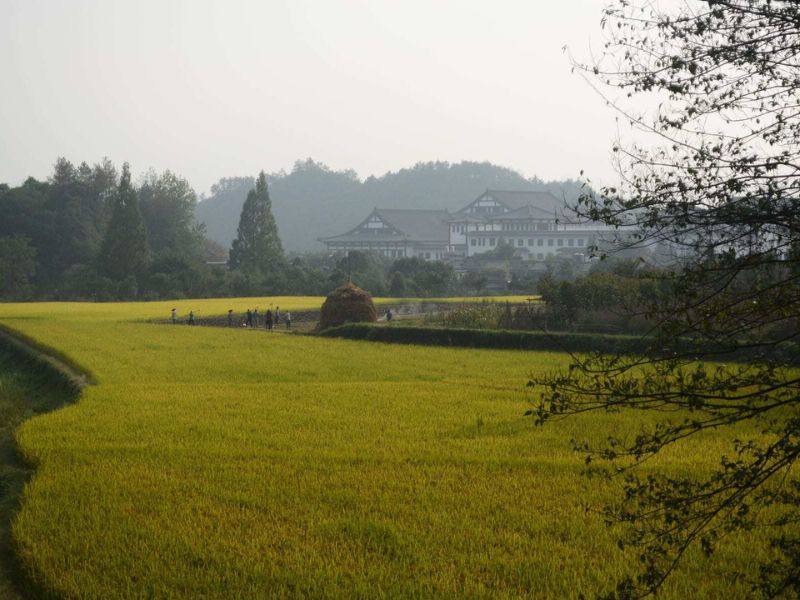
China is huge and has many different climate zones; you will need to check the climate specific to the region or regions you plan to bike through for your trip.
In general, winter is very cold in the north and on mountains and plateaus, while it is mild in the south. Summer is hot everywhere except in the highlands and mountain regions.
Excluding the vast western desert areas, where rainfall is scarce and irregular, summer is normally the rainiest season.
The rainiest part of the country is the southeast, and the least rainy is the northwest. Check this site for more detailed information.
Bicycle tours in China, some Itinerary Ideas

It is very hard to choose the best cycling itinerary in China, I would actually say it’s impossible, how could such a thing even exist?
China is so vast, diverse, and full of marvels that any cycling route outside the main road is likely to be at least interesting, if not gorgeous.
Here are a couple of bike touring itinerary suggestions. We plan to add more in the future and update this blog guide constantly – if you have a bike route you would like to recommend, please contact us or leave a comment.
One-week cycling trip in Zhejiang: marshes, waterfalls, rivers, and tea terraces

This is not an area of China very well known to foreign tourists, but it is really beautiful: green hills, streams where to bathe, tea terraces, rice fields, and very slow rhythms – archetypal China.
Furthermore, this route is suitable for everyone, even cycle-touring beginners; it is completely paved, with little traffic, and there are many hotels and tourist infrastructure at very low prices.
If you want detailed information on this part of China, read our guides to the Zhejiang region.
This route lies entirely in Zhejiang province; it is 312 miles (516km) long and can be easily cycled in one week. Have a look at:
The Silk Road

We have cycled this route from Kazakhstan, and now it seems more difficult to get a visa, but the route could be done in reverse, entering China from more friendly borders or flying in.
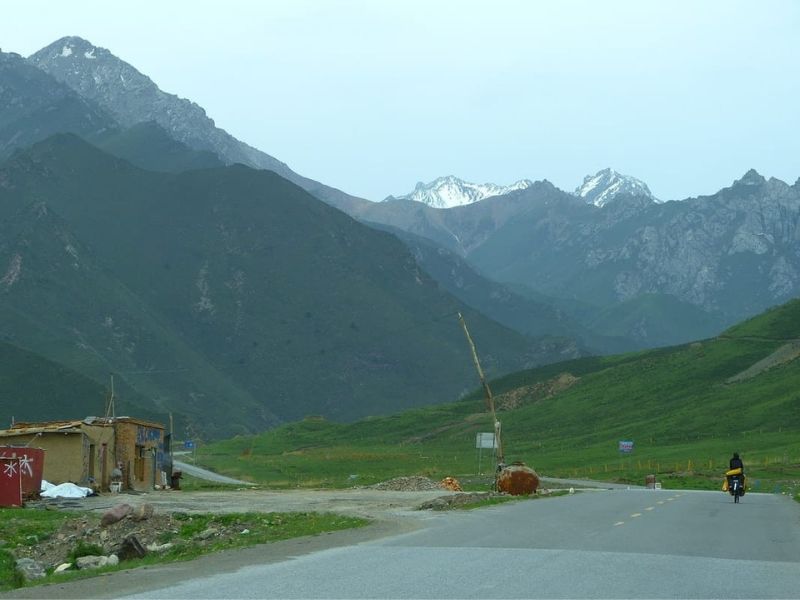
If it is not possible to cross the Xinjiang region, you can enjoy the beautiful mountains of Qinghai, once part of Tibet, and the oases of Gansu, rich in scenic beauty, such as the unmissable colorful mountains, and culture, such as the impressive Buddhist caves of Mogao and the huge sand dunes around the Crescent Moon Lake. Have a look at:
Travel Insurance for Cycling in China
It doesn’t matter how safe a country is, things can always happen – accidents, thefts, injuries, etc are unfortunately very common in the real world. We recommend ALWAYS getting a TRAVEL INSURANCE
The most versatile and best value-for-money is undoubtedly WORLD NOMADS, have a look a their website to get a quote.
Getting Out of China by Ferry
There are several ferry connections from China to South Korea, Japan, and Taiwan. Ferries are very good and mostly bike-friendly, making them a great option for continuing your bike trip in Asia.
Check our account of the ferry from Qingdao to Incheon
Planning a bike trip around Southeast Asia? Check also
Bike touring beginner? Have a look at