

Last Updated on 17 January 2026 by Cycloscope
Sanmen Travel Guide and Things to Do
Sanmen is a really off-the-beaten-path getaway town in Zhejiang, perfect for a weekend out or even a day trip from Hangzhou or Shanghai. The county of Sanmen is pretty big, comprising mountains, seaside, and wetlands. We lived here for 1 year.
Disclosure: Some of our articles contain affiliate links. This comes at no additional cost for you and helps us keep this website up and running. (as Amazon Associates we earn commission from qualifying purchases)

The highlight of Sanmen County is surely Shepan Island, home to the best caves in Zhejiang, but the town itself and the nearby wetlands are also really worth a visit.
Sanmen County’s history dates back to the Neolithic period; the caves on Shepan Island have been inhabited since then.
In more recent times, Sanmen was the first city in China to host a successful (for a little while) communist revolution in 1928, and also the first to raise the red flag when the Maoist forces definitively defeated Chang Kai-shek’s government.
It’s now under the municipality of Taizhou, which hosts the world’s most advanced nuclear power plant, a multi-billion-dollar collaboration between the US government and the PRC. Sanmen is also home to many underground Christian churches.
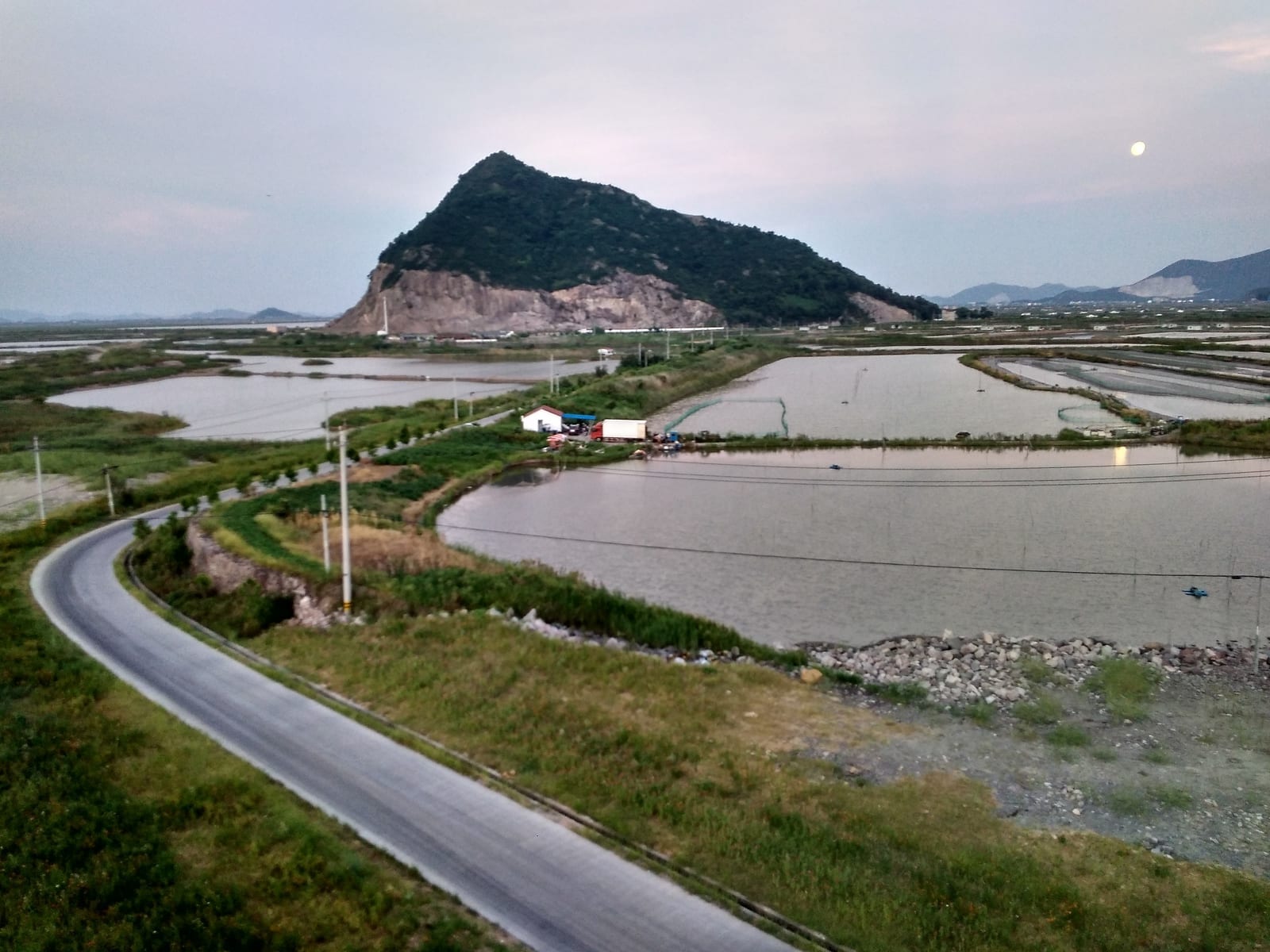
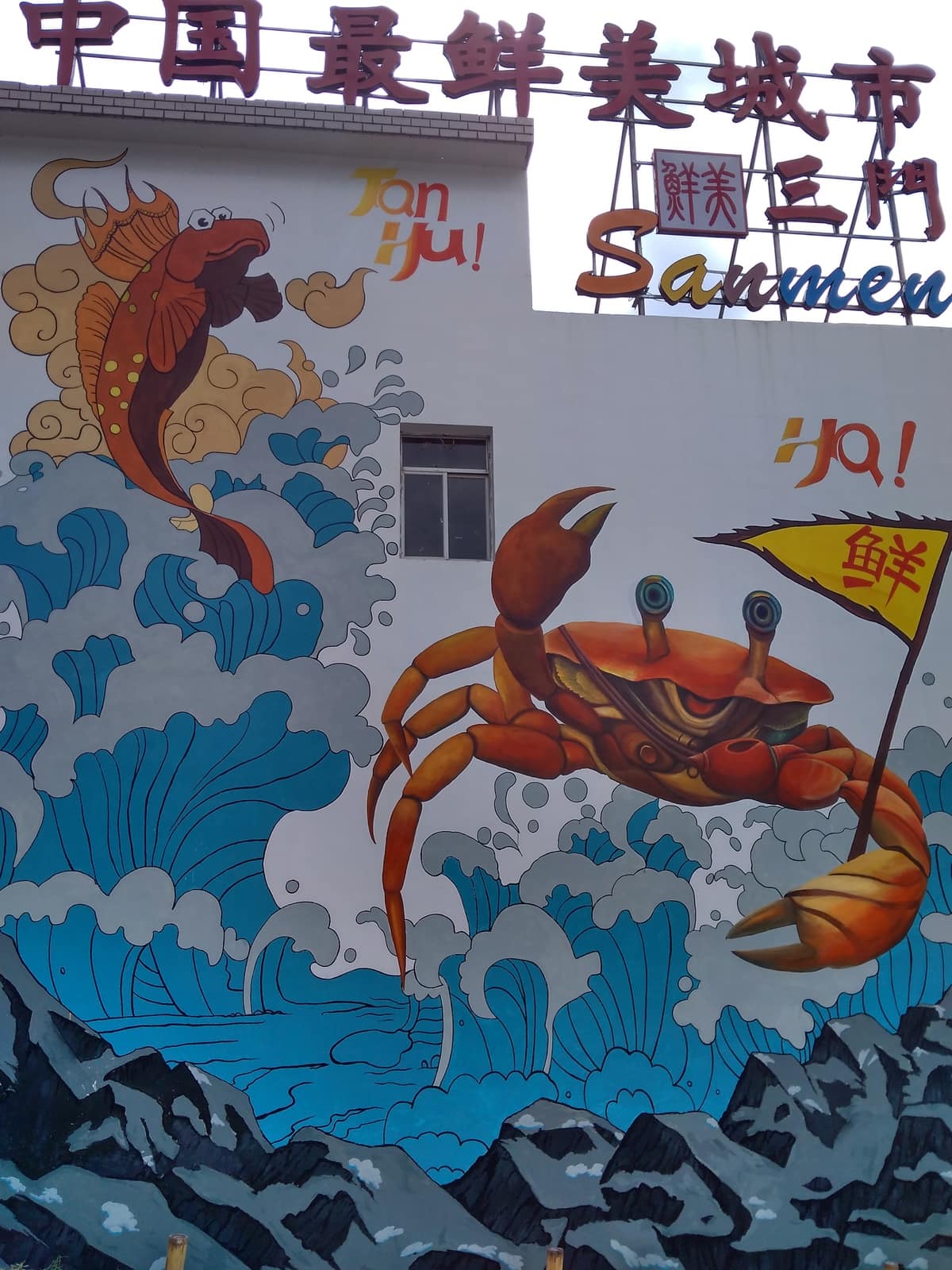
Sanmen is mainly famous for its crabs, which are well known in China for their delicious taste. The crabs are bred in the fascinating wetlands, where thousands of artificial ponds have been created. There is a saying in Sanmen for advertising the crab, “Sanmen crabs, walking all over the world.”
This post is part of our weekend getaways from Shanghai or Hangzhou, a collection of great off-the-beaten-path spots in Zhejiang and Jiangsu.
Sanmen Travel Guide
Sanmen City
Sanmen City has a really relaxed atmosphere. While the entire county’s population is about 400,000, the city itself probably has less than half that.
Moreover, due to the territory’s configuration, the city is divided into three major areas, separated by a couple of kilometers.
The new districts, with their modern, ugly, tall residential compounds, are on the east side, while the old town is mainly comprised of buildings from the 80s and 90s, a maximum of three or four stories high, with a more ancient neighborhood, very nice to stroll around.
The main road, Renmin Lu, is lined with trees and small shops and runs north to reach the ancient quarter. Sanmen was once famous for its artistic stone windows, carved with intricate, beautiful designs.
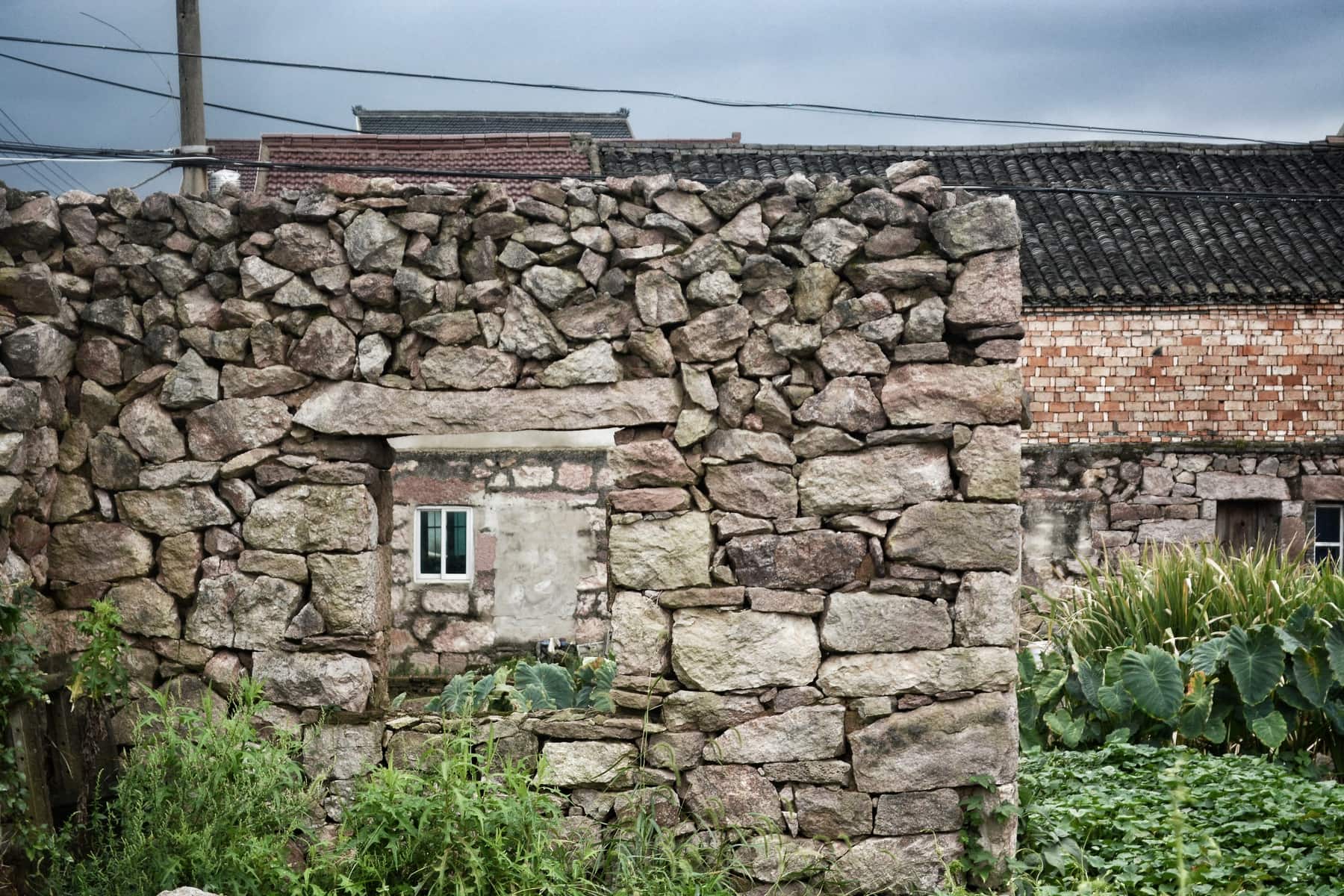
There are many of those old windows in the old town, together with an incredible variety of drywalls, made in different patterns and with various kinds of stones. You can see old noble houses turned into a ghetto and into collective housing, possibly from before the Cultural Revolution.
Everything is very decadent but beautiful, a real leap into the real China, this neighborhood could be a real tourist attraction if restored but somehow, it is more authentic this way.
Sanmen is flanked by the Zhuyou Brook, a nice riverside spot with a long cycling path leading to the countryside.
The many temples of Sanmen
Sanmen city is surrounded by hills, and pretty much on each of them is a Buddhist temple, some literally nestled in the forest.
They don’t have vital historical significance or artistic value, but are quiet places where an actual aura of spirituality can be felt.
The best crab in China: Sanmen Wetlands
The Sanmen area is affluent in water; the Zhyou Brook, Qingxi Brook, and the Tinpang Creek all flow into the Yellow Sea here, forming a big delta, a vast, muddy wet area rich in islands.
Taking East from Sanmen for about 15km, you’ll reach a pretty big area where this wetland has been terraformed into thousands of ponds, probably since very ancient times, for crab and shrimp breeding.
The place is really fascinating, full of herons and other birds, with a few old villages and a run-down harbor.
To reach this area, take bus 107 from Sanmen East Station on Fenming Road (from the city center, take any bus heading east).
You’ll pass what Google calls Pearl Island and head further east, where the wetland begins. A simpler option is to grab one of the many taxis and ask to be taken to Xiaotao (小涛).
Shepan Island
Shepan Island is the central tourist spot in Sanmen, the only official one, according to Chinese authorities. It’s not really an island, since it’s connected to the mainland via many crab-breeding ponds, though the best way to get there still requires a ferry ride.
The island has three main points of interest: the tuff quarry, the pirate cave, and the mud park. The latter was closed because it only opens in the summer; it’s a sort of amusement park with mud slides and that kind of thing. We visited the other two spots, which we’ll describe below.
To get to Shepan, take the local bus from Sanmen Bus Station; it will drop you off at the ferry jetty. The ferry costs 4RMB and takes 15 minutes. It can take cars and motorbikes.
The ferry leaves you in the little village of Shepanxiang, where there are dozens of restaurants, of course, specializing in crabs.
The Tuff Quarry
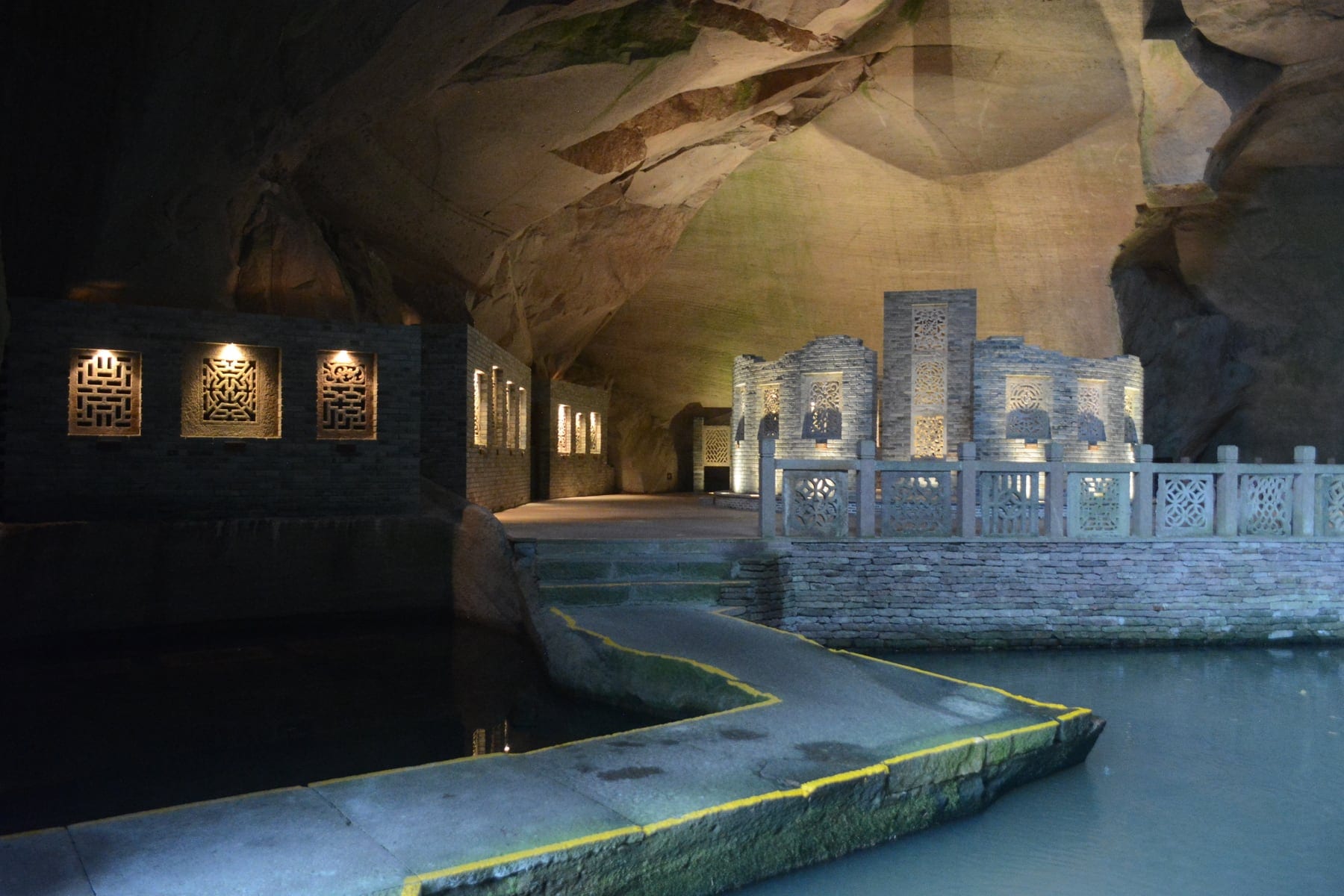
The name may sound unappealing, but this is really a magical place. Centuries ago, a natural cave was here, which has been excavated since ancient times to extract tuff stone used to build palaces and temples, and exported as far as Japan.
The excavation complex is vast, with many halls of weird shapes. The first part is a sort of mining museum, with fascinating explanations (also in English) about mining and the often deadly work of miners.
The second part is the house, which was inhabited until 2006! It’s a big house, somehow classy, with elegant pieces of furniture, drywalls separating the different rooms, and the high ceiling of the cave as a roof, really a magical place.
The third part is dedicated to Sanmen’s art of window crafting; indeed, the stone used to make these peculiar pieces of architectural art comes from this cave.
There’s a big hall, dimly but scenically lighted, where many windows are exhibited. The carvings are incredibly intricate. Overall, we liked this place a lot, very professionally curated, which rarely happens in China. The entry fee to this site is 50RMB.
To get to here go east from the town of Shepanxiang, however, it’s hard to miss, there’s only one bus on the island and it will bring you here.

One kilometer before this site, there’s an old village with dry walls and the typical Sanmen windows; it’s very nice to take a walk there and see the original architecture of the place, without the filter of restoration.
The Pirates’ Cave

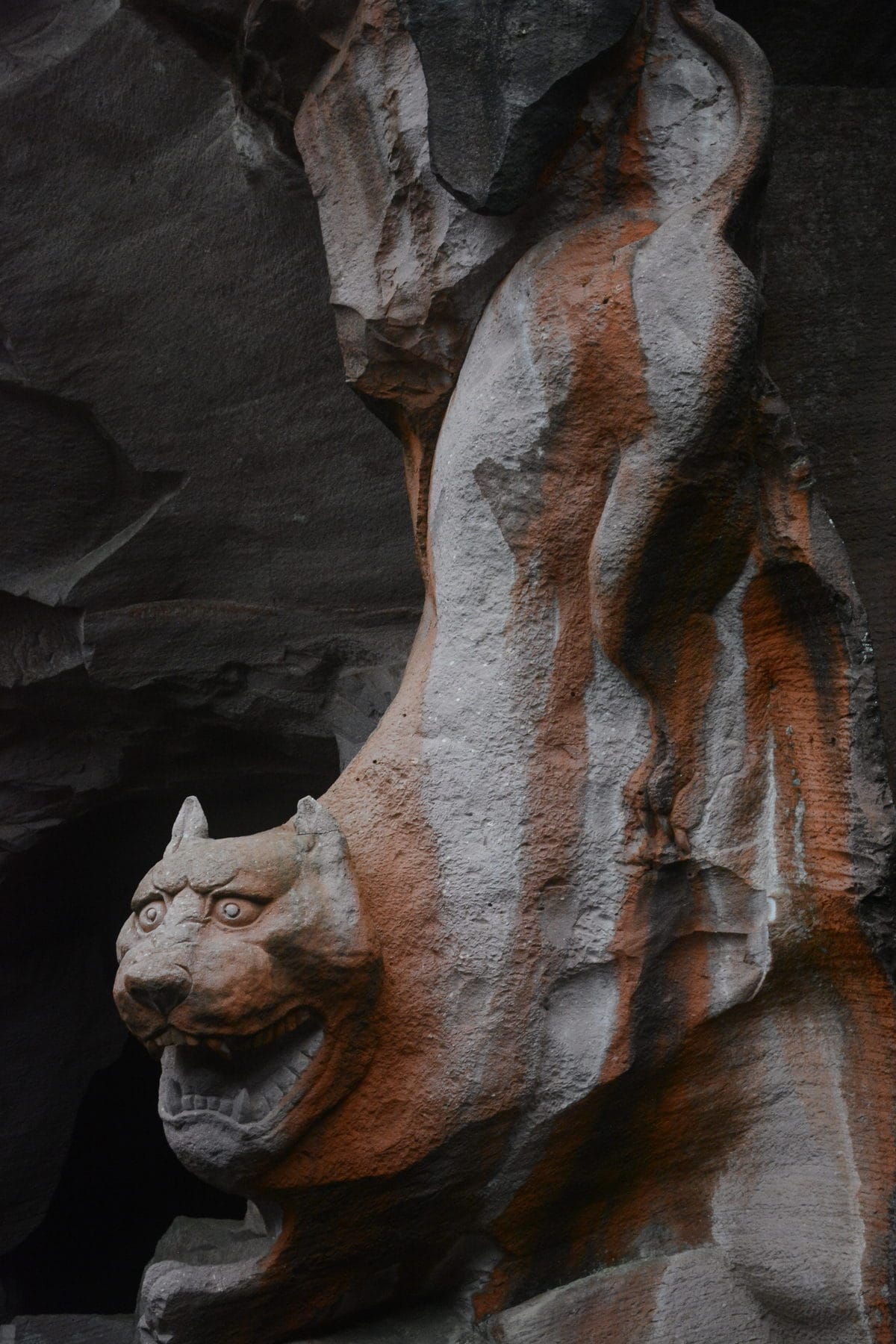
The pirates’ cave is another former tuff quarry, similar to the previous one but bigger. Apparently, this was abandoned during the 17th century and then occupied by pirates.
The site has been turned into a sculpture park, with huge figures of animals and people cut out from the tuff walls. Here, too, there’s a house, supposedly the pirates’ sleeping quarters, though I’m pretty sure it is fake.
Anyway, the whole set gives the impression of a pirate cove, the sculptures are incredible, and the caves are large and impressive. The entry fee here is again 50RMB.
How to get to Sanmen from Hangzhou or Shanghai
Getting to Sanmen is super easy; the city is on the Shanghai-Hangzhou-Ningbo-Thaizou train line, so there are plenty of bullet trains from each of these cities.
The journey from Hangzhou takes 2 hours, and a second-class ticket costs about 110RMB.You can book the train on Ctrip.
From Sanmen Train Station, local buses run to the city center. Taxis are plenty and pretty cheap, like everywhere in China.
Where to sleep in Sanmen and Shepan Island
There’s apparently only one hotel on Shepan Island, the Sanmen Shepan Island International Vacation Hotel, it looks nice and not too expensive.
Sanmen City offers a range of accommodations, including some super-cheap options. We are not sure the cheaper one will accept foreigners, though.
Always book your stay with Ctrip; if the hotel can’t accept foreigners, they will find you a new one. According to the new law, they should all accept foreigners, but in reality, it doesn’t always happen, especially in less touristy places.
This post is part of our weekend getaways from Shanghai or Hangzhou, a collection of great off-the-beaten-path spots in Zhejiang and Jiangsu.
Check Also
- Cycling in China – Itineraries and bike touring guide
- The Taoist mountains of Shenxianju
- The great wall without crowds: Linhai
- Zhoushan and Dongji Dao are the best islands in Zhejiang
- Sanmen, islands, caves, wetlands, and tasty crab
- WuYi: The best hot springs in Zhejiang
- The holy mountains of Tiantai
- The tea terraces of Shibawo in Pan’an
- Qiandao Lake – the best swimming spot in Zhejiang
Found it useful?
Follow Us on Social Networks and Subscribe to our Newsletter