

Last Updated on 28 November 2025 by Cycloscope
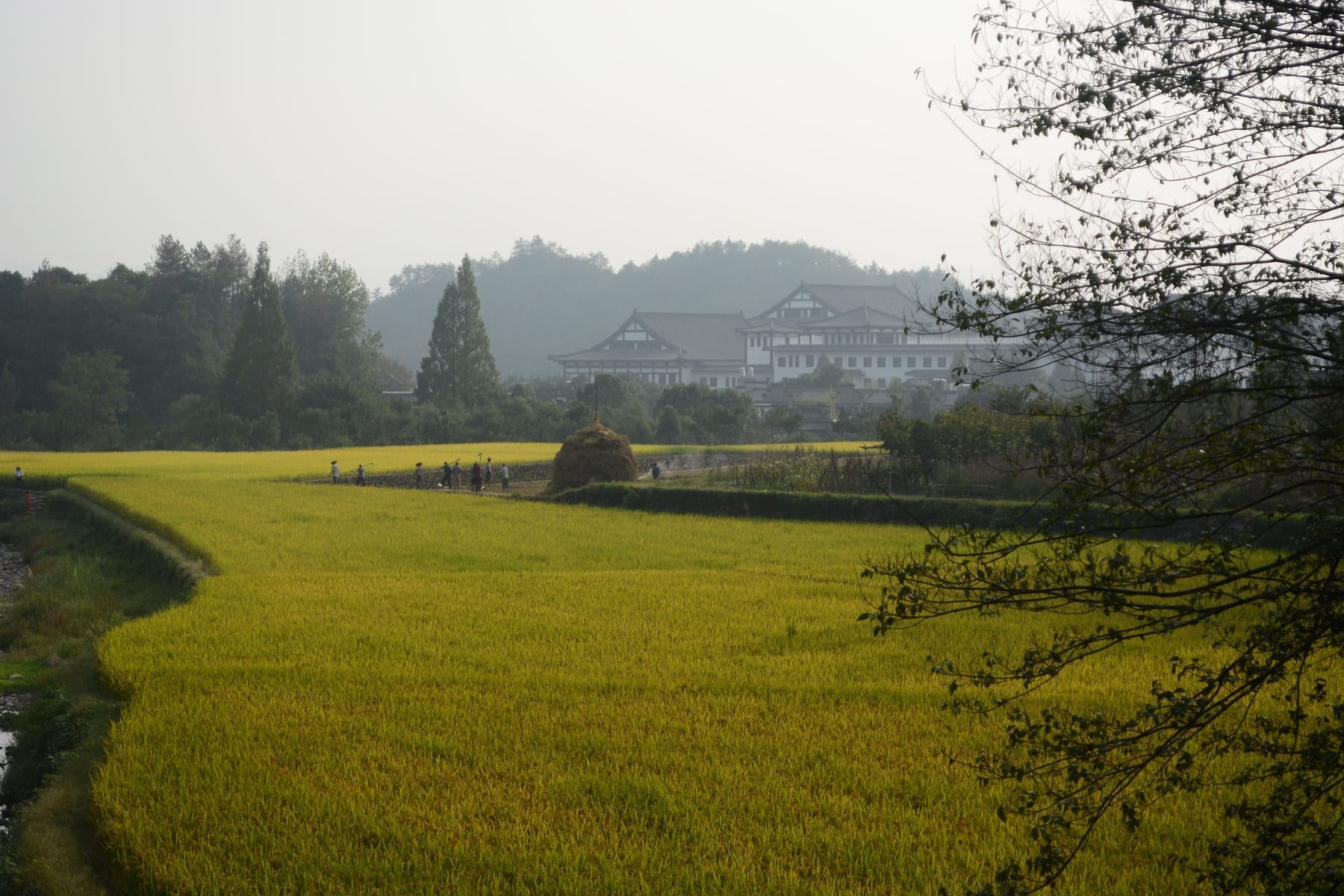
Guida di viaggio a Tiantai. Un’altra bella gita giornaliera da Hangzhou/Shanghai: Monti Tiantai e terme, tempio di Guoqing, Parco Nazionale di Huading, Qiongtai Xiangu
Another excellent day trip from Hangzhou or Shanghai (although staying at least one night would be better) is the historical and naturalistic area of Tiantai. Tiantai has a long history indeed; it’s the birthplace and home of one of the most essential Buddhist sects, Tiantai Buddhism, with many followers across China, Japan, and South Korea.
Disclosure: Some of our articles contain affiliate links. This comes at no additional cost for you and helps us keep this website up and running. (as Amazon Associates we earn commission from qualifying purchases)

Tiantai Mountain is sacred to both Taoism and Buddhism, with thousands of pilgrims visiting each year; it’s also one of the most famous tourist spots in Zhejiang province. The area has lots of attractions, some are very beautiful, while others are sorts of tourist traps. We’ll try to guide you to the good ones through this little guide to one of the best places to visit in Zhejiang.
This post is part of our weekend getaways from Shanghai or Hangzhou, a collection of great off-the-beaten-path spots in Zhejiang and Jiangsu.
Check Also
- Cycling China – Full bike touring guide and itineraries
- The Taoist mountains of Shenxianju
- The great wall without crowds: Linhai
- The tea terraces of Shibawo in Pan’an
- Zhoushan and Dongji Dao, the best islands in Zhejiang
- Sanmen, islands, caves, wetlands, and tasty crab
- WuYi: The best hot springs in Zhejiang
Tiantai Travel Guide
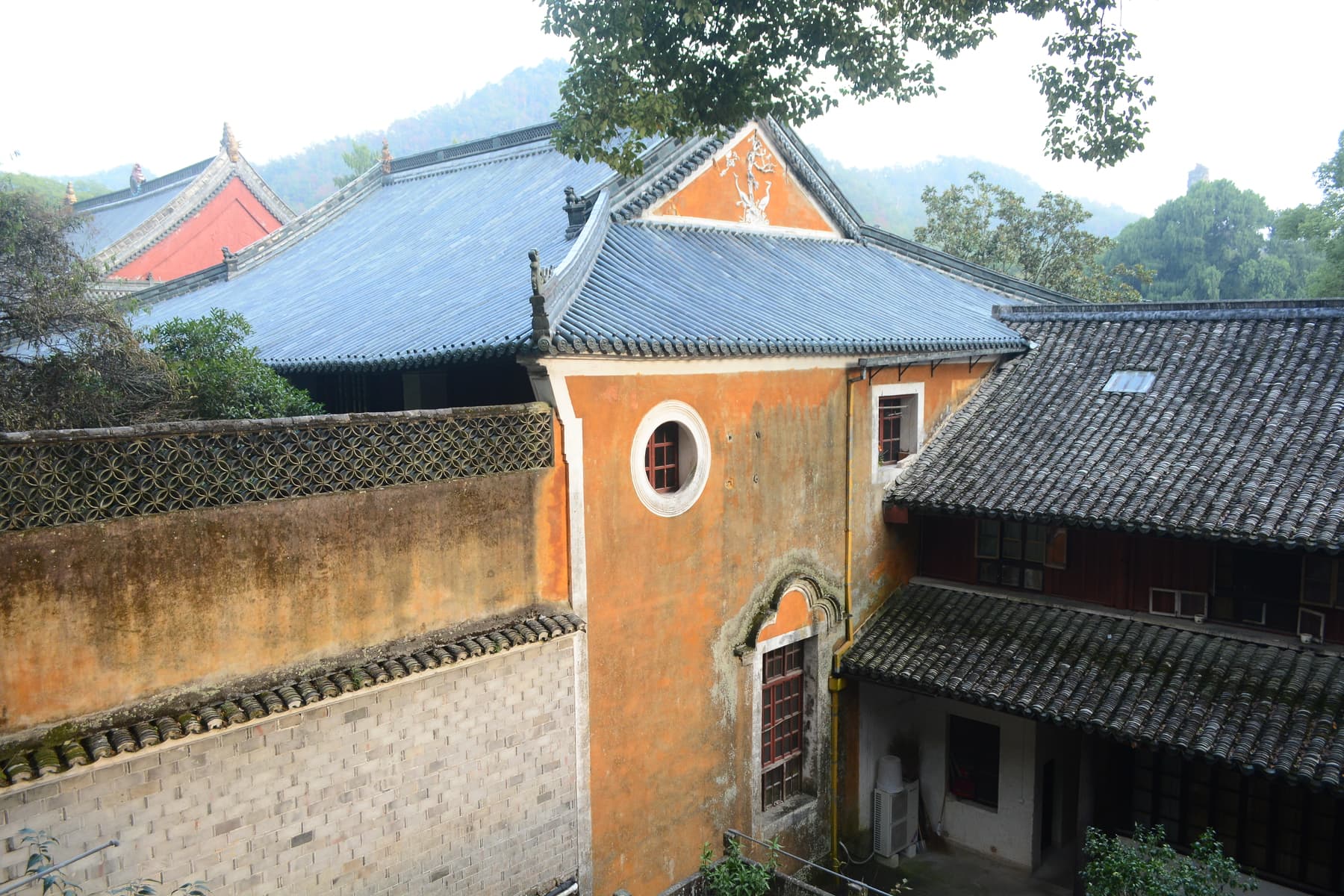
Tiantai City
Tiantai city is not beautiful, a reasonably large town with wide roads and no old areas. The best places to find accommodation are: near the Guoqing Temple, north of the Chicheng Scenic Area, and towards the Qiongtai Xiangu Scenic Area.
Places to eat are everywhere, as usual in China, some brown signs are pointing to so-called “rural restaurants”, we haven’t been there, but we saw a beautiful one north of Chicheng on Tianda Line, a stilted building on the river.
Tiantai Tourist Service Center
Tiantai Tourist Service Center is the transportation hub for all the main tourist attractions of Tiantai. From here, you can buy tickets to each of these and catch buses that will bring you right to the entrance. The employees speak some English, so it shouldn’t be hard to move around. It is located on Faixia Road, near the Chicheng Scenic Area, north of Tiantai city center.
Guoqing Temple
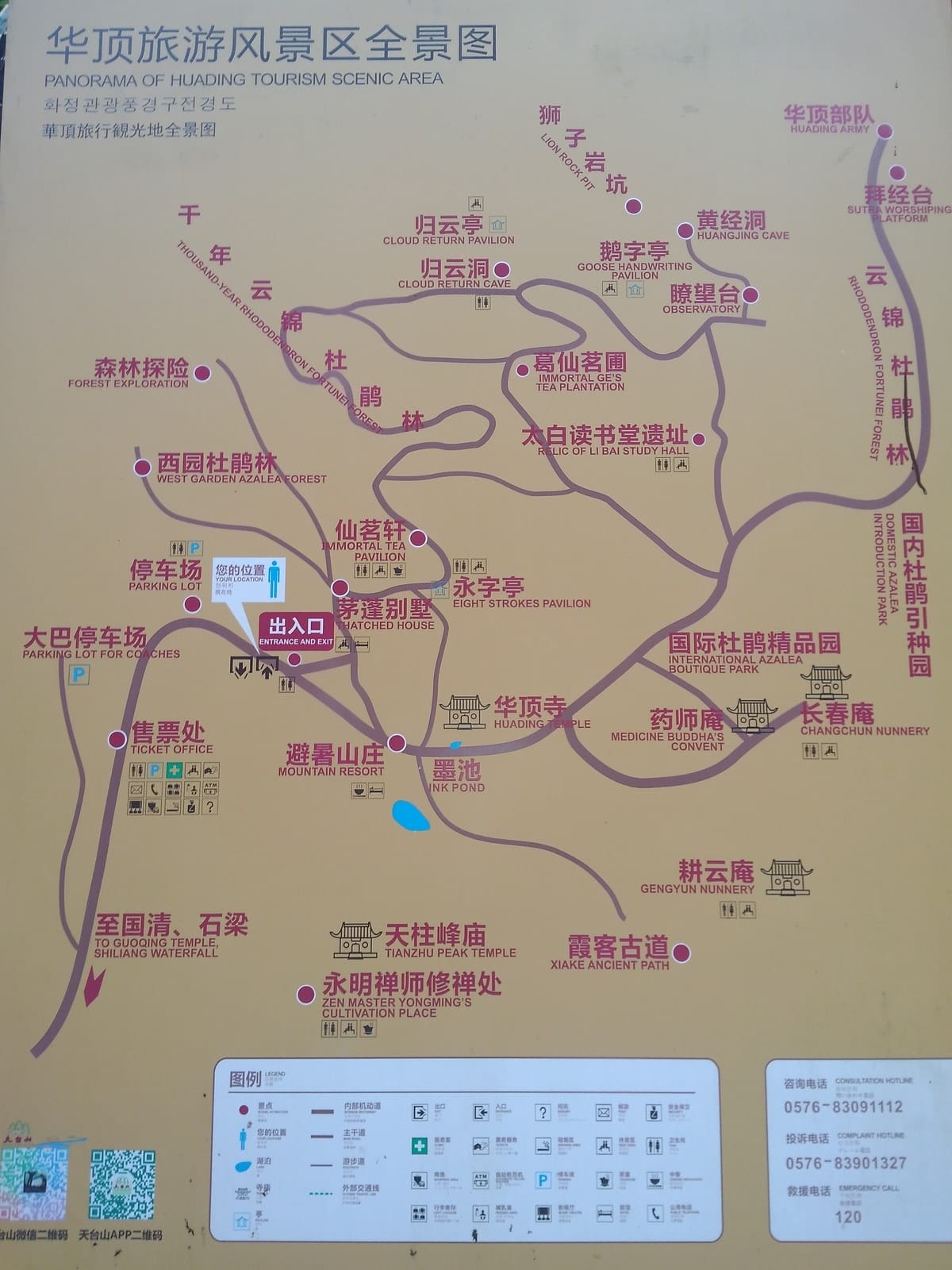
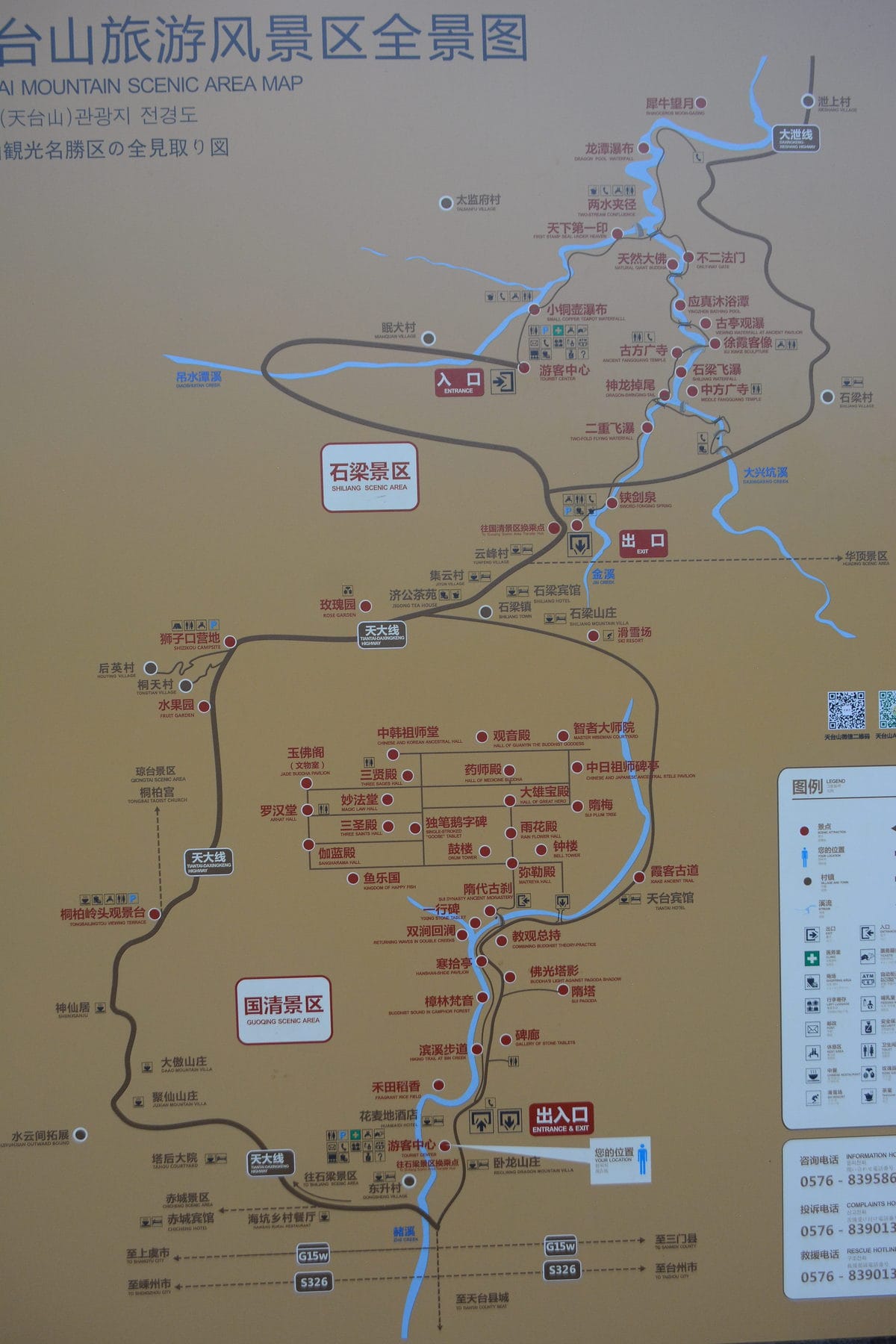
Guoqing Temple is the birthplace of the Tiantai sect of Mahayana Buddhism; its history dates back to the late 16th century and, as previously said, is visited by thousands of pilgrims every year. The temple is big and has many halls.
There is a stone pagoda on a nearby hill. Ancient and beautiful camphor trees surround the temple. Fortunately, there is no entry fee, so there’s really no reason not to visit this evocative place.
Tiantai Hot Spring Resort
Hot springs might not be what China is famous for, but there are many of them, and some are stunning.
Just near the Guoqing temple is the Tiantai Hot Spring Resort, a large facility with about 420 rooms inaugurated in 2015. There are several hot-spring pools in the hotel’s courtyard; some are open-air, while others are sheltered in pavilions. It might be a fantastic accommodation option if your budget is not too tight; rooms start at 680 RMB.
Qiongtai Xiangu Scenic Area
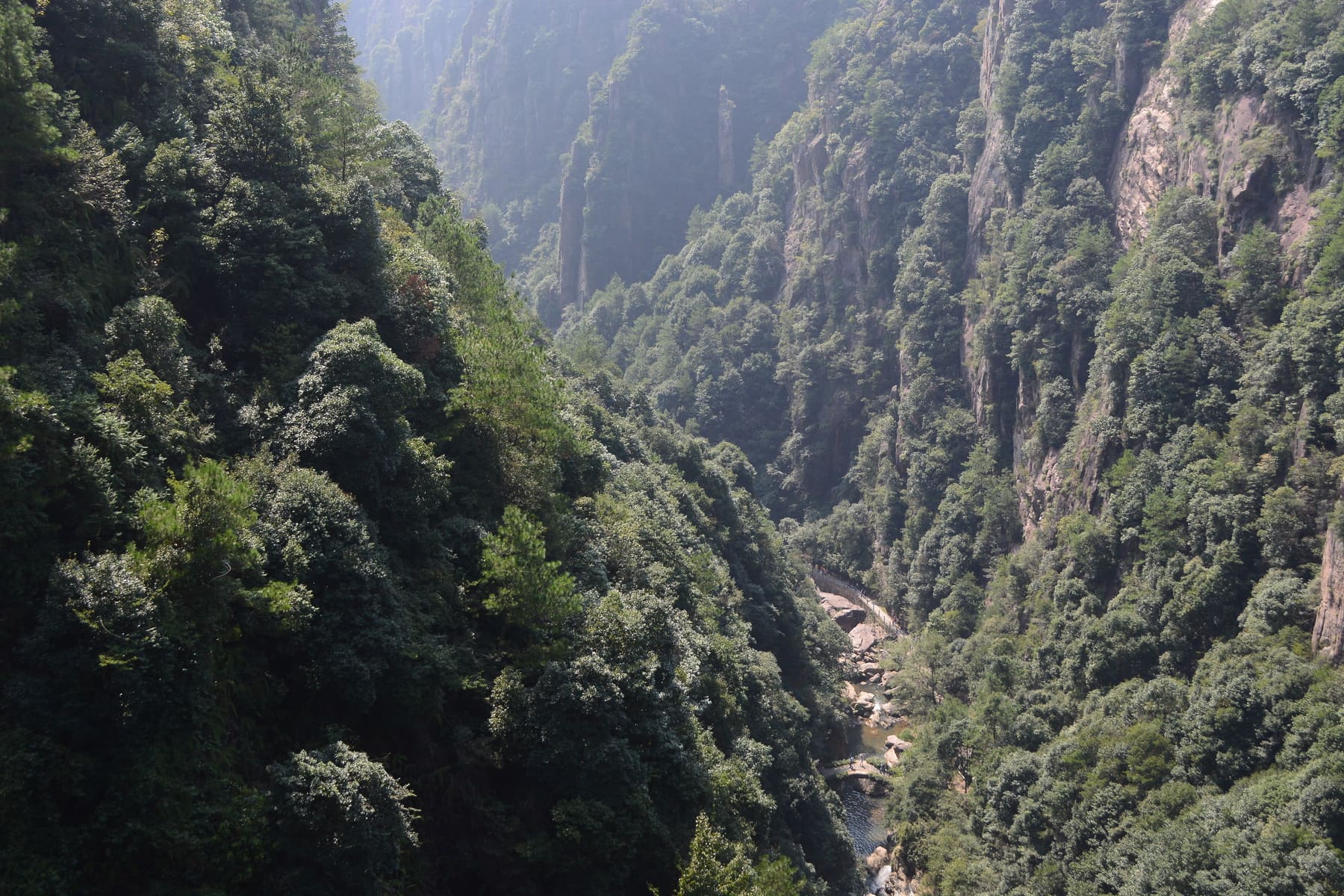
Qiongtai Xiangu Scenic Area is the most visited attraction in Tiantai. It’s a natural park comprising an artificial reservoir, a river, some waterfalls, and a scenic mountain peak.
There are two entrances to Qiongtai Xiangu, one at the top of the mountain and the other at the bottom, next to the lower part of the reservoir.
Needless to say, if you enter from the bottom, you’ll have to climb all the way up, and vice versa, so choose what fits you better.
The lower part welcomes you with a nice, long pavilion above the reservoir, with an artificial waterfall falling from under your feet. Then it’s a gentle, pleasant stroll along the river, with beautiful, weird rocks and bathing-perfect ponds. Too bad you’re not allowed to swim here. However, I don’t think anyone will complain if you take a quick bath when the place isn’t crowded.
This swimming ban is common in all of China, and it’s mainly a matter of safety; each year, many Chinese drown, and most of them are not good swimmers, even if the government is trying to promote swimming all over the country.
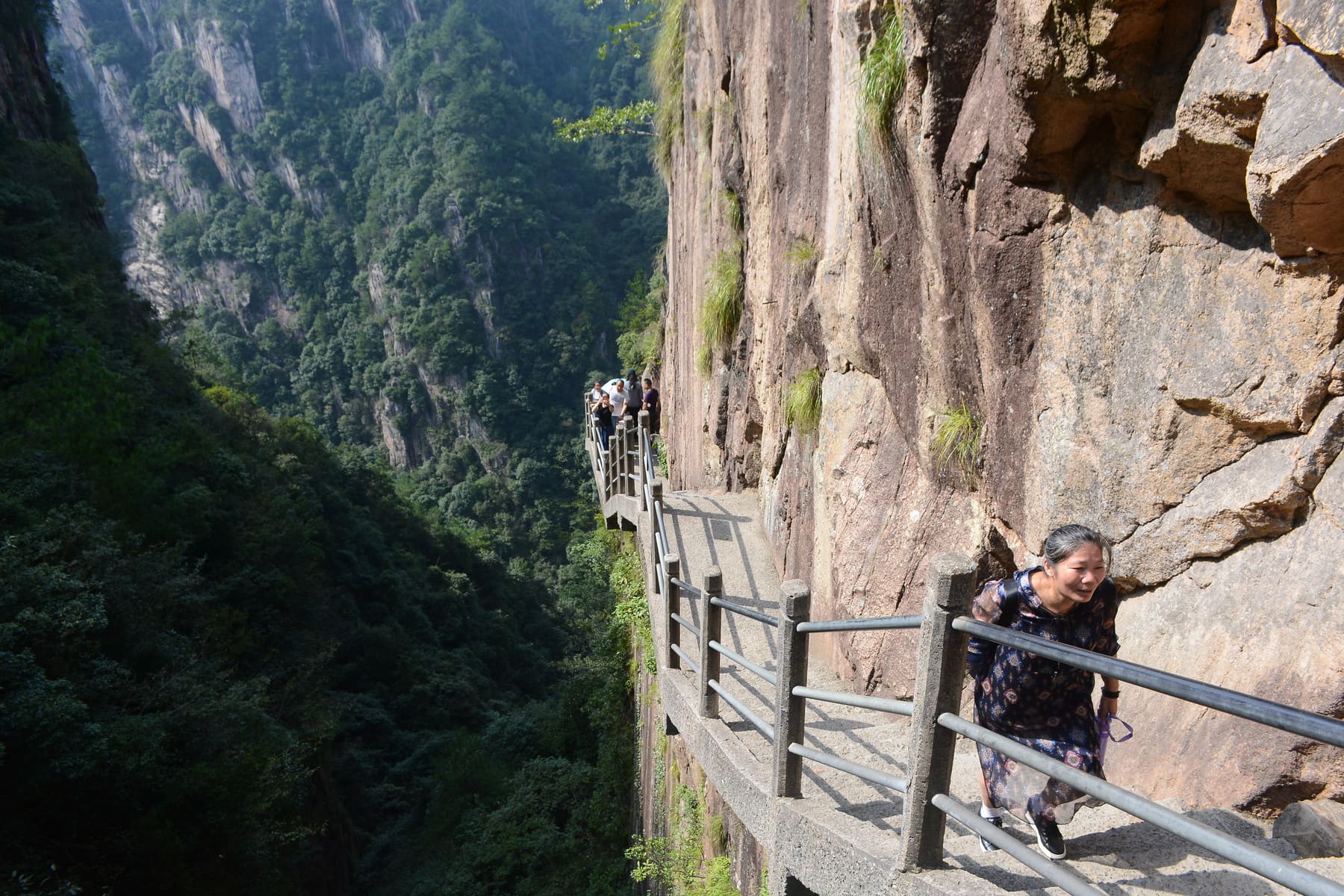
You’ll pass by a few lovely waterfalls, after which the ascent begins. After the first ramps, the path turns into a suspended concrete walkway that becomes increasingly leg-wiggling as it goes up.
The scenery here is spectacular, but if you suffer from vertigo, think twice about going up. Nothing compared to Shenxianju anyway.
At the top of the mountain, there’s a sort of tower made of big rocks; it really resembles a Sardinian Nuraghe. It’s called “the altar of the emperor’s sacrifice”, I presume it has been built recently, but I’m not sure.
The whole hike takes about 2 hours and is relatively straightforward, though the steps up might be exhausting for some in very hot weather.
The entry fee is 65RMB, and there are shuttle buses bringing you from one entrance to the other for 10 kuai. You can get here by bus from the Tourist Service Center of Tiantai, there are also local buses going there from the city center, ask around.
Huading Peak National Park
Huading is the highest peak of the Tiantai mountains, so we thought this would be the place to visit to experience the holiness of Tiantai.
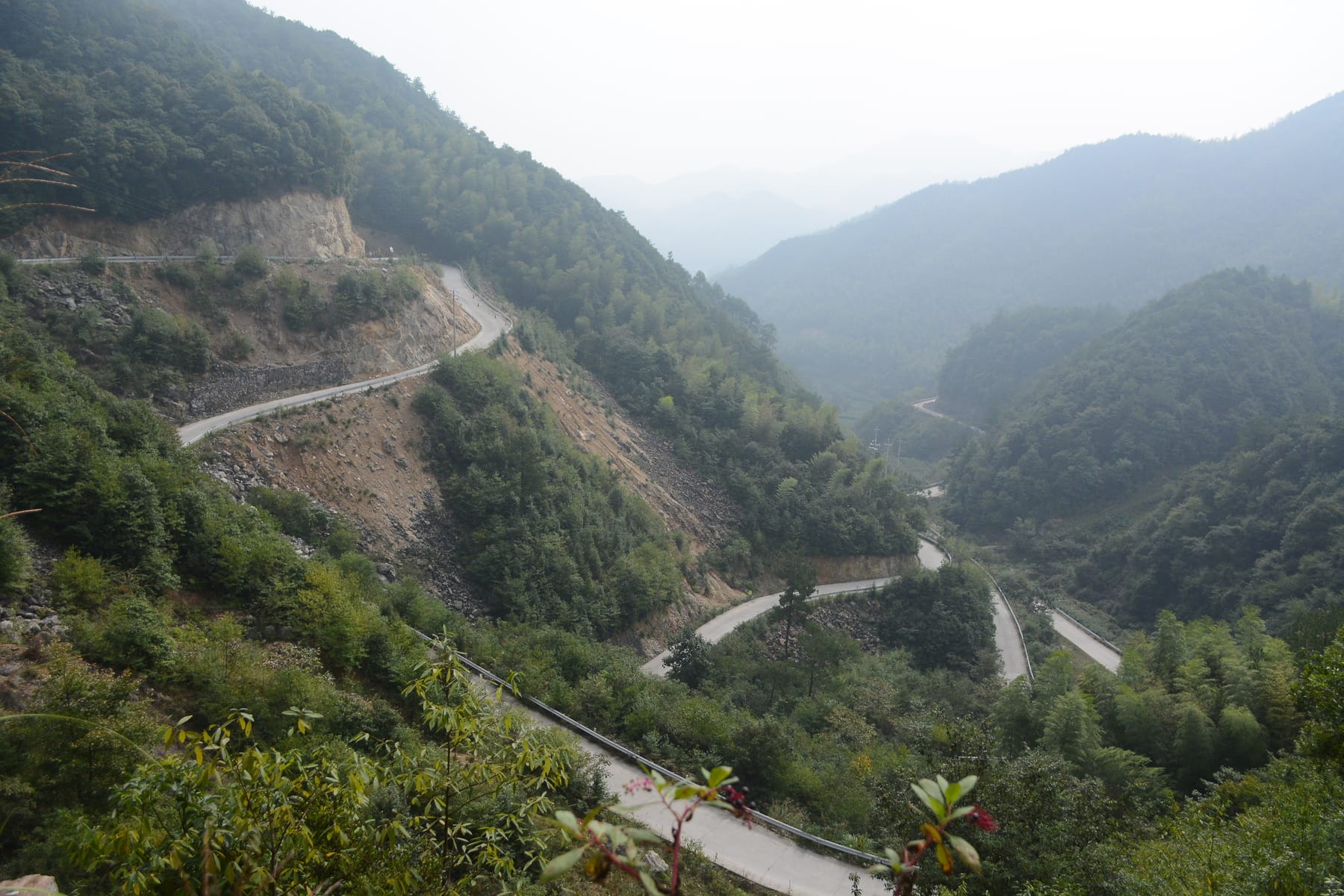
Unfortunately, the place is a bit of a scam. Catching the bus at the Tourist Center it’s a very scenic ride up to about 900msl, this road could be worth the trip itself if only you could stop along the way to admire the scenery, the many traditional villages, and the big Tao temple next to the upper entrance of Qiongtai.
Unluckily, the road was too challenging for our e-bike; we would like to go up by bicycle someday. Anyway, if you have a proper gasoline means of transport or strong cycling legs, go up there and be amazed.
The Huading National Park looks huge on a map, but the actual scenic area is tiny and honestly unworthy of the 50RMB entry fee (plus the 40RMB for the bus; a combo ticket for bus and entrance is available for 80RMB).
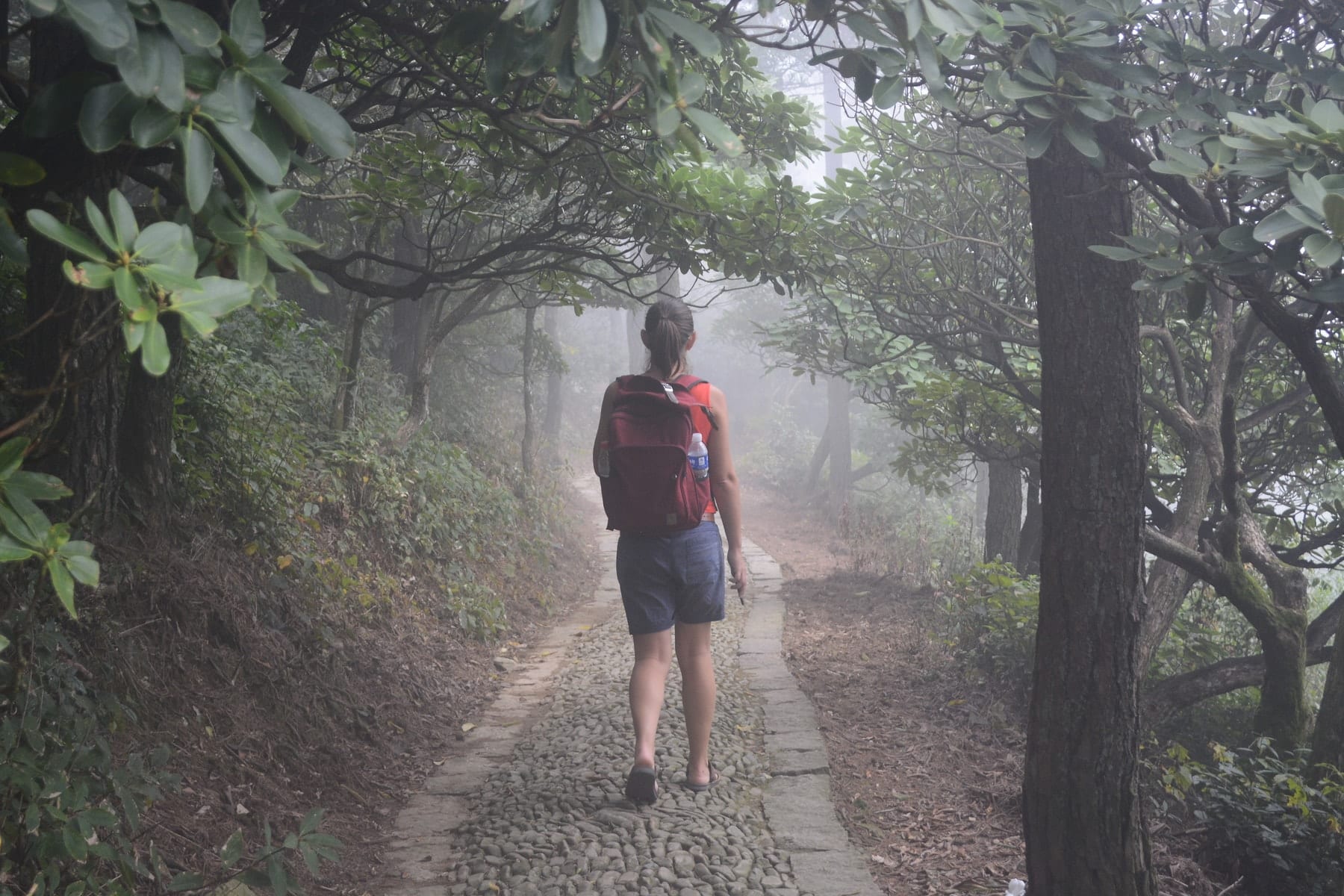
It’s actually no more than a nice walk in the woods, with an azalea groove and some tea terraces (nothing compared to the ones in Shibawo). There’s also a Buddhist temple with an authentic atmosphere. We enjoyed Huading overall, but just because we were almost the only tourists there, I don’t wonder why.
There are many more free paths in the park and around that nobody goes on, but the only way to get there is by having your own transportation.
The Tianpei Line
The Tianpei line is the road that runs north from the Guoqing temple towards the mountains. This road is just beautiful, probably the best thing to see in Tiantai, going up steeply and crossing many traditional villages and temples.
Country roads are going left and right from it, upon cliffs or down the valley. Unfortunately, this also can be adequately explored if you have your own transport, or you could hire a taxi if you speak a little bit of Mandarin.
Some more things to do in Tiantai
Another famous area in the Tiantai Mountain is the Shiliang Waterfall Scenic Area. It’s also in the Huading National Park, up high in the mountains; buses from the tourist center run there, and the entry fee is 60 RMB. We didn’t visit it, sensing another scam, so we can’t speak about it.
Near Guoqing temple and the hot spring resort is also the former residence of Jigong, a large area completely closed by high walls. It all looks built just yesterday, seeming just another of the many fake old towns of China. I don’t know if there’s anything original in there. The fee is 30RMB.
Chicheng Mountain is another scenic area, easily accessible from the Tiantai Tourist Center by a short walk. It has a pagoda on its top; we don’t know much more.
Where to sleep in Tiantai
Accommodations in Tiantai are plentiful; they range from the usual cheap Chinese-style hotels to scenic mountain-view luxury resorts, including hot spring hotels.
Most of the hotels in Tiantai accept foreign guests, we anyway advise you to book your stay in advance through Ctrip, the best and most reliable booking website for China, if anything happens Ctrip will directly call you and provide solutions for any issue, we were always pretty happy with their services.
We slept at the Fengya Lanzhuang Hotel, a budget option just a couple of kilometers from Qiongtai Scenic Area, the typical not-so-clean Chinese hotel; the staff is very friendly, though, and they speak some English.
How to get to Tiantai
We came to Tiantai from Shibawo by e-bike, less than 40km, of which the first 25 km were on a beautiful road with many spectacular switchbacks, surrounded by a thick forest where we spotted some superb birds, very colorful.
Tiantai is easily accessible by bus from Hangzhou. It is an hour’s ride from Hangzhou Passenger Transport Central Station to Tiantai Passenger Transport Central Station. The bus fare is around CNY 79.
From Shanghai:
Take a long-distance bus from Shanghai South Long Distance Bus Station or Hutai Road Long Distance Bus Station to Tiantai Passenger Transport Central Station. The bus fare is around CNY 140. It takes about 3 hours.
Get to the Scenic Areas of Tiantai Mountain from the Tiantai Passenger Transport Central Station:
How to get to Guoqing Temple:
Take bus No. 5 and get off at Guoqing Jingqu (Guoqing Temple).
How to get to Shiliang Waterfall and Huading Peak:
Take bus No. 1, 5, 3a, or 3b from Tiantai Passenger Transport Central Station to Tiantai Tourist Service Area and then take a local bus. (information not totally reliable).
How to get to Chicheng Mountain:
Take bus No. 5, get off at Chicheng Hotel Station, and then walk for 1.4 km (0.9 mi).
How to get to Qiongtai Xiangu Scenic Area:
Take bus No. 8 from the Passenger Transport Central Station. Then take the shuttle bus.
This post is part of our weekend getaways from Shanghai or Hangzhou, a collection of great off-the-beaten-path spots in Zhejiang and Jiangsu.
Check Also
- Cycling China – Full bike touring guide and itineraries
- The Taoist mountains of Shenxianju
- The great wall without crowds: Linhai
- The tea terraces of Shibawo in Pan’an
- Zhoushan and Dongji Dao, the best islands in Zhejiang
- Sanmen, islands, caves, wetlands, and tasty crab
- WuYi: The best hot springs in Zhejiang
Was this useful?
If you think so, Follow Us on Social Networks and subscribe to our Newsletter