

Last Updated on 1 April 2026 by Cycloscope
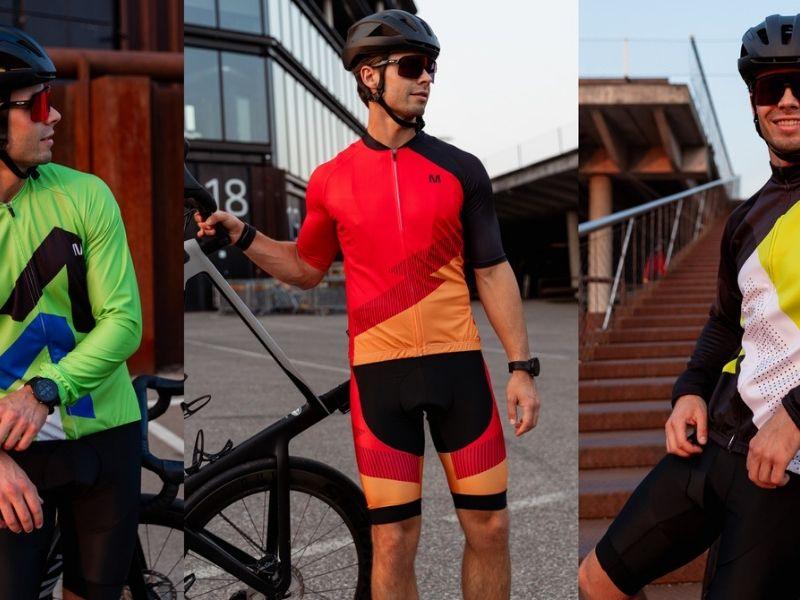
How to choose cycling kit for bike touring, bikepacking, and long-distance rides. Tips on bib shorts, jerseys, comfort, and durability that actually matter.
There is a big difference between cycling gear that feels fine for one fast local ride and cycling gear that still feels right after six hours in the saddle, a café stop, changing temperatures, rough roads, and another day waiting tomorrow. That difference matters more than many riders think.
Disclosure: Some of our articles contain affiliate links. This comes at no additional cost for you and helps us keep this website up and running. (as Amazon Associates we earn commission from qualifying purchases)
For road cyclists doing short training loops, the wrong jersey or bib shorts can be an annoyance. For touring riders, bikepackers, and anyone spending long days on the bike, the wrong gear can shape the entire experience. It affects comfort, temperature management, morale, recovery, packing choices, and sometimes even whether a rider wants to get back on the bike the next morning.
That is why more riders are paying closer attention to cycling gear, not just as matching apparel, but as a practical system for long-distance riding. It is about how the jersey and bib shorts work together over time, across changing conditions, and through the repetitive demands of multi-hour or multi-day riding.
This matters whether you are planning a credit-card tour through mountain roads, a self-supported bikepacking trip, a week of mixed-surface exploration, or regular long-distance weekend rides that leave home before sunrise and return near sunset. The longer the ride, the more your clothing choices stop being cosmetic and start becoming functional.
Choosing the right cycling clothes is not about finding the most expensive option or the most technical race-oriented design. It is about identifying what actually matters as time in the saddle grows, conditions become less predictable, and comfort has to last beyond the first hour.
Why long-distance riding changes what matters in a cycling kit
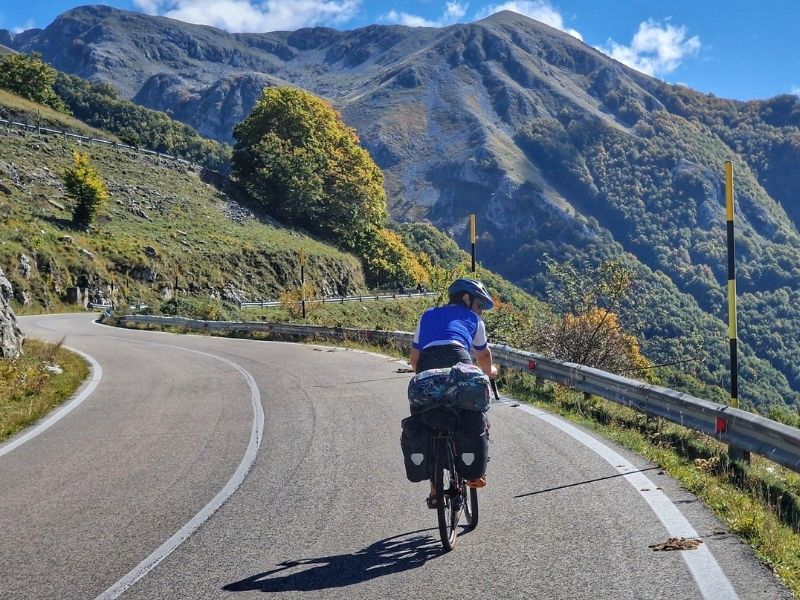
A lot of buying advice online is still written from a short-ride or performance-first perspective. That works for some riders, but it misses the reality of touring and bikepacking. Long-distance riding changes the decision-making framework.
In a race, the priority may be aerodynamic fit, aggressive cut, and performance under intense effort for a defined period. In touring or bikepacking, the priorities become broader. You may ride hard at times, but you also need comfort during steady pacing, resilience through repeated wear, practicality when stopping often, and confidence that your clothes will still feel good deep into the day.
That is why a quality cycling kit for longer rides should be assessed through five core filters:
- saddle comfort over extended hours
- jersey practicality and storage
- breathability across changing temperatures
- durability and repeat-wear reliability
- value over time, not just initial price
These factors are interconnected. For example, a jersey that looks sleek but becomes clammy after a few hours in shifting weather creates friction across the whole ride. Bib shorts with a decent first impression but inconsistent support under real saddle time can turn a promising route into a survival exercise.
Bib shorts usually matter more than riders expect
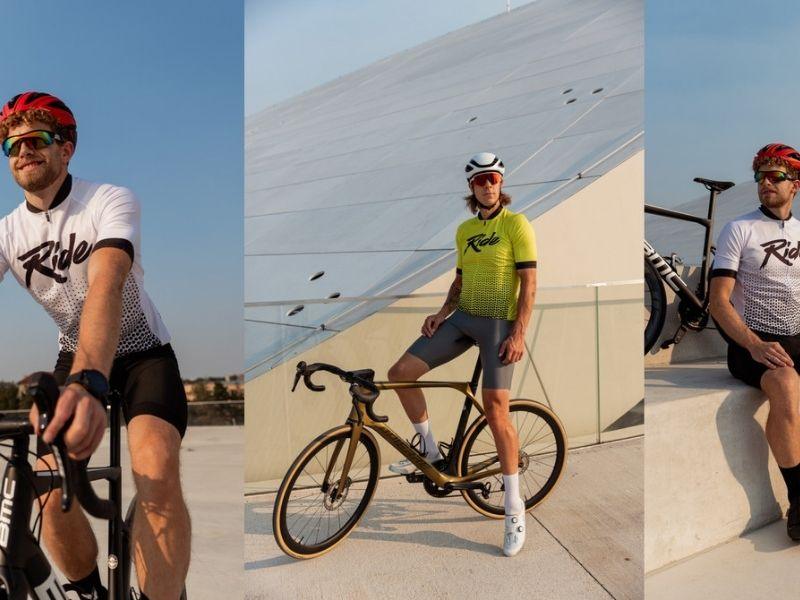
If there is one area where long-distance riders should be demanding, it is the bib shorts. On a casual spin, many shortcomings remain tolerable. On long rides, they do not.
The chamois is obviously the first thing people talk about, but bib quality is about more than the pad alone. Compression, leg grippers, strap comfort, seam placement, panel construction, moisture handling, and how the shorts behave after several hours all matter. A bib that feels good standing in front of a mirror or during the first forty minutes of a ride may not hold up once the body settles into endurance effort.
For touring and bikepacking, this becomes even more important because riders are often dealing with repeated exposure. You are not just choosing for one ride. You may be choosing a week of riding, limited washing opportunities, variable terrain, and long back-to-back hours in the saddle. In that environment, reliability matters more than marketing language.
A good long-distance bib should provide stable comfort rather than dramatic first impressions. It should not feel overly restrictive, but it should stay in place. It should manage sweat without becoming heavy. It should support you through seated climbing, flatter cruising, rougher road surfaces, and the low-grade fatigue that accumulates through the day.
This is why riders who are serious about longer distances should think in terms of a complete cycling kit rather than only a jersey. The jersey gets attention because it is visible. The bib shorts determine whether the ride remains enjoyable.
Jerseys need to work when the ride stops being simple
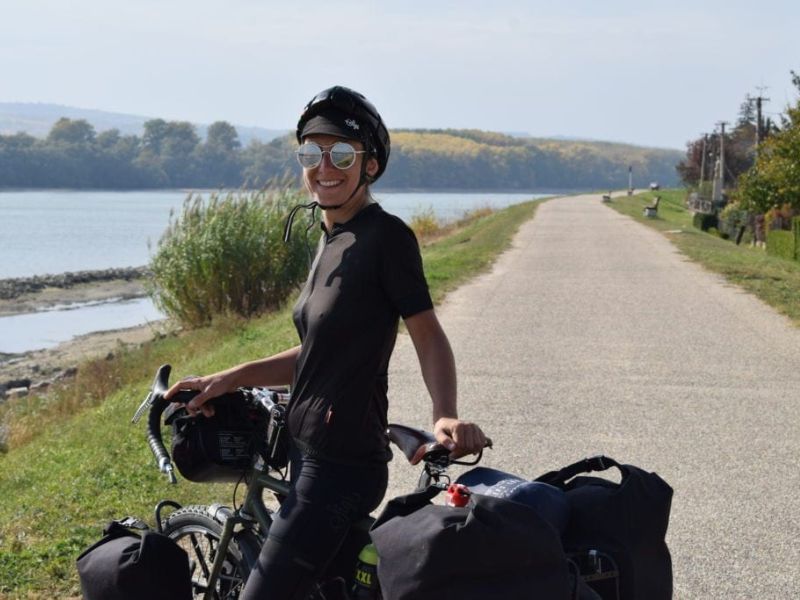
A jersey for touring or bikepacking has to do more than fit well in a forward riding position. It has to function during the full rhythm of long-distance riding.
That means it should still feel comfortable after hours of changing posture, climbing, descending, eating, stopping, reloading pockets, adjusting layers, and dealing with fluctuating temperatures. It should breathe well enough to prevent overheating, but not feel flimsy. It should manage moisture, dry reasonably quickly, and maintain shape instead of feeling stretched or sloppy later in the ride.
Pocket design matters more than many riders admit. Long rides increase the need for practical storage. Food, arm warmers, a gilet, small tools, receipts, gloves, and random ride-day items have to go somewhere. Even riders using bags often want a jersey that has pockets that handle well, because easy-access storage reduces unnecessary stopping and improves the flow of the ride.
This is where the touring and bikepacking perspective diverges from purely race-oriented kit advice. In performance road riding, minimalism often dominates. In long-distance riding, utility matters too. The best jersey is not necessarily the one with the tightest race cut or the most dramatic design. It is the one that still feels right when conditions stop being ideal, and the ride becomes more complex.
That does not mean touring riders should settle for shapeless or overly casual gear. It means they should be selective about what “performance” actually means in their riding context.
Fit is not just about speed; it is about sustainability

A common mistake in buying cycling kits is assuming that tighter automatically means better. For some riders and some use cases, a close fit is absolutely the right choice. But for touring, bikepacking, and all-day riding, the best fit is the one you can live in for hours without tension, distraction, or fatigue.
That may still be an athletic fit. It may even feel race-inspired. But it should not create unnecessary pressure points, awkward bunching, restrictive straps, or a jersey shape that only works in one narrow position. Long rides involve movement. Riders reach into pockets, walk into shops, stop at viewpoints, sit at cafés, layer up and down, and spend a lot of time somewhere between full effort and full relaxation. A good kit supports that range.
This is especially important for riders whose body shape does not match the assumptions of many mainstream kit brands. Long-distance cyclists are not all built like racers. They vary more in height, torso length, shoulder width, leg build, and comfort preference. A strong cycling kit collection should reflect that by offering enough design and sizing flexibility for riders to find a fit that works over real distance, not just in product photos.
That is one reason why some riders look specifically for men’s cycling kits for long-distance rides.
That phrase fits naturally because the conversation around touring kit is not only about style. It is about finding a matched jersey-and-bib setup that can handle endurance use, repeated wear, and varying levels of intensity without becoming uncomfortable halfway through the ride.
Touring and bikepacking require better temperature management
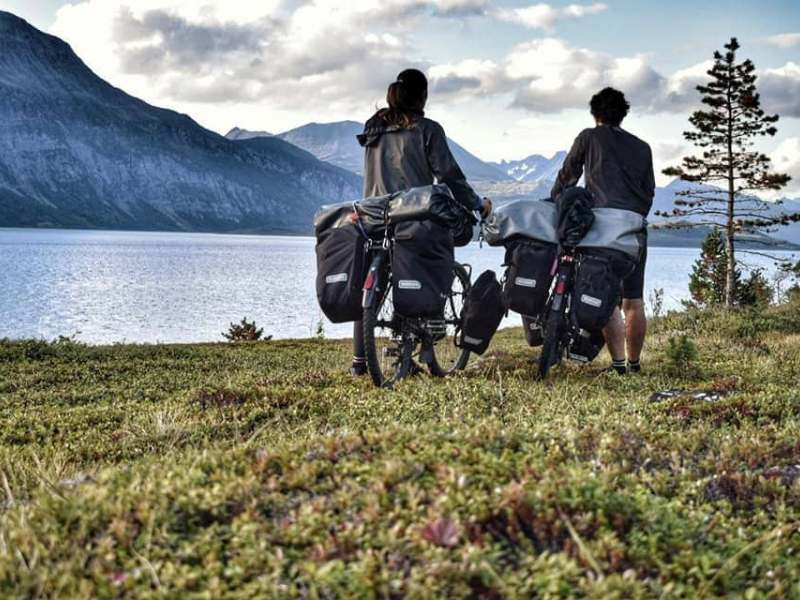
One of the biggest realities of long-distance cycling is that you rarely ride in one stable temperature band all day. Mornings can be cool, climbs can generate heat, descents can chill the body quickly, and weather can change far more than expected. That makes temperature management one of the most underrated parts of choosing a kit.
Riders often think in terms of “summer jersey” or “winter jersey,” but touring usually lives in the in-between spaces. You need a jersey that breathes when the effort rises, yet still layers cleanly when you add a vest, arm warmers, or a light shell. You need bib shorts that stay comfortable in changing conditions and do not become overly heavy with sweat or humidity.
This is where fabric quality matters in a more practical way than many product descriptions suggest. Breathability is not just about staying cool. It is about drying rate, comfort after effort spikes, and how quickly the kit returns to a stable feel after weather or terrain changes. The wrong fabric can leave a rider feeling damp, overheated, or oddly chilled once the pace drops. Over a full day, those small imbalances add up.
For bikepacking, where washing and drying opportunities may be limited, material behavior becomes even more important. Riders need kits that remain wearable after repeated use, recover reasonably well after a wash, and do not feel fragile or overly delicate. Performance matters, but resilience matters too.
Durability is a real part of value
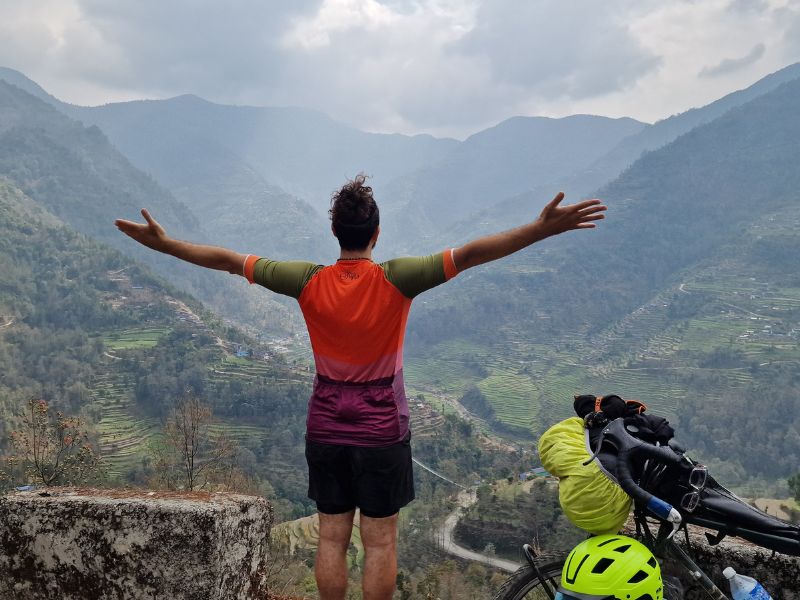
Price always matters, but for touring cyclists, value should be judged over time, not at checkout alone.
A cheap cycling kit that loses shape, fades quickly, develops seam issues, or stops feeling comfortable after several rides is not actually cheap. It simply delays the real cost. On the other hand, a well-priced kit that holds up through repeated long rides can deliver much stronger value even if the initial spend is slightly higher.
This is particularly relevant for riders who are building a rotation for regular endurance riding, travel, or multi-day use. They need a kit they can trust, not just a kit that looks good on the first outing. Stitching quality, fabric recovery, zipper reliability, pocket stability, and bib construction all influence whether a kit remains part of a rider’s actual long-term setup.
That is why the smartest buyers do not ask only, “Does this look good?” They ask:
- Will I still want to wear this after ten long rides?
- Will it feel consistent after washing?
- Will I trust it on a day when comfort really matters?
- Does it solve problems I actually have on the bike?
These are much better questions for the touring and bikepacking category than the usual obsession with trend cycles or purely visual appeal.
Matching jersey and bib matters more than many riders realize
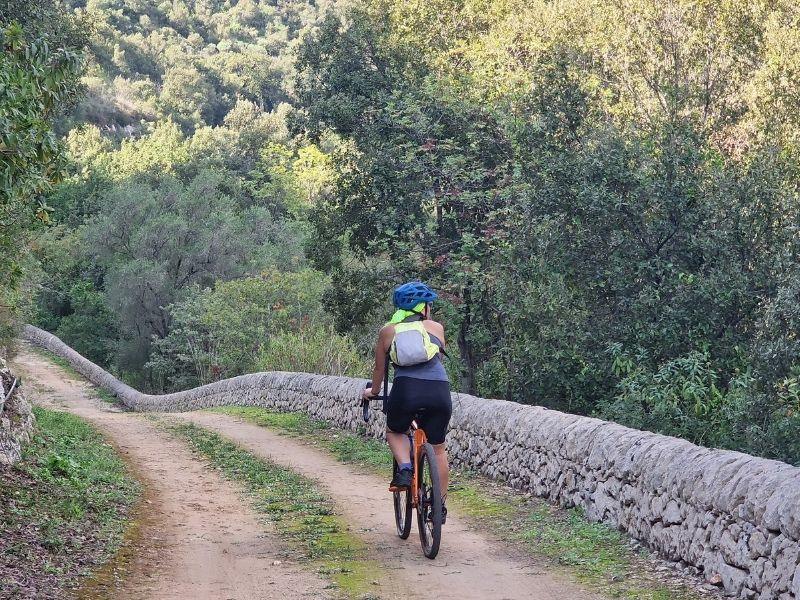
Another overlooked point is the importance of balance within a complete cycling kit. Riders sometimes treat jerseys and bib shorts as separate purchases, but on long rides, how they work together matters.
A well-matched kit can improve overall comfort because the fit logic is coherent. The jersey sits naturally with the bibs. The cut makes sense in the same riding position. The fabrics complement each other. The visual design also contributes something many riders underestimate: psychological smoothness. When the whole setup feels deliberate, the rider often feels more settled and confident, too.
This may sound subtle, but long-distance riding is built on subtle things. Small irritations become bigger over time, while small improvements in comfort and confidence become more valuable. Matching kits can help reduce friction in both physical and mental terms. They simplify the pre-ride decision, create a more cohesive fit, and often perform more predictably than random combinations assembled without much thought.
For riders who spend serious hours on the bike, that kind of consistency is useful.
Bikepacking riders should think beyond race-day assumptions
Bikepacking has introduced more riders to long-distance cycling, but it has also brought new confusion around apparel. Some riders assume traditional road cycling kits are too specific for bikepacking, while others go too far in the opposite direction and choose clothing that sacrifices too much on-bike comfort.
In reality, many bikepacking trips still benefit from proper cycling kits, especially when the days are long and the riding itself is central rather than incidental. The key is not to reject cycling apparel, but to choose it with the right priorities.
A bikepacking rider may care less about aggressive race styling and more about:
- all-day comfort
- practical storage
- durability
- layering compatibility
- price-to-use value
- quick drying between rides
That is where broader, more practical cycling kits for touring and bikepacking come into the conversation in a meaningful way.
This kind of positioning works because it reflects the real decision-making logic of many riders. They are not chasing marginal aero gains. They are trying to find a kit that performs well, remains comfortable over time, and makes sense for riders who want usable performance without overspending.
Style still matters, just not in the shallow way
It would be wrong to suggest that touring and bikepacking riders do not care about style. They absolutely do. But style in this category works differently.
The best-looking cycling kits for long-distance riding are usually the ones that feel purposeful rather than flashy. They suggest confidence, clarity, and utility. They look like something a rider would genuinely want to wear for hours, not just something designed to catch attention for five minutes online.
For many cyclists, style becomes more important with experience, not less. As riders spend more time on the bike, they become more selective. They move away from loud novelty and toward a kit that feels wearable, coherent, and suited to their real riding life. That often leads to cleaner designs, smarter color choices, and matched setups that still look strong after repeated use.
In that sense, style and function are not opposites. In good cycling kits, they reinforce each other. A well-designed kit often feels better because the rider is not constantly negotiating with visual compromises or awkward fit choices. It simply works.
The best cycling kit is the one that supports the whole day
A short ride can hide a lot of weaknesses. A long ride exposes them. That is why the touring and endurance perspective is so useful when evaluating cycling kits. It forces the question that matters most: does this kit support the full day, or only the first part of it?
The right answer depends on the rider, route, climate, and budget. But the underlying principle is stable. A strong cycling kit for bike touring, bikepacking, and long-distance riding should make the ride easier to live in. It should support comfort, storage, breathability, confidence, and repeatability. It should be good enough to stop thinking about.
That is ultimately what many experienced riders are looking for. Not hype. Not costume. Not the most expensive name in the category. Just a setup that performs over time and distance.
When you think about it that way, choosing a cycling kit becomes less about chasing trends and more about building a reliable riding system. And for riders who care about long days in the saddle, that shift in thinking usually leads to better choices.
Final thoughts
Cycling kits are often judged too quickly and too superficially. For touring riders, bikepackers, and anyone who regularly rides long distances, that approach misses the point. The real value of a kit appears gradually, through hours of effort, repeated use, changing weather, and the quiet demands of endurance riding.
A jersey needs to do more than look sharp. Bib shorts need to do more than feel acceptable at the start. The full kit has to remain functional and comfortable after enough time has passed for weaknesses to become obvious. That is why riders who think seriously about long-distance cycling usually become more selective, not less, about what they wear.
The best cycling kits for this kind of riding are the ones that balance comfort, practicality, durability, and value. They support the whole experience, from the first hour to the last climb, from the morning rollout to the café stop to the final stretch home. They help the rider stay focused on the ride rather than the clothing.
And in the end, that is the clearest sign of a good decision. When the road is long, the weather changes, and the day becomes more demanding, the right cycling kit does not ask for attention. It earns trust.