
Last Updated on 9 June 2026 by Cycloscope
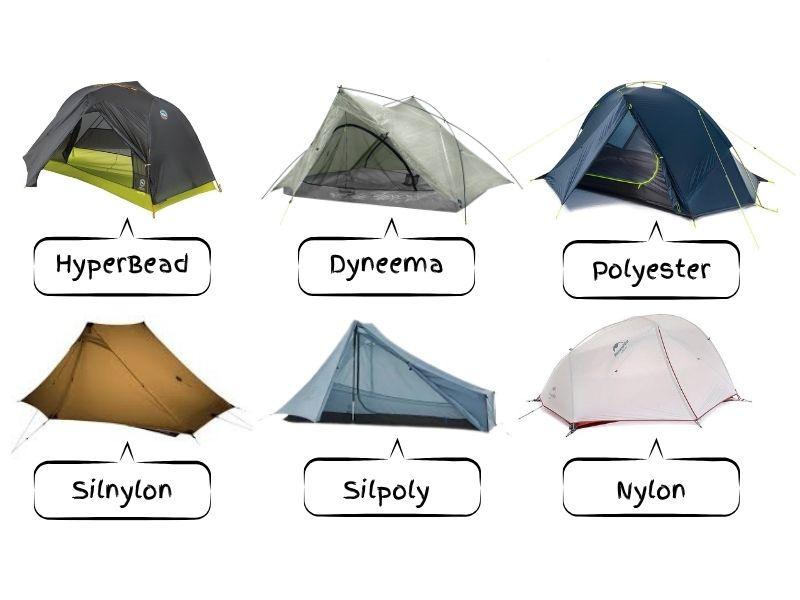
The best tent materials from budget polyester to ultra-premium DCF — with real product examples from Naturehike, Big Agnes, Zpacks, and more. Find the right fabric for your adventure and your budget.
Whether you’re a weekend warrior hauling the family car-camping or a thru-hiker counting every gram on a 2,500-mile trail, the material your tent is made from will define your experience more than almost any other factor. It determines weight, waterproofing, durability, condensation, and, of course, price.
Disclosure: Some of our articles contain affiliate links. This comes at no additional cost for you and helps us keep this website up and running. (as Amazon Associates we earn commission from qualifying purchases)
In this guide, we break down every major tent fabric currently on the market, from cheap polyester to ultra-premium Dyneema Composite Fabric (DCF), with real-world product examples at each tier so you know exactly what you’re getting for your money.
Why Tent Material Matters
Tent fabric affects:
- Waterproofing – how much rain it can handle before soaking through.
- Weight – critical for backpackers, irrelevant for car campers.
- Durability – how many seasons it lasts.
- Breathability – determines condensation build-up inside.
- Packability – how small it stuffs down.
- UV resistance – degradation over time from sun exposure.
- Stretch – how much it sags when wet, affecting pitch quality.
No single material excels at everything. Understanding the tradeoffs helps you pick the right tent for your style of adventure.
The Materials: Cheap to Expensive
1. Polyester (PU-coated) — Budget Tier (~$30–$150)
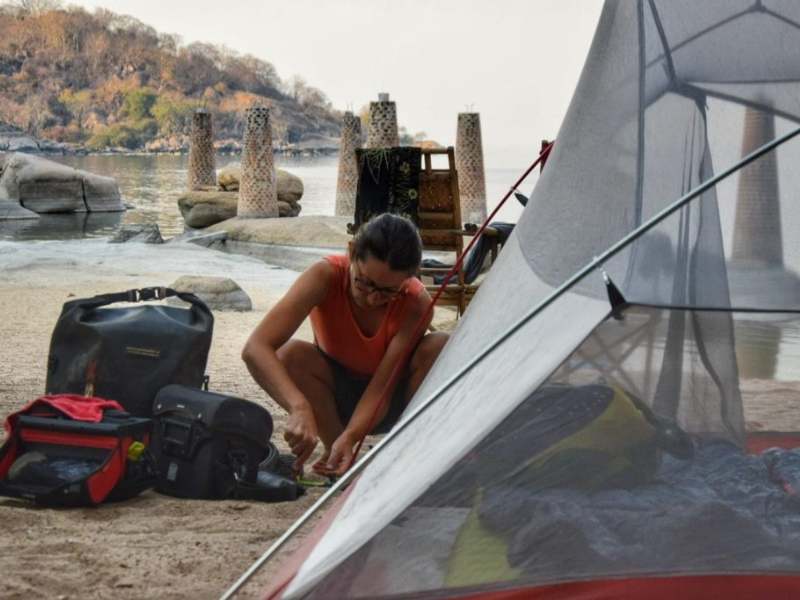
What it is: Basic polyester fabric coated with polyurethane (PU) on the inside face. This is the most common material in entry-level and family tents. Read our full Nature Hike Tents Review and Comparison, or 9 Best Lightweight 2-person Tents under 200$ for Backpacking & Bike Touring.
Pros:
- Very affordable.
- Virtually no stretch when wet (polyester absorbs almost no water, unlike nylon).
- Better UV resistance than nylon — retains 20–30% more tensile strength after extended sun exposure.
- Easy to seam tape (PU is tape-friendly).
Cons:
- PU coating degrades over time through a process called hydrolysis, eventually causing the dreaded sticky, peeling inner layer.
- Heavier than nylon or silicone-treated fabrics.
- Less tear-resistant than silnylon or DCF.
Typical specs: 150D–210T polyester, PU 1500–3000mm waterproof rating.
Real Product Example: Naturehike Cloud Up 1 (~$90–$110)
The Naturehike Cloud Up 1 is a solo backpacking tent that punches well above its price bracket. Its rainfly uses 20D nylon with silicone coating (PU4000mm), while the groundsheet is often polyester. At just 3.3 lbs, it delivers surprising waterproofing and wind resistance for a tent in this range. It’s become a cult favorite among bikepacking and budget-backpacking communities worldwide — and one we’ve tested extensively during our 4 years of bikepacking in Africa.
Other examples in this tier: Any Coleman or Quechua dome tent, Decathlon tent range (most using 190T polyester or similar), VEVOR canvas bell tents (~$660 for large canvas, though that’s a different category).
2. PU-Coated Nylon — Entry to Mid Tier (~$100–$300)
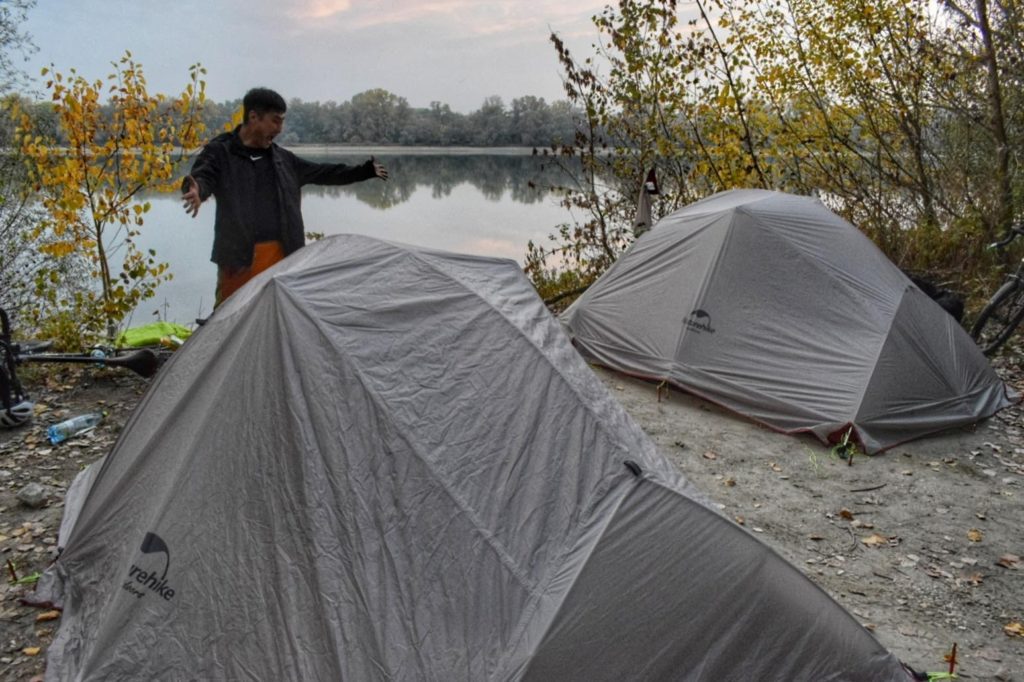
What it is: Nylon fabric with a polyurethane coating. This is a step up from basic polyester, offering better tear resistance and lighter weight.
Pros:
- Stronger and more tear-resistant than PU polyester.
- Lighter than equivalent polyester for the same denier.
- Wide availability at accessible prices.
Cons:
- Nylon absorbs water and expands 3.5% in length when wet (nylon 6) or about 2% for high-tenacity nylon 6,6 — causing sag and requiring guy-line adjustment in rain.
- Like PU polyester, the coating degrades over time.
- Less UV-resistant than polyester.
Typical specs: 20D–70D nylon, PU 1500–4000mm.
Real Product Example: Naturehike Mongar UL 2P (~$130–$170)
The Naturehike Mongar UL 2 is built with a 15D ripstop nylon rainfly (PU1500mm+ with silicone), a 20D nylon inner, and a 210T polyester groundsheet rated to PU5000mm. It tips the scales at 1.53 kg (3.37 lbs) —the minimum weight—remarkably light for a two-person tent under $170. The 8.5mm aluminum alloy pole system handles wind well. The “green 20D version” is the one to get; an orange variant uses lower-quality 210T nylon.
3. Silnylon (Silicone-Impregnated Nylon) — Mid Tier (~$200–$450)
What it is: Nylon fabric that has been impregnated with silicone on both faces, rather than just coated on one side. This is a significant upgrade over PU nylon.
Pros:
- Dramatically improved tear strength — silicone impregnation reinforces the fabric’s fiber structure.
- Far more durable long-term than PU coatings, which eventually degrade.
- Water beads aggressively off the surface.
- Good packability and relatively light.
- Excellent resistance to ripping — fibers slip and bundle rather than tearing like paper.
Cons:
- Nylon still absorbs some moisture and sags when wet; it requires re-tensioning of guy lines after rain.
- Silnylon cannot be factory seam-taped (silicone won’t bond to tape) — seams must be hand-sealed with silicone sealant.
- More expensive than PU fabrics.
- Considered the most difficult fabric to manufacture (few factories can work with it).
Typical specs: 15D–30D ripstop nylon, no mm rating (silicone = inherently waterproof), raw fabric costs $7–10/sqm.
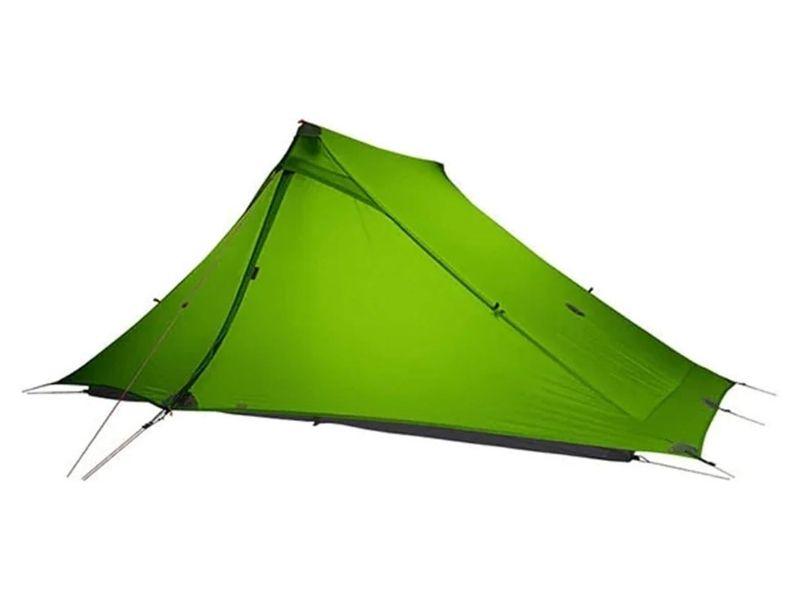
Real Product Example: 3F UL Gear Lanshan 2 Pro (~$160–$190)
The 3F UL Gear Lanshan 2 Pro — a trekking-pole tent popular in the budget ultralight community — uses silnylon throughout. According to tests by Better Trail, this tent has survived over 300 nights of backcountry use, including severe wind and storms, remaining rip- and leak-free. It’s a testament to how far silnylon durability stretches at a mid-range price. Available on Amazon.
Another example: Gossamer Gear The Two (~$320). One of the more affordable dedicated silnylon shelters from a US cottage brand, the GG The Two uses a trekking-pole setup and proven lightweight silnylon construction.
4. Silpoly (Silicone-Impregnated Polyester) — Mid to Upper-Mid Tier (~$250–$550)
What it is: The same silicone impregnation process as silnylon, but applied to a polyester base fabric instead of nylon. This is increasingly the go-to choice for serious backpackers who want performance without DCF’s price.
Pros:
- Minimal stretch when wet — polyester absorbs almost no water, so it stays taut through rain.
- Excellent UV resistance — significantly better than silnylon for high-sun environments (deserts, alpine terrain, summer Sierra).
- Long-lasting silicone coating with no hydrolysis risk.
- Better dimensional stability than silnylon — keeps a crisp pitch in storms.
Cons:
- Slightly less tear-resistant than silnylon (polyester fibers are stiffer, less able to bundle under force).
- Still more expensive than PU fabrics.
- Like silnylon, it requires hand-sealing of seams.
Typical specs: 10D–30D polyester, silicone on both sides.
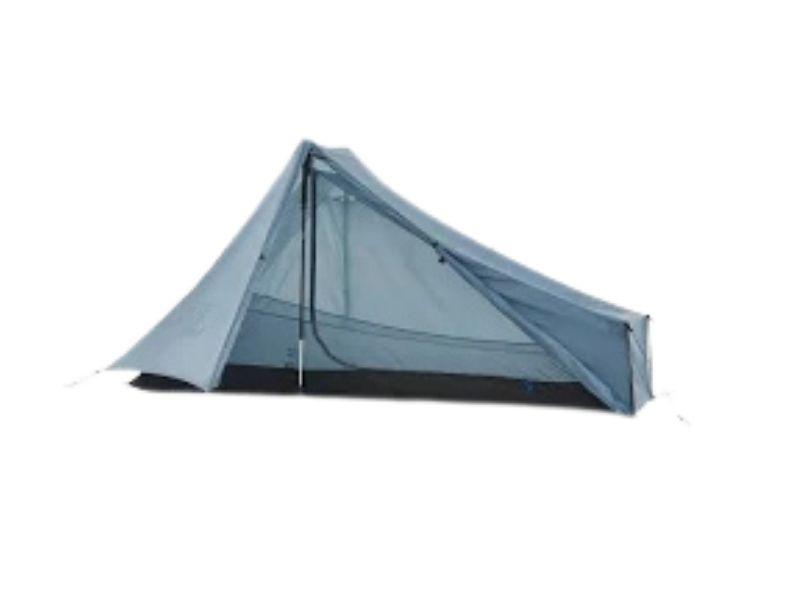
Real Product Example: Durston X-Mid Pro 1 (~$475)
Widely regarded as the best silpoly tent on the market, the Durston X-Mid Pro uses silpoly throughout and has become the benchmark recommendation for hikers who want near-DCF performance at a more accessible price point. The silpoly construction handles the X-Mid’s double-wall design well, staying taut through multi-day rainstorms.
Honorable mention: Many SMD (Six Moon Designs) tents and tarps have moved to silpoly as their primary material, citing UV durability as the key reason. Available on Amazon.
5. Big Agnes HyperBead™ Nylon — Upper-Mid Premium Tier (~$400–$650)
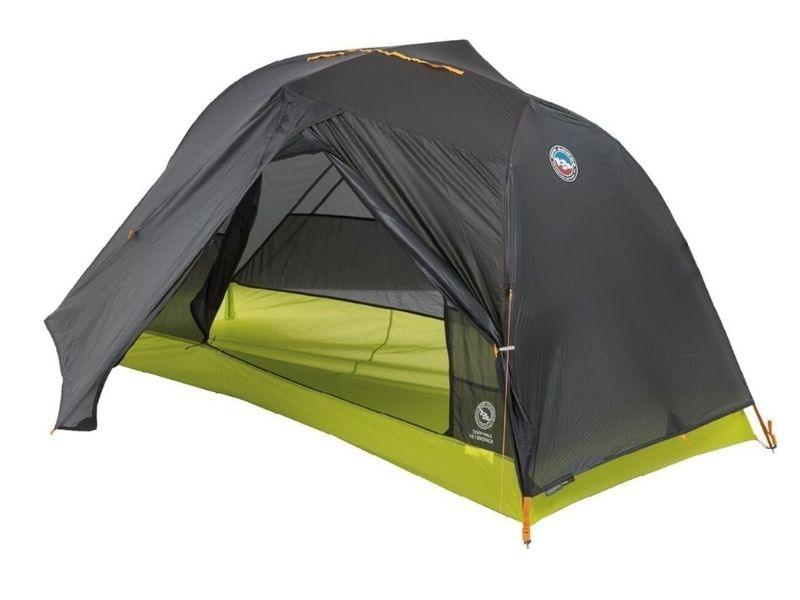
What it is: Big Agnes’ proprietary in-house fabric treatment, launched across their entire ultralight tent line in 2025. Rather than a traditional surface coating, HyperBead is described as waterproofing at a molecular level — without relying on DWR treatments, PFCs, or PFAS chemicals. Read the full review here.
Pros:
- Claimed to be 6% lighter, 25% more waterproof, and 50% stronger than traditional silicone-treated nylon
- PFAS-free — significant for environmentally-conscious buyers
- Factory seam tape applied with a waterproof, solvent-free PU process (no PVC, no VOCs)
- Solution-dyed nylon reduces dye fade and environmental impact
- Freestanding designs — user-friendly setup
Cons:
- Proprietary — you can only get it in Big Agnes tents.
- Premium price.
- Heavier than DCF shelters.
- Poles required (no trekking-pole option in the main lineup).
Specs: 15D nylon base with 20D solution-dyed ripstop, 1500mm waterproof rating.
Real Product Examples:
Big Agnes Copper Spur UL2 (~$499.95) The Copper Spur UL2 is Big Agnes’ most popular tent since 2008, now updated with HyperBead fabric for 2026. It’s a freestanding, double-wall, 3-season tent weighing about 2 lbs 4 oz in the 2-person version. It features DAC Featherlite poles, two doors, two vestibules, and multiple interior gear pockets. An excellent choice for backpackers who want a spacious, fully-featured tent without managing trekking poles. Available on Amazon.
Big Agnes Copper Spur UL3 XL (~$629.95) The larger sibling at around $630, adding more floor space while keeping the HyperBead fabric and ultralight construction. Reviewed as “a triumph of ultralight design” by T3 in early 2025. Available on Amazon.
Big Agnes Fly Creek UL1 (~$379.95) The solo option in the HyperBead lineup — a minimalist freestanding tent at an aggressive weight. Available on Amazon.
6. DCF — Dyneema Composite Fabric (formerly Cuben Fiber) — Premium Tier (~$600–$1,000+)
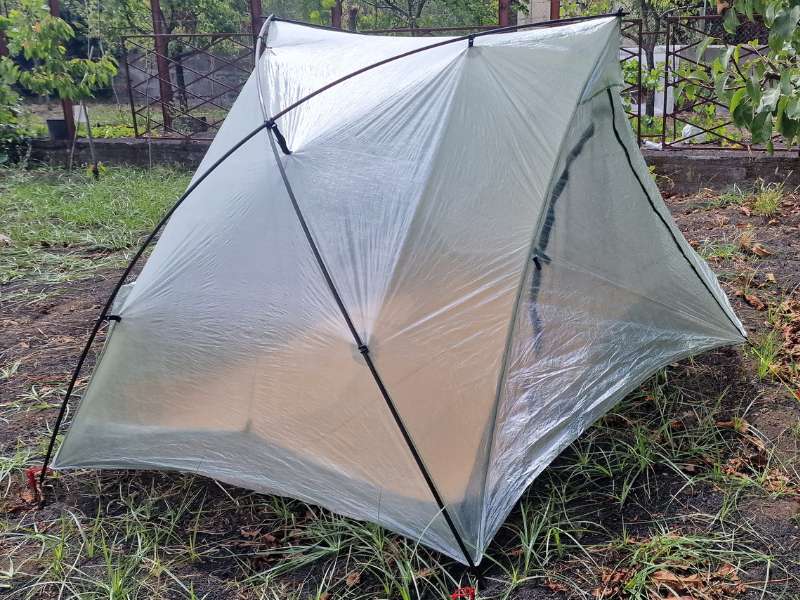
What it is: DCF is a laminate of ultra-high-molecular-weight polyethylene (Dyneema) fibers sandwiched between polyester film layers. It’s not a woven fabric in the traditional sense; it’s engineered at a structural level for strength-to-weight performance. Originally developed for sailing, it’s now the gold standard in ultralight backpacking shelters. Read our full review here.
Pros:
- Extraordinary strength-to-weight ratio — Dyneema fibers are stronger than steel by weight
- Inherently waterproof — no coatings that can wear out; water cannot penetrate the laminate.
- Zero stretch — stays absolutely taut in rain, wind, and temperature changes.
- Does not absorb water — no weight gain when wet.
- Quick-drying.
- Taped seams are factory-applied and permanent
- Bio-based versions now available (sourced from renewable feedstock).
- PFAS-free, no DWR treatments needed.
Cons:
- Expensive — dramatically more than silnylon or silpoly.
- Semi-transparent (especially lighter grades) — some hikers find this a privacy concern
- Less abrasion-resistant than nylon — dragging on granite or rough surfaces can damage the polyester film.
- Crunchy/crinkly in cold temperatures.
- DCF floors can develop pinholes over time on abrasive ground.
DCF grades: .55 oz/sqyd (lighter, more flexible), .75 oz/sqyd (more opaque, more durable), 1 oz/sqyd (commonly used for floors).
Real Product Examples:
Zpacks Duplex Classic (~$749) The Zpacks Duplex is the most iconic DCF tent on the market and arguably the most popular shelter on long-distance trails like the PCT and AT. Made entirely in the USA from Dyneema Composite Fabric, the 2-person trekking-pole shelter weighs just 525g (18.5 oz) with guy lines and stuff sack. It’s available in .55 oz/sqyd (blue or olive) or the heavier, more opaque .75 oz/sqyd (spruce green).
The floor uses the heavier 1 oz/sqyd DCF for durability. It has been proven over thousands of thru-hiker miles — three Treeline Review testers put three Duplex tents through over 10,000 miles of hiking combined. One harrowing thunderstorm test in Glacier National Park, with penny-sized hail and a flooded campsite, saw the Duplex remain completely dry while neighboring silnylon shelters leaked.
Zpacks Duplex Lite (~$670) A slimmed-down version at 15.9 oz (450g), using lighter-weight .75 oz/sqyd DCF for the floor to save weight. The world’s lightest fully-enclosed 2-person tent at the time of writing. Ideal for solo use or two very close partners who value grams above all else.
Hyperlite Mountain Gear Unbound 2 (~$775) Another well-regarded DCF option from a US cottage brand, positioned as a more weather-capable shelter with reinforced construction. At roughly double the price of a comparable silnylon tent, it makes the premium nature of DCF immediately apparent.
Quick Comparison Table
| Material | Weight | Waterproofing | Durability | UV Resistance | Price Range | Best For |
|---|---|---|---|---|---|---|
| PU Polyester | Heavy | Good | Moderate | Good | $30–$150 | Family camping, budget |
| PU Nylon | Medium | Good | Good | Fair | $100–$300 | Budget backpacking |
| Silnylon | Light | Excellent | Very Good | Fair | $200–$450 | 3-season backpacking |
| Silpoly | Light | Excellent | Good | Excellent | $250–$550 | Sun-heavy environments |
| HyperBead Nylon | Light | Excellent | Excellent | Good | $400–$650 | Feature-rich backpacking |
| DCF | Ultralight | Exceptional | Good* | Good | $600–$1,000+ | Ultralight/thru-hiking |
*DCF is strong but less abrasion-resistant than woven fabrics.
Bonus: Cotton Canvas — The Heavy Classic
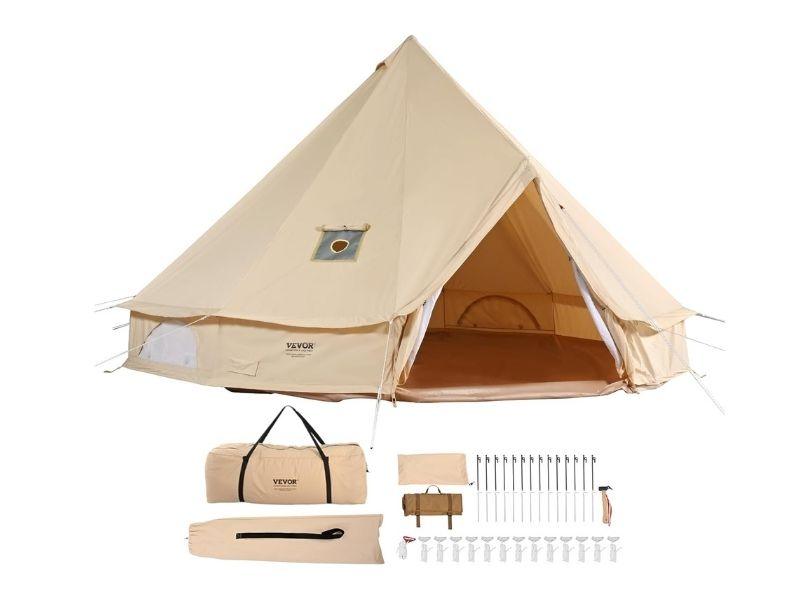
Before synthetics, all tents were canvas. And canvas hasn’t disappeared — it’s thriving in the glamping and basecamp market.
What it is: Woven cotton (or poly-cotton blend) fabric, typically uncoated or lightly treated for water repellency.
Pros:
- Exceptional breathability — no condensation problem; air moves through naturally.
- Naturally regulates temperature (cooler in summer, warmer in winter).
- Extremely durable — a well-maintained canvas tent can last decades.
- Supports wood-burning stoves with a stove jack.
Cons:
- Very heavy — typical canvas tents range from 44 to 225 lbs.
- Slow to dry and can mold if packed wet.
- Requires long setup time (10–30 minutes).
- Not suitable for backpacking.
- Quality tents start around $599 for a 4–6 person model and scale to $4,000+
Real Product Examples:
- WHITEDUCK Avalon Canvas Bell Tent (~$1,200–$2,550) — premium cotton canvas, stove jack included, popular for glamping. Available on Amazon.
- WHITEDUCK Alpha Pro Canvas Wall Tent (~$2,500–$4,000) — large 4-season outfitter tents for hunting camps and extended basecamp use.
- VEVOR Canvas Bell Tent (~$660) — budget entry into the canvas space, 7m, holds up to 12 people. Available on Amazon.
Canvas is the right call if you’re setting up a semi-permanent camp, running a glamping experience, or simply want the most comfortable basecamp environment possible. It is not backpacking material.
Which Material Should You Choose?
Car camping or family trips → PU Polyester or basic PU Nylon. No need to spend more. Look at Naturehike’s family range or any reputable budget brand.
Budget 3-season backpacking → Naturehike Cloud Up or Mongar series. Outstanding value in PU nylon at $90–$170.
Serious 3-season backpacking, 10–30 nights/year → Silnylon or Silpoly. The Gossamer Gear The Two, 3F UL Gear, Lanshan 2 Pro, or Durston X-Mid Pro give you real performance without bank-breaking price.
Feature-rich backpacking with freestanding convenience → Big Agnes Copper Spur UL2 (HyperBead). The best all-around tent for hikers who want space, features, and durability in a sub-3-lb package.
Ultralight thru-hiking, fastpacking, or serious gram-counting → Zpacks Duplex. The DCF tax is real, but so is the performance. For anyone spending 50+ nights per year on trail, it’s the shelter you’ll never want to replace.
Glamping or semi-permanent basecamp → Canvas. The White Duck and similar premium canvas brands offer decades of use and unmatched comfort. Just don’t expect to carry it on your back.
A Note on Coatings vs. Fabrics
One thing that often trips up buyers: the coating and the base fabric are separate decisions. A 20D nylon can be coated with PU (cheaper, degrades) or silicone (pricier, more durable). A 20D polyester can be similarly treated either way. When reading spec sheets:
- PU Nylon / PU Polyester = budget to mid-range, taped seams, degrades over the years.
- Silnylon / Silpoly = mid to high performance, hand-sealed seams, long-lasting.
- HyperBead = Big Agnes proprietary, best of modern nylon coatings.
- DCF = not a coating — an entirely different structural material.
Always check the denier (D) number too. Thinner fabrics (10D–15D) save weight but sacrifice abrasion resistance. Thicker fabrics (30D–70D) handle rough ground better.
Final Word
The best tent material is the one that matches how you actually camp. A $90 Naturehike tent will serve a casual hiker brilliantly; it won’t hold up to 150 nights on the Pacific Crest Trail. A $750 DCF Zpacks shelter is a thru-hiker’s best friend but overkill for someone who camps four weekends a year near a trailhead.
Know your use case, match the material to it, and your shelter will never let you down.
Other articles you might find useful: