

Last Updated on 2 August 2026 by Cycloscope
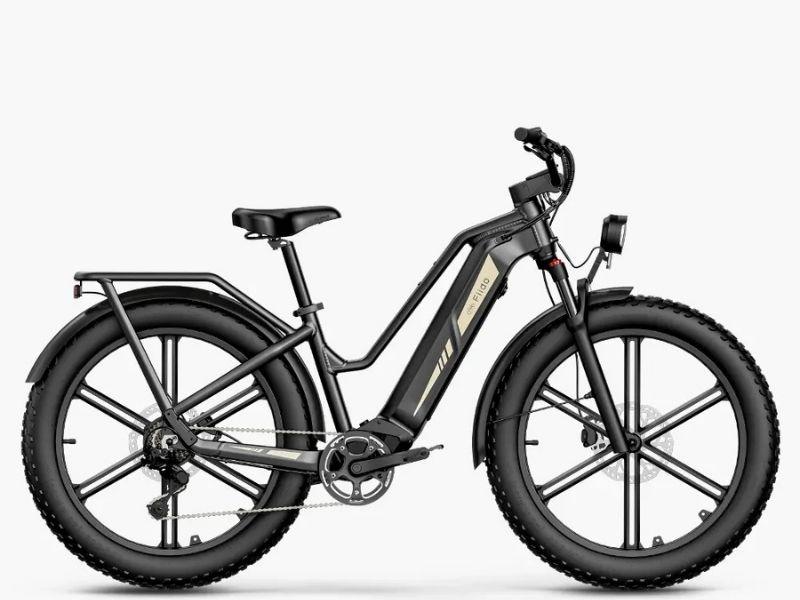
An electric bike can make a long ride easier, but that does not automatically make it suitable for touring.
Disclosure: Some of our articles contain affiliate links. This comes at no additional cost for you and helps us keep this website up and running. (as Amazon Associates we earn commission from qualifying purchases)
How we write our reviews: most of our reviews are based on first-hand long-term use or short-term test by a member of our team. For some new models or build variations, we rely on our experience with similar models and our team's experience in understanding bike geometry and components.
A good touring bike must remain comfortable after several hours in the saddle, carry luggage without becoming unstable and provide predictable assistance when the route includes hills, gravel, wind or long distances between charging points. It also needs to match the type of journey its owner actually plans to take.
A rider exploring paved cycle routes at weekends has very different requirements from someone carrying camping equipment through remote countryside. A folding fat-tire bike may be ideal for recreational trips from a campervan, while a mid-drive trekking bike may be better suited to sustained climbing and multi-day travel.
That is why there is no single touring model that is best for every rider.
A well-designed touring ebike should balance range, comfort, luggage capacity, terrain capability and long-term practicality rather than relying on one impressive specification.
Within Fiido’s current range, the Nomads, Nomads Pro, Titan and M1 Pro approach that balance in four different ways. Comparing them by riding scenario makes it much easier to determine which one belongs on city cycle paths, mountain roads, remote trails or the back of a campervan.
What Makes an Electric Bike Suitable for Touring?
Touring places makes greater demands on a bicycle than commuting or short recreational rides.
A commuter may travel the same predictable route each day and recharge at home every evening. A touring rider may encounter changing surfaces, unexpected headwinds, long climbs, heavy luggage and few convenient charging opportunities.
Before comparing individual models, it helps to understand the characteristics that matter most.
Real-World Range Matters More Than the Advertised Maximum
Range is usually the first specification buyers examine, but the maximum figure shown on a product page is only a reference point.
Actual electric-bike range is affected by:
- the weight of the rider and luggage;
- climbing and repeated acceleration;
- wind direction and temperature;
- tire width and pressure;
- road or trail conditions;
- the selected assistance level;
- riding speed;
- battery age and condition.
A bike that travels a long distance with a light rider on flat pavement may achieve substantially less when loaded with camping equipment and ridden through hills.
Touring riders should therefore think in terms of energy reserves rather than one maximum-distance claim.
The important question is not simply, “How far can this bike go?”
It is:
Can it complete the expected route with enough battery left for hills, detours and changing conditions?
Expandable battery systems can be particularly useful because they allow riders to add capacity for longer trips without carrying the same amount of battery weight on every daily ride.
Hub-Drive or Mid-Drive?
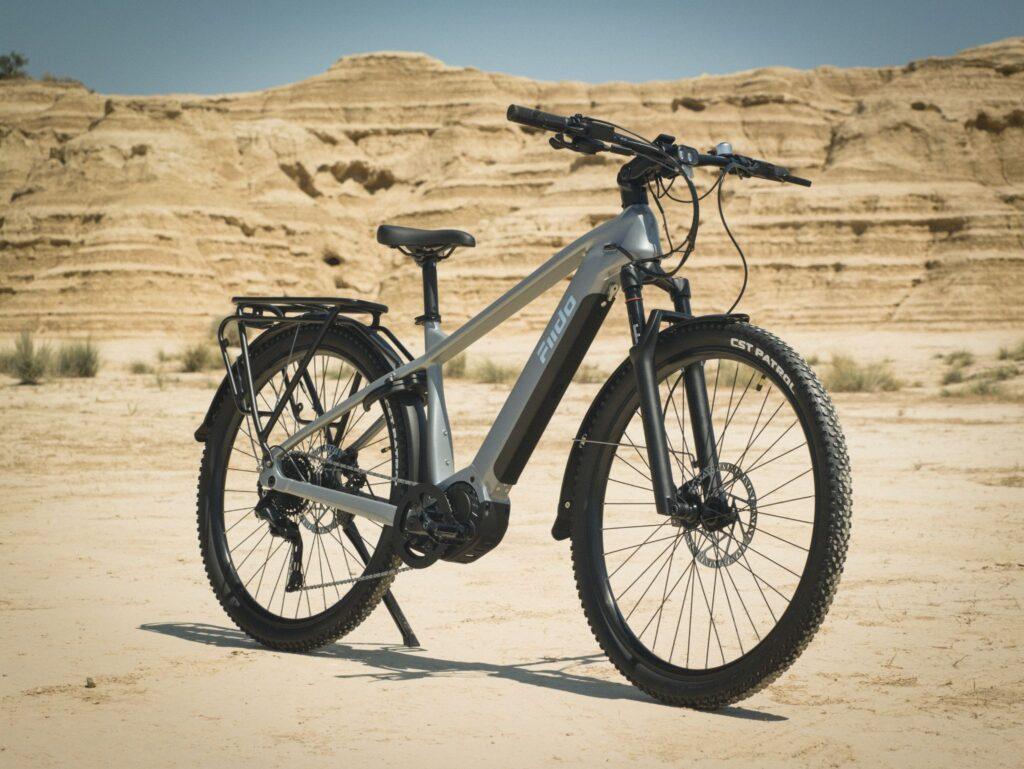
The location of the motor influences how an electric touring bike feels.
A rear-hub motor drives the wheel directly. These systems are relatively straightforward, can deliver strong assistance and are often more affordable than premium mid-drive setups. They can work well for city riding, flatter touring routes and riders who want reliable support without a highly complicated drivetrain.
A mid-drive motor applies power through the bicycle’s gears. This allows the motor to operate more efficiently when the rider selects an appropriate gear, particularly during long climbs or when carrying luggage.
Mid-drive systems generally provide:
- more natural-feeling assistance;
- stronger climbing efficiency;
- better use of the bicycle’s gear range;
- more balanced weight distribution.
However, they may also place more wear on the chain and drivetrain. Replacement and servicing costs should therefore be considered alongside performance.
Neither system is automatically best for everyone.
A rider travelling mainly on flat greenways may be entirely satisfied with a well-tuned hub-drive bike. Someone planning mountain routes and heavily loaded multi-day trips may benefit more from a high-torque mid-drive system.
Tire Size Should Match the Route
Tires strongly influence efficiency, comfort and control.
Narrower trekking tires generally roll more efficiently on paved roads. Moderate-width tires offer a useful balance between road speed and grip on gravel. Fat tires provide stability and flotation on loose surfaces but increase weight and rolling resistance.
For touring, the choice usually falls into three categories:
Road and cycle-path touring
Moderate-width tires are usually the most efficient option. They preserve energy over long paved distances and still provide enough comfort for maintained gravel roads.
Mixed-terrain touring
Wider tires and suspension become more useful when the route includes broken pavement, forest tracks, gravel and uneven paths.
Remote or soft-surface travel
Fat tires can be valuable on loose gravel, sand, mud and rough trails, especially when stability matters more than maximum road efficiency.
Touring riders should avoid choosing the widest tire simply because it looks more capable. More tire can provide more control, but it also requires more energy to accelerate and maintain speed.
Luggage Capacity Changes the Whole Ride
A touring e-bike must carry more than its rider.
Depending on the journey, luggage may include:
- panniers;
- a tent and sleeping equipment;
- food and water;
- tools and spare tubes;
- rain clothing;
- cameras or work equipment;
- chargers or an additional battery.
The frame, rack and wheels must remain stable when this weight is added.
Payload figures should also be interpreted carefully. Some manufacturers publish the maximum combined weight of the rider and cargo, while others publish separate limits for the rack or complete vehicle.
Before loading a bike for a long journey, riders should check:
- the total permitted payload;
- the rear-rack limit;
- how weight should be distributed;
- whether panniers can be fitted without heel interference;
- whether the brakes are suitable for the total loaded weight.
A very large battery is not enough if the bicycle becomes difficult to control when the rack is full.
Comfort Becomes More Important With Every Hour
A riding position that feels acceptable during a 20-minute test ride may become uncomfortable after three hours.
Touring comfort depends on more than the saddle. Important factors include:
- handlebar height and reach;
- frame size;
- saddle adjustment;
- suspension;
- tire pressure;
- grip shape;
- pedal position;
- the ability to change hand and body positions.
A more upright position may reduce pressure on the hands and neck, but a slightly forward position can improve control and efficiency in wind or on climbs.
Correct sizing is especially important. Buyers should compare their height and inseam with the manufacturer’s geometry rather than relying only on a general “medium” or “large” label.
Repairability Should Be Part of the Buying Decision
Long-distance touring can take riders far from the original seller.
Before buying, it is worth checking:
- whether the battery is removable;
- whether replacement batteries are available;
- whether the tires use a commonly available size;
- which brake pads and drivetrain parts are fitted;
- whether local bicycle shops will service the mechanical components;
- how warranty repairs are handled;
- whether proprietary electronics can be diagnosed locally.
For remote touring, carrying basic tools, a tube or repair kit, a pump and essential spare parts remains important even on an electric bike.
The best touring bike is not just one that can travel far. It is one that can be kept moving when something minor goes wrong.
Fiido Nomads: Best for Everyday Touring and Weekend Exploration
The Fiido Nomads is the most conventional all-round touring option in this comparison.
It is designed for riders whose journeys combine city streets, paved cycle routes, country roads and occasional gravel. Rather than specialising in extreme terrain or maximum motor torque, it aims to bridge daily transport and recreational touring.
The Nomads uses a 250W rear-hub motor, a torque sensor and a Shimano nine-speed drivetrain. Its removable battery has a capacity of approximately 418Wh, while Fiido offers an expandable battery structure for riders who require substantially more distance. Fiido states a range of up to approximately 79 kilometres from one battery and up to around 238 kilometres when the optional three-battery arrangement is used under its test conditions.
Its 29-inch wheels and 2.1-inch tires give it a profile closer to a trekking bicycle than a compact fat-tire model. The larger wheels should roll efficiently over paved surfaces while remaining suitable for maintained gravel and uneven roads.
The Nomads also includes hydraulic disc brakes, front suspension and a nine-speed drivetrain. These are useful features for riders who encounter mixed surfaces but do not need the weight and rolling resistance of a full fat-tire setup.
Who Is the Nomads Best For?
The Nomads is a strong match for riders who:
- commute during the week and tour at weekends;
- ride mainly on roads, cycle paths and light gravel;
- want an expandable battery system;
- prefer a conventional trekking-bike shape;
- value range and versatility over extreme off-road capability;
- are buying their first dedicated electric touring bike.
It is particularly appealing to riders who do not want to own separate bikes for commuting and recreational exploration.
With one battery, it remains a practical everyday bike. Additional batteries can be added when longer trips become part of the plan.
What Are the Trade-Offs?
The rear-hub motor is suitable for general touring, but riders regularly climbing steep roads with heavy luggage may prefer the drivetrain efficiency of a mid-drive model.
The Nomads is also less specialised for rough trails than the Titan and less compact for transport than the folding M1 Pro.
Its strength is balance, not extremity.
Fiido Nomads Pro: Best for Climbs and Serious Long-Distance Touring
The Nomads Pro is aimed at riders who want a more performance-focused touring platform.
Its most significant difference is its mid-drive motor. Fiido specifies up to 100Nm of torque, giving the bike considerably more climbing potential than a typical entry-level trekking e-bike. The motor’s position also allows it to work through the bicycle’s gears, which can improve control and efficiency on sustained climbs.
The bike uses 29 × 2.1-inch tires and a 120mm air-suspension fork. This combination is intended to provide efficient rolling on roads while offering more control on rough tracks, broken pavement and mixed-terrain routes.
Fiido offers the Nomads Pro in standard and range-extender configurations. The European product listing advertises approximately 75 kilometres in standard form and up to 225 kilometres with the extender setup under specified testing conditions.
The available medium and large frame sizes also make it better suited to riders who want a more precisely fitted full-size touring bicycle.
Who Is the Nomads Pro Best For?
The Nomads Pro is the strongest choice in this group for riders who:
- expect long or repeated climbs;
- carry luggage over hilly routes;
- plan multi-day road and mixed-terrain trips;
- prefer natural mid-drive assistance;
- want larger wheels and more capable suspension;
- see touring as a primary use rather than an occasional activity.
It is also the logical upgrade for a rider who likes the Nomads concept but wants substantially more torque and a more advanced climbing platform.
What Are the Trade-Offs?
The Nomads Pro is more expensive and mechanically more sophisticated than the standard Nomads.
A powerful mid-drive can also increase chain, cassette and chainring wear, especially when the rider shifts under heavy motor load. Owners should learn to reduce pedal pressure briefly while changing gears and maintain the drivetrain regularly.
Its full-size frame also means it is not the easiest model to transport inside a small car or store in a restricted apartment.
Fiido Titan: Best for Extreme Range, Heavy Loads and Remote Routes
The Fiido Titan approaches touring from a very different direction.
It is not designed primarily as a fast, lightweight road-tourer. It is a heavy-duty fat-tire bike for riders who prioritise load capacity, stability and the ability to continue across difficult surfaces.
The Titan uses 26 × 4.0-inch tires, front suspension, four-piston hydraulic disc brakes and a torque-sensing assistance system. Fiido publishes a load capacity of up to 200 kg.
Its battery strategy is also distinctive.
The standard bike uses a removable main battery, while the optional battery package adds two further batteries mounted on a rear rack. Fiido’s European and UK pages advertise up to approximately 347 kilometres under test conditions with the expanded setup.
Actual touring range will vary considerably with terrain, load, temperature and assistance level. Fat tires and heavy cargo are likely to reduce distance compared with controlled tests.
Even so, the ability to carry multiple batteries is valuable when the route passes through areas where charging opportunities are uncertain.
Why Fat Tires Make Sense on the Titan
The Titan’s 4-inch tires provide a larger contact patch than conventional trekking tires.
This can improve stability and confidence on:
- loose gravel;
- sand;
- muddy tracks;
- forest trails;
- broken rural roads;
- rough routes carrying heavy luggage.
The wide tires can also be run at lower pressures to absorb vibration and improve comfort.
The trade-off is rolling resistance. On smooth pavement, a fat-tire bike generally requires more energy to maintain speed than a lighter trekking bike with narrower tires.
For riders spending nearly all their time on paved roads, the Nomads or Nomads Pro will usually feel more efficient.
For riders travelling beyond maintained cycle routes, the Titan offers more security.
Who Is the Titan Best For?
The Titan is designed for riders who:
- carry heavy camping, fishing or photography equipment;
- ride through remote countryside;
- encounter gravel, mud, sand or forest tracks;
- need substantial load capacity;
- have limited charging opportunities;
- prioritise stability and range over low weight;
- want an e-bike for both touring and practical cargo use.
It is particularly well suited to expedition-style trips where the bike must function as a transport platform rather than simply a bicycle with electric assistance.
What Are the Trade-Offs?
The Titan is heavy. Fiido lists the bike at approximately 37.8 kg with its main battery, before additional batteries, racks and luggage are added.

That makes stairs, train transfers and vehicle loading more difficult. Owners should think carefully about storage and transport before buying.
The wide tires also make it less agile and less energy-efficient on smooth roads than a conventional trekking e-bike.
The Titan is an excellent tool for demanding journeys, but it is more bike than many casual touring riders require.
Fiido M1 Pro: Best for Recreational Touring and Portable Adventures
The Fiido M1 Pro is the most compact and recreationally focused option in this comparison.
It combines a folding frame with 20 × 4.0-inch fat tires, front suspension and a rear shock absorber. This gives it a distinctive role: it can be stored or transported more easily than a full-size touring bike while still providing stability on mixed surfaces.
Fiido’s current global specification lists a 250W motor with 50Nm of torque, a torque sensor, hydraulic disc brakes, seven-speed gearing and a removable battery. The advertised assisted range reaches approximately 88.8 kilometres under the company’s test conditions.
The folding frame makes the M1 Pro particularly relevant to:
- campervan and motorhome owners;
- riders transporting a bike by car;
- people with limited storage;
- holiday riders;
- weekend explorers;
- users combining paved paths with light off-road routes.
It is not a classic long-distance trekking bike, but touring does not always mean crossing a country over several days.
For many riders, touring means travelling somewhere by car or camper, unfolding the bike and exploring the surrounding coast, forest, countryside or town. The M1 Pro fits that pattern well.
Who Is the M1 Pro Best For?
Choose the M1 Pro when:
- foldability is a major requirement;
- most trips are recreational rather than expedition-based;
- the route combines pavement, gravel and easy trails;
- compact storage matters more than maximum efficiency;
- the budget does not extend to a premium mid-drive tourer;
- you want a bike that can accompany another form of travel.
Its full suspension and fat tires can provide comfort on rough paths, while the folding design creates transportation options that full-size models cannot match.
What Are the Trade-Offs?
The smaller wheels and wide tires are less efficient over very long paved distances than the 29-inch trekking setup used by the Nomads models.
The folding frame also prioritises portability rather than the stiffness and luggage integration of a dedicated expedition bike.
For short tours, mixed-terrain day rides and travel from a campervan, these compromises may be entirely reasonable.
For continuous multi-day touring with full panniers, the Nomads Pro or Titan would generally be a more suitable platform.
Fiido Touring E-Bikes Compared
| Model | Best for | Drive approach | Terrain | Battery strategy | Principal advantage | Main trade-off |
| Fiido Nomads | Commuting and weekend touring | Rear-hub motor with torque sensor | Roads, cycle paths and light gravel | One battery with expandable multi-battery option | Best overall balance | Less specialised for steep, heavily loaded climbs |
| Fiido Nomads Pro | Long climbs and multi-day travel | High-torque mid-drive | Roads, hills and mixed routes | Standard or extender configuration | Strong climbing and natural assistance | Higher cost and more drivetrain maintenance |
| Fiido Titan | Remote routes and heavy equipment | Heavy-duty rear-hub platform | Gravel, forest tracks, mud and rough terrain | Main battery plus optional additional batteries | Range, stability and load capacity | High weight and greater rolling resistance |
| Fiido M1 Pro | Recreational and vehicle-based touring | Compact rear-hub folding platform | Urban routes, gravel and light trails | Removable single battery | Folding portability and mixed-terrain comfort | Less efficient for extended road touring |
Published ranges are based on manufacturer tests and should not be interpreted as guaranteed distances. Actual results depend on rider weight, cargo, weather, terrain, tire pressure, speed and assistance level.
Which Fiido Touring E-Bike Should You Choose?
Choose the Nomads if you want one bike for work and weekends
The Nomads is the most balanced option.
It suits riders who spend most of their time on paved routes but occasionally explore gravel paths and countryside roads. Its expandable battery structure also allows touring ambitions to grow without requiring a completely different bicycle.
Choose the Nomads Pro if hills define your routes
The Nomads Pro is the stronger option for sustained climbing, heavy touring luggage and riders who prefer mid-drive assistance.
Its 29-inch wheels, air suspension and high-torque motor make it the most conventional serious touring machine in the group.
Choose the Titan if the route is remote and the luggage is heavy
The Titan is the specialist for difficult terrain, large loads and long gaps between charging points.
It is most useful when rugged capability matters more than easy carrying or fast pavement performance.
Choose the M1 Pro if the bike must travel with you
The M1 Pro is the best choice for campervans, car-based holidays, compact storage and recreational mixed-terrain exploration.
It gives up some long-distance efficiency in exchange for folding convenience and fat-tire stability.
Touring E-Bike Buying Checklist
Before choosing any electric bike for touring, examine how it will perform across the entire journey rather than during a short test ride.
Use this checklist before purchasing:
Route
- Will most riding take place on pavement, gravel or rough trails?
- Are there sustained climbs?
- How far apart are charging opportunities?
- Will the route include trains, ferries, stairs or vehicle transfers?
Range
- What is a realistic loaded range?
- Can the battery be removed for charging?
- Is an extender or spare battery available?
- How much weight does each additional battery add?
Luggage
- Is a rear rack included?
- What is its maximum load?
- Can full-size panniers be fitted?
- Will the bike remain stable with luggage mounted high or at the rear?
Comfort
- Is the frame available in the correct size?
- Can the handlebar and saddle be adjusted?
- Is the riding position sustainable for several hours?
- Does the suspension match the planned terrain?
Maintenance
- Are replacement tires and tubes easy to source?
- What brake pads and drivetrain components are used?
- Is professional service available near home?
- Can basic repairs be completed during a trip?
Storage and Transport
- Can the bike fit through the available doors?
- Does it need to be carried upstairs?
- Can it be lifted onto a vehicle rack?
- Is the rack rated for the weight of the e-bike?
These practical questions often matter more than a small difference in motor power or advertised range.
Final Verdict
There is no universal best touring e-bike because touring does not describe one type of journey.
The Fiido Nomads is the most balanced choice for riders combining commuting with weekend exploration. It offers the shape and efficiency of a traditional trekking bike together with an expandable battery system.
The Nomads Pro is better suited to demanding long-distance riders. Its mid-drive motor, high torque, large wheels and air suspension make it the strongest option for climbs and serious multi-day touring.
The Titan is the heavy-duty explorer. Its fat tires, high load capacity and multi-battery potential are designed for remote routes, difficult surfaces and riders carrying substantial equipment.
The M1 Pro provides a more accessible route into recreational touring. It is particularly useful when folding storage, car transport and mixed-terrain comfort matter more than maximum road efficiency.
Choosing between them begins with an honest assessment of the route.
A rider who stays on paved cycle paths does not necessarily need expedition-level tires and three batteries. A rider travelling through remote terrain should not select a lightweight urban bike simply because it feels easier during a short test ride.
The right touring e-bike is not the model with the largest specification on paper.
It is the one that carries the rider, luggage and expectations through the complete journey—while leaving enough comfort, confidence and energy to enjoy everything between the starting point and the destination.
Check also: