Last Updated on 2 August 2026 by Cycloscope
Buying a compact electric cargo bike should be simple. In practice, it often turns into a long debate between two competing priorities.
Disclosure: Some of our articles contain affiliate links. This comes at no additional cost for you and helps us keep this website up and running. (as Amazon Associates we earn commission from qualifying purchases)
How we write our reviews: most of our reviews are based on first-hand long-term use or short-term test by a member of our team. For some new models or build variations, we rely on our experience with similar models and our team's experience in understanding bike geometry and components.
Do you choose the Tern GSD for its greater passenger and cargo capability, even if it may be more bike than you need for everyday urban trips? Or do you choose the smaller Tern HSD for easier handling and storage, while wondering whether its capacity will still be enough as your family or transport needs grow?
That is why so many buyers become stuck in the Tern GSD versus HSD comparison. Both are premium compact cargo bikes, both are designed to reduce dependence on a car, and both can handle considerably more than a conventional bicycle. Yet each represents a different compromise.
The GSD prioritises maximum family utility. The HSD prioritises compact everyday practicality.
The arrival of the Fiido T3 Max introduces a third approach. Instead of asking riders to choose between substantial carrying ability, very large battery capacity and a space-conscious longtail format, it attempts to bring all three together in one platform.
Why Is the Tern GSD vs HSD Decision So Difficult?
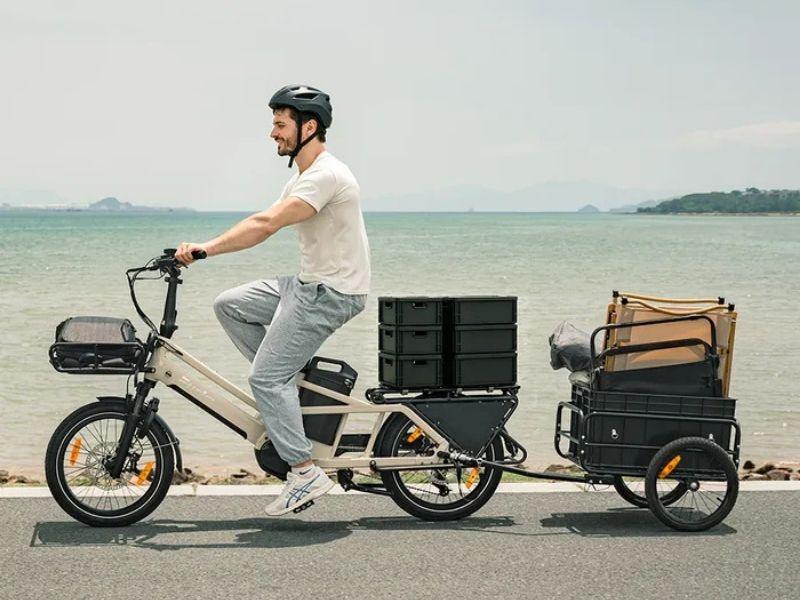
The GSD and HSD overlap in many of the situations that matter most to cargo-bike buyers.
Both can be used for school runs, grocery shopping, commuting and passenger transport. Both use smaller wheels and compact frame designs to make heavy loads easier to manage. Both also offer accessory systems that allow riders to configure the rear of the bike around children, bags or everyday cargo.
The important difference is not simply that one is “better” than the other. It is that they are designed around different levels of utility.
The current Tern GSD platform is intended to function as a serious family transport vehicle. Tern rates the third-generation GSD for a maximum gross vehicle weight of 210 kg and says it can carry two children while remaining approximately as long as a regular bicycle. Its rear rack is rated for up to 100 kg.
The HSD is designed for riders who want many of the benefits of a cargo bike in a smaller package. Tern describes the second-generation HSD as shorter than a regular bicycle, with a maximum gross vehicle weight of 180 kg and an 80 kg rear-rack capacity. It is primarily positioned for carrying one passenger rather than two children at the same time.
This creates a familiar dilemma.
Choose the GSD and you gain more room for children, groceries and future family needs. However, you may also be buying a larger and more expensive cargo system than your current routine requires.
Choose the HSD and you gain a more agile urban bike that is easier to manoeuvre and store. But if you later need to carry two children, heavier equipment or more cargo over longer distances, you may begin to question whether you should have selected the larger platform.
The difficult decision is therefore not really about GSD versus HSD. It is about how much carrying capacity a buyer should sacrifice in exchange for everyday convenience.
The Traditional Compact Cargo-Bike Compromise
Cargo-bike design usually involves several connected trade-offs.
Increasing passenger and cargo capacity often requires a longer rack, a reinforced frame and stronger components. Adding more battery capacity increases weight and takes up frame space. Making a bike shorter and easier to store may reduce the room available for passengers or oversized loads.
That is why buyers looking for a modern Cargo Electric Bike should evaluate the whole platform rather than focusing on a single specification.
Important questions include:
- How many passengers will the bike regularly carry?
- Does the quoted weight rating include the bicycle and rider?
- How much weight can the rear rack support?
- Will the bike be stored in a garage, apartment or shared bicycle room?
- How far will it travel when fully loaded?
- Is the battery intended only for riding, or can it support other activities?
- Are compatible passenger and cargo accessories available?
The answers reveal whether a bike is truly suitable for a household’s routine. A large maximum-weight number is not useful if the passenger area is too small. A compact frame is not enough if the battery regularly runs low during loaded trips.
The Fiido T3 Max Introduces a Third Option
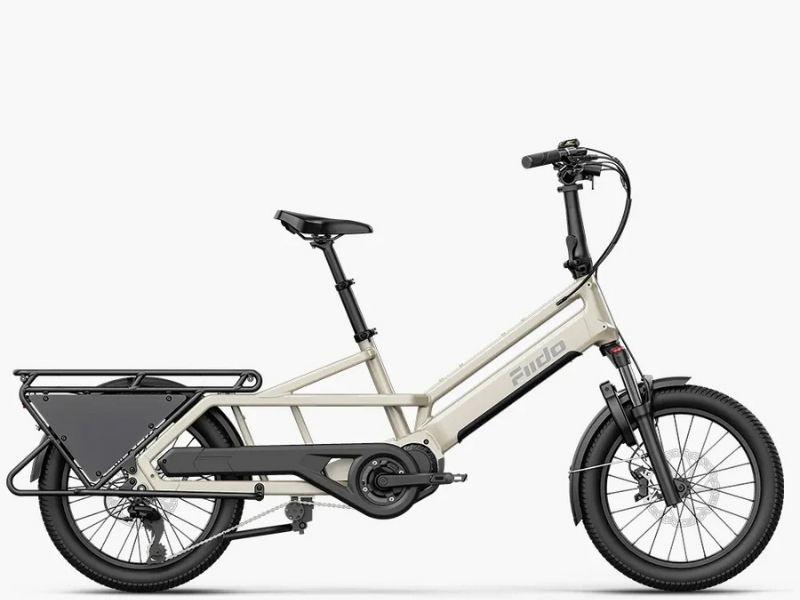
The Fiido T3 Max is a longtail cargo e-bike built around a different proposition: provide heavy-duty carrying capacity and unusually large energy reserves without moving to a bulky front-loading cargo-bike format.
It is not a copy of either Tern model. Nor does it make every GSD or HSD configuration obsolete. Instead, it addresses the central concern behind the comparison: what happens when a rider wants GSD-style family utility but does not want capacity and range to dictate every other part of the ownership experience?
Its answer is based on four principal features:
- a stated payload capacity of up to 200 kg;
- an extended rear platform suitable for passengers and cargo;
- a dual-battery configuration with up to 1,620 Wh;
- an additional battery that can supply up to 800 W to external devices.
These specifications give the T3 Max a distinct position within the longtail category.
Heavy-Duty Capacity for Growing Family Needs
The T3 Max is rated by Fiido for up to 200 kg of payload, divided on the European specification page between a maximum saddle load of 120 kg and an 80 kg rear-rack load. Its extended longtail platform is intended for two-child families, larger grocery runs, outdoor equipment and commercial transport.
This is particularly relevant to buyers considering an HSD but worried about future capacity.
A cargo bike may initially be purchased for transporting one young child. Several years later, the same household may need room for two children, school bags, sports equipment and groceries. Purchasing only for today’s lightest use case can create another expensive buying decision later.
The T3 Max aims to provide enough capacity for those changing requirements from the beginning. Its rear platform is longer than that of the more compact Fiido T3 and is specifically positioned for heavier family and cargo use.
However, weight figures must be compared carefully.
Tern publishes a maximum gross vehicle weight for the GSD and HSD. That figure includes the bike, batteries, rider, accessories, passengers and cargo. Fiido describes the T3 Max figure as payload capacity and separately publishes limits for the saddle and rear rack.
The numbers therefore should not be treated as perfectly interchangeable. Buyers should always check how each manufacturer defines its rating before calculating a real passenger-and-cargo allowance.
A 1,620Wh Battery System Changes the Range Question
Capacity is only useful when the motor and battery can support the load over a practical distance.
The standard T3 Max uses a 648Wh battery. The dual-battery version adds a removable 972Wh battery, producing a combined capacity of 1,620Wh. Fiido advertises up to 200 km of range under favourable test conditions with the dual-battery setup.
Real-world range will naturally be lower when carrying children or heavy cargo, climbing hills, riding quickly or using a high assistance level. Nevertheless, the size of the battery reserve is significant.
For a family, additional capacity can mean completing school runs, shopping trips and weekend rides without charging after every journey. For a delivery rider, it can mean covering more of a working day before returning to a charger. For an outdoor user, it creates more room for route changes, hills and unplanned detours.
Dual-battery cargo bikes are not a completely new idea. Some GSD configurations also support two batteries. What distinguishes the T3 Max is the combination of a total capacity reaching 1,620Wh with a removable extender battery that performs another function when the ride ends.
The Extender Battery Is Also a Portable Power Source
The 972Wh extender battery in the dual-battery T3 Max can be removed from the bike and used with an inverter offering up to 800W of output.
Fiido states that the system can power or charge devices such as phones, cameras, drones, camping lights, portable refrigerators and coffee makers. The single-battery version does not include this mobile power-station capability.
This may sound unrelated to urban family transport, but it substantially expands how the bike can be used.
Consider a family ride that ends at a park or campsite. The same battery that extended the journey can operate lights, keep food cool, recharge photography equipment or provide power for small devices. A mobile professional could use it for tools or work equipment. A delivery rider or market vendor could support electronics away from a fixed outlet.
The battery therefore becomes more than an instrument for reducing range anxiety. It turns part of the bike’s energy system into portable infrastructure.
Of course, power used for appliances is no longer available for the return ride. Riders still need to manage their remaining battery level responsibly. But neither the GSD nor the HSD is principally marketed around this type of external power function, making it one of the clearest distinctions in the T3 Max proposition.
Does the T3 Max Really Offer HSD-Like Practicality?
The claim requires some qualification.
The T3 Max is still a longtail cargo bike with an extended rear rack. It should not be described as being the same size, weight or shape as the HSD without a precise model-to-model dimensional comparison.
The HSD’s strongest advantage remains its extremely compact format. Tern says the current model is shorter than a conventional bicycle, and some versions can be parked vertically or partially folded to reduce their storage footprint.
The T3 Max approaches the space problem differently. It retains a conventional longtail layout rather than using a large front cargo box, and it incorporates foldable handlebars to make indoor storage and movement through narrower spaces more manageable.
That does not make it as small as every HSD configuration. It does mean buyers can obtain a large rear cargo platform without moving to one of the widest and longest forms of family cargo bike.
For riders with extremely limited apartment storage, frequent stair carrying or a small lift, the HSD may remain the more practical choice. For riders who have reasonable ground-level storage and care more about passenger room, range and energy capacity, the T3 Max offers a different balance.
Tern GSD vs HSD vs Fiido T3 Max
| Decision factor | Tern GSD | Tern HSD | Fiido T3 Max |
| Main purpose | Premium heavy-duty family transport | Compact urban cargo and one-passenger use | High-capacity family, outdoor and utility transport |
| Passenger emphasis | Up to two children or one adult | Primarily one passenger | Longtail platform intended for family passenger use |
| Published weight figure | Up to 210 kg maximum gross vehicle weight on Gen 3 | 180 kg maximum gross vehicle weight on Gen 2 | Up to 200 kg stated payload |
| Rear-rack rating | Up to 100 kg on Gen 3 | Up to 80 kg on Gen 2 | Up to 80 kg |
| Battery strategy | Bosch configurations vary by model | Bosch configurations vary by model | 648Wh standard or 1,620Wh dual-battery setup |
| External power output | Not a primary feature | Not a primary feature | Up to 800W through the removable extender battery |
| Storage advantage | Compact relative to its carrying ability | Strongest option for restricted urban storage | Longtail format with foldable handlebars |
| Best suited to | Buyers prioritising a mature premium family ecosystem | Riders prioritising easy handling and minimal footprint | Buyers prioritising cargo capacity, energy reserves and outdoor versatility |
Specifications vary by generation, configuration and sales market. In particular, maximum gross vehicle weight and payload are different measurement concepts and should not be directly equated.
Who Should Still Choose the Tern GSD?
The GSD remains a compelling option for families who value a highly developed cargo ecosystem and are prepared to pay for an established premium platform.
It is particularly suitable for buyers who want:
- a wide range of proven passenger and cargo accessories;
- room for two children;
- Bosch drive-system integration;
- an established dealer and service network;
- a cargo bike designed around long-term daily family use.
Its 210 kg maximum gross vehicle weight and 100 kg rear-rack rating also make the latest generation exceptionally capable.
The T3 Max should not be presented as erasing these advantages. Tern’s accessory ecosystem, service structure and platform maturity may be more important than raw battery capacity to some households.
Who Should Choose the Tern HSD?
The HSD makes the most sense when space and daily ease of use are the highest priorities.
It is a strong fit for:
- one-child households;
- riders sharing the bike with several family members;
- dense urban areas;
- small bicycle rooms and garages;
- users who want cargo capability without the feel of a larger longtail.
The HSD proves that a compact bike can still carry substantial loads. Buyers simply need to be confident that its passenger layout and battery options match their likely future needs.
Who Should Consider the Fiido T3 Max?
The T3 Max is most persuasive for riders who repeatedly find themselves wanting features from both sides of the GSD-HSD debate.
It should be considered by buyers who need:
- space for growing family transport requirements;
- substantial grocery, work or camping loads;
- greater energy reserves for longer loaded rides;
- power for devices away from the electrical grid;
- an extended longtail without moving to a large front-loader;
- one vehicle that can cover school runs, weekend trips and practical work.
Before selecting any ebike, buyers should compare the complete ownership system: passenger capacity, weight definitions, battery replacement cost, local servicing, accessory availability, storage requirements and legal rules for carrying passengers.
The bike with the largest number on its specification sheet is not automatically the right one. The strongest purchase is the one that can perform the household’s real journeys without creating new problems at home.
Final Verdict: Do Buyers Still Have to Choose?
The Tern GSD and HSD remain two of the clearest reference points in the compact cargo-bike market.
The GSD is the more complete heavy-duty family system. The HSD is the neater answer for riders who value urban agility and restricted-space storage. The reason buyers struggle to choose is that both solve one side of the same problem extremely well.
The Fiido T3 Max changes that conversation by offering another balance.
Its 200 kg stated payload, 1,620Wh dual-battery option and 800W portable power output give it capabilities that extend beyond the conventional school-run cargo bike. At the same time, its longtail format and foldable handlebars prevent it from becoming a large front-box vehicle that dominates every storage space.
It will not be the right answer for someone who needs the smallest possible cargo bike. It may also not replace the appeal of Tern’s mature accessory and dealer ecosystem.
But for riders who were considering the GSD because they feared outgrowing the HSD—and considering the HSD because they did not want a cumbersome utility vehicle—the T3 Max offers a credible third path.
It does not make the GSD or HSD irrelevant. It makes the old assumption that buyers must choose between heavy-duty capability and everyday flexibility far less convincing.