

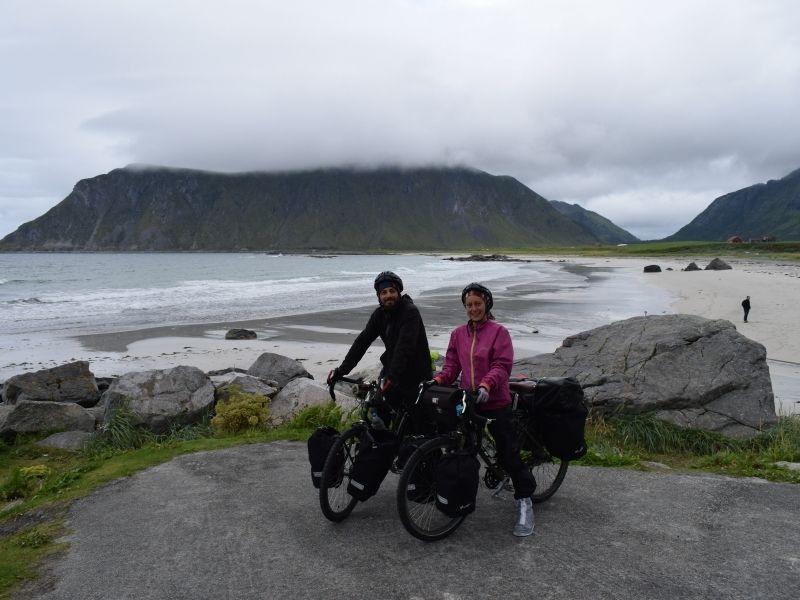
Cycling the Lofoten & Vesterålen Islands by bike: epic ferry crossings, wild camping, tunnel tips, and stunning Arctic scenery. A ride you’ll never forget.
One of the highlights of our Norway trip, alongside the Rallarvegen, was the Lofoten and Vesterålen Islands section. We arrived by ferry from Bodø — an experience we will never forget. It was mid-August, and the weather wasn’t great, but we weren’t expecting 10-meter waves. Before departure, they announced there was a lot of wind and that passengers couldn’t go out on deck.
Shortly after, they opened the ship’s bar and started serving hot dog sandwiches — not the wisest decision, I’d say. The boat was literally flying, crashing down nose-first; a crossing as epic as it was terrifying. The Norwegians on board looked calm — whether from sheer paralysis or because this is perfectly normal for them, we still don’t know. Let us know in the comments if you’ve taken this ferry and what your experience was like!
Disclosure: Some of our articles contain affiliate links. This comes at no additional cost for you and helps us keep this website up and running. (as Amazon Associates we earn commission from qualifying purchases)

Once we finally set foot on dry land, the sea was calmer — but the weather was not. Rain and wind. Naturally, we hadn’t booked anything. Hotels in Norway are extremely expensive, and in the Lofoten Islands, being such a popular tourist destination, we didn’t even want to check the prices. We found a sheltered spot among the rocks near the harbour and set up camp there.
Daniele had actually been to the Lofoten Islands before — 25 years ago, on an interrail trip — and back then there were only fishermen and stockfish, offering accommodation at very low prices. Times have changed quite a bit. The stockfish are still there, but now you can find everything: shops selling mangoes and watermelons, ethnic restaurants, and pricey hotels. But the beauty of nature, thankfully, is still very much there.
Kvalvika Beach & the Ryten Trail
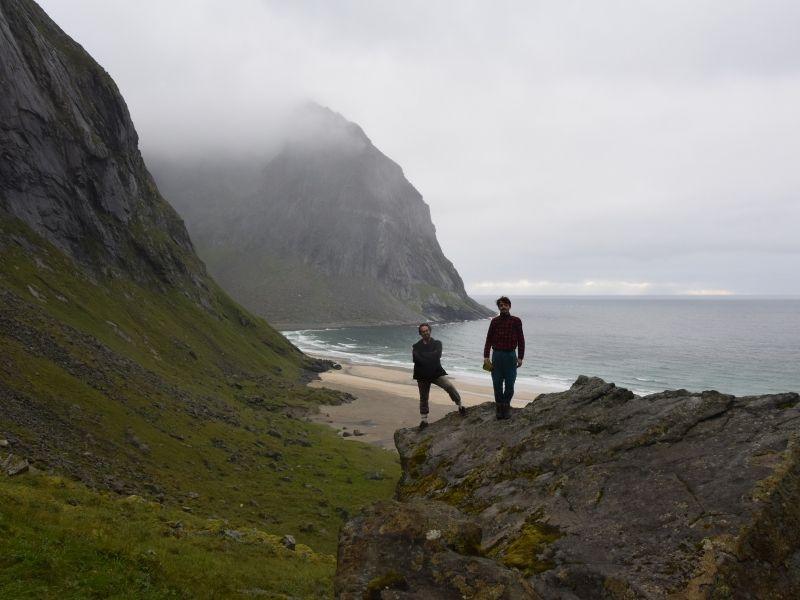
The hike to Kvalvika Beach via the Ryten peak is one of the most iconic in all of Lofoten. The trail rewards you with a bird’s-eye view of a pristine white-sand beach framed by dramatic mountain walls — one of those sights that makes you question whether you’re still in Norway or somewhere in the tropics. The only difference: the water temperature will quickly remind you. Of course, the weather was miserable, incredibly windy, and rain coming down horizontally, but that’s also the charm of Norway.
The Lofoten archipelago is famous for its rock and ice climbing spots. You can check out all the available trails here. If you’re not experienced, I recommend going with a guide on the more difficult trails. The weather can change very quickly, especially in summer, and make the trails wet and slippery.
Ride to Fiskebol
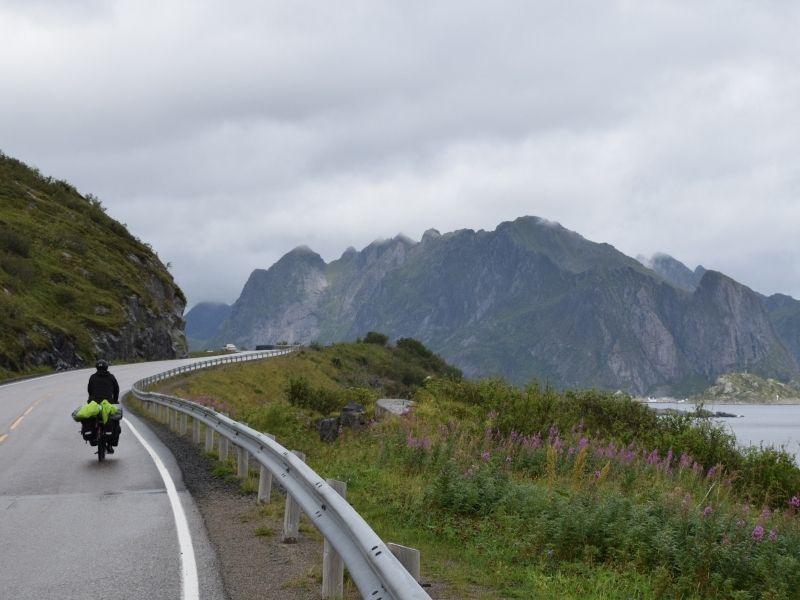
From our camp, we headed west toward Fiskebol, a small village and ferry terminal connecting the islands. The riding here is quintessential Lofoten — narrow roads hugging the coastline, tunnels carved through mountains, and views that force you to stop every few kilometres. Expect rolling terrain with some punchy climbs, but nothing too technical.
The E10, which is the main highway dominating the Lofoten Islands, has tunnels, and some of them are off-limits to bikes. Secondary roads are highly recommended for cyclists: they’re much nicer and safer, if sometimes a little longer. We checked this website to know about the tunnel situation on our route and make a plan.
Ride to Sortland
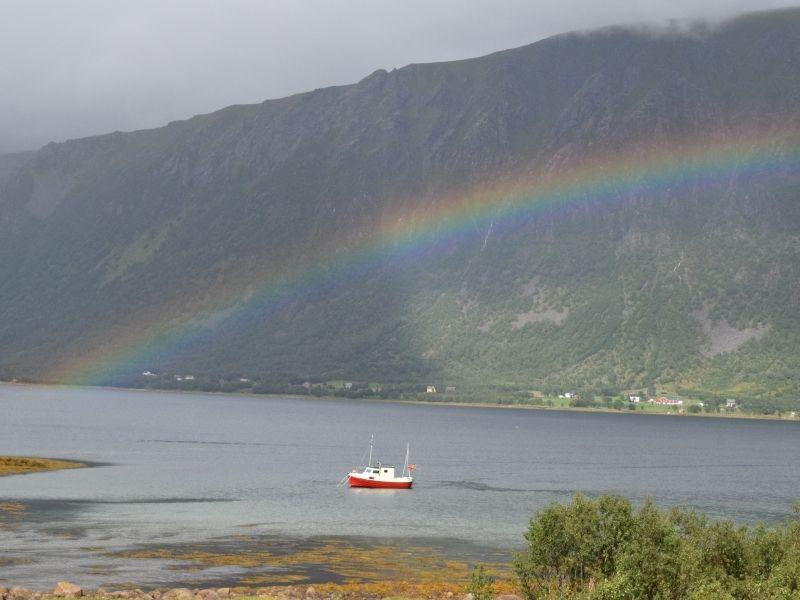
Crossing into Vesterålen, we made our way to Sortland, known as the “Blue City” for its brightly painted buildings. The landscape starts to feel slightly less dramatic than Lofoten, but broader and wilder. A good place to restock supplies and rest before pushing further north.
Ride to Noss
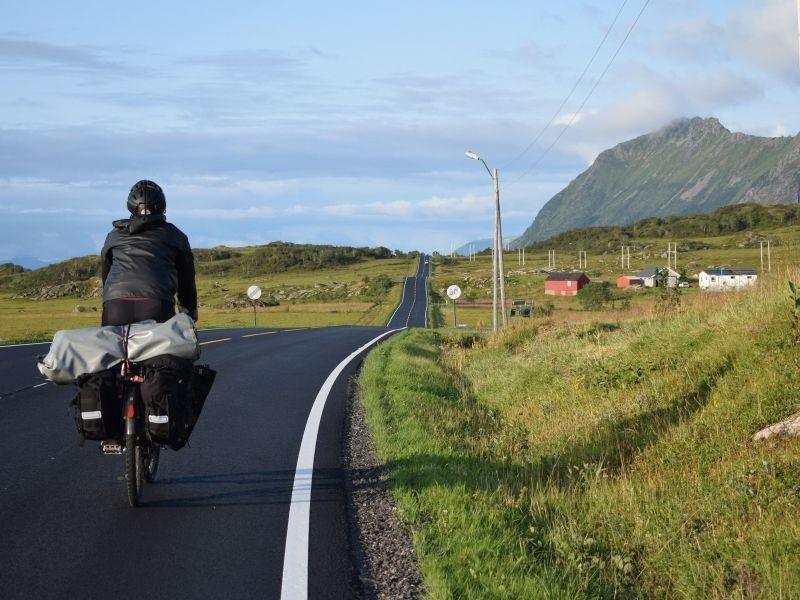
Continuing north, the road to Noss (Nyksund area) takes you through some of the most remote and untouched scenery of the entire trip. Traffic thins out, the sky feels bigger, and the silence is something you notice. Wild camping opportunities are plentiful.
Ride to Andenes
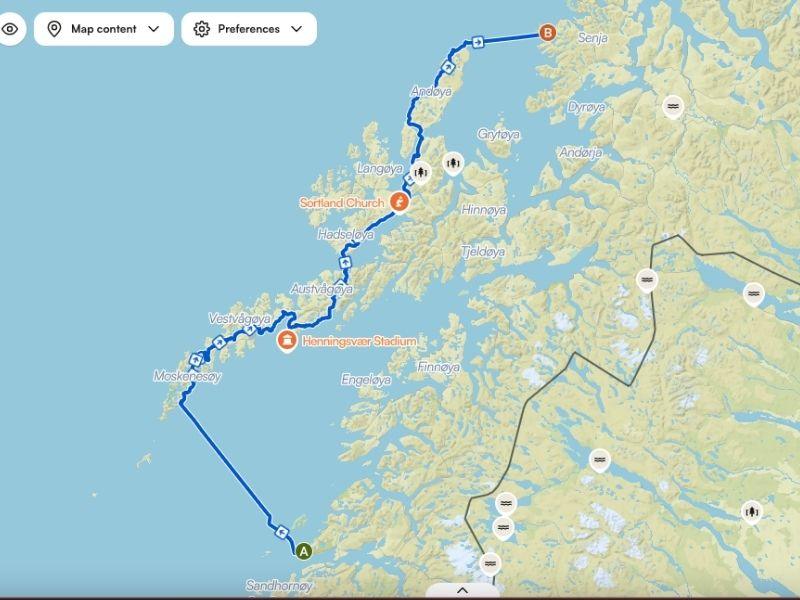
Andenes, at the northern tip of Andøya island, is a destination in its own right. It’s one of the best places in Norway for whale watching, and the lighthouse at the edge of town feels like the end of the world in the best possible way. If the weather clears, the light here is extraordinary — golden and low even in August.
Ferry to Gryllefjord
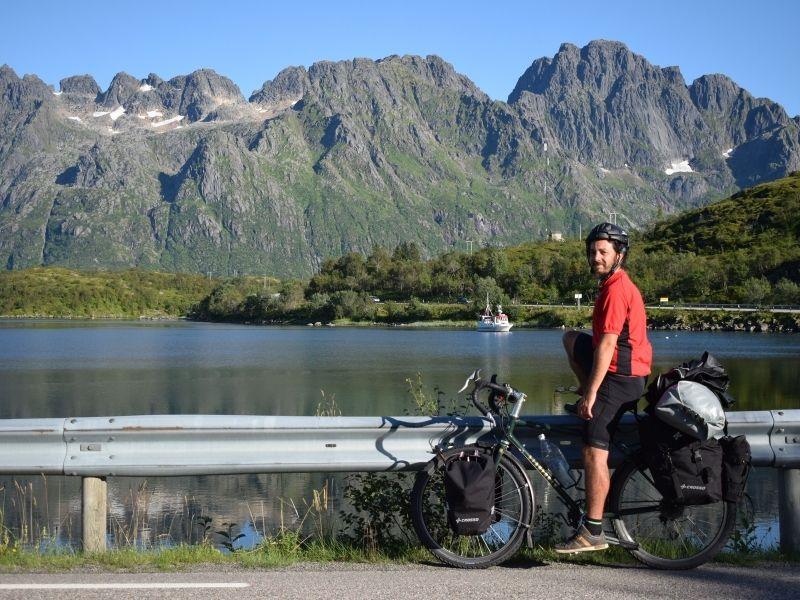
From Andenes, a seasonal ferry crosses to Gryllefjord on the island of Senja — a crossing far calmer than our Bodø adventure, thankfully. This is the gateway to Senja, often called “Norway in miniature” for its dramatic combination of fjords, mountains, and coast. A perfect ending — or new beginning — to an unforgettable leg of the journey.