

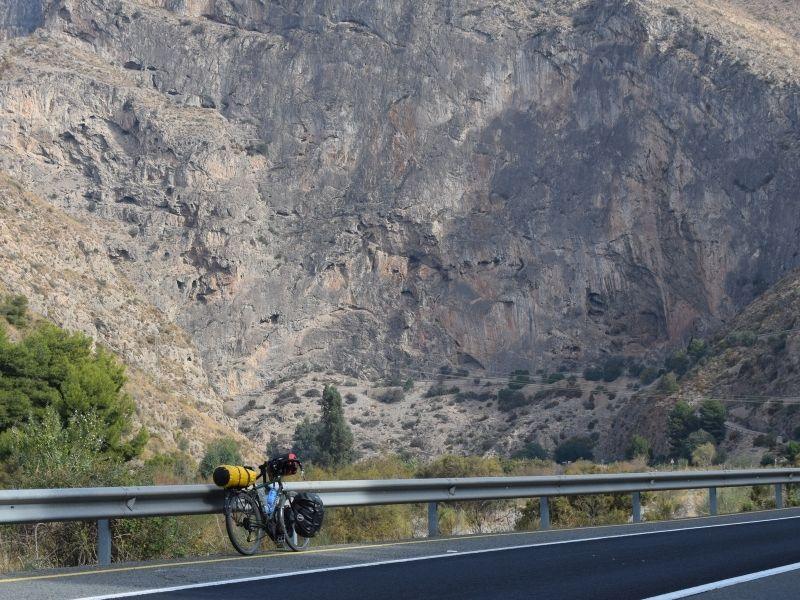
Plan your bikepacking trip across Spain — Pyrenees, northern routes, Andalusia, EuroVelo trails, train travel with bikes, camping tips, and daily costs.
Spain is one of Europe’s most compelling bikepacking destinations — and it remains underrated compared to the Alps or Scandinavia. Dramatic in its contrasts, it offers Atlantic rainforests and Mediterranean coastlines, wild Sierra mountains and vast sunflower plains, Roman roads and medieval pilgrim routes. From the snow-brushed passes of the Pyrenees to the white villages of Andalusia, there is a route here for every kind of rider.
Cycloscope contributors have covered thousands of kilometres across the country on loaded bikes, and this guide pulls it all together: the best routes, the EuroVelo network through Spain, how to travel by train or plane with your bike, camping realities, and an honest look at costs.
The Big Three: Cycloscope’s Bikepacking Routes in Spain
1. The Pyrenees Coast to Coast — 888 km
Disclosure: Some of our articles contain affiliate links. This comes at no additional cost for you and helps us keep this website up and running. (as Amazon Associates we earn commission from qualifying purchases)
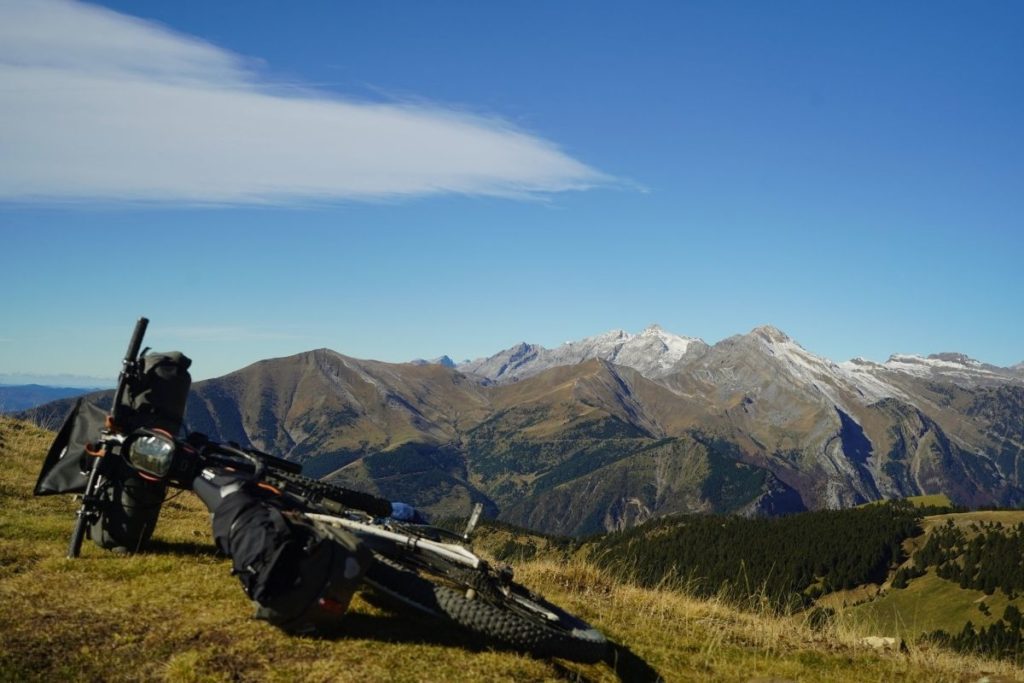
If remoteness and raw mountain riding are what you’re after, this is it. Our full Pyrenees bikepacking guide covers the 888 km route from Sainte-Marie-la-Mer on the Mediterranean all the way to La Arena on the Atlantic — 14 days through some of the most spectacular and least-visited mountain terrain in western Europe.
Around 40% of the route is paved, 50% dirt road, and 10% singletrack. Expect over 2,000 metres of climbing on multiple days. The rewards — solitude, rifugio sunrises, panoramas with no one else in sight — are proportional to the effort.
Not a ride for the faint-hearted, but Peter Baumeister, who completed it in November, describes it as one of the most fulfilling experiences of his life.
Key facts: 888 km / 552 miles · 14 days · difficulty 90/100 on climb
Best season: June–September. November is possible but requires experience in winter mountain conditions.
What to carry: Warm sleeping bag, down jacket, rain pants, and helmet. Always bring a tent, even if planning to use refugios — they may be closed or simply not there.
2. Cycling Northern Spain — Miranda to Miño, 662 km
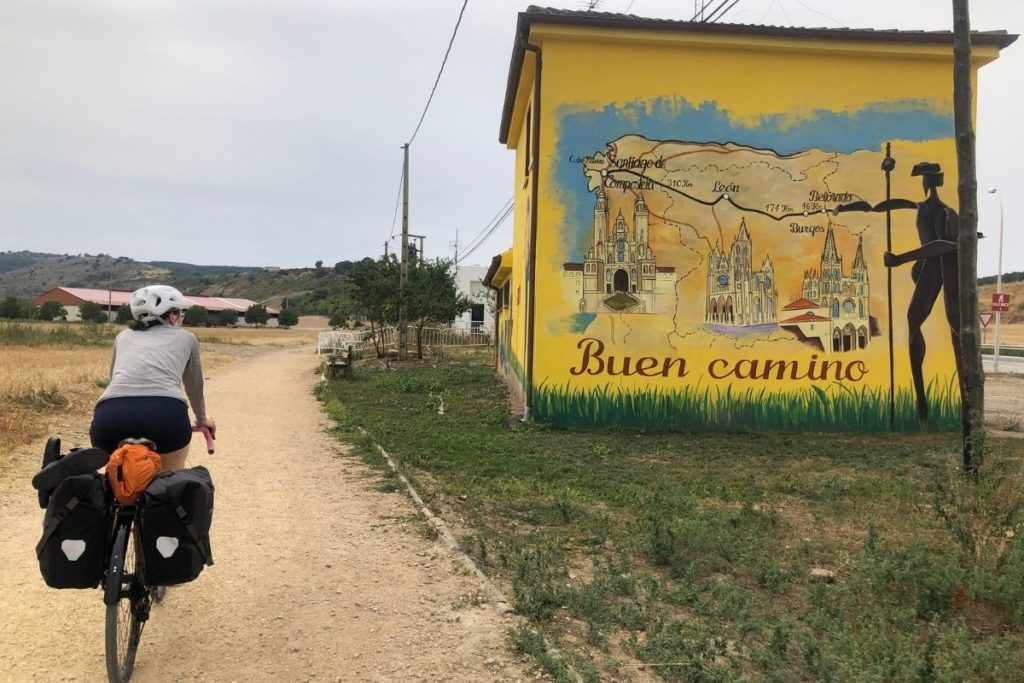
A route that weaves the legendary Camino Francés with wilder, self-made tracks through Castile & León and Galicia. Read the full guide to cycling Northern Spain for the complete GPX and first-hand account from C + Me Adventures, who rode it in September on gravel bikes.
The mix is roughly 55% road and 45% gravel. The experience shifts dramatically as you ride: the bone-dry plateau of Castile, the Gothic grandeur of Burgos and León, the Roman wall of Lugo (the best-preserved in the world), and then the green, rainy, seafood-rich landscapes of Galicia. The descent from Serra dos Ancares — nearly 20 km, hitting 45 mph — is one of those descents you’ll be talking about for years.
Key facts: 662 km / 411 miles · 12 days · 55% road / 45% gravel
Best season: March–June or late August–October. Summer heat in Castile can exceed 40°C.
What to carry: Minimum 40 mm tyres (the gravel is rocky and fast). A gravel bike is ideal. Gas canisters are hard to find — consider a petrol stove instead.
3. Cycling Andalusia and the Southern Coast — 1,684 km
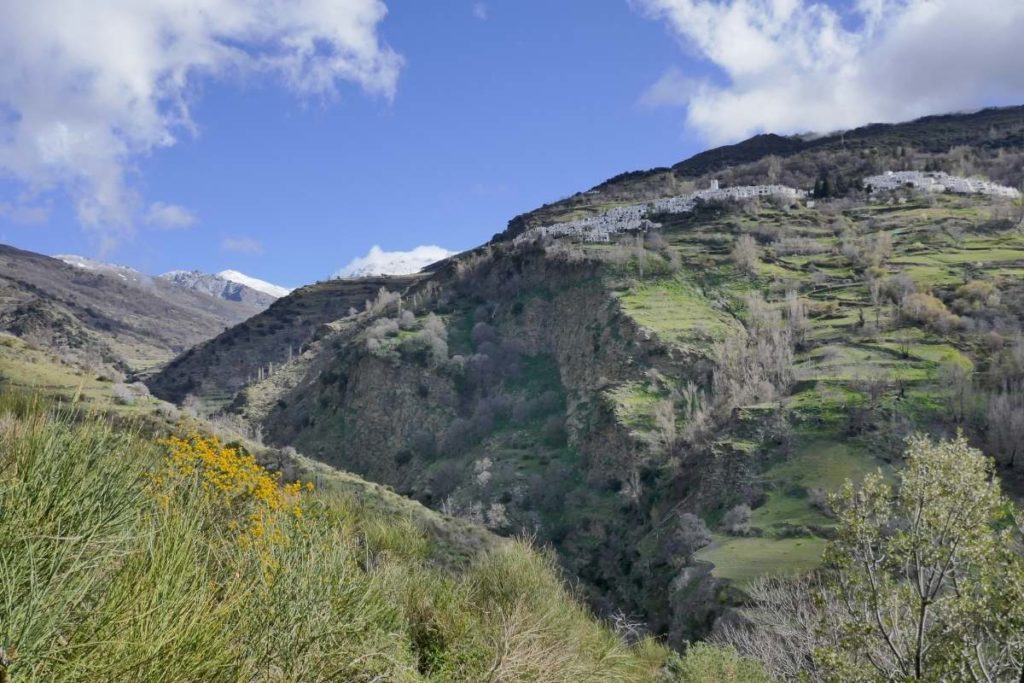
The longest and most varied of the three, this bikepacking route through Andalusia runs 1,684 km from Valencia to Córdoba, written up by Alessandra Croce, who rode it solo over 80 days. Around 90% is on paved secondary roads or dedicated cycleways, making it the most accessible of the three for riders less comfortable with extended off-road.
The route hits a staggering list of highlights: the Parc Natural de l’Albufera, the white fishing towns of the Costa Blanca, Cartagena, Cabo de Gata, the Desierto de Tabernas, Granada, the Caminito del Rey, Ronda, Tarifa, the Parque Nacional de Doñana, Sevilla, and Córdoba. Culturally and gastronomically, this is Spain at its richest.
Key facts: 1,684 km / 1,046 miles · 80 days (or a shorter segment) · 90% paved
Best season: March–May or September–November. Andalusian summers are brutally hot.
Tip: Sunscreen is an essential, not optional. Electrolytes and vitamin supplements will get you through the long, hot days.
EuroVelo Routes Through Spain
Spain is crossed by four EuroVelo routes, which are useful either as standalone itineraries or as a framework for linking segments of your own tour.
EuroVelo 1 – Atlantic Coast Route runs the entire western edge of Europe from Norway to Portugal, passing through the Basque Country and down the Atlantic coast of the Iberian Peninsula. In Spain, it traces the Camino del Norte — the coastal variant of the Camino de Santiago — through Irún, San Sebastián, Bilbao, Santander, and on through Galicia toward Portugal. For bikepackers, this is a superb way to link a Pyrenees crossing into a longer journey south.
EuroVelo 3 – Pilgrims’ Route is largely identical to the Camino Francés through Spain: entering at the Pyrenees near Roncesvalles and rolling through Pamplona, Logroño, Burgos, and León to Santiago de Compostela. The Camino sections are exceptionally well-marked and make excellent bikepacking — as C + Me Adventures discovered while riding the Northern Spain route.
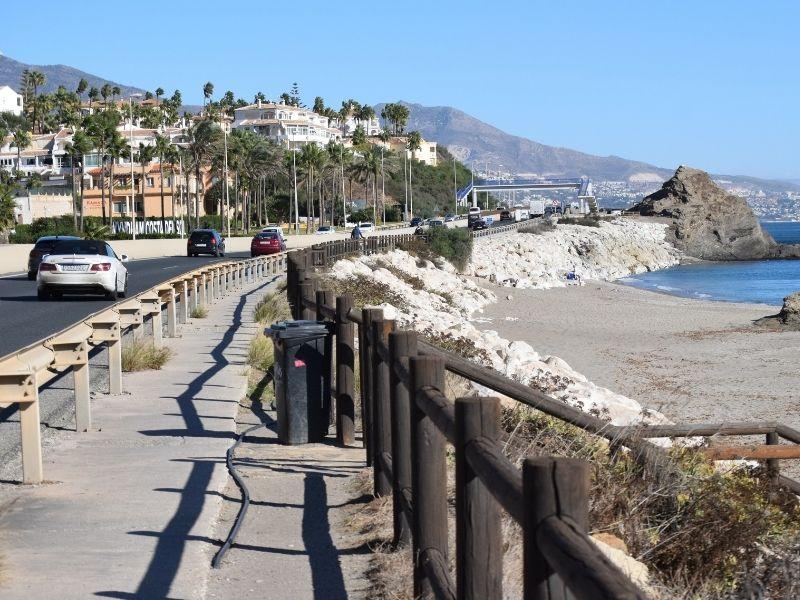
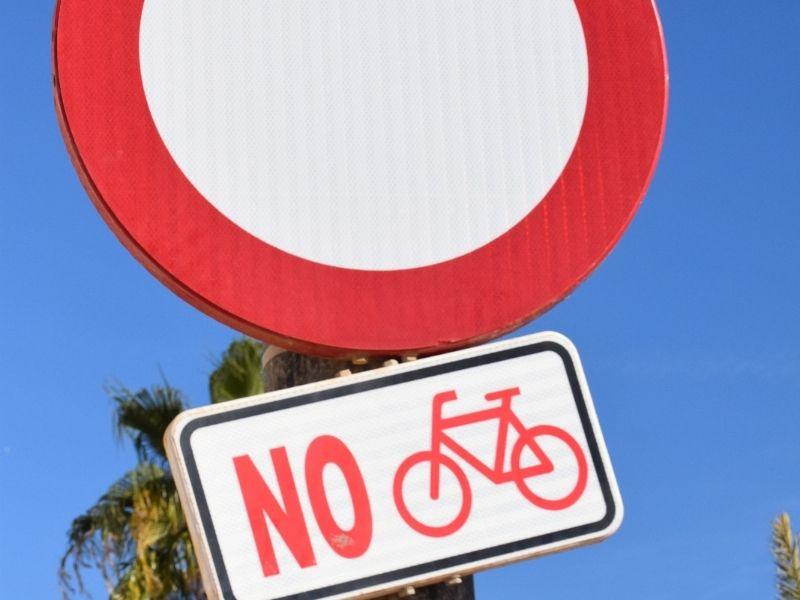
EuroVelo 8 – Mediterranean Sun Route follows the Mediterranean coastline from Cádiz all the way to Athens, tracing Spain’s eastern coast through Valencia, Castellón, and Barcelona before crossing into France. The Andalusia bikepacking route naturally overlaps with sections of this corridor near Valencia and the Costa Blanca. Honestly, we didn’t like this part at all, especially in the south, where the cycle path practically doesn’t exist (see the photo above), the traffic is heavy even though we cycled in November, I can’t imagine it in summer.
EuroVelo 13 – Iron Curtain Trail enters Spain only briefly through the Pyrenees foothills, but connects riders on longer trans-European journeys.
For up-to-date EuroVelo maps and GPX downloads, the official resource is the EuroVelo website.
Other Long-Distance Cycling Trails in Spain
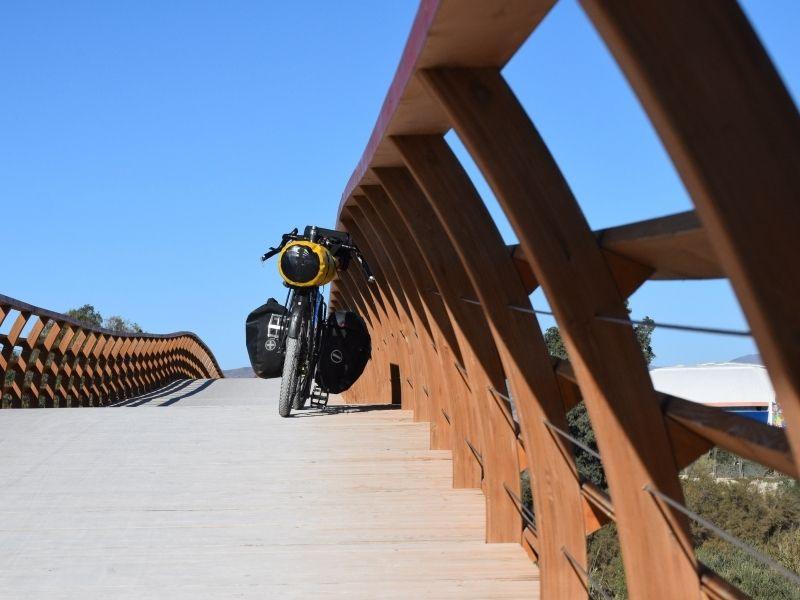
Beyond EuroVelo, Spain has a growing network of dedicated cycling infrastructure.
Vías Verdes (Greenways): Spain’s most extensive cycling infrastructure. These are disused railway lines converted into paved or hard-packed gravel paths — currently over 3,400 km and expanding. They are flat, scenic, car-free, and connect rural areas that are otherwise hard to reach without busy roads. Popular sections include the Vía Verde del Aceite in Andalusia (120 km through olive groves), Vía Verde del Plazaola in Navarra, and the Vía Verde de la Sierra in Cádiz. The network is searchable at viasverdes.com.
Camino de Santiago routes: Every route to Santiago works beautifully as a bike tour. The Camino Francés is the most famous and well-served. The Camino del Norte (coastal) and Camino Portugués are less crowded and arguably more scenic. Bike-specific albergues are increasingly common.
La Ruta de la Plata: A north-south route along the old Roman silver road, running from Sevilla through Extremadura to Salamanca and Gijón — about 800 km. Less trafficked than the Camino Francés and full of Roman ruins, medieval bridges, and stork nests.
Taking Your Bike on Trains in Spain
Renfe, Spain’s national rail operator, is essential for bikepackers wanting to start or end a route without a long slog through cities, or to skip an unpleasant section.
The rules vary significantly by train type, which trips up many riders:
Cercanías and Media Distancia trains allow bikes on board without dismantling, usually at no or minimal charge. These regional services cover most of the bikepacking territory — connecting cities like Miranda de Ebro, Burgos, León, Valencia, and Sevilla into the network.
Long-distance AVE (high-speed) trains generally require you to box your bike, which is impractical while touring. Some routes have a bike reservation option, but it is limited and often fully booked. Avoid relying on AVE for bike transport unless you plan well in advance and are prepared to box up.
Practical tips:
- Always check the Renfe website or app on the day — rules and availability change seasonally.
- Book bike spaces in advance on any service that requires them; spaces are limited.
- For detailed train-and-bike information, the Spanish resource conalforjas.com is thorough and regularly updated.
- Arrive early at the platform; bike spaces fill up quickly, and conductors may refuse boarding.
Buses: Intercity coaches (ALSA and others) generally do not accept assembled bikes. Some will take boxed bikes as luggage for a fee, but this is inconsistent. Bus travel with bikes is best avoided unless there’s no alternative.
Flying into Spain: Major gateway airports — Madrid, Barcelona, Málaga, Bilbao, Valencia — all receive international flights. Airlines typically charge €30–€80 for a bike as sports equipment, boxed to standard cycling box dimensions (check with your carrier). Ryanair and Vueling are commonly used by European bikepackers. Málaga makes an excellent entry point for a route through Andalusia; Bilbao or San Sebastián for the north, and the Pyrenees.
Camping in Spain
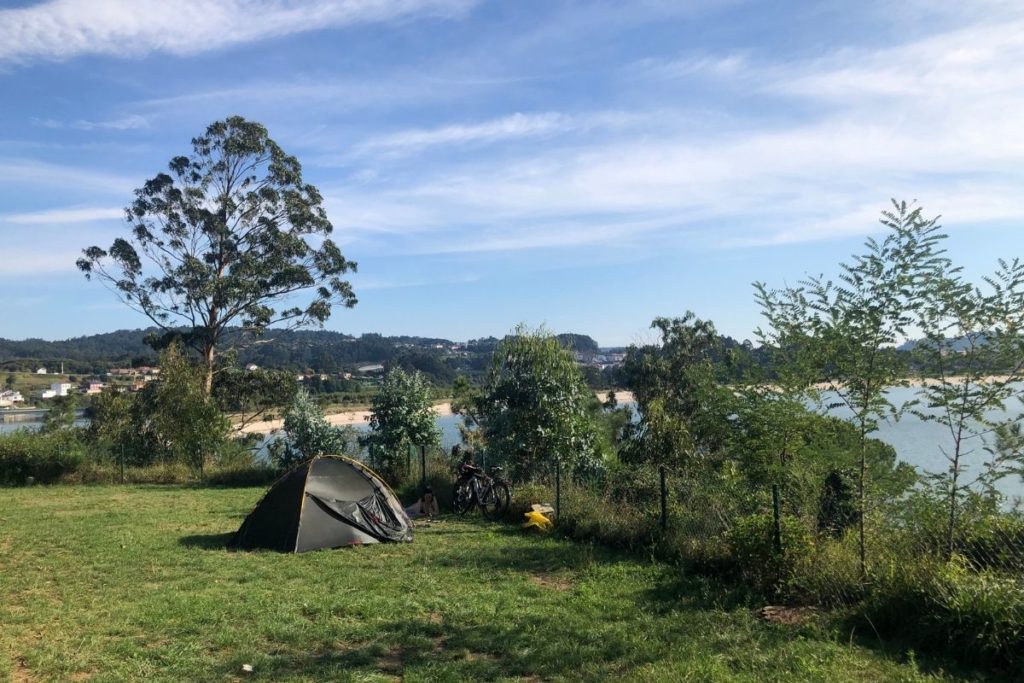
Wild camping (acampada libre) is technically illegal across most of Spain, with narrow exceptions in some regions for very short stops — typically one night in an isolated spot, arriving after sunset and leaving sunrise before, and not in national parks or protected areas. In practice, enforcement in truly remote areas is rare, and many bikepackers do camp wild in the Sierra and mountain zones without issue.
Campsites (campings): Well distributed across popular routes. Expect to pay €8–€15 per night per person, including a pitch. Most have showers, basic cooking facilities, and sometimes a bar. In peak summer months (July–August), especially on the coast and near the Camino, book ahead or arrive early.
Albergues: The pilgrim hostel network along the Camino routes is excellent and cheap — typically €10–€18 per night in a dorm. Many have specific cycling sections and secure bike storage. Outside Camino corridors, standard youth hostels (HI network) exist in major cities.
Locals and asking: Spain’s hospitality culture means that asking for a quiet corner of a field or a bar car park often works. C + Me Adventures spent one night in a local bar’s car park on the Northern Spain route — a simple question to the owner was all it took.
Refugios in the mountains: Along the Pyrenees route, unmanned refugios provide basic shelter (bunk platforms, sometimes a wood stove). They are free or donation-based, but critically, they may be locked, burned, collapsed, or simply not where the map says. Always carry a tent in the mountains.
What Does Bikepacking Spain Cost?
Spain is mid-range by European standards — cheaper than France, Germany, or Scandinavia, broadly similar to Portugal and Italy. Here’s a realistic daily budget breakdown:
Budget/camping/cooking most meals: €25–€40/day
- Campsite or wild: €0–€12
- Supermarket food (breakfast, lunch, dinner): €8–€15
- Coffee, snack, the occasional beer: €5–€10
Mid-range / mix of albergues and restaurants: €45–€70/day
- Albergue or cheap hostel: €12–€20
- Menu del día (set lunch with wine): €10–€14 — extraordinary value and enough calories to fuel a full day’s riding
- Dinner or extra snacks: €10–€20
Comfortable / occasional guesthouse: €70–€110/day
Region-specific notes:
- Galicia and the Basque Country are slightly pricier than Castile or Andalusia.
- Coastal areas in July–August can be 30–50% more expensive than the same towns in May or October.
- The menú del día is one of bikepacking’s great pleasures in Spain — a three-course lunch with bread and wine for €10–€14, available in almost every village bar between 1 and 3 pm. Make it your main meal.
- Vegetarians and vegans should be aware that plant-based options are limited outside cities. Self-catering is the most reliable approach; produce is cheap and excellent.
Best Time to Go Bikepacking in Spain
Spain’s size means timing depends heavily on where you’re riding:
Spring (March–May): Ideal for Andalusia and the south — warm, green, avoiding the punishing summer heat. Northern Spain and the Pyrenees may still have snow on high passes until late May.
Early summer (June): Sweet spot for northern routes and the Pyrenees. Days are long, mountain passes are open, and crowds haven’t peaked.
Summer (July–August): Fine for the Atlantic coast and Galicia (though rain is always possible). Avoid Castile, Andalusia, and the interior unless you enjoy 40°C+. Camino albergues and coastal campsites are extremely busy.
Autumn (September–October): Perhaps the best overall season. The heat has eased, the harvest produces excellent local food and wine, and the trails are quiet. The Pyrenees window closes in late October.
Winter: The deep south (Cádiz, Almería, Huelva) is rideable and mild. Everything above 1,000 m should be treated as a serious mountain environment.
Bikepacking Spain: Practical Tips
Water: Drinking fountains (fuentes) are common in villages across Spain, but not all are potable. Look for signs reading agua potable, or ask a local. Carry at least 2 litres in hot or remote sections. In the Pyrenees and mountain areas, springs are abundant and generally safe — a filter is still worth carrying.
Food: The menú del día is your best friend. Supermarkets (Mercadona, Lidl, and Dia are the most common) are easy to find in any town and have good produce sections. Note that many close from 2–5 pm and are closed on Sundays.
Navigation: For the Camino sections, waymarking is so thorough you barely need a GPS. For everything else — Galician back roads, Pyrenean passes, Andalusian tracks — Komoot with offline maps and a handlebar mount is essential. The Andalusia contributor specifically credits Komoot as irreplaceable for planning.
Tyres: A minimum of 40 mm is strongly recommended for any route with significant gravel. The gravel in northern Spain and the Pyrenees is dry, rocky, and fast — it rewards wider rubber.
Bike shops: Concentrated in cities. Carry spare brake pads, cables, a chain, and the tools to use them. Don’t count on finding a bike shop in a small town.
Phone signal: Generally excellent across Spain, including rural areas. Roaming within the EU is free for European SIM cards.
Safety: Spain scores very high for cycling safety — traffic is generally respectful of cyclists, and crime is not a significant concern on rural routes. Dogs can be a nuisance in rural Galicia; a loud voice usually works.
Where to Go Next
Spain is a natural gateway to longer European cycling adventures. From the Pyrenees, you can continue east into France along the Mediterranean coast, or west to connect with Portugal and head toward Lisbon. The Atlantic coast links seamlessly with the EuroVelo 1 network running north through France to the Channel.
From southern Spain, ferries from Tarifa and Algeciras connect to Morocco — an entirely different kind of bikepacking awaits across the Strait of Gibraltar.
Whatever direction you head, Spain will stay with you: the smell of orange blossom on a night descent, the silence of a Castilian plateau at dawn, a cold Albariño in a Galician port after 100 hard kilometres. It has a way of doing that.
All three Cycloscope Spain routes include downloadable GPX tracks via Komoot. Click through to each article for maps, more detailed gear notes, and first-hand accounts from the riders who did them.
Related routes on Cycloscope: