
Last Updated on 19 January 2026 by Cycloscope
The best ultralight 2-man tents under 200$, affordable bike camping tents for hiking & cycling adventures
Compare 9 cheap 2-person lightweight tents for backpacking, bikepacking & cycle touring
The world of lightweight tents is becoming bigger every day, along with the well-established brands producing backpacking, cycle touring, bikepacking, and ultralight tents in general, many new brands come out into the market every year, sometimes with innovative products, sometimes with reliable, cheap camping tents that won’t break your bank and still keep you warm and dry, ready for your next day hike or whatever.
Disclosure: Some of our articles contain affiliate links. This comes at no additional cost for you and helps us keep this website up and running. (as Amazon Associates we earn commission from qualifying purchases)
How we compile our gear guides: during the almost 10 years of cycloscope.net our team personally tested dozens of similar pieces of gear. For what we can't test personally, we involve other people in the cycling community to give their feedback and opinion about gear they have used. Our decade-long experience in bicycle touring enables us to find the key cons and pros of every product we mention.
In this blog post, we’ll talk about cheap 2-person tents under $200, so don’t expect the quality of a Hilleberg here. But the tents on this list are all well-suited for bicycle touring, long hikes, and adventurous backpacking trips; they are almost all fully freestanding, meaning they can be used on almost any terrain or surface.
So let’s dive into the comparison of our favorite budget, lightweight 2-person tents for 2026.
The best-value 2-man backpacking tents in a nutshell
- Naturehike Mongar
- ALPS Mountaineering Zephyr 2
- Hyke & Byke Zion 2P
- Mountainsmith Bear
- Hyke & Byke Yosemite
- Naturehike Cloud-Up 4 Season
- Eureka Tetragon
- Featherstone Outdoor UL 2North Face Stormbreak 2
- Marmot Crane Creek
9 Best BUDGET Lightweight 2-Person Tents Under 200$
1. Naturehike Mongar
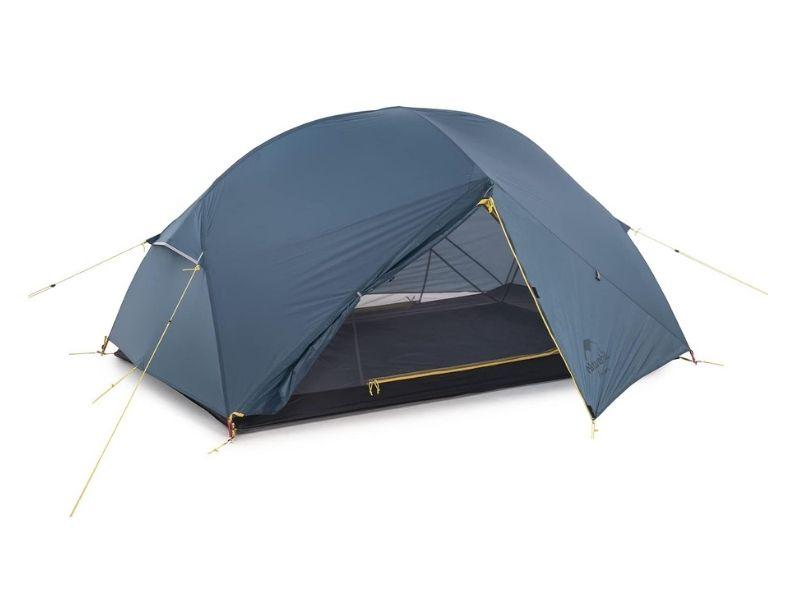
A very nice budget tent is the Naturehike Mongar, an ultra-lightweight and compact 3-season/2-person backpacking tent. If you’re familiar with the MSR Hubba Hubba, then you’ll notice the similarities. Naturehike was an MSR factory in China in the past.
Weighing only 4 lbs for the whole set and with a packing size of just 19.6 x 5.9 x 5.9 inches, the Mongar is a great bang for the buck, priced under 170$, way below the MSR price tag.
The rainfly and floor are made from 20D polyester with a 4000mm waterproof index, a silicon-coated fabric with fully taped seams. The Mongar can keep you dry during tropical downpours if set up properly. The poles look durable, made of 7001 aluminum.
This freestanding tent resists strong winds thanks to its stable design. The ventilation is good with two air vents on the flysheet to prevent condensation.
The two doors, one on each side, provide easy access and storage. Both doors indeed have a decent-sized vestibule that can be fully or partially closed.
Mongar freestanding tent – Lightweight fabric and a rational structure result in a properly packed weight. Balance the stability, comfort, and weight. More available space, enough for 2 people. Good ventilation, 2 air vents on the two sides of the fly, prevents condensation from building up.
Another quite useful feature is the overhead gear loft, where you can store a torch or a battery-powered fan.
Specs
| Colors | Gray / Purple / Light Green |
| Waterproof Index | PU 4000mm |
| Sun-Protection | UV 50+ |
| Materials | 20D silicone-coated ripstop nylon / Poles: 7001 Aluminum |
| Features | 2 entrances / 2 vestibules |
| Packed Size | 19.7*5.9″ (50*15cm) |
| Weight | 4.6lbs/2.1kg (all included) |
Check Also:
> Naturehike Tents REVIEW! 11 Tents Compared for 2026
2. ALPS Mountaineering Zephyr 2-Person Tent
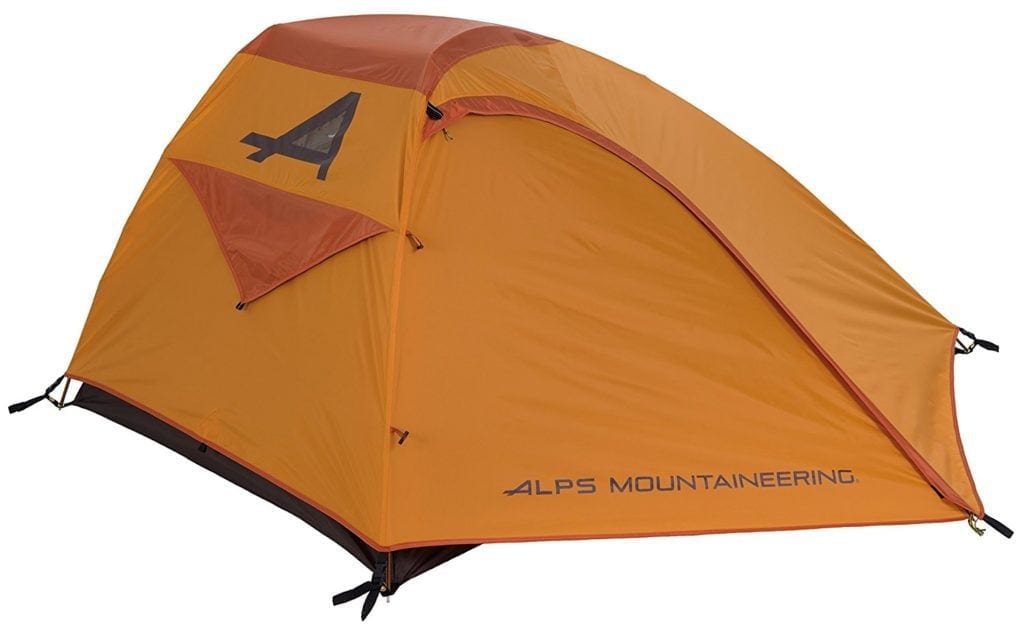
Alps Mountaineering is a well-established Missouri-based brand that has been manufacturing high-quality gear since 1993. Their Zephyr has been tested by many backpackers, hikers, and outdoor enthusiasts.
The geometry is different from the classic two-person lightweight tents, and it looks designed to withstand strong winds. Walls made from mesh improve air circulation, preventing condensation from collecting inside the tent.
The tent is quite wide, accommodating two people comfortably, but for those who need even more space, a 3-person version is available.
Specs
3. Hyke & Byke Zion 2P Two-Person Lightweight Tent and Footprint
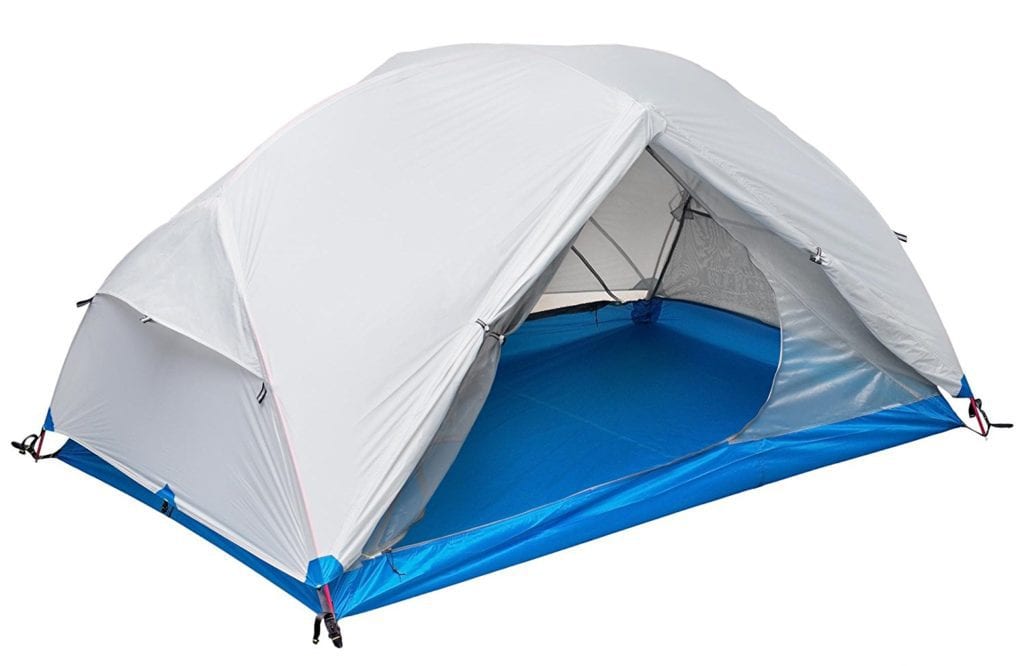
Hyke & Bike is an outdoor brand based in the US. There is a lot of information about them on their website, which makes them easier to trust. They are also involved in charity and microloans and seem to have an ethical corporate profile.
The Zion is a pretty standard freestanding two-person tent with a single pole. It comes with a footprint, inner walls made entirely of mesh fabric, and a waterproofing rating of 3000mm. The stakes’ quality looks higher than the standards for this price; a stake presser is included.
Specs
4. Mountainsmith Bear 2 Person 3 Season Tent
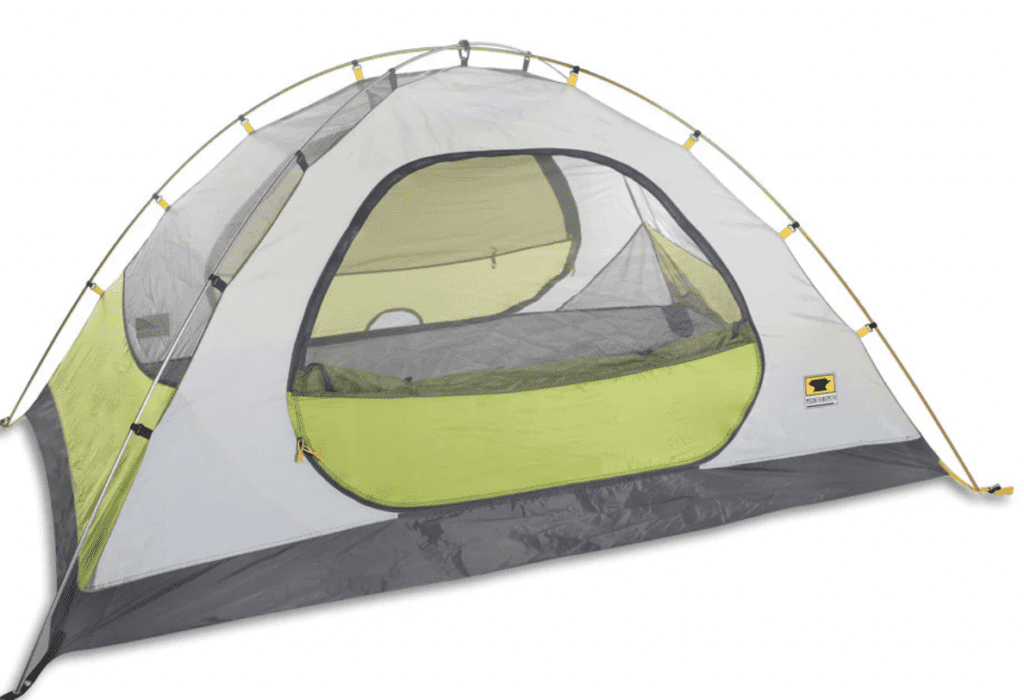
Another great budget tent from Mountainsmith, the Morrison has been around for a while, proving its worth on hundreds of thousands of outdoor adventures.
This 2-man tent was awarded “2011 & 2012 Backpacker Magazine Gear Guide – KILLER DEAL!” and “2011 Outside Magazine – KILLER VALUE!”, which should say something about the tent’s quality.
The inner tent is not entirely made of mesh fabric like many other lightweight tents, which probably makes it less breathable but also warmer.
It’s totally freestanding, features 2 doors for easy access, and has a tall bathtub floor construction that keeps water out, even if you find yourself in a puddle.
A simple, cheap, and well-tested lightweight backpacking tent that ticks all the boxes.
Specs
| Packaged Weight | 5 lbs 8 oz (With Footprint) |
|---|---|
| Packed Size | 18″ x 7.5″ (46 x 19 cm) |
| Inner Dimensions | 92″ x 56″ x 43″ (234 x 143 x 110 cm) |
| Number of Doors | 2 doors |
| Floor Material | 190td Poly PU5000MM F/R |
| Material | 185T Breathable Poly F/R |
| Rainfly Fabric | 185t Poly PU2000MM F/R |
| Design Type | Freestanding |
5. Hyke & Byke Yosemite Two Person Backpacking Tent with Footprint
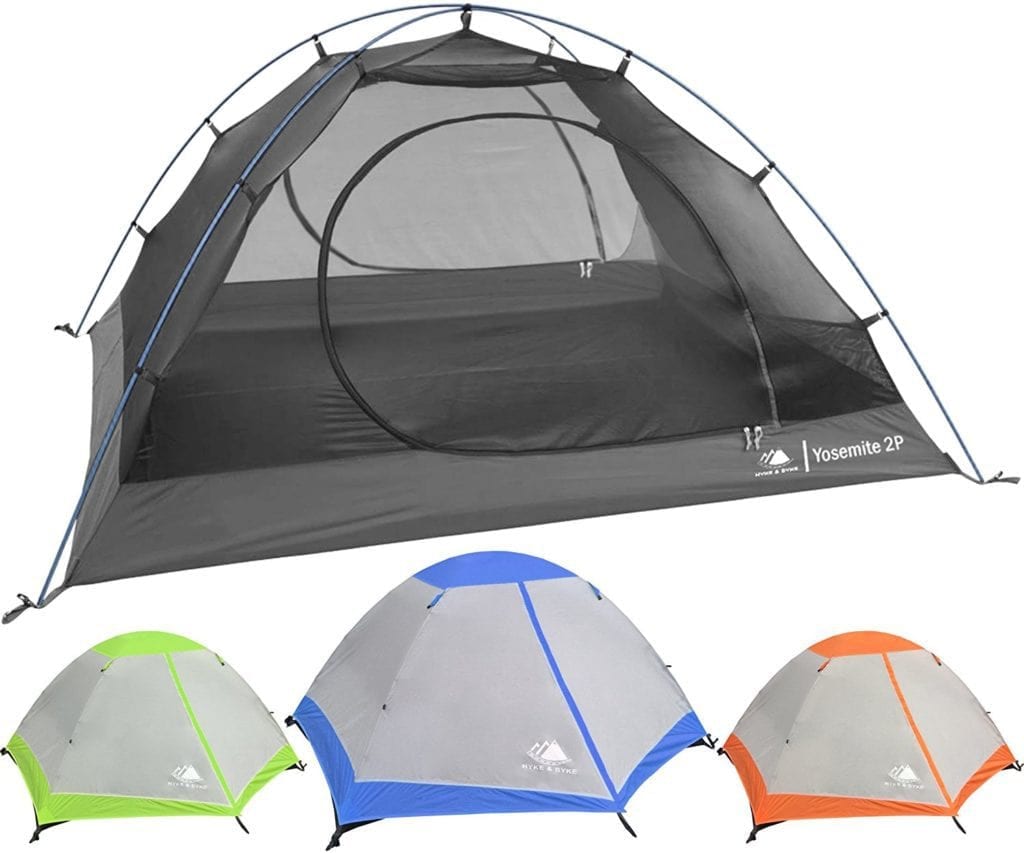
We already mentioned that we like Hyke & Byke’s philosophy and their approach to making affordable, high-quality outdoor products. This Yosemite model is indeed one of the cheapest lightweight tents on the market.
It still has a high-rated waterproof floor (PU5000), an included footprint, and two large doors and standard vestibules. It weighs slightly more than the Zion 2P but has an inner length of 223cm, which makes it a great choice for the big guys.
Specs
6. Naturehike Cloud-Up 4 Season – EDITOR’S PICK!
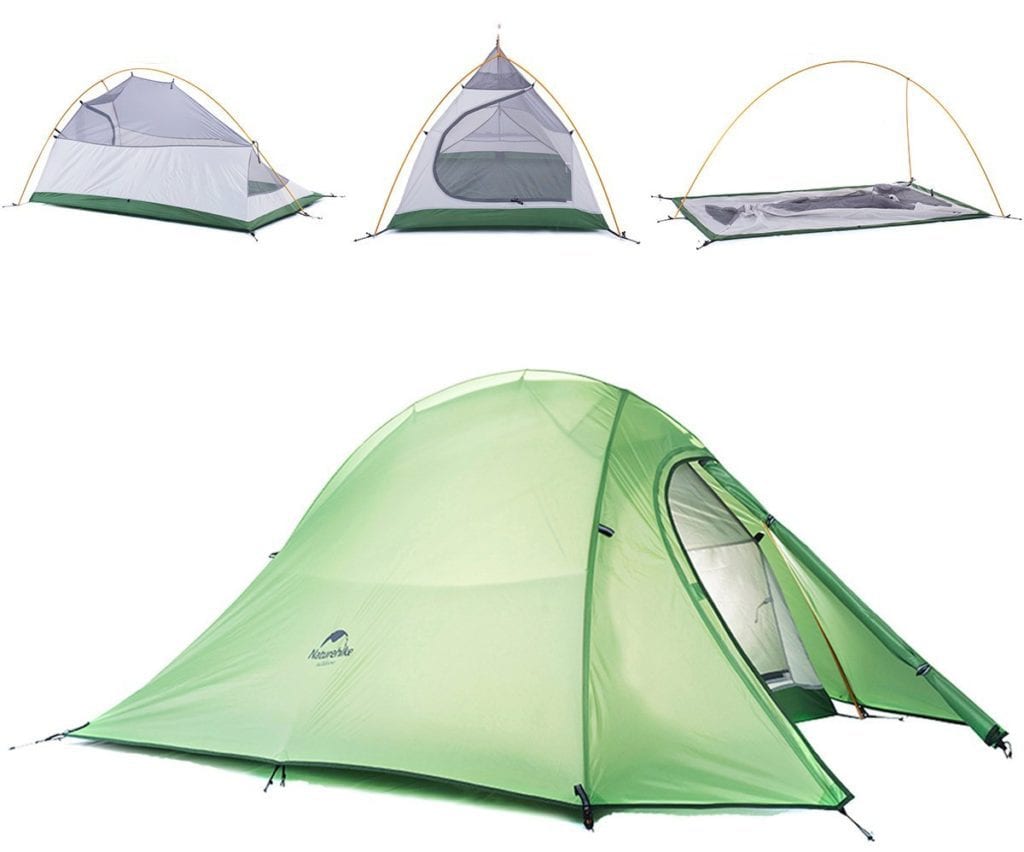
Our four-season pick, the NatureHike Cloud Up, is what we got for ourselves, and we’ll be using it on our next Nordic trip. NatureHike is a Chinese brand quickly making its way in the outdoor world thanks to the high quality of its products, its low price tags, and its great customer service.
The inner igloo is made of high-density mesh and nylon fabric, ensuring breathability, and the fly comes in two options: with a skirt for real winter use and without.
The two-person version of this tent is not 100% freestanding, requiring two stakes for tensioning; the 3-person version, though, is fully freestanding (that’s what we’ve got). Overall, this is one of the best budget backpacking tents, and certainly the best Naturehike tent so far.
Specs
6. Eureka Tetragon
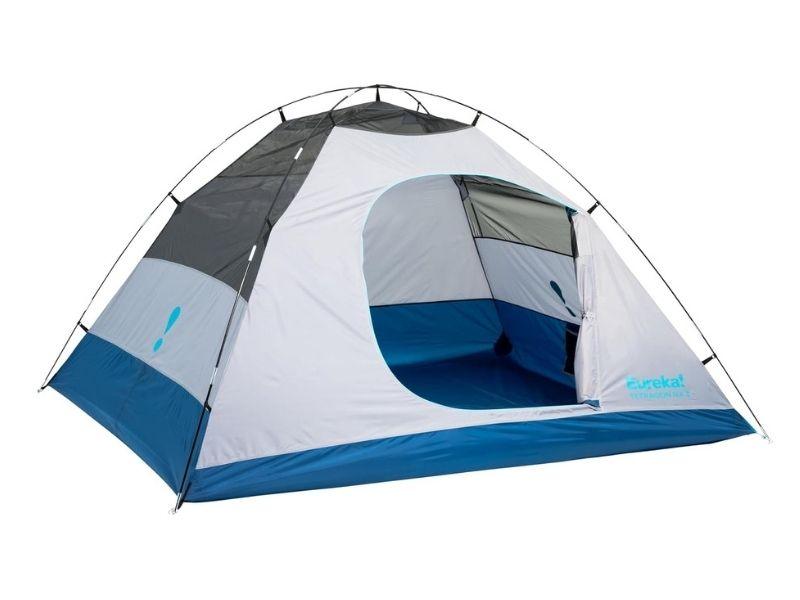
Eureka! Outdoors might not be the most famous outdoor brand, but this company from Dubbo, New South Wales, has been around since 1885! Their story spans the World Wars, when they made tents for military camps, and their gear has undertaken many tough expeditions.
The Tetragon is a very spacious 2-person lightweight tent, fully freestanding and perfectly suited for bike touring, backpacking, and even ultralight bikepacking. If 140cm of width is not enough for you, there’s also a very light 3-person version.
Specs
7. Featherstone Outdoor UL 2-Person Ultralight Bikepacking Tent for 3-Season
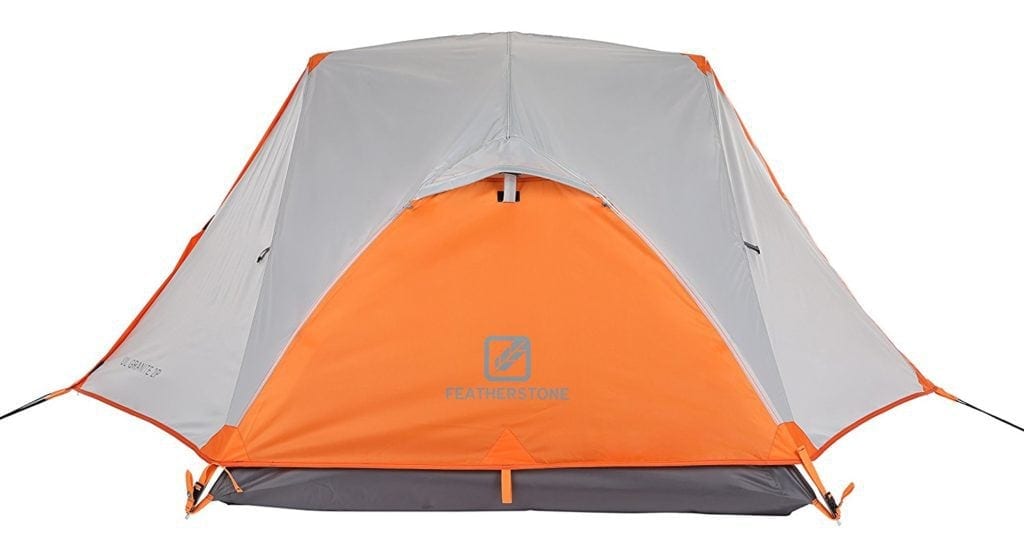
There’s not much information about Featherston Outdoor on the web, so I can’t say whether it’s a trustworthy brand, but this good-looking tent seems pretty decent and comes at an incredibly low price.
With a trail weight of nearly 3.8 lbs, it seems a truly lightweight option for a two-person backpacking trip or bicycle touring expedition. Two Vestibules provide ample Storage Space for your camping gear. Two wide doors add convenient entry and exit.
The inner igloo walls are completely made out of mesh fabric, which should ensure high breathability. It comes with a footprint included. Like all other tents here, it’s fully freestanding, requiring stakes only for the vestibules.
Specs
8. North Face Stormbreak 2
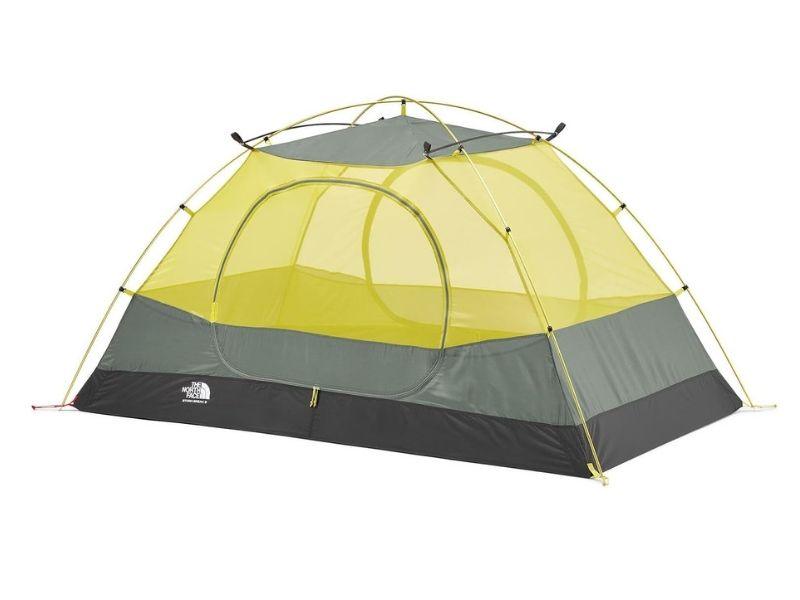
Who doesn’t know The North Face? The California-based trademark is not only the most famous outdoor brand in the world but also among the most renowned clothing companies.
The Stormbreak 2 is a basic, lightweight hiking tent with two wide vestibules and a simple, effective design. Unfortunately, The North Face only provides information about the floor area, without indicating its width and length.
As far as I can tell, most of The North Face’s products are made in China, at least those with lower price tags like the Stormbreak 2 tent.
Specs
9. Marmot Crane Creek Backpacking and Camping Tent
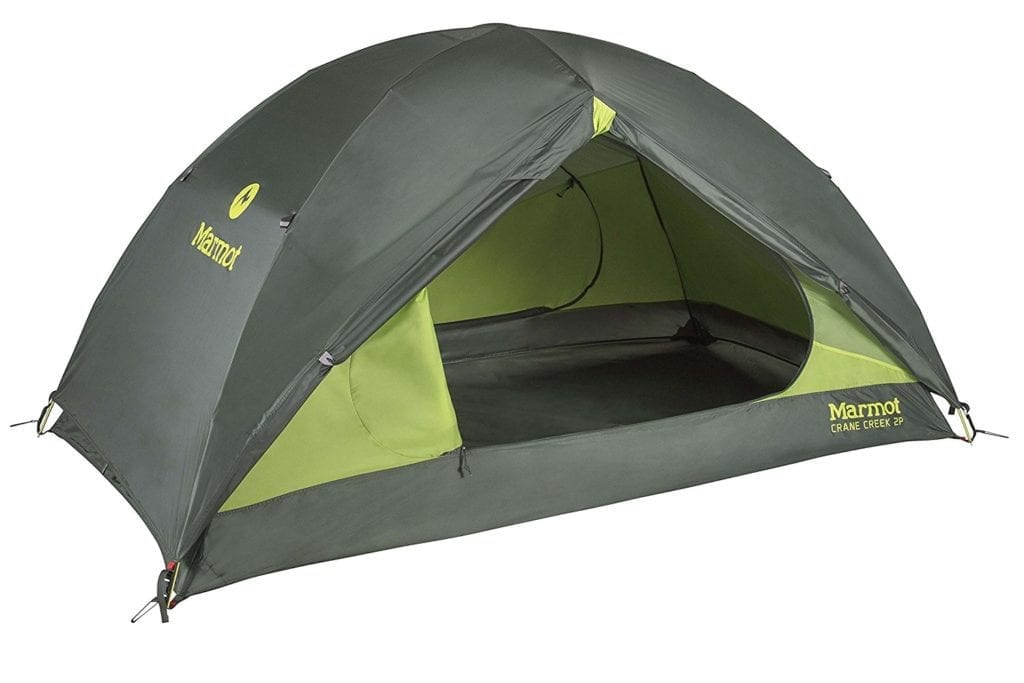
Another well-established and popular outdoor brand, Marmot products make up to 95 percent of their sales, which are made in China, Vietnam, Bangladesh, El Salvador, Costa Rica, and Honduras, with only the high-end mountaineering products made locally to ensure top quality in extreme-weather environments.
The Marmot Crane Creek is a sturdy, well-built, essential 2-person lightweight tent well suited for bike touring, hiking, and backpacking. It’s not the lightest nor the biggest on this list, but if brand authority still matters, it should be a reliable option. A 3-person version is also available.
Specs
2-Man Lightweight Tent Buying Guide
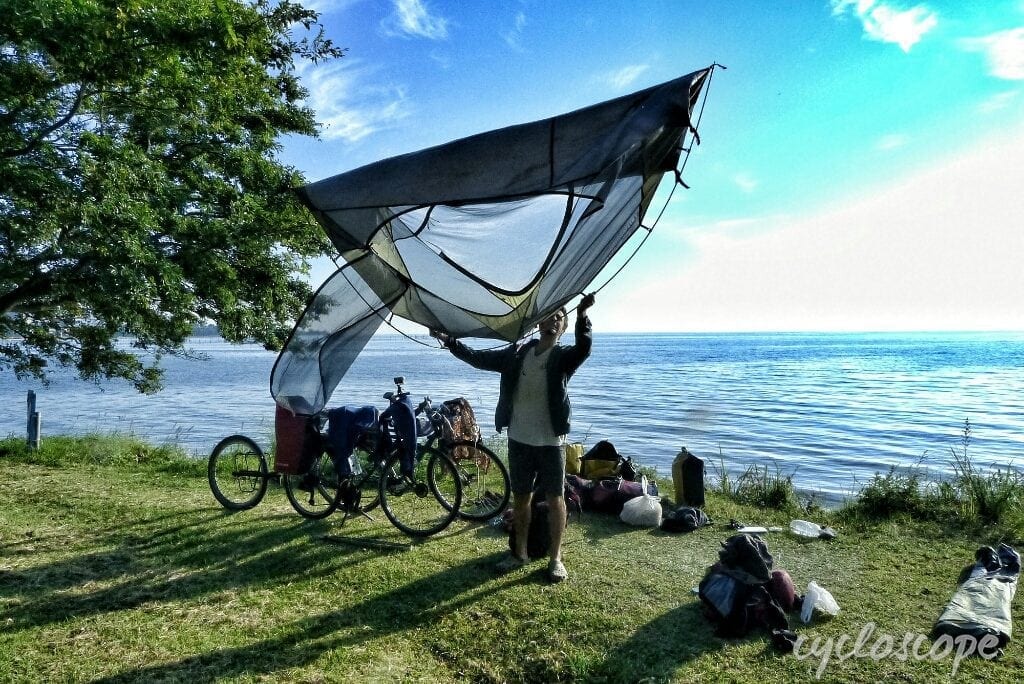
Use: Bike Touring/bikepacking Tents VS Backpacking Tents
Although it may seem a specious distinction, the needs of a bike tourer are a bit different from those of a backpacker or hiker. First of all, the bicycle traveler usually has more gear, spares, tools etcetera add up to the bulk. So, an ideal bike touring tent should have large vestibules for gear storage.
Besides that, when bike touring, you use your tent more. Your tent will be your home for most of your trip, especially if it is going to last a while, so you’ll want a comfortable, reliable place to live. Adding a few hundred grams in exchange for a bigger and stronger tent might be a good choice, in my opinion.
Backpacker tents, on the other hand, should ideally be ultralight and small when packed. The weight of your tent will be on your shoulders instead of a bike rack, and shouldn’t take too much space in your single piece of luggage, your backpack, indeed.
Climate: 3-Season Tents VS 4-Season Tents
Although the quality, design, and materials of a tent make a difference in cold weather, make no mistake: what really keeps you warm during freezing camping nights is your sleeping bag (and your companion, if you have one).
For most of the trips, a 3-season tent should be enough. With a decent sleeping bag, you should be able to stay warm down to 0°C, so if you don’t plan to venture into colder climates, you can go for a 3-season.
3-season tents are lighter and usually provide higher ventilation. If you plan to camp in really hot weather, you’ll feel faint and be covered in sweat inside a 4-season tent.
But not all is bad about 4-season tents, if your average night temperatures are below 15°C, a 4-season tent will just provide a comfortable sleeping environment, without you needing to wear too many clothes.
Check our full guide
> 3 season vs 4 season tents – what do I need?
Terrain: freestanding tents VS not-freestanding
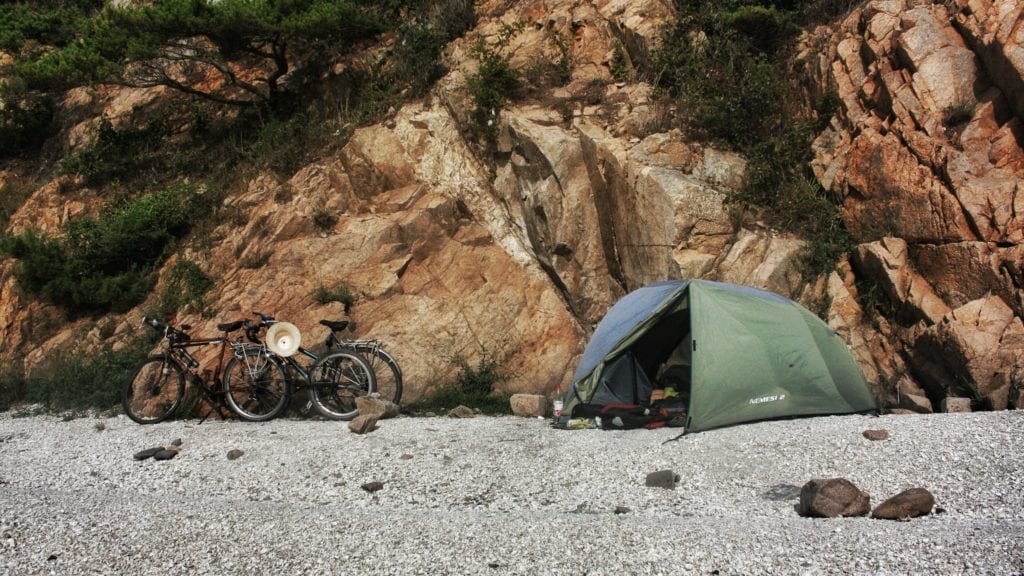
Tents can be free-standing (no need to pitch it to the ground), half-free-standing (only need a few stakes), or not-free-standing (doesn’t stay up if not pitched).
We suggest absolutely avoiding not-free-standing tents, it’s very common to find perfect sheltered camping spots where is impossible to plant a stake (or peg), it may be concrete, wood or whatever (like for example the magical gazebos of Korea, or porches of the Shinto Shrines in Japan), you can also find kinds of soil where pitching is really complex, like hardened soils or sand.
We suggest taking a half-freestanding tent like this (you can use ropes to tie it somewhere), or, even better, a completely free-standing one like this (the super expensive tent of my dreams). Don’t forget to bring a few spare pegs (stakes). Sooner or later, you’re going to lose at least one.
Almost all the tents listed here are 80-100% freestanding, some need stakes just for the vestibules.
Another important factor to consider when choosing a camping tent is the possibility of pitching its inner igloo alone, without needing to put the fly on it.
Pitching just the inner tent is great in hot weather and, if the tent is mostly mesh, can allow great stargazing without being bothered by mosquitoes.
Living Space: 1-man tent VS 2-person tents VS 3-person tents
One could assume that a 2-person tent is good for 2 persons, but that’s not always true. Depending on how much time you’ll spend in your tent, a tight living space may lead to discomfort and a drop in your love for camping.
We would advise taking with you the most spacious tent possible, especially for bike touring, when weight is less of a concern than when backpacking.
25 inches (63cm) per person is what is usually considered enough width for one person, but it’s honestly a bit too narrow in my humble opinion, particularly in hot climates.
My 2 cents is to consider at least 70cm (28″) per person, the wider the better, especially if you plan to keep some gear inside with you.
Since some of the lightweight tents listed here are narrower than that, you could think about getting the 3-person version, which is available for many of these models.
Another important, often overlooked spec is the tent’s length. Although 210cm (85″) may seem enough, keep in mind that this information indicates the length at floor level.
Depending on the design of the tent, if the walls are very slanted, this length might be much shorter at your head’s height, resulting in it touching the walls, which is not pleasant. Consider buying a longer tent if you are tall.
The elements: waterproofness, wind resistance, and snow handling
Regarding waterproofness rate, we quote from the MSR website:
“A fabric’s waterproof rating, measured in millimeters (mmH20), refers not to the thickness of the fabric or its polyurethane (plastic) coating but to the pressure at which water is able to press through the fabric. The standard waterproofing test involves applying water pressure behind a fabric sample until 3 drops of water are able to pass through the fabric.
For example, a 1500 mmH20 rating means the fabric can sustain 1,500 mm of water on top of the fabric before it can leak.
The measurement can then be converted into pounds per square inch (a 1,500 mmH20 rating would translate into 2.18 psi).”
So, how many millimeters of waterproofing do you need?
The short answer is, not always a lot. A point of comparison is an umbrella, which you might assume to be a good example of waterproof protection.
Umbrella fabric under the hydrostatic head tester yielded a rating of just 420 mmH2O, showing that a higher number isn’t always necessary to keep you dry. So then why do tents have waterproofing ratings of 1,000-10,000 mmH20?
Part of the reason is the greater durability that thicker, higher-rated waterproof coatings often provide. But of course, an umbrella never has to cope with the kind of abrasion that a tent floor might undergo.
Wind resistance, in contrast, is determined by several factors, primarily the strength of the poles, the quality of the stakes, and the aerodynamics of the design.
While a tall tent might seem very comfortable, if the walls are too vertical, it’s likely to be blown over by strong gusts of wind. Be sure to properly pitch your pegs if you expect strong winds. Learn more about wind resistance here.
4-season tents are designed to withstand heavy snow loads; they usually have even steeper walls to prevent snow from piling up on the top.
FAQ about backpacking tents
What are vents for in camping tents?
Some tents have one or, most commonly, two vents in the rain-fly; they are meant to improve the ventilation and might be very important to avoid condensation.
What are footprints in camping tents?
The footprint is an additional sheet placed between the tent’s floor and the ground to improve insulation and prevent terrain asperities from tearing a hole in the floor fabric.
Is a 2-person tent big enough for 2 people?
A 2-person tent is designed to accommodate two people, but its actual size and comfort may vary by brand and model. Generally, a standard 2-person tent should provide enough space for two average-sized adults to sleep side by side comfortably.
However, it’s essential to consider the gear and personal belongings that will also need to fit inside the tent.
If you and your camping partner prefer a bit more elbow room or need space to store extra gear, you might consider a 3-person tent.
It’s always a good idea to check the specific dimensions and floor area of the tent you’re interested in to ensure it suits your needs.
Remember that a 2-person tent is better suited to couples or close friends who don’t mind a bit of snuggling, while solo travelers might prefer it for extra space and gear storage. Ultimately, your personal preferences, gear requirements, and camping style will determine whether a 2-person tent is big enough for your needs.
If you have any other cheap lightweight tents you would recommend, please contribute in the comments!
Check also
> The very best lightweight one-person tents
> 9 best double sleeping mats
> 10 best ultralight budget sleeping bags
> Top sleeping pads compared
> Camping Gear Essentials List
> How much does it cost to cycle around the world
> How to find sponsorship for outdoor adventures
> How to write a sponsorship letter
> Beginner’s guide to bike touring