

Last Updated on 10 February 2026 by Cycloscope
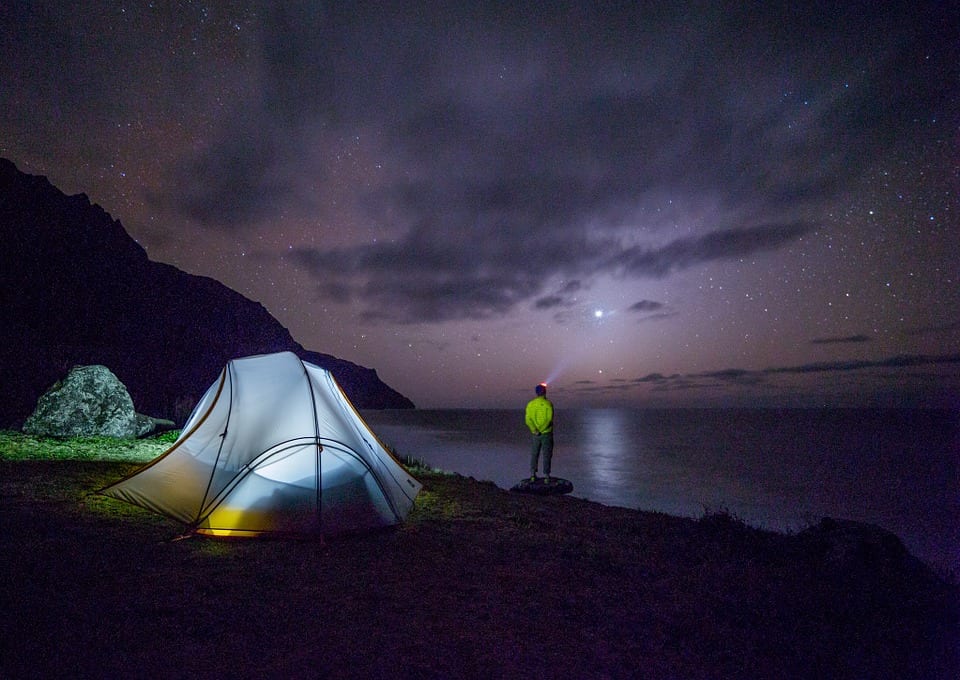
A thorough comparison of the best and brightest headlamps for camping, hiking, cycling, backpacking, running, repairing, and house
Should you really worry about LUMENS?
Looking for the brightest headlamp on the market? Do you want the best headlight for camping, outdoor activities, car repair, cycling, or hard-hat night work… in short the top multipurpose headlamp?
Disclosure: Some of our articles contain affiliate links. This comes at no additional cost for you and helps us keep this website up and running. (as Amazon Associates we earn commission from qualifying purchases)
How we compile our gear guides: during the almost 10 years of cycloscope.net our team personally tested dozens of similar pieces of gear. For what we can't test personally, we involve other people in the cycling community to give their feedback and opinion about gear they have used. Our decade-long experience in bicycle touring enables us to find the key cons and pros of every product we mention.

In this article, we will compare the best head flashlights for all budgets. In the first part, we’ll have a closer look at some interesting cheap headlights on Amazon and other retailers, while in the second, we’ll introduce you to the non-plus-ultra of headlamps, the best on the market (in our opinion).
The Best & “Brightest” Headlamps in a Nutshell

- Best Headlamp/Flashlight for Camping:
Petzl Tikka Core - Best Headlamp For Hiking:
Nitecore NU25 UL - Best Headlamp for Hard-Hat/Car-Repair Work:
Nitecore HC65 UHE - Best Headlamp for Cycling:
Black Diamond Storm 500‑R - Best Headlight for Backpacking:
Black Diamond Astro 300‑R - Best Head Lamp for Running:
Petzl Nao RL / UltrAspire 3.0 / Nitecore UT27 Pro - Best Multi-Purpose Headlamp/Flashlight:
Black Diamond Spot 400‑R
The Best & “Brightest” Budget/Cheap Headlights – Review
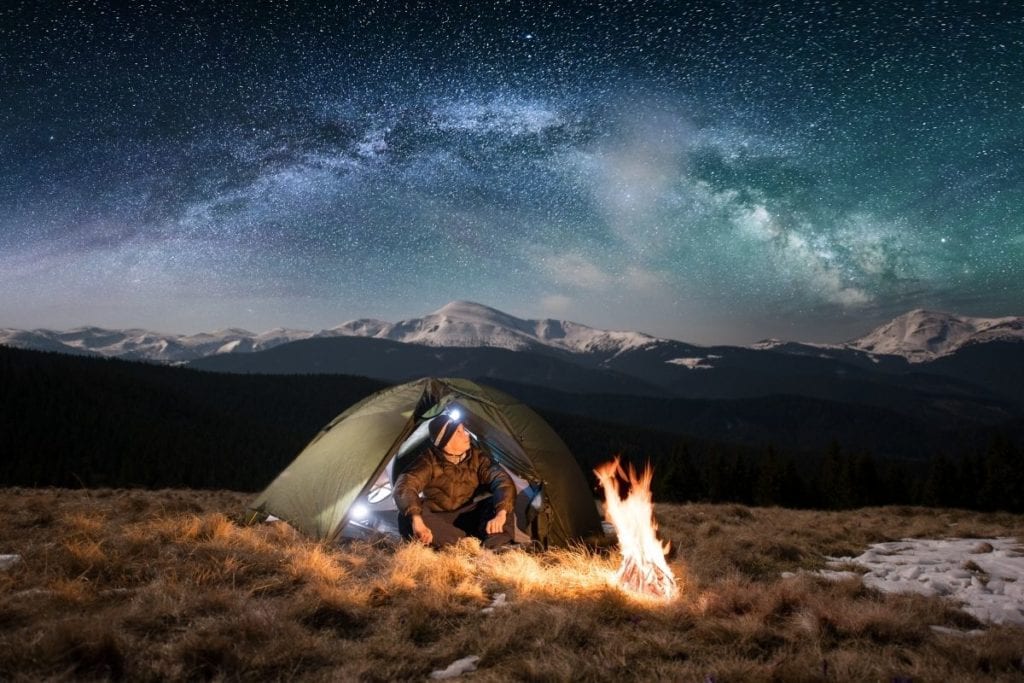
1. Petzl Tikka Core
Best Headlamp for Hard-Hat / Car-Repair Work
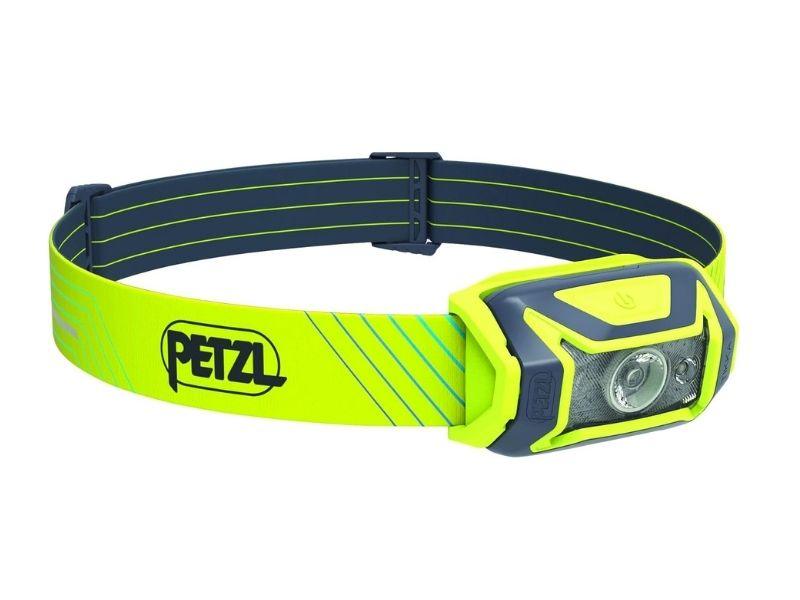
A compact hybrid-power headlamp designed for general outdoor use. The Tikka Core produces up to 450 lumens with a wide, even beam optimized for campsite tasks and close-range visibility. It uses Petzl’s Hybrid Concept power system, running on the included rechargeable CORE battery (1250 mAh) or three AAA batteries.
The single-button interface controls multiple brightness levels plus a red mode for night vision. A reflective, washable headband improves comfort and visibility, while the LOCK function prevents accidental activation during transport. The light can also be mounted to helmets or bikes with compatible adapters.
Key Features:
- Max output: 450 lumens
- Beam pattern: wide flood
- Weight: 84 g
- Power: rechargeable CORE battery or 3×AAA
- Charging time: ~3.5 hours
- Use case: campsite, travel, everyday outdoor use
Pros:
- Hybrid battery system (rechargeable CORE or AAA)
- Wide flood beam ideal for camp tasks
- Lightweight and compact design
- Simple, reliable single-button operation
Cons:
- Limited beam distance for technical night travel
- Not the brightest model for high-speed movement
2. Black Diamond Storm 500-R
Best Headlamp for Cycling
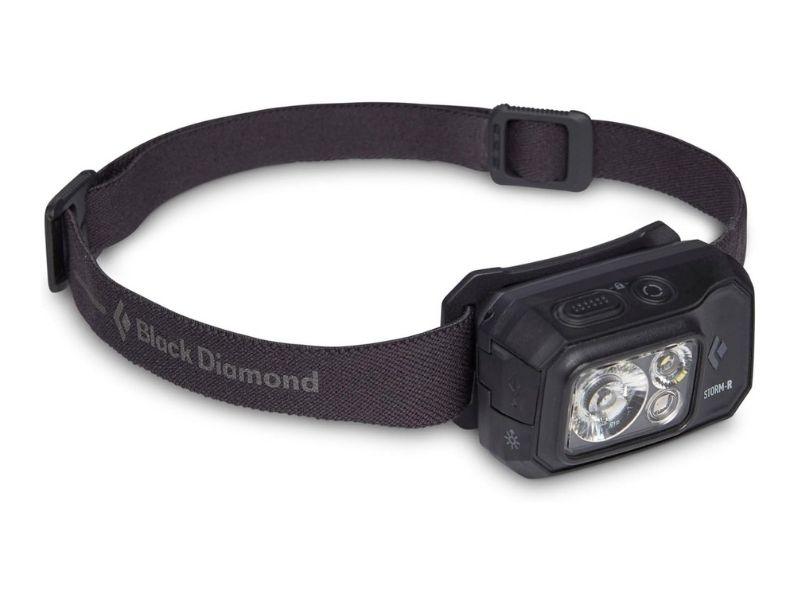
A high-output rechargeable headlamp built for severe weather and high-movement activities. The Storm 500-R delivers a strong, focused beam suitable for fast travel, with multiple lighting modes including dimming, strobe, and colored night-vision LEDs.
Its sealed construction is designed to withstand rain, mud, and dust. The rechargeable battery reduces reliance on disposable cells for everyday riding.
Key Features:
- Max output: 500-lumen class
- Rechargeable lithium battery
- Multiple beam modes + red/green/blue LEDs
- Weather-resistant sealed housing
- Use case: night cycling, harsh weather riding
Pros:
- Extremely lightweight, ideal for ultralight hikers
- USB-C rechargeable with excellent efficiency
- Multiple brightness levels and red light mode
- Strong output-to-weight ratio
Cons:
- Shorter runtime on the highest setting
- The strap system is minimalist and less cushioned
- Beam spread is narrower than that of larger models.
3. Nitecore HC65 UHE
Best Headlamp for Hard-Hat / Car-Repair Work
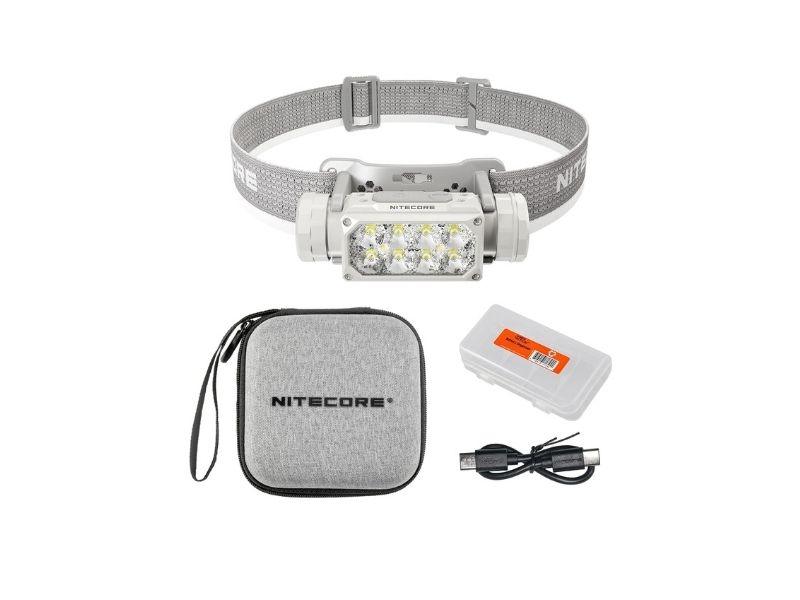
A powerful, heavy-duty headlamp designed for technical environments and mechanical work. The HC65 UHE features a high-output beam, multiple lighting modes, and a rugged aluminum body that enhances durability and heat dissipation. Its strong central beam makes it ideal for detailed work in dark spaces.
Key Features:
- Max output: up to 2000 lumens
- Weight: ~150 g
- Battery: Rechargeable 18650
Pros:
- Very high brightness for precision tasks
- Durable metal construction
- Multiple beam types for different work situations
- Long runtime with a high-capacity battery
Cons:
- Heavier than outdoor-focused headlamps
- Overpowered for simple camp use
4. Black Diamond Storm 500-R
Best Headlamp for Cycling
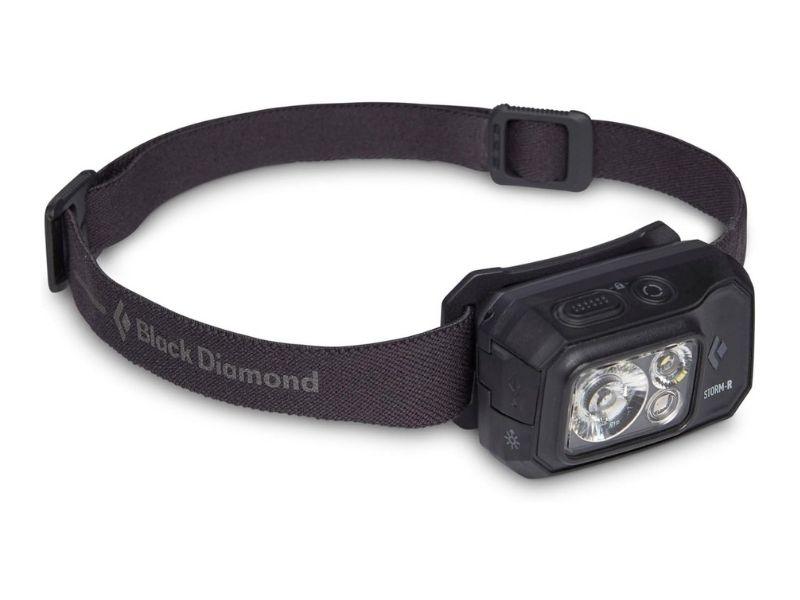
A weather-resistant headlamp designed for harsh conditions and night riding. The Storm 500-R combines strong brightness with a sealed housing that protects against rain, mud, and dust. Its balanced beam pattern provides good visibility on both roads and trails during bikepacking trips.
Key Features:
- Max output: 500 lumens
- Weight: ~100 g
- Battery: Rechargeable Li-ion
Pros:
- Strong beam suitable for night riding
- Fully waterproof and dustproof design
- Rechargeable battery system
- Multiple brightness and color modes
Cons:
- Heavier than ultralight options
- Not as powerful as dedicated bike lights
5. Black Diamond Astro 300-R
Best Headlamp for Backpacking
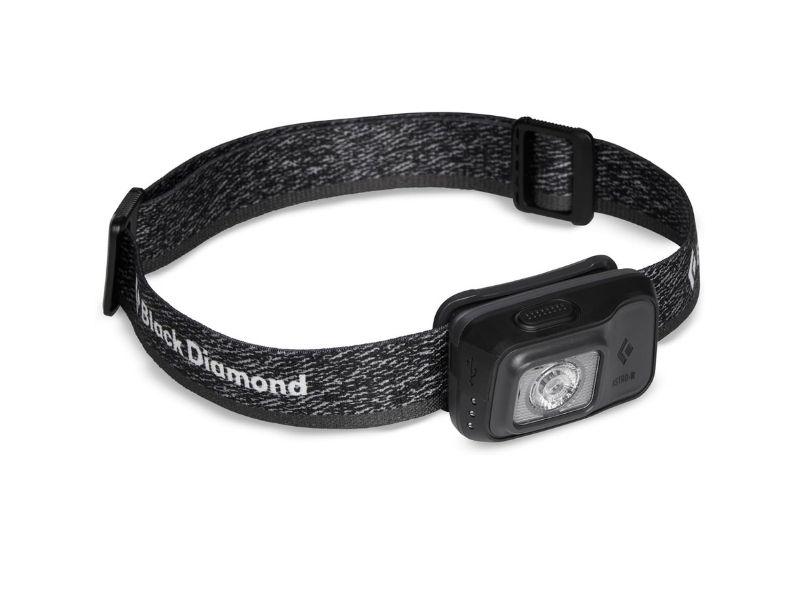
A lightweight rechargeable headlamp focused on simplicity and reliability. The Astro 300-R uses a single LED system with dimming control, optimized for camp tasks and low-power navigation.
Its compact size and reduced feature set keep weight and complexity low, making it a strong choice for backpackers who prioritize efficiency and long runtimes over maximum brightness.
Key Features:
- Output: ~300-lumen class
- Rechargeable battery system
- Single-button interface
- Compact minimalist design
- Use case: backpacking, camp lighting
Pros:
- Lightweight and compact
- Simple interface and easy to use
- USB rechargeable
- Good efficiency for long trips
Cons:
- Lower brightness than performance models
- Limited features and beam control
6. Petzl Nao RL / UltrAspire 3.0 / Nitecore UT27 Pro
Best Headlamp for Running
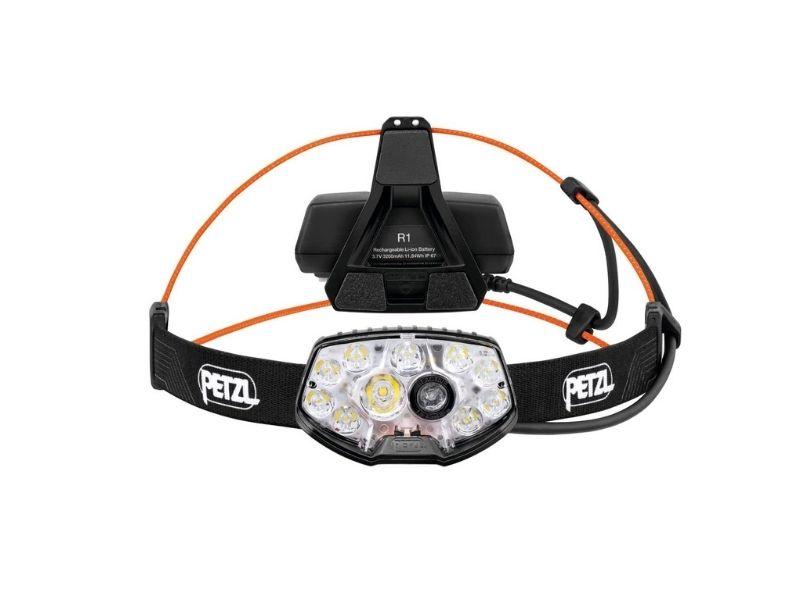
These performance-oriented headlamps are designed for fast movement and high visibility on trails. They provide strong forward projection combined with stable, lightweight designs that reduce bounce while running. Built for endurance use, they offer powerful output and efficient battery systems.
Key Features:
- Max output: ~800–1500+ lumens (model dependent)
- Weight: ~70–150 g
- Battery: Rechargeable
Pros:
- Very bright beam for fast trail visibility
- Lightweight and stable fit
- Long beam reach for forward vision
- Rechargeable battery systems
Cons:
- Higher price compared to basic headlamps
- Some models use external battery packs
7. Black Diamond Spot 400-R
Best Multi-Purpose Headlamp / Flashlight
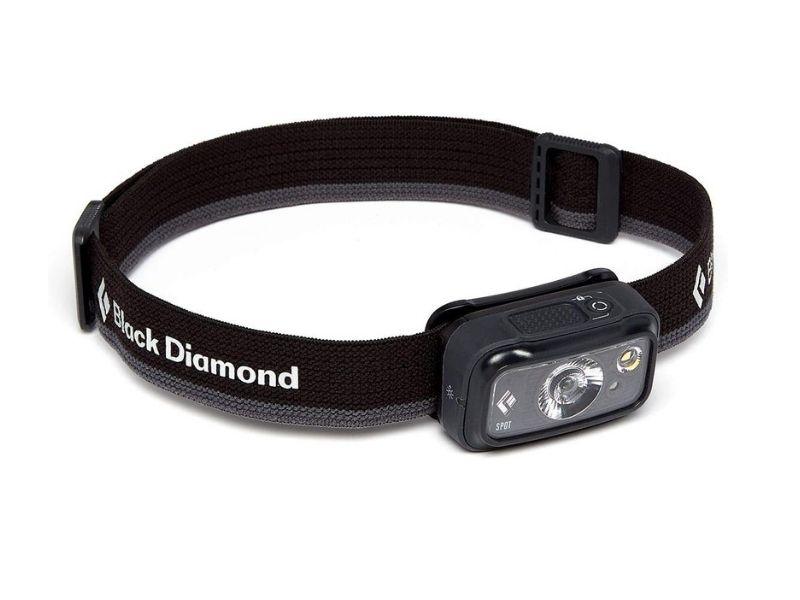
A versatile all-around headlamp that balances brightness, size, and runtime. The Spot 400-R offers enough power for hiking, camping, travel, and emergency use, making it a reliable single-light solution for different activities.
Key Features:
- Max output: 400 lumens
- Weight: ~86 g
- Battery: Rechargeable
Pros:
- Good balance of power and efficiency
- Rechargeable battery
- Compact and lightweight
- Suitable for multiple outdoor uses
Cons:
- Not specialized for extreme brightness
- Beam distance is moderate compared to high-power models
What are Lumens?
The Lumen (symbol: lm) is the unit used to measure the total quantity of visible light emitted by a source, just as the gram is a basic unit for measuring mass.
With the difference, though, of the Lumen being weighted according to a model of the human eye’s sensitivity to various wavelengths. Lumens are related to lux; one lux is one lumen per square meter.
Lamps used for lighting are commonly labeled with their light output in lumens; in many jurisdictions, this is required by law. In 2010, European Union legislation came into force mandating that lighting equipment be labeled primarily in terms of luminous flux (lm) rather than electric power (W).
For example, an energy-efficient bulb that claims to be equivalent to a 60 W tungsten bulb must have a minimum light output of 700 lm; a typical home light bulb might produce about 1000 lm.
Should you really mind lumens when choosing the best headlamp for your needs? Is “the brightest” also “the best”
We have already seen that the typical home bulb usually outputs about 1000 lumens. Isn’t that enough light for your purposes? Most likely yes.
So why should you go for a brighter headlamp? Maybe you need a long-range headlight. If you focus the light into a very bright center of only 10°, the beam will arrive further. How further do you need to go? As far as the eye can see, which is most likely no more than 500 meters. In this case, you need to find a headlamp with a zoom option.
The light should never be so bright as to blind you or to whiten out your target. So, the brightest headlamp won’t help you in most cases; you’ll never fix your car flashing a 3000-lumen beam.
You need something in between, a beam to be spread out in a wide enough area and capable of lighting clearly without hardening your eyes.
For running, for example, the Petzl Actik Core beams are ideal, with only 350 lumens. Their beams are more vertical, helping you see exactly what you’re running into. Petzl Nao+ is also very good.
The temperature of the light beam also dramatically affects the user experience. 1000 lumens of white light will do what only 2500 lumens of yellow light could do.
Be aware when buying “the brightest headlamp.”
Cheap Headlamp Companies choose any number for their lumens output; in this article, we’ll report what the companies state, but you should look at a 40,000-lumen headlamp with suspicion. The real output is most likely 1/10 of that, which is anyway very powerful.
One thousand lumens in a narrow beam will show you a wild boar at 400 meters. If you get a light three times that strong, it won’t enable your eyes to see another 800 meters – your eyes are incapable of picking out an animal at that distance. The brightest headlamp claims mean little unless you really want to light up a football stadium.
Tips for Headlamp Maintenance
- Avoid using your headlamp while charging.
- If the light becomes dark, please recharge in time.
- Take the battery out if you don’t use it for a long time.
- Please carefully check the battery compartment for any negative or positive connections when loading the batteries.
- Please do not look directly with the eyes. The ultra-high brightness will hurt the eyes.
- Keep the inner clean. Do not wipe with your hands or hard objects. Wipe fingerprints off the lens with cotton swabs and soft cloths.
How to evaluate the waterproofness of a headlamp – IPX explained
When choosing your next headlight, you will often find yourself reading the device’s impermeability rating.
To get an idea of what those letters and numbers mean, let’s start by saying that there are two parameters for measuring the device’s resistance: one concerns resistance to impact with solid bodies, the other protection against liquids. In both cases, you will find the acronym “IPX” followed by a number.
IP is the name of the standard developed by the International Electrotechnical Commission (IEC) to determine the resistance of an electrical device to freshwater and common materials such as dirt, dust, and sand.
The first digit after IPX indicates the IEC classification assigned to a unit for its resistance to solids. In this case, the maximum level is 6, indicating that no “harmful” dust or dirt has penetrated the headlamp after eight hours of direct contact with the material. In particular:
- IPX1: protection from contact with a large surface, such as the back of a hand, but no protection against intentional contact with a part of the body;
- IPX2: protection against small objects, including fingers;
- IPX3: protection against tools, such as screwdrivers, thick wires, or similar objects;
- IPX4: protection from most wires, screws, and nails;
- IPX5: partial protection from contact with harmful dust, ie the powder is able to penetrate into the device but will not be able to compromise its operation;
- IPX6: total protection from contact with harmful dust – in this case, dust cannot enter the device.
As for the resistance to water, whether it is using the headlamp in the rain or unluckily drop it into the lake, the meaning of the classification codes is this:
- IPX1: Protection against water dripping vertically on the device;
- IPX2: Protection against vertically dripping water when the device is inclined at an angle up to 15 °;
- IPX3: Protection against direct splashes of water when the device is inclined at an angle up to 60 °;
- IPX4: Protection against rain and splashes of water regardless of direction and inclination;
- IPX5: Protection against low-pressure water sprayed by a nozzle with a diameter of 6.3 mm;
- IPX6: Protection from water fired in powerful jets by a nozzle with an opening of 12.5 mm in diameter;
- IPX7: Protection against immersion in water at a maximum depth of 1 meter for a maximum of 30 minutes;
- IPX8: Protected from immersion in water at a depth of more than 1 meter (the manufacturer must specify the exact depth at which the device is not damaged).
So an IPX45 means IPX4 resistance and IPX5 waterproofness. If only one number is found, that usually refers to the water-resistance parameter.
Check Also
- 17 best lightweight tents under 200$ – Camping Gear Essentials Checklist
- Top 10 Best Instant Pop-Up Tents for Couples or Families
- Best and Safest Helmets for Cyclists
- The Best Portable Solar Panel Chargers – Which One to Choose?
- 12 Best 4-Person Tents reviewed – Family or Backpacking?
- The 10 Brightest Bike Lights in 2026