

Last Updated on 13 January 2026 by Cycloscope
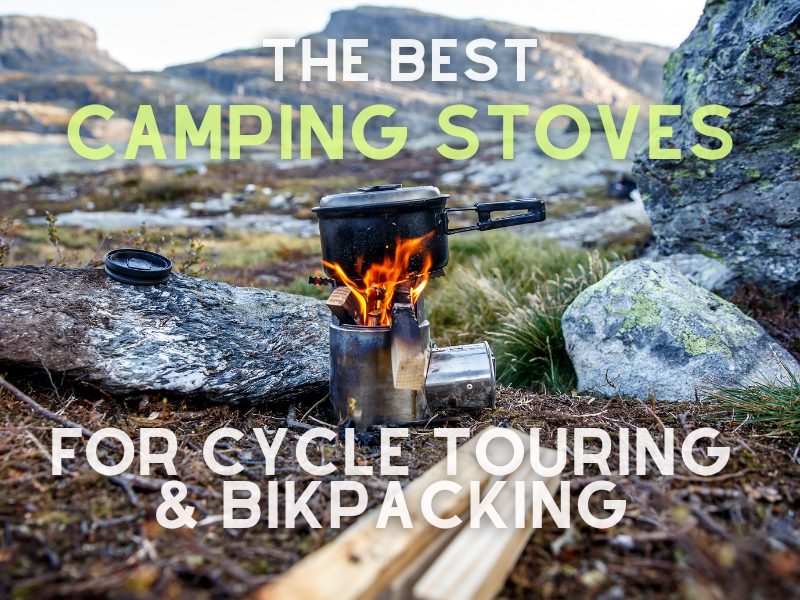
Uncover the best camping stoves for bikepacking and cycle touring. Explore a range of lightweight, multifuel stoves, wood burners, spirit/alcohol, canisters, and DIY stoves for your outdoor adventures. Discover the top options for efficient cooking and easy portability on your next cycling excursion.
If you’re an adventurous cyclist who loves exploring new destinations on two wheels while enjoying delicious meals on the go, you’ve come to the right place.
Disclosure: Some of our articles contain affiliate links. This comes at no additional cost for you and helps us keep this website up and running. (as Amazon Associates we earn commission from qualifying purchases)
In this article, we’ll delve into the realm of the best bikepacking stoves and discover some of the top options available for your culinary needs during your cycle touring adventures.
11 Best Bikepacking Stoves
divided by category
3 Multifuel
bikepacking stoves
Multifuel stoves are among the most popular for cycle touring, as you can burn both unleaded gasoline and diesel on them, which are widely available across the globe. The downside is that they have a lot of small parts that can break on a rough cycle tour, so you must bring spare parts.
They are also generally large, heavy, loud, and smelly.
MSR WhisperLite Universal Backpacking
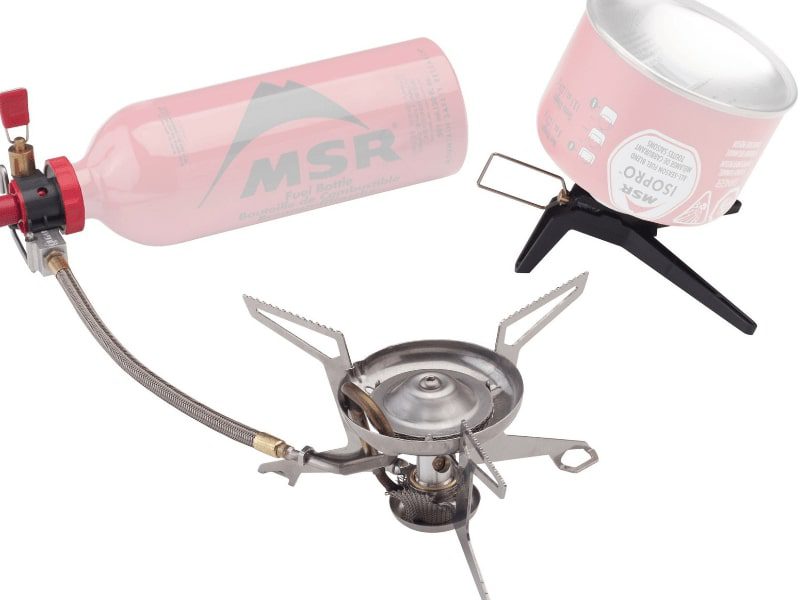
A favorite among the best multi-fuel bikepacking stoves, this one can run on unleaded gasoline, white gas, kerosene, and isobutane-propane canisters.
The stove, pump, and canister mount weigh 388 grams and measure 15cm x 15cm x 12cm, making it a great option for any cycling tour. It is easy to switch fuel types and to clean with the Shaker Jets™ self-cleaner system.
Optimum Svea Stove
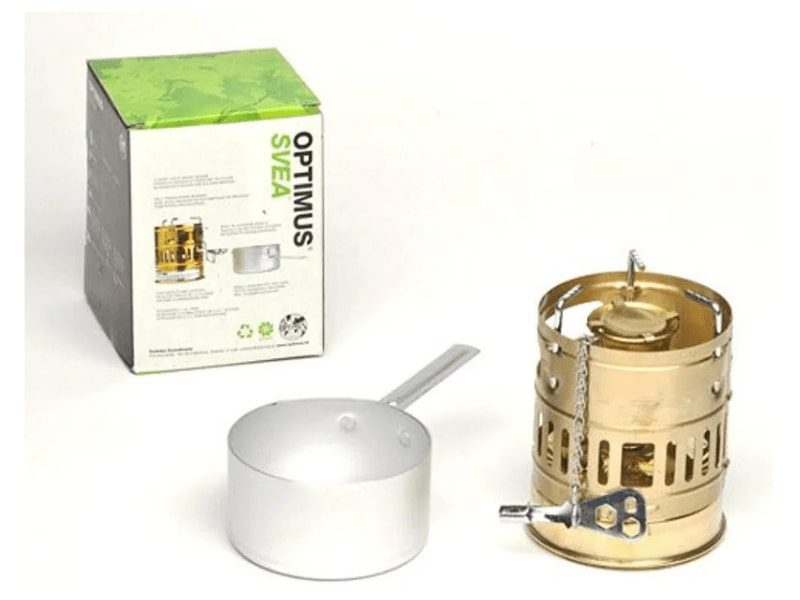
This is the perfect bikepacking stove for anyone heading to higher altitudes, thanks to its impressive performance at high altitudes. It is a top performer in all weather conditions, making it a reliable stove for longer cycling tours spanning different seasons.
It runs on white gas, is super lightweight at only 130.4 grams, and packs up at as little as 10cm x 10cm x 13cm.
Primus Omnifuel stove
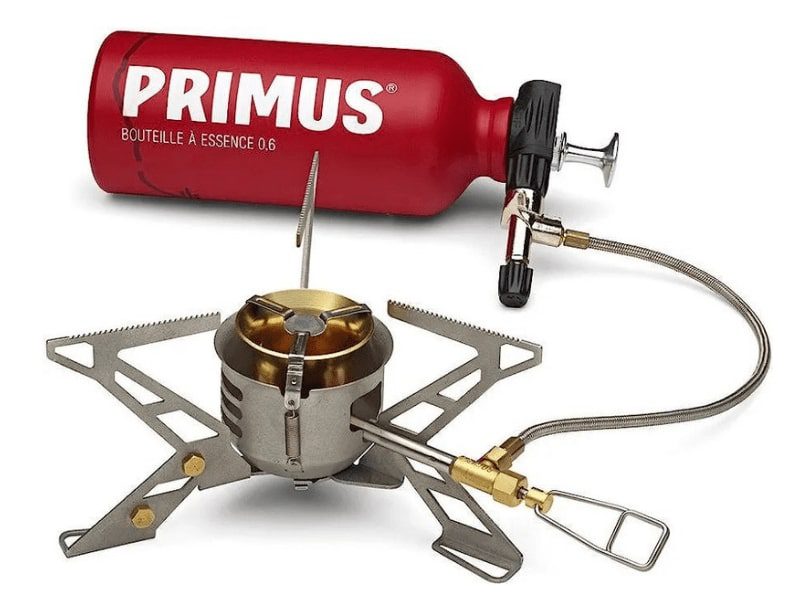
Primus Omnifuel excels as a reliable stove for any international cycling tour, running on a variety of fuels like white gas, diesel, kerosene, canister gas, and aviation fuel. It comes with a multitool, a foldable windshield, and a heat reflector.
The downside is that it is on the heavier side compared to other options on this list, with its 450 grams. Its dimensions are 14cm x 9cm x 6.5cm.
2 Best
Spirit Burner Stoves
for bike touring
Spirit burners burn different types of spirits with alcohol levels above 70%, which is also easily accessible in large parts of the world.
Besides, they are quieter than other stoves, making them a popular option among bikepackers.
The drawback is that in some countries, you can not get hold of spirits, and it burns poorly in cold temperatures.
Trangia Triangle stove
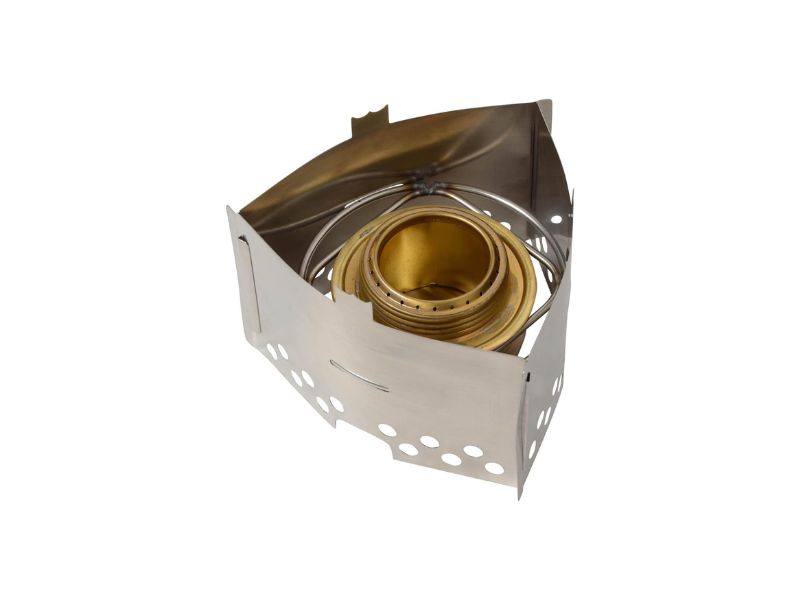
One of the most loved stoves for bike camping is the Trangia Triangle stove.
It is a lightweight version of the much heavier Classical Trangia stove and consists of three stainless steel walls that cover the Trangia fuel canister and a steel support ring.
At only 115 grams, it’s also attractive in its dimensions: 14cm x 10cm x 1cm. The stove burns alcohol, and the higher the percentage, the better (preferably 90%+).
ATiAP Alcohol Stove
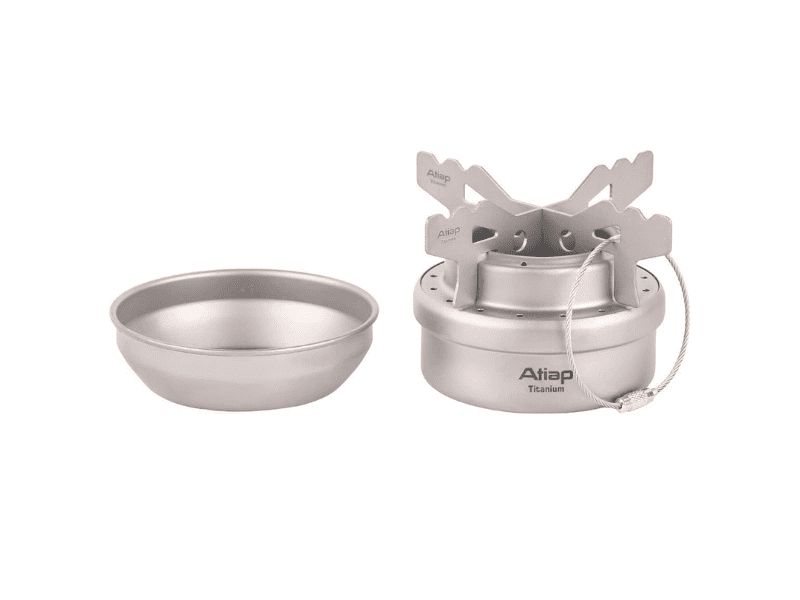
This budget-friendly spirit burner weighs only 77 grams, making it a good choice for international bikepackers seeking a small, lightweight alternative.
That said, it takes longer to cook water and food than other cycle tour stoves, and it is very small, so you must be careful not to tip it over or use a pot that is too big.
2 Great
Canister Stoves
for bicycle touring
Canister stoves are popular on shorter, domestic cycling tours. However, you cannot fly with butane or butane-pressurized canisters, so it is not ideal for international trips unless you research in advance whether you can get hold of it at your destination.
MSR Reactor 1.0L Stove System
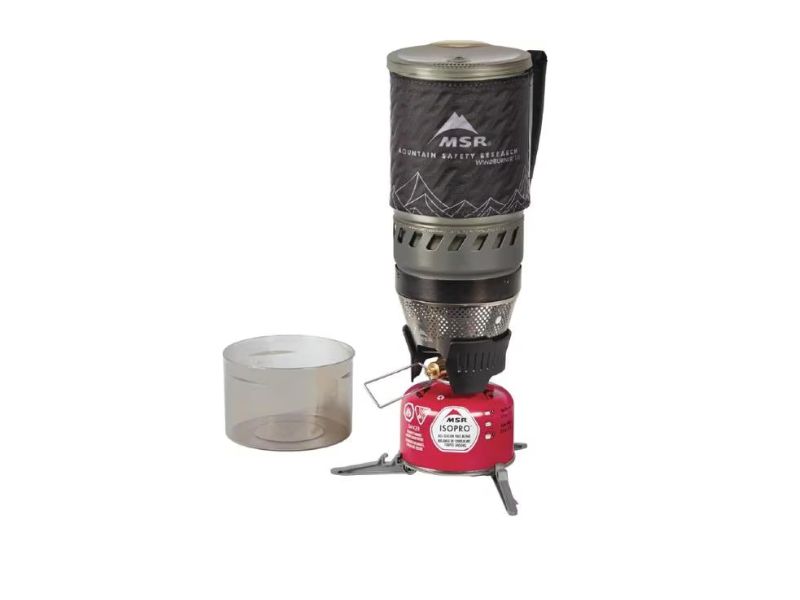
This is an excellent canister stove for cycle touring, as it is windproof, making it possible to cook in all weather. Besides, you can store both the stove and the canister inside the pot, making it more compact and easier to pack.
The 1-liter pot is perfect for 1-2 people and comes with a strainer lid so you can easily drain water from noodles, etc. It weighs 416 grams, measures 12cm x 15.5cm, and is very quiet.
MSR PocketRocket 2
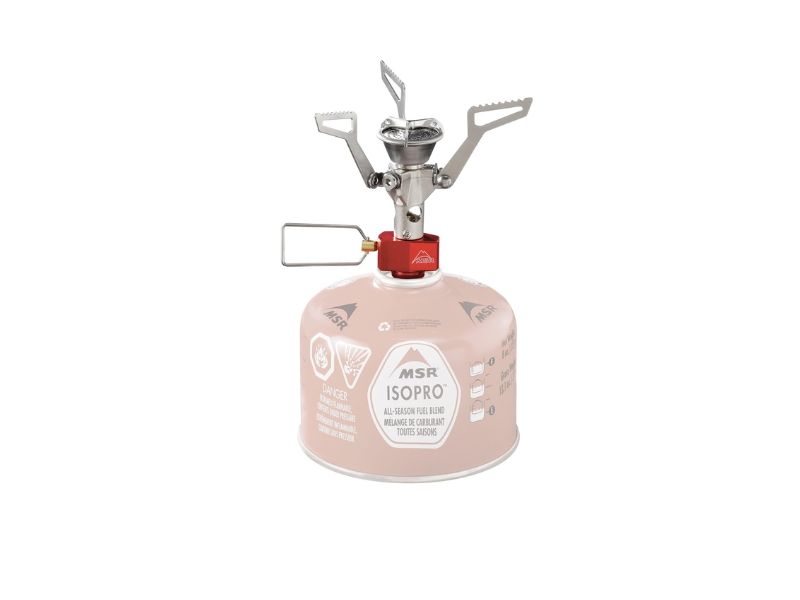
By far among the most budget-friendly and lightweight bikepacker stoves for cooking is the MSR PocketRocket 2, which is much lighter than its predecessor, making it even more attractive to those who want to go minimalist.
It neatly packs up to 8cm x 4cm x 3cm in a lightweight box, making it easy to store in your pack. The weight is 73 grams. Though small, it holds larger pots well as long as the canister stands steady, due to its folding pot support.
2 Wood-burning stoves for bike camping
Wood-burning stoves are a good option when cycling to remote areas where other fuels are not available.
The downside is that it requires dry, hot weather; otherwise, you will struggle to light the wood, and it takes time.
There are also fire hazards in summer, and many areas prohibit fires, so make sure you check up on regulations before you go. Usually, wood-burning stoves are also a bit more on the heavy side compared to other alternatives.
BioLite CampStove 2
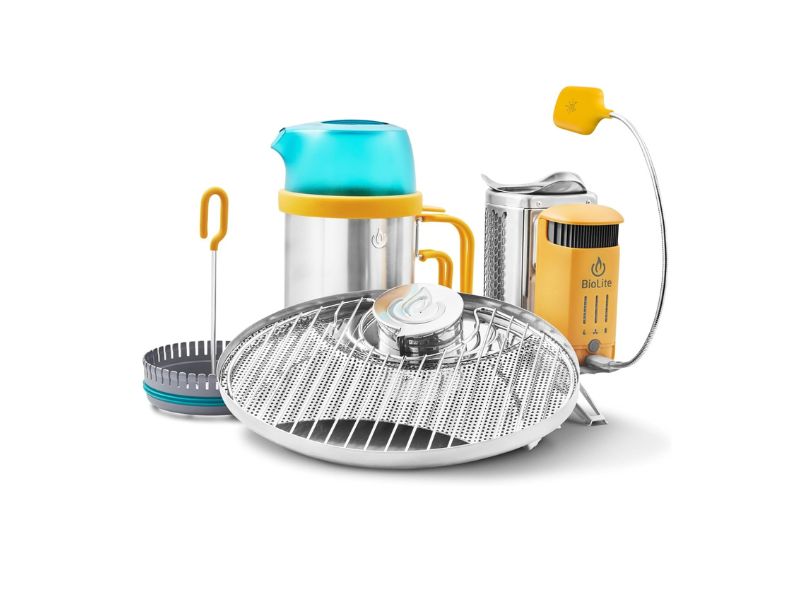
As far as wood-burning stoves for bikepacking go, this is by far the most versatile.
As you burn wood, it generates energy, and you can charge your phone at the USB outlet. A full battery charge can fully charge a phone.
A smart LED dashboard also helps you control the flames with 4 fan strengths. The stove has a shield protecting the flames from the wind.

However, is on the heavier side, just the stove weighing 907 grams. Besides, this package includes a kettle pot, coffee press, grill, and flex light, which together turn out to be 2.37 kilos.
Solo Stove Lite
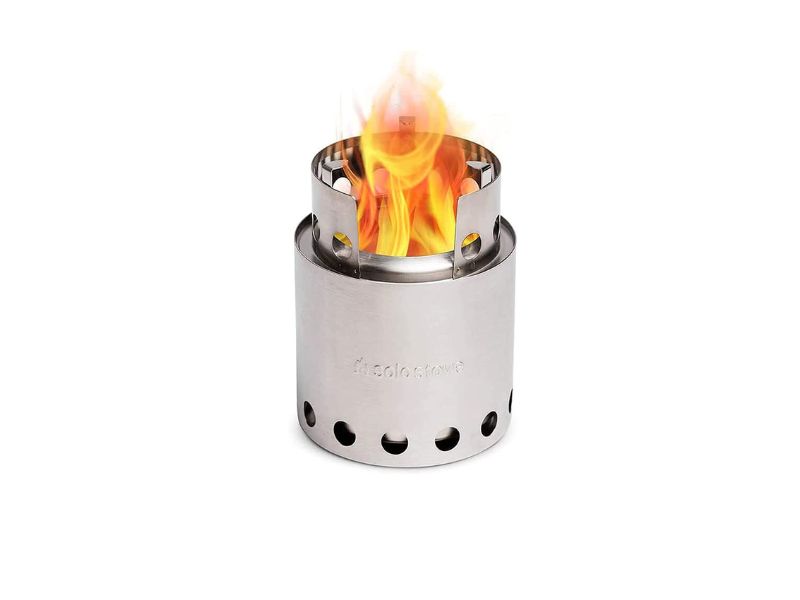
This is one of the most popular wood-burning stoves among bikepackers. It is much lighter than other wood burners, at only 250 grams.
The design featuring a double wall assures less smoke, and the airflow allows it to be efficient. Yet it takes longer to warm water on a wood burner than on most other stoves, and there is no flame control, so you can’t “turn it down” when cooking your bikepacking food.
It comes with a lightweight pot where you can store the stove, saving you space in the pack. The pot packs down to 11cm x 12cm, so you can easily fit it in your pack.
The Best solid-fuel stove
for cycle touring
Solid fuel stoves are the least popular option, but they work well as a reserve stove when everything else fails. It is lightweight and typically fueled on briquette tablets or gel tubes. The drawback is that they have no flame control, and heating goes slowly.
Esbit Pocket stove
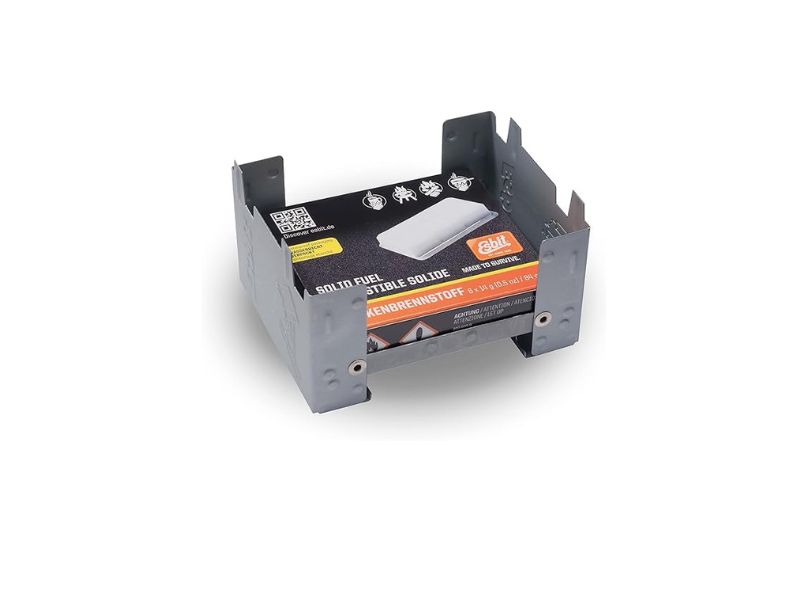
This is a great budget-friendly bikepacking stove that many cyclists keep in their emergency kits. At only 92 grams, it adds minimal weight to your pack, and it fuels on fire briquettes, which are also lightweight.
The reason this stove is usually not the main stove for bikepackers is that it takes a long time to heat water, so it is not ideal for cooking.
But if your regular stove breaks down, you will be thankful to dig out the Esbit Pocket Stove and cook up some easy, dehydrated meals until you can fix your equipment.
Check Also
> The 10 Best Travel Water Filter and Purifiers for Cycle Touring, Bikepacking, and Hiking
Or Explore our large
> Camping Gear Section
FAQ about bike touring stoves
What type of stove is best for bikepacking?
Multi-fuel stoves are the most popular among bikepackers as it is easy to find different kinds of fuel, also internationally and in remote villages. However, spirit burners are a lot quieter and do not smell as bad, and alcohol is usually available in most countries.
Are Trangia stoves worth it?
Trangia stoves are lightweight and surprisingly durable. As they are spirit-burning stoves, it is also mostly easy to find alcohol for them.
What is the difference between a camping and a bikepacking stove?
Camping stoves are usually larger and steadier. They might hold enough space for two pots, and they are often a lot heavier and bulkier than bikepacking stoves. The latter needs to pack up tightly and, preferably, be much lighter, making it easier to fit into the pack.
How does fuel type affect stove performance?
Fuel choice influences everything from cooking speed to reliability. Canister fuels (butane/propane blends) are convenient and clean, but they don’t perform as well in cold weather and are hard to recycle. Liquid fuels (such as white gas or petrol) burn well at low temperatures and high altitudes and are easy to find worldwide, but they require priming and maintenance. Alcohol and wood fuels are ultra-lightweight and often cheap or free, but they burn more slowly and less efficiently.
What should I know about fuel availability on tour?
Fuel access can make or break your trip — especially overseas. Canister fuel is common in North America and Europe, but in many places abroad it’s harder to find. Liquid fuels like petrol or white gas are widely sold in most countries, and wood or alcohol may be sourced locally. Choose a stove whose fuel matches where you plan to ride.