

Last Updated on 11 February 2026 by Cycloscope
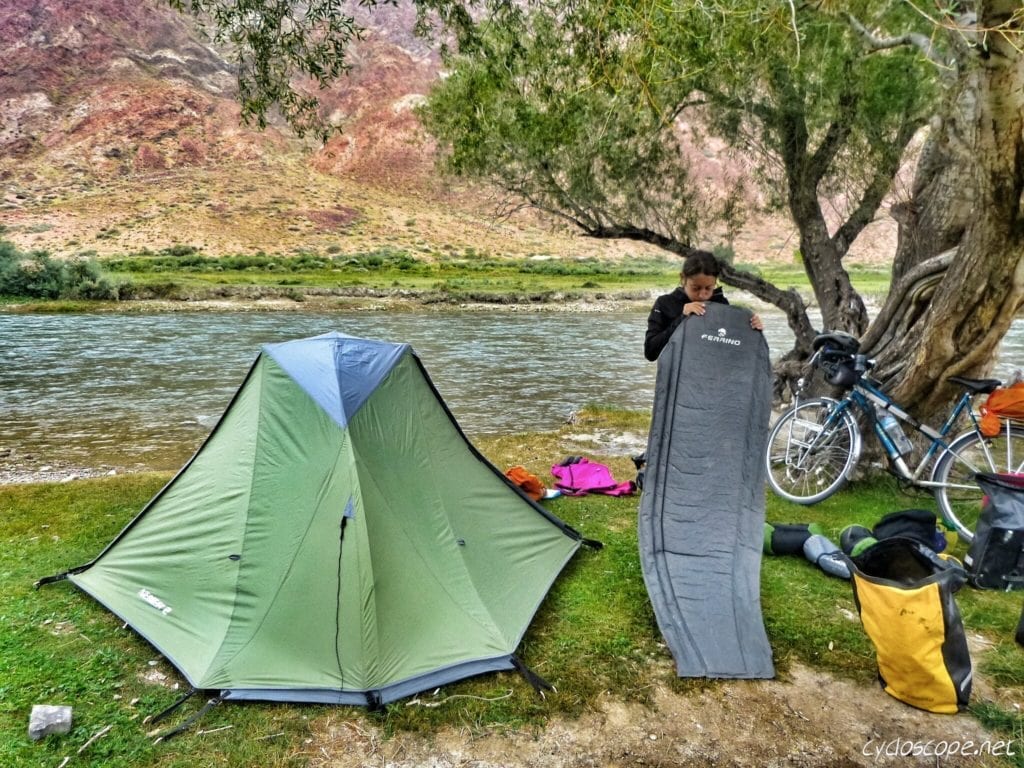
Bike camping! A list of ultralight camping equipment to bring when cycle touring or bikepacking
Essential and useful gear to enjoy the bicycle camping life
Bike camping is an extraordinary activity you should do at least once in a lifetime. In this article, we’ll go through the ultimate bike camping gear list, both for long-cycle touring expeditions and for weekend bikepacking camping trips.
Disclosure: Some of our articles contain affiliate links. This comes at no additional cost for you and helps us keep this website up and running. (as Amazon Associates we earn commission from qualifying purchases)
When on a long-distance bike journey, unless you’re going on a so-called “credit card tour” (meaning sleep only in hotels and eat only in restaurants), most of your nights out bike touring will probably be camping nights.
Camping and bike touring/bikepacking go hand in hand, and camping is one of the fascinating aspects of traveling by bicycle.
Finding the perfect spot, sleeping in nature, cooking your own meal, enjoying the stars, and waking up in the wilderness. These are experiences you’ll carry with you forever.
Choosing the right camping gear for your expedition makes the difference between nights that are amazing and memorable or nights that are horrible and restless. If you’re traveling in climatically extreme areas, your very survival will depend on it.
So, if you’re planning on a warm-weather destination, don’t waste too much money on that; you can find lightweight gear without selling a kidney, but if an expedition to Kazakhstan in winter is what you’re up to, don’t stay too cheap.
This article is part of our series about Essential Gear for Bicycle Touring and Bikepacking
This section is about camping gear. For the other sections check below.
Cycle Touring Camping Gear List in a Nutshell
- Camping Tent
- Sleeping Pad
- Sleeping Bag
- Sleeping Linen (optional)
- Headlamp
- Knife
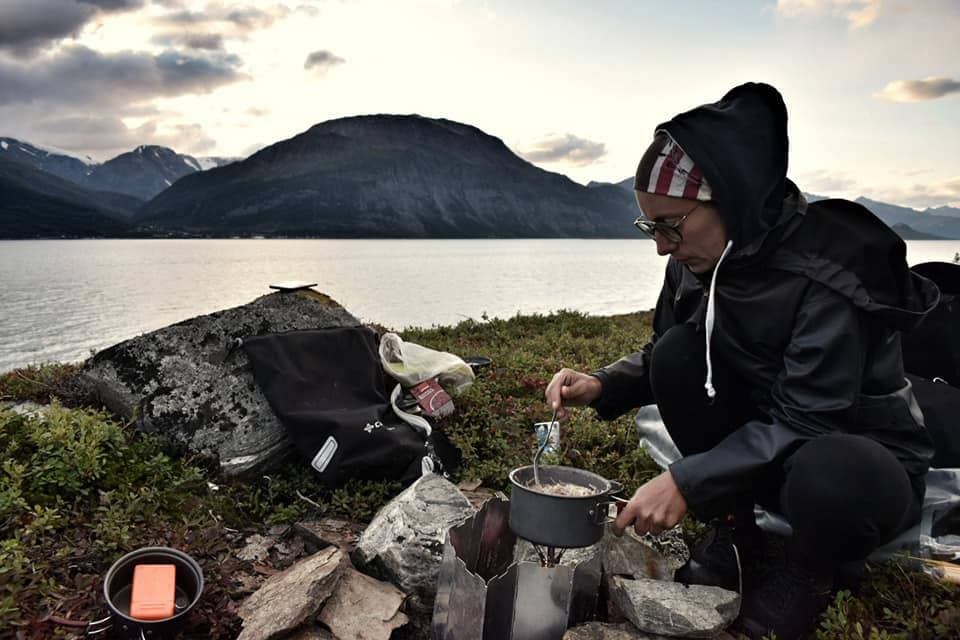
- Stove
- Cooking Pans
- Kitchen Tools
- Vacuum Flask (optional)
- Water Filter (only in remote areas)
- Foldable Sink (optional)
What is Bike Camping (or Cycle Camping)
Well, cycle camping is when someone takes their bicycle and rides around for a while, then finds a nice spot to set up camp for the night.
You can go for a single night out or do this for the rest of your life; it will still be bike camping.
Of course, the duration of the trip matters when choosing the right gear to go bike camping.
If you stay out for a week in the same area, you won’t have much temperature variation, so you can bring less gear suited to the season.
When on an extended bike camping trip, you’ll probably go through a wide range of climates, which means you’ll need to find a compromise – or carry A LOT of stuff.
Another thing that makes a difference is your campsite of choice: if you plan to overnight in public or private camping, then you will need less stuff – certainly not a folding sink or a water filter, for example.
If, instead, your plan is to wild camp, which means camping in the wilderness often in a stealth fashion, then you’ll need some more stuff.
This list aims to cover all the essential bike camping gear for every need. If you think there’s something missing, please let us know in the comments section.
Check Also
> Bikepacking Bags! The Best For Each Category from CHEAP to TOP
The Essential Bike Camping Equipment
Bike Camping Tent
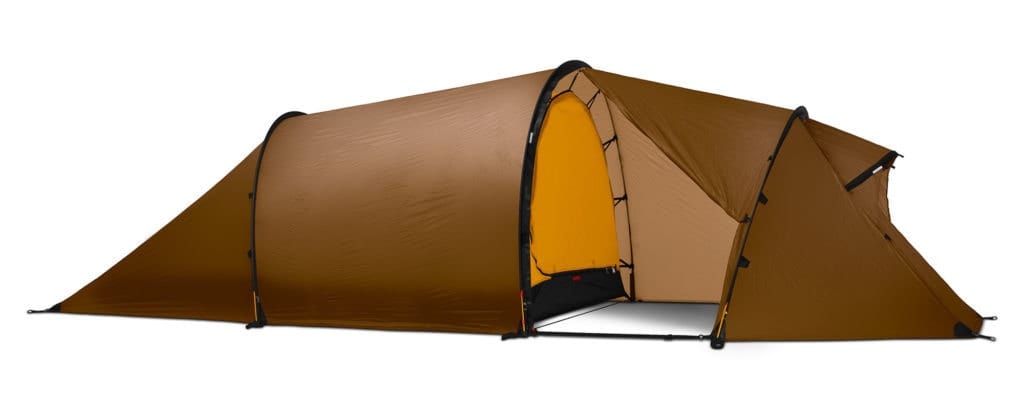
Your tent will be your home for most of your trip. If it is going to last a while, you’ll want a comfortable, reliable home to live in.
It should be lightweight, small when packed, and as big as possible when mounted. Having wide vestibules is very important to store your gear.
Tents can be free-standing (no need to pitch it to the ground), half-free-standing (only need a few stakes), or not-free-standing (doesn’t stay up if not pitched).
We do suggest you absolutely avoid non-free-standing tents; it’s very common to find perfect sheltered camping spots where it’s impossible to plant a stake (or peg).
It may be concrete, wood, or whatever (like, for example, the magical gazebos of Korea or the porches of the Shinto Shrines in Japan). You can also find types of soil where pitching is particularly complex, such as hardened soil or sand.
We suggest taking a half-freestanding tent (you can use ropes to tie it to something), or, even better, a completely free-standing one.
Some people love to use hammocks for camping, if you are one of them do not forget to buy a sturdy carabiner.
Check our lists
> 17 best lightweight tents under 200$
> The Very Best One-Person Tents
Sleeping Mats for Cycle Camping
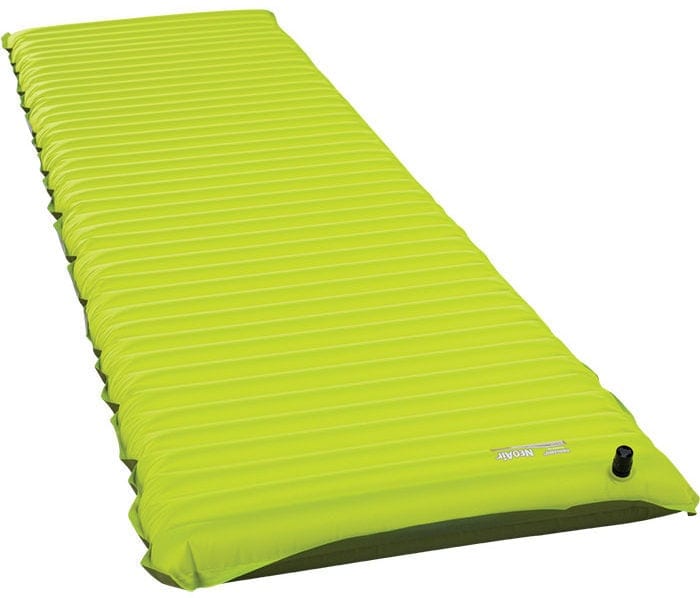
If the tent is your house, then the Sleeping Mat is your bed, since any type of camping cot is out of the question for bikepacking. It’s very important to get proper sleep when your body is under continuous effort, as in bicycle touring.
Self-inflatable mats are the most common choice and, indubitably, the very convenient option, though inflatable camping pads are usually lighter and more compact.
There are dozens of brands out there. Thermarest is the most popular; rigid camping mats are very bulky but eliminate the risk of puncture and give peace of mind.
Sleeping Bag
The quality of the sleeping bag you’ll need strongly depends on the temperatures you’ll face. There are very cheap, compact, and lightweight sleeping bags that are good for temperate climates.
If you plan to camp in colder outdoor temperatures, it is very important for your survival to invest a little more in this item.
The lower the temperature, the more expensive the sleeping bag. If you are on a budget but do not want to give up quality, here are the top 10 sleeping lightweight bags under 100$
Torch (Flashlight)/Headlamp
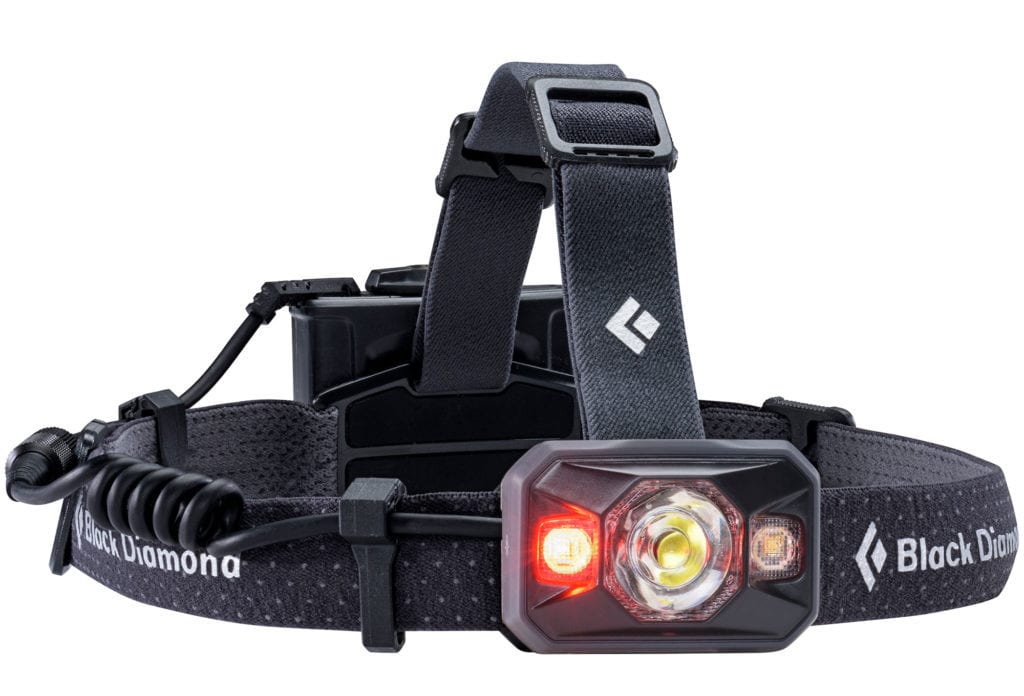
Unless you’re a feline, you’ll need some help to see in the dark. Headlamps are definitely the best solution, as they leave your manipulative limb free to manipulate whatever.
Check our Camping Headlamp Buying Guide
Knife
A knife has so many purposes that I won’t bother you or myself listing them. A high-quality folding knife or a classic Swiss knife is what you need.
Not-So-Essential Camping Equipment for Bicycle Touring
Sleeping Liners
A sleeping liner is a thin sheet that can add some warmth to your sleeping bag or be used when it is too hot for a proper blanket.
They are lightweight and do not take up much space, a great solution for added versatility to your sleeping gear.
Cooking Stove for Bike Camping
We cooked for 2 years using a very basic DIY alcohol stove made out of a beer can, you can make your own for free, there are plenty of sophisticated DIY stove projects on this beautiful website.
If you want something more professional, MSR, Jetboil, and Primus make nice multifuel stoves.
Cooking Pan
What’s a stove without a pan? There are many solutions on the market for cooking sets. A windscreen is fundamental for cooking outdoors when the wind is an annoyance.
Kitchen Tools
Whether it’s a fork, a spoon, chopsticks, or your hands, you must find a way to deliver the tasty meal you just cooked to your mouth.
Camping-specific tools are cool and make for perfect gifts for your travel partner, but you could also just bring a fork and a spoon from home, of course.
Vacuum Flask
Nice to keep your coffee hot, or your iced tea icy. Simple as this, better than a normal cycling water bottle. Also, if you want hot coffee, maybe you should consider a portable coffee maker.
Water Filter
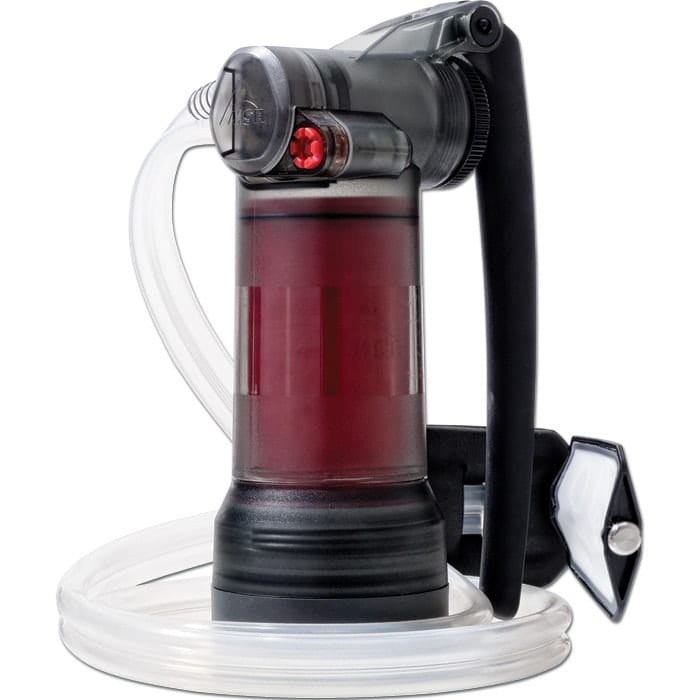
A water filter is something you may use very rarely, but it’s a true lifesaver. If you’re going to travel in densely populated areas, you probably don’t need that. But when going to places like Kazakhstan, you’re going to love it.
We have the wonderful MSR Guardian; it’s incredibly slow but allows you to literally drink from puddles. Cheaper options are LifeStraw or Platypus.
Learn more
> The 10 Best Travel Water Filter and Purifiers for Cycle Touring, Bikepacking, and Hiking
More Bike Camping Gear
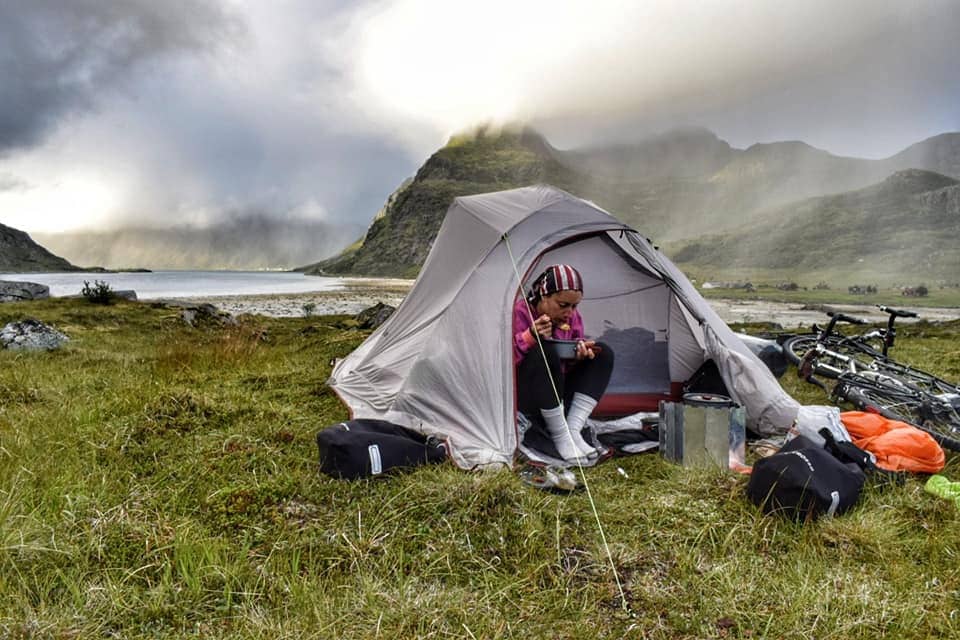
Of course, that’s not all you’ll need for your next cycle camping trip; there’s a lot more to be carried along with you, especially if you’re going on a long bike trip.
Have a look at our compact
> Bikepacking Gear List! The Ultimate Cycle Touring Packing List
Cycle Touring Essential Gear List
What gear should I bring on a bicycle trip? The choice of the gear really depends on what kind of trip you are planning: are you going to ride the Tibetan Plateau in winter? Are you going to travel to Southeast Asia? Or your plan is an exploration of Europe?
So, if you don’t plan an extreme expedition, our advice is not to worry too much about the gear.
If you’re on a budget, don’t invest too much money in equipment; save it for the trip instead. You can travel on an old refurbished mountain bike, use buckets as panniers, and get a cheap tent.
Quality gear, though, is an investment that could last a lifetime or at least several touring years. So, if your wallet isn’t crying, consider the motto: “You get what you pay for.”
Tools and Spare Parts to Bring on a Bicycle Expedition
When you’re out bike touring for a long while, you want to be able to fix all the more common failures that can happen to your bike.
While some more complex issues may need the help of an expert mechanic (or at least a workshop), flat tires, broken spokes, gear regulation, wheel turning, brake fixing, and pad replacing, and bolt tightening are the kinds of stuff you’re most likely to face when out touring.
Most of them are not hard at all (well, tuning a wheel is not easy), and you can deal with them yourself (better say that sometimes you must). Read more…
Electronic Equipment to Bring on a Long-Haul Bicycle Expedition
We don’t need to go back as far as the days of the pioneers of bicycle touring; just 20 years ago is enough to find ourselves stripped of all the electronic stuff we are now so used to.
Some people, even nowadays, enjoy the old style, a way to be more in touch with nature and take a break from the stress of the modern world.
All these electronics, though, give bicycle travelers a new set of possibilities that can simplify and also improve the bike touring experience.
Shoot great videos and pictures, stay in touch with your relatives and friends, always know where you are, and even work remotely while traveling.
We put together this list of gear to help you think about what you may need for your next bicycle expedition. Read more…
Bicycle Touring Clothing Essentials
The choice of clothes to take with you while bicycle touring is strongly dependent on the weather and climate you’re going to cycle.
If, like most bike tourers, you plan to ride and camp mostly at temperatures above 0°C (32°F) don’t invest too much money in clothing.
Most of the time, wearing ordinary sports clothes and maybe one or two bike jerseys will be just fine.
We put together this list of gear to help you think about what you may need for your next bicycle expedition. Read more…
Have a look at
- The Basic Bicycle Accessories for a Long Haul Bicycle Trip (start here)
- Tools and spares to bring on a bike trip
- Electronic Equipment to Bring on a Long-Haul Bicycle Expedition
- Bicycle Touring Clothing Essentials
- The Safest Bicycle Helmets – Rated by a Scientific Study
- 23 best bike touring panniers compared
- The Best Online Stores for Bicycle Touring and Bikepacking
- 17 best handlebar bags compared
If you’re looking for a bicycle
- 15+1 Best Bikepacking Bikes in 2026: Gravel, Touring, Plus, MTB Hardtail, Fat, Full-Suspension & Folding
- What’s the Best Type of Bike For Touring and Adventure Cycling? 7 Best Bikes for Cycle Travel
- 18 Great Touring Bikes Under 2,000$
- 21 Best Touring Bicycles Under 1,000$
- 10 Great Women-Specific Touring Bikes
- Gravel Bike Touring – The Why and the 6 Best Gravel Bikes for Touring and Bikepacking
FAQs About Bike Camping
Where do you keep your bike when camping?
Unless you have a tent with a vestibule big enough to store the bike, park your bike as close as possible to your tent. Possibly tie one of the wheels to the tent with a thin rope, so you’ll notice if someone tries to move it.
How do I prepare for a bike camping trip?
Bring some food and enough water, a flashlight or headlamp, a sharp knife, warm clothing, and a complete camping sleeping system (tent, mat, sleeping bag). Let go of your fears and enjoy communion with nature.
Found it Useful?
Subscribe to our Newsletter and Follow Us on Social Networks!