

Last Updated on 14 January 2026 by Cycloscope
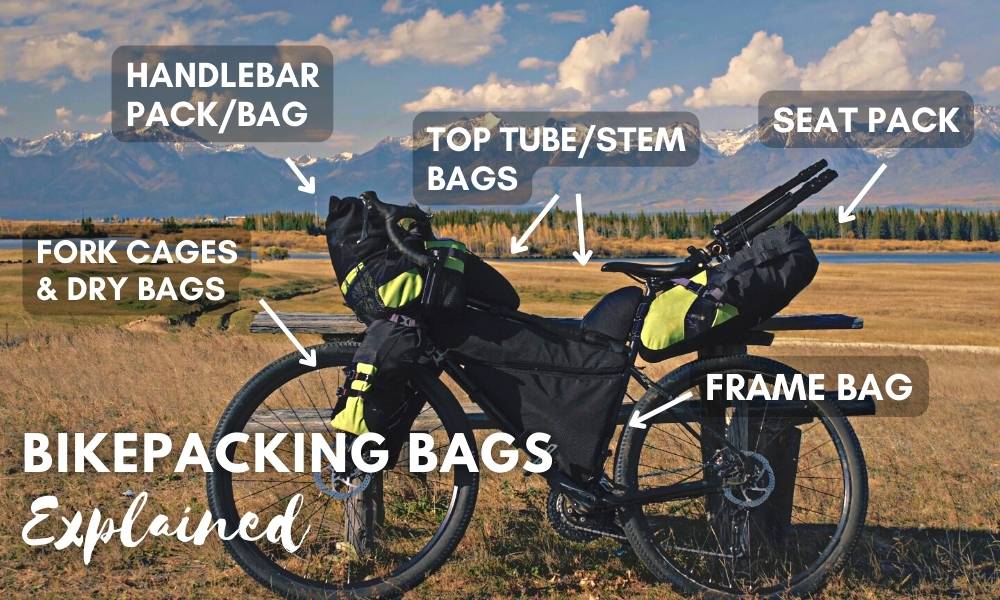
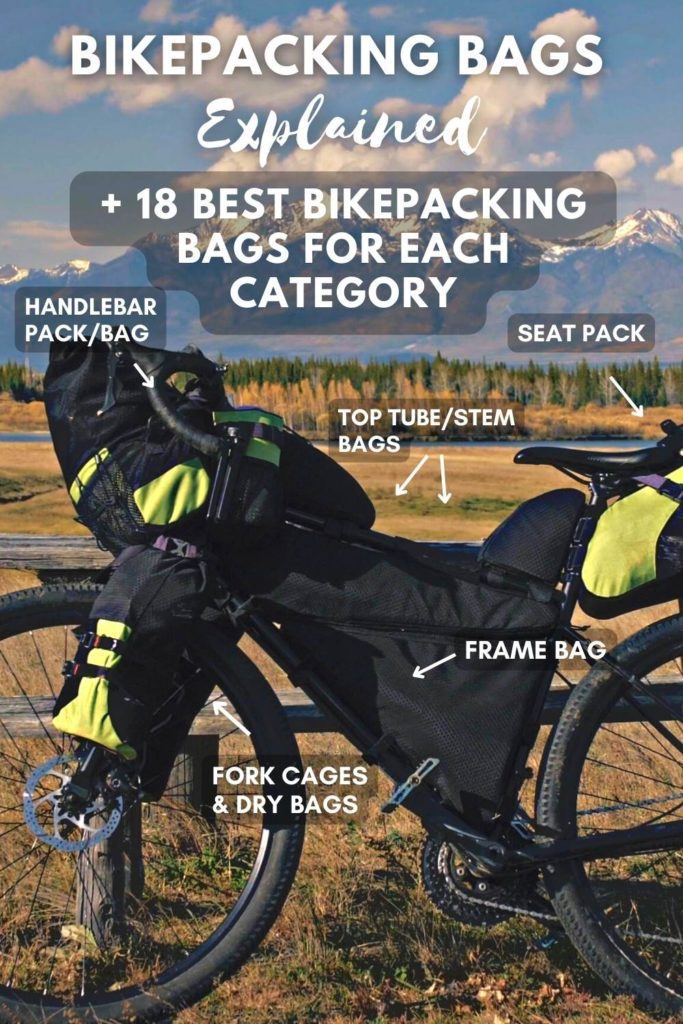
All the different types of bikepacking bags – explained!
+ The Best bikepacking bags for all budgets, cherry-picked for each category from cheap to the top!
Seat Packs / Handlebar Bags / Frame Packs / Top Tube / Fork Cages and Dry Bags/ Backpacks /
What are the best bikepacking bags? In this article, we’ll go through all the types of bikepacking bags, give our opinion on what to pack in each bikepacking bag in your kit, and provide you with our top 3 for each category.
Disclosure: Some of our articles contain affiliate links. This comes at no additional cost for you and helps us keep this website up and running. (as Amazon Associates we earn commission from qualifying purchases)
How we compile our gear guides: during the almost 10 years of cycloscope.net our team personally tested dozens of similar pieces of gear. For what we can't test personally, we involve other people in the cycling community to give their feedback and opinion about gear they have used. Our decade-long experience in bicycle touring enables us to find the key cons and pros of every product we mention.
In traditional-style bicycle touring, the luggage is stored mostly in lateral bags called bike panniers. Those need a rack to be hung onto (a rear rack, a front one, or both), so they inevitably make the bike-rider system much wider.
But then touring changed, with the introduction (or maybe the re-invention) of the bikepacking setup and the desire to go more off-road.
Although some use “bikepacking” to refer to off-road cycle touring, that’s not really correct. Bikepacking is a bicycle setup that offers great advantages both on tar and off-road.
Advantages of Bikepacking Bags
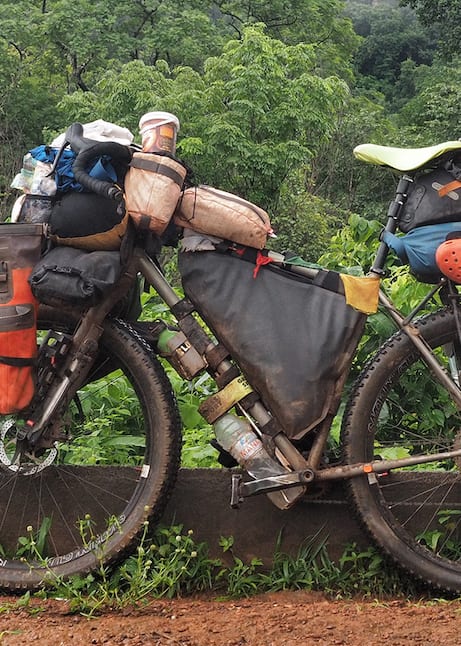
The bikepacking style is indeed modular; it uses a combination of specific types of bags properly designed not to widen the rig’s profile.
By using every available space within the bike frame, bikepacking bags let riders tackle the narrowest single tracks without worrying about balance or obstacles.
As we’ve seen, what really defines modern bikepacking is the kind of bags used. Bikepacking uses specific bags that don’t need racks and are designed to attach to specific spots on the bike; since bikes are all different, bikepacking bags are less universal than touring panniers.
That’s why we see a lot of small brands making custom bikepacking bags in small factories, and sometimes even in their garages – this is a great thing about bikepacking!
Bikepacking bags can be used differently according to your bikepacking style. Styles are, of course, not codified, but we identify these four broad categories:
- endurance races and long-distance ultra-cycling
minimal setup [seatpack, top tube bag, handlebar] - mountain-bike camping
requires camping gear [seatpack, handlebar bag, half-frame bag, top tube] - credit-card leisure bikepacking holidays
road bike or gravel, minimal setup [seatpack, half-frame bag, top tube] - expedition bikepacking journey
requires more gear [all bikepacking bags + panniers/backpack]
Let’s go through all the categories of bikepacking bags, our favorites in each, and some resources to explore more and find the best bikepacking bags for your tour.
The Best Bikepacking Bags In A Nutshell
- 1. Seat packs
Attached to saddle and seat post [up to 20l]
Best ones: Ortlieb, Rockbros, Blackburn - 2. Handlebar pack/bag
Mounted on the front hand of the handlebars [up to 15l]
Best bags: Ortlieb, Revelate, Rockbros - 3. Frame Bags
Inserted in the diamond of the frame [up to 14l]
Best ones: Ortlieb, Moosetreks, Revelate - 4. Top Tube and Stem Bags
Locked on top of the top tube, near the stem or the seat post, can mount 2 [up to 5l x 2]
Our favorites: Blackburn, Topeak, Revelate - 5. Cargo Cages and Dry Bags
Attached to the front or rear fork eyelets [up to 16l x 2]
Best ones: Blackburn, Salsa, DOM Gorilla - 6. Backpacks
On your shoulders [up to 20l]
Best backpacks: Evoc Trail, Camelback KUDU, Camelback Octane
1. Seat Packs
- Attached to saddle and seat post [up to 20l]
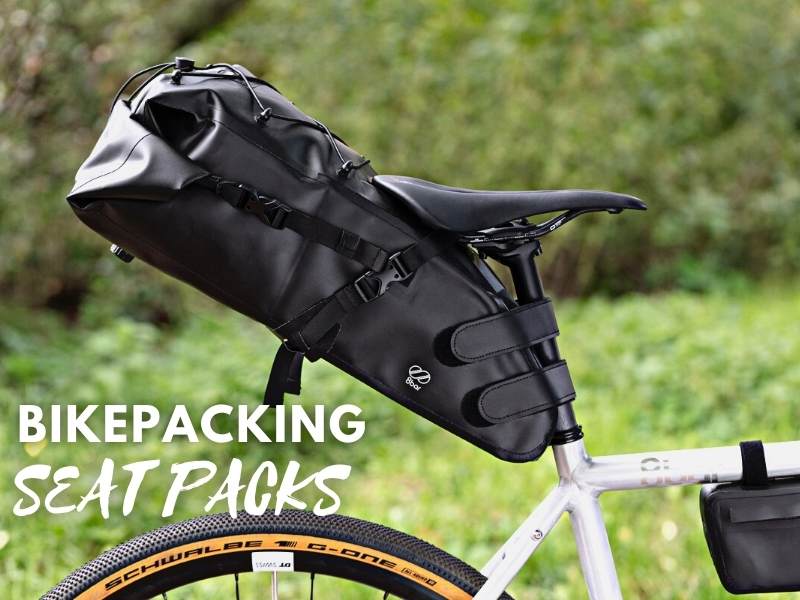
Old-style saddle bags gone oversized is the concept behind bikepacking seat packs. This particular type of bikepacking bag is an essential part of a bikepacking set-up.
Bikepacking seat packs are large enough to store a minimal bikepacking kit for a short solo trip without the need for additional bags.
A good seat pack should be totally waterproof and solidly anchored to its mounting points, to prevent it from swaying from side to side.
Backpacking saddle bags usually feature external straps and cords to secure additional gear, great for shoes and a raincoat.
Please be extra careful when packing a large bikepacking seat pack. Make sure it is packed tightly and place the heavier items closer to the seat post to avoid the risk of it sagging and wearing on the rear tire.
Pros & Cons of Bikepacking Seat Packs
+ Large volume [up to 20L]
+ Aerodynamic profile
– A higher center of gravity
– Prone to swaying
Bikepacking seat packs are ideal for storing camping gear and spare shoes
Learn more about
> 12 Best Saddle Bags in 2026. Road, MTB, Gravel, Bikepacking
Our favorite bikepacking seat packs:
Ortlieb Seat-Pack Saddle Bag [16.5 L]
Best bikepacking saddle bag overall
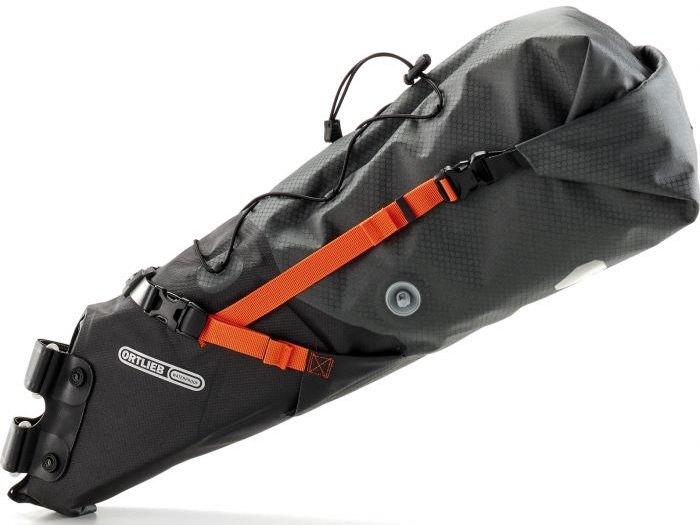
- Maximum capacity: 11 lbs/5kg
- Note: In order to meet IP64 waterproofness standards, the closure must be rolled 3 – 4 times
After a few years of ignoring the bikepacking market, Ortlieb dove straight into it with a line of products whose quality stands firmly in the top category. Nothing less to expect from what has been the best bike bag brand in the world for a long while.
The Ortlieb bikepacking seat-pack has a variable volume that ranges from 8 to 16.5L, thanks to the roll-top closure. An air-release valve easily purges the bag of trapped air, allowing for tighter compression.
The materials are lightweight yet abrasion-resistant polyurethane-laminated ripstop nylon, reinforced with extra heavy-duty fabric near the mounting points. The rigid polyethylene inner stiffener maintains the bag’s shape.
The hooks and straps have a firm grip on the seat post; they are stable and prevent the bag from swaying when properly packed. They are compatible with any seat post, including dropper posts.
The Ortlieb bikepacking saddle bag includes 3M Scotchlite reflectors for improved visibility in low light, an elastic cord on the outside to quickly stash light gear, and a daisy chain with 7 loops running along the underside of the bag, allowing a rear light to be fixed.
A great bikepacking bag that stays in place on rough trails, is pretty easy to pack, and features an impressive volume.
ROCKBROS Waterproof Bikepacking Seat Pack [14 L]
best budget bikepacking seat pack
The budget-friendly ROCK BROS bike saddle bag is a great bang for the buck. Made of 600D nylon and TPU waterproof film covering, this bag is sturdy and completely waterproof.
The total tail-bag capacity is about 14L, which lets you pack a light jacket, pants, and even your small sleeping bag and sleeping pad. It meets the needs of heavy commuters, bikepackers, and long-distance cyclists.
The saddle post adapters offer great versatility, allowing the bag to be mounted on almost any seat post. The only issue is that the clips that hook below the saddle might loosen over time, so you’ll need to tighten them to keep the bag from swaying side to side.
A standard elastic cord is included to help you attach extra gear to the top of the bag.
Blackburn Outpost Elite Universal Seat Pack & Dry Bike Bag
best harness + bag system for bikepacking
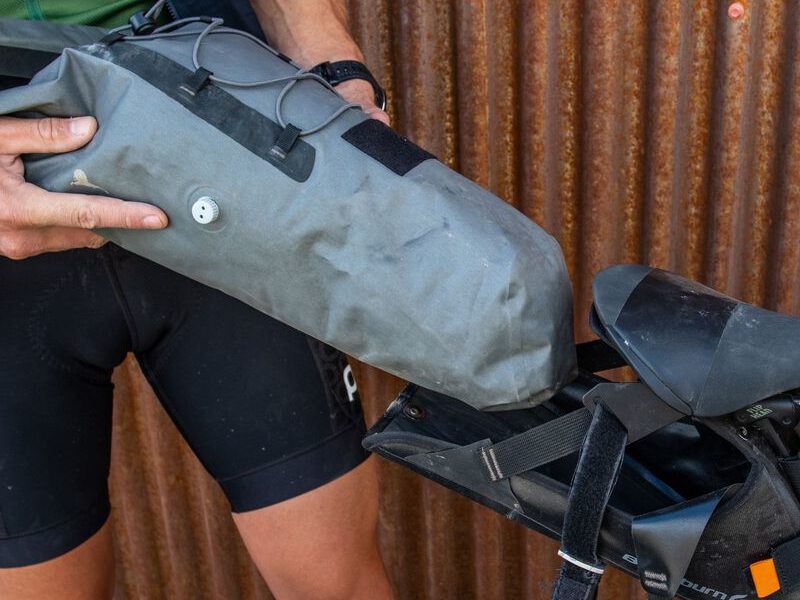
You’ll see quite a few Blackburn products here; that’s because they’re amongst the best bikepacking bags available nowadays.
The Blackburn Outpost Elite has a rock-solid mount and sturdy, smart construction that make it stand out from the seat-pack crowd.
The most interesting feature is its harness system: the bag is separated from the harness, allowing the user to remove the bag from the bike in a hassle-free manner.
The t6061 aluminum wing bolts securely clamp to the seat rails, ensuring your cargo won’t shift even on the roughest trails. The mount is also dropper-compatible.
The Blackburn Outpost Elite waterproof dry bag features a scuba-style air bleed valve so you can pack it as tight as you need, without worrying about leaks.
The seams are welded on both the inside and outside of the bag to ensure total waterproofness.
Learn more:
> 12 Best Saddle Bags in 2026. Road, MTB, Gravel, Bikepacking
2. Handlebar packs and bags
- Mounted on the front hand of the handlebars [up to 15l]
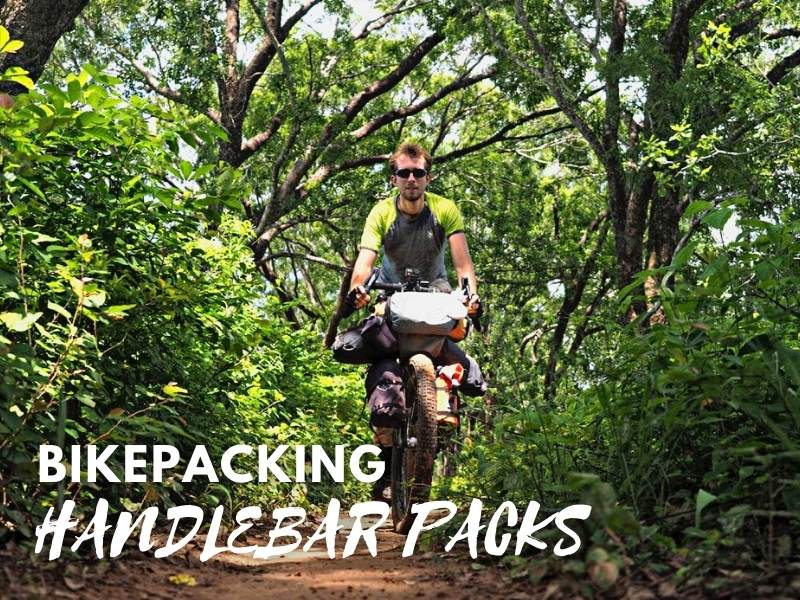
The front of the handlebars is a classic location to store gear, historically used in both military setups and classic bicycle touring.
Choosing the best handlebar bag for bikepacking is not easy. There are quite a few out there with pretty different characteristics: classic bike-touring handlebar bags are still great for minimal setups, but if you need to store more gear, at the cost of some accessibility, you’re probably gonna need a proper bikepacking handlebar pack.
With the rise of bikepacking, a new generation of handlebar bags has emerged, and more and more people are considering the handlebars a perfect space to store the bulk of their gear.
According to many bikepackers and cycle tourers, the load on the front helps with handling, and it’s much better than the load on the rear – I can say I agree with this for the most part (there should always be a balance).
The new generation of bikepacking handlebar packs is mostly roll-top waterproof bags that use a harness to attach them to the bars. They are generally used to store a sleeping bag or even a small tarp tent.
Pros & Cons of Bikepacking Handlebar Bags
+ Large volume [up to 15l]
+ Good center of gravity
– Difficult to access
– Non-aerodynamic profile
Bikepacking handlebar packs are ideal for storing your camping tent or clothes
Traditional handlebar bags are great for valuables such as passports, money, and a camera
Learn more about
> 21 Best Bike Handlebar Bags in 2026 – For Bicycle Touring and Bikepacking Compared
Our favorite Handlebar Packs:
Ortlieb Handlebar-Pack 15L
The best handlebar pack
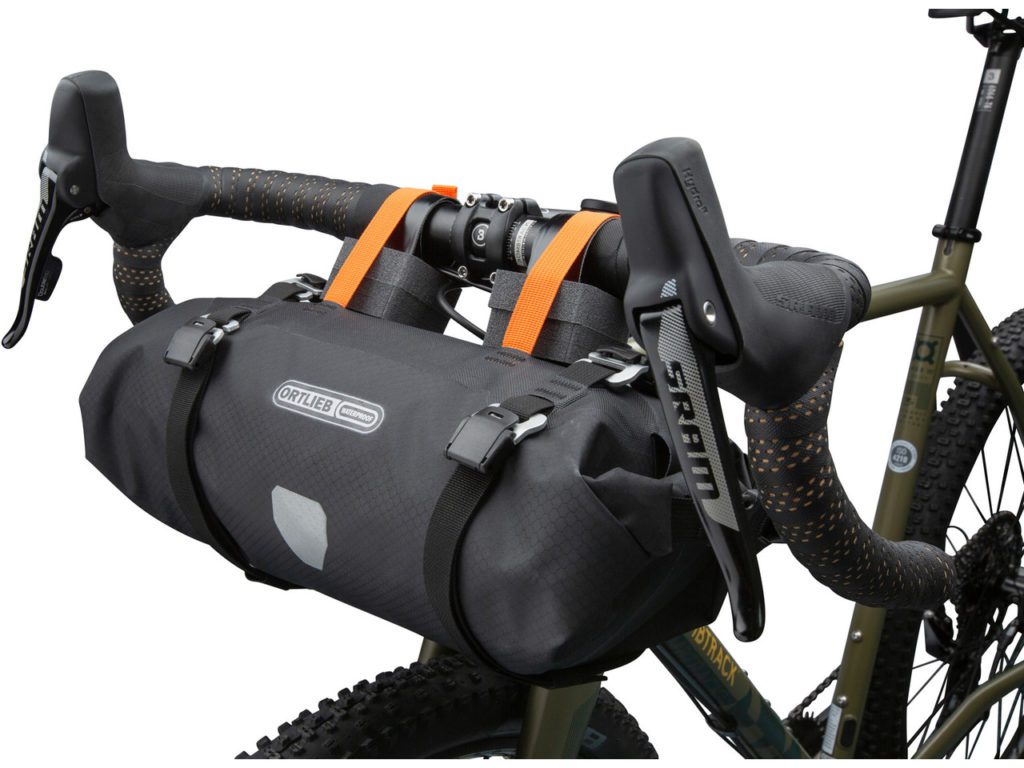
Looking for the best bikepacking handlebar pack to carry essentials for your weekend trip? Well, the Ortlieb Handlebar Pack is a no-fuss choice.
This brilliantly designed handlebar drybag from the bike Panniers leader brand has a massive 15-liter volume, enough to accommodate your sleeping bag, sleeping pad, and other small accessories.
When it comes to accessibility, the two-sided roll closures make everything in the bag easy to access. Moreover, you can easily attach extra equipment with the attached compression belts and drawstrings. If, in any case, you need more volume, you can attach the accessory bag to it.
Lastly, the pack’s mounting system includes spacers and two straps with extra-long velcro closures. These help in attaching the bag to the handlebars while maintaining balance and stability. It is also suitable for carbon handlebars.
Recently, Ortlieb released a new handlebar bag that can be used either as a stand-alone bag or as an extension of the handlebar pack. The Ortlieb Handlebar Pack QR is definitely worth a look!
Features:
- Material: PS21R
- Weight: 417 g
- Dimensions: 20 x 58 x 20 cm
- Volume: 15 Liters
Revelate Designs Sweetroll Handlebar Bag
great for expedition bikepacking
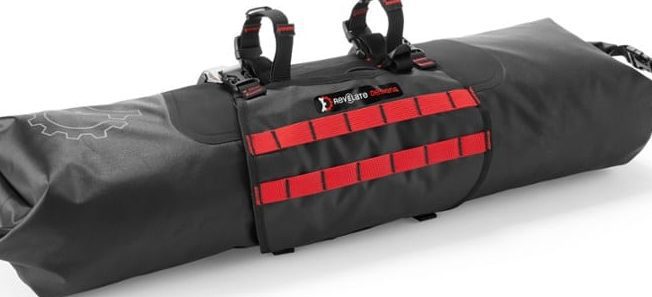
This handlebar bag is another great option if you are heading out on an extended bikepacking trip. Its various state-of-the-art features make it one of our favorites.
The waterproof design with RF-welded seams, the solid four-point bungee attachment, the fiberglass cross stiffeners provide strength to the fixing area, the adjustable “shovit” flap for carrying extra load, a modular front system with extra pockets for storage, and lastly, the dual entry ensures ease of access to all the stored items.
Revelate is a legend in bikepacking bags, with great frame bags, stem bags, and seat packs in their catalog.
Features:
- Material: Dual-coated 210 Deniers waterproof TPU laminated nylon; 420 Denier Dual Coated TPU
- Weight: 437 – 465 g
- Dimensions: 15 x 56 cm (H x W)
- Volume: 14-18 Liters
Rock Bros Handlebar Bag
cheap and convenient
Now, this is a product that has it all! Yeah, this awesome product from Rock Bros offers a variety of bags in different volumes. You can get anyone between 7 and 14 liters. Other than that, it provides the ultimate convenience of accessing your gear via its dual roll-down closure at each end. This provides instant, easy access at any time.
Moreover, the bag can be easily secured to the bike’s handlebars with 2 nylon straps that feature side-release buttons. The extra-large velcro straps with spacers let you add extra gear if needed.
This roll-down type bag also includes a small 6-liter add-on pouch. It can be used to store some necessary handy items like snacks, gloves, headlamps, etc. All these features make it a sure-shot choice for bike riders and explorers, thus the best bikepacking handlebar pack.
Features:
- Material: 600D Nylon + TPU waterproof coating
- Weight: 538 g
- Dimensions: 50 x 15 x 15 cm
- Volume: 7 to 14 Liters
- Includes an add-on pouch for storing small items.
Long velcro straps for attaching extra gear on the outside.
Flexible mount with adjustable height.
See more options here:
> 21 Best Bike Handlebar Bags in 2026 – For Bicycle Touring and Bikepacking Compared
3. Frame Bags
- Inserted in the diamond of the frame [up to 14l]
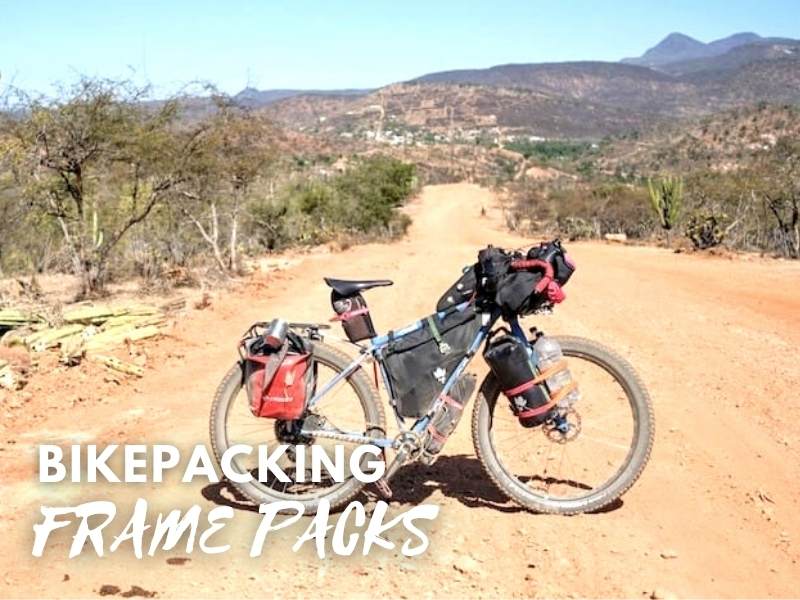
Frame bags fit inside the frame’s diamond; they are ideal for storing heavy items like tools and spares, or fragile items such as small laptops, tablets, or e-book readers.
Bicycle frame bags are not an absolute novelty; they have been around since before the term “bikepacking” was invented. The concept was used, for example, by the Swiss army during WWII.
In the 80s and 90s, small, triangular frame bags were a common sight on road bikes and hardtail MTBs alike. With the rise of bikepacking, though, they become as big as taking the whole of the inner diamond of the frame.
Bikepacking frame bags provide additional storage at a relatively low center of gravity, allowing the rider to pack heavier items there.
Bikepacking frame bags, though, require a bit more attention when purchased, compared to other bikepacking gear. That’s because bikes vary in geometry and size, so not all of these frame packs will fit.
Pros & Cons of Bikepacking Frame Bags
+ Protected location
+ Good center of gravity
– affects riding in case of side winds
– must find the right size for your bike
– takes the place of water bottles
Bikepacking frame bags are ideal for storing heavy or fragile stuff (tools, spares, electronics)
Check also
> The Best Frame Bags for Bikepacking and Cycle Touring
Our favorite Frame Bags:
Ortlieb Frame-Pack
Top capacity and waterproofness
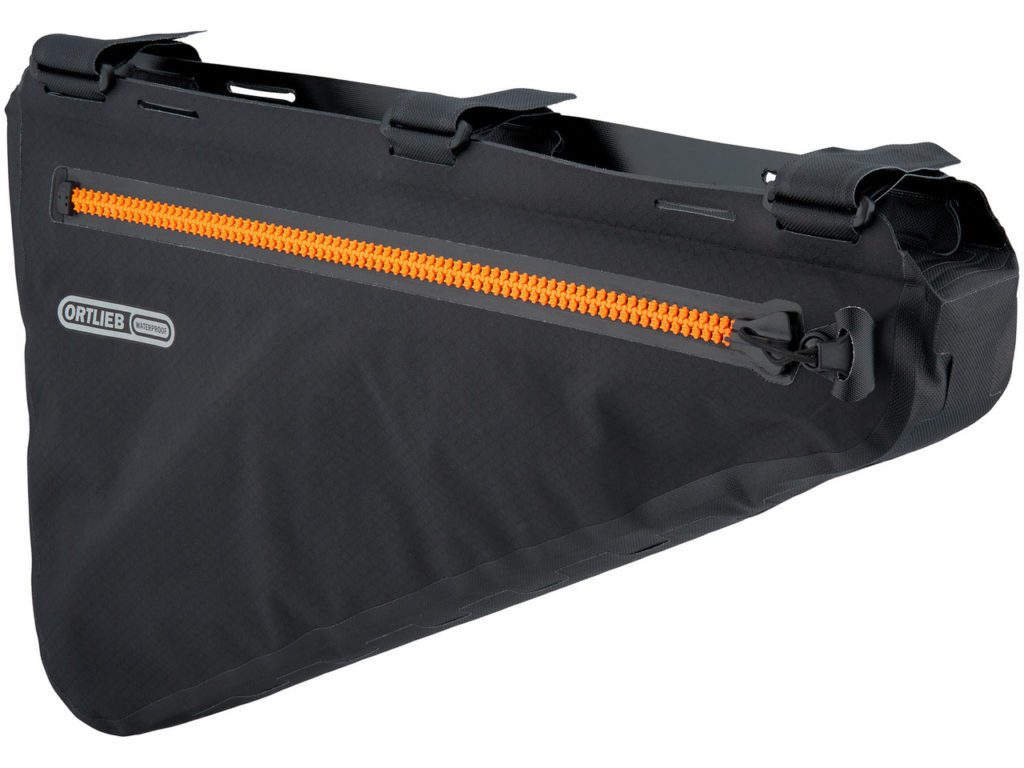
This frame bag from the legendary German brand comes in two volumes and two colors (black matt and slate), making it both spacious and stylish.
It is one of the best frame bags for bikepacking trips because it lets you store as many items as you need and look cool while doing so. Like all Ortleb products, waterproofness is total and reliable.
The center of gravity is low on the bike’s tube, meaning that you can even store heavy items in this Ortlieb, such as camping stoves and tools.
Featuring ultra-strong Velcro straps, nylon exterior, and waterproof zippers, this frame bag is ideal for long cycle-touring adventures. It can withstand any weather and is easy to mount, making it perfect for cyclists who are always on the go.
| Total Volume: 4 liters, 6 liters |
| Weight: 186g (medium), 232g (large) |
The Moosetreks Trail
Amazing durability
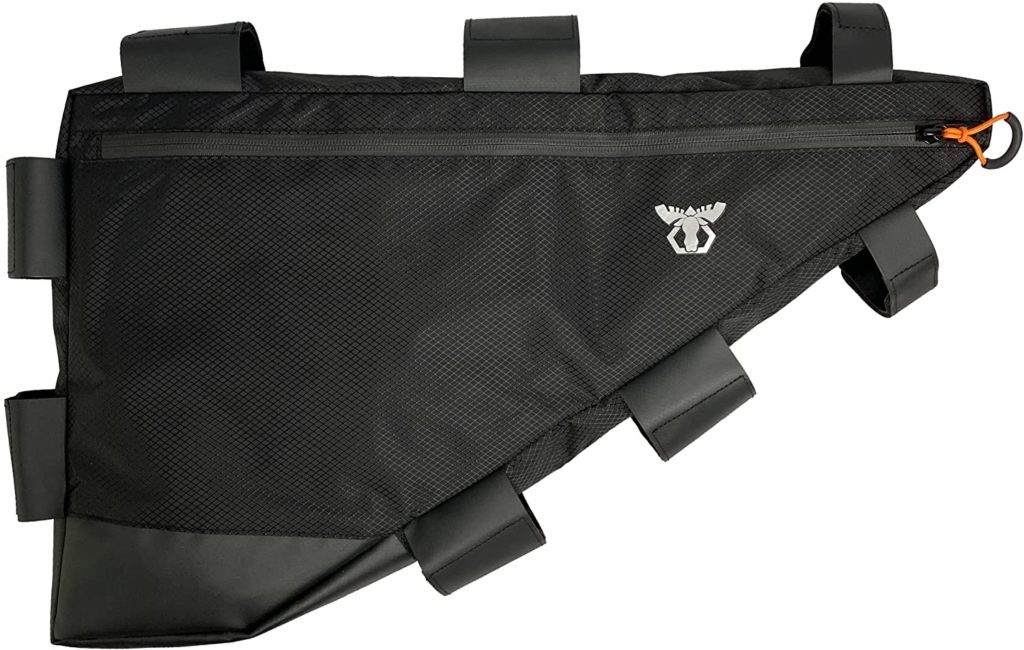
This cycling frame bag is another great budget choice for bikepacking. It’s durable and extremely water-resistant, made from a ripstop nylon laminated fabric with thermoplastic polyurethane coating.
Thanks to the bag’s six available sizes, the Moosetreks Trail fits on any bike frame and has an even load balance, perfect for long cycling trips.
This frame bag features velcro straps and a velcro divider, creating comfortable compartments in the Moosetreks. The Trail frame bag isn’t just perfect for long-lasting use, but also for e-bikes, since it can carry batteries and controllers, heavy items that fit in the Moosetreks Trail.
| Small – 6.5L, Medium – 12L, Large – 14L |
| Weight: 207g – 404g |
Revelate Ranger Frame Pack
a great bikepacking classic
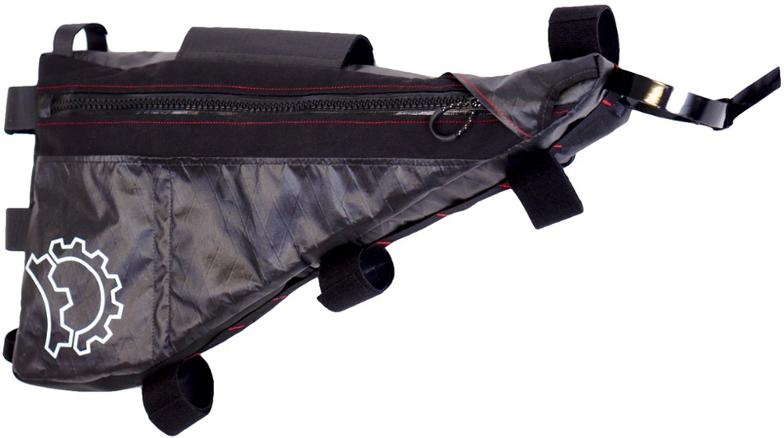
Another great add-on to your bikepacking set-up comes, once again, from Revelate Design. The Ranger bikepacking frame pack is coated with urethane tape for scratch resistance and near-total waterproofness (still, don’t throw it into the river).
The Ranger comes in four sizes with different capacities and measures, making it suitable for almost any frame. It boasts a wide main compartment with vertical dividers, an exit port for a hydration tube or battery wires, and an internal strap providing an attachment point for a pump at the top of the bag.
Easy to wash and incredibly lightweight, the large-size bag can fit a U-lock, a 14-oz water bottle, a pair of shoes, a phone, and a wallet, with room to spare for a few more small items.
| From 6 L to 10 L, (12 oz to 17 oz) |
4. Top Tube & Stem Bikepacking Bags
- Locked on top of the top tube, near the stem or the seat post, can mount 2 [up to 5l x 2]
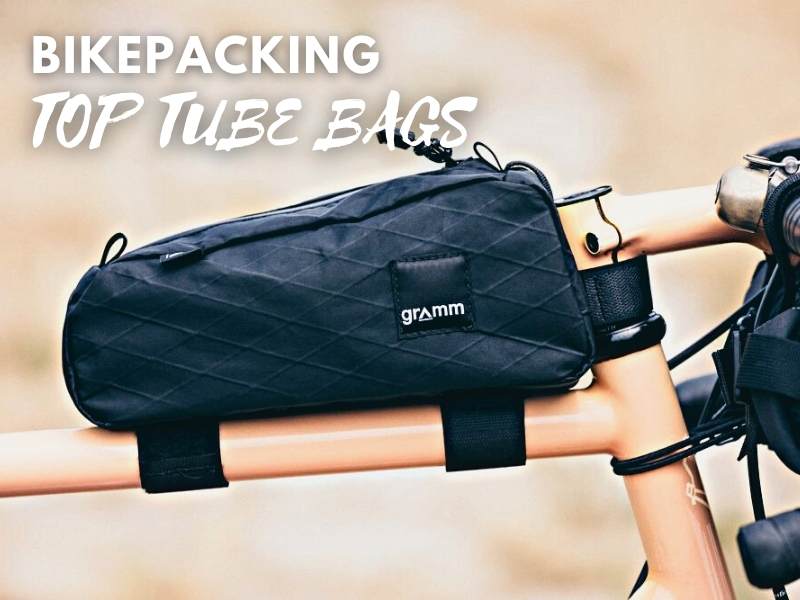
The top of the top tube is another underrated storage space that doesn’t get in the way of riding. A slick top-tube bag is a great place to store stuff, very accessible and comfortable to reach.
The whole concept of bikepacking involves using all the available space on your bike for storage, without compromising aerodynamics or stability. A top tube bikepacking bag is a great addition to a bikepacking bag kit. A top tube pack occupies the space just behind the head tube and is secured by 2 or 3 Velcro straps (or bolts).
Thanks to a teardrop shape reminiscent of 1970s dirt bikes, top tube bags are often referred to as ‘gas tanks’. It’s worth noting, however, that Revelate Designs coined and trademarked the name.
While the fabric of most top tube bags is waterproof, water does enter through seams when exposed to sustained rain, due to the stitching process used to assemble the product. Thus, we recommend using an internal dry bag for contents that must remain 100% dry.
Pros & Cons of Bikepacking Top Tube Packs
+ Ease of access
+ Unnoticeable
– small volume
Bikepacking top tube bags are ideal for storing stuff you might need at hand – snacks, a cell phone, and a small camera are good examples
learn more
> The 13 Best Top Tube and Stem Bags for Bikepacking, Road, MTB, and Gravel Riding
Our favorite top tube & stem bikepacking bags
#1 – Blackburn Outpost Top Tube Bike Bag
solid and versatile
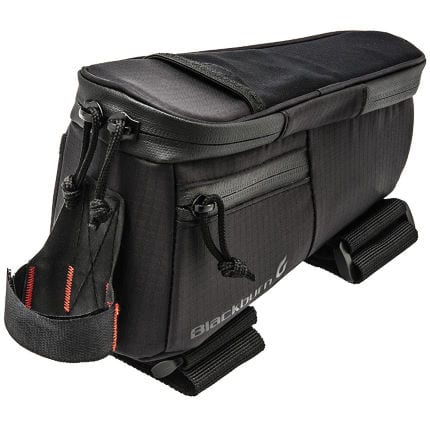
Blackburn offers something unique in its Outpost top tube bag design. They let you have a stronger fastening on the stem and tubes of your bike with the use of bolts. Plus, they went the extra mile by considering the most likely things you will store in their bag and segmenting the bag accordingly.
They consider what’s put in each of their bags and tailor the compartments to ensure a place for every piece.
You get a divider to split the interior compartment into two sections, and it’s a big room that accommodates a phone, wallet, keys, and a couple of snacks. It also comprised a mesh compartment on the top and two small pockets on either side – one zip and one uses an elastic band.
For a clean look and stout mount, two reinforced M5 grommets hold the bag to your front frame.
#2 – Topeak Fuel Tank with Charging Cable Hole
ease of access
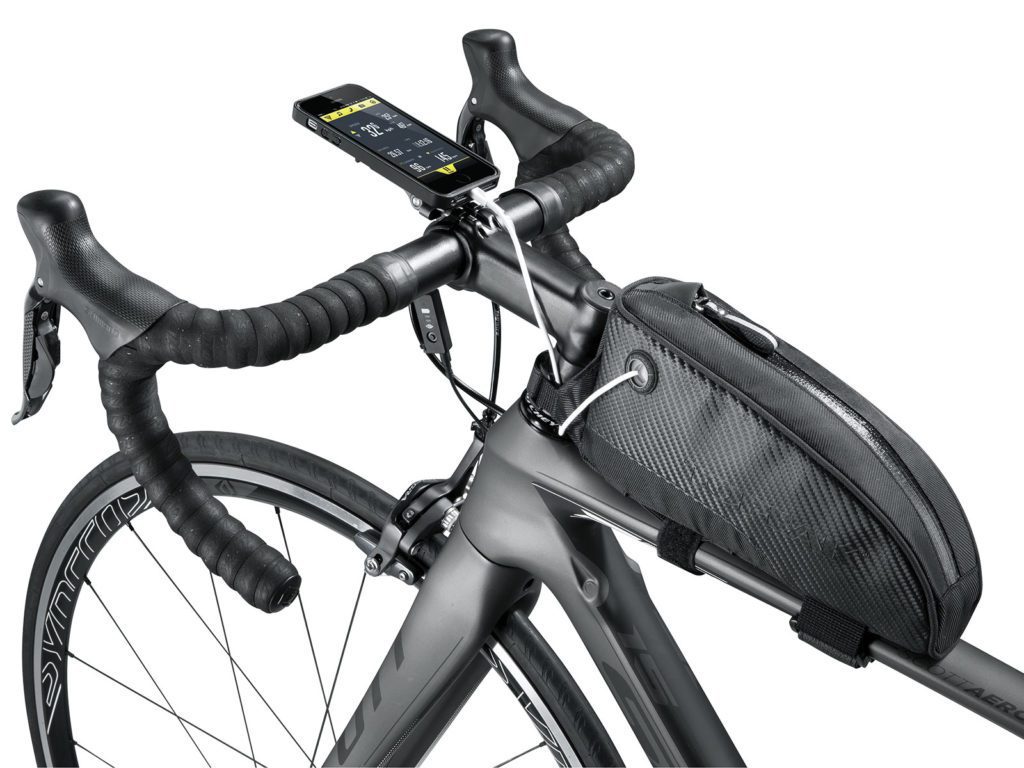
As a leader in the bike bags world, the Fuel Tank Topeak boasts a large storage room and a dedicated opening for earbud cables that shouldn’t go unnoticed.
Yopeak Fuel Tank’s one-handed operation helps you navigate squirrelly gravel without losing momentum, and the zip-down the middle makes quick, safe access easy. The bag remains solid even when fully open.
I rode a 100-mile century with the large one; it carried so much and stayed out of the way of pedaling. The big room lets you carry spare batteries, charging cables, a watch, a bike computer, a phone, a travel-size lotion, chafing cream, and a few packets of Gu.
To hold items like wallets, keys, etc., the Fuel Tank top tube bag features mesh pouches built into its inner walls.
There is a grommet built into the side of this Topeak bag to fit a USB cable or earbud cable.
#3 – Revelate Designs Mag Tank Stem Bag
Price: +/- $60
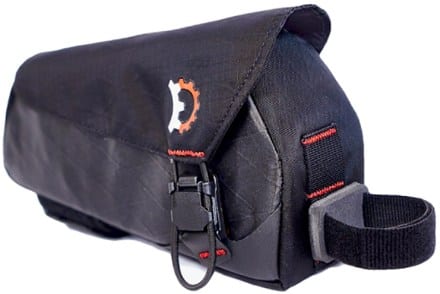
Revelate is a pioneer in the ever-expanding world of bikepacking bags. When testing the Revelate top tube storage, I was looking for a bag that stays out of the leg’s way and opens with a flip. The fact that it was sturdy and spacious was a welcome plus.
In one go, it held my phone, bike tool, tire levers, patches, and keys. It does not rub against the knee when pedaling because of its sleek design, and while riding, it has a magnetic latch for easy opening and closing. I adore it! It takes no effort and can be done in motion.
I was also surprised by how well this bag stays in place. It snugs tightly on the top tube while riding. It’s a bit pricey but well worth those few more bucks.
5. Fork Cages & Dry Bags
- Attached to the front or rear fork eyelets [up to 16l x 2]
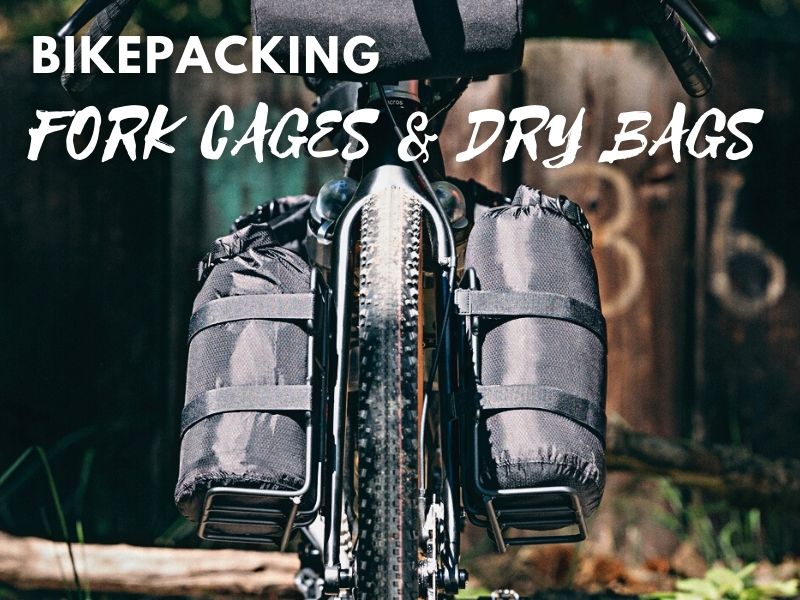
In the world of bikepacking, cargo cages have become the staple of fork-mounted luggage, taking away the place traditionally assigned to front pannier racks.
A concept invented by Salsa in 2010 with the Anything Cage, a bike cargo cage, is a utilitarian attachment that can be mounted on the frame or fork of your bike. It might be used to carry additional water or store gear (usually in dry bags).
Called also bikepacking front fork mounts, gorilla cages, or fork cages – they are similar to oversized bottle cages, but also able to hold a 6+ liter dry bag or other gear in a secure fashion by attaching it to the cargo cage via straps.
This way, the front fork has a decent cargo capacity without a rack. Some of the best bikepacking cages come with their own fork dry bags, like Gorilla Cage, Specialized Burra Burra, and Salsa Anything, but many kinds of bags can be attached to fork mounts.
Pros & Cons of Bikepacking Top Tube Packs
+ Lightweight
+ No rack needed
– requires a special braze-on on the fork
Bikepacking dry bags and fork cargo cages are ideal for storing camping gear, such as a hammock pad or sleeping bag. Spare clothes can also find a place here.
Check our dedicated article about
> The Best Bikepacking Cargo Cages & Fork Dry Bags – “Anything” Fork Mounts
Our favorite bikepacking dry bags & fork cages
#1. Blackburn Outpost Cargo Cage
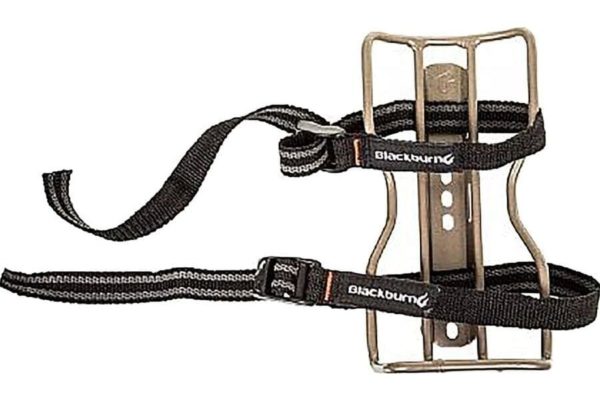
Pros
- Highly durable
- High weight capacity
- A simple attaching mechanism
Cons
- A bit heavy
Here comes the master of cargo cages. This brilliantly designed Blackburn bottle cage features a sturdy, durable construction that securely holds all your gear.
In addition to being exceptionally strong, the Blackburn Outpost cargo cage comes with straps. These are long enough to hold oversized dry bags up to 7L.
For attachment, the outpost cargo cage fits the bike frame or fork via its three mounting holes.
- Tube diameter: 6 mm
- Straps included: Yes
- Weight Capacity: 8.8 lbs
#2. Salsa Exp Series Anything Cage
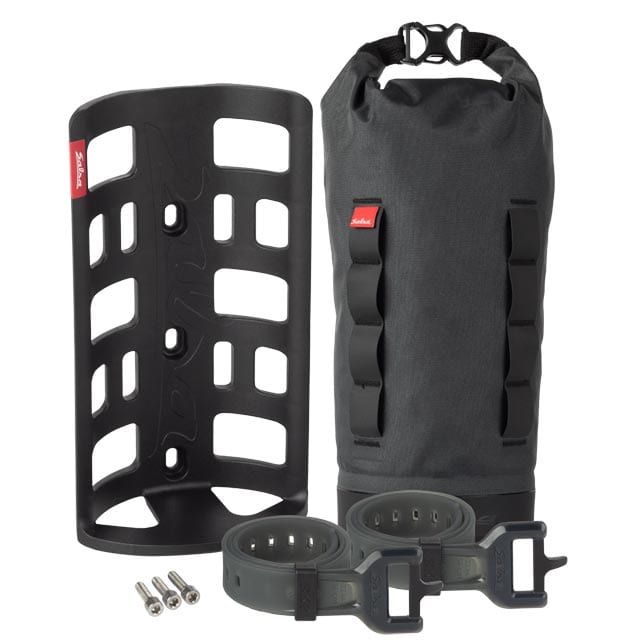
Pros
- Straps come included
- bag bundle
- easy to mount
- awesome durability
- lightweight
Cons
- Expensive
- low weight-bearing capacity
The inventors of the thing. In 2010, Salsa came up with this awesome anything cage for bike packing. This cage has probably been tested by bikepackers around the world more than any other, and it has rarely failed even the most extreme missions.
The glass-filled nylon construction is lightweight and provides immense durability, and can handle up to 3 kilograms of weight.
Moreover, this new Anything Cage comes with two EXP rubber straps that you can use to secure lightweight gears to your bike’s frame or fork.
- Material: Glass-filled Nylon, Rubber
- Weight capacity: 6.6 lbs
- Three-hole mounts
- Straps included: Yes
- Weight: 149 grams
#3. DOM Gorilla Cage II
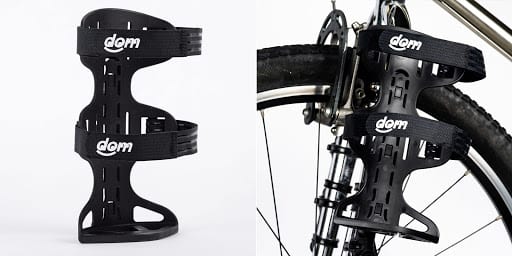
Pros
- Stays sturdy in cold weather
- Extremely lightweight
- Fit for sleeping pads, bottles, and dry bags
Cons
- Low weight capacity
The distinguishing feature of this cargo cage is its three-wrap system. These wraps perfectly secure your gear bags, dry bags, or water bottles with zero chance of dropping or moving.
Other than this, you can easily mount it to the fork frame of your bike with a simple slide-down movement (you first need to screw the base of the cage to the frame).
The cage is made from an engineering-grade polymer that makes it fit for even freezing cold weather. Thus, making it extremely sturdy.
- Material: Engineering-grade polymer
- Weight: 0.28 lbs
- Weight capacity: 5.5 lbs
- Wing Wraps: 3
6. Bikapacking Backpacks & Hydration Packs
- On your shoulders [up to 20l]
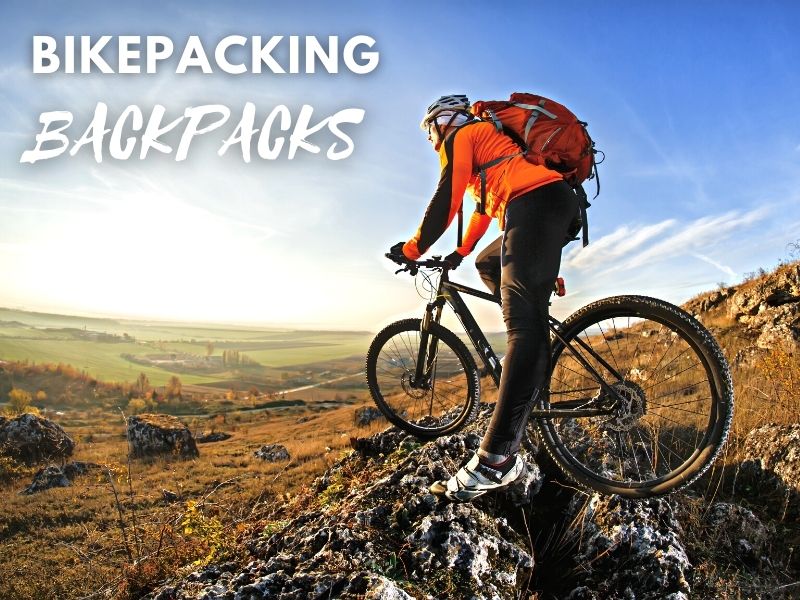
Although most bikepackers lean towards bikepacking bags, storing all your gear in a frame bag, a handlebar bag, a seatback, and some cargo cages might not work for a long-distance cycling trip – food and water, especially, can be very bulky to carry – that’s when you will need the best bikepacking backpack.
Cycling backpacks often feature a water bladder, a clever solution to storing water, while the rest of the backpack can easily be used to stash bulky food, rain gear, or whatever suits your setup.
On the other hand, serious bikepacking has spread all over with the advent of Enduro racing and some genuinely clever ways to carry spares and tools.
Sometimes, however, no matter how many tools you stow in steerer tubes or Velcro straps, you still need to carry a lot of stuff, and sometimes you need to carry a lot of stuff.
Pros & Cons of Bikepacking Backpacks
+ large capacity
+ water bladders
– not pleasant on the back and shoulders
– blocks perspiration
Bikepacking backpacks are ideal for storing food provisions and water
Our favorite bike backpacks and hydration packs
Evoc Trail Builder Performance Backpack [30L]
Best for trail building
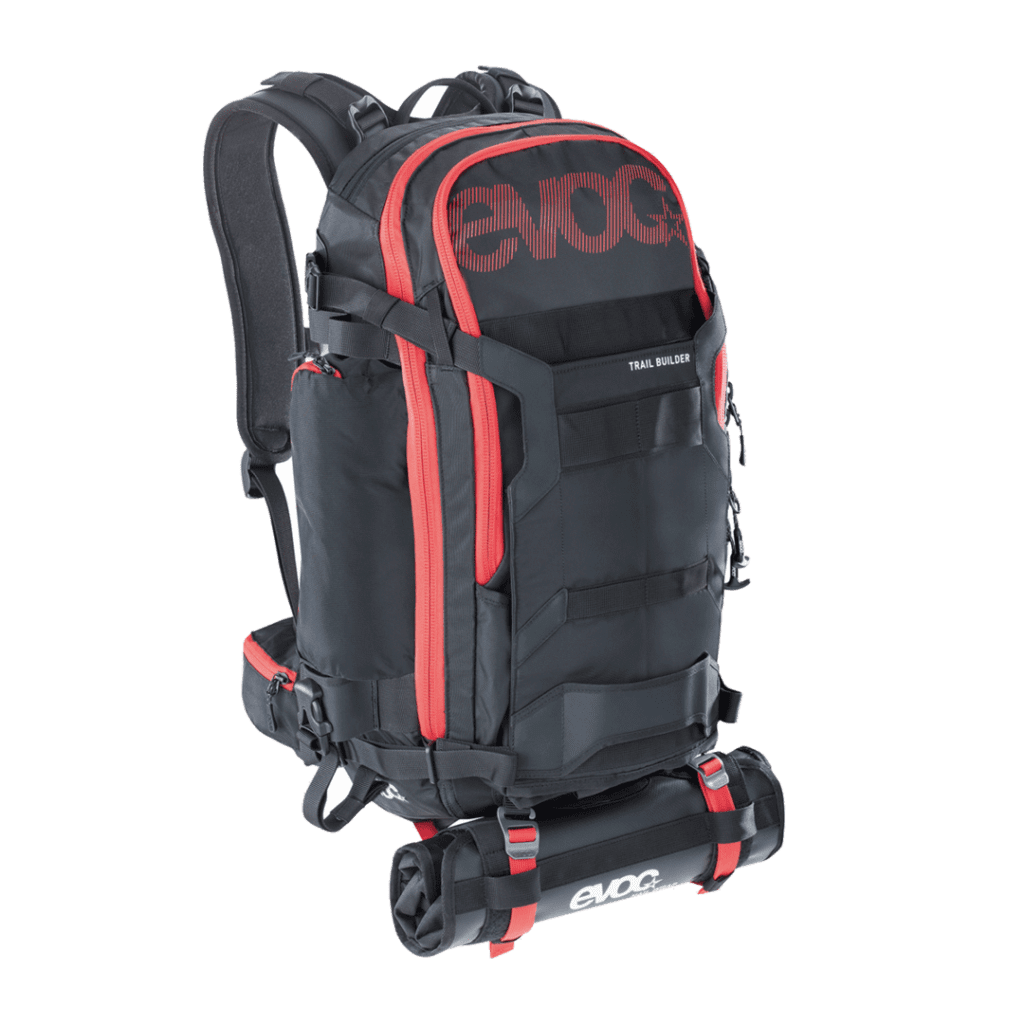
You can carry your trail-building workshop on your back with Evoc Trail Builder. The backpack, designed with trail builders in mind, offers a carrying system that provides balanced load distribution, making it ideal for comfortably transporting heavy loads.
Evoc Trail Builder is one of the best mountain bike backpacks for carrying your goods and food on trails with your mountain bike or gravel rig.
This large Evoc backpack sits securely on your back while you ride, unlike non-cycling backpacks that tend to wobble as you cycle.
In addition, it features a rear light tab and reflective strips to improve night-time visibility. While this cycling backpack comes without hydration bladders, it features a bladder pocket ready to take one.
CamelBak K.U.D.U. Protector 20 Hydration Pack [20L]
for full-suspension MTB camping adventures
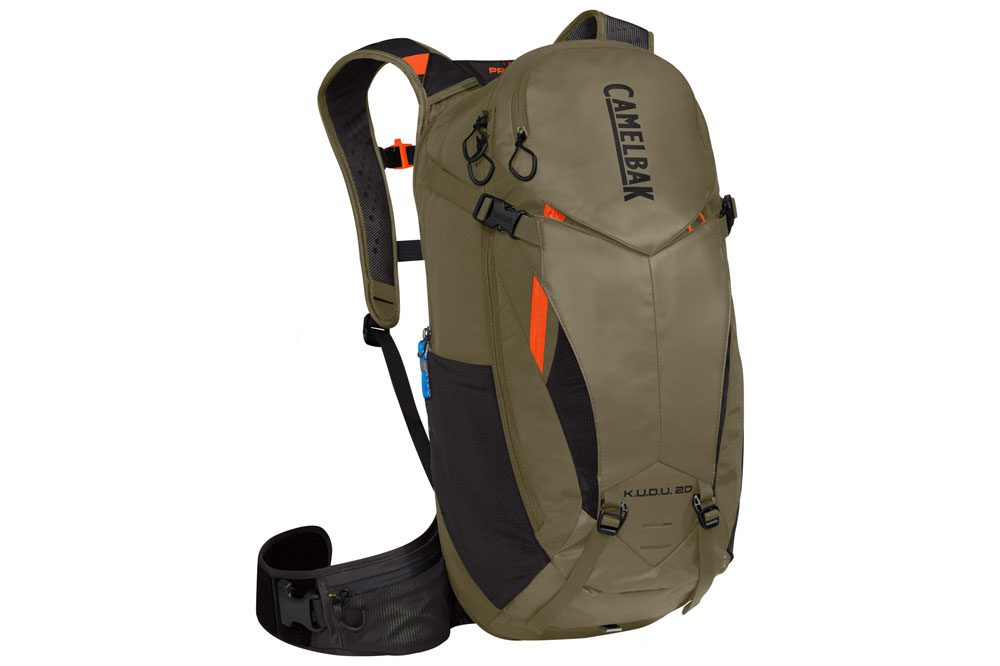
Awesome and spacious, CamelBak has many straps to secure it to your body and a built-in back protector. The full-back Level II protector shields you against minor injuries and absorbs impact in a crash. The pack has lots of pockets too. It includes a 3-liter hydration pack as well.
You can find a pack that ventilates better or weighs less than CamelBak, but you will hardly encounter one that fits as securely as it does. You can put snacks, spare tubes, a multi-tool, a hand pump, a first aid kit, and a light jacket with ample room to spare.
It fits great and looks even better.
CamelBak Octane 10 Hydration Pack [10L]
small and compact
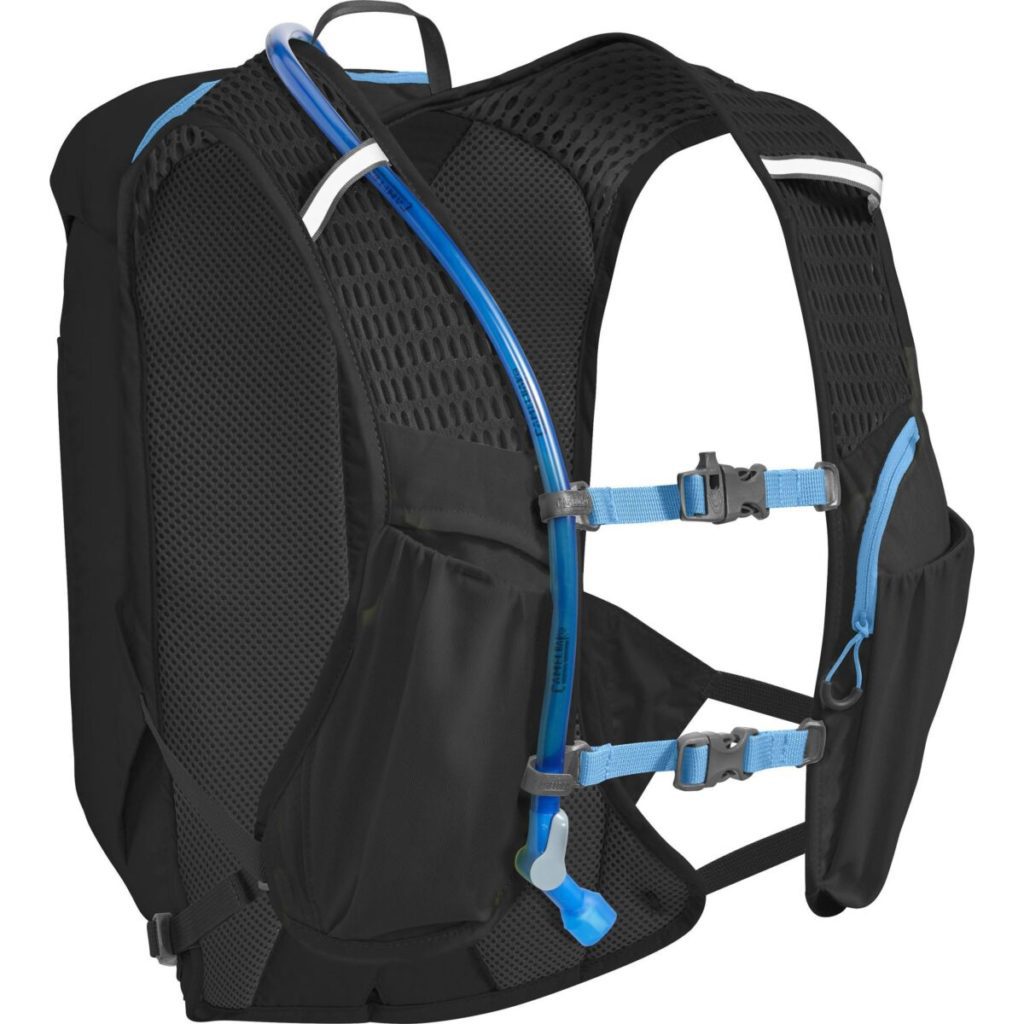
CamelBak ranks among the best MTB backpack manufacturers because it has no real shortcomings. It’s a little intimidating to adjust, but it feels like another part of your body once done. It doesn’t bounce or move around.
It’s light despite the 2L bladder. You will love the 2-liter water reserve, as it will help you avoid exhausting it during trail runs and longer Spartan races.
It offers a huge amount of storage, with the handy “snack pouches” on each shoulder strap and the backpack compartment itself. This means you can store things like energy gels and protein bars in the shoulder straps and a headlamp and your phone or keys in the back, and you rarely need to remove the pack even when you need to refuel during a run.
Learn more
> 13 Best Cycling Backpack: Mountain Bike, Commuting, Bikepacking
Check also:
> The best saddles for cycle touring and bikepacking
FAQs about Bikepacking Bags
What bags do you need for bikepacking?
For a minimalist, ultralight bikepacking setup, you could use just a setback, a top tube bag, and a handlebar bag or roll pack.
If you’re planning a self-sufficient trip or going long distances, you should also add a frame bag, fork cages, and dry bags to the setup.
Do you wear a backpack while bikepacking?
Cycling with a backpack can cause back pain and fatigue. Although most backpackers prefer not to wear a backpack, for some long-distance trips, a backpack is essential if you don’t want to use lateral panniers.
How do you pack food for bikepacking?
Rice, pasta, and other basic mealies can be stored at the bottom of a seat pack. Canned food and light stuff, such as instant noodles, are best placed in the frame bag or in dry bags mounted on the fork. Snacks to be consumed while cycling have their right place in top tube packs or handlebar bags.