

Last Updated on 14 January 2026 by Cycloscope
The best bikepacking saddles for cycle touring. The 11 most comfortable seats for women and men, reviewed and compared. The best Brooks & More
Let’s begin with the most important statement: there’s no such thing as the best bikepacking saddle or the best cycle touring saddle. The best bike saddle is the one that’s more comfortable for you, and you only.
Disclosure: Some of our articles contain affiliate links. This comes at no additional cost for you and helps us keep this website up and running. (as Amazon Associates we earn commission from qualifying purchases)
Among all the components of a bike, saddles are the most intimate and personal, and recommending a saddle to anyone is an almost impossible task.
For our first 20,000km, I cycled with a refurbished leather saddle dated 1936, and Elena with a cheap foam saddle. When we swapped to the super-hyped Brooks B-17, we were not happy at all, and even after many km and many different saddles, we still miss our first ones.
That said, in the cycle touring and bikepacking world, some saddles have become the staple, being used by thousands and thousands of bike adventurers every day – that means there must be something to them.
In this article, we’ll review the basic characteristics of the best saddles for bikepacking and cycle touring, the most commonly used ones, and the latest technological finds.
We’ll also try to give you advice on choosing the best bike saddle for your unique sit-bone shape.
Check also
> 11 Best Gravel Bike Saddles – Performance & Comfort for Long Rides
9 Best Touring Bike Saddles in a Nutshell
Best Brooks leather saddles
- Brooks B17 – most popular bike touring saddle
- Brooks Flyer – best touring bike saddle for an upright riding position
2 Best Brooks Cambium Saddles
- Brooks Cambium C17 – best bikepacking Brooks saddle
- Brooks Cambium C19 – best Brooks saddle for women
Best Non-Brooks Saddles for Touring and Bikepacking
- WTB Pure – great bikepacking saddle on a budget
- SMP Pro – the best touring saddle with a sloped point
- Chromag Trailmaster DT – great touring bike saddle for off-road riding
- Ergon SMC – best all-rounder cycle touring saddle
- Charge Spoon Saddle – best cheap touring saddle
The Best Brooks Saddles for Touring & Gravel Bikepacking
Cambium Vs Leather
Brooks is without any doubt the most popular saddle brand in the world of cycle touring and bikepacking – this historical brand has been manufacturing the finest leather saddles since 1866!
Nowadays, Brooks has two main lines of saddles: the classic leather saddles and the new Cambium Gamma, made from vulcanized natural rubber and organic cotton canvas.
The main difference between leather and cambium is that leather saddles “break in”, which means they slowly adapt to the shape of your bottom, thus becoming more comfortable the more you ride on them, this happens also with good-quality foam saddles.
Cambium saddles don’t break in, and although flexible, recreating the hammock-style elasticity of the leather, they retain their shape forever. That means if you find them uncomfortable, they are not gonna get better with time.
The advantage of cambium saddles is their waterproofness, lighter weight, high durability, and sleek look.
2 Best Brooks Leather Saddles
All Brooks leather saddles come in at least 4 versions:
- Carved – with a long cut in the middle, meant to relieve pressure from the perineum and increase airflow. My favorite version.
- Short – indicated for women and shorter riders
- Special – featuring hand-hammered copper rivets for an extended lifespan
- Softened – with treated leather, it is faster to break in but also to wear out
- combinations of the above
Brooks B17
The most popular bike touring saddle
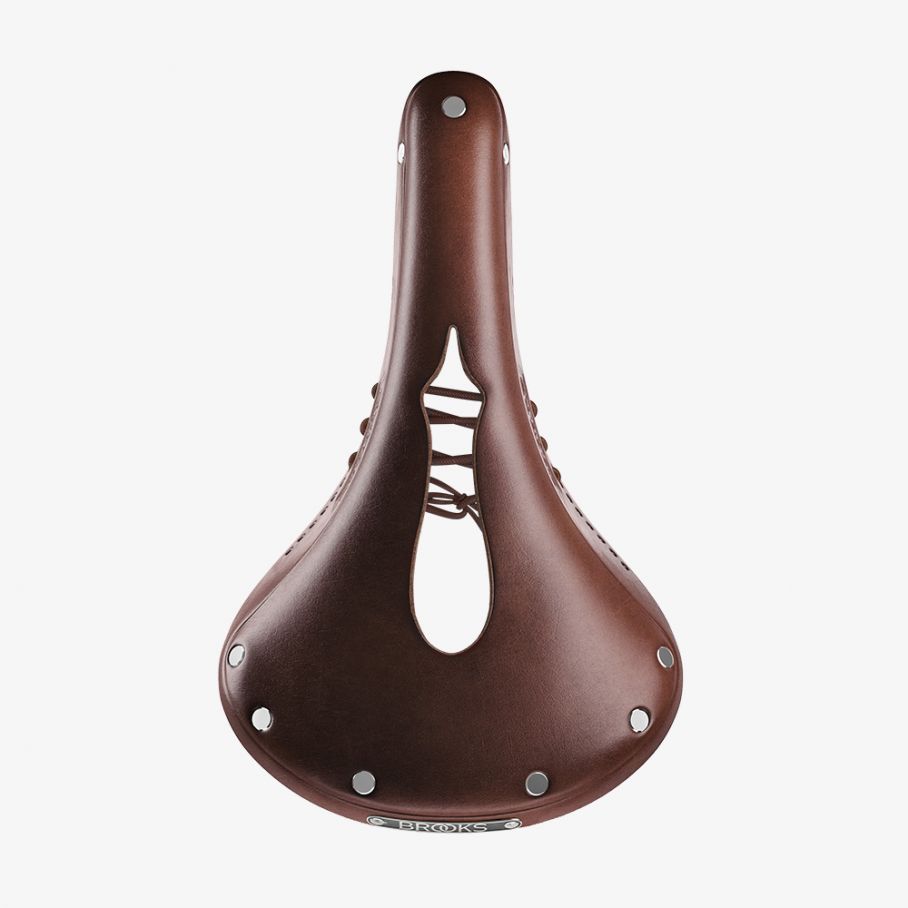
The classic of the classics, the B17 is definitely the most popular saddle in the bike touring world, and many agree that it’s one of the most comfortable bikepacking saddles.
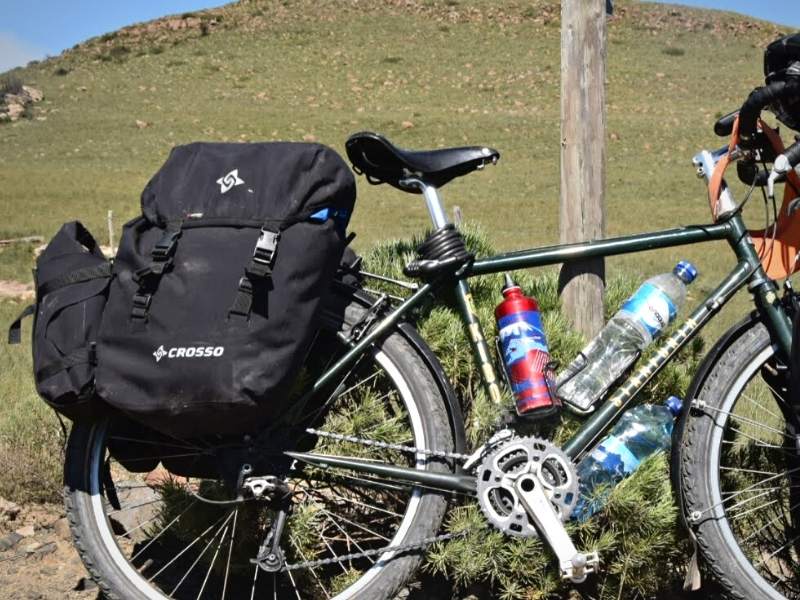
I’ve used a B17 on my Stanforth Kibo for the whole of my Northern Europe trip and for my crossing of East Africa, and I’ve been quite happy with it.
It definitely took more than a few hundred kilometers to break in, during which I experienced numbness and a pretty sore butt – but after that, it became one of the most comfortable touring saddles I’ve ever ridden.
Although some claim to feel great riding it even without padded bike shorts, that’s not the case for me – while I could ride my 1936 Royal Nord saddle for 7 hours without padding, I don’t enjoy the B17 unpadded for more than a couple of hours.
Leather Brooks saddles are very durable and can take a lot of abuse from the weather without wearing out. Just give them a small dose of Brooks leather cream (Proofide Dressing) once or twice a year.
What I had problems with was the tensioning screw, which mysteriously stripped and needed to be replaced. Tensioning is fundamental, as the leather keeps stretching even after years and needs to be tensioned every now and then.
The B17 comes in many versions. I’ve been using the standard one, but trying the carved one made me want to swap for that, a nice relief for the perineum.
The short version is also wider, and it’s the proper choice for women and folks with wider seat bones.
The narrow is more performative, dedicated to randonneur racers or competitive bikepackers, if you are looking for performance then the titanium version is your cup of tea.
Brooks Flyer
best touring bike saddle for an upright riding position
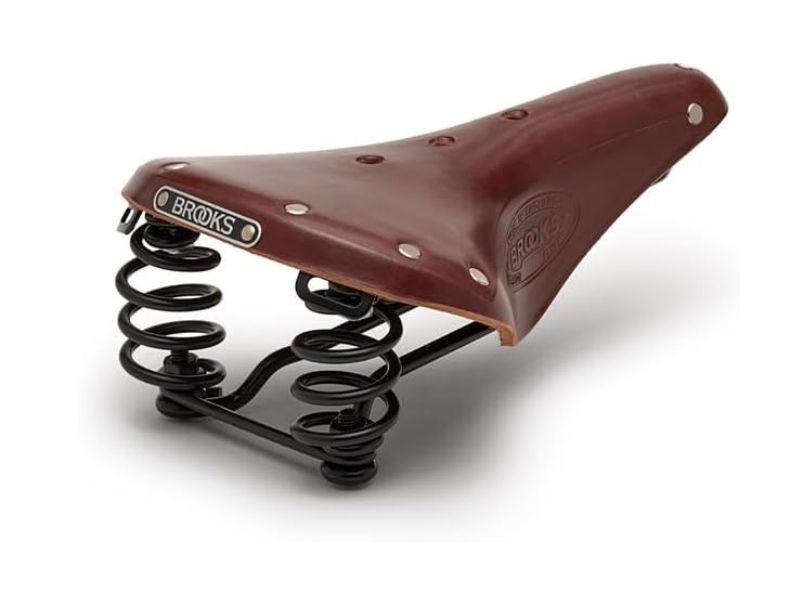
The Brooks Flyer is in all aspects a B17 with spring suspension. All the good and bad we said about the Brooks B17 in the previous paragraph apply to the Flyer as well.
The main difference is the springs, which make it heavier but also more comfortable and cushioned.
We recommend the Brooks Flyer for those who like a more upright riding position but still want to tackle all the most challenging off-road tracks.
The Flyer comes in the same options as the B17, except the more performative titanium and narrow versions – this is a saddle for comfort, not for competition.
2 Best Brooks Cambium Saddles
Brooks Cambium saddles come in many colors and patterns, and they also have carved and standard versions, as well as copper rivets.
We prefer the carved version of the cambium even more than the leather Brooks. Being more rigid, the middle cut adds a little of welcomed elasticity.
Brooks Cambium C17
Best bikepacking Brooks saddle
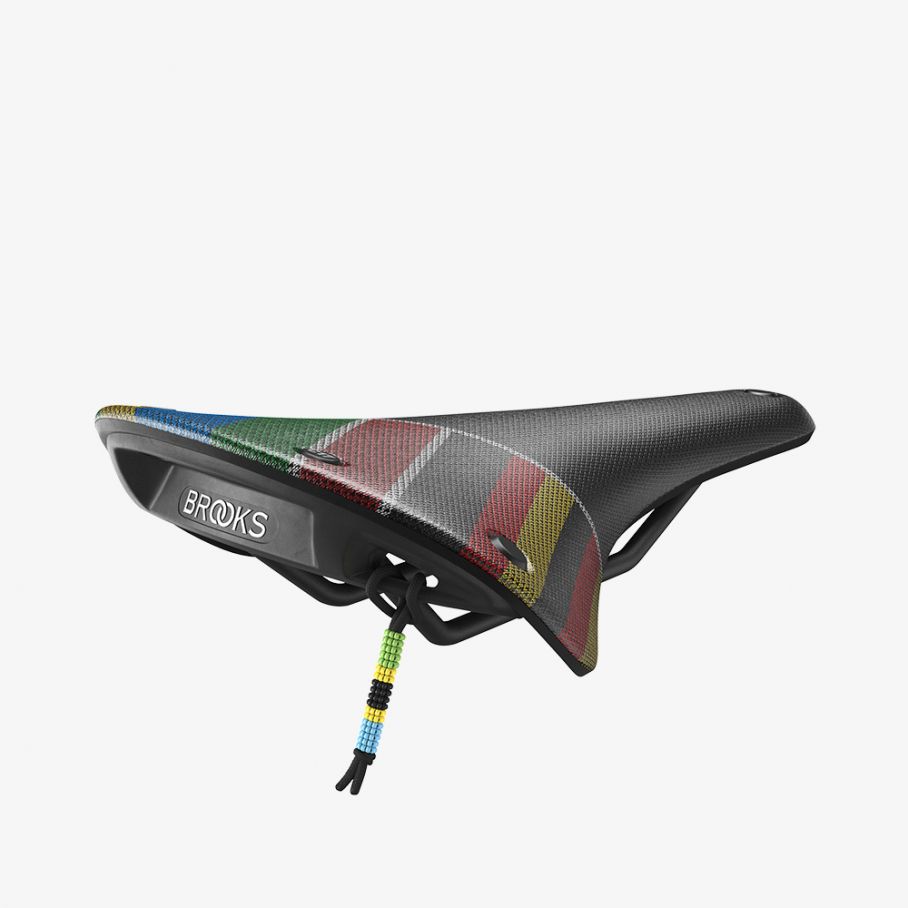
Price: $104 / Made in Italy
The Brooks C17 is the cambium version of the B17. Although the shape and dimensions change slightly (164mm width vs 175mm of the B17), this saddle has the same characteristics as a classic B17, with the main difference being the material.
A good middle point between flexibility and firmness is reached thanks to the vulcanized rubber that constitutes the main material of the saddle.
Slightly lighter than a B17, at 464g, the C17 can’t be considered a lightweight saddle, but do a few grams on the saddle matter when traveling by bike?
Durability-wise, the nylon top of the Cambium saddles, although weatherproof, won’t last as long as leather.
The C17 is compatible with bikepacking seatpacks and traditional saddlebags, too.
Brooks Cambium C19

Price: $94 / Made in Italy
An even wider option at 184mm is the C19, a saddle that I’ve seen more and more often on the touring rigs of fellow bike travelers. Like the whole Cambium series, the C19 is entirely waterproof, featuring strong aluminum rivets, and manufactured using 100% Organic (vegan) cotton canvas. The latter is certainly a thing to consider if you want a “cruelty-free” Brooks saddle.
The seat is made of vulcanized rubber and topped with nylon canvas, suspended over a sturdy steel rail.
The Cambium saddles don’t break in but are comfortable from day one (or they’ll never be). The carved version adds more flexibility and relieves pressure from the pelvic floor.
Best Non-Brooks Saddles for Touring and Bikepacking
Brooks saddles are so common in the bikepacking and touring world that it’s easy to wonder if other brands even exist – well, they do! And some great and very comfortable saddles come from them. Let’s have a look at some of the best bikepacking saddles not made by Brooks.
WTB Pure
great bikepacking saddle on a budget
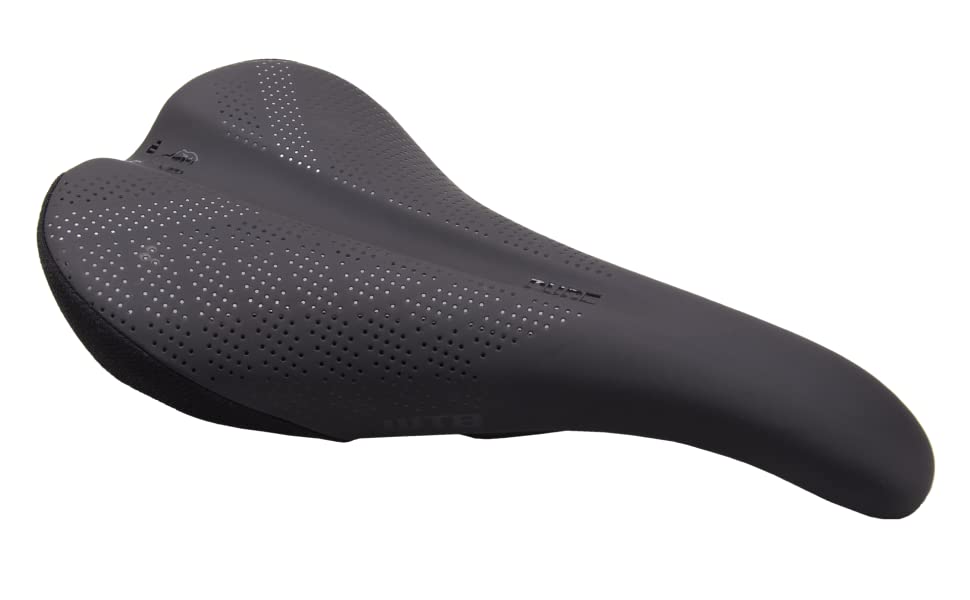
Simple, affordable, lightweight – the Pure by WTB has many fans in the touring and bikepacking world, but also in the gravel riding and MTB scene.
The slightly dropped nose is a feature I love, together with the narrow width, which allows for a more aggressive riding position without squashing the genitals.
The firm foam is suited to long days in the saddle and has proven quite durable compared to competitors in the same price range.
The WTB Pure’s frame comes in steel (345g), Chromoly (340g), and titanium (239g) versions. The width is average at 148mm, fitting sit bones between 102-130mm. The length is 275mm.
Selle SMP Pro
best touring saddle with sloped point
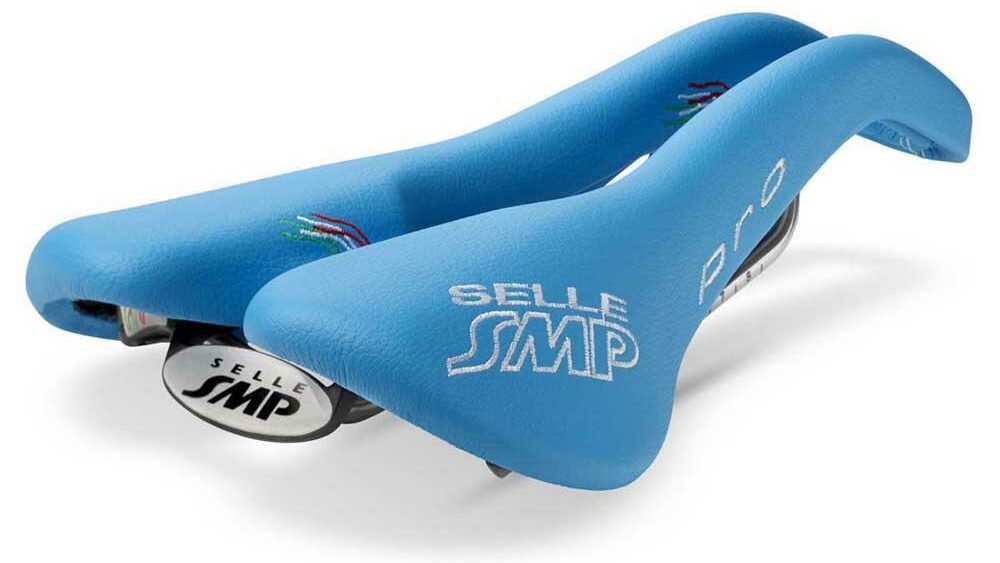
The sloping shape of the Selle SMP saddles is their distinctive trait and a unicum in the world of saddle makers. The sloped point, together with one of the widest cut-outs on the market, makes this saddle the winner in the pressure point relief competition, although not for everyone.
Since we are all unique, this shape might not work the same way for everyone, though Selle SMP offers a wide range of sizes. In some cases, adjusting the saddle position is enough to find the sweet spot and let this saddle do its work: be comfy in every riding position, including the most aggressive ones.
The materials are top-notch, and the construction is really well-made, which is expected for this price tag.
Chromag Trailmaster DT
Great touring bike saddle for off-road riding
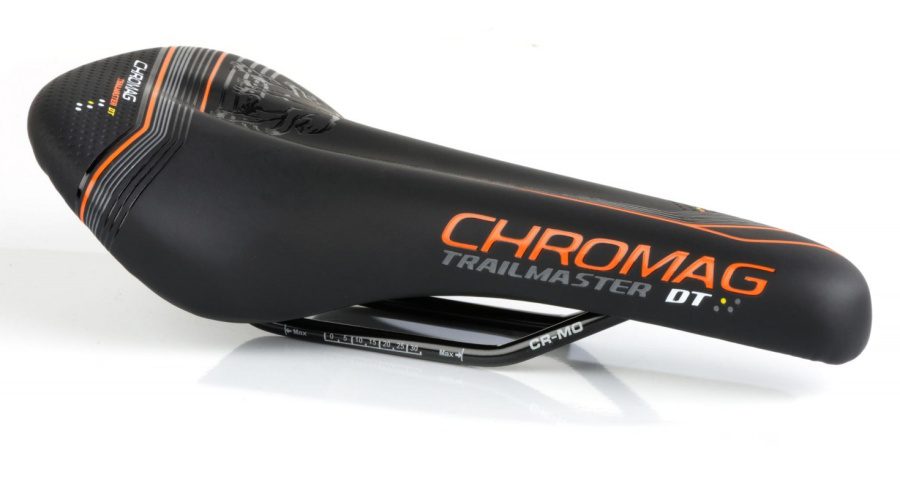
The Chromag Trailmaster DT is not as famous as the other saddles described above, but with its low price tag and solid construction, it’s definitely a player to consider.
Its main peculiarity is its extended length, which can improve control on technical terrain, making this a great pick for off-road lovers.
The synthetic top makes it totally weather-resistant, and the generous padding ensures comfort even when riding a bit off-center.
Ergon SMC
best all-rounder cycle touring saddle
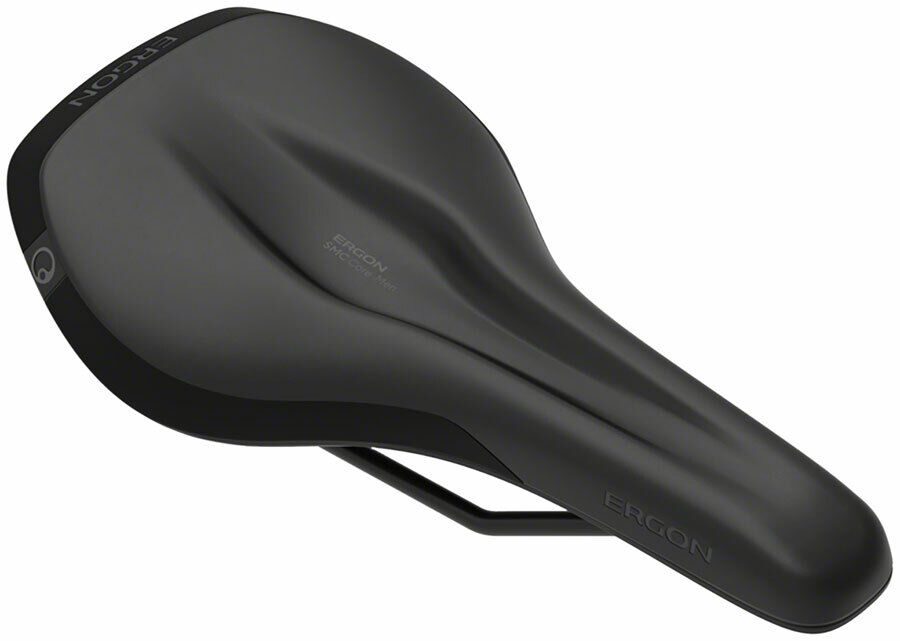
Here’s another popular saddle I’ve seen on dozens of touring bikes. I tried it myself on a quite extended ride, and I was genuinely impressed.
This saddle is a great all-rounder, comfy on trails and pavements alike. It might be thanks to the “Core and TwinShell technology”.
That’s an innovation from Ergon that combines a thick layer of closed-cell particle foam sandwiched between two nylon composite shells. This causes the saddle to shift sideways in response to the rider’s hip movements.
This technology, together with well-designed pressure relief channels, greatly mitigates the eternal problem of numbness and sore butts. Ergon saddles are made in Germany.
Charge Spoon Saddle
best cheap touring saddle

If you are looking for a budget touring bike saddle, this might be the one for you!
The Charge Spoon costs less than 35 bucks, it’s comfortable from day one, and has very little to envy from much more expensive models.
Light, comfy, durable, and cheap, this saddle is a real bargain and might be worth trying even if you are already pretty satisfied with what you have.
The profile is quite average, not too wide, not too narrow, not too long, and not too short. The relief channel is a bit shallow, and the padding is not as thick as others, but I’ve found it quite comfortable, though I rode on it for just a 70km mixed-surface ride.
What saddle has worked best for you? Let us know in the conversation below!
How to pick the best bikepacking saddle for your comfort
After you’ve gone through our personal selection of the best saddles for touring and bikepacking, it’s time to really consider how to pick the best one for you!
As already mentioned, there’s no such thing as the best touring saddle; we are all different, and what works for me might be hell for you, and vice versa.
We’ll try to give you some tips on how to pick what could be the most comfortable bike saddle for your bikepacking adventures, but nothing will ever beat getting your ass on it, so be ready to try a few before finding your comfy bike touring companion.
What’s the best touring bike saddle for women?
Women have wider sit bones compared to men and thus need slightly wider bike saddles. Some companies manufacture versions of their saddles specifically designed for women, go for it if that’s available, otherwise just measure your sit bones as described below and choose a bikepacking saddle adequate to your size.
Another key difference between men’s and women’s saddles lies in the widths of the central groove. Because women have more exposed soft tissue, a wider cut-out is generally preferred by girls.

Women’s saddles are also usually shorter than men’s ones
Besides these points, all the information you’ll find below and above this paragraph is valid for both men and women.
How do I choose a comfortable bike saddle?
Among the worst discomforts bike tourers experience on their adventures, saddle sores, chafing, numbness, and irritation are maybe the most common and least pleasing.
Let me say this straight: if you’re not used to sitting for many hours on a saddle, and for many days in a row, you’ll have to cope with it. Even the best bike saddles will give you pain if your butt is not hardened enough.
But don’t worry too much, the pain will alleviate with time, and we’ll now give you a lot of advice on how to make it go away faster.
Before we even start: never change a winning team
If you’re happy with your current saddle but need a replacement because it’s worn out or broken, just get the same saddle or one very similar.
First things first: get a proper bike fitting
Bike fittings are proper regulations of the distance between your points of contact with the bike (saddle, handlebars, pedals) and your body measures, and for your riding style. They are made by professionals and are the best gift you can give yourself if you’re an avid bike rider.
A professional bike fit will really change your cycling life, solving or greatly easing all the physical discomforts bike riding can cause, such as lower back pain, shoulder tightness, wrist pain, and even saddle sores.
Tip: ask your bike fitter if saddle pressure mapping will be part of the process. If there’s swelling or pain off the bike, a trip to your physician is also advised.
Second: Study yourself
What’s wrong with your current saddle? What are the issues?
Is it rubbing? Maybe the saddle is too wide
Is it numbness? Maybe the saddle is too hard, too long, or doesn’t have a deep enough pressure relief channel. Or maybe your position is not correct (try playing with the rails, moving your saddle backward or forward, or go to point one and get a bike fit).
Also, what’s your riding style? Are you leaning forward in an aggressive road-style position? Or are you more of a leisurely upright rider? In case 1, get a wider, more cushioned saddle; in case 2, get a more road-oriented saddle.
Measure your sit bones to get the right saddle size and shape
Measuring your sit bones is a great step towards riding comfort. It will help you find the right saddle size for your body, which is very important.
What you want to measure you want is the distance between the centers of your ischial tuberosities.
Confused?
These are the pointy lower parts of your pelvic bone on either side. Touch your bum from a seated position and look for those bones; you’ll find them easily.
How do I measure my sit bones at home?
There are a few methods to get the distance between your sit bones for saddle selection:
- Place two small objects (ie, erasers) under your butt, move them until you feel like you’re sitting on your bones, then measure the distance between the objects>
- Place some aluminum foil over a soft surface (i.e., a carpet) and mimic a riding position. Measure the distance between the deepest impressions left on the foil
- Fill a large Ziploc bag with icing sugar (or flour), squeeze out the air, and seal it. Sit on it and mimic a riding position. Then measure the impressions.
- Let someone you don’t mind touching measure them for you while you sit on a bike. They are easy to feel.
If none of these work, read more here or go to a bike shop that’s got the proper tool.
Once you’ve got this measure, match it with the saddle size. Usually, the manufacturers state something like “ideal for 110/120cm”. Typical sit bone widths range from 100mm to 150mm.

Different shapes of bike saddles
Bike saddles come in different shapes depending on riding style.
- Performance-oriented road saddles are narrower and harder
- Endurance/touring saddles are a bit wider and more cushioned
- Recreational (city/trekking) saddles are the widest for a more upright position
- MTB saddles are flatter on the back, for a more upright position, slightly wider (for a more upright rider), and a bit more cushioned to absorb bumps.
- A gravel saddle is something between a road and an MTB one.
Saddle padding
Logic seems to suggest a softer saddle will be more comfortable, don’t you think?
Well, absolutely not. A saddle that’s too soft will let your bum sink and cause chafing, so don’t get one just because it feels good to sit on. You’ll need to ride and get those legs, hips, and pelvis going in motion for a little while to really judge the comfort of a saddle.
Leather VS Synthetic: What’s the best material for a bike touring saddle?
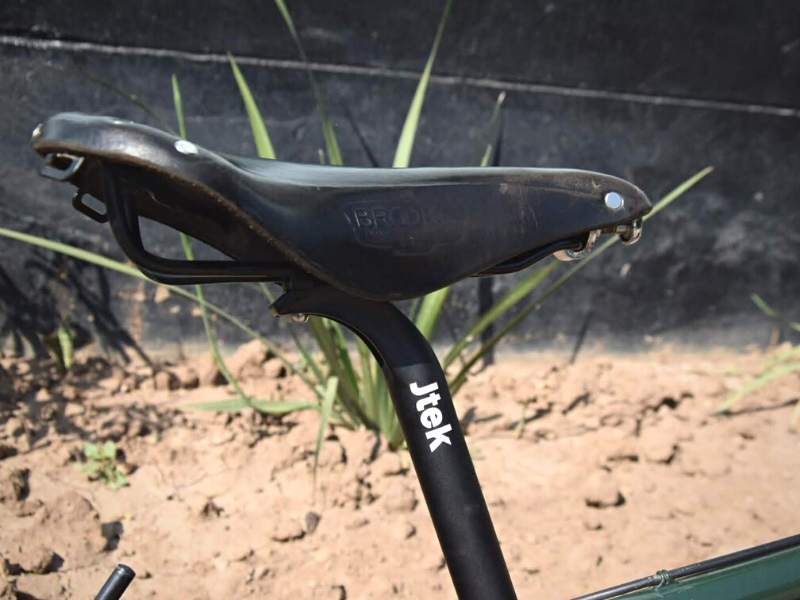
Again, there’s no best in saddles.
Synthetic saddles are low-maintenance, lighter, and weatherproof.
Leather saddles adapt to your body shape and are more comfortable in the long run.
Cut-out saddles
Some of the best touring bike saddles come with a central cutout. They are designed to relieve pressure from your perineum, the pelvic floor, the part of your body between your genitals and your anus.
The perineum is a very important plexus; it hosts some of the lowest nerves of the spinal cord, which control your legs and are very sensitive.
Relieving this pressure can greatly help with numbness problems.
Another benefit of cut-out saddles is the improved airflow underneath: more ventilation, less sweat, and less chafing.
FAQs about the best touring bike saddles
Are the Brooks saddles really that comfortable?
Brooks leather saddles are comfortable once they break in. But that’s not a universal statement. I’ve met several bike tourers who hated their Brooks saddles and swapped for something else.
Are leather bike saddles better?
No. There’s no better or worse when it comes to bike saddles. Leather saddles get the shape of your own bum, and thus can result in more comfort, while synthetic saddles require less maintenance and are weatherproof
Is more padding better for long multi-day rides?
Not always. Too much soft padding can cause your sit bones to sink in, leading to pressure on soft tissues and discomfort over time. Most long-distance riders benefit more from firmer support with a pressure-relief channel or cut-out than from simply added cushioning.
If I feel numbness or discomfort, should I change my saddle immediately?
Not necessarily — numbness or soreness can also be caused by poor fit, bike position, or shorts without proper padding. Try tweaking saddle position, wearing quality cycling shorts, and giving any new saddle some riding time before deciding it’s the wrong one.