

Last Updated on 11 February 2026 by Cycloscope
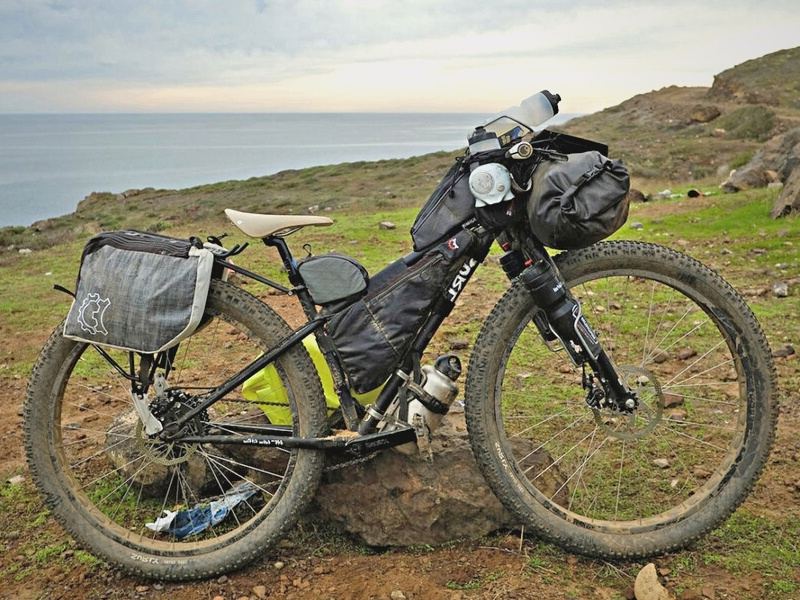
Bike camping and MTB. Pros & cons of Mountain Bike Touring
/Long-distance hardtail conversions
/multi-day full suspension trips
/ the best MTB for bikepacking
Ever thought of an MTB camping overnighter? Or a multi-day bikepacking trip on your full suspension? And what about long-distance touring on a mountain bike?
Disclosure: Some of our articles contain affiliate links. This comes at no additional cost for you and helps us keep this website up and running. (as Amazon Associates we earn commission from qualifying purchases)
How we compile our gear guides: during the almost 10 years of cycloscope.net our team personally tested dozens of similar pieces of gear. For what we can't test personally, we involve other people in the cycling community to give their feedback and opinion about gear they have used. Our decade-long experience in bicycle touring enables us to find the key cons and pros of every product we mention.
Mountain bikes are a lot of fun; they can go where no other bike can, but somehow they are rarely considered for bike camping trips, or at least they were. With the rise of bikepacking and the great variety of bike bags available nowadays, MTBs can be great rigs for cycle holidays and even bike touring.
Let’s start by saying that hardtail MTB has been used for touring since the 90s, there’s no novelty in this, a hardtail mountain bike can double as a touring bike with just a few minimal adjustments.
In this article, we’ll go through the nuances of touring vs. bikepacking on a mountain bike, and we’ll cover the fundamentals of bike camping and the essential packing list.
The second section will be dedicated to the 3 best MTBs for touring, bike camping, and bikepacking, and we’ll even find out how to convert an old MTB for touring if you’re on a budget.
In the final part, we’ll answer some common questions about mountain bike touring and camping.
Mountain Bike Camping
[everything you need to know]
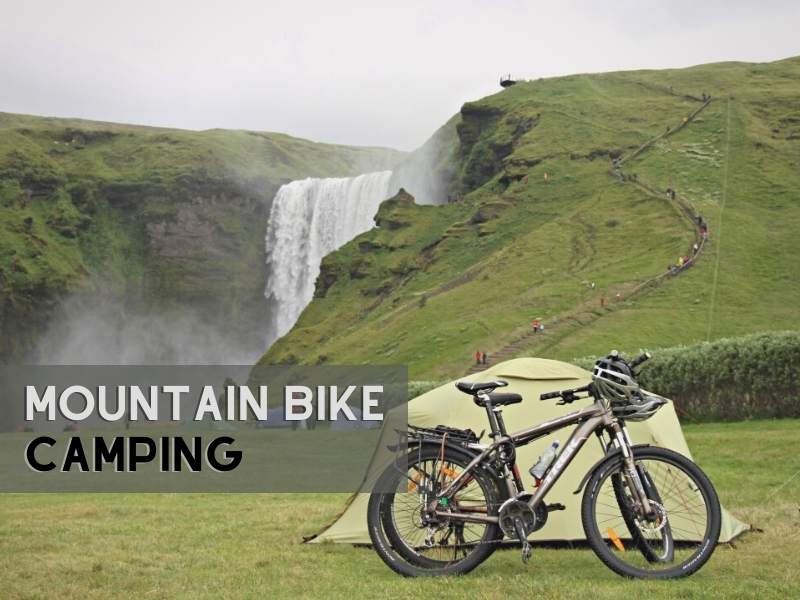
If you’re a camping lover, someone who loves getting lost in the wilderness (like us), you’re gonna love mountain bike camping.
On a bike camping trip, you will wake up totally immersed in nature, make your coffee, and hit the trail straight away.
MTB camping has its basic rules, which you should never fail to obey:
- Leave the trail better than you find it
- leave no trace
- bury your shit
- camp at a safe distance from landslides or flood-risk areas
The first two are more or less the same – just don’t be a jerk – for the third one, you might want to learn how to pee and poo outdoors properly – the fourth one is a fundamental safety rule that can save your life.
Mountain Bike Camping Essentials
For a mountain bike camping trip, you’ll need to carry a few fundamental things:
For Camping
Tools and spares
- Multi-tool kit
- Tire patches
- Pump
- Spares (1 spoke, 1 tube, 1 rack bolt if you have a rack)
Food and water
- Stove
- Pots and cutlery
- Food
- Extra Water (unless you already know you’ll camp near a drinkable water source)
- First aid kit
So, as we have seen, even just the basic gear for an overnight camping is already quite a lot of stuff.
Although some practice bike camping by hauling their gear in a cycling backpack, we don’t really recommend doing so.
Sure, the MTB hydration pack is a great solution for carrying extra water, but the rest of the gear should be on your bike, not on your shoulder… otherwise, believe me, your ride will be miserable.
Luckily, nowadays, the options are innumerable, either for traditional bike bags or bikepacking bags.
Mountain Bike Bikepacking
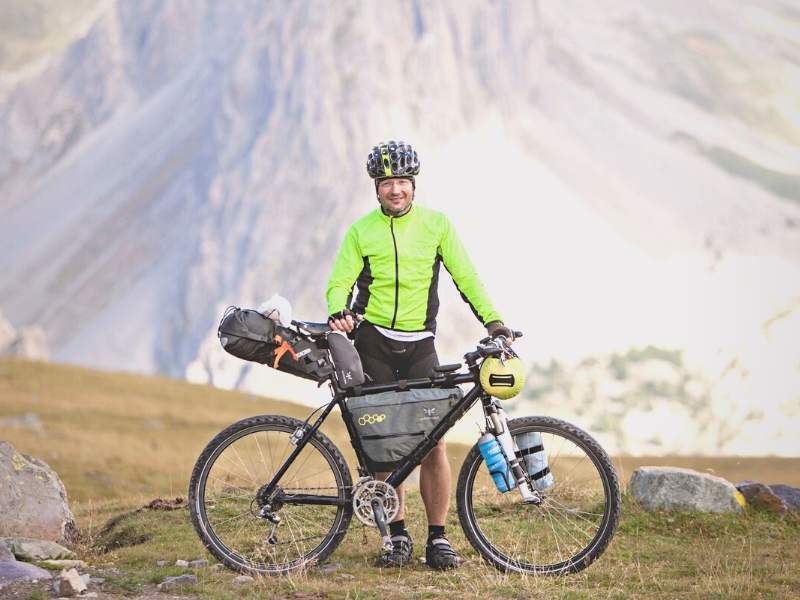
Even though MTBs can also be used for long-distance touring (as we’ll see soon), the real deal of using a mountain bike for multi-day trips is to get lost in the woods, to really roam free in nature; the trail is all you need on an MTB, that’s why we love it.
This kind of trail camping trip is for its own innate nature:
- Shorter in the time span
You’ll be away from civilization. So most likely not for more than a few weeks, although some do stay for years.
- Circumscribed to a limited area
Covering distance on off-road trails takes much longer than on tarmac
By carrying just the basic essentials (mentioned above), you’ll be riding light and enjoying nature.
Mountain bike camping touring can nowadays be easily achieved with a bikepacking setup. Let’s have a look at bikepacking bags for MTB
- Saddle Packs
- Attached to saddle and seat post [up to 20l]
- Handlebar Packs
- Mounted on the front hand of the handlebars [up to 15l]
- Top Tube Packs
- Locked on top of the top tube, near the stem or the seat post, can mount 2 [up to 5l x 2]
- Frame bags
- Inserted in the diamond of the frame [up to 14l]
- Fork Cages and Bags
- Attached to the front or rear fork eyelets [up to 16l x 2]
- Stem Bags
- On the inner side of the handlebar, often used for water [up to 2l x 2]
- Backpacks
- On your shoulders [up to 20l]
I invite you to explore all these different types of bags through our links, to find what’s good for you.
While hardtails offer more space for gear and handle the load better, full-suspension MTB is a great option for short but adventurous bikepacking trips.
Full-suspension MTB bikepacking is becoming increasingly popular; frame bags for full-suspension MTBs are also available.
Full-suspension, though, is a very delicate machine, so don’t trust it on long expeditions.
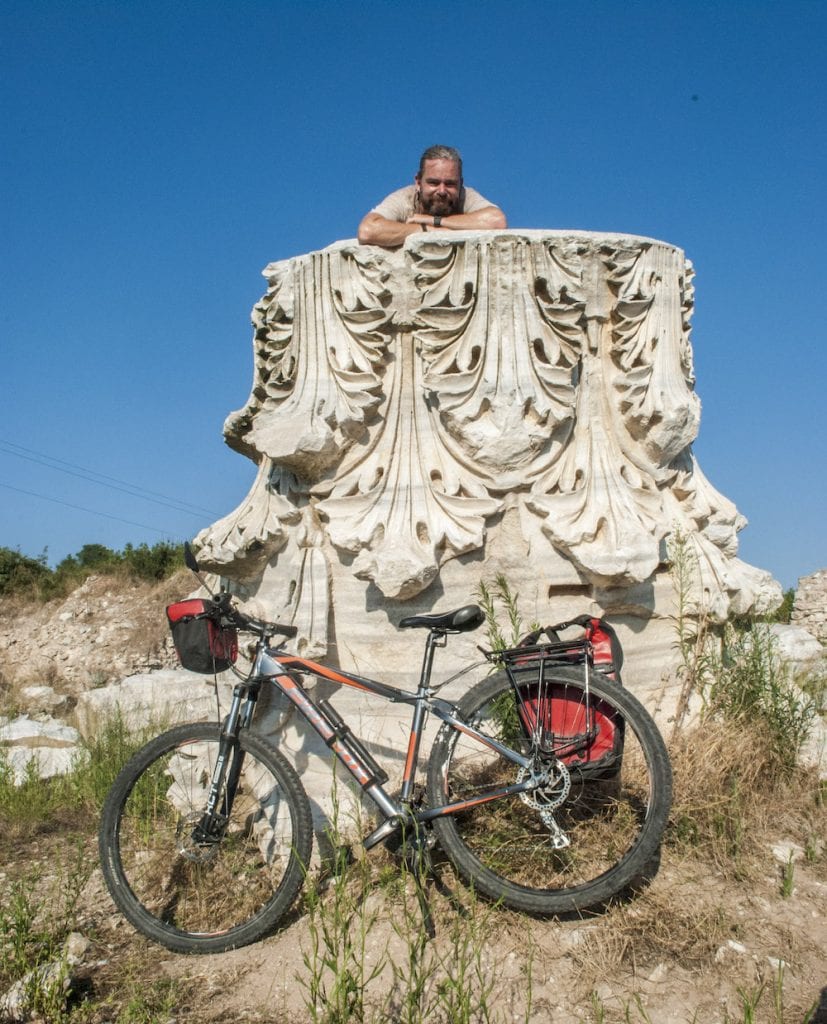
Long Distance Mountain Bike Touring
For “long-distance touring,” we mean two or more months, at least cross-country, often across a continent, sometimes around the world.
So, are MTBs suited for this kind of bike touring?
The answer is, of course, yes, with a few warnings. Let’s see what factors you should be taking care of for a successful mountain bike expedition.
Characteristics of MTBs for Touring
- Let go of carbon – use a steel or aluminum frame
- strong wheels, with at least 32 spokes (better 36)
- relaxed, less aggressive geometry
- front suspension fork with travel <20mm
- longer wheelbase
- a frame with plenty of eyelets and mounting points
Some MTBs will already come with these characteristics, and we’ll see some plus bikes that are basically mountain bikes for touring.
But if you already have a mountain bike and want to travel with it, you’ll need to do some tweaks.
MTB to touring bike conversion?
Mountain bikes have a long history in bicycle touring. The 80s and 90s rigid have been used for decades by budget bike travelers, and refurbishing an old mountain bike is still the way to go if you can’t afford a fancy bike.
We have written before about my conversion of a 1936 Randonneur, and how to convert an old mountain bike into a touring bike, so check these posts out if you are planning a long-distance bike trip.
That said, in a nutshell, here’s what you should look at when converting a modern hardtail MTB for bike touring.
- get stronger wheels, with more spokes and possibly double-walled rims
- Replace handlebars to add more positions
- Get a front fork with a travel of <10mm
- change to a more comfortable saddle
- Install tubeless tires
Optional
- Replace hydraulic brakes with disk brakes
- Get the best touring tires
If you’re familiar with bikes, you could do this with your toolkit and bike workstand in your garage, but if you don’t have practice with bicycle mechanics, let a pro handle the conversion – just tell them what you want.
Check also
> The best travel insurance for bicycle touring and bikepacking
What’s The Best MTB for Touring, Bikepacking, and Bike Camping?
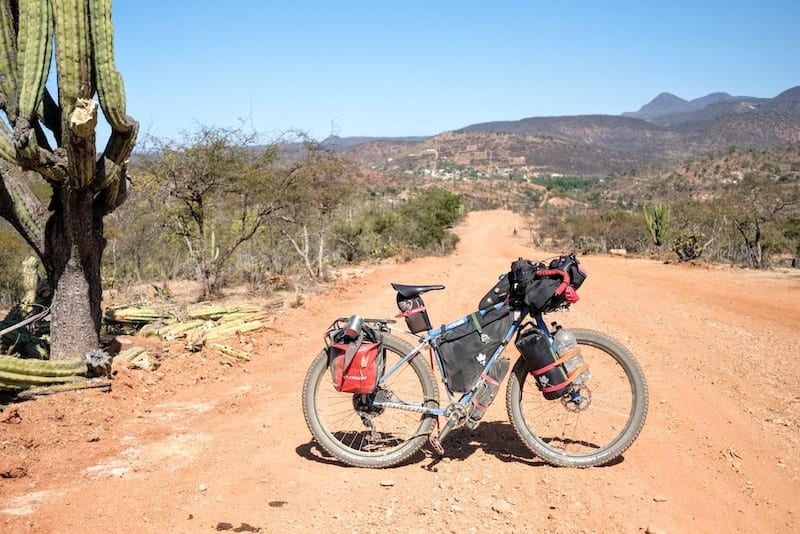
Here we are going to analyze what kind of touring each type of MTB is suited for and pick our best mountain bikes for bikepacking for each category.
Check Also
> Gravel Bike Touring – How To & the 7 Best Bikes
Hardtail MTBs for touring
As we’ve already seen, hardtail MTBs are great for bikepacking, and although not the best touring bikes, some are better than others.
Some aluminum Hardtails perform great even on month-long expeditions, and if you really wanna get lost in the trails, what’s better than a mountain bike?
Hardtail MTBs nowadays tend to be loaded in a bikepacking style rather than a lateral pannier setup, but a proper MTB designed for multiday adventures shouldn’t have any problems handling two small rear panniers.
Our favorite hardtail MTB for touring
Salsa Timberjack
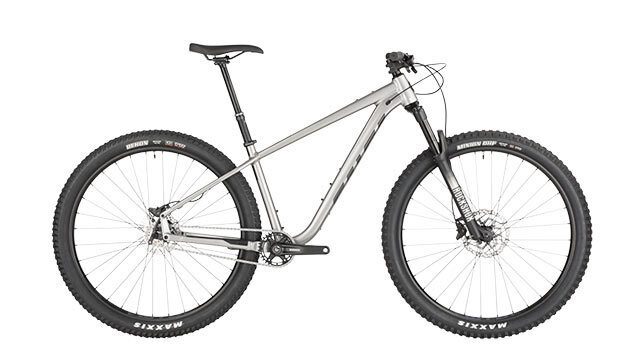
| max tire clearance | 27.5 X 2.8” / 29 X 2.6″ |
| gearing | 32T x 12-Speed, 10-51T |
| weight | 13 kg (size M) |
The Timberjack by Salsa is one of the most touring/bikepacking friendly harteil MTBs on the market.
Well-versed in singletrack and trail exploration, this rig also caters to the bikepackers out there with its many braze-on mounting points and sturdy construction with 32-hole rims.
The geometry is comfy for a trail monster: a long top tube and wheelbase, a low bottom bracket, a slack head tube angle, and a steep seat tube angle.
A complete build can be purchased for as low as $1,699. Available at Rei.com.
Full Suspension MTB for Bikepacking
While hardtails are certainly more suited for travel, full-suspension MTBs can still be used for extreme weekend bikepacking adventures. Frame bags for full-suspension MTB are also manufactured.
Full-suspension MTB bikepacking is becoming increasingly popular; frame bags for full-suspension MTBs are also available.
Full-Suspension, though, with its many moving parts, is sadly prone to failure. They are also quite hard to pack and don’t handle excessive load – you’ll really have to go minimalistic when bike camping on a full-sus.
Our favorite full-suspension MTB for bikepacking
Kona Hei Hei
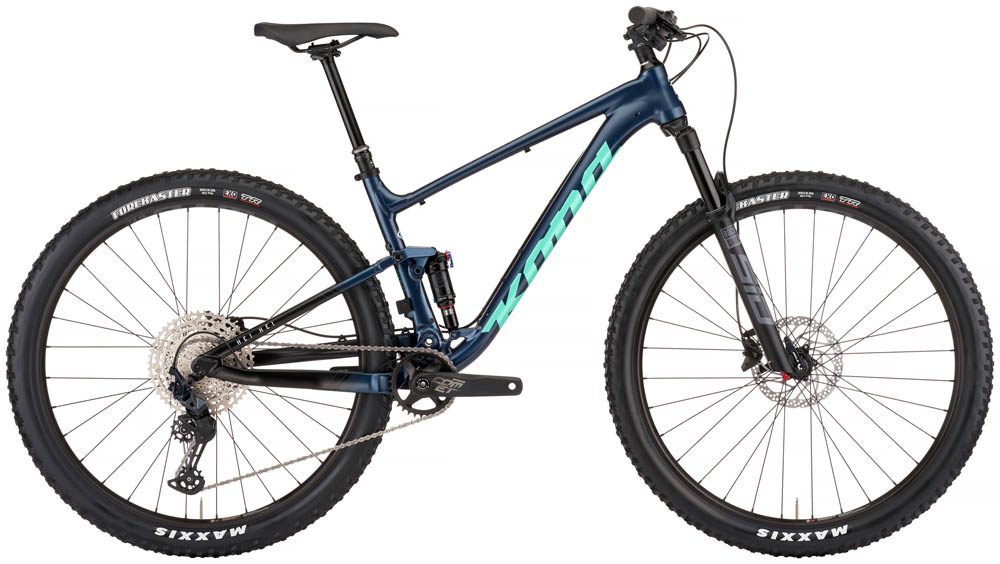
| max tire clearance | 29 x 2.5″ |
| gearing | 1 X 30T / 10-51T 12-Speed |
| weight | 11.8 kg (size M) |
The Kona Hei Hei is a superb alloy full-suspension MTB that has proven itself bikepacking worthy.
It features a durable and lightweight Race Light Aluminium frame, a RockShox suspension fork, and hydraulic disc brakes.
Fork travel is 120mm at the front and 100mm at the rear, just right for bikepacking. The drivetrain is a Shimano Deore 1×12-speed group set with a 10-51T cassette.
This bike offers stable all-terrain control, smooth gear shifting, and powerful all-weather disc brake power.
Lightweight and Durable Cross Country Full-Suspension Trail Bike for Bikepacking
Plus Rigid Fork Bikes
Plus bikes are kind of a novelty. Their main characteristics are a sloped geometry and, more importantly, a huge tire clearance, not quite like a fat bike but up to 3″ or more.
Plus bikes also often feature simplified gearing and transmission, often 1×11 or 2×10. They are somehow rigid-fork steel mountain bikes with drop bars (although a few flat-bar options are available).
Plus bikes are meant to be adventure bikes and are really catered towards the bikepacking fanbase.
They perform at their best with bikepacking bags, but can also be loaded with lateral panniers and trunk bags, touring vs bikepacking style, you can do both on a plus bike.
Characteristics of Plus Bikes
- wide tire clearance
- mountain bike geometry
- reduced gearing
Plus bikes are real adventure bikes, the ideal choice when touring for an extended period of time on difficult mountain roads
Check also
> Ribble Adventure 725 Review
> Cinelli Hobootleg Geo
Our favorite Plus Bike:
Bombtrack Beyond – 29er Touring Expedition Bicycle (+/- $1,800)
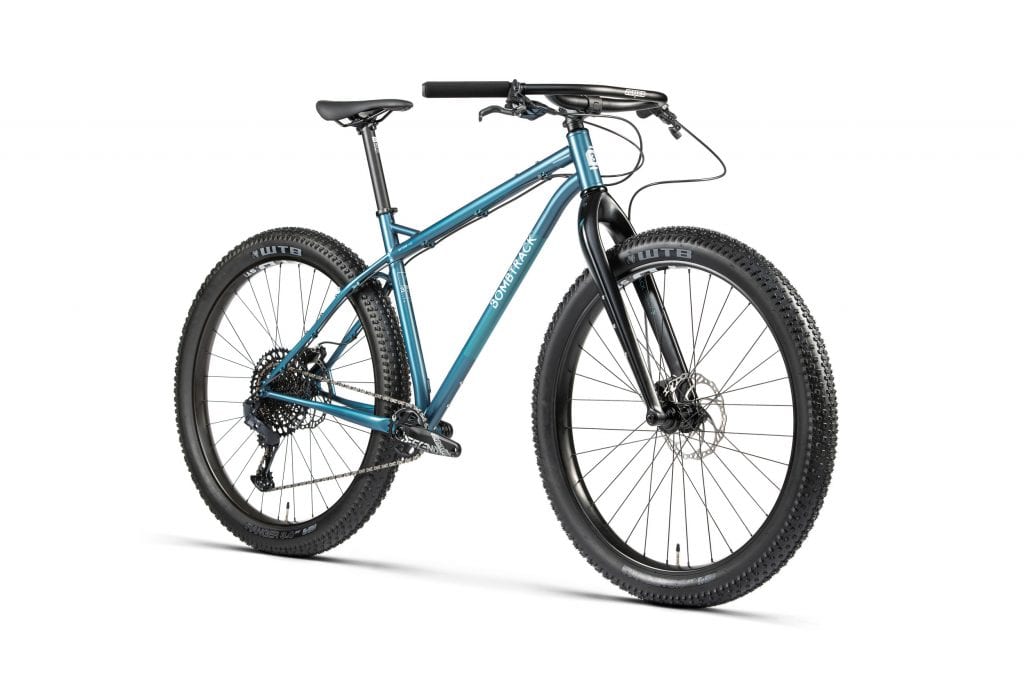
| max tire clearance | 29” x 2.1” |
| fork | BOMBTRACK BPC full carbon, TA, 1.1/2” – 1.1/8”, triple cage mounts, internal hub dynamo cable routing |
| gearing | 1 x 30 T / 12-speed, 10 – 52 T |
| weight | 12.9 kg (size M) |
This expedition machine has been one of our favorites since its introduction in 2016.
The new Beyond by Bombtrack has seen some interesting modifications from the previous models.
A single-speed chainring (30T) and a 12-speed 10-52T is the new drive train of choice, a great set of gears capable of bringing you up the steepest and roughest hills. The carbon fork reduces weight while still offering triple cage mounts.
Another novelty of the Beyond is the Jones Loop Bar; although Bombtrack still offers different handlebar options, this will now be the standard. The Jones might seem a little weird, but they offer more hand positions, helping the shoulders and upper body stay relaxed for hours in the saddle.
Designed as a bike packer’s dream, the Beyond features mounting options for front and rear racks as well as up to five bottle cages.
The Bombtrack Beyond is just what I would use for extreme off-road bikepacking expeditions
Vintage MTBs
Old MTBs from the ’80s and ’90s have been repurposed for touring since they were first built, carrying thousands of budget adventurers around the world to the most remote places on our beautiful Earth.
Bicycle touring is not just for those with a decent bank account and a powerful passport.
Although there is no doubt that, as a rule of thumb, you get what you pay for, I like to say that every bike is a touring bike, as long as you tour with it.
In this article we wrote extensively about
how to turn a free or cheap piece of junk into your next touring bicycle
FAQs about Mountain Bike Touring
Can you use a mountain bike for touring?
Hardtail and rigid-fork MTBs can be converted for long-distance touring. Full-suspension MTBs should be avoided.
Are mountain bikes good for long-distance riding?
If equipped with durable parts, mountain bikes are good enough for long-distance riding. Avoid performance-oriented components and stick to reliable stuff.
How do you turn a mountain bike into a touring bike?
By mounting stronger wheels, comfortable handlebars and saddle, and high-quality tires. Eventually, replace hydraulic brakes with mechanical brakes.
What is the difference between a mountain bike and a touring bike?
Touring bikes are meant to carry loads and handle all kinds of terrains. Mountain bikes are meant for off-road use and are usually not designed to carry gear.
Can you use a mountain bike for bikepacking?
Absolutely! MTBs are fantastic for lightweight off-road bikepacking.
How do I pack my bike for camping?
By using bikepacking bags and packs, you’ll be able to fit everything you need for bike camping without a pannier rack.
What skills are required for MTB touring?
The only skill required is the ability to ride a bicycle (but you could also tour on a tandem if you can’t).
Check Also
> 41 great gifts for any kind of cyclist
> 10 Best Clipless Mountain Bike Shoes: SPD Cleats for MTB
> MTB for Big Guys – 9 Best Mountain Bikes for Heavy Riders & Tall Men