

Last Updated on 30 November 2025 by Cycloscope
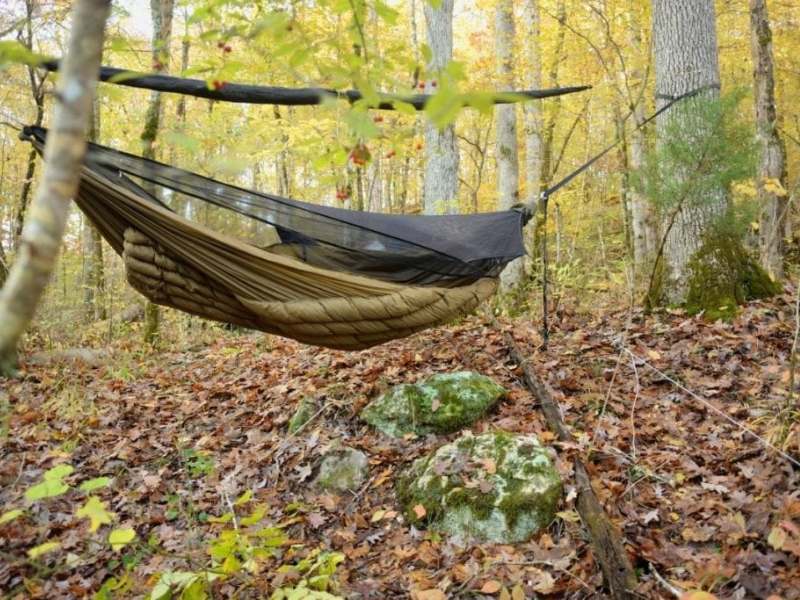
The best sleeping pads for hammock camping. A thorough comparison and review of the top ultralight hammock air mats & pads for unusual adventures and daily leisure
Hammock camping has gained popularity in the last few years, maybe due to the hype around minimalist backpacking/bikepacking or the added coolness of sleeping in a hammock, but the fact is that more and more travelers are now looking for the best hammock sleeping pads.
Disclosure: Some of our articles contain affiliate links. This comes at no additional cost for you and helps us keep this website up and running. (as Amazon Associates we earn commission from qualifying purchases)
How we compile our gear guides: during the almost 10 years of cycloscope.net our team personally tested dozens of similar pieces of gear. For what we can't test personally, we involve other people in the cycling community to give their feedback and opinion about gear they have used. Our decade-long experience in bicycle touring enables us to find the key cons and pros of every product we mention.
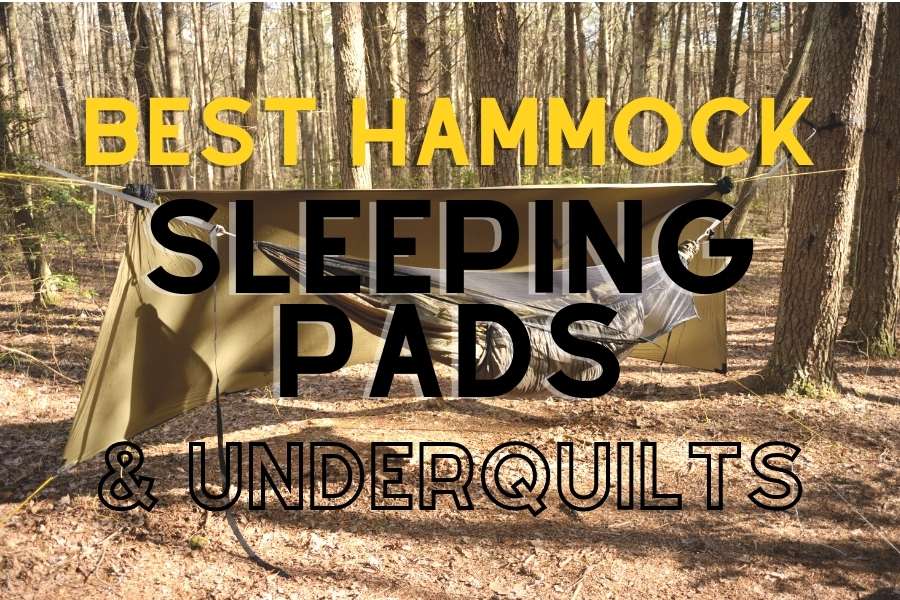
Whatever purpose you’re mounting a hammock for, you certainly can do with more cushion – usually obtained through a hammock sleeping pad or underquilts.
When you need to set up a place to sleep as a bikepacker on the road or a camper, however, you need much more than a cushion: you also need heat insulation and, on rarer occasions, water resistance. This is why you need a hammock mattress pad or an underquilt to support your hammock.
Although only a few brands have started manufacturing air mattresses specifically for hammock camping, some traditional sleeping pads work well in a hammock.
Which ones? Read on!
Check Also
> Top 5 Underquilts for Hammock Camping
> 13 Best Double Mattress for Camping – Self inflatable pad, Air Beds, Lightweight Mats
The Best Hammock Sleeping Pads in a Nutshell
- 1. Klymit Insulated Static V Sleeping Pad
- best-insulated mattress for hammocks
- 2. Klymit Hammock V Sleeping Pad
- The only real hammock sleeping pad
- 3. Sea to Summit Comfort Light Insulated
- Most comfortable ultralight camping mat
- 4. Nemo Tensor Extreme Conditions
- Best sleeping pad for minimalist bikepacking/backpacking
- 5. Therm-A-Rest ProLite
- Best ultralight self-inflating backpacking pad
Best Hammock Sleeping Pad: Top 5 for 2026
1. Klymit Insulated Static V Sleeping Pad
best-insulated mattress for hammocks
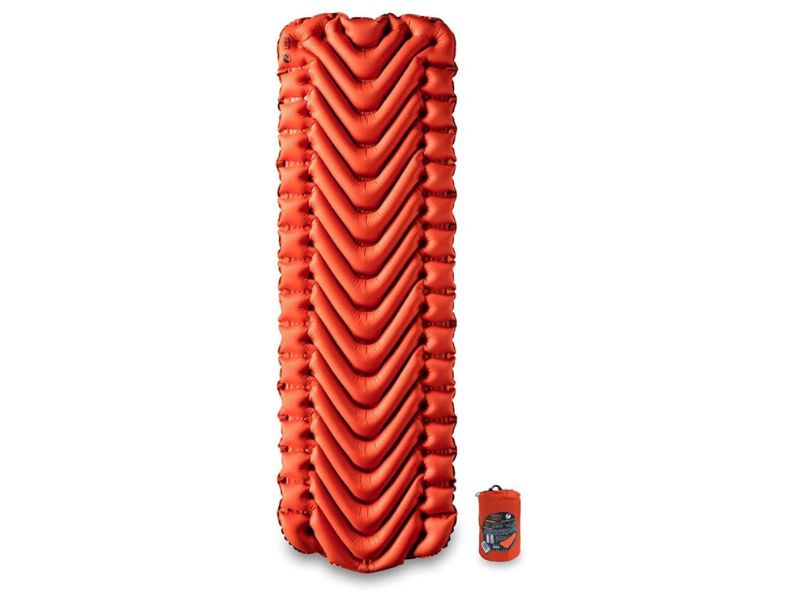
After 7 months of living on the Appalachian Trail, this pad was serviceable for me. It did well on a hammock or in shelters for 2200 miles under various conditions.
I slept from 90+ to freezing temps. It did the job of cushioning my nighty nights and keeping the cold in the woods at bay. It is the best sleeping pad for hammock camping I’ve owned.
Over 7 months, I have inflated, deflated, unpacked, and packed this pad hundreds of times, with no leaks. I did wear out the carry bag, however. But I emailed Klymit, and they sent a new one within a week, free.
Want to enjoy a double hammock with your loved one? Read about the best double matrasses for camping!
2. Klymit Hammock V Sleeping Pad
The only real hammock sleeping pad
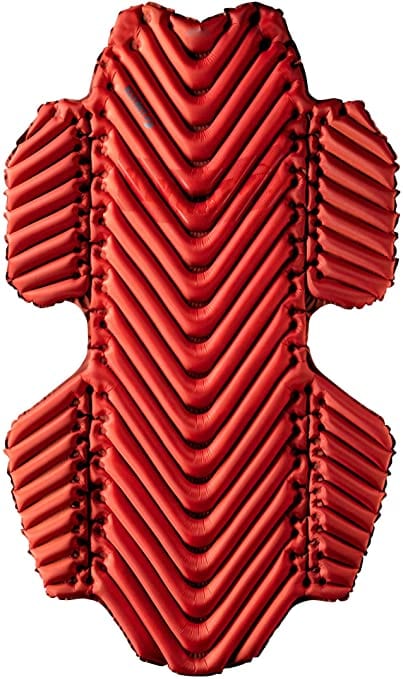
Even the strongest hammock setup is a disaster if you can’t stay warm while on a trail. With Klymalite lofted synthetic insulation and non-slip zones, Insulated Hammock V boasts 180 degrees of protection from drafts and cold air.
This is definitely the best sleeping pad for hammock camping, being specifically designed for this purpose.
And for just 2 pounds, you can get all the warmth you need, thanks to the pad’s incredibly light, soft-touch fabric.
It fits all standard hammocks, double wide or single. Furthermore, the pad, with its intelligent ergonomics, wraps around the body and creates a barrier that prevents cold from creeping in from the bottom and sides.
The V-chamber design limits air movement, keeping you comfy. The manufacturers included a patch for emergency repairs.
Downsides: cannot be used as a regular sleeping pad.
3. Sea to Summit Comfort Light Insulated Mat
Most comfortable ultralight camping mat
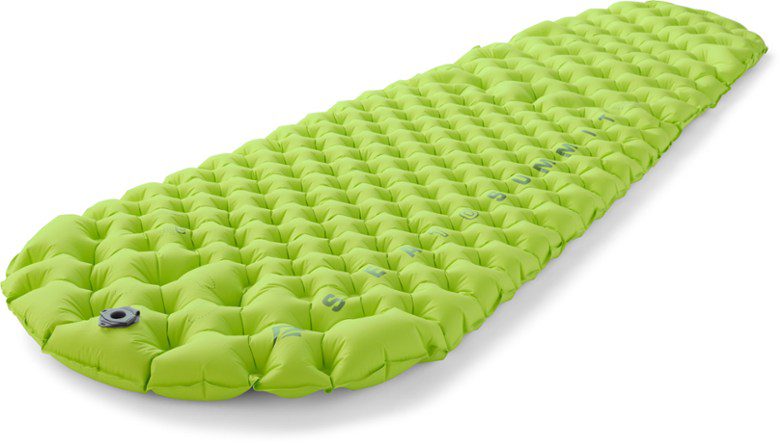
- R-Value: 4.2
- Weight: 21.8oz 618g

The innovative Air Sprung Cells, formed by a matrix of dot-welds, function like individual coils in a pocket-sprung mattress.
Pressure on one cell does not affect the surrounding cells. These Air Sprung Cells evenly distribute weight and contour perfectly to the body.
A patent-pending, multi-function, low-profile valve allows fine-tuning of comfort level and inflation, and very fast deflation, while inflation takes 30 to 60 seconds with a Sea to Summit pump; mouth inflation requires only 8-12 full breaths.
The liquid-extruded anti-microbial TPU bonds permanently to the shell fabric, virtually eliminating delamination and preventing internal mold growth from mouth inflation. Thermolite, radiant heat loss by non-woven, and silent Exkin Platinum prevent internal convection.
The COMFORT LIGHT SERIES features a hybrid layer construction for low weight and packed volume. In the torso area, the mat is divided into upper and lower chambers, with offset dot-welds that double the cell resolution, providing greater support and insulation.
In the head and leg areas, where less support is needed, the construction is a single chamber to reduce overall weight and packed volume. The downsides? It sounds like a Therm-A-Rest, and with a very high price tag.
4. Nemo Tensor Extreme Conditions
Best sleeping pad for minimalist bikepacking/backpacking
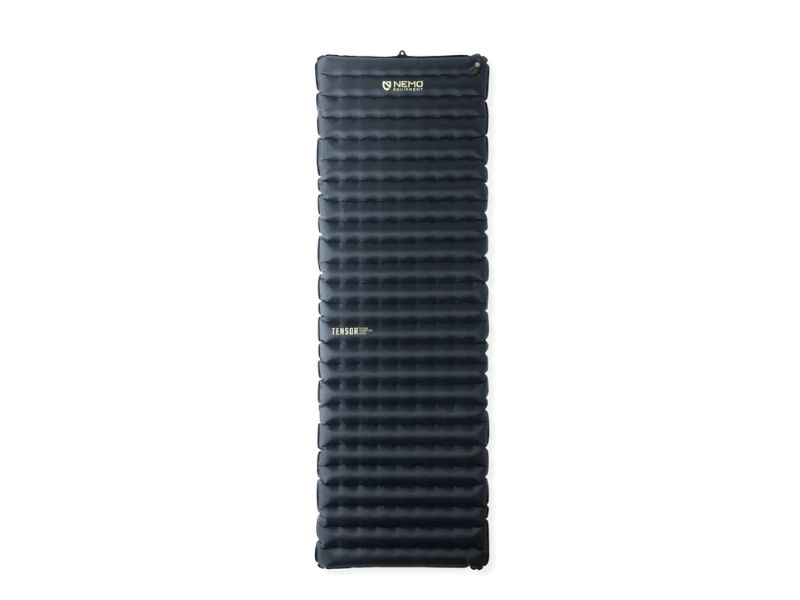
NEMO has long been a favorite among discerning backpackers for its refined balance of comfort, technical design, and packability. The Tensor Extreme Conditions continues that legacy, built for adventurers who demand maximum performance with the least weight.
Despite its rugged purpose, the Tensor Extreme Conditions comes in at an impressively low 12.2 oz (350 g)—a remarkable feat for a pad engineered for use in harsh environments. At 72 x 21.5 x 1.75 in (183 x 54.6 x 4.4 cm), it provides a full-length platform with generous width, yet packs down to a compact 3.5 x 6 in (9 x 15.2 cm)—small enough to disappear in any ultralight kit.
As with the rest of NEMO’s Tensor lineup, the design centers on delivering quiet, stable, edge-to-edge comfort without unnecessary bulk. While the manufacturer does not list an R-value for this model, its construction focuses on minimizing weight while still offering dependable performance for fast-and-light missions. For the gram-counter looking to push long miles through unforgiving terrain, it strikes a compelling balance: streamlined cushioning that doesn’t compromise on sleeping comfort.
Inflation & Deflation:
The pad inflates quickly—just a handful of breaths, thanks to its efficient valve system—and deflates just as easily when it’s time to pack up and move. The multi-functional valve allows quick air dumps as well as fine-tuned adjustments to dial in exact firmness.
Use Case:
Perfect for ultralighters, alpinists, and backpackers who prioritize speed and packability, the Tensor Extreme Conditions delivers a comfortable night’s sleep without the added weight. Just keep in mind: with no stated insulation, this pad is best suited for missions where cold-ground protection is not the primary concern. In cooler shoulder-season temps, you may find yourself wishing for a few extra grams of insulation.
A sleek, minimalist pad built for ambitious miles—classic NEMO execution for the high-performance crowd.
5. Therm-A-Rest ProLite
Best ultralight self-inflating backpacking pad
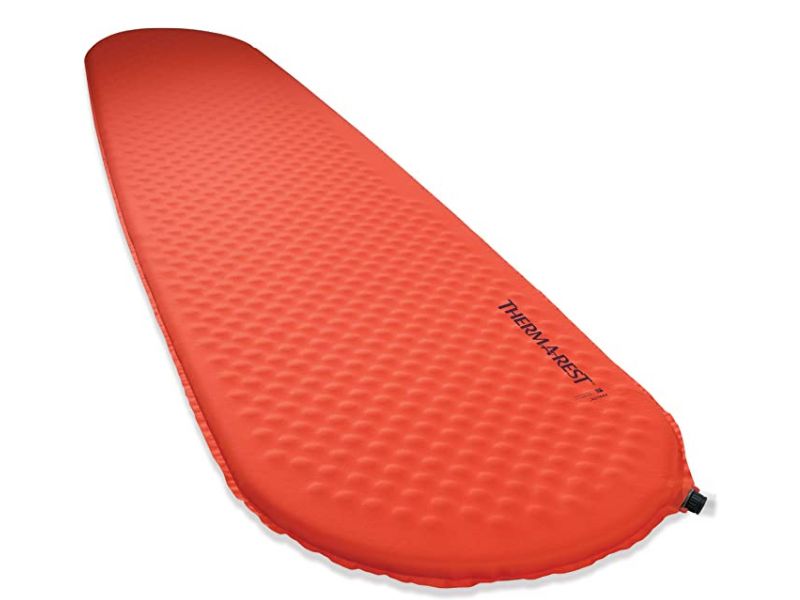
- Weight: 17oz 470g
- R-Value: 2.3
- Size: 72 x 20 x 1″ / 183 x 51 x 2.5cm
- Packed: 11 x 4.1″ / 28 x 10.4 cm
Therm-A-Rest is the most popular brand of lightweight backpacking sleeping pads, a reputation earned over years of experience serving thousands of adventurers, including on extreme expeditions.
The ProLite is the lightest and most compact self-inflating mattress available. Self-inflation keeps set-up super-easy, and its die-cut foam packs small, easily fitting inside most ultralight backpacks. It’s ideal for high-mileage bicycle touring journeys where every gram counts. Stuff sack included.
Despite being a summer sleeping mat, it still has a respectable R-Value of 2.3, which should keep you warm enough even in near-freezing temperatures (given a proper sleeping bag, of course).
Some users complain about it being a little noisy, and 1″ thickness surely isn’t the most comfortable for side sleepers, whose hips might touch the ground beneath.
It comes in four sizes: 2 full-length and two half-length for ultralight addicts.

Frequently Asked Questions about Hammock Sleeping Pads
Hammock sleeping pad vs. underquilt, which one should I go for?
By creating an insulated air space underneath you, a sleeping pad solves the heat-loss problem on the ground. Underquilts, on the other hand, are specifically designed to fit specific hammock models, even though a pad can perform the same function in a hammock. You will also discover adjustable underquilts that can accommodate a wide range of hammocks.
What is R-Value in Sleeping Pads?
The R-value is the unit of measure of a sleeping pad’s ability to insulate, the measurement of a material’s thermal resistance. The higher the R-value, the warmer it will be.
For example, Therm-a-rest’s NeoAir XTherm has an impressive R-value of 5.7, while the Klymit Static V only has an R-value of 1.3.
How do I know if a sleeping pad can be used for hammock camping?
To use a regular lightweight air mat on a hammock, you’ll need a pad that’s not too thick, ideally a maximum of 3cm or 2.3″. This is a usual characteristic of self-inflating sleeping pads. A thicker mattress will be more rigid and won’t adapt to the curve of your hammock