Likoma & Chizumulu Island Travel Guide Facts, History, Things to do, Accommodation, and getting there
Planning a trip to Likoma Island? Want to know how to get there, things to see and do, and what accommodation options are available in Chizumulu and Likoma? We lived in Malawi for 6 months and visited Likoma as part of our Malawian Travel Itinerary. Here’s a Local Travel Guide to Likoma and Chizumulu Islands.
Disclosure: Some of our articles contain affiliate links. This comes at no additional cost for you and helps us keep this website up and running. (as Amazon Associates we earn commission from qualifying purchases)
Cycloscope are proud users of the best touring bikes in the world
Chizumulu and Likoma Islands are among the most hidden and well-preserved gems of the African continent. Set on the east side of Lake Malawi (Lake Nyasa), these unusual little paradise islands belong to the stunning country of Malawi, although they technically sit in Mozambican waters.
Those waters are among the clearest you can find in a lake, anywhere in the world. Thriving with colorful fish and calm, friendly waters, it was to soak and let go of all the stress while admiring the thousands of baobabs, standing out against the tall, yellow grass.
This paradise, though, ain’t short of dangers. But don’t worry, in this travel blog, we’ll tell you everything you need to know to stay safe in Likoma Island and Lake Malawi.
Visiting Malawi? Find out literally everything you need to know with our
Likoma Island runs on a generator; a plan to make it self-sufficient through solar power is being carried out by a joint venture of Chinese and Malawian enterprises.
Crocodiles used to be a threat in Likoma and Chizumulu, but they have been heavily shot in the 90s and nowadays are almost eradicated.
Chizumulu lost most of its beaches due to rising water levels in Lake Malawi.
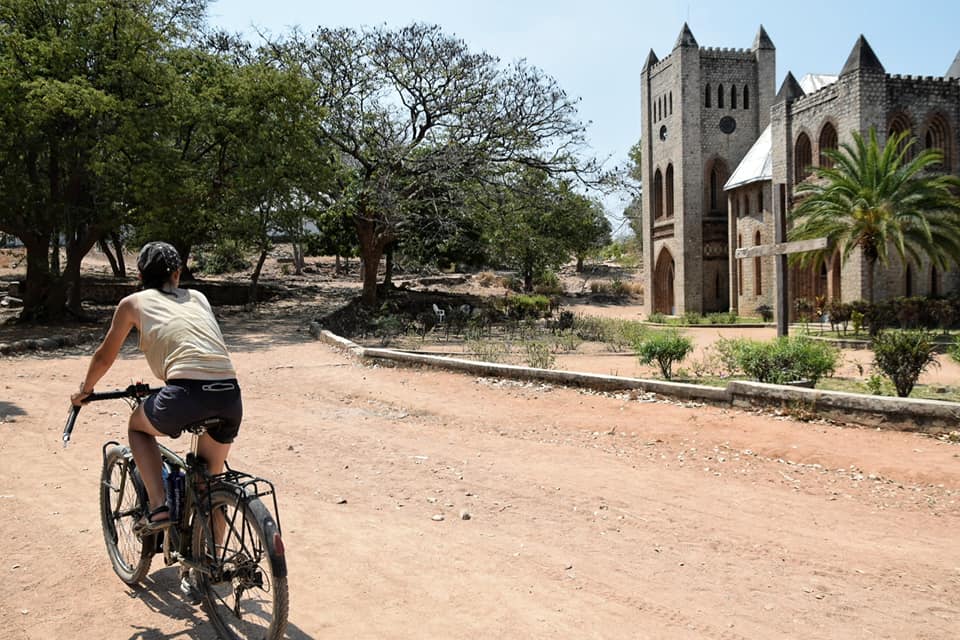
The Cathedral of Saint Peter (1903) is the biggest church in Malawi – it’s been built to be a real-size replica of Winchester Cathedral.
Geography and landscape of Likoma Island
Likoma’s landscape is pretty unique, unlike what you would find in either Malawi or Mozambique.
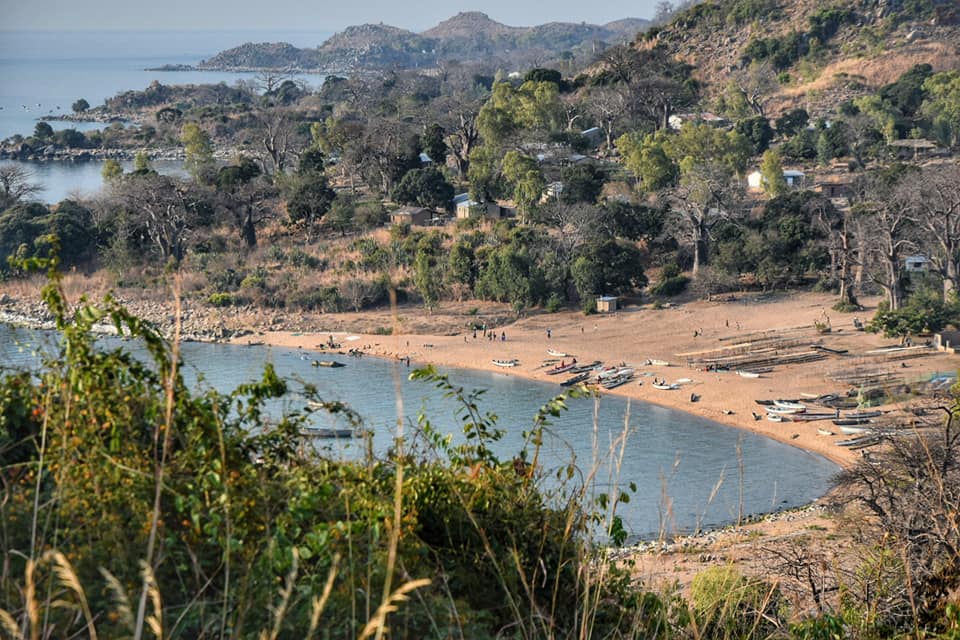
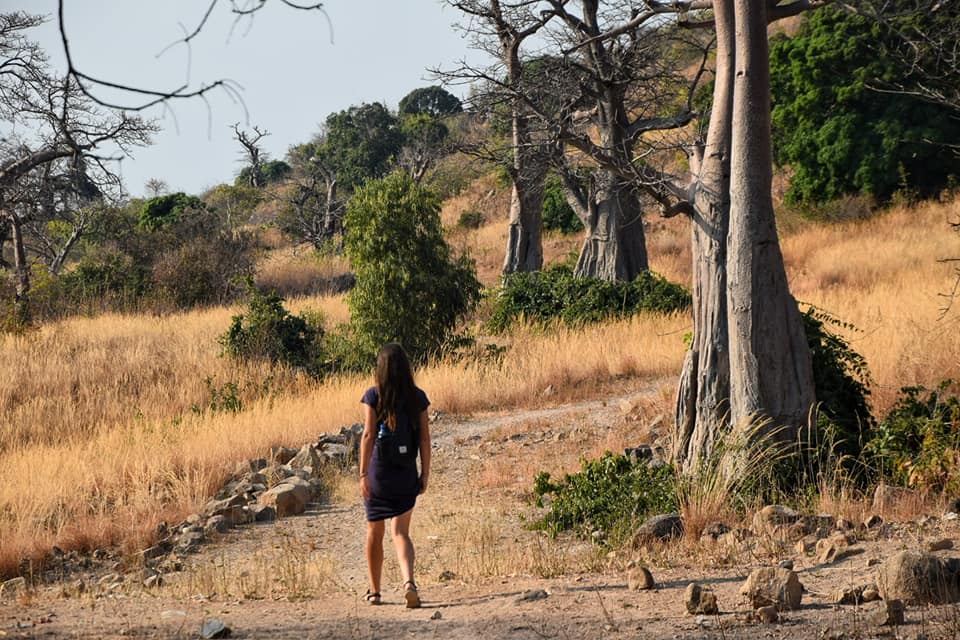
The hilly islands of Likoma and Chizumulu are covered in tall yellow grass and dotted by thousands of baobabs, mostly relatively small but very peculiar.
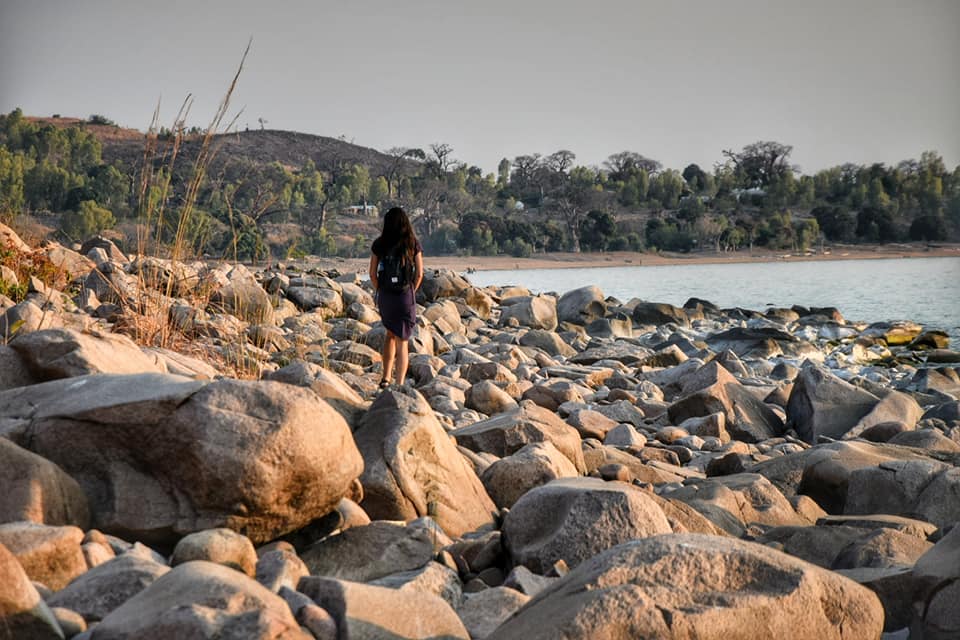
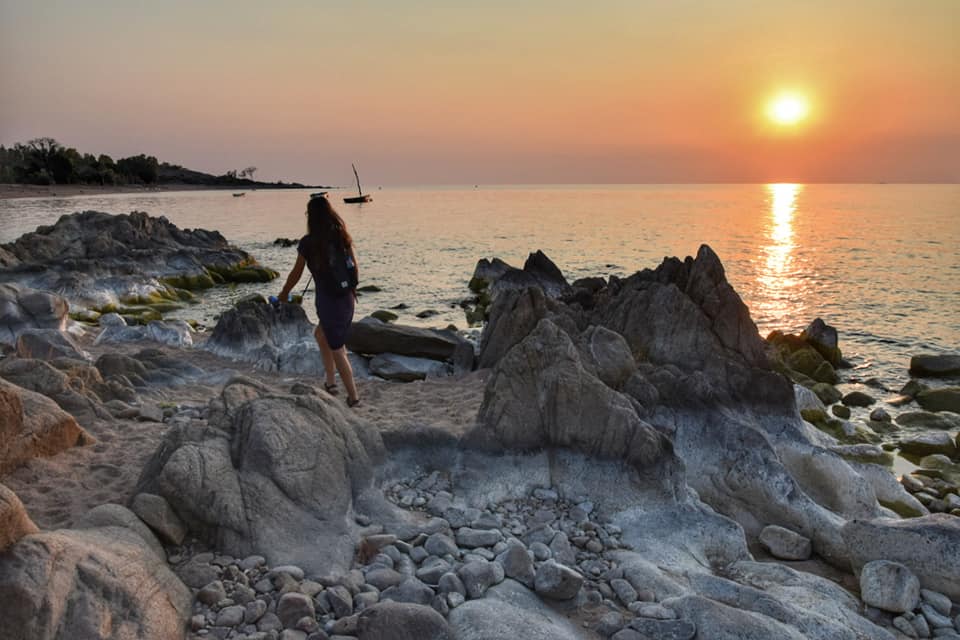
Liokoma has several stunning beaches, made of thin golden sand and shaded by lovely mango trees. The rest of the shore is rocky, with plenty of colorful fish swimming around.
The only real town is Mbamba (or Likoma village), on the southeastern shore, where ferries depart and arrive.
Accommodation in Likoma and Chizumulu
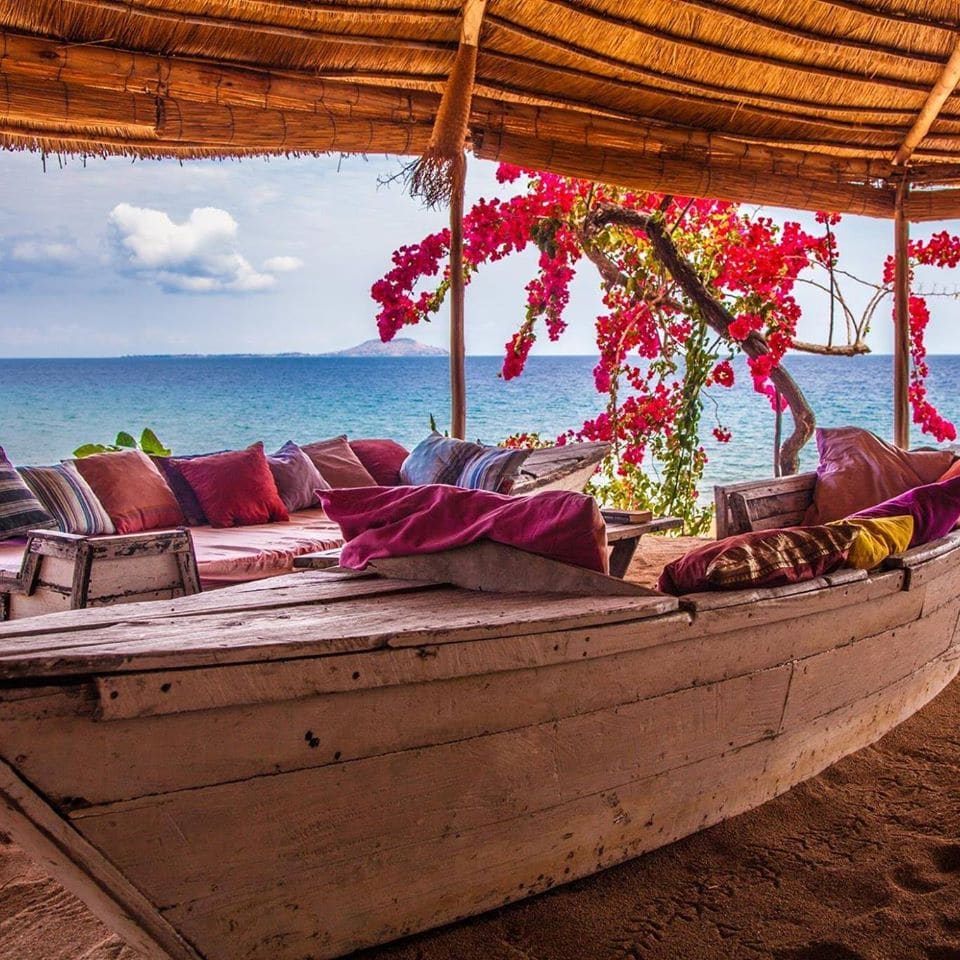
Lounge at Mango Drift
Being such small islands and still pretty off the beaten path, there aren’t many accommodation options in Likoma and Chizumulu.
Those that are there, though, are pretty cool, although the food quality is a bit lacking. We checked out most of them personally, and here they are.
Mango Drift
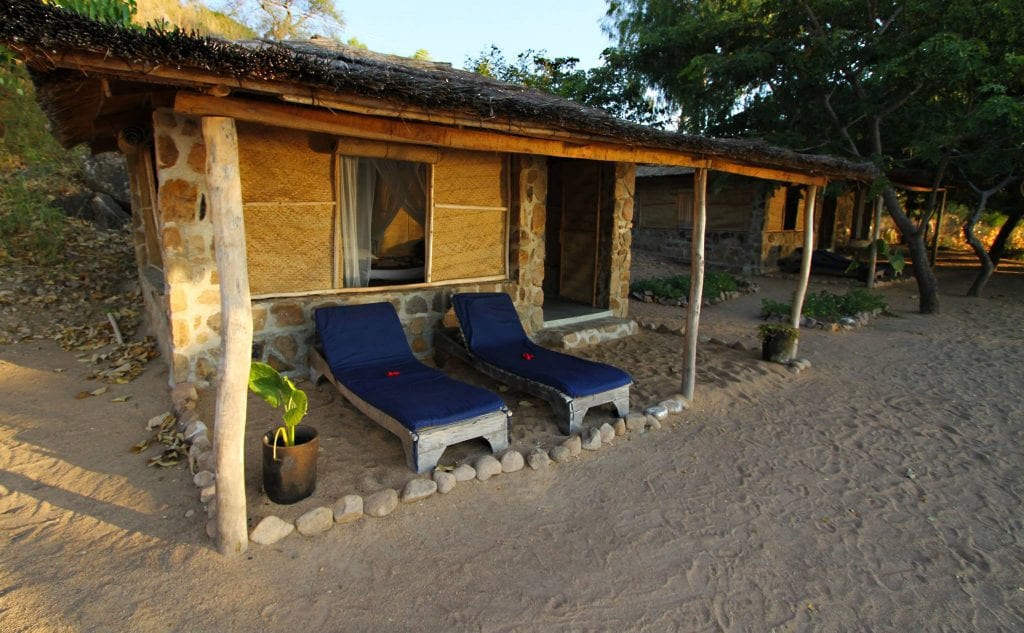
Standard chalet at Mango Drift
The Mango Drift is the most popular backpacker’s lodge in Likoma, for two main reasons:
It’s beautiful
It’s the only backpacker’s accommodation in Likoma
Set on one of the most gorgeous stretches of beach on the whole island, the lodge offers four open chalets (shared bathroom), a cheap dorm, a couple of ensuite rooms, and camping options on the beach under the shade of cozy mango trees.
The bar and lounge areas are nice, and there are beach chairs, hammocks, and sheds available. Overall, the Mango Drift is a great place to chill.
Activities at Mango Drift include:
Diving Center
FREE Snorkeling Gear
FREE Use of SUPs and Kayaks (the boats are in excellent condition)
On-Demand Boat Tours
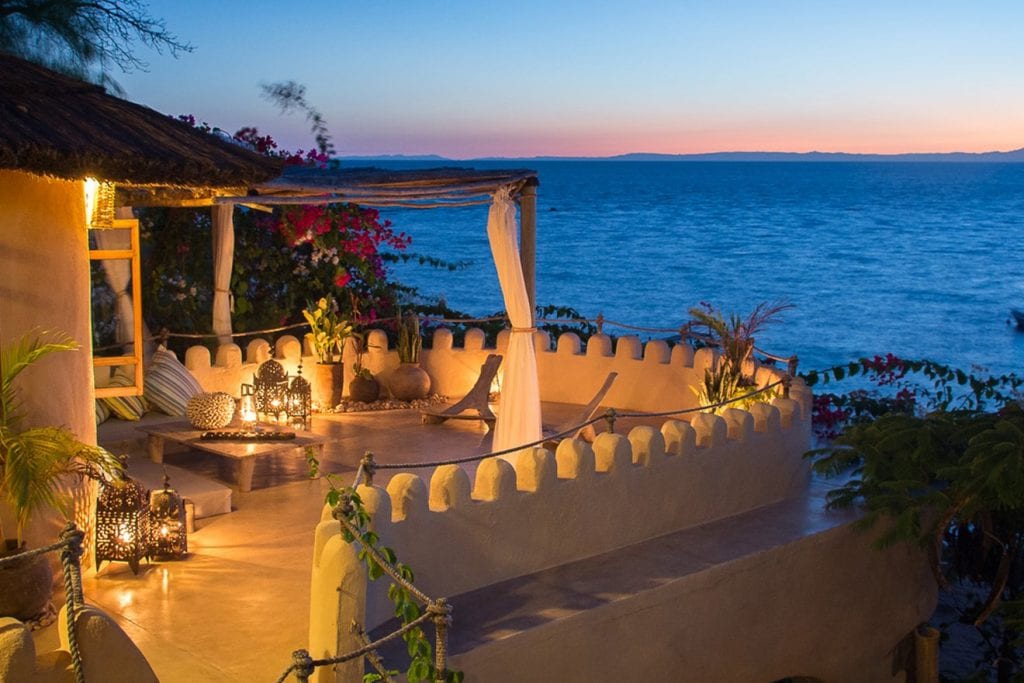
Luxury resort on Likoma: Kaya Mawa
Kaya Mawa
Kaya Mawa is a prime luxury resort, one of the most expensive in Malawi, with rates starting at 300$ per person/night.
Ulisa Bay Lodge is the other mid-range accommodation option in Likoma. It has a lovely garden, a beautiful beach, and organizes the usual activities (snorkeling, boat trips, “cultural” tours).
The cottages have three levels: Standard, Superior, and Deluxe, with prices from $20 to $100. There is also a campsite and a nice dorm.
Khaiko Lodge is another budget beach lodge with a restaurant and ensuite rooms. It’s more conveniently located compared to Mango Drift, just 1.5km from the airport. They also arrange boat trips.
Beautifully made, this small lodge on Chizumulu Island is a really cozy place where you could get stuck longer than expected.
It’s located just next to the beach where the MV Ilala ferry will drop you, so no walking with luggage. There’s a restaurant, a bar, and a small lakefront pool.
Tenayu Lodge – Chizumulu
The only other accommodation option in Chizumulu is a cozy homestay on the lakeshore that also offers camping options (inside a baobab tree).
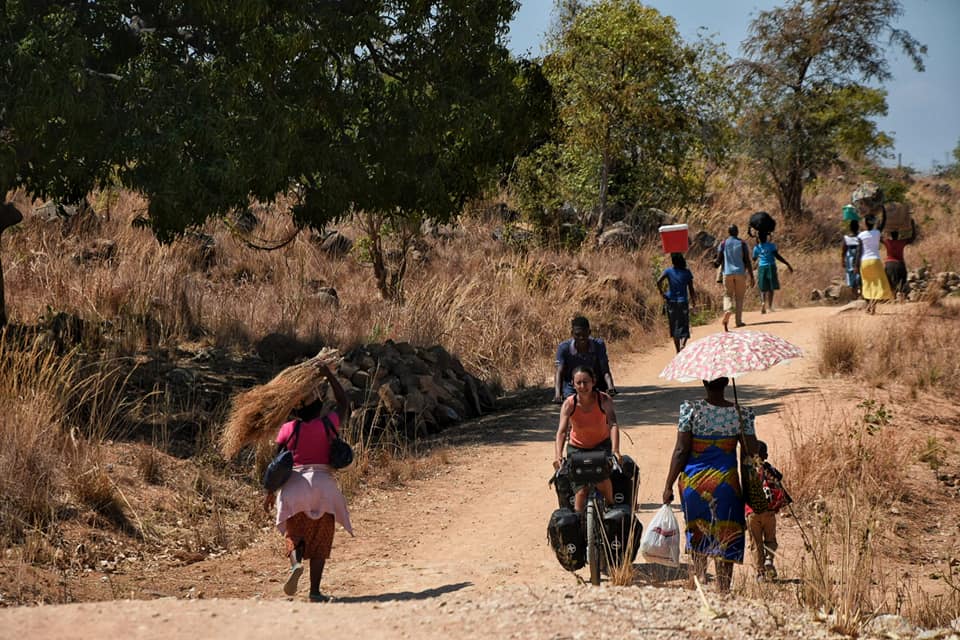
roam around with a camera, and people will ask for pictures
There are a bunch of basic guesthouses in Likoma Village, mainly around the two ferry arrival points.
Those have simple rooms with mosquito nets, shared bathrooms, and usually a cheap restaurant serving local food (mostly nsima with usypa and local chicken/goat).
Prices go from 2,000 to 6,000 kwacha for a single/double room.
11 Things to do in Likoma Island
Chilling on the beach and bathing in the clear waters of Lake Malawi are definitely the most popular activities on Likoma, but there are quite a few things to do and see on the island.
The most popular manmade attraction is undoubtedly St. Peter’s Cathedral, one of the biggest churches in Malawi – it looks a bit out of place on such a tiny island.
Climb the tower and enjoy the spectacular view. If you’re lucky, you might meet the charming watchman, who’ll happily give you a tour for a few thousand kwacha.
You’re welcome to join the vibrant service on Sunday morning; it’s interesting even if you are not a believer. The cathedral is less than 500m inland (and uphill) from the ferry terminal.
Nkhaji Nature Park is a prospecting nature reserve on Likoma Island. Very little has been done so far, just a few walking gangways. Anyway, pleasant to know something is planned, visit, and support the project.
Another interesting place to visit is the Shrubs Art, Craft, and Culture Gallery Shop. Situated at Jalo Port by the loading and offloading area for boats. It offers Likoma Island paintings, recycled art, local fabrics, clothes, bao boards, and small souvenirs.
Culture Tour – visit the St. Peter’s Cathedral and climb the tower
Boat Trip – Kaya Mawa, Mango Drift, Ulisa, Khaiko
Diving, Snorkeling – Kaya Mawa, Mango Drift
Kayaking, SUP – Free at Mango Drift
Hiking, Cycling – All around the island (no bikes available, but you can ask in town)
Sailing – Kaya Mawa can arrange a catamaran anda dinghy sailing boat
Swimming – everywhere on public beaches
Camping – Mango Drift, Ulisa Lodge
Drink, Eat, Socialize – Mango Drift, or local bars in town.
Shopping – limited to the Shrubs Craft & Art Gallery, some crafts are also at the market
Hairdressing – dreadlocks and braids can be done at the village
Hiking on Likoma Island
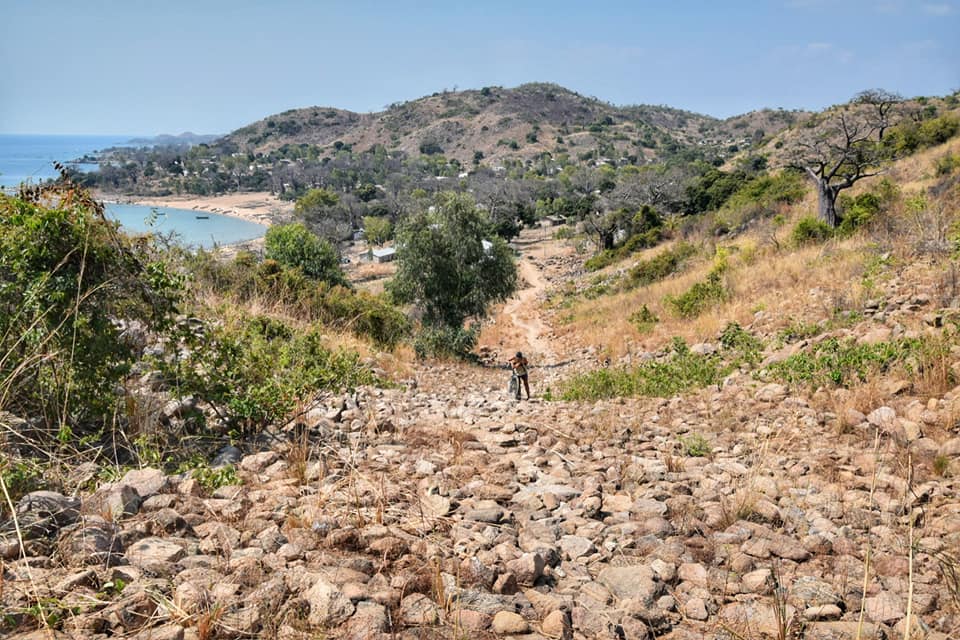
The whole of Likoma Island is a hiking trail; the island is small, and there are almost no cars (only 2 or 3 on the whole island).
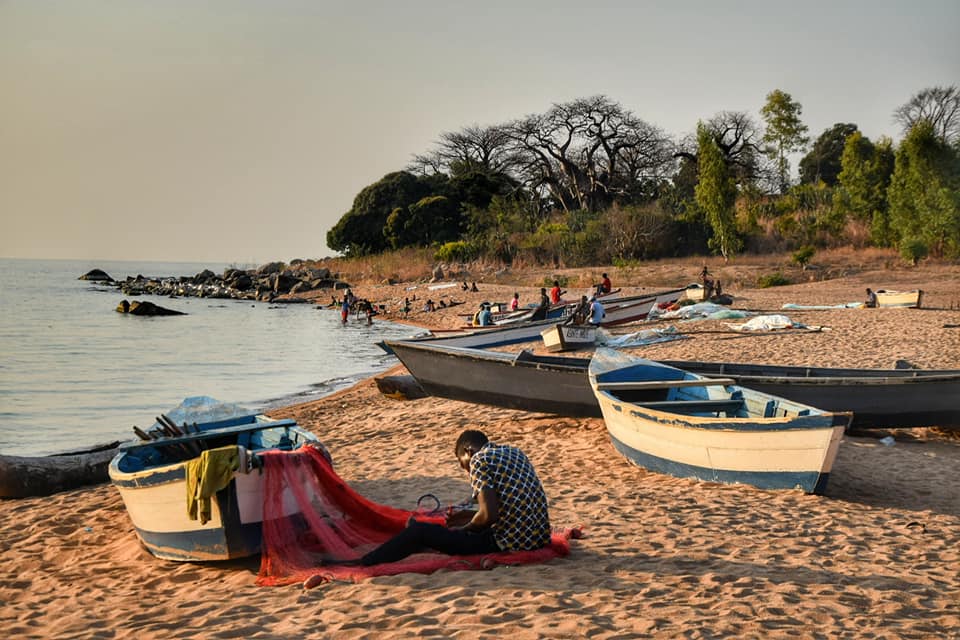
Starting from Mango Drift, it’s about 45 minutes to the nearby tiny village and beach, where it’s nice to see the local fishing lifestyle.
It’s about 20 minutes from Likoma Village to the St. Peter Cathedral. From there, you can proceed to Ulisa Bay Lodge and the northernmost peninsula of Likoma.
It’s impossible to get lost in Likoma, get your boots on (beware of snakes), and start hiking this beautiful landscape. Going all around the island will take you a long, full day.
How to get to Likoma Island (and Chizumulu)
Likoma and Chizumulu Islands can be reached by plane from Mzuzu or Lilongwe ($150/200$ return with Ulendo) or by boat via the Ilala Ferry (once a week) or the Mozambican boat Chambo (twice a week).
The MV Ilala goes all around the lake, the whole duration of the trip from Monkey Bay, and returns.
On its northbound journey, the ferry leaves Nkhotakota on Saturday at 4 am, arriving on the island at 10:30 am and in Chizumulu at 18:30 (with a long stop in Likoma). It leaves for Nkhata Bay at 17:00, passing by Chizumulu and getting to Nkhata Bay at around midnight.
From Nkata Bay (southbound), the Ilala departs at 1:30 am, arriving on Chizumulu at 4:30 and on Likoma at 9 am. From Likoma to Nkhota Kota, the departure is around 3 pm.
! Important! Most of the places where the Ilala stops have no jetty, which includes Likoma and Chizumulu. Folks and stuff are moved pretty acrobatically from the ferry to smaller boats.
You’ll have to climb down on a boat and then wade the last few meters to the beach. People are ready to help those who need it, so don’t worry too much.
read more (also about the Chambo, and the other ferry options) on our
Likoma has no recorded history before the arrival of European colonists. Apparently, its remote location and difficulty of access have made it a peaceful place for centuries. The local economy is mainly based on fishing and very little agriculture.
In 1880, missionaries from the Universities’ Mission to Central Africa, founded in response to a plea by David Livingstone, established their headquarters on Likoma Island.
It was a base for operations against the slave trade, due to the presence of British missionaries, who had built an imposing cathedral (St. Peter’s, 1911). The island was assigned to Malawi rather than Mozambique when national borders in East Africa were established after World War II.
Chizumulu Island consists of two large hills, with a flatter area to the south. The beaches are narrow, but the waters are super-clear.
Cassava plantations cover much of the lower slopes of the hills, with the upper parts being covered in low forest. As in Likoma, the baobab trees are the protagonists of the landscape.
The electricity on the island comes from a generator, just like Likoma; it runs from 6 am to 10 pm (with a break between 12 and 2 pm).
There are no roads, but a well-constructed path running around the island’s shore, a nice hiking trail that can be walked in about three hours.
The locals speak a Nkamanga dialect, a variety of Nyanja.
Diving in Likoma
Lake Malawi is very far away from any oceans or other water bodies; this isolation created an outstanding example of biological evolution. The 500+ species of cichlid (rockfish, known locally as Mbuna) of Lake Malawi evolved from a common ancestor within the last million years (the actual number of species is still unknown).
Lake Malawi around Likoma is usually flat and has little current, making it a great place to get a PADI Open Water certification, especially for those who are not too comfortable with it.
Moreover, diving in Lake Malawi’s fresh waters makes it easier on your eyes during the mandatory safety exercises.
Add to this the uniqueness, abundance, and shimmering colors of Lake Malawi’s fish, the chilled atmosphere, and the quiet, slow pace of the locals.
There’s only one diving instructor in Likoma, working for Likoma Island Divers, which serves both Kaya Mawa and Mango Drift resorts.
Safety in Likoma – Belharzia, Crocodiles, and Malaria
Thefts, robberies, or attacks are very rarely (if ever) experienced in this area, in general, the whole of Malawi can be considered pretty safe for tourists if the obvious concerning precautions are applied.
Accidents can happen, and you should bear in mind that there’s no hospital on Likoma; there are only small, ill-equipped clinics. In case of a serious injury, you should be airlifted to Mzuzu or Lilongwe… better have travel insurance (our recommendation is World Nomads, read more later)
Another small but existing danger in Likoma Island comes from the animal kingdom, namely, reptiles and small parasites.
Reptiles
Despite what Malawians and lodge managers say, crocodiles are very common on Lake Malawi. However, most of the ones dwelling around Likoma have been shot in the 90s (we personally met the guy who did it).
They posed a serious threat to the island’s inhabitants, but not anymore. Small crocs are occasionally seen around the rocky areas, avoiding bathing or paddling at night.
Venomous snakes are present, including the black mamba and other deadly cobras, which tourists occasionally encounter.
When we were at Mango Drift, a customer found a big snake in his room. The staff killed it but seemed to have no idea what it was, or maybe they didn’t want to say.
Bilharzia, also known as snail fever or schistosomiasis, is a disease caused by parasitic flatworms called schistosomes. The disease is spread by contact with fresh water contaminated with the parasites. These parasites are released from infected freshwater snails.
The urinary tract or the intestines may be infected. Symptoms include abdominal pain, diarrhea, bloody stool, or blood in the urine.
Those who have been infected for a long time may experience liver damage, kidney failure, infertility, or bladder cancer. In children, it may cause poor growth and learning difficulties.
All these might seem scary, but actually bilharzia is a very remote danger to the well-informed tourist. First of all, bilharzia is very easy to treat – be sure to buy one of the two drugs available, praziquantel or oxamniquine, at any Malawian pharmacy, including Likoma.
Those medicines, especially the praziquantel, are 100% effective and very safe for the organism, you’ll have to assume your dose in one go six weeks after your last contact with the lake water. If you don’t want to take a drug without being sure you need it, you can get tested for bilharzia at any hospital in Malawi.
Malaria is present on Likoma, and you should take precautions. Do prophylaxis if you want, but most importantly, use efficient repellents and mosquito nets.
ATM and Card Payment in Likoma and Chizumulu
There’s no ATM on Likoma Island, needless to say, in Chizumulu. Most lodges accept card payments, but connectivity can be an issue. Small shops and vendors only accept Kwatcha, so bring some.