Last Updated on 27 January 2026 by Cycloscope
South Luangwa National Park, Zambia.
An unforgettable safari in one of Africa’s richest wildlife parks.
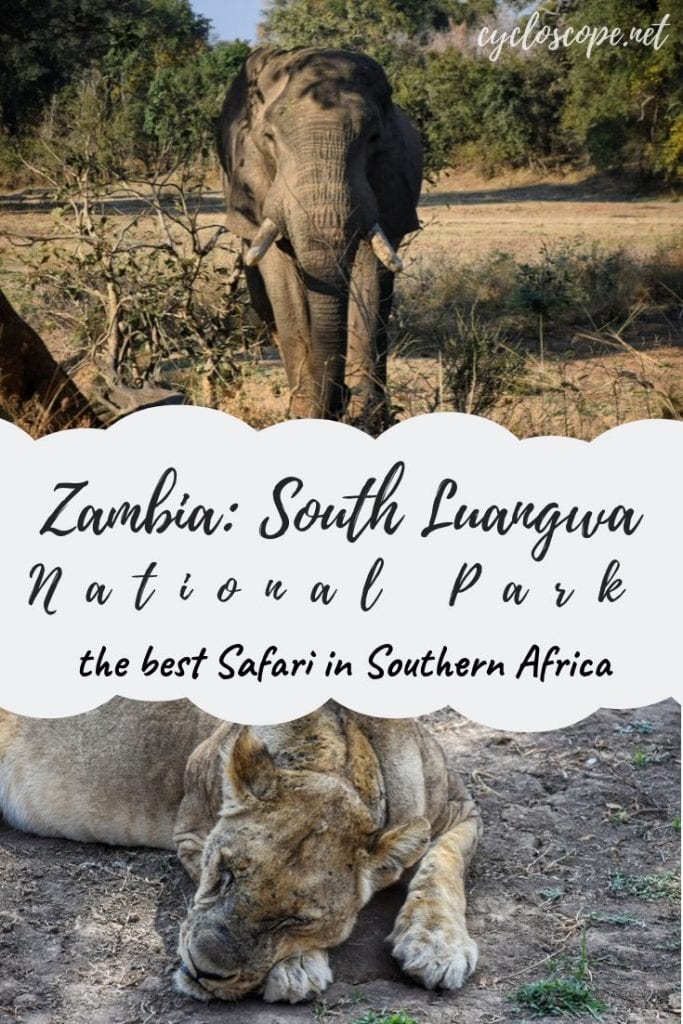
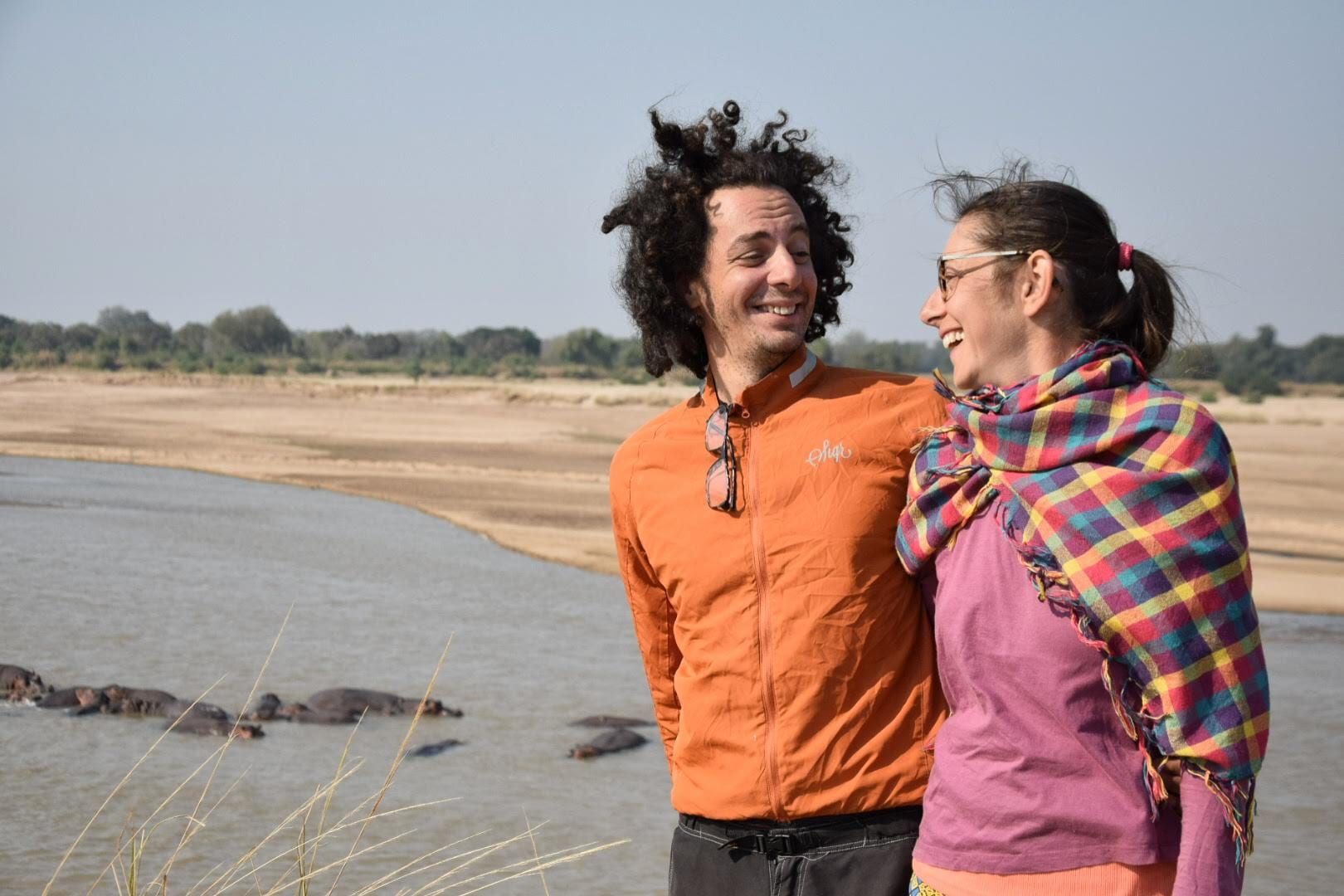
The South Luangwa National Park is one of the best safari parks in Zambia and of the entire African continent for animal wildlife density. It takes its name from the Luangwa River, which flows through the park, offering a home to thousands and thousands of hippos and crocodiles and supporting the lives of hundreds of other species.
Disclosure: Some of our articles contain affiliate links. This comes at no additional cost for you and helps us keep this website up and running. (as Amazon Associates we earn commission from qualifying purchases)
They established the park as a protected reserve in 1938 and then as a National Park in 1972. It has an area of 9,000 km2, ranking 15th among African parks, just between the Chobe National Park in Botswana (10,566 km2) and the Ngorongoro in Tanzania.
During our bicycle trip in Africa, we cycled through Zambia to the city of Chipata, from where we organized a 3-day safari in the South Luangwa National Park, sleeping in Mfuwe, the village just outside the main park entrance, with several lodgings for all budgets.
Fauna and Flora of the South Luangwa National Park – What could you see here
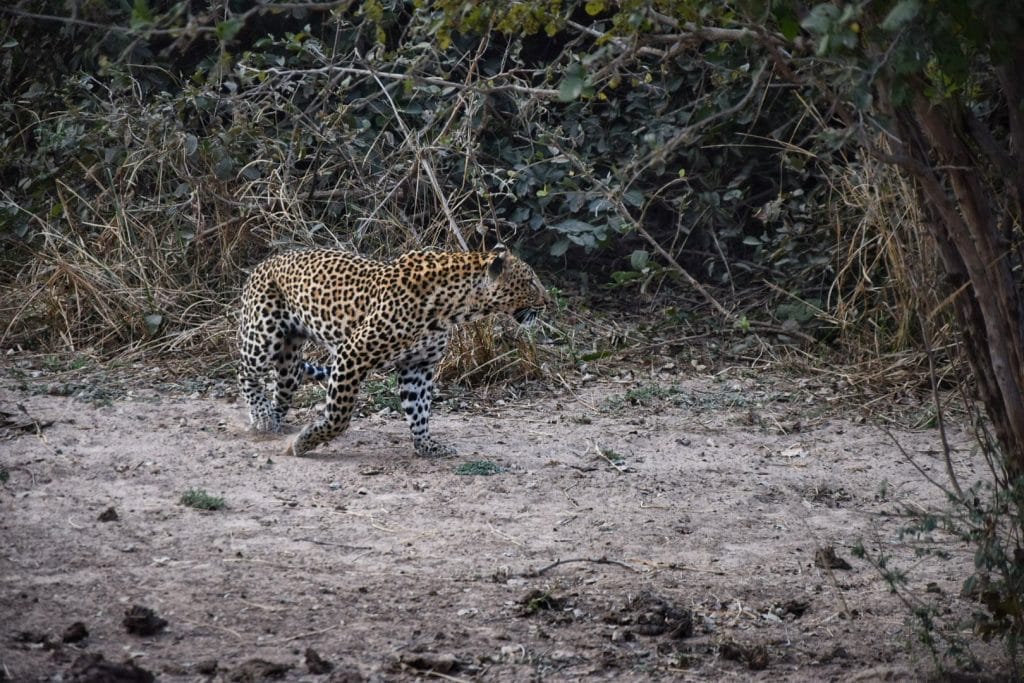
Notably, the rhinoceros is absent, and conservationists recently reintroduced it only in North Luangwa. The Luangwa River is the most intact river system in Africa and is the vital blood of this 9059 km2 park. The park is home to a wide variety of wildlife, birds, and vegetation.
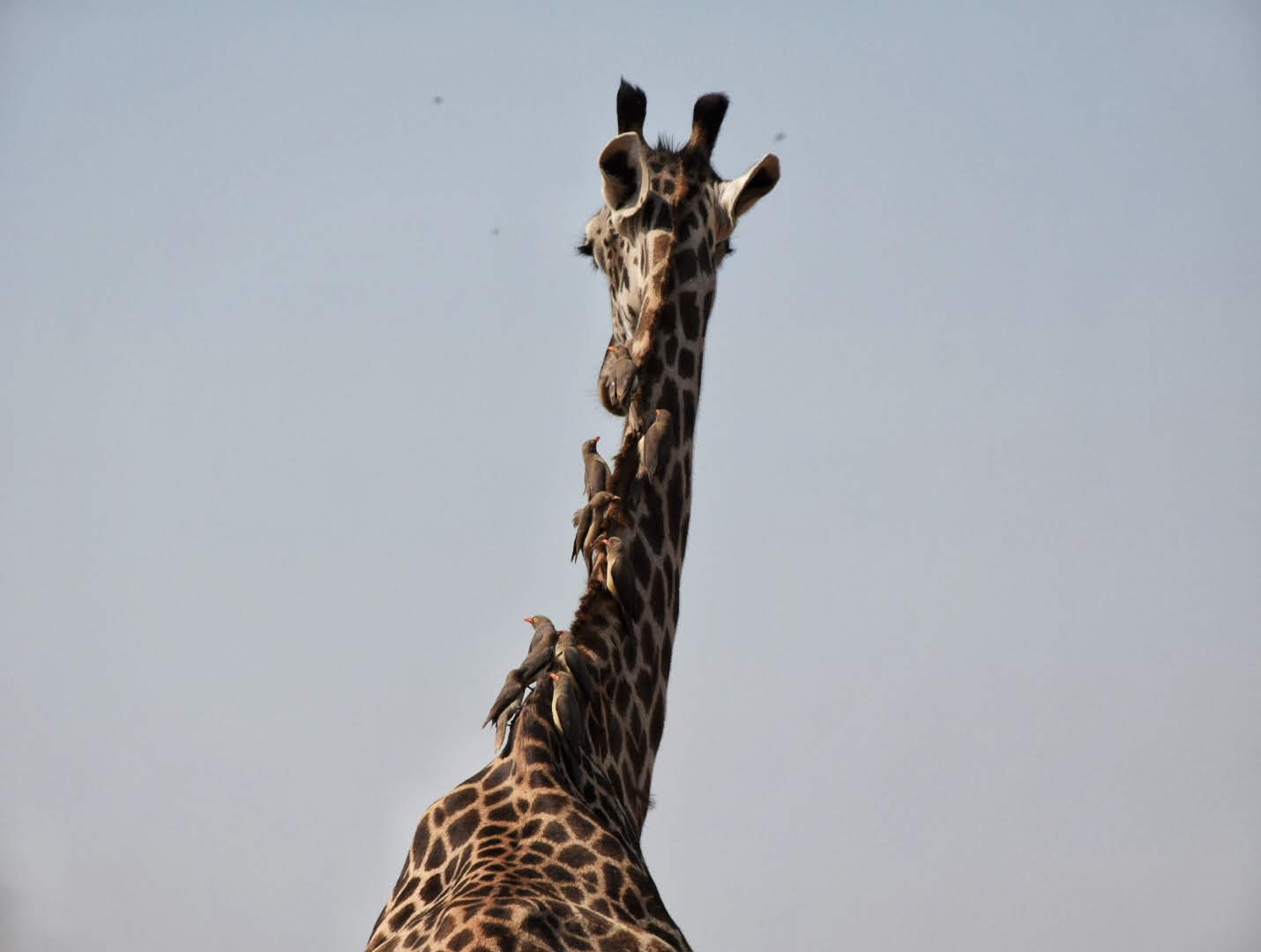
There are 60 different animal species and over 400 different bird species in the South Luangwa National Park. South Luangwa is also home to some endemic species, including the Thornicroft giraffe, which lives only here, and the Crawshay zebra.
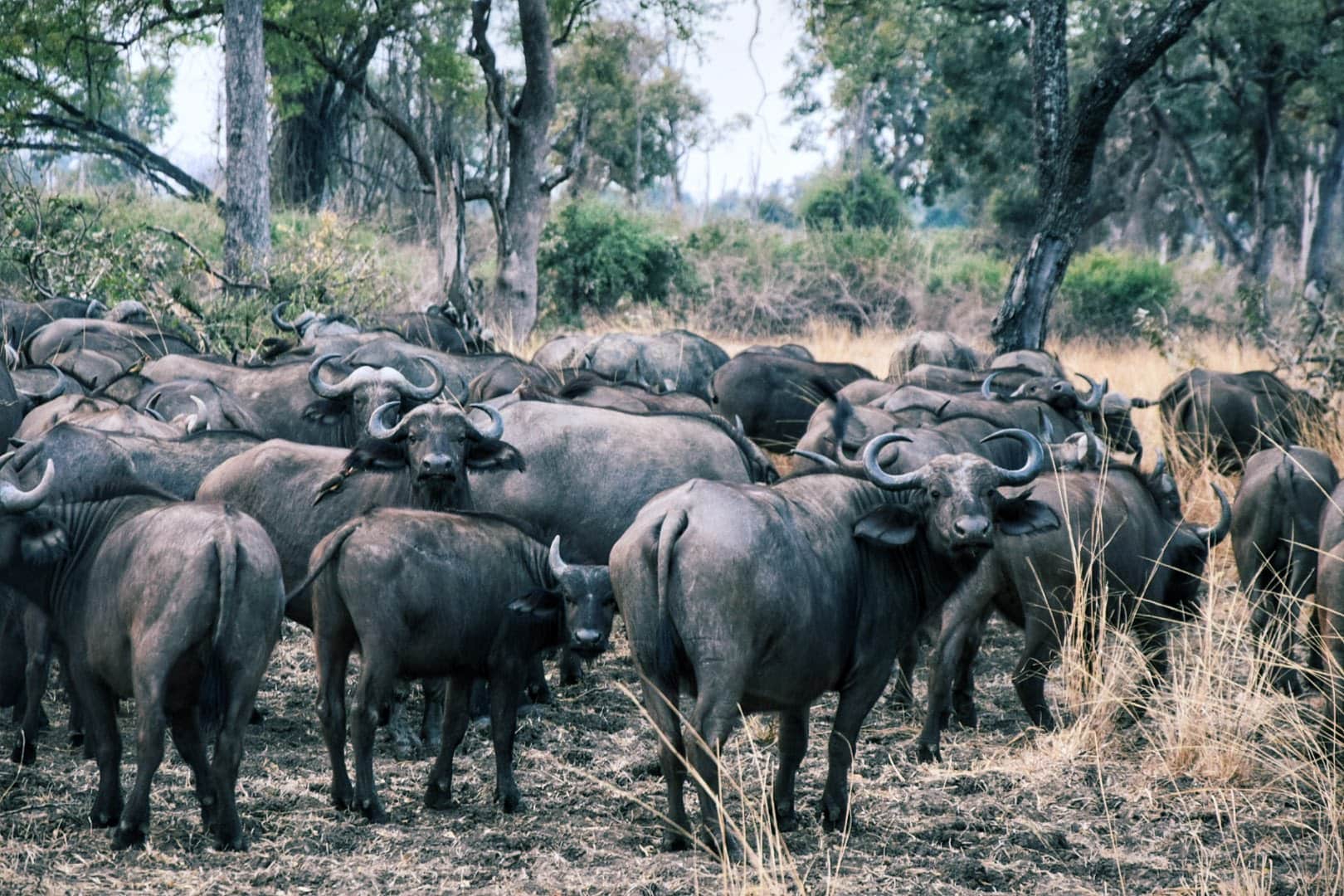
Elephants cross the river during mornings and evenings, and large buffalo herds are easy to meet. The same goes for hippos and crocodiles. Common but not always easy to meet are hyenas, lions, and leopards. One of the hardest animals to come across is the wild dog, also known as the wild African dog or painted dog, now almost extinct.
The African Wild Dog Conservation Association is trying to create a natural corridor for wild dogs between the national parks of South Luangwa and Lower Zambezi, as these animals need large areas to lead their nomadic lives.
Best time for a safari in Zambia, Luangwa National Park

The best time to visit South Luangwa is the dry season, especially from July to September. This is the best time to see more animals and also the most practical for driving in the park, which, in the wet season, could become quite muddy. If you are a birdwatcher, the best time, even if rather hot, is September.
As far as we have been able to see, given the richness of the fauna of the area, it is not hard to see animals also during the rainiest times of the year, even then a drive in the park is certainly worthwhile but it is not advisable to go with your own car, there may be difficult passages that require more expert guidance and a more appropriate vehicle.
How to reach South Luangwa National Park

By car
The road connecting Chipata to Mfuwe was finally paved a few years ago. The distance from Chipata to Mfuwe is 130km (2h) if traveling on the main road. Reaching the park takes about 9 hours from Lusaka and 15 hours from Livingstone.
For those arriving from Lilongwe, the capital of Malawi, it will take about 5 hours, but keep in mind that you’ll need to cross the border, and it can be a bit stressful and expensive with a rental car.
There’s a nice, adventurous alternative route to get here called the Old Petauke Road; more info is in the “by bicycle” section below.
By plane
Planes connect the small town of Mfuwe to the capital, Lusaka; you will arrive at the Mfuwe International Airport (MFU), a few kilometers from the park entrance. It is also possible to fly directly to Mfuwe from the Lower Zambezi National Park (Jeki / Royal Airstrips). You can book the flight yourself. Alternatively, several companies are selling Safari all-inclusive, including flights.
Certainly, it is not the most economical or ecologically sustainable solution, but if you have little time, it could be worth it. If you are coming from Malawi, Fly Ulendo offers a daily service from Lilongwe to Mfuwe International Airport. The flight from Lilongwe to Mfuwe takes about 1 hour.
Public Transportation
You can take a bus from the central bus station in Lusaka to Mfuwe, or take a bus to Chipata and then a minibus or taxi. Keep in mind that the bus takes about 15 hours, so breaking the journey somehow could be a good idea. We were in Chipata, and we contacted Mophy Budget Safari. They drove us from Chipata to Mfuwe, and the cost of the safari included everything. You can find their contact information here.
By Bicycle
The easiest way to cycle to the South Luangwa main gate is the same as driving: follow the Great East Road to Chipata, then turn for Mfuwe.
If you’re up for a real adventure, though, there’s a very tough dirt road leading there called the Old Petauke Road. Petauke is a small town you’ll cross along the Great East Road; from there, you can use this old road to get straight to Mfuwe. The distance is much shorter, but the time to ride it (or even drive it) will be the same or longer.
The second half of the road runs along the Luangwa River and basically enters the park. Because the park lacks a fence and the river teems with wildlife, you will very likely encounter many animals: hippos and crocs undoubtedly, but also buffaloes, giraffes, antelopes, and even lions…
Many cyclists ride it, and it sounds cool. However, be aware that these wonderful creatures can be deadly, and you’ll be very unprotected on a bike. A lioness recently hunted a cyclist, but a safari car saved them.
Zambia Visa
The visa for Zambia costs USD 50 for most nationalities (including all of Europe and North America; Irish, Romanian, and Serbian citizens are exempt) and can be obtained at any land border or airport.
The visa is valid for 30 days and can be renewed up to 2 times for free, in a very simple and fast way. Just go to an immigration center and provide the address where you are staying. It would be better to go on the day of the deadline or at most a few days before. The total stay is limited to 90 days.
If you plan to visit Victoria Falls from both Zambia and Zimbabwe, you can apply for the Kaza UniVisa, valid for 30 days and allowing you to travel to Zimbabwe and return to Zambia. Border officials also provide this visa, but they do not offer it at all ports of entry, and an extension is not possible. You can get it in the following in Zambia:
- Livingstone (Harry Mwaanga) Airport
- Victoria Falls Bridge Border (Border with Zimbabwe)
- Kazungula Land Border (Border with Botswana)
- Lusaka (Kenneth Kaunda) Airport
For those arriving from Zimbabwe, the visa can be obtained here:
- Victoria Falls Airport
- Victoria Falls Bridge Border (Border with Zambia)
- Kazungula Land Border (Border with Botswana)
- Harare airport
Safari at South Luangwa National Park
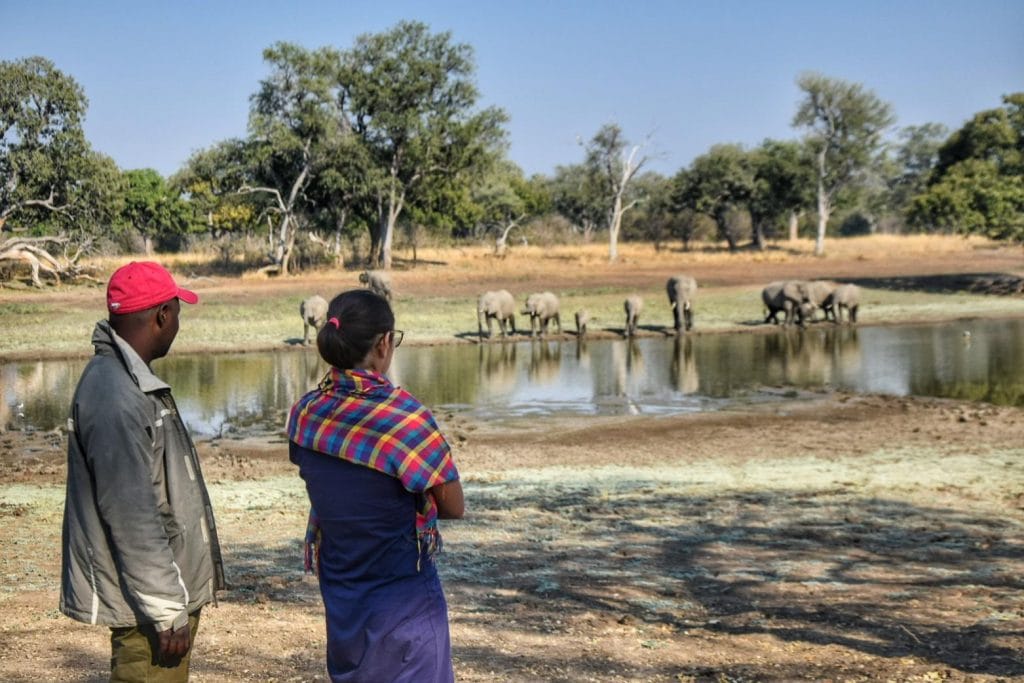
The main entrance to the park, Mfuwe, is located on the eastern bank of the Luangwa. Scattered around every area of the park are over a dozen lodges and campsites, but of course, the cheapest accommodations are located outside the park gate. Many companies offer safaris, and the costs vary, particularly depending on the accommodation chosen. There are 3 types of safari:
- Walking safari
- Guided safaris (on an open safari vehicle – done both in daytime and at night)
- Self-Drive Safaris
Walking safaris in South Luangwa National Park
The South Luangwa National Park is where walking safaris were born and remains the ideal place for this type of activity. A Safari on foot differs completely from a classic car safari – first, the animals will not ignore you like when you are in the car, but they will immediately perceive you as another animal, and you will have to behave accordingly, not coming too close and carefully following the directions of your guide. The sense of adrenaline will be much greater on a walking safari.
Besides two park guides, there will be an armed ranger with you in case of emergencies. The solutions offered are numerous, ranging from a 3- or 4-hour walking safari, which costs around USD 50 per person, to an 8-day walking safari that allows you to see different areas of the park. Furthermore, cars cannot leave the course; on foot, you can go anywhere, following the animals’ tracks or what is left after their meal.
Walking safaris in Africa are absolutely great for kids, who will get to learn a lot about following tracks, identifying plants, and understanding animal behavior. Consider that many parks have an age limit: your kids have to be 12 or older. Be sure to bring good binoculars.
Most companies offer walking safaris, including our Mophy Budget Safari, which has the lowest prices.
Morning Safari, Night Safari, and Whole-Day Safari
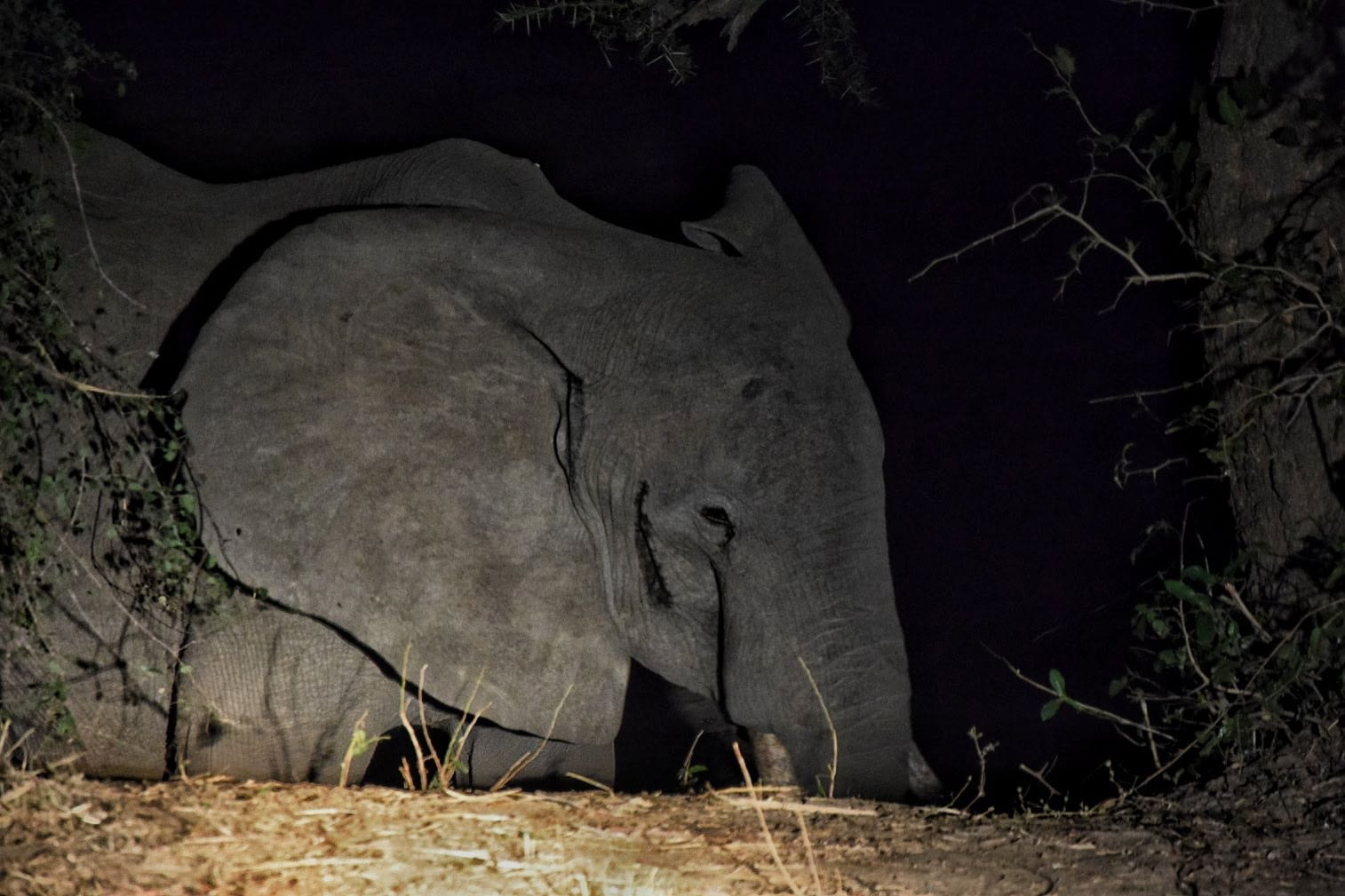
These are the classic options: the morning safari is about 4 hours of driving in the classic jeeps, from dawn to lunchtime. You can choose between the morning option or the night safari, which starts before sunset and lasts until 7 pm.
It seemed to us that the night safari is a bit too invasive towards the animals, since your “spotter” will cast powerful lights on them, and many animals really do not like that. We did both safaris and enjoyed them very much.
There were not too many tourists, and, despite a couple of occasions, when it seemed there were too many cars near the leopards, and when they shone a light on a hippo, we did not have the impression of disturbing anyone.
Full-day safaris
The whole-day safari is another option; it also begins at dawn and lasts until the first hours of darkness, giving you a couple of hours of darkness to spot nocturnal animals. A 1h launch break will give you time to rest, though a whole-day safari can be quite exhausting, especially for kids.
The full-day safari starts at dawn and continues until 7 p.m. It’s a great way to explore the park’s more remote areas, which aren’t accessible during the standard 4-hour safari due to time constraints. On this occasion, we could see lions farther north than the park entrance.
It’s still a tiring day—you’ll spend about 13 hours in the car—but there are several breaks in safe areas: one for breakfast, a longer stop for lunch, and another at sunset.
Safety concerns and behavior to adopt while on a safari
Safaris are pretty safe, especially guided ones, while those who self-drive should take a few more precautions when driving through game reserves. Zambia is one of Southern Africa’s safest countries, so you shouldn’t worry about petty crime.
In general, it is important not to speak aloud, especially if you encounter predators such as lions, and not to stand in the car or move outside the vehicle’s perimeter.
Apparently, animals, including lions, see cars and men as a single peaceful beast, which is why they ignore them and do not attack them.
If you stand up, move your arms, or lean your head out of the car, this illusion will be broken, and it could be very dangerous. In practice, follow the guides’ advice to the letter. This applies to guided safaris run in open vehicles.
Check with your tour company that the vehicle is in perfect order, and ask whether they have a radio on board for emergencies (as there’s no mobile signal in most of the park). Few agencies and lodges have their own vehicles; most rent them from third parties, so not all are in good order.
Self-Drive Safari
Another possibility is to rent a car and go on your own. We never did it, so we don’t have firsthand experience, but it is easier to spot animals on an organized Safari. First of all, you will not be busy driving, and the rangers can contact each other if they sight something.
Even if the animals are really a lot, you will for sure see dozens of elephants, hippos, crocodiles, giraffes, buffaloes, and antelopes, but it could be more difficult to spot lions and leopards without the right tip.
Keep in mind that in most of the park, mobile signal is completely absent, so if you have problems with the car, you will not be able to contact anyone. Definitely not recommended during the rainy season.
We believe it is better to use the park’s cars, which can accommodate about 15 people at a time, rather than adding a dozen more vehicles to the Park.
Our experience with Mophy’s Budget Safari
We were in Chipata. We contacted Mophy, who runs Mophy’s Budget Safari and organizes car transport from Lilongwe or Chipata to Mfuwe. The cost seemed excellent compared to what these excursions typically cost; you will find offers and costs on their website.
In addition to transport, you will be taken to a very pretty safari lodge, still under construction (two operational huts at the time of writing, two larger ones for families coming later this year). The cottages are basic but very cozy, equipped with everything you need, and located on a large pond, 5 minutes from the park entrance.
You will have the chance to see the animals directly from the lodge there, especially elephants, giraffes, and buffalo. It must be said that our car has had some problems throughout the day’s safari; we have had to change the laundry 3 times.
As we understand, the machines are not owned by Mophy but rented, so the fault would probably be attributed to the rental and the guides (also third-party; 90% of guides are freelancers) who did not check the car before leaving.
However, Mophy’s Budget Safari is a company created and managed by local people, and we still consider it the best way to spend our money instead of enriching people who are already very rich.
You might also like
Hippo Cruise at St. Lucia, South Africa – a first-hand account
Safari at iMfolozi National Park, the oldest game reserve in South Africa
Praia do Bilene – may be the best beach in Mozambique
Lesotho – a road trip through the Kingdom of the Sky