

Last Updated on 29 November 2025 by Cycloscope
Hluhluwe – iMfolozi Nature Reserve: a great safari opportunity in KwaZulu-Natal, South Africa
How to book, things to know, and accommodation options near the game reserve
If you’re traveling in South Africa, you’re likely to want to see some wildlife. A safari in the Hluhluwe-iMfolozi Game Reserve is a great way to spot the so-called “Big Five” (Lion, Rhino, Leopard, Buffalo, Elephant) and other beautiful animals in their natural environment.
Disclosure: Some of our articles contain affiliate links. This comes at no additional cost for you and helps us keep this website up and running. (as Amazon Associates we earn commission from qualifying purchases)
Much more tranquil than the more famous Kruger National Park, Hluhluwe-Umfolozi (another spelling) is also very scenic, with its rolling hills covered in wild bushes and the great Umfolozi rivers winding through them like a giant snake—a top Safari destination.
We visited Hluhluwe-iMfolozi on a full-day guided safari departing from the resort town of St. Lucia, it was a nice day-break from our cycling trip through Southern Africa and we really enjoyed it.
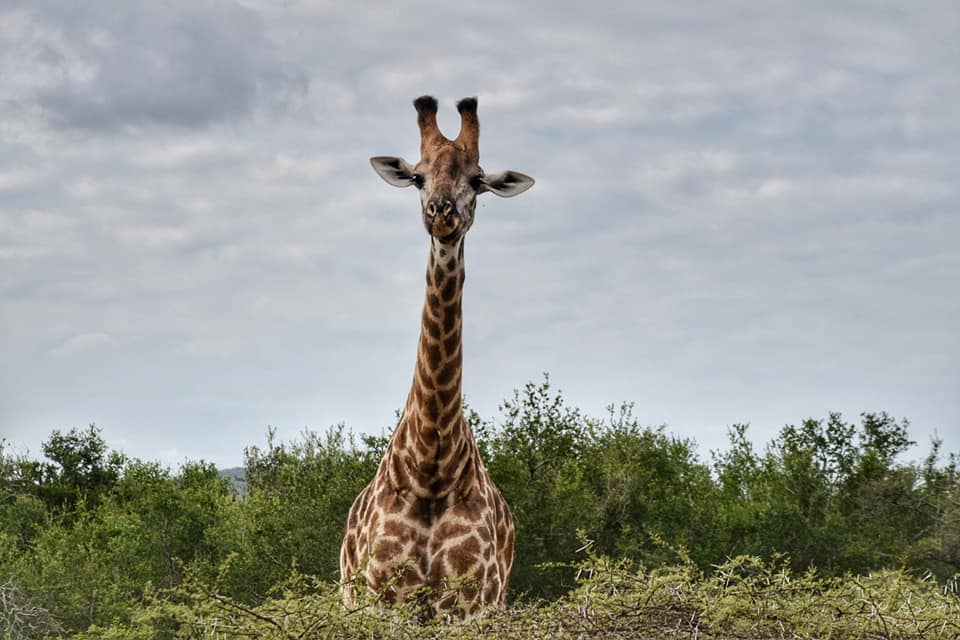
We spotted four of the big five (not the leopard, which is very difficult to spot) plus a lot of giraffes, stunning kudu specimens, warthogs, vultures, zebras, and plenty of other antelope and other animals.
In this blog article, we’ll provide all the information needed to organize a safari trip to the Hluhluwe-Imfolozi Game Reserve and National Park.
- Exploring the area? Why not visit the hippos in St. Lucia?
- Are you interested in what to see in Cape Town? Check this
Planning a trip around South Africa? Have a look at
- Barrydale and the Little Karoo
- A road trip through the Eastern Cape
- Prins Alfred Pass – An off-the-beaten-path Garden Route itinerary
- Maletsunyane Falls in Lesotho
Check also our complete guide about
Cycling in South Africa – everything you need to know
Hluhluwe – iMfolozi National Park, the oldest park in Africa
Established in 1895, the iMfolozi Game Reserve, situated in the South African region of KwaZulu Natal (KZN) is the oldest national park in Africa. It is the only public National Park in KwaZulu to host the Big Five, and, thanks to its efforts to date, the world’s largest population of white rhinos, despite poaching being a daily problem.
The white rhino is indeed the reason the park first came into existence. This species was already endangered in the late 19th century. Although the park has witnessed the systematic killing of more than 100,000 other animals (blamed for the endemic presence of tsetse flies), the white rhino was spared, and today there are about 1,000 specimens in the park.
Located 280 kilometers (170 mi) north of Durban, the park covers 960 km² (96,000 ha), about 10 times the size of the city of Paris. A hilly and wild expanse of land between the Black Umfolozi and the White Umfolozi rivers, which has been the theatre of many fundamental events in the history of KwaZulu-Natal, a vital area in the struggle between the Voortrekkers (Boer settlers), British ivory traders (and later the Empire), and the Zulu Kingdom born under the famous Shaka.
We recommend the reading of Natal and the Zulu Country by T.V. Bulpin if you’re interested in the history of this beautiful part of the world.
How to book a safari in Hluhluwe – Imfolozi
Booking a safari around Hluhluwe-iMfolozi Game Reserve is very easy. If you want to book last-minute while you’re already in St. Lucia, there are many tour operators who charge very similar prices and offer nearly identical packages.
We booked through the Monzi Safaris Backpackers and Lodge, which was our accommodation of choice in St. Lucia. You can also book through several accommodations in the town of Hluhluwe, more about this later.
Anyway, it’s often a good idea, especially during public holidays or weekends, to book in advance and be sure to get your spot. We recommend booking online through a reliable tour aggregator like Hotellook or Viator.
There are several safari options in Hluhluwe-iMfolozi, from half-day tours to full-day safaris, or all-in-one-day tours that include a hippo river cruise in St. Lucia together with a half-day safari in iMfolozi. If you really are into wildlife spotting and want to get the best out of a Hluhluwe safari, there are also 3-day tours that include on-site accommodation.
We feel like recommending the full-day tour, which we took. It included a good breakfast and lunch, and we had time to enjoy the park and see many animals. If you’re bringing young kids on a safari, though, maybe Hals Day would be enough—more about our experience and the tour structure later in this article.
Self-Drive Safari in Hluhluwe – Umfolozi National Park
If you own or have rented a car and are self-driving in Africa, you can do self-drive safaris in Hluhluwe-iMfolozi. There’s one main paved road inside the park, while the rest is dirt but well-maintained.
Self-driving in game reserves, though, requires a lot of attention. You’ll have to be careful not to get too close to massive and dangerous animals such as elephants or buffalo, keep your eyes on the road and drive slowly… as our guide said: “the only real danger here is self-driving tourists”.
Moreover, it is easier to spot animals when you are not driving, and going with more people will give you the advantage of multiple pairs of eyes. Furthermore, you will be given a lot of information on what you are observing.
Bicycles and motorbikes are not allowed in the natural park, for obvious reasons. Dogs are also not welcome here.
Visitors pay a park entrance fee of R210 per person per day (50% off for children). Persons with a South African ID get a discounted rate.
Anatomy of a Safari in Hluhluwe – iMfolozi Game Reserve
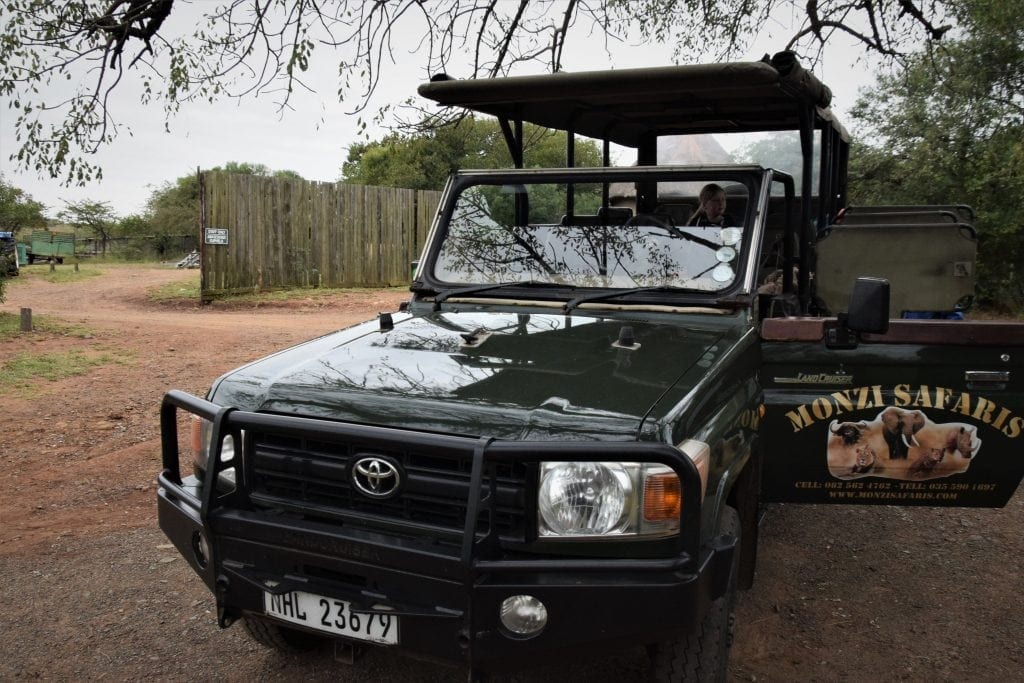
All companies running safari trips in iMfolozi use very similar vehicles: 10-seater open-deck 4x4s that are supposed to be tall enough to keep you safe.
To get to the park at dawn, if you are based in St. Lucia, you’ll be picked up at 5 am from your hotel and, after an hour, arrive at the national park gate. The drive from Durban takes about 3 hours, so be prepared to get very sleepy by midday. It’s also unlikely that you’ll make it in time for dawn.
The best option if you don’t want to get up too early is to stay in Hluhluwe the night before, which is just minutes from the park gate.
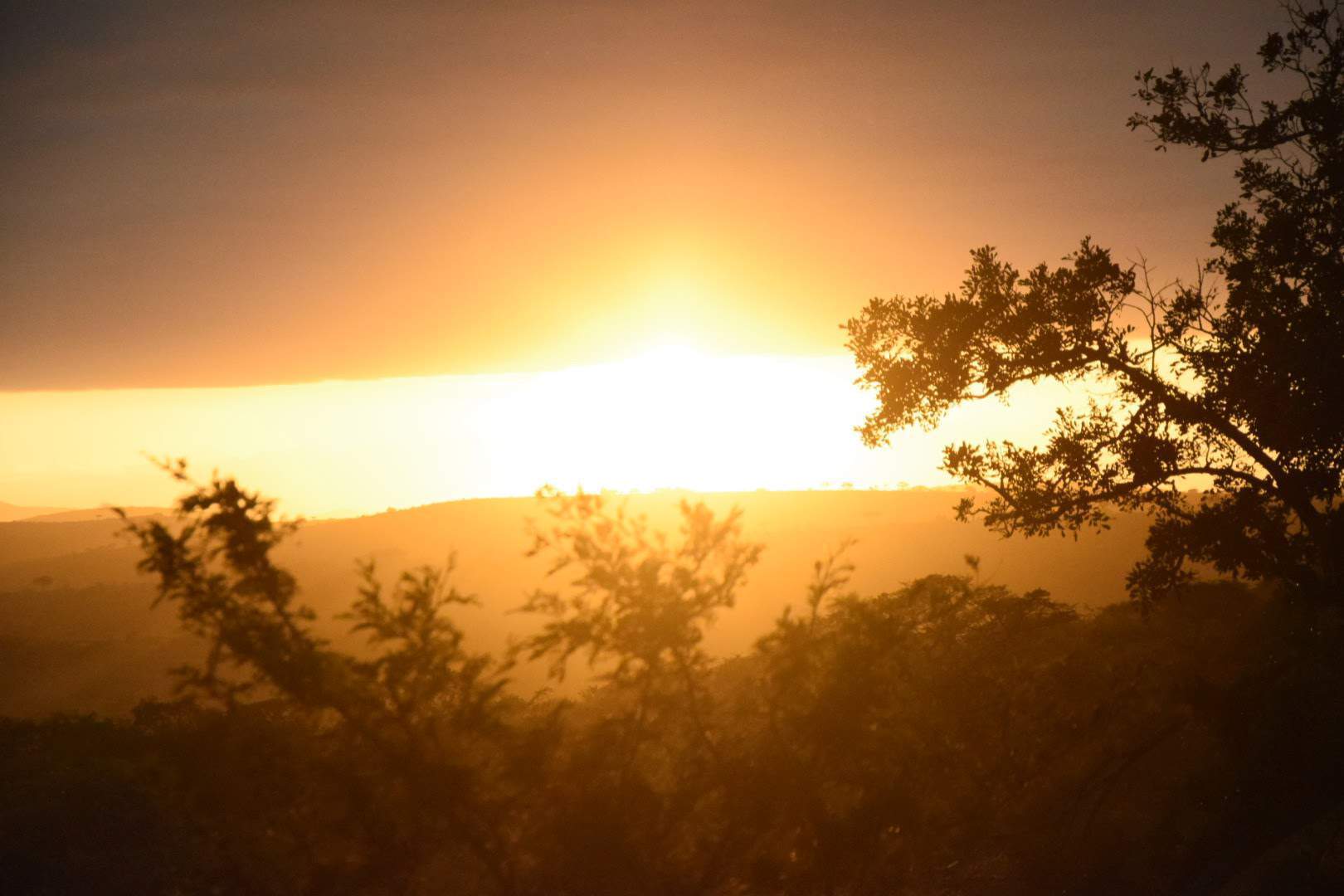
Dawn in the iMfolozi park is spectacular, with the sun rising among the hills in this picture-perfect, stereotypical African scene.
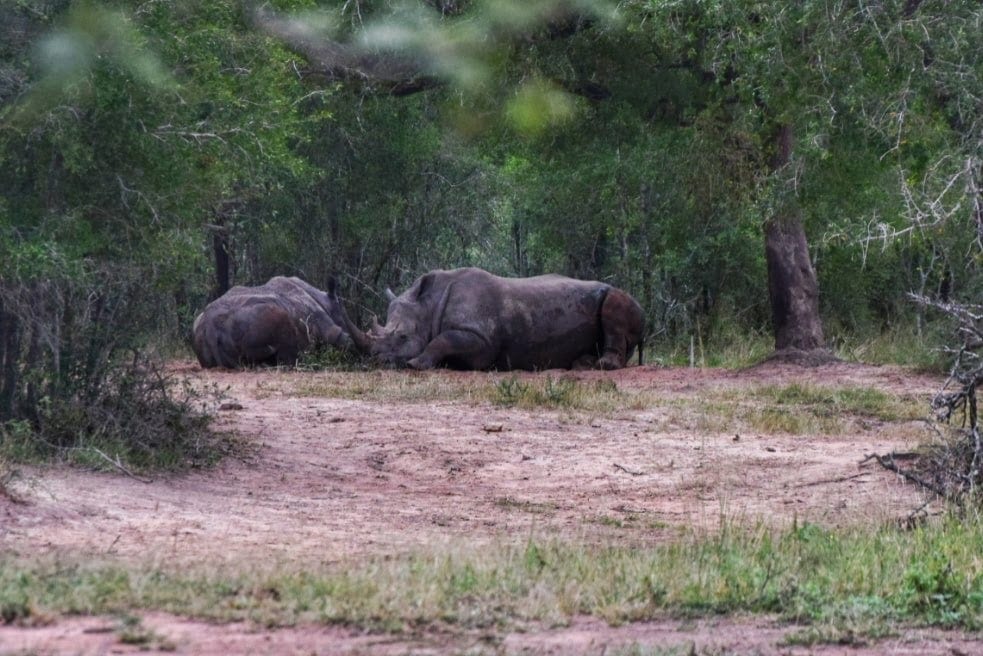
After one hour of looking out for those wildlife that like to wake up early, you’ll be taken to one of the base camps for a simple but good breakfast. Ours included: sandwiches, croissants, yogurt, cakes, muffins, juice, coffee, and tea. This pre-breakfast ride wasn’t very successful for us; we only saw a few buffalo and a super-sleepy rhino from far away.
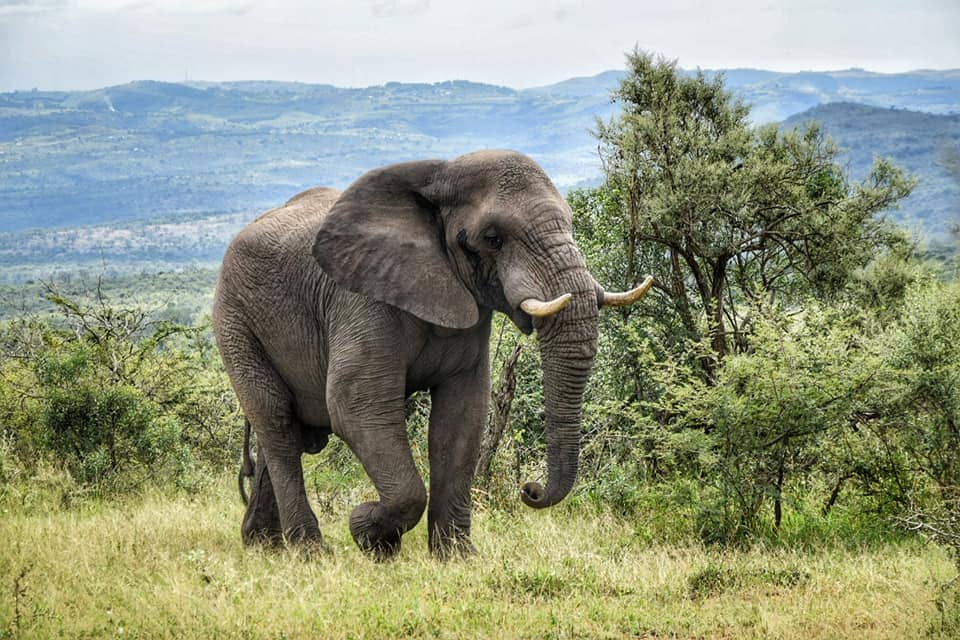
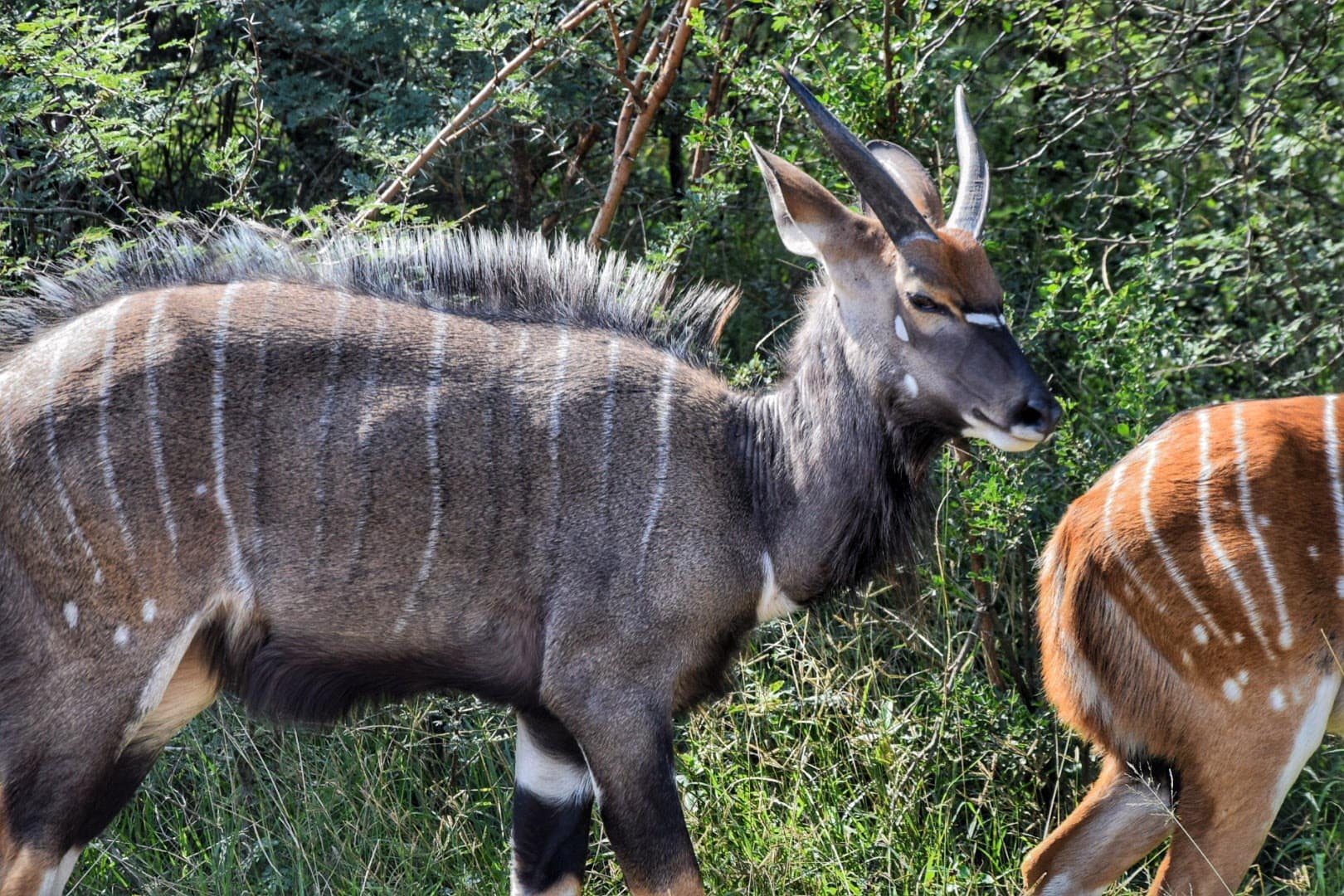
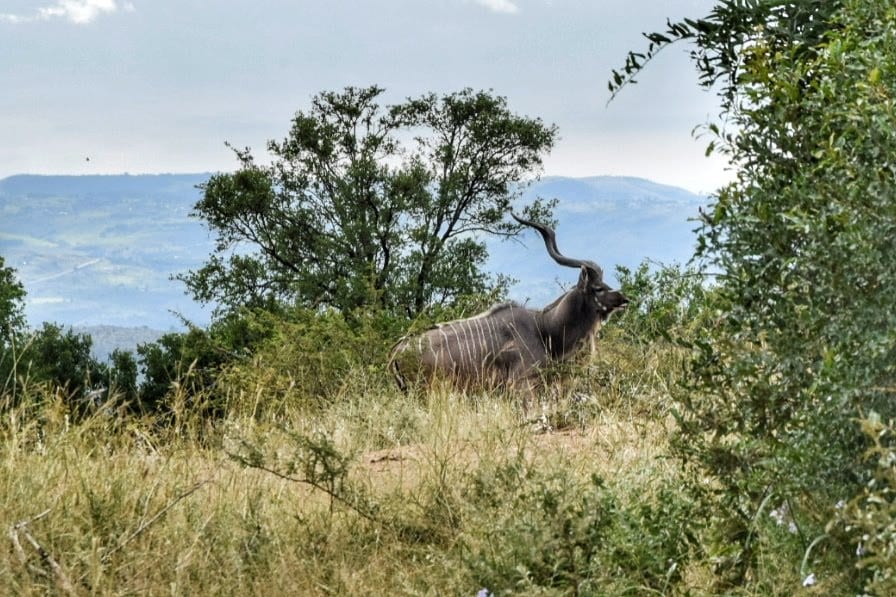
We resumed the drive after about half an hour and went deep into the park. In the next few hours, we saw a bit of everything: many beautiful giraffes very close to the road, plenty of warthogs, a massive specimen of male kudu that impressed even our very experienced driver, an elephant in mast walking beside us, an enormous herd of elephants from far, a white rhino couple, zebras, vultures, eagles and even a huge male lion from far.
It’s, of course, a good idea to bring good binoculars, although the driver usually has a spare pair for you to borrow.
Lunch is at about 11:30 and is usually a barbecue (braai in Afrikaans, you’ll learn this term – they are obsessed), vegetarian options are available, but the request must be notified at least the day before. Lunch usually includes wine and beer, in perfect South African style.
The lunch break lasted about one hour but it was a welcomed relaxed time, we got to know the other participants and the driver/guide entertained us with a lot of stories from his vast experience in game reserves. We were also visited by a horny kudu trying his way with a beautiful female, and a family of warthogs with cute cubs.
After lunch, we hopped on the truck again for another drive around, with beautiful views of the river and more and more animals. At 2 pm, we left the park and drove back to St. Lucia, arriving around 3 pm.
The tour lasts 10 hours, 2 of which are spent getting there and 8 inside the park.
The half-day tour from St. Lucia is identical, but it ends before lunchtime, around 11:30/12:00. We chose the whole-day tour because the difference in cost between the two options was not much.
We paid 1200 Rand for the whole day. At the same time, the half-day is 950 and doesn’t include lunch.
Where to stay near (or in) Hluhluwe – Umfolozi
When it comes to accommodation in the Hluhluwe area, there are plenty of options available for all budgets and tastes.
We recommend staying in St. Lucia, a lively town full of restaurants, bars, and shops, and with a lovely beach. In St. Lucia, there are many choices, with the cheapest being Monzi Safaris Backpackers and Lodge.
They have a backpacker dorm, a few rooms with shared bathrooms, and basic and luxury tents. They also offer a buffet dinner on weekends (a bit pricey but good). They have two small pools and a shared kitchen, and it’s easy to book tours with them.
Another good base to explore the area is the town of Hluhluwe, which is more rustic but quite enjoyable. We also spent a night there at Ilala Weavers Hluhluwe Country Cottages. The place hosts a craft village where local women produce traditional Zulu baskets, hats, jewelry, and such, a nice way to support the community. There is also a nice cafeteria on site.
If you want to stay inside the Umfolozi Nature Reserve, two main camps offer rustic to luxury accommodations. They are a bit pricier, but you’ll get the chance to spend the night inside the park.
Overall, accommodation prices in the area start from 400 Rand. Inside the park, expect to pay at least 1000 Rand for a double room.
Problems and possible solutions for the conservation of wild animals in Africa
Perhaps you already knew it, but we only discovered it here: the term “Big 5” refers to the five animals that were more difficult to hunt, not, as many people think, the biggest African animals. The Big Five are lion, buffalo, rhinoceros, elephant, and leopard.
The lion, being a nocturnal animal, is a bit difficult to meet by day; we have only seen one from far away. We haven’t seen the cheetah, which, as our guide explained, is killed by the lion as a competitor in the hunt. In nature, the cheetah does not live in the same territory as the lion, but here they are forced to live together, and apparently, the lions have the upper hand.
Although it is undoubtedly not a zoo but a park of 960 square kilometers that, to us, may seem immense, it is not as big as the spaces where animals used to live, which were far more boundless.
Along the way, we saw many trees destroyed; they explained that it was the elephants who did it as a “test of strength”. What happened before the fences, however, was that the trees had time to regenerate; the elephants migrated to the Zambezi River, on the border between Zambia and Zimbabwe, and, since this was uncrossable, they returned, crossing Mozambique and back to South Africa. This path took 3 years, and in the meantime, the trees the elephants had cut down grew back.
Now, because of the fences, the elephant migration takes only three months, and the vegetation cannot heal its wounds. Another problem the park is facing is poaching: the locals live on a few euros a day, and when someone knocks on the door offering $30,000 for those who manage to bring in a rhino horn, it is not easy to say no. Added to this are often corrupt politicians with economic interests in ivory trafficking, horns, and so on.
Our guide suggested cutting rhino horns as a preventive measure, a solution adopted by neighboring Zimbabwe, which decided to anesthetize and cut off the horns of 700 rhinos to combat poaching. In this way, the rhino finds itself hornless but alive.
The idea would be to make it a legal trade, at least as long as there is demand from China and Vietnam for the horn of a rhino that is attributed miraculous properties. Properties that obviously do not exist since the horn is made of keratin, like our nails. The Zimbabwean solution seems acceptable, since the horn, like our nails, grows back.
It goes without saying, though, that the only mammal that is actually in supernumerary is us, and that, in our opinion, all these ideas are nothing but ways to preserve and justify human stupidity. However, as long as there won’t be a global cultural evolution, we still need to keep the big animals in existence.
In addition to the great iconic animals, other animals at risk of extinction that are not talked about much, in fact, not at all, because they are not iconic. One that has particularly impressed us is the vulture, often poisoned by poachers.
By killing these birds, in fact, it is no longer possible for the park authorities to identify animals killed by poachers (previously traceable by the typical circular flight of the vulture, visible even from far away).
Often the poisoning occurs near the fence, they throw a dead animal inside and poison the meat, in addition to the vultures, also lions, leopards, hyenas, and other animals that go to feed on the carcass are often killed as a collateral effect.
The vulture has the fundamental task of cleaning and eliminating bacteria that could cause epidemics. This practice has killed between 50% and 98% of the vulture population in some countries.