

Last Updated on 27 January 2026 by Cycloscope
Experience Cape Town in 3–4 days: famous sights, local secrets, and adventure for every traveler.
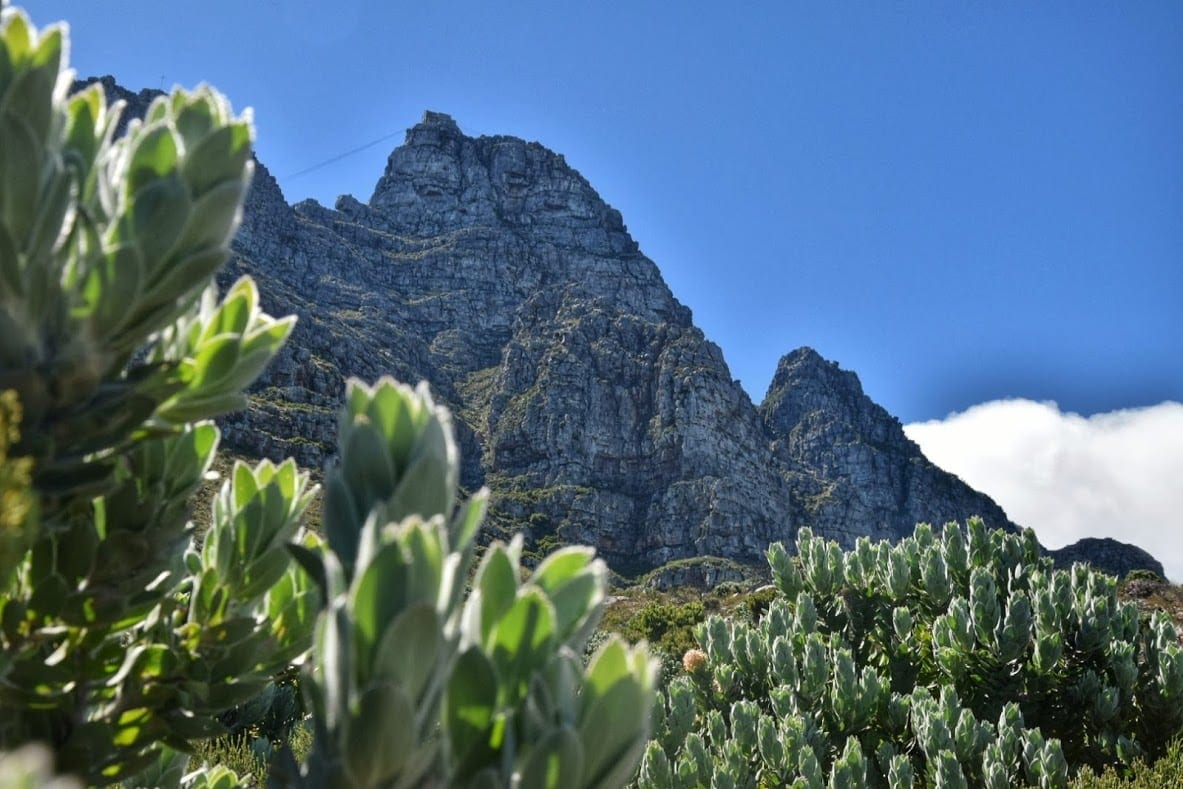
Cape Town is not a typical city; the feeling is more like a series of villages tied together by a folkloristic-looking train, while being torn apart by the spectacular peaks of the Table Mountains.
Disclosure: Some of our articles contain affiliate links. This comes at no additional cost for you and helps us keep this website up and running. (as Amazon Associates we earn commission from qualifying purchases)
Cape Town has been one of our favorite cities since we first visited. With its innumerable attractions and things to do and see, we ended up spending 10 days here.
In this travel blog, we’ll try to give you a consistent list of the best places to visit in Cape Town in 3 or 4 days. Most people book through tour operators, but you’ll see that’s not actually necessary.
Cape Town was our first step in Africa. We were immediately struck by it: it’s a big city with a huge territory, yet completely immersed in stunning nature.
What we could call the city center is Green Point, to the north, with plenty of shopping streets, nightclubs, concerts, and so on… but the best of Cape Town is not here; it is instead scattered around the rest of the wonderful peninsula, full of things to do and see.
The capital of the Western Cape province is also one of the most culturally advanced cities in Africa, with a bustling nightlife. Cape Town is also a gay-friendly city, which is pretty rare in Africa.
Suffice it to say that we met an elephant seal molting its skin on the beach of Fish Hoek, a few meters from an ice cream bar.
Wildlife is literally everywhere: it’s very easy to meet seals, penguins, and, for the bravest, to plunge into a cage and see the great white shark.
The only concern about this beautiful city is personal safety in Cape Town; in fact, it’s unfortunately a place where you should exercise caution when traveling.
Cape Town is where our African bicycle trip started. We flew here (together with our Stanforth Kibos) from Rome, with Ethiopian Airlines.
Map of Cape Town Attractions
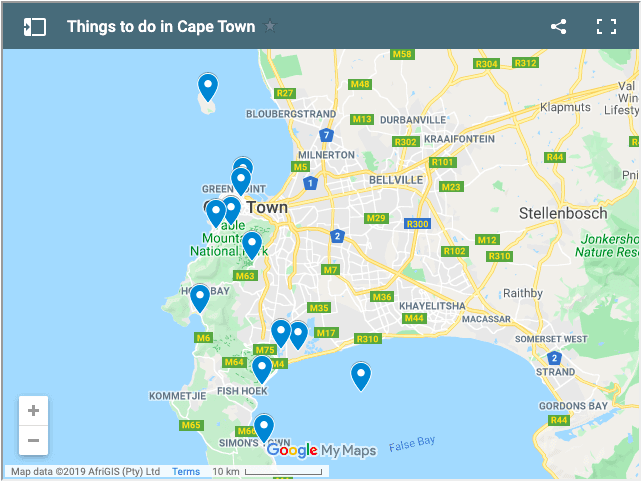
Cape Town, what to see in 3 or 4 days
1. Kirstenbosch Botanical Garden
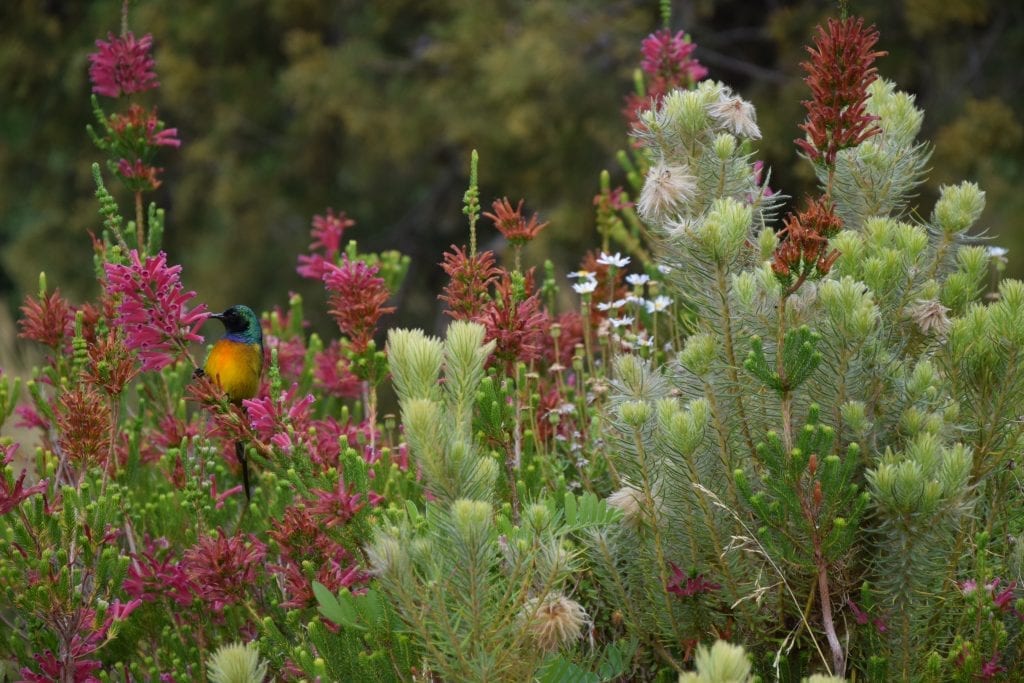
Located near the wine farms in Constantia, at the foot of Table Mountain, one of Cape Town’s symbols, the Kirstenbosch Botanical Garden is a wonderful place to get a taste of the natural richness of this country.
It was founded in 1913 and features plants and trees from all regions of South Africa; it is considered one of the most beautiful botanical gardens in the world and is listed as a UNESCO World Heritage Site.
We have seen many around the globe, and we can say this is certainly one of the most impressive.
There are areas with majestic prehistoric cycads, a garden with medicinal plants (very interesting to read all the uses — some keep dogs and even crocs away), the fragrance garden of endemic spices, and even a spectacular concert area where big shows are staged, mostly in summer.
The Kirstenbosch Botanical Garden covers an area of 530 hectares and supports a large diversity of birds, mammals, and reptiles. There are 5 main routes inside the park, all marked with precision.
At the entrance, you will be given a map of the Botanical Garden. You can climb directly onto Table Mountain from Kirstenbosch and reach Skeleton Gorge, from where you will see a majestic view of Camps Bay.
Walking through the Cycas section, you will really feel like you are in Jurassic Park. Try not to be saddened by the last specimen of an entire species going extinct after millions of years on this Earth, just because of logging.
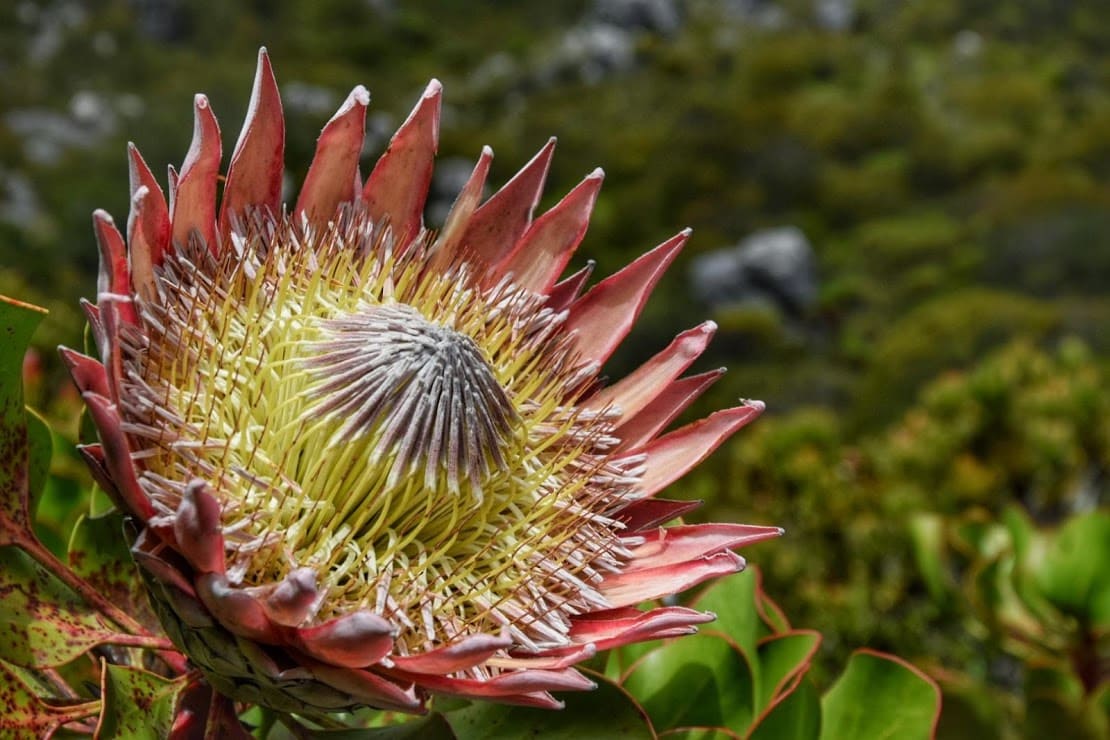
Do not miss the national flower of South Africa, the King Protea, which can be found only in this part of the country.
How to get to the Kirstenbosch Botanical Garden
If you have rented a car, take the M3 from the city center towards Muizenberg, then follow the signs to Kirstenbosch. Parking at the botanical garden is free.
For those who want to reach the park by public transport, you can take advantage of the City Sightseeing Hop-On/Hop-Off Bus (the classic double-decker tourist bus) that makes several stops along its route. More information is on the official website: www.citysightseeing.co.za.
Of course, it is possible to take part in organized tours, but there is really no need. Moving around the city is not very difficult, and if you are on foot, just use Uber, which is very efficient and cheap.
Opening times:
- Summer (September – March) from 8 to 19
- Winter (April – August) from 8 to 18
- The Botanical Garden is open every day.
Entrance ticket:
- International adult (non‑African): ~R230–R250 per person (about €12–€14)
- South African & SADC residents: ~R100 per adult
- African residents (non‑SADC): ~R140
- Students (with valid ID): ~R60
- Children (6–17): ~R40
- Under 6: Free
Accessibility:
- The Botanical Garden is accessible to people with disabilities. Download this map to check accessibility points and routes. For the blind, it is possible to take the Braille Trail.
2. Hike Table Mountain National Park
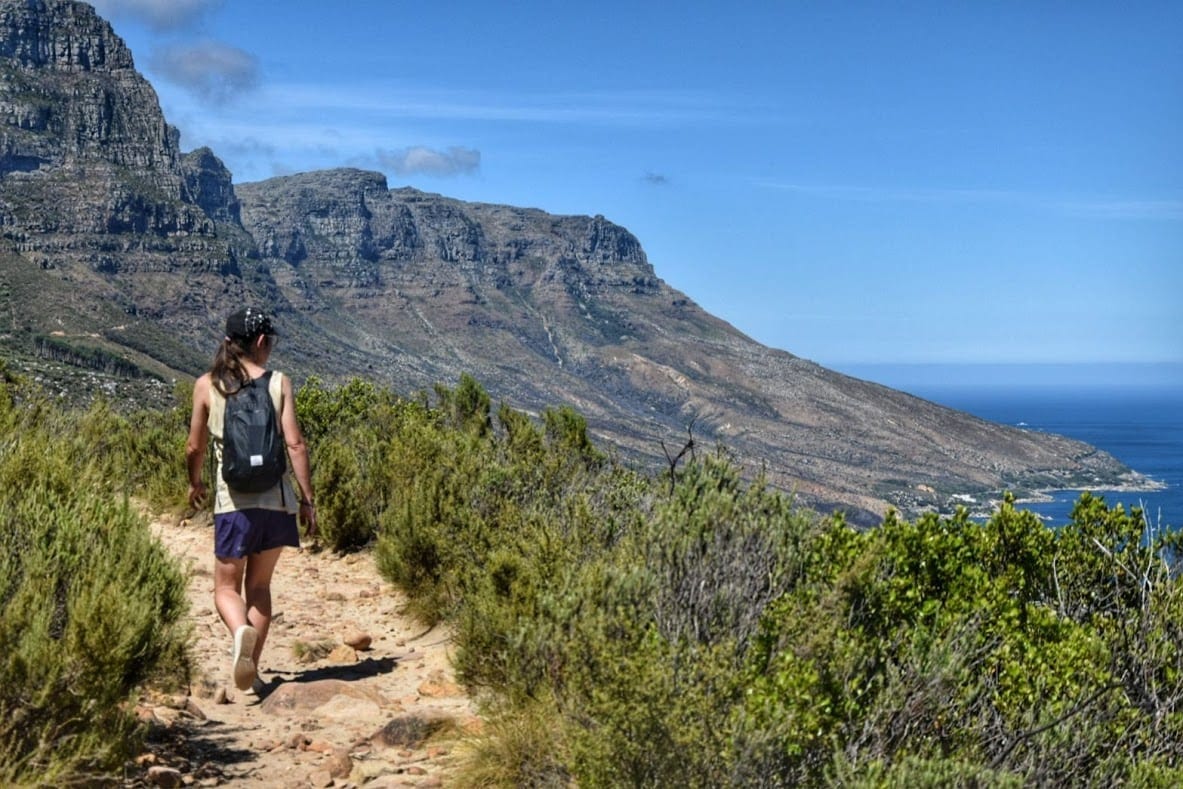
Table Mountain National Park covers 221 km², a vast wilderness area directly accessible from the city. There are literally dozens of trails, some easy and short, some really challenging.
One of the most famous and symbolic destinations is the top of Lion’s Head. This route is famous for its landscape and accessibility: it requires little effort and is not very long. The route entrance is on Signal Hill Road, where the car can be parked.
If, like us, you travel by bike, it is always better to leave it in a safe place and reach the entrance of the footpaths in another way. Leaving bikes parked outdoors for a whole day is absolutely not recommended in Cape Town.
Unfortunately, during our visit to Cape Town, the route was closed due to a fire that hit the mountain.
The hike we chose (suggested by locals) lasted about 7 hours. Entering from the north entrance of Pipe Track, we followed it to the junction for the Kasteelport Hiking Trail, which took us to the old cableway viewpoint.
Then we went through the Valley of the Red Gods to the Valley of Isolation, where we saw several King Proteas in flower, the symbol of South Africa!
Being summer, the flower season was almost over, but in spring, there must be a real show. Indeed, this is the so-called fynbos region, one of the most diverse flower ecosystems in the world.
A short description of our hike
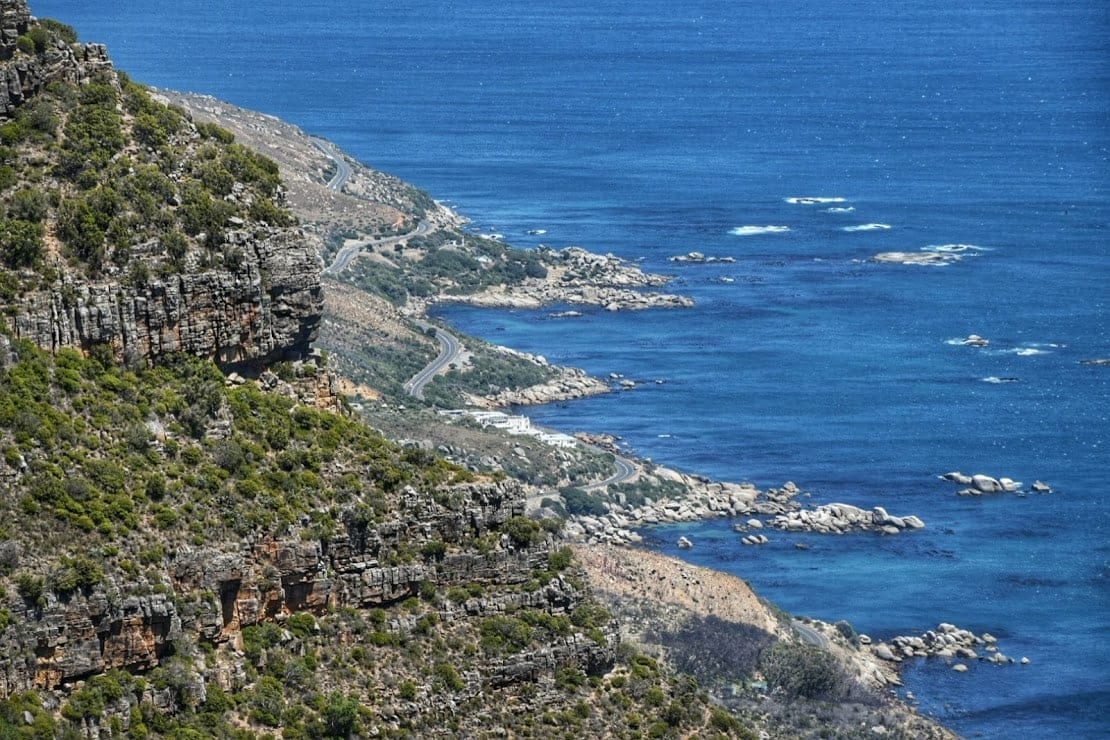
The first part of the route on Pipe Track (part of the longer Contour Trail) is rather flat, while the ascent to the top via Kasteelport is quite steep, though spectacular for its stunning views over unique landscapes.
Once at the top, we reached the old cableway viewpoint, which we didn’t enjoy much because of the strong gusts of wind that made us feel unsteady.
The route then led us to Echo Valley, where a few metal ladders and lousy canopies made the track a bit scary for the faint-hearted. This area, though, is gorgeous: you are almost at the top here, with views over the entire peninsula!
We planned to get to the very top at the new cable-car station. Unfortunately, the ropeway was closed due to strong winds, so we had to get down on foot.
The route down to the lower cableway goes through Platteklip Gorge. The path along this gorge is very steep and not particularly pleasant when it’s windy.
You should always check online whether the cableway is open, and always factor in the time needed to descend on foot. The cableway can close at any time when the wind rises.
An alternative would be to climb to the top of Platteklip Gorge and take the same path back.
It’s a good idea to check the wind forecast, which in summer can be very strong and spoil the hike. We downloaded an app called Windy.
If you want to go hiking for a few days, not far from the old cableway, there are a couple of free shelters.
By asking for the keys, you can spend the night there. More information is available on this site. Camping within the National Park is forbidden, also due to the risk of fire.
3. See the penguins at Boulders Beach
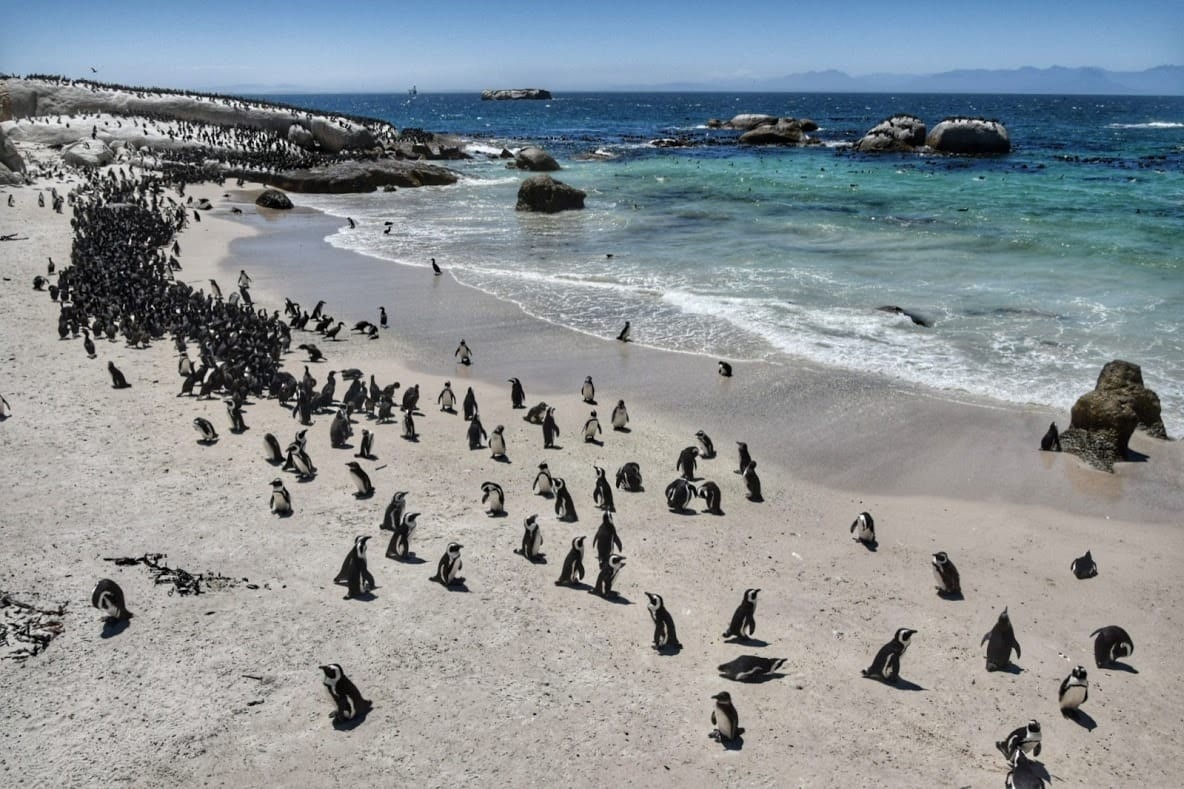
About 1 kilometer from the center of Simon’s Town, a tourist village on the south coast of the Cape Town peninsula, there is a colony of African penguins, the only penguin species living on the continent.
Usually, penguins prefer islands to hatch eggs to be more protected from predators.
African penguins are found in southern Namibia and South Africa. They are a species at risk. In 1910, there were 1.5 million; today, due to pollution, commercial fishing, and irresponsible tourism, there are only about 3,000 specimens left in the Boulders Beach colony.
They are small, weighing about 3 kilos and standing 60–70 centimeters tall.
The entrance ticket costs:
- International adult: ~R215–R245
- International child: ~R105–R120
- South African adult: ~R50–R55
- South African child: ~R25–R26
SADC nationals: Intermediate rates ~R110 adults, ~R55 children. If you do not want to queue at the ticket office, you can buy the ticket online.
Boulders Beach is also one of the most beautiful beaches in Cape Town. It has a dedicated swimming area where you can actually swim with penguins.
In September and October, there are fewer penguins, as they spend a lot of time at sea. The best season is summer, especially in January. We visited the colony in mid-February, and there were lots of penguins.
There is another colony at Stony Point; the entrance should be cheaper, and probably fewer tourists, as it is further away from the city.
Some locals told us that several years ago, penguins were often hit by cars while crossing the nearby coastal road at night in search of food.
Now a fence has been built for protection, keeping them away from vehicles and from night predators on the beach.
Entering through the main entrance, you will access a wooden walkway, which serves to protect the dunes and not disturb the penguins. You will see hundreds of them, intent on hatching eggs, raising young, fishing, and arguing with cormorants, with whom they share the beach.
Going back to the entrance, you can take another walkway that will take you to another vantage point. You will always be just a few meters away from the penguins.
Going out and continuing along the coast, always on a wooden walkway, you will arrive at the entrance to Boulders Beach (which is accessed with the same ticket, so keep it).
On this beach, protected by large boulders, the water is very calm (rare in South Africa), and if you have a wetsuit or do not fear the cold, you can have a nice, restorative swim and relax on the sand surrounded by penguins.
As far as we saw, they are not scared of humans at all, nor even interested. Obviously, you must not get too close, try to touch them, or do any other stupid things; even if they are small, their beaks are quite sharp.
If you would like to request information or support the African Penguin Conservation Center, you can contact the Boulders Visitor Center at +27 (0) 21 786 2329.
Getting to the African penguin colony at Boulders Beach
By car, bike, or any other road vehicle, you simply have to follow the coastal road to Simon’s Town (the M4). Shortly after the village, you will see the sign on your left; parking is available.
Alternatively, you can use the City Sightseeing Hop-On Hop-Off Bus or take a train to Simon’s Town. Trains depart from Cape Town and cross the entire peninsula; Simon’s Town is the last station.
From Simon’s Town, it takes about half an hour to walk — a pleasant walk that will also take you through the village. If you do not want to walk, you can ask for a ride or call an Uber.
4. Cycle or drive to Chapman’s Peak
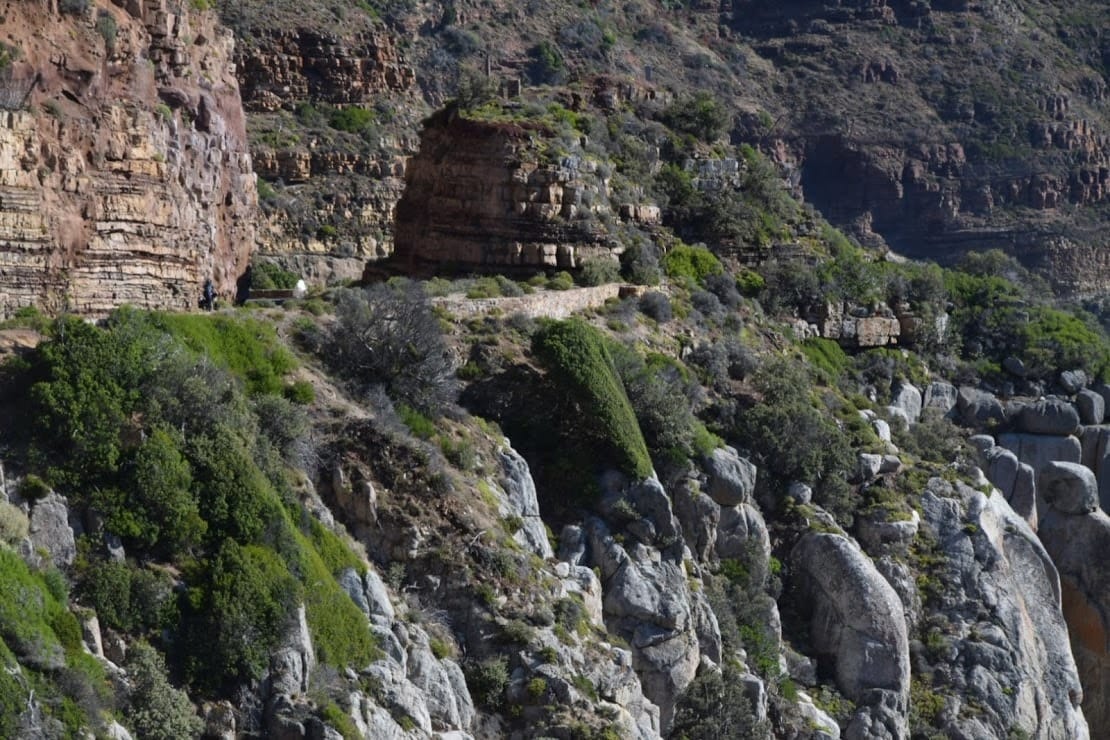
On our way from Green Point to Muizenberg, we rode Chapman’s Peak Road, a coastal route offering breathtaking views of the sea.
This stretch of coastal road is not always open; it can be closed due to strong winds and falling rocks.
A sign indicates the state of the road before the ascent, or you can check online here, where you can also check forecasts and wind direction.
Bicycles can access the road for free, while cars and motorcycles have to pay. Find the standard rates here. For those entering from Hout Bay, you can use the Day Pass for free, but it doesn’t allow you to drive the entire road; you will need to backtrack from the Day Pass Control Point.
With the Day Pass, you have access to Chapman’s Peak from 6 a.m. to 8 p.m. from October to March and from 7 a.m. to 6:30 p.m. from April to September. Check here on how to get a free Day Pass.
Along the way, there are numerous picnic areas with tables and, sometimes, public toilets. It is forbidden to camp, and bicycles cannot be ridden after sunset.
After the pass, you will be surprised by the majesty of Noordhoek Beach, with its dunes and white sand, and by the brilliant rural village, very quiet and colorful. If you want to spend the night here, check this list of nearby hotels.
5. Learn to kitesurf or surf in Muizenberg, Cape Town
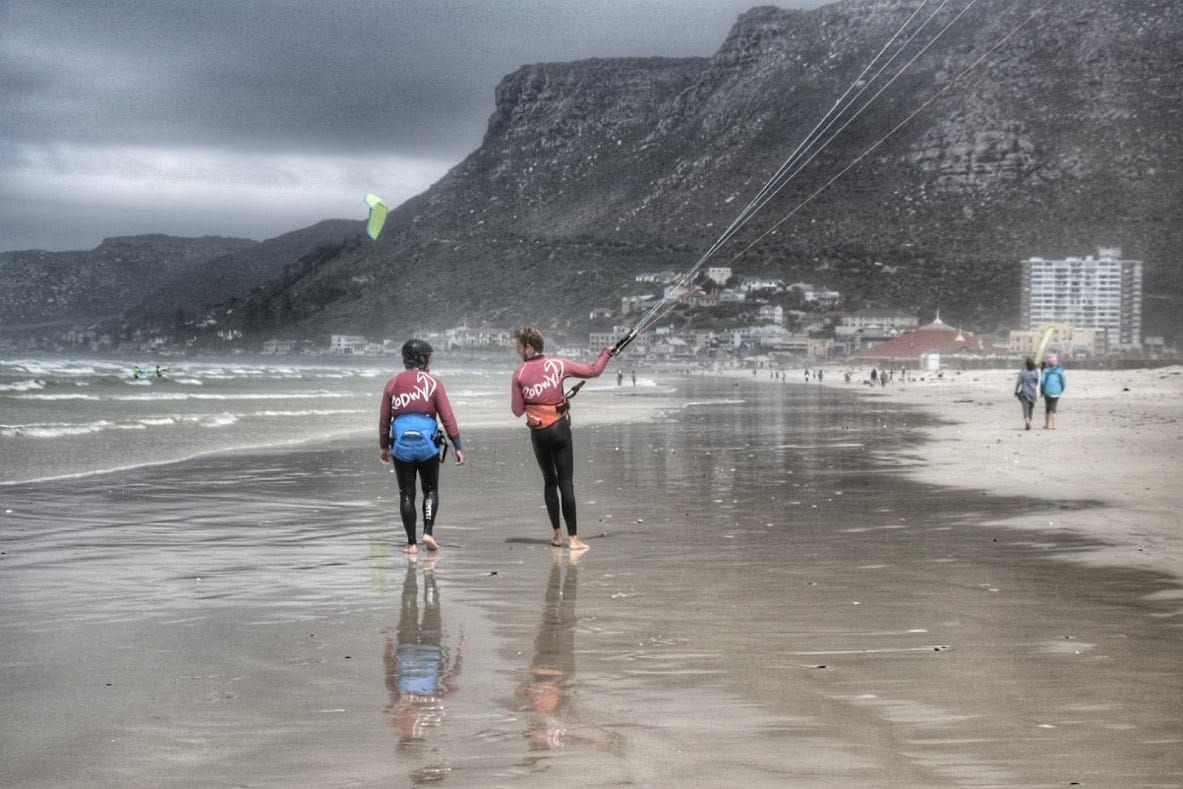
Kitesurfing (or kiteboarding) is one of the most popular water sports in South Africa, practiced and taught almost everywhere along the country’s 2,500 km coastline.
In Cape Town, particularly in the Muizenberg suburb, several schools offer courses and individual lessons, even for complete beginners.
It has always been one of my dreams, so why not try to learn right here? The best time of year for kitesurfing in Cape Town is certainly the Australian summer, from November to April.
Outside temperatures are high but not scorching (between 24 and 30 °C), the water is a little less frozen (about 20 °C in Muizenberg), rainfall is rare, skies are clear, and, more importantly, the winds are constant and quite strong (up to 35 knots).
Here’s our full article on the kitesurfing course in Cape Town.
Muizenberg is also a great spot to learn traditional surfing and windsurfing. There are plenty of schools around, all with qualified instructors.
If you want to relax after a day in the water, there are several nice bars and cheap fish restaurants.
Staying in Muizenberg is probably one of the best choices. Have a look at how many cheap accommodations are available here!
Here’s our full article on the Kitesurfing course in Cape Town.
6. See the seals at the Kalk Bay pier
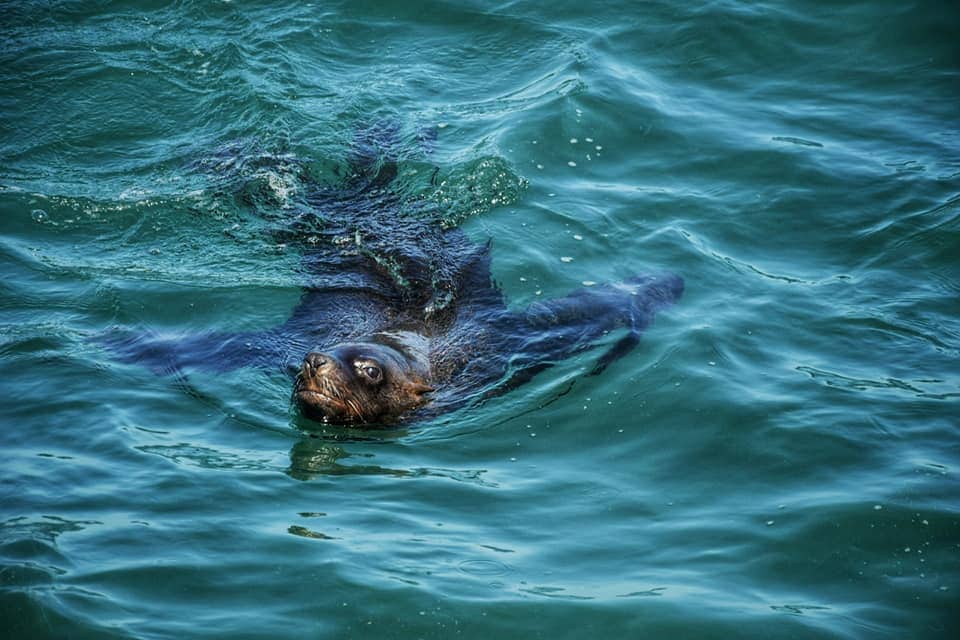
There is not much to say here: just go to the pier, and the seals are there. Do not get too close; they are more agile than they seem.
Someone was feeding them when we were there, and there was a real show to get some food. Bear in mind, though, that this is illegal and dangerous — don’t try to do it yourself. There will probably be some local fishermen doing it and then trying to collect a few bucks from tourists around.
The seals usually like to swim around the docked boats or sleep in the sun in the company of fishermen. Where else can you see something like this?
7. Take a walk in Green Point and the V&A Waterfront – with maybe some whale-watching
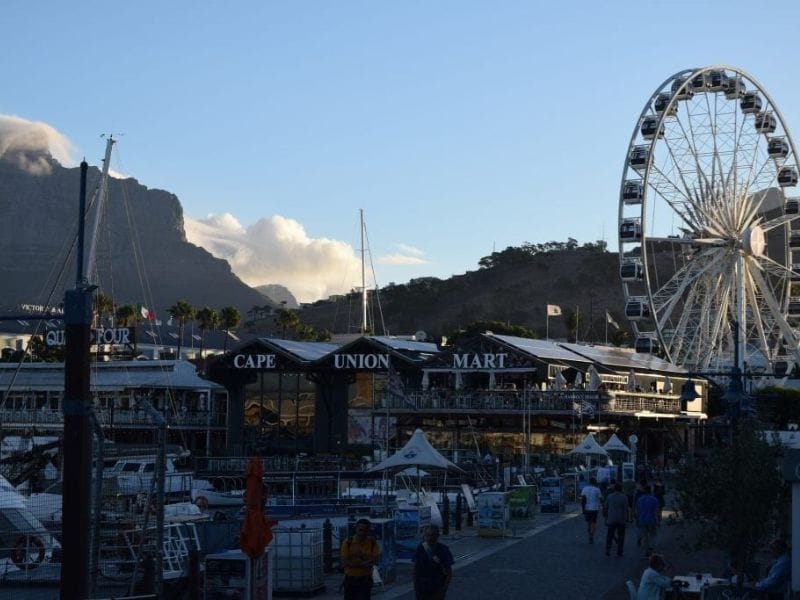
It seems the V&A Waterfront is one of the most visited places in South Africa, though honestly, we were not particularly impressed.
This is technically an industrial port, even if only the pier structure remains. From here, many excursions will take you to see Robben Island, whales, seals, and other marine attractions.
For the rest, there is a large shopping center with luxury shops, outdoor restaurants priced much higher than the rest of the city, and breweries that serve craft products.
In short, we thought it was a tourist trap, but if you want to spend an evening drinking (beer does not cost much) and eating, and you do not have a tight budget, this is the place for you.
You can also find the Rugby Museum here (entry 75 Rand), an interactive museum with numerous digital contents that trace the history of South Africa’s national sport.
A bit further southwest is the Sea Point boardwalk. It is nothing special, but we happened to see a lot of whales from there! Definitely worth passing by and trying your luck.
Green Point, instead, is a really nice area to stroll, home to many of the oldest buildings in Cape Town, as well as many bars and dining options, among which are some of the best vegan restaurants in the city.
8. Robben Island, the prison of Mandela… and many others
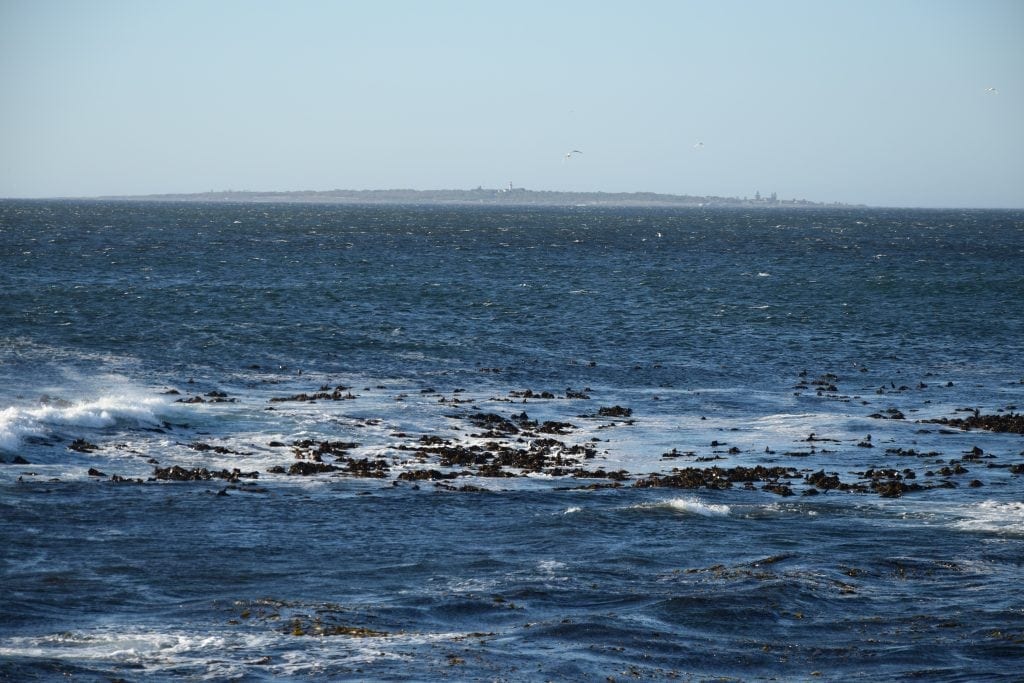
Robben Island is an island about 7 kilometers off the west coast of Cape Town that was declared a World Heritage Site by UNESCO.
It has an oval shape, is only a couple of kilometers long, and is flat. Since 1600, the Dutch have used it as a political prison.
Nelson Mandela spent 18 of his 27 years in captivity here. Every day, Tours depart daily at around 09:00, 11:00, 13:00, and 15:00 (weather permitting); they last about 3 hours and include a visit to Mandela’s cell.
In addition to Mandela, other prominent figures from the anti-apartheid movement and South African politics were imprisoned here, as well as Kgalema Motlanthe and Jacob Zuma, the fourth South African president from 2009 to 2018.
Robben Island prices for 2026:
- South African adult: ~R400 per adult
- South African child (under 18): ~R210
- Non‑South African adult: ~R600
- Non‑South African child (under 18): ~R310
9. A couple more things to do in Cape Town
- Swimming – Cape Town is on the Atlantic Ocean, and the waters can get pretty cold and wavy. Thankfully, there are several seawater pools onshore where you can bathe safely. Check the one in Camps Bay, with its beautiful white-sand beach and many coves.
- Stroll the city center at Green Point – Cozy colonial architecture and loads of bars and restaurants, certainly worth spending an afternoon
- Visit Duiker Island (Seal Island) – Seal Island is home to 75,000 Cape Fur Seals and the hunting ground for the Great White Shark. Only 40 minutes from Cape Town Centre.
- Kayak or SUP board in Marina da Gama – Marina da Gama is a nice lake in the Muizenberg area. If you want to relax boating on some flat waters, that’s the place for you.
Did you find this article useful?
Do you want to see more of Cape Town?
Share and contribute in the comments!