
Last Updated on 4 December 2025 by Cycloscope
Where to get a full kitesurfing course in South Africa
everything you need to know
Kitesurfing (or Kiteboarding) is one of the most popular water sports in South Africa; it is practiced and taught throughout the nation’s 2,500km+ coastline.
Disclosure: Some of our articles contain affiliate links. This comes at no additional cost for you and helps us keep this website up and running. (as Amazon Associates we earn commission from qualifying purchases)
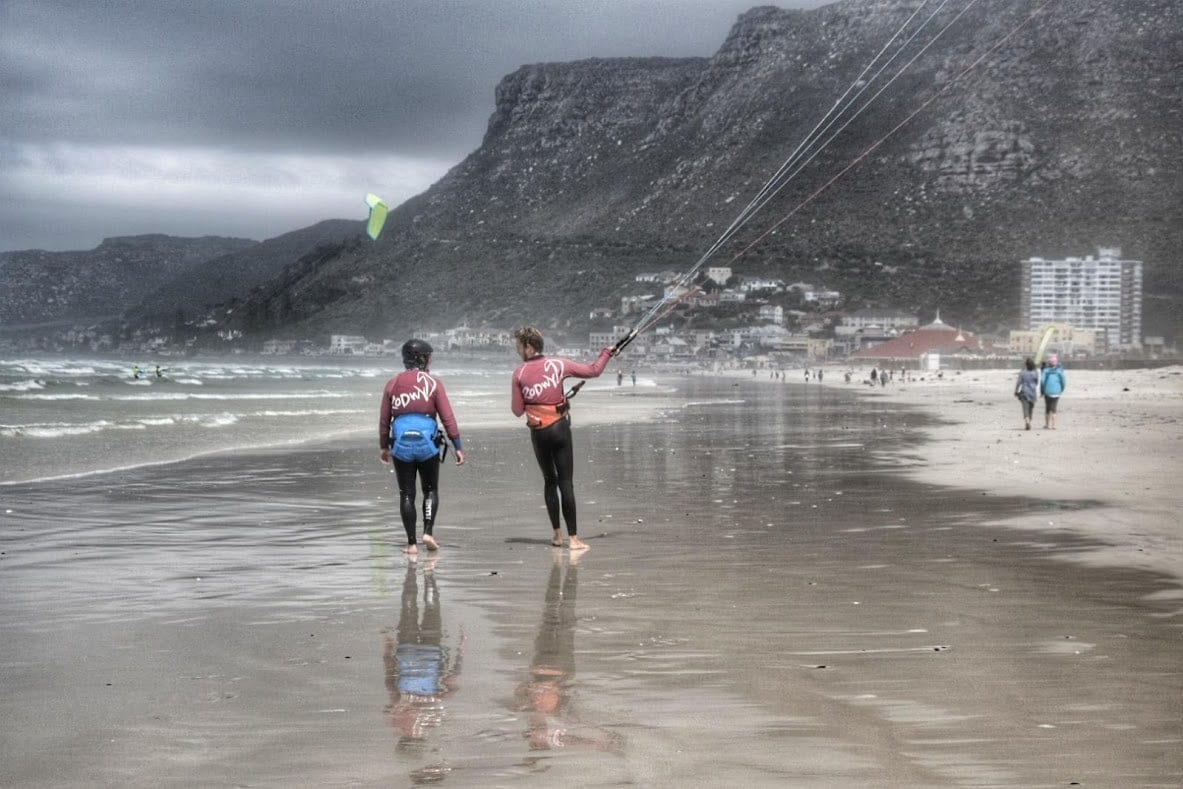
Cape Town, though, and primarily the suburb of Muizenberg, is an ideal location for beginners to learn the sport; indeed, several schools in the area can provide you with courses and individual lessons. Many travelers begin their backpacking trip in Africa here with the baptism of the freezing Cape waters.
It’s been a dream of mine to try kitesurfing since the first time I got acquainted with it on some beach in western Sicily, so what better chance than getting into the freezing waters of Cape Town and giving it a try?
And I know what some of you are thinking… sharks? We’ll also get into that later.
Check also
Cape Town travel guide, the best things to see and do
Kitesurfing lessons in Maputo – Mozambique
Traveling in South Africa? Have a look at
Cycling South Africa – The Ultimate Guide
Meeting the hippos in St. Lucia
Western Cape scenic route
Road Tripping Lesotho – Itinerary and things to know
Kitesurfing: the what and the why
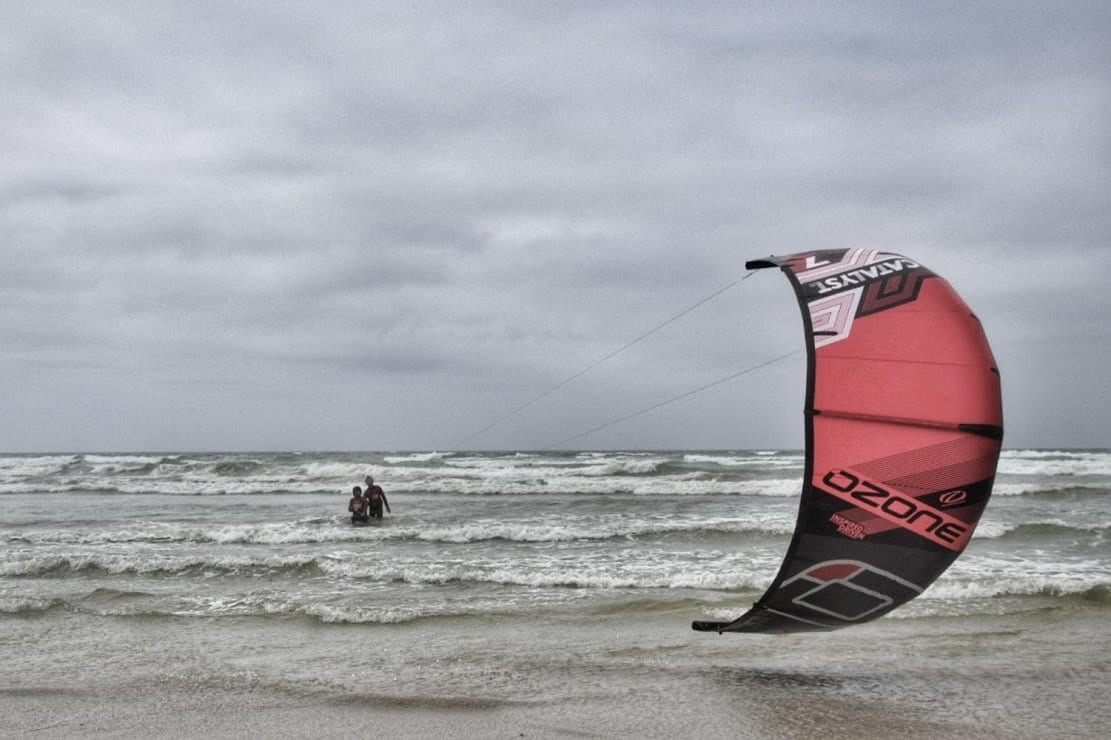
Kitesurfing is a thrilling sport that blends elements of snowboarding, windsurfing, sailing, paragliding, and other action sports, combining them into something that really has it all: speed, acrobatics, balance, and jumping…
You can even tackle distance rides (the record for a solo unsupported kiteboarding ride is a 2000km/24-day Brazilian coast journey by Louis Tapper).
Although several attempts at kite-propelled vehicles have been made since the 19th century, Kitesurfing is literally brand new as a sport, being popularized only in the late ’90s. That means there’s still a lot of room for innovation.
Kitesurfing in Cape Town: Muizenberg and other locations
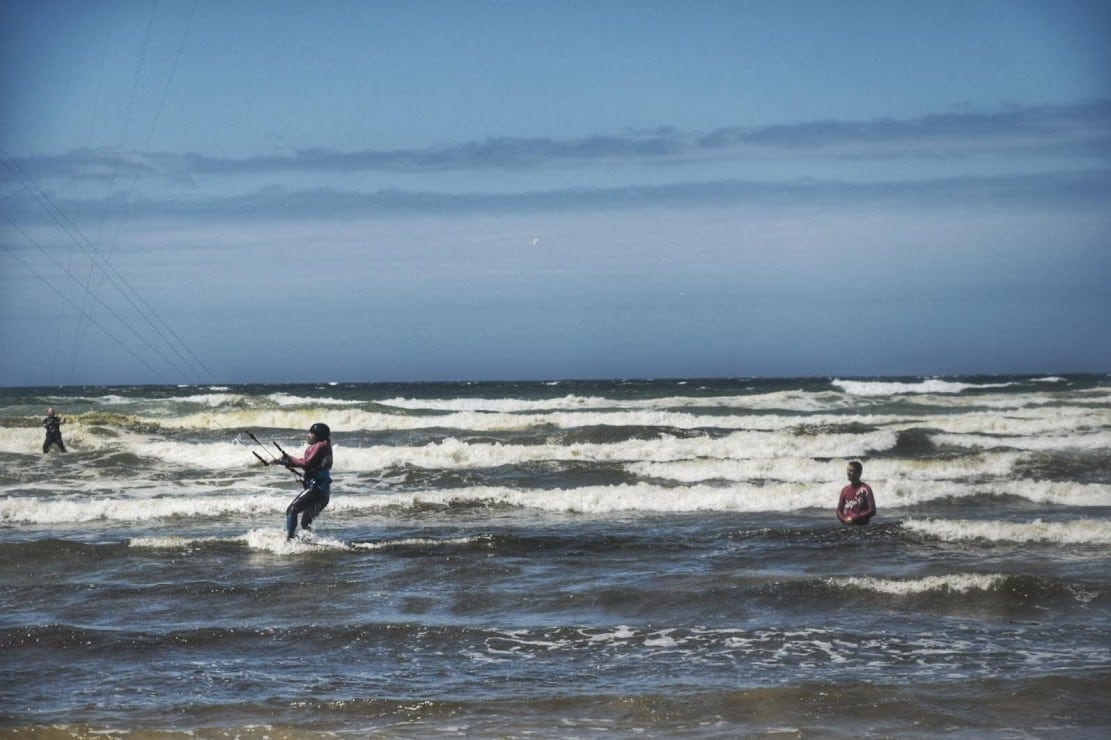
Besides being a beautiful city, Cape Town, with its steady summer winds, is one of the best locations in the world for surfing and kiteboarding.
Muizenberg is the favorite spot in the city for beginners, given its shallow waters, long but not large waves, consistent winds, and the absence of obstacles. Muizenberg, though, is not the place where you’ll find the real PROs, who usually favor the more exciting conditions of Blouberg, Witsand, or Strand.
The easiest spot in the whole of South Africa for learning is Langebaan, with its often totally flat water. Langebaan is some 160km north of Cape Town along the West Coast, near the beautiful fishing village of Paternoster.
Best season to Kitesurf in South Africa
The best time of year to kitesurf in Cape Town is definitely the austral summer, from November to April, before the waves become too big. Indeed, May is the surf season in the Western Cape.
Outside temperatures are high but not scorching hot (between 24 and 30 C), the water is a bit less freezing (about 20C in Muizenberg), precipitation is rare, skies are clear and, most importantly, the winds are steady and strong enough (35 knots).
Getting good kitesurfing weather off-season is, unfortunately, pretty rare. So you’d better plan a summer visit if that’s your primary aim.
Surf Store Africa
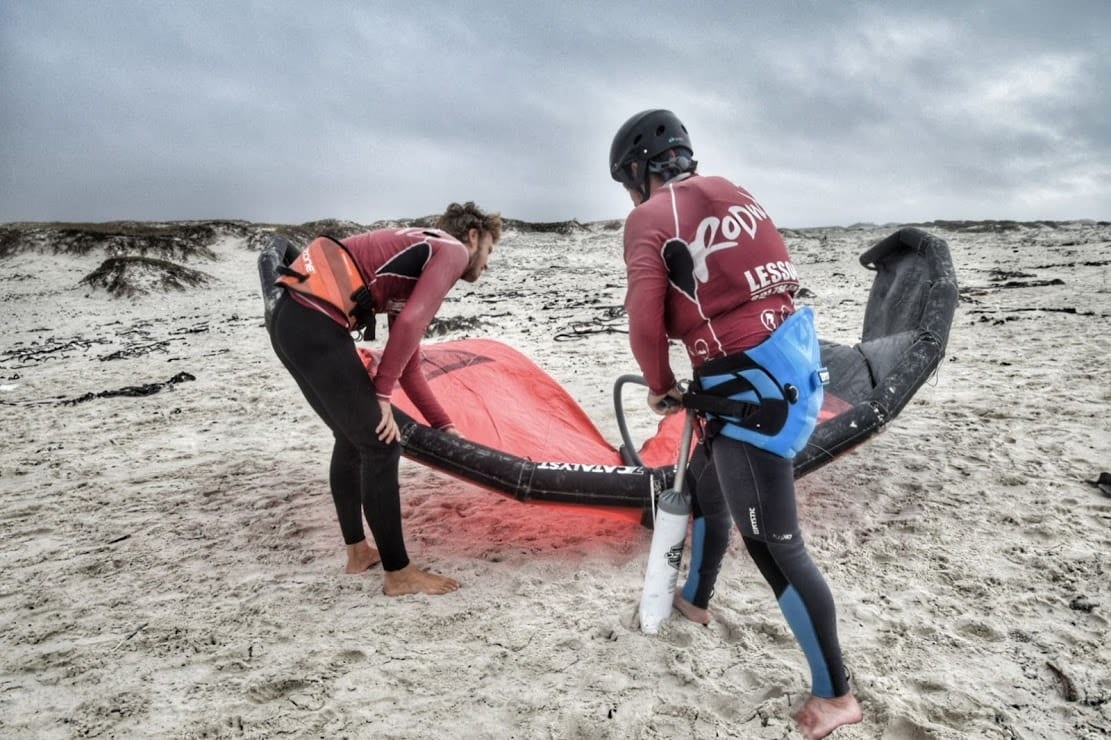
I got in touch with Matthew from Surfstore Africa and booked my full 3-day course with him. I had great fun from day one. Matthew is a really young guy in his 20s. He started practicing kitesurfing in 2014 and has been a certified instructor since 2017.
A three-day course is ideal for learning the basics from scratch. Matt can bring even a not-half-decent student like me from absolute ignorance to feet-on-the-ground even in such a short time. The course is structured like this:
- Day 1: Kite control on-shore and a bit of theory. Safety measures, kite set-up, and launching handling in the “power zone.”
- Day 2: in the water. You’ll learn how to be dragged by the kite in different fashions (upwind, downwind, figure-of-8. No board yet.
- Day 3: getting your feet on the board and trying to control it.
These kitesurfing lessons will give you the basics, but don’t expect to be doing flying tricks on your third day of the course. You’ll probably still need someone to watch out for you as you practice a few more times (depending on your skills, of course).
Anyway, if you want to be totally independent, my advice is to get one or two more lessons with Matthew or somewhere else. Also, keep in mind that each spot has its own peculiarities; some are safer than others, so if you try a different location, be sure to ask local kitesurfers for a bit of advice.
At Surfstore Africa, each lesson lasts 2 hours, and it is extended to 3 hours if the course is done by two people at the same time.
The price of a full course like the one described here is 4,800 Rand, while a single lesson costs 1,600 Rand.
If you would like to experience kitesurfing before investing in a full course, Surfstore Africa also offers tandem rides for 1,600 Rand. You can book directly from their website here.
My experience learning to Kitesurf with Surfstore Africa
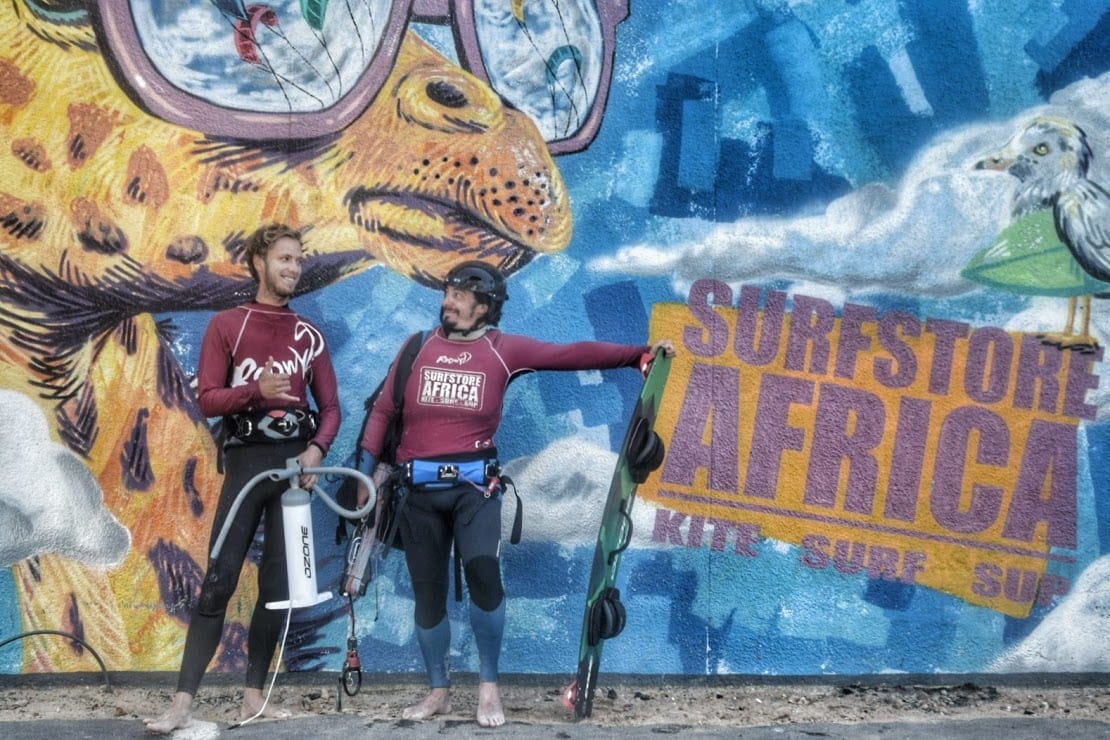
I had a great time teaching kitesurfing with Matthew from Surfstore Africa; he is very patient and overall a super-nice guy, with no show-offs and no brags.
On the first day, we remained on the beach, no wetsuit involved. He first had me control a small training kite to understand the basics of steering and the concept of “power zone”. Then I was strapped to a 5-meter kite to learn about safety measures and how to control it without being unwillingly dragged away.
The second day, I got all suited up and into the water. The first half of the lesson focused on kite control in the water, dealing with waves crashing over me and relaunching the kite from the water. The second half was so much fun: body-dragging… in pills, using the kite to drag your body around in the water.
On the third day, we finally took the board with us. Matthew focused on making me master the body-dragging exercises for the first hour, then I tried to stand on the board, which was anything but easy, especially since the sea was a bit wavier than usual that day. I managed to stand and ride for a few seconds… now I’m more than ever willing to practice, practice, and practice!
The infamous South African white sharks and the Shark Spotting System
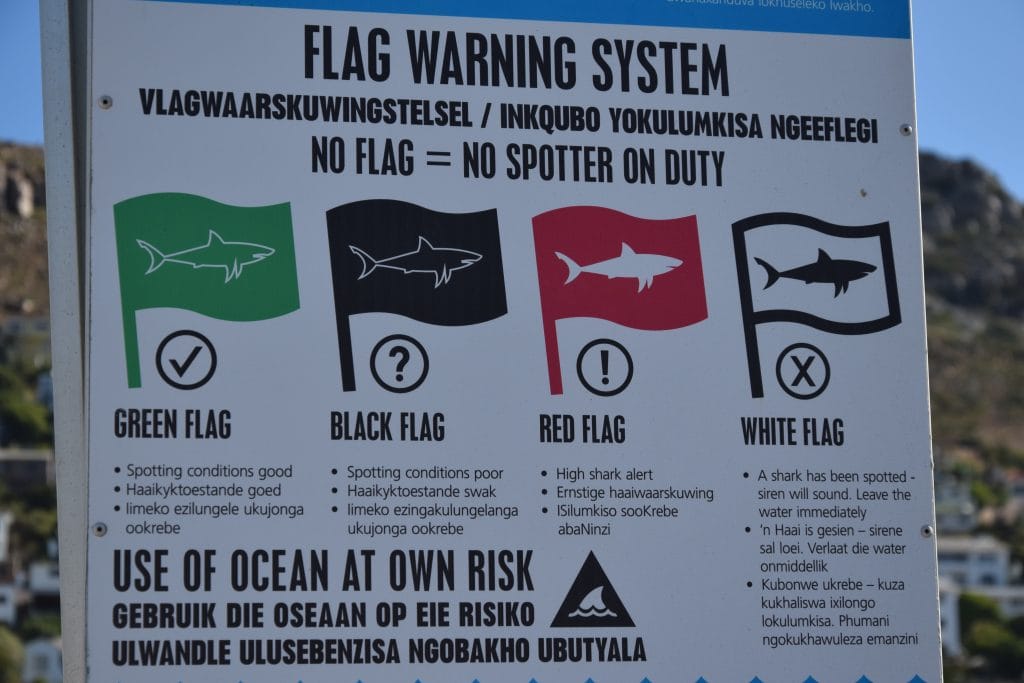
Yes, everybody knows that… there are a lot of big white sharks in South Africa. Incidents are pretty rare: since 1990, only 1 out of 4 shark attacks has resulted in a serious injury, and only 15% have been fatal. This means 1.2 casualties per year across South Africa.
Cape Town enforces a strict regime of shark-attack prevention, with nets on the most commonly used beaches and dedicated shark-spotting towers on the hills (what a job…).
A code of colored flags indicates whether a shark has been spotted or the visibility is too poor to be sure the water’s safe. Be careful as I doubt your travel insurance will cover shark attacks..