

During our 3-month bicycle trip in Japan, we were hosted by a friend in Kawasaki, a residential suburb on Tokyo’s southern fringe that, at first glance, didn’t seem to offer much to do.
We were there for about a week, waiting for the flight that would take us onward to the Philippines. When we asked our host what there was to see nearby, she mentioned the factory night cruises. We said yes immediately.
And then we discovered that Kojo yakei (工場夜景) translates literally as “factory night view,” and it’s become one of Japan’s most quietly compelling travel trends. What started as a niche pursuit for photographers has grown into a full-blown subculture, with dedicated cruise companies, bus tours, and even night-view train services drawing visitors to the last places most tourists would think to look: refineries, thermal power plants, and chemical processing complexes.
Disclosure: Some of our articles contain affiliate links. This comes at no additional cost for you and helps us keep this website up and running. (as Amazon Associates we earn commission from qualifying purchases)
The Keihin Industrial Zone — sprawling across reclaimed land along Tokyo Bay, bridging Yokohama and Kawasaki — is the epicenter of it all.
Why Factories?
During the day, the Keihin zone is what it looks like: utilitarian, grey, industrial. Miles of pipe networks, holding tanks, and smokestacks are doing their unglamorous work. Nothing about it invites lingering.
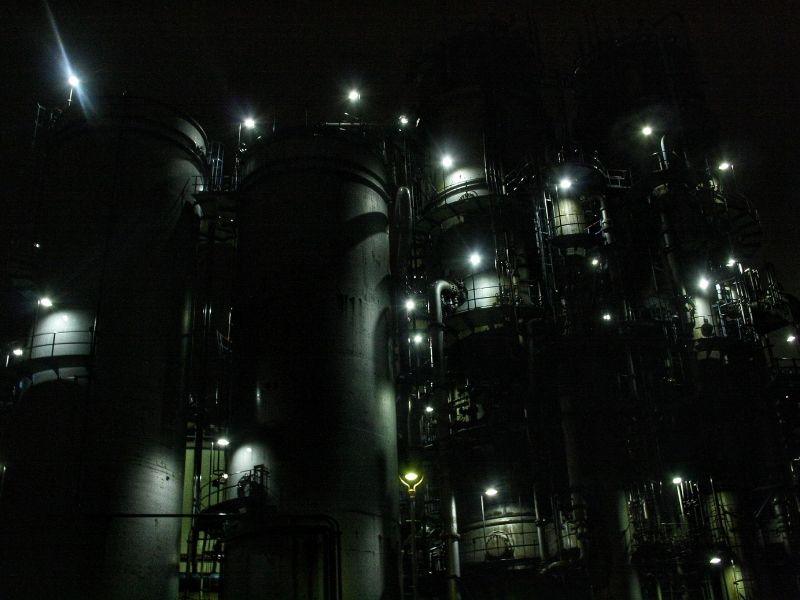
At night, everything changes. The same infrastructure that goes unnoticed in daylight becomes something otherworldly under artificial illumination. Flare stacks throw orange light across the water.
Refinery towers glow with white LED strings. Steam catches the light and halos the cranes. The scale of it all — these vast, quietly humming machines — reads as almost cinematic when darkness strips away the mundane context. Dystopian, but beautiful.
Photographers were the first to notice. The images started circulating on social media and photography forums in the early 2010s, and the reaction was consistent: people couldn’t believe these were real industrial facilities rather than sci-fi film sets. That curiosity drove the tours.
The Cruise Experience
The most popular way to see the factories is by water, and for good reason: the canal routes cut directly into the industrial zones, reaching viewing angles that are completely inaccessible from land. Several companies operate these cruises departing from Yokohama, typically running 90 minutes to two hours.
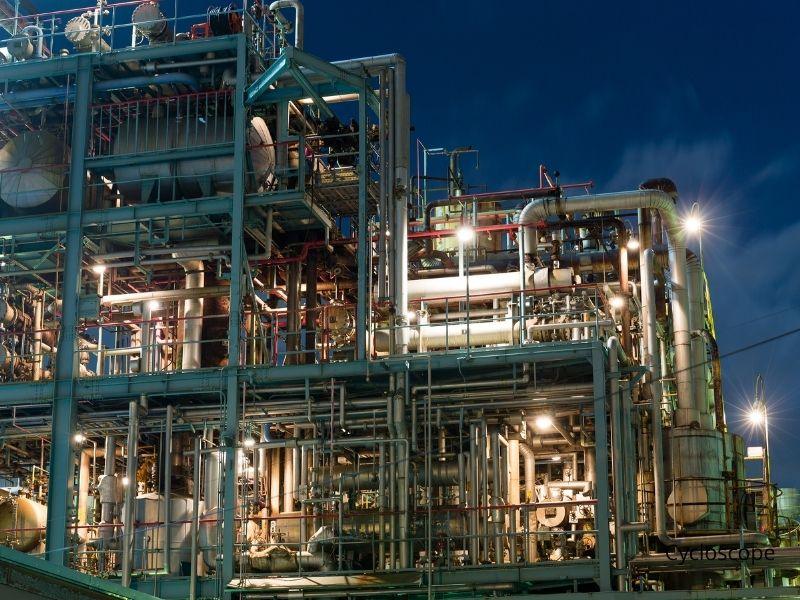
The experience gets you deep inside the Keihin Canal, where countless chimneys and plants are lit up, and light reflecting off the water creates a scene reminiscent of science fiction. Highlights along the route include the massive Toa Oil plant — nicknamed “Kawasaki’s Mont Saint-Michel” by regulars — the flickering flames of a flare stack, and the enormous chimney of the JERA Kawasaki Thermal Power Plant.
The canal itself is normally off-limits to the public, and en route, you’ll also pass the Bay Bridge and Landmark Tower from the water near the Yokohama border, and even spot the Kawasaki Higashi Post Office — a processing hub for international sea mail.
On board, a guide narrates the route in Japanese, identifying each facility, its owners, what it produces, and relevant history. The experience is compelling enough that language isn’t really the barrier it might sound like — the factories speak for themselves.
Cruise Options
Several operators run variations on the same basic route:
Reserved Cruise / Night Factory Jungle Cruise runs on weekends and departs from near the Red Brick Warehouse, tracing the Shiohama, Tanabe, and Minamiwatarida canals before returning. The cruise has been certified as part of the Kanagawa Keihin Coastal Area industrial tourism program and has won the Kanagawa Tourism Award and been recognized as a Japanese night view heritage site. Tickets run ¥6,000 for adults as of 2026.
Keihin Ferry’s Factory Night Scenery Exploration Cruise (工場夜景探検クルーズ) departs from Osanbashi Pier in a commuter-style boat. Other options take passengers aboard speedboats or yakatabune — traditional Japanese houseboats — for a more atmospheric ride.
Kojo Yakei Kawasaki Factory Night Cruise departs from outside the Kawasaki Nikko Hotel near JR Kawasaki Station and runs approximately three hours, with seasonal departure times. Meeting times shift with the seasons: 6:20 pm from March to September, and 5:20 pm from October to February.
Booking directly through cruise company websites is straightforward.
Shooting from the Water
For photographers, the factory night cruise is both an extraordinary opportunity and a genuine technical challenge. The angles from the canal are unlike anything achievable from land — but the moving platform, low light, and high-contrast illumination make it demanding.
A few things help:
Gear: A fast prime lens is your best ally here. Shutter speeds above 1/80th of a second are recommended for sharp results — when the boat is at a standstill, anything slower than 1/40th tends to blur. Aim for f/2.8 or faster if possible, and push ISO to 4000 or above while keeping an eye on noise.
Format: Shoot RAW. The post-processing latitude makes a real difference when you’re recovering shadow detail from a dark scene with hot highlights.
Stabilization: A monopod helps at the cost of some maneuverability. Be considerate of other passengers — the boats aren’t large.
Expectation management: The iconic long-exposure factory shots you’ve probably seen online were made from fixed tripods on land, often on docks or in Kawasaki Marien park. What you’ll capture from the boat is different — more immediate, more kinetic, and often more interesting for it.
It’s also worth knowing that smartphone cameras have gotten good enough to capture factory shots if you know the right tricks — many guides will share tips during the cruise.
Getting There
The cruises typically depart from central Yokohama, making access easy. Yokohama Station connects directly to Tokyo in under 30 minutes on the Tokaido Line, and Kawasaki — midway between the two cities — is only a few minutes further.
The Factory Night Jungle Cruise runs on weekends only, so if you have a specific date in mind, booking early is advised as it sells out.
Most cruises are best experienced in the colder months — autumn and winter tend to offer clearer air, sharper reflections on the water, and a certain atmosphere that suits the subject. Departures also shift earlier in winter, which means less waiting around after you arrive.
More Than Photography
It’s easy to frame the factory night cruise as a photographer’s excursion, and many people do approach it that way. But the experience is worth it without a camera, too. There’s something genuinely affecting about drifting through these massive structures at night — the scale of them, the indifference of the machinery, the strange quiet of a working industrial zone after hours.
Since the 2010s, kojo yakei has developed into a distinct form of industrial tourism that draws not just photography enthusiasts but couples on dates — the industrial night view has become, improbably, romantic.
Japan has a long tradition of finding aesthetic value in unexpected places — wabi-sabi, the appreciation of impermanence and imperfection, extends naturally to these rusting, steaming, brilliantly lit machines. The factory night cruise is, in its way, a very Japanese thing: a careful, guided appreciation of something most of the world treats as invisible.
Worth the boat ride.
Needless to say, we loved Japan so much that we stayed there for three months and would go back tomorrow. Here are some other articles you might be interested in:
- Japanese Alps, Shirakawa Go, a Leap Into Traditional Japan
- Budget travel in Japan: how to explore Japan with less than 10$ per day
- The Naples of Japan, Kagoshima, and the Sakurajima volcano
- Cycling Japan: Bicycle Touring Advice and an (almost) Perfect Itinerary
- Bicycle Touring Shikoku and Honshu – A Great Itinerary for Adventure Travel Japan
- 11 great off-the-beaten-path places to visit in Japan