

Last Updated on 31 January 2026 by Cycloscope
How much does a trip to Japan cost? Tips and tricks for organizing a do-it-yourself trip to Japan at a very low cost. Our guide to spending less than €10 a day.
Backpacking Japan is a dream for many, but often I’ve heard people considering it impossible because of the high costs.
Disclosure: Some of our articles contain affiliate links. This comes at no additional cost for you and helps us keep this website up and running. (as Amazon Associates we earn commission from qualifying purchases)

Even though Japan is not a cheap country, this guide will show you how to budget for travel there. We stayed there for three whole months, the entire duration of the free Visa, for around 1,500€ for two people.
We traveled to Japan on our bikes, but this guide is dedicated to hitchhikers, walkers, and all sorts of backpackers with a little adventurous spirit.
Nothing could beat the freedom of the bicycle. Japan is a straightforward destination for beginner bicycle tourists, so consider buying a bike or building one from junk. There are just so many reasons to switch from backpacking to cycle touring.
Japan is way more than Tokyo, Osaka, and Kyoto, and slow travel is the best way to experience this magical country completely. The real Japan is in the countryside, and small towns are good places for budget travelers.
Check also
The perfect Itinerary in Japan for bicycle travelers and backpackers
13 off-the-beaten-path destinations in Japan
5 pieces of advice to backpack Japan on a budget
- Sleep in a tent, use hospitality networks
- Buy your food in supermarkets
- Get a shower in a cheap onsen or public bath, or straight from the waterfalls in summer
- Move around by bicycle, walking, hitchhiking, or using local trains
- Use Wi-Fi connection from convenience stores
Sleeping
How to sleep for free in Japan
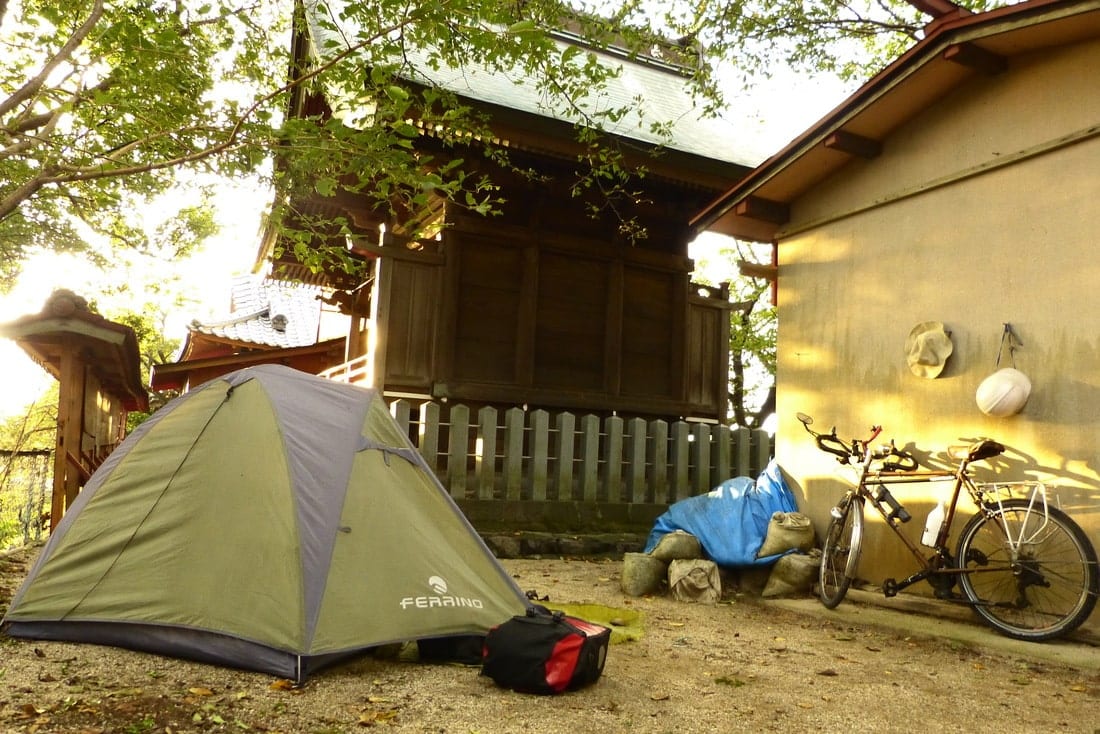
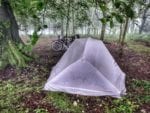
Free camping (also called wild camping) is definitely the best choice in Japan. It’s allowed, and it’s easy to find beautiful spots, especially if you’re away from urban areas.
We often slept in Jinja or Shinto shrines. They are everywhere, and you can usually find a roof to stay dry, a water pipe, and sometimes even an electric plug.
Cemeteries are also another option. Anyway, we never really had problems finding somewhere to pitch the tent (even though in the urban areas it could be complex and less pleasant, with highway bridges being the most obvious option).
Many Japanese, even families, sleep in their cars during their holidays; this is considered perfectly normal. If you plan to rent a car, be sure to get one suited to your needs, which could save you literally thousands of dollars.
Warmshowers and Couchsurfing are widespread in Japan, but many members don’t speak English and are often shy about hosting you. Give it a try anyway, we met wonderful people.
- Check Our Guide about Couchsurfing and its Alternatives
Random host: Opening his house to a stranger is very uncommon for a Japanese person. That being true, we have been hosted by people we didn’t know directly for almost a month in the Tokyo area anyway.
The thing is, we may say, that a Japanese person is willing to offer his/her excellent hospitality if you are introduced by someone or if you first make friends with him/her.
Where to sleep in Osaka and Kyoto almost for free
There are secret, free, or super-cheap accommodations in the centers of Osaka and Kyoto.
In Osaka, there’s a free campground in Tsurumi Ryokuchi Park (GPS coordinates: N 34° 43′ 00.2 E 135° 34′ 05.7).
It’s an official campground; all you need to do is register. This being Japan, the safest country in the world, you don’t have to worry much when leaving your belongings there and going to explore the surprisingly quiet city of Osaka.
In Kyoto, you can stay at the student dorm for 200 Y (1.5 €). It’s a dirty place, but also very fun. Staying here, you get to experience the real lifestyle of Japanese university students.
In the dorm, there’s a kitchen (good luck) with a music rehearsal room inside, a pool table, and draught beer.
You can easily stumble upon some theater, art, or music performances. The nearby campus gym is free to use. The dorm is open to backpackers and all sorts of travelers.
(Kyoto student dorm open to travelers, GPS coordinates: N 35° 01′ 41.5 E 135° 46′ 42.2).
So even in Japan, if you know where to look, there’s always a chance to find super-cheap accommodations for those cycling or backpacking on a budget.
Budget Accommodation in Japan
Accommodation prices in Japan are similar to Western European standards, but with a difference. While in the big cities, it’s easy to find hostels with dorms for as low as 15 USD per night, hotels and B&Bs can be crazily overpriced in more rural areas of Japan… this is where the stereotype of expensive Japan becomes true.
Here are some preventative prices of the cheapest accommodation options in Japan:
- Cheapest dorm in Tokyo from 27$
- Cheapest double room in Tokyo from 48$
- The cheapest bed in the dorm in Kyoto from 24$
In the more rural areas and small towns, though, we never saw anything for less than 50$ for a room in a love motel.
So overpriced they are, that outside the main tourist area, you will see dozens of abandoned hotels, and most Japanese people have lost wealth and purchasing power over the last few decades. That’s why so many of them prefer to sleep in the car for their weekend out.
Renting a car in Japan (and Sleeping in)
If you decide not to cycle through Japan, we won’t blame you. Some mountains out there are not for everyone.
Still, you should consider the advantages of being able to move independently in such a big and beautiful country.
Renting a cheap car in Japan costs around $40/50$ per day, those are usually cube-style cars, some of which are actually pretty spacious.
In Japan, all cars are automatic, the minimum driving age is 18, and you will need a Japanese driver’s license or an International Driving Permit (IDP) to rent and drive a car.
Those international permits are usually issued by your country’s national automobile association for a small fee.
Sleeping in the car in Japan is totally legal and very common among travelers and weekenders; even families do it.
Except in the crowded urban areas, it is pretty easy to find a spot to park and sleep. Many convenience stores, like Lawson and Family Mart, have oversized parking lots where you can park and spend the night.
These stores have restrooms, food, and free wifi. If you are in a rural area, find a nice spot with a good view and park for the night.
Food
Where to get cheap food in Japan
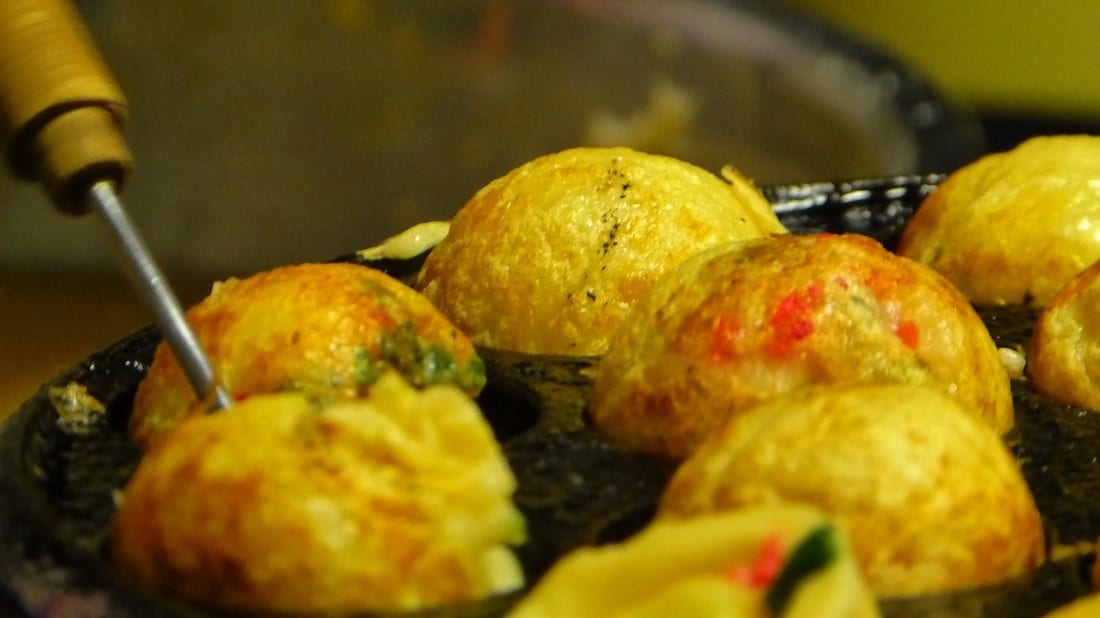
Japan is very famous for its food, and its fame is definitely deserved! Restaurants, though, are not for the budget traveler; expect to pay 5€ for the cheapest bowl of ramen (Japanese noodles in broth).
So, how do we experience Japanese food on a budget? No problems, there are many ways.
Convenience Stores (combini)
In the beginning, it’s easy to stick to combini (7-Eleven, Family Mart, Lawson, and other convenience stores). Convenience stores are your best friends when cycle touring or backpacking in Japan.
They have a choice ofbentos (precooked meals) you can warm up in the microwave at the store, and you can also get free hot water if needed.
The food in this kind of place isn’t so good, but there’s usually a lot of choice: rice and meat,onigiri (rice balls), various noodles, and even some “Italian-style” spaghetti.
Think of the convenience store as an all-in-one station: you have wi-fi (see “connectivity” below), a toilet, drinkable water, food and drinks, and, not least importantly, a place to throw your garbage, almost impossible to find elsewhere. But you won’t experience much of the Japanese cuisine here.
Japanese supermarkets
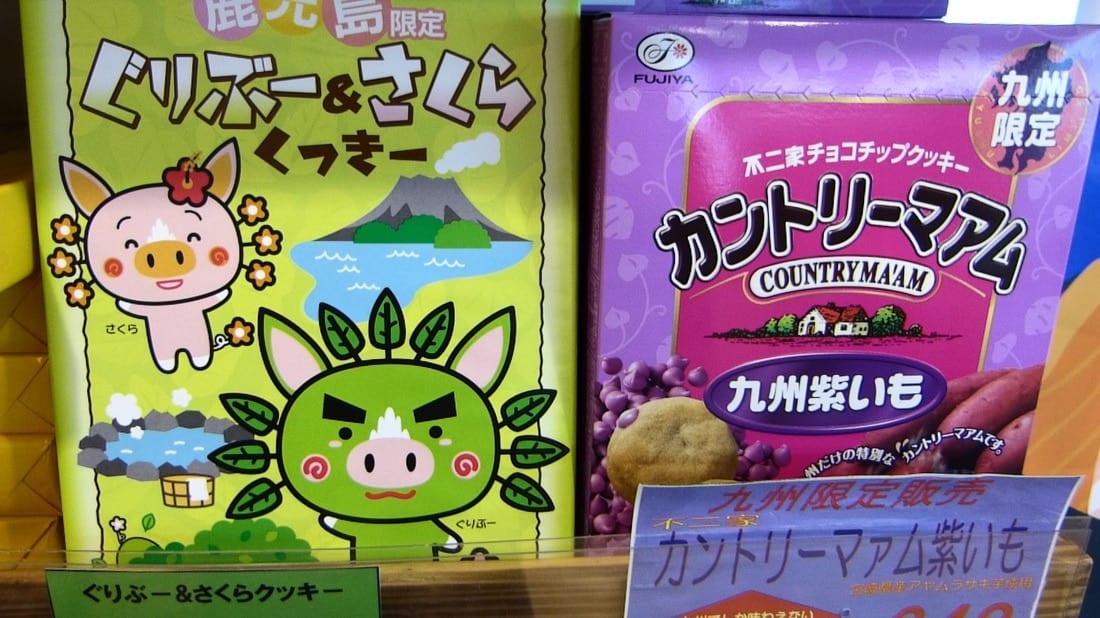
But the best choice for budget food when backpacking or cycling in Japan is, for sure, Supermarkets.
Japan has among the best supermarkets in the world, according to my experience. Here you can find almost everything you are dreaming of. Most of them, not just the biggest, have a kitchen, and they prepare their bento on the spot.
Stuff is much fresher here; it’s very easy to find eight perfect pieces of sushi for 3€. A lot of choices, more similar to what you’d find in a cheap/budget restaurant.
The secret hint? One or two hours before closing time, they will offer a 20% to 50% discount on all bentos. Eight nice pieces of sushi for 1.50€? Not bad, I would say.
Moreover, if camp cooking is your thing, you can get all sorts of ingredients from all over the world at Japanese supermarkets, and some are pretty cheap!
Fruits and vegetables are notoriously expensive, but you can often find up to 90% off expiring veggies, and they are still good for 1 or 2 days. Not much more they could live in my bags anyway.
We spent a lot of time in Japanese supermarkets figuring out how to get a great meal, and we often succeeded.
Japanese Discount Stores
Another secret tip for budget travelers in Japan is the Discount stores. Those are apparently big cosmetic and soap shops, but they always have a food department.
Here you can find pre-cooked udon and noodles for 17Y, and sauces to dress them for 0.5€ (tomato sauce, carbonara, mushroom cream).
Sorts of jam for your breakfast, frozen onigiri, and other frozen stuff that will quickly defrost in your bags. Also, the cheaper beer is here.
Seasonal fruits and vegetables are easy to find for road travelers in rural areas. Just beside the roads, there are stalls with packs of them for a low price. If there’s nobody there, leave the money in the box. This is Japan.
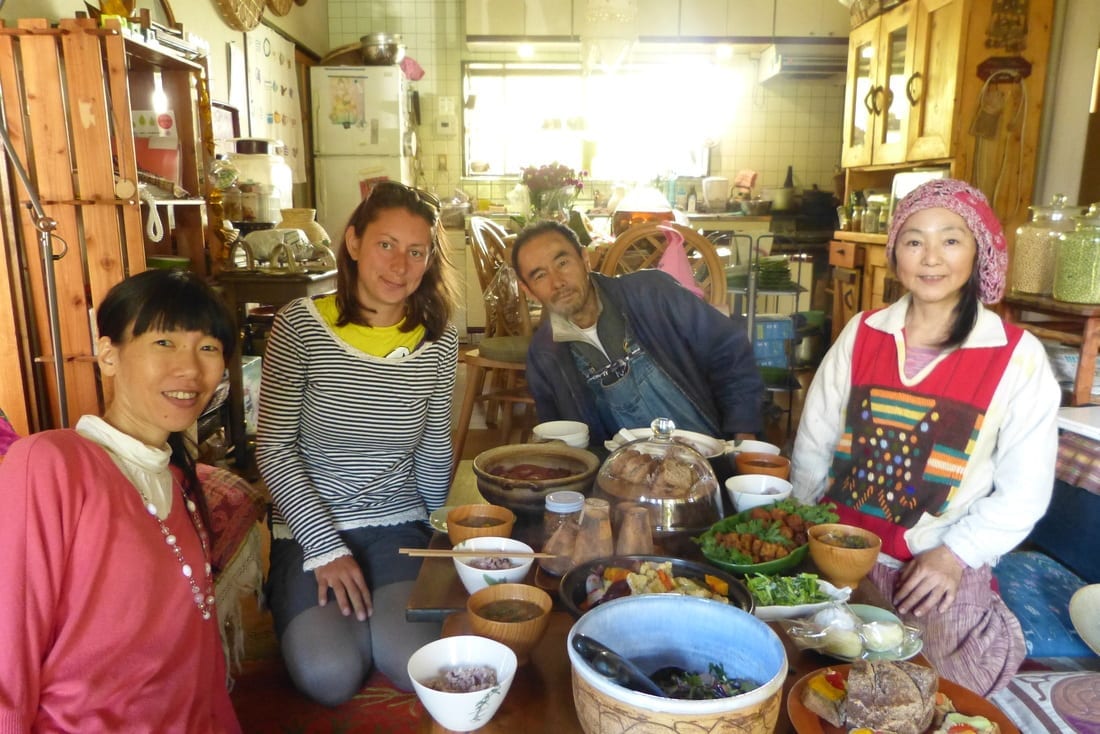
But the best and only real way to experience authentic Japanese cuisine is to have a Japanese person cook especially for you, so make friends! Japanese people can be timid, but they are warm at heart.
Water Supplies
Drinking water is available everywhere since tap water is drinkable in Japan. Convenience stores (combini) and gas stations also have toilets.
Having a proper shower is not hard; onsen and public baths are everywhere and can be very cheap, ranging from 1€ (even free in Beppu, maybe also elsewhere). You can stay here as long as you want, until closing time (usually in the evening).
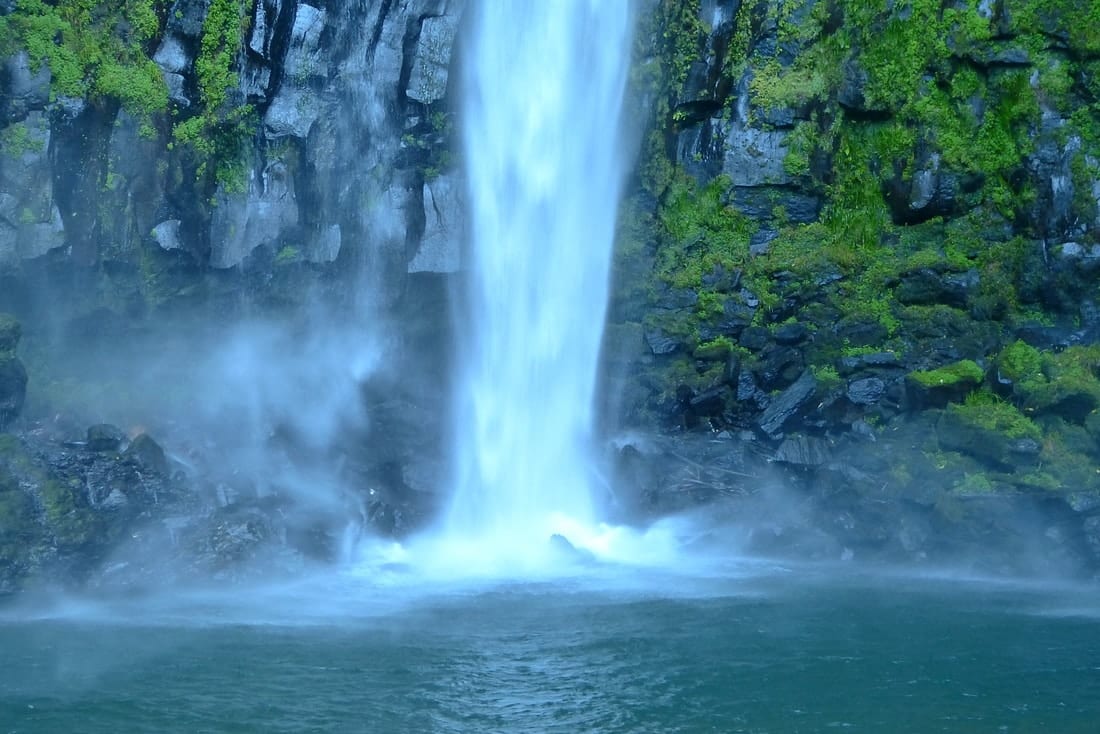
If you are in Kyushu during the warm season, you can enjoy plenty of waterfalls and rivers where you can rinse yourself from the sweat.
Communication
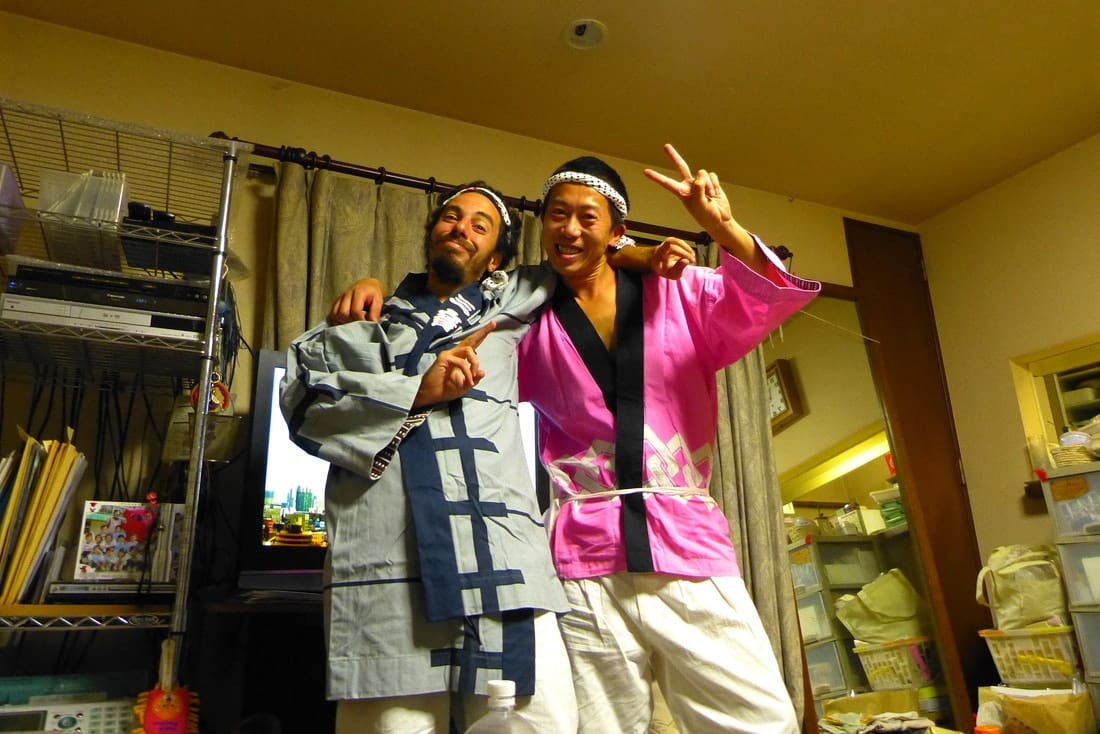
This is really hard. We can compare Japan to Central Asia regarding the number of English speakers, close to 1%, probably. Some of them will understand if you write down some sentences.
Speak very slowly and very basic English, try to imitate the Japanese pronunciation (for “hot” they say “hotto”, for example), and learn some basic Japanese, numbers, and greetings, and you will get sincere smiles.
Connectivity
Free Wi-Fi is available at most convenience stores (7-Eleven, Family Mart, Lawson) by subscribing to their Wi-Fi networks; these usually have a 1-hour-per-day limit, but if you subscribe, you will never be without the internet.
There are convenience stores everywhere in Japan. Free public Wi-Fi is not as standard as in Korea.
Getting a Japanese SIM card and telephone number is not a piece of cake. You can have a look at this article comparing Pocket WiFi options with SIM cards in Japan and see what’s best for you.
Weather
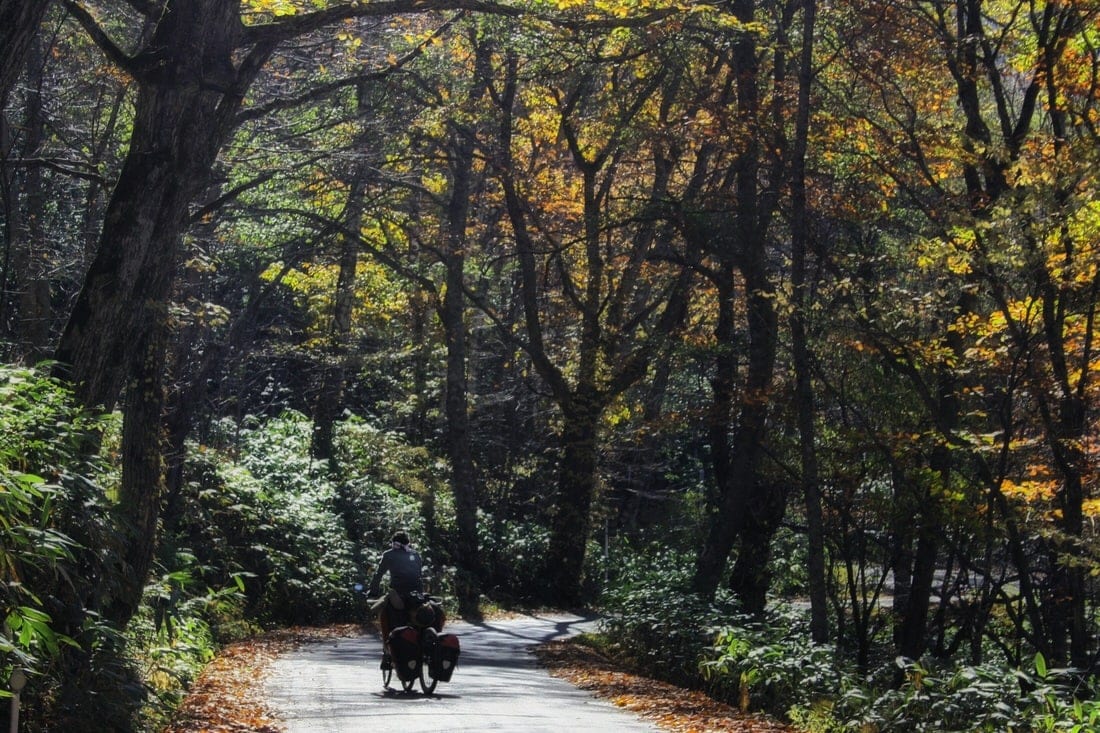
Japan is a big country that stretches from the tropical climate of Kyushu and Okinawa to the Siberian winds blowing over Hokkaido. Thus, bicycle touring in Japan is easy year-round. Go south in Winter and north in Summer if you’re not looking for extreme climates; otherwise, do the opposite.
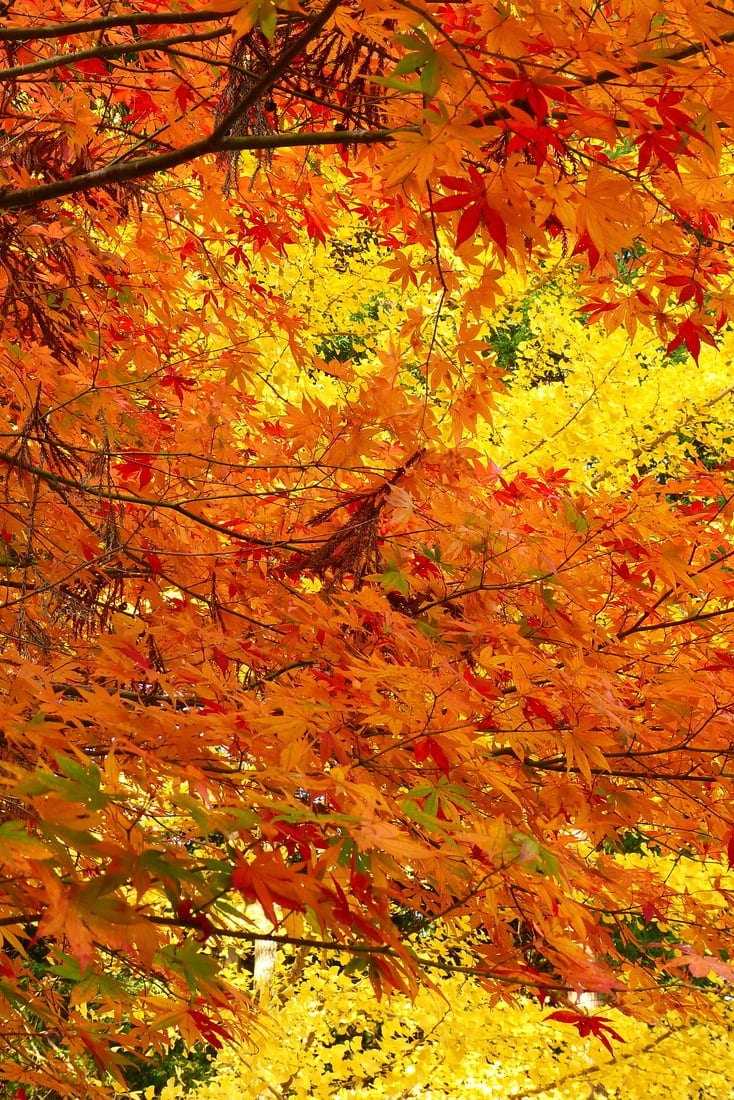
Cycling in Hokkaido must be excellent in winter, but you’ll need the proper gear. Autumn and Spring are great everywhere, red maple leaves in the former, and cherry blossoms in the latter.
Budget Transportation in Japan
If you’re bored by a busy stretch, in a rush to get somewhere, and willing to throw your bike on a bus, forget about it. Usually, long-distance buses and trains don’t accept bicycles as luggage.
Moreover, both are quite expensive high-speed trains. That’s another thing that makes a bicycle trip by far the cheaper option to experience Japan on a budget, but you have to ride it all (if you want your wallet happy).
Hitchhiking is possible and safe, but not super easy. Again, the Japanese “shyness” may be.
Safety
Criminal threats are the least of your worries here; Japan is the safest country in the world. You can leave your wallet on the bar table and go for a walk, no problem.
Go to part two, our suggested itinerary for a road trip in Japan
Follow our budget travels