

Last Updated on 31 January 2026 by Cycloscope
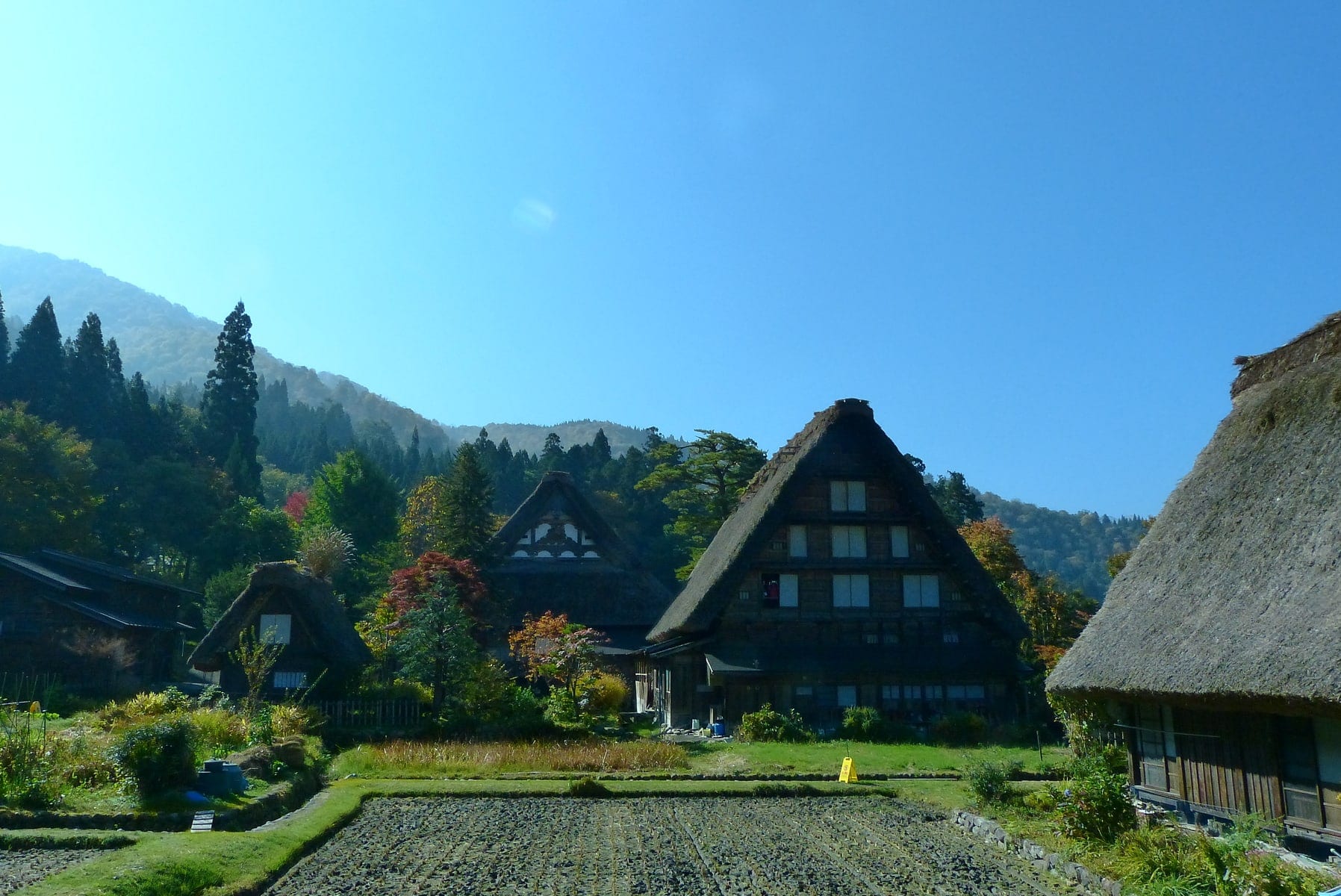
Bicycle touring to Shirakawa-go, in the Alps of Japan
How to visit Japanese traditional houses. Kiritsuma-Gassho-Zukuri
Reaching Shirakawa is worth it even just for the trip itself, and if you happen to cycle all the way up here, you will appreciate the magic of this place even more.
Disclosure: Some of our articles contain affiliate links. This comes at no additional cost for you and helps us keep this website up and running. (as Amazon Associates we earn commission from qualifying purchases)

We came to Shirakawa-Go as part of our three-month Japanese leg of a two-year Asian bicycle trip, planning our visit around the yearly Doburoku Matsuri, a Shinto festival celebrating mountain gods and raw sake. Read our full reportage here!
Set at the border between Gifu and Toyama prefectures, on the so-called Japanese Alps, in the lush green valley of the Shogawa River (an important source of freshwater and hydroelectric power with its many blue reservoirs).
Shirakawa is at its best in Autumn, when the weather is good, and the colors are astounding. Shirakawa-go really is a place not to be missed. Be sure to include it in your itinerary when planning your trip to Japan.
Shirakawa-Go
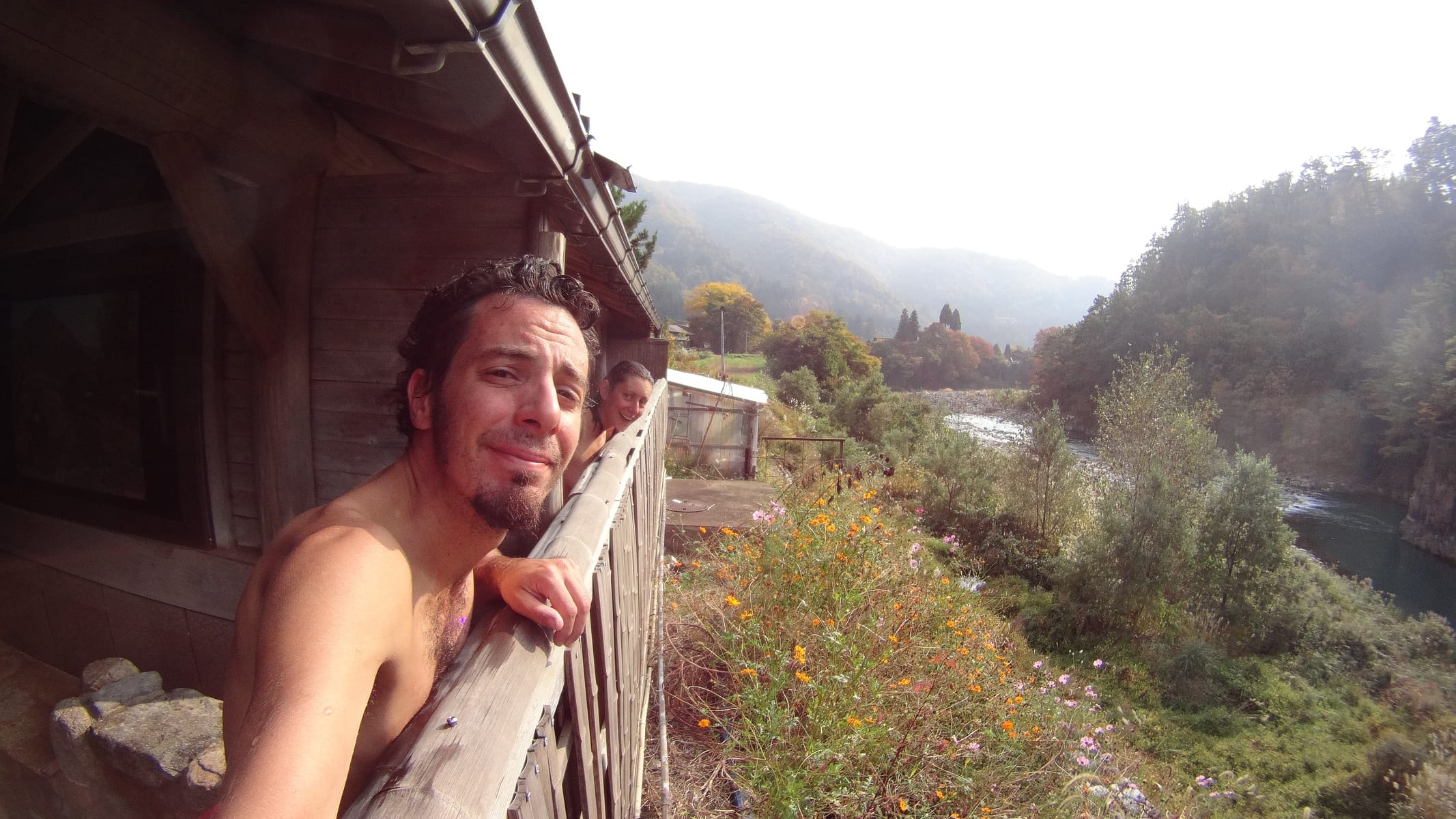
Today is October 20, Elena’s Matsuri, also called her birthday. We pay a visit to a local Onsen (hot spring) and, for just around 3€, we get to take a nice, relaxing bath in thermal waters with a spectacular view over the valley and the river. We think about where to go after Japan: the Philippines? Taiwan? Hong Kong? Who knows…
Released from the spa, we go for a walk through the old town center of the wonderful Shirakawa-go.
Gassho-Zukuri Houses
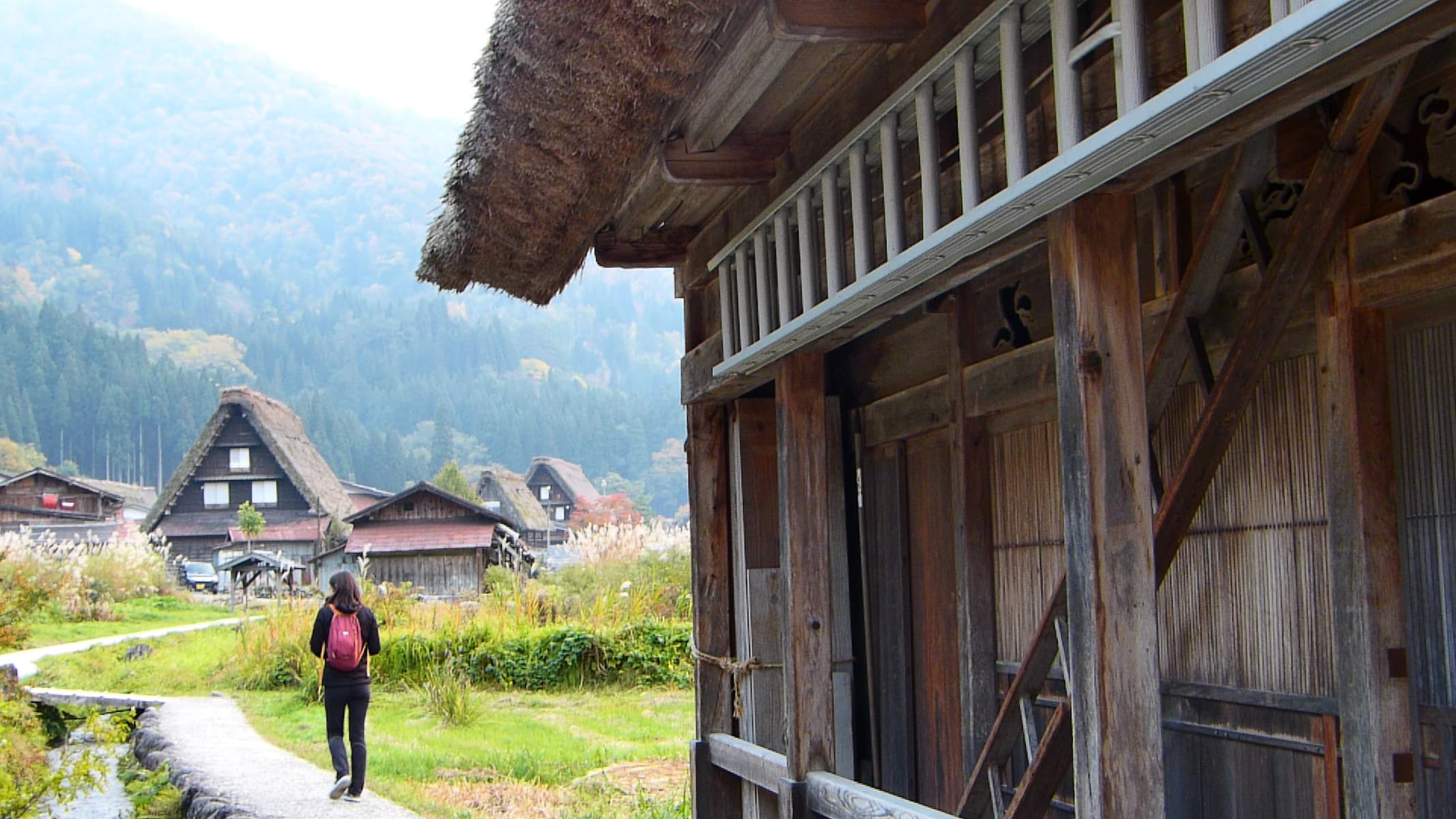
Shirakawa-go was declared a UNESCO World Heritage Site in 1995 for its unique houses. They are called Kiritsuma-Gassho-Zukuri, “prayer-hands constructions”, with their slanting, thick straw roofs that resemble hands joined in prayer.
These houses are entirely built of wood and natural materials, without nails; they are suspended on pillars resting on uncut stones.
The lower part of the pillars is modeled on the shape of the stones themselves to adhere perfectly, a simple antiseismic trick that allowed these buildings to survive the many earthquakes in the last 250 years (some of the hoses are that old).
The sloping roof, entirely made of twigs and straw, easily handles the massive winter snowfall.
The houses have several stories and are designed to host large families. A reproduction of a Gassho house is available for free at the local small museum in the information center, where interesting videos about the construction process are also on display.
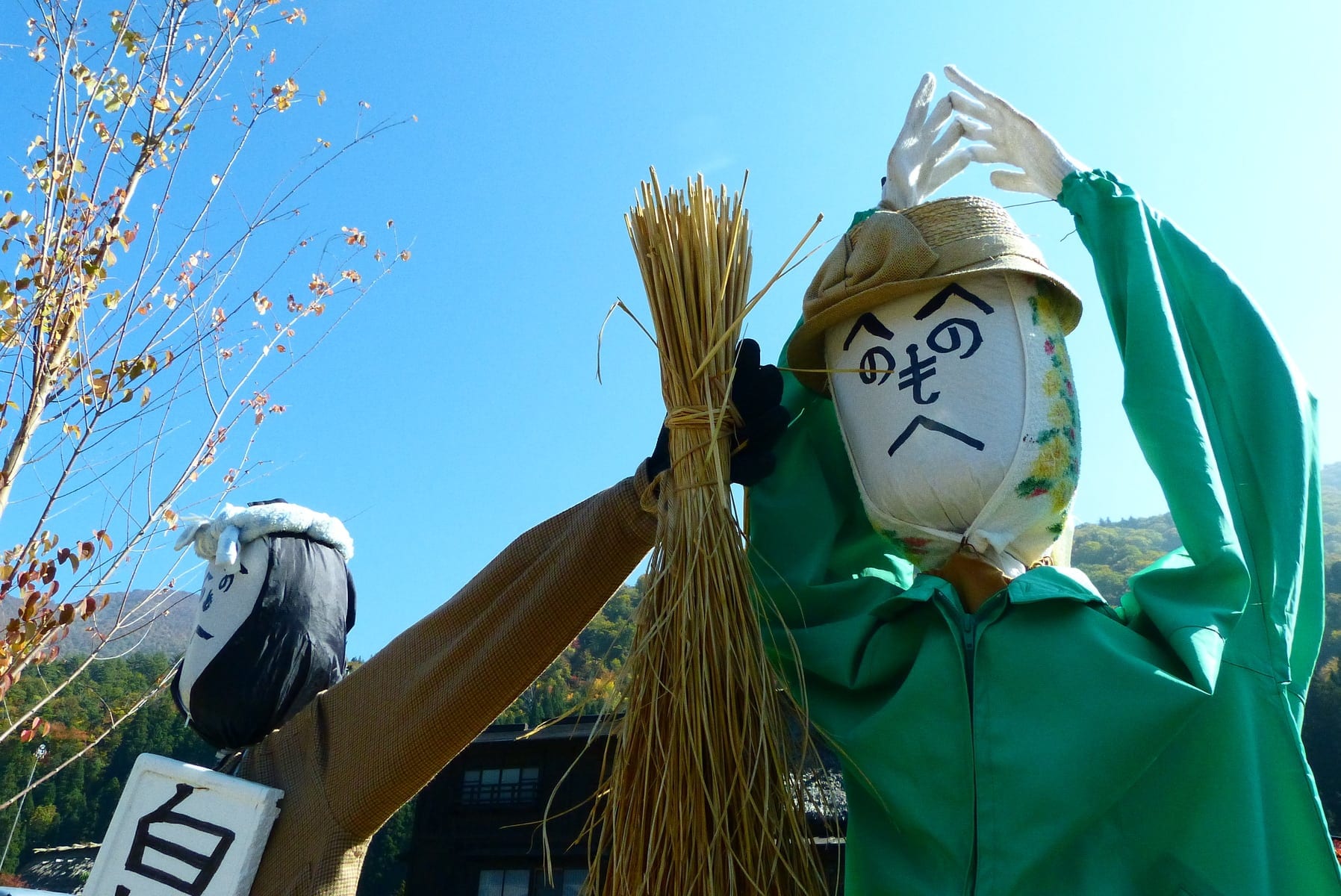
Walking through the fields adjoining the houses, on the wooden planks that make paths above the orchards, and watching the beautiful and funny handmade scarecrows is really a dive into Japan’s past.

There are several other smaller villages built in this style in the area, less touristy and with even older houses. We rode through them by bicycle, leaving Shirakawa behind, following the Shogawa River, in a dreamy state of mind that made us feel like we were bicycle touring in a fairy tale.
For hints and tips about traveling in Japan on a very tight budget (less than 10 USD per day), read our guide here. To have a panoramic view of our
To have a panoramic view of our Japanese bicycle touring project, check our itinerary in this other article. Please comment, like, and share on social networks if you like!
Please comment, like, and share on social networks if you like!
More Alpine Landscapes