

Deforestation, climate change, drought, and economic hardship are fueling deadly vampire panics in Malawi—the link between folklore, fear, and environmental crisis.
In rural Malawi, rumors of vampires can still lead to violence. Known as anamapopa, these alleged bloodsuckers are blamed for misfortune, illness, and economic hardship.
Behind the panic lies a country struggling with poverty, deforestation, environmental degradation, and the uncertainty faced by communities that depend almost entirely on the land for survival.
The Vampires of Malawi
Disclosure: Some of our articles contain affiliate links. This comes at no additional cost for you and helps us keep this website up and running. (as Amazon Associates we earn commission from qualifying purchases)

With raised voices and frantic tones, a group of villagers in southern Malawi patrols their town at night. Machetes glinting in the moonlight and torches ablaze, the mob paints a fearsome picture; woe unto those who should chance upon them out in the streets.
It is neither religious tensions nor ethnic violence that has lured this group of men and women out at night, but rather a collective sense of dread: these villagers are hunting vampires. The mob — pitchforks and all — looks like it has walked out of a Shelley novel.
The pressures of climate change are leading to increasingly frequent vampire panics in Malawi, as social and economic stressors push the local population to seek out scapegoats for their plight.
In a country where ninety percent of the population makes their livelihoods from agriculture, any disturbance during the growing season has serious repercussions, the most bizarre of which are the outbursts of vampire-related violence.
It should be noted that these bloodsuckers — or anamapopa as they are known — are not to be confused with the gothic counts or sparkly teenagers prevalent in the West, but rather Malawian black magic practitioners seeking economic gain.
Victims are killed, and their body parts and blood are used in black magic rituals to produce charms for those seeking to do well in business. “Anyone who is doing well in business is assumed to be involved in Satanism or some form of the occult,” says Stephan Sazuze, a cross-border trader and victim of an anti-vampire mob that destroyed his house and most of his property in September 2017.
“What we have observed with the bloodsucker allegations is that innocent people have been brutally murdered with no evidence.” — George Thindwa, executive director of the Association of Secular Humanism in Malawi
A BBC film crew recently experienced this kind of violence first-hand in mid-August after they were attacked by a mob in northern Malawi while investigating a string of child murders. Having made contact with a confessed killer selling charms made from blood and body parts to wealthy clients, the crew was set upon by an armed mob during an undercover meeting.
While the murderer managed to escape in the confusion, the journalists were accused of being vampires and stoned by the crowd. “We knew that that was the moment we were going to die. I held my producer’s hand. They were going to end our lives,” recalls undercover journalist Anas Aremeyaw Anas. Fortunately, local police intervened, but the incident lays bare the depth of fear gripping Malawian communities.
When the Rains Don’t Come
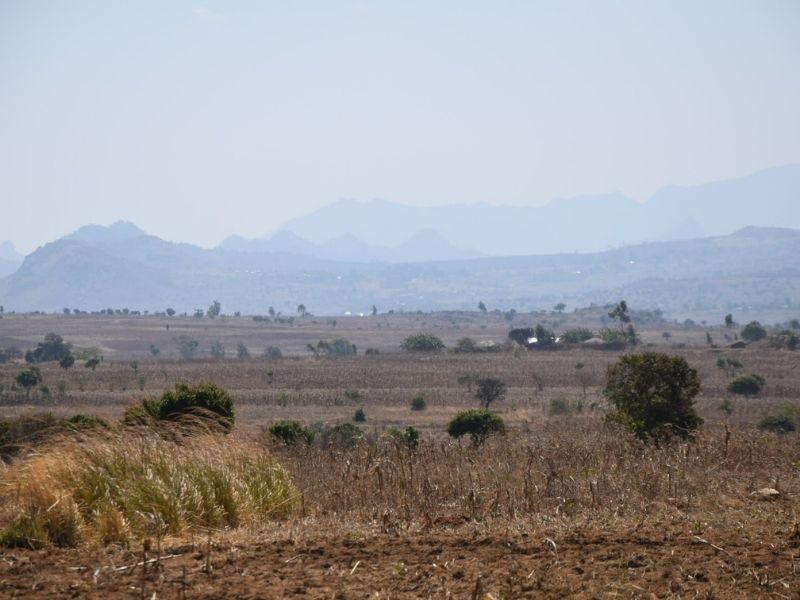
To understand the vampire, one must first understand the drought. A highly severe drought in 2017 affected over 6.5 million people throughout Malawi, linked to El Niño conditions. This was not an isolated event.
Since 2000, 42 weather-related disasters have occurred in Malawi, compared to only 12 in the preceding two decades. The pattern is relentless and worsening. Districts that have always experienced temperatures below 30°C have seen temperatures rising to 40°C, and rainfall can no longer be predicted.
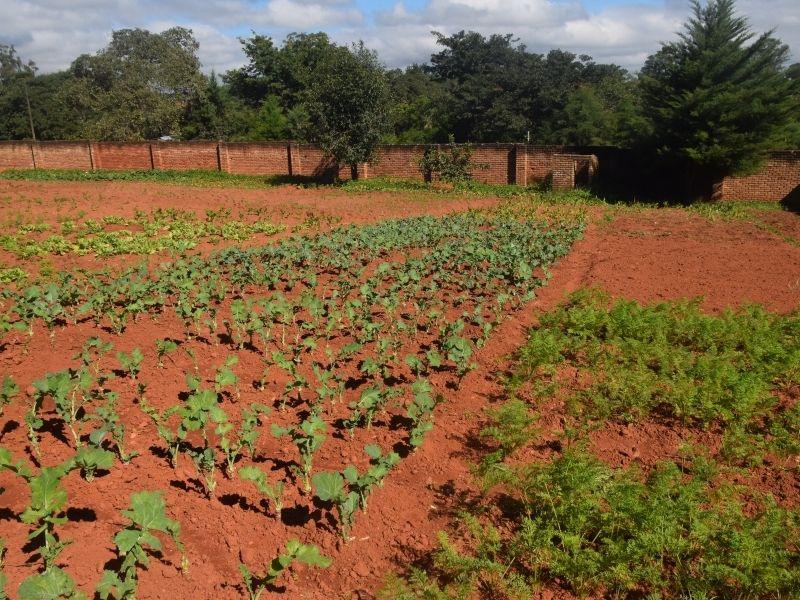
For communities that grow their own food, this uncertainty is existential. Subsistence farmers predominantly grow maize for domestic consumption on farms of less than one hectare in size, making the sector deeply vulnerable to rainfall variability. When crops fail, not only do families go hungry, but the social fabric that holds communities together begins to fray.
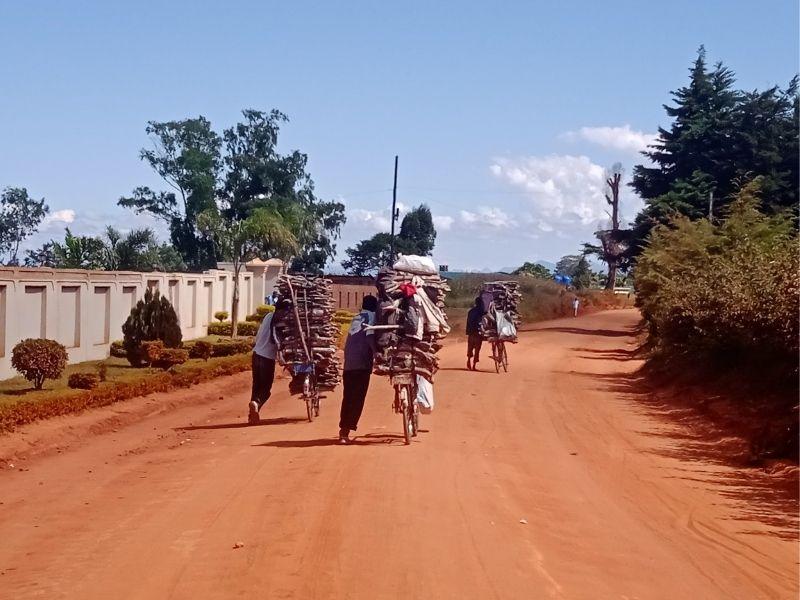
They cook using charcoal, and to produce it, they constantly burn the forest with no plan to replant it.
People need someone to blame, and in the absence of a tangible enemy like a drought or a flood, the instinct is to look inward, toward those who appear to be thriving while everyone else suffers.
I personally know a friend who was told by some relatives not to show himself in his mother’s village, because an uncle was allegedly planning to kill him. Shortly before that, he had visited the village for a funeral, and the simple fact of arriving by car and with a mobile phone was enough for him to be labelled a “vampire.”
According to anthropologist Adam Ashforth, who has studied supernatural beliefs in sub-Saharan Africa for decades, vampire stories crop up almost every year in Malawi, often when farmers wait for rain with little else to do.
“People have time on their hands and are deeply anxious about the growing season,” he has observed. If the rains come, the rumors fade — but when they do not, starvation can ensue, and food insecurity turns to crisis, as rumors flip to violence and mobs target whites, the wealthy, and state officials.
The Rich and the Blood-Soaked
The anamapopa are not random bogeymen. They are, in the Malawian popular imagination, fundamentally an economic creature. Anthony Mtuta, assistant lecturer in anthropology at the Catholic University of Malawi, has argued that the roots of the vampire scares lie in “economic hardships and inequalities.” As he put it: “It’s the rich versus the poor. The poor believe the rich are greedy and are sucking the blood of poor people.”
This metaphor has a powerful logic. In a country where wealth is scarce and inequality is stark, unexplained prosperity becomes suspicious. The trader who can afford a new car, the businessman whose shop survives where others fail — in the folklore of desperation, success like this requires a dark explanation.
Blood, literally extracted from the poor, was transformed through ritual into commercial advantage for the privileged few. It is a raw, visceral image of what economists call rent extraction.
Malawi is largely reliant on foreign aid (mostly stolen by the government), and some locals view even this assistance with suspicion. “To villagers, the thinking is that no gift is for free… ” You pay back through blood,” Mtuta has noted. In this reading, even international development becomes suspect: another form of vampirism, another transaction in which the poor ultimately bear the cost.
The people who are most often accused of being vampires or witches in Malawi tend to come from the most marginalised groups: widowed women, the elderly (particularly older women), the disabled, and increasingly children.
This reveals another layer of the phenomenon — when collective anxiety reaches fever pitch, the mob does not always target the wealthy. Sometimes it turns on those who are simply easiest to accuse: those without social protection, without powerful relatives, without the means to defend themselves.
A History With Deep Roots
The current wave of panic is not an aberration. The first blood-sucking accusations in Malawi were recorded as far back as 1948 and 1949. What changes is the intensity and the trigger. Researchers have consistently found that these panics flare during periods of acute hardship — droughts, famines, periods of rapid social or political change. During periods of intense stress, these stories can act as a lightning rod for rage, leading to what some experts call “witch-cleansings.”

Crucially, this is not a uniquely African pathology. Witch-cleansings have occurred in the United States, and not just in the 1600s in Salem. In the 1980s, Satanic Panic, the fear of social change, seemed to have primed many Americans to buy into tales of demonic rituals in daycares, destroying the lives of innocent people along the way.
The impulse to locate evil in a concrete, punishable body — rather than in abstract systems or climatic forces — is a deeply human one. Malawi is not unique in this regard; it is simply more acutely exposed to the conditions that trigger it.
Politicians and religious leaders have at times made the problem worse. Some politicians and religious figures have, at least in the recent past, stoked vampire rumors for their own benefit — a convenient way to redirect popular frustration away from governance failures and toward supernatural enemies.
The Human Cost of the Panic
The violence that erupts from these panics is concrete and deadly. In the 2017 outbreak alone, at least nine people were killed by vigilante mobs. At least 250 people were arrested in Malawi over mob violence stemming from bloodsucker accusations.
Entire communities were destabilised. In the Mulanje area, the number of tourists visiting collapsed after mid-September, causing tour guides and market traders to lose their livelihoods — the very economic insecurity that helped spark the panic in the first place.
Clinical psychologist Dr. Chiwoza Bandawe of the University of Malawi in Blantyre has described the panic as “a reflection of the way the country looks at things, and makes sense of tensions and economic pressures.” For him, the supernatural framing is a symptom, not the disease. Address the underlying desperation — the failed harvests, the broken healthcare system, the yawning inequality — and the vampires lose their power.
No Easy Exorcism
Religious leaders have been identified as one potential force for curbing this violence, given that locals often seek their guidance in resisting vampiric dangers. Some Catholic clergy in Malawi have called on their colleagues to help address the issue. But institutional responses remain slow and patchy.
What the evidence makes clear is that as long as climate change continues to destabilise Malawi’s agricultural heartland, the conditions that breed these panics will persist and intensify. Droughts do not just destroy crops — they destroy trust, corrode community bonds, and create the psychological conditions for scapegoating. The vampire, in this sense, is not a superstition to be dismissed but a social symptom to be read carefully.
Even when a particular spate of violence fades, belief in vampires and the satanic transformation of blood into inequality is likely to persist in Malawi, lingering and ready to explode again. Until the deeper crises — of climate resilience, economic equity, and institutional trust — are addressed, Malawi’s night patrols will keep marching. The torches will keep burning.
This article draws on reporting from the BBC, the Catholic University of Malawi, Equal Times, our own experience living in Malawi, and academic research on supernatural belief systems in sub-Saharan Africa.
We lived and cycled in Africa for 4 years, mostly in Malawi and Tanzania. If you are interested in more articles about travelling in Malawi, which is an amazing and beautiful country, you might be interested in these articles:
- “In Malawi” – the Most Complete Malawi Travel Guide on the Web
- Likoma Island LOCAL’s GUIDE [Things To Do – Facts – Photo Gallery]
- Cape Maclear & Monkey Bay: A Travel Guide about 2 Magical Spots on Lake Malawi
- Gule Wamkulu – the sacred dance and masks of the Chewa people, Malawi
- Cycling Malawi: Bikepacking and Cycle Touring Routes
- MV Ilala Ferry – the Terrific Boat of Lake Malawi: the Ultimate Guide
- Mzuzu – 7 Unusual Things to Do & Experience like a Local