

Last Updated on 27 April 2026 by Cycloscope
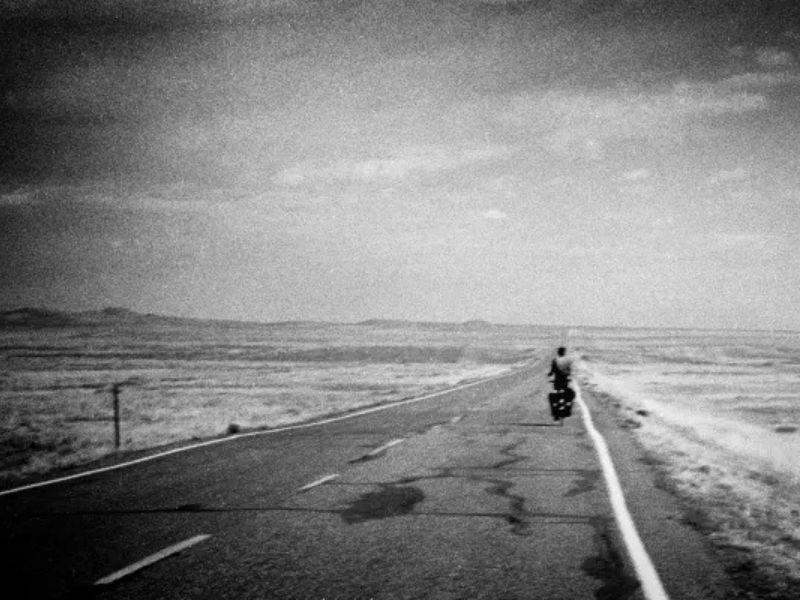
A thoughtful review of The Long Landscape by Peter Delpeut—more than a ride across the US, it’s a deep reflection on cycling, perception, and why we still travel by bike.
There are plenty of cycling books about big journeys, tough roads, and impressive mileage. The Long Landscape by Peter Delpeut is not really one of them.
Disclosure: Some of our articles contain affiliate links. This comes at no additional cost for you and helps us keep this website up and running. (as Amazon Associates we earn commission from qualifying purchases)
Yes, it follows a ride across the United States. But if you’re looking for route details, gear talk, or a classic adventure narrative, you won’t find much of that here. This book is something quieter, more reflective—closer to a long conversation about what it actually means to travel by bike.
Delpeut moves between two timelines: a first ride across America in the 1990s and a more recent return to long-distance cycling, decades later. What’s interesting is not so much the journey itself, but how his perspective has changed. The same act—riding a bicycle—feels different with age, experience, and a body that no longer works the way it used to.
That’s one of the strongest aspects of the book. There’s no attempt to romanticize suffering or pretend nothing has changed. The shift toward e-bikes, guesthouses, and what some might call “credit-card touring” is openly discussed, without defensiveness. If anything, Delpeut suggests that the essence of cycling isn’t about doing everything the hard way—it’s about staying connected to the experience.
And that’s really what this book is about: experience.
The Long Landscape feels like a distant, modern echo of The Wheels of Chance by H.G. Wells.
Wells’ 1896 novel follows a modest, slightly lost character escaping everyday life on a bicycle, discovering along the way not just landscapes, but a different version of himself. The journey is messy, often uncertain, occasionally absurd—but deeply human. More than a travel story, it’s about freedom, identity, and the strange mental space that cycling opens up.
This is a thoughtful, quietly ambitious travel memoir that uses cycling as a lens to explore memory, perception, and the changing nature of experience. Rather than focusing on action or adventure, the book leans into reflection, asking what it really means to move through the world—especially in an age where even “self-powered” travel is no longer entirely independent.
Its strongest quality is the central idea that, despite technological evolution, the essence of cycling remains unchanged. The notion that riding a bicycle today can evoke the same sense of wonder felt by early cyclists—and even be compared to the astonishment of the first cinema audiences—is both original and convincing. It gives the narrative a philosophical backbone that elevates it beyond a standard travelogue.
Another recurring theme is the contrast between real travel and controlled, artificial experiences. The Disney World chapters early in the book might seem like a strange detour, but they set up something important. Disney represents a version of travel without friction—clean, predictable, curated. Cycling, on the other hand, is the opposite: uncertain, uncomfortable at times, and impossible to fully control.
This is a reflective and idea-driven book that will appeal more to readers interested in the philosophy of travel than in the journey itself. It doesn’t fully escape its structural looseness, but its central insight—that the simplest forms of movement can still carry profound meaning—makes it worth engaging with.
As the journey progresses, that contrast becomes sharper. Out on the road, nothing is filtered. The environment dictates the experience—traffic, weather, terrain, even boredom. And Delpeut doesn’t avoid that boredom. In fact, he leans into it. Long stretches of uneventful riding are not skipped over; they’re part of the point. They show how cycling changes your perception of time and distance.
If there’s a limitation, it’s that the book stays very much inside Delpeut’s head. Encounters with other people are often brief and rarely developed into full stories. This isn’t a social or cultural portrait of America—it’s a personal, almost introspective exploration. For some readers, that might feel a bit distant.
But if you accept that perspective, the book becomes much more interesting.
Because in the end, The Long Landscape is not about crossing a country. It’s about trying to understand why something as simple as riding a bicycle across a landscape can stay with you for decades.
It’s about that feeling—hard to explain, easy to recognize—that comes from being out there, moving slowly, exposed, paying attention.
And about the fact that, even now, that feeling hasn’t really changed.
Verdict: A thoughtful, introspective cycling book that goes far beyond the idea of a journey. Not for those looking for action or practical detail, but deeply rewarding if you’re interested in the meaning behind long-distance riding.
You can read the book here.
For more bicycle touring books, read this article.