
Last Updated on 28 November 2025 by Cycloscope
Sani Pass – between South Africa and Lesotho
road conditions, accommodation, tours, and general info about one of the highest roads in Africa
Sani Pass is a legendary drive, tackling this road trip up the highest pass in South Africa is a real adventure even for experienced 4×4 drivers.
Disclosure: Some of our articles contain affiliate links. This comes at no additional cost for you and helps us keep this website up and running. (as Amazon Associates we earn commission from qualifying purchases)
This extreme pass, leading to one of the highest roads in Africa, was completed around 1950, and the road conditions are still pretty much the same, if not worse. Sani Pass is the only border between the Mountain Kingdom of Lesotho and the region of KwaZulu-Natal in eastern South Africa, and the only road that crosses the Drakensberg Range.
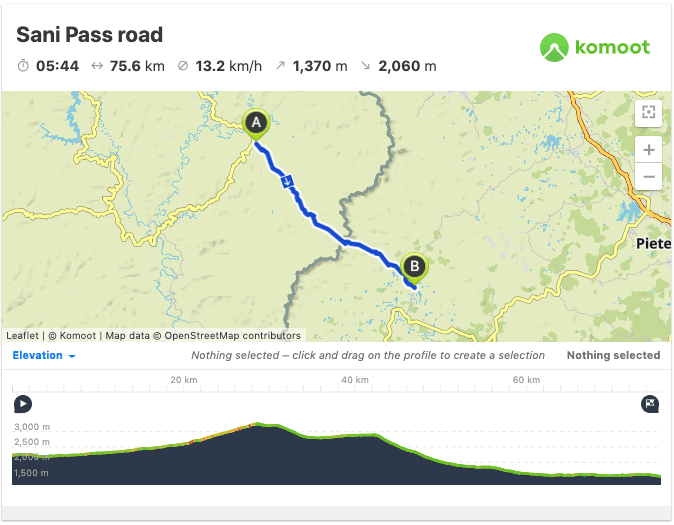
Seen from the South African side, Sani Pass starts at about 1550 meters and has a total elevation gain of 1300 meters to the Lesotho border, plus an additional 400 meters to the highest point near Sani Top.
We rode this pass on our fully loaded bicycles, fortunately, downhill. Still, with this guide, we hope to give helpful information to all those willing to embark on this marvelous adventure, no matter your chosen means of transport.
Going to Lesotho? Have a look at
Maletsunyane Falls, hikes, accommodations, and an insight guide on the highest waterfall in Lesotho
Planning Lesotho – advice and itineraries
Sani Mountain Lodge – why you should avoid
Road-tripping South Africa? Have a look at
Getting to Lesotho from Port Elizabeth – a great Eastern Cape route
Barrydale and the Little Karoo
Cycling the Western Cape Coast from Cape Town
Want everything in one post?
Cycling in South Africa – everything you need to know
Sani Pass and Sani Top – the highest pass in Africa?
Sani Pass, with its 2876 meters, is the highest pass in South Africa, but it’s not really a proper pass. The road indeed keeps on climbing after the Lesotho Border, reaching its highest point at 3240 meters near the village of Sani Top.
This is apparently the 3rd-highest drivable pass in the whole African continent, the 1st step of the podium being the 3255 meters of the Tlaeeng Pass (also in Lesotho, not very far) and the Wolkefit Pass in Ethiopia (3250 meters).
We are talking about a few meters’ difference, so, in our humble opinion, those numbers do not matter much. This road goes above the roof of Africa, or at least of Southern Africa, and it is a road trip worth taking, not because of the numbers, but because of the marvelous natural scenery and fascinating cultural heritage to be discovered in this remote area of the world.
A brief history of the Sani Pass
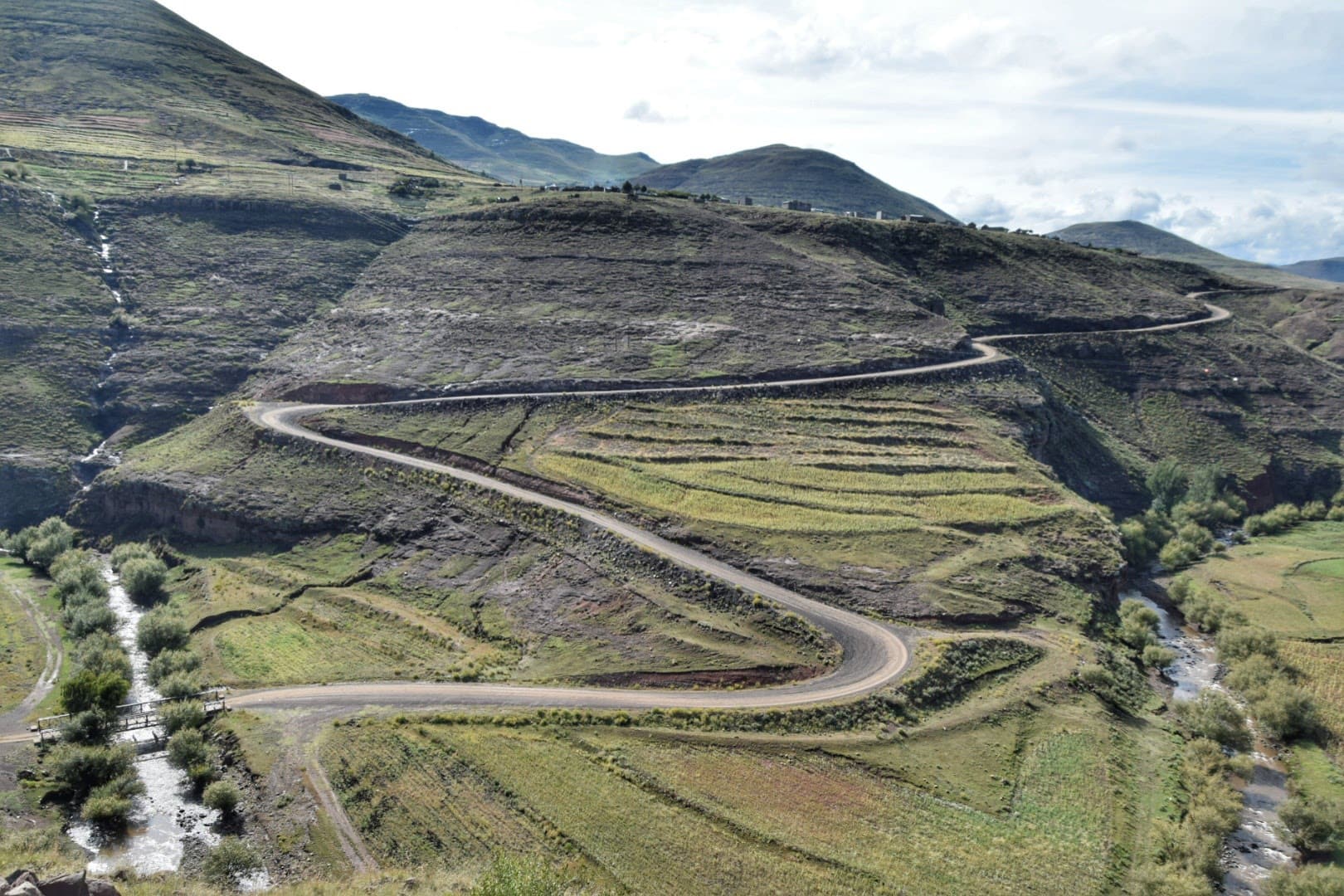
The name Sani derives from the name Rafolatsane, who was the son of Paramount Chief Letsie, and who also gave the name to the nearby village of, indeed, Rafolatsane (more about it later). Rafolatsane was chief during the last years of the 19th century.
At the time, the narrow path followed the shortest route along the Umkomazana River, born on the summit. Near the top of the path was almost vertical, and animals had to be dragged up.
When settlers came, the tap was slightly improved on the steepest slopes. The pass was a busy trading route in the first half of the 20th century, with goods being transported on animals. Apparently, the first car ventured up this grueling road in 1948. If you want to know more, you can read this fascinating book about the Saga of Sani Pass and Mokhotlong.
The Sani Pass road – map and elevation profile
Driving or riding the Sani Pass: the road conditions
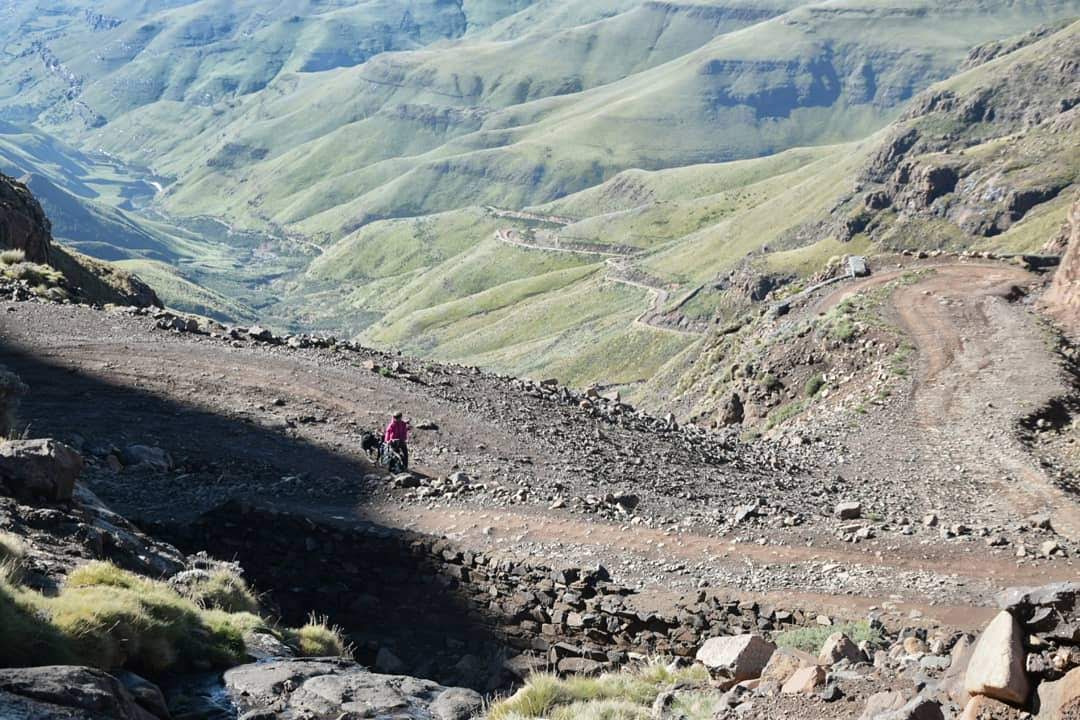
We rode Sani Pass on our bikes coming from Mokothlong in Lesotho, so we’ll describe the road this way. If you’re coming from South Africa, just read from the bottom. Information about the roads leading to this section can be found in our Lesotho Itinerary article.
We’ll start this itinerary in the village of Rafolatsane, very close to the provincial capital of Mokothlong. In both places, you can find basic accommodation and the usual ill-supplied shops.
Road conditions at Sani Top – Lesotho side
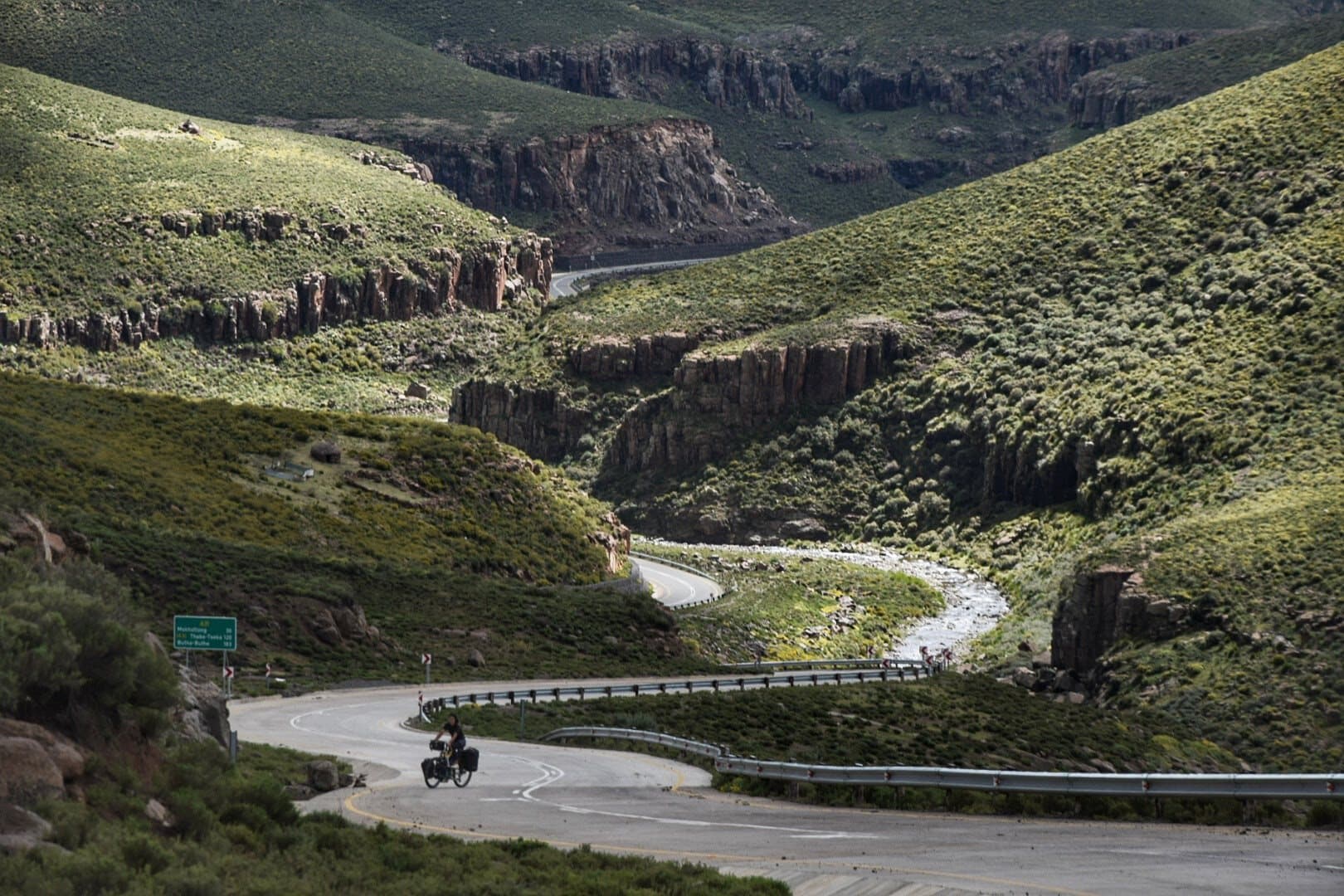
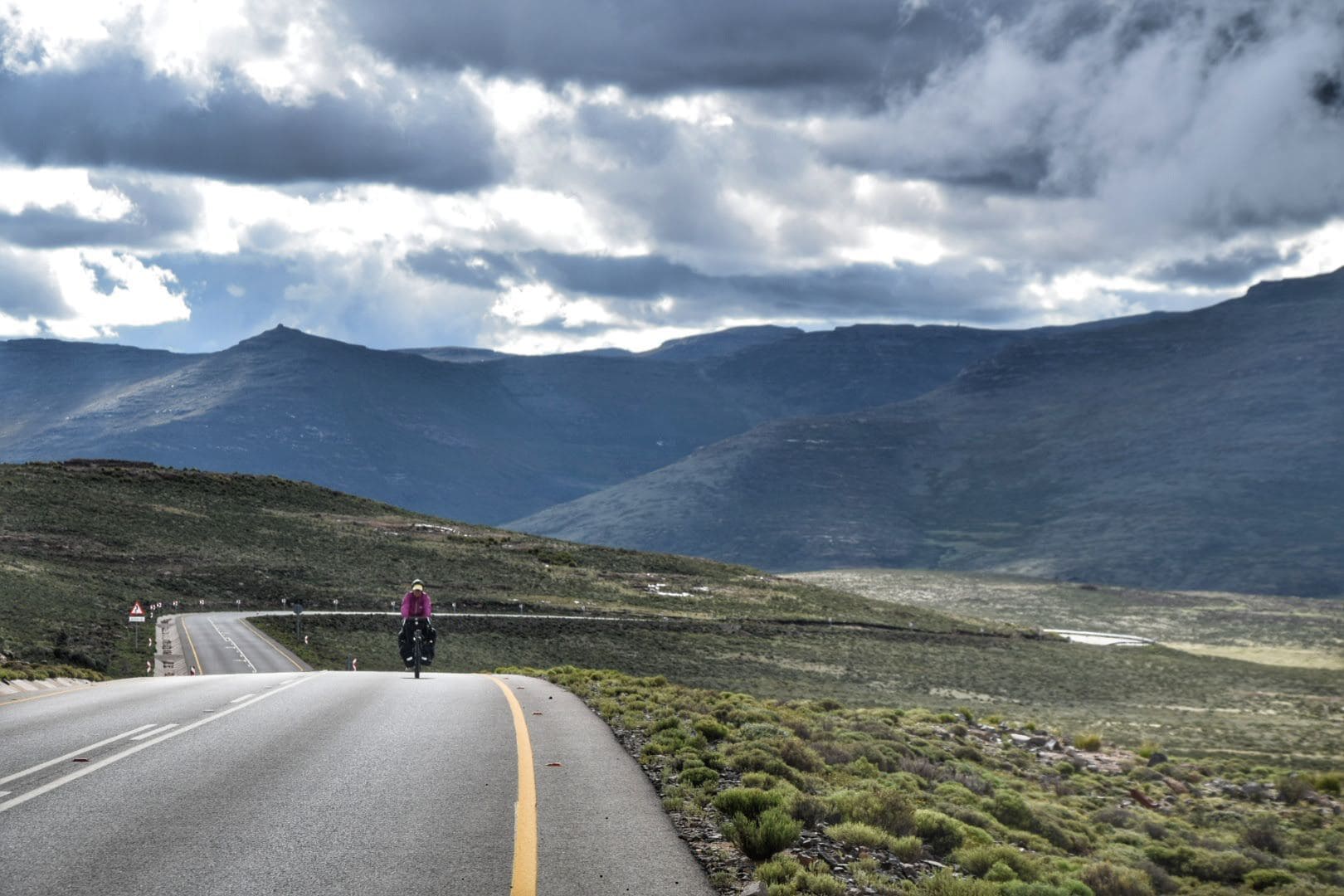
Despite Google Maps showing the Thaba-Tseka/Mokothlong road in yellow and the road to Sani Pass in thin white, the former is actually a dusty dirt road. At the same time, you’ll have smooth tar from Mokothlong to the Lesotho border at the top of Sani Pass.
We started our morning in St. James Lodge, a few km from the tarred crossroad in the village of Rafolatsane. Here, there’s a steep up and down to the river on a decently bumpy road.
From the crossroads at 2113 meters, the road climbs quite gently to 2600 meters over 20 km. The scenery here is lovely, but definitely not the most impressive in Lesotho. Overall, it’s a pleasant ride in a sparsely populated area of Lesotho. You’ll pass a local homestay.
At the 20th kilometer, the inclines get steeper while the road winds through a shallow canyon, getting nicer and nicer until the highest point at 3240 meters. Here, there’s a nice broad view and a series of steep switchbacks that descend 400 meters over 3km.
The road then goes straight through the highlands, passing the tiny hamlet of Sani Top. This is one of the coldest areas in Southern Africa (with records of about -20 °C in winter).
The tar continues to the Lesotho border, where it abruptly ends at the top of Sani Pass; from here, the real adventure begins.
Sani Pass – the no man’s land between the borders
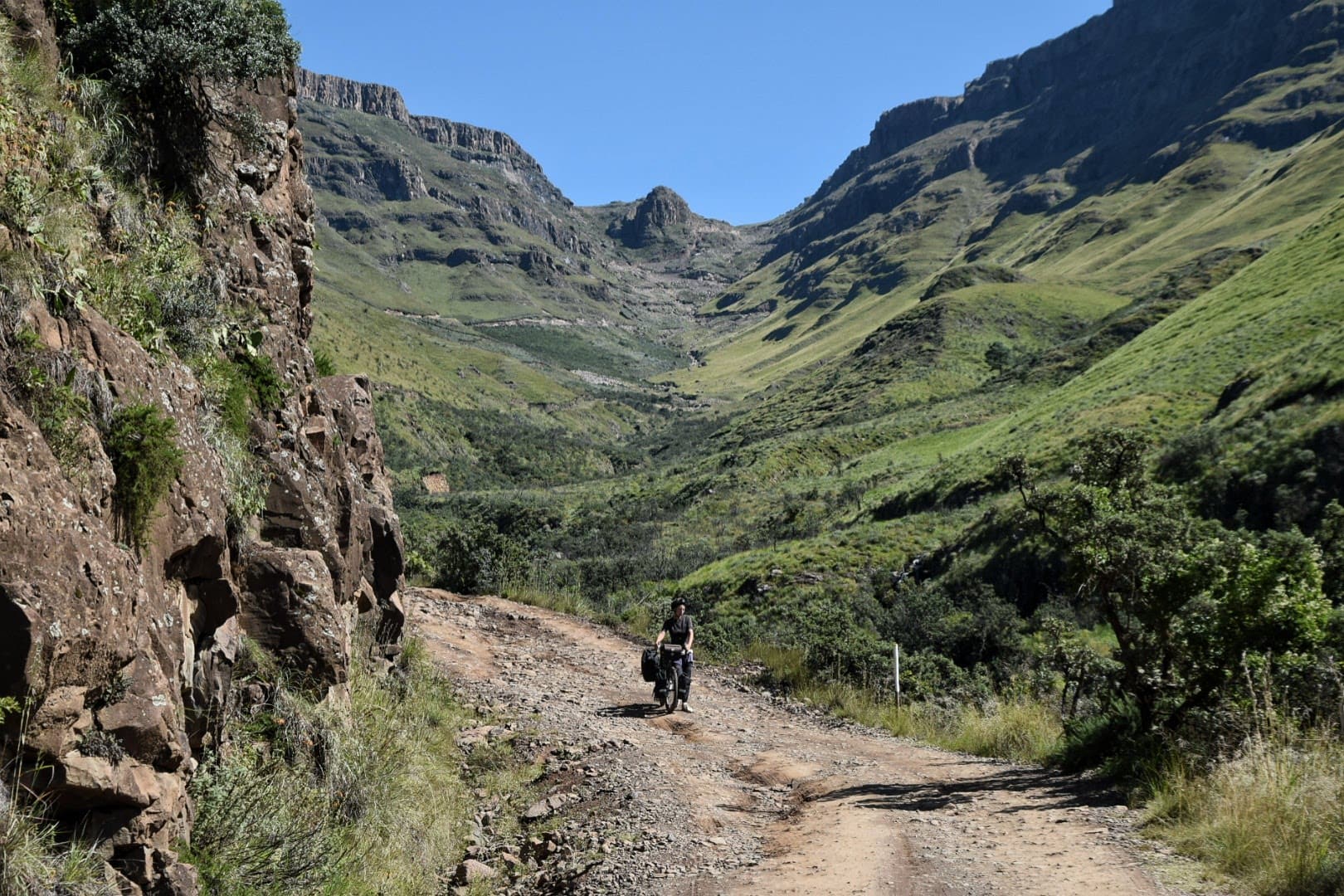
At the Lesotho border, the proper Sani Pass road begins (or ends, depending on your perspective). The highest point at 2876 meters, where the tar ends, offers a stunning view over the whole pass road. In the morning, it’s easy to be presented with an oniric sea of clouds, with peaks peeking like islands in a white sea.
Sani Pass is honestly the most beautiful pass we rode in Lesotho, and we have ridden a few. It’s not the most scenic road, but it’s a complex challenge here, and it definitely wins the competition with other mountain passes.
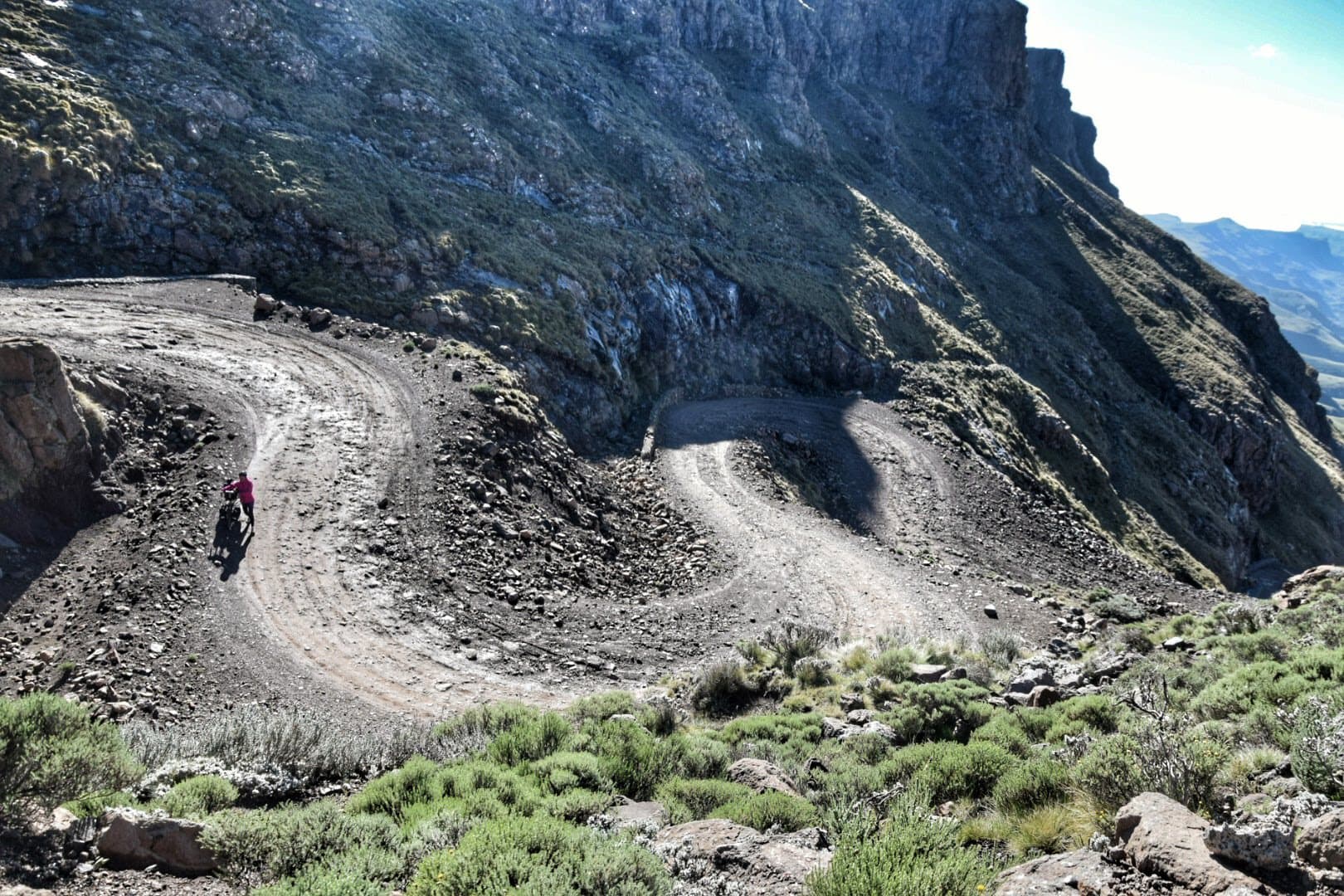
The road begins with a series of tight switchbacks, fifteen to be precise, that will bring you down to 2600 meters, about 250 meters in 1km, with slopes between 15 and 20%. This section is full of big boulders and loose rocks, making it almost impossible to ride when fully loaded. We were thrilled to have our new Catalyst Pedals. It requires extreme caution, even on a 4×4 or motorbike, whether going uphill or downhill.
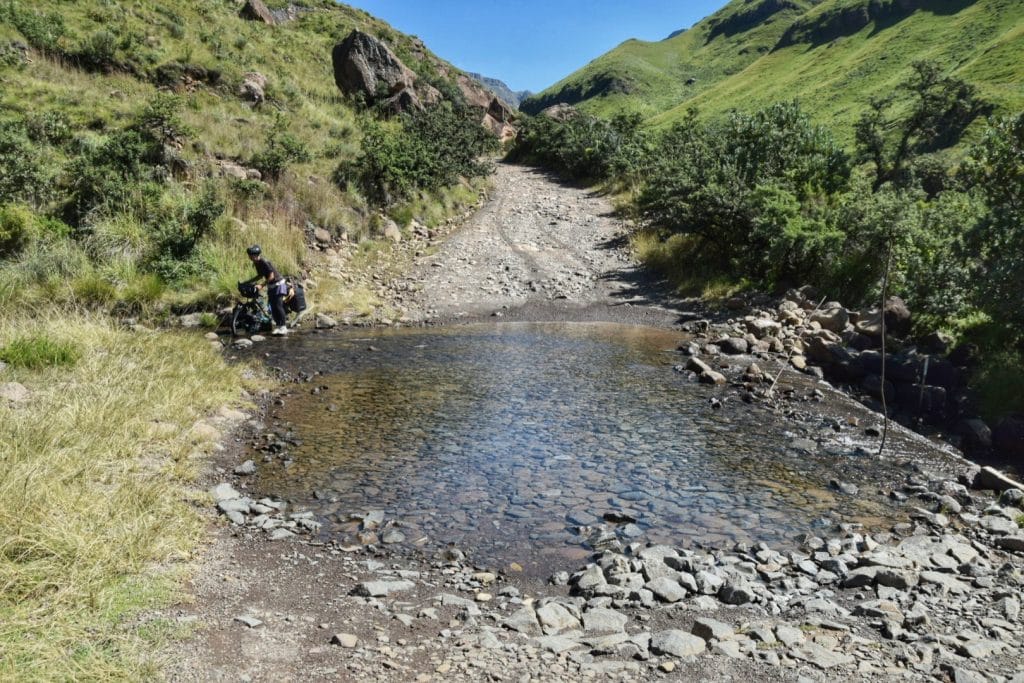
After the switchbacks, the slopes become slightly milder (10 to 15%), reaching the side of the Mkhomazane River, a stream joined by many waterfalls, forming ponds that you might have to wade. This no-man’s-land area is called the Mkhomaze Wilderness Area and is pretty wild, crossing the high, rough peaks of the Drakensberg range.
Being between two borders, you will see no shepherds here, and no people besides the tourists going up and down; it’s a very safe area for free camping, although there are not many flat spots.
This whole section has a total elevation gain of about 900 meters in about 8km.
Sani Pass road from the South African border to the tar (near Himeville and Underberg)
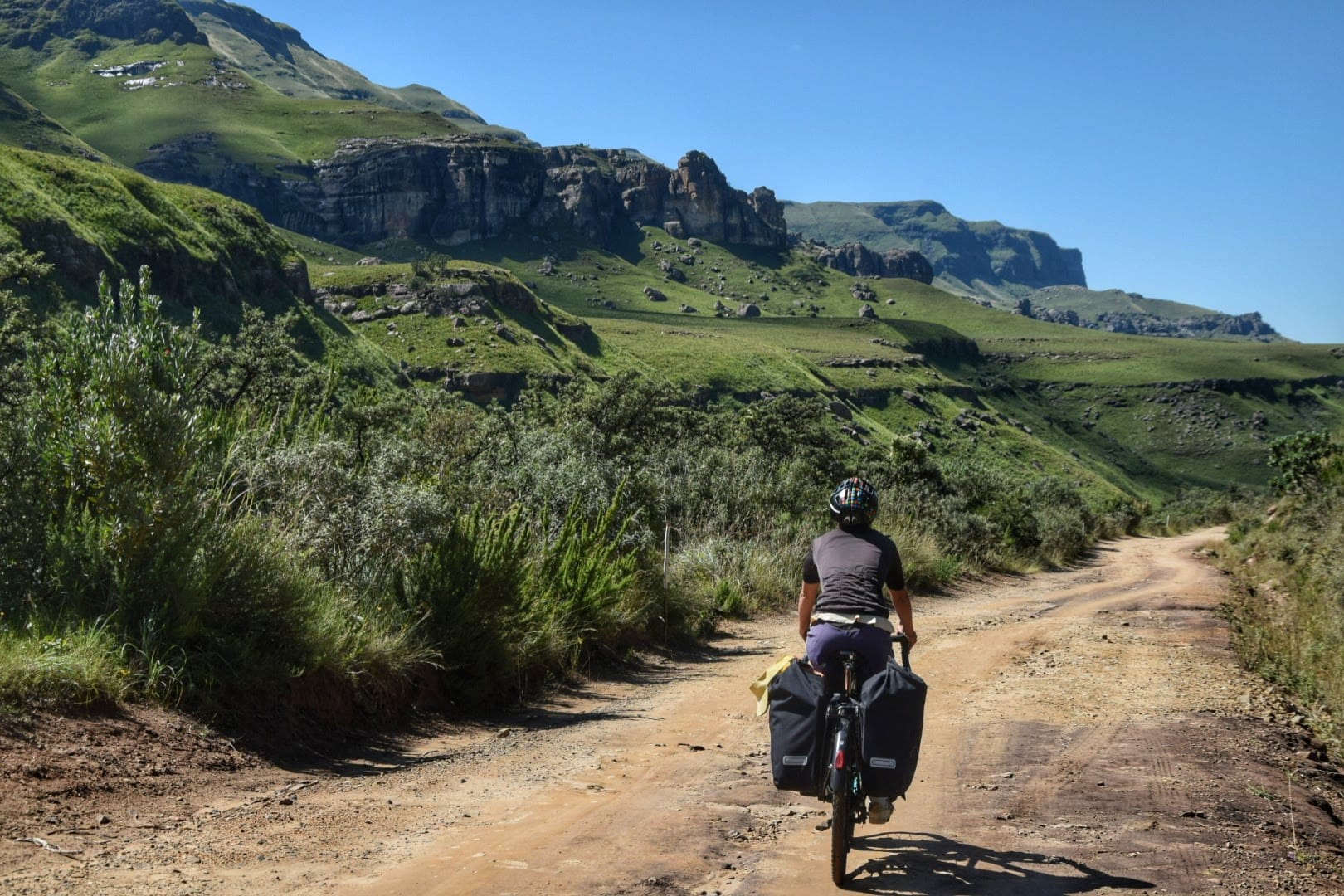
From the South African border to the tar, there are 13 more kilometers of dirt. Here, the slopes are very mild, but ongoing road construction keeps this section very muddy.
We were fortunate that on the day of our descent, the weather was very sunny, so it dried up most of the thick mud. Otherwise, it would’ve been a nightmare of pushing and pushing for hours. This section will be paved quite soon. Ask the locals when you are there.
Sani Pass road improvements paving project
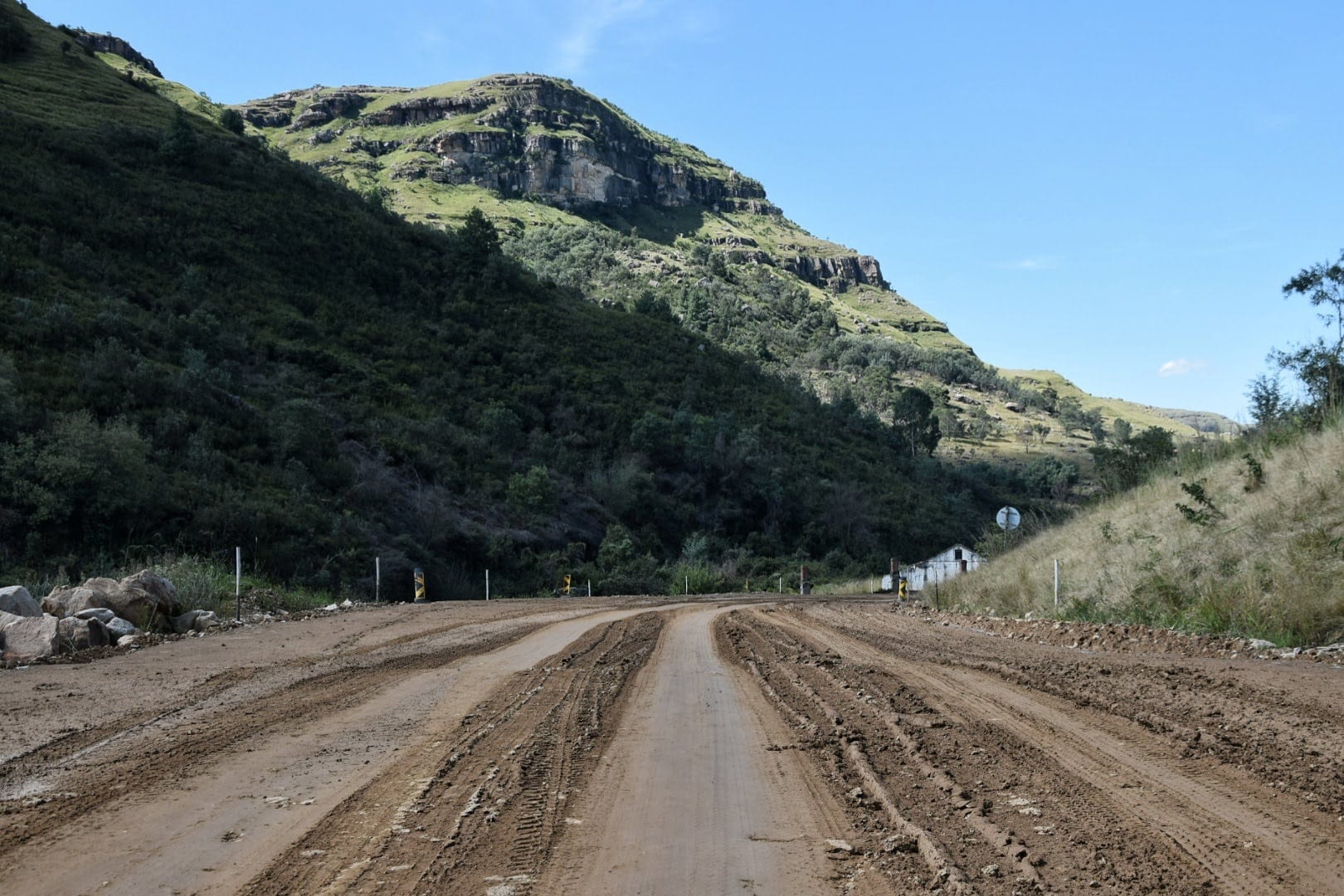
The South African government scheduled the paving of the Sani Pass road for the following years. The flat section at the bottom is already undergoing roadwork, and it should be completed by July 2020.
Stage 3 of the project is the paving of the steep section in the no-man’s-land. No fixed dates are given for the start or completion of this project, so you’ll probably still have a few years to enjoy Sani Pass in its real wilderness.
Border and South African visa issues
The South African border is 8km from Lesotho and it’s open until 6 pm in Summer and 4 pm in other seasons, keep this in mind if crossing the Lesotho border late, you might get stuck.
Another thing that you should know, especially if you’re not a citizen of South Africa or Lesotho, is that your South African visa keeps running while you’re in Lesotho, in fact, eating up your day’s allowance. If you run out of time on your South African visa while in Lesotho, you’ll only be given a 7-day extension.
Lesotho is also visa-free for several nationalities, 49 countries have 90 days exemption while 22 are allowed only 14 days, check here if your country is among these.
Where to stay (and not to stay) around Sani Pass
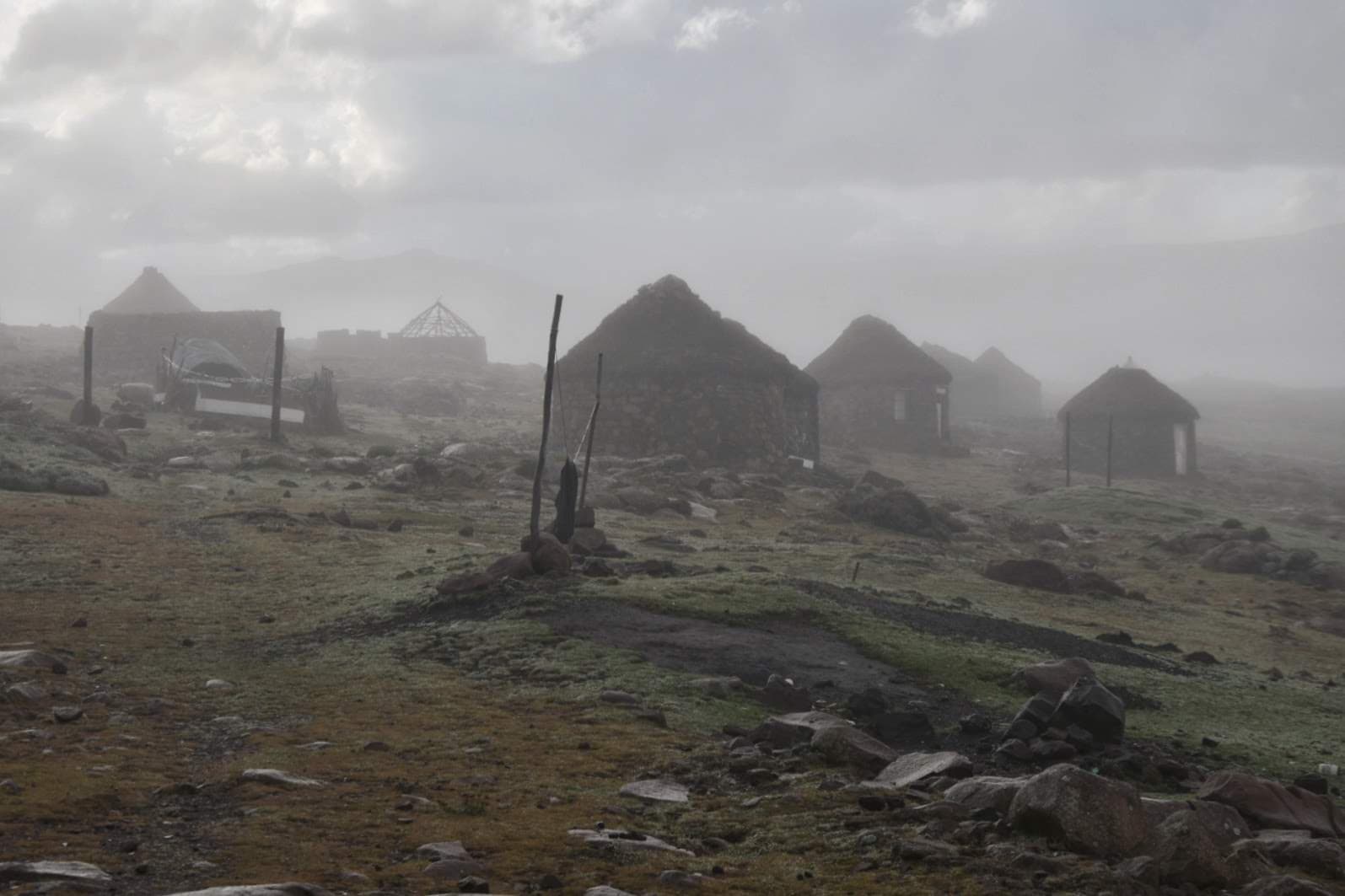
There are several accommodation options at or near Sani Pass. At the Lesotho border, there’s the popular/infamous Sani Mountain Lodge, which claims to be the highest pub in Africa. We stayed there and we absolutely don’t recommend it, in this article, we explain why.
Until a few years ago, the Sani Mountain Lodge was the only place to stay, but now several more places have been opened in the immediate vicinity. The nearest is Masoba Soba, which offers rooms and rondavels for a fraction of the price (560 Rand). It also has a shop, a bar, and a restaurant.
Another place that looks very nice is the Sani Stone Lodge, located 3km off the main road (RONDAVEL R1100, DOUBLE ROOM with en-suite – R600.00, BACKPACKERS LODGE with en-suite – R190.00 pp, CAMPING – R90.00 pp). The place also has a restaurant and a bar.
While some problems, like a lack of heating and hot water, are also reported there, the prices are certainly in another league compared to the Sani Mountain Lodge. We would love to hear your comments on these places if you stay there.
Further down the road, there’s also a local homestay, and a few lodges are available in the village of Rofolatsane. We stayed at Saint James Lodge and loved it. Although at 300 Rand per person in a dorm, it’s not really on the cheap side, you can also sleep in cheaper basic rondavels or in a lovely campsite. Saint James is located in the premises of the homonymous School, so there are kids around.
Also in Rafolatsane is the Molumong Eco Lodge, which looks promising on their website; we’ve only seen it from afar.
On the South African side, all the lodges are downhill in the tarred section of the Sani Pass road. Those are often chosen by South Africans who ride the pass up and down on the same day.
The town of Underberg is the ideal base to stock up on groceries, and it’s the last stop on your way to Lesotho. Consider stopping at the very well-stocked SuperSpar if you are planning a multi-day trip in Lesotho, as there is not much food up there.
Here’s a map of the accommodation in Underberg and nearby Himeville. We stayed at the “old” Himeville Arms, a hotel and pub that has seen better times, but it’s still ok.
Visiting Sani Pass on a guided tour
If you don’t have your own vehicle and don’t want to hike up the pass, several companies offer guided 4×4 tours up and down the pass.
Tours may start from Durban or Underberg, have different prices, and offer different experiences. You can check prices and availability on Viator, which offers a dozen interesting options.
Hitchhiking up the Sani Pass is totally possible, especially during the weekends, it shouldn’t be too hard to find a ride.
Road trip to Sani Pass – what to bring and general precautions
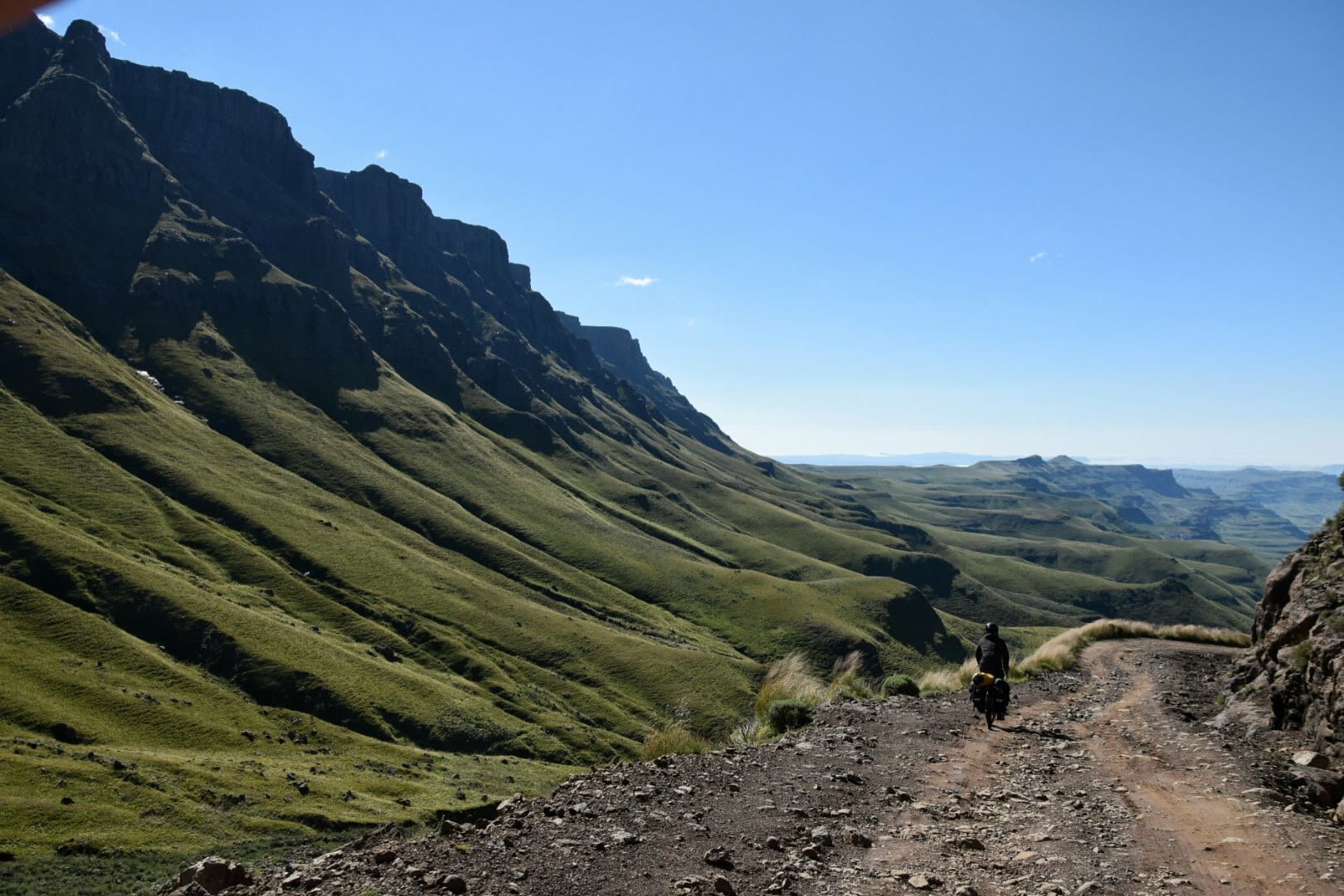
There are no shops from the beginning of Sani Pass road in South Africa, all the way to Mokhotlong and Rafolatsane, even if on a short day trip, it’s always advisable to bring food and supplies with you from South Africa. Water is available from several rivers along the road.
It can get very chilly even in summer, so pack warm clothes. Very warm ones if you go up there in winter when temperatures can get as low as -20°C.
In wet weather, the Sani Pass can become very very tricky, and quite dangerous if not faced with the appropriate gear and skills, try to get information about the status of the road if there have been recent heavy rains.
Going to Lesotho? Have a look at
Maletsunyane Falls, hikes, accommodation options, and an insight guide on the highest waterfall in Lesotho
Planning Lesotho – advice and itineraries
Sani Mountain Lodge – why you should avoid it
Road-tripping South Africa? Have a look at
Getting to Lesotho from Port Elizabeth – a great route
Barrydale and the Little Karoo
Cycling the Western Cape Coast from Cape Town