
Last Updated on 30 November 2025 by Cycloscope
Our experience with Catalyst Pedals by Pedaling Innovation after 6,000km in Africa: a thorough review. Are they the best flat pedals? Where is the innovation?
The biggest pedals on the market, the Catalyst by Pedaling Innovation, look impressive at first sight – they really stand out and make your bike noticeable. For our African bicycle trip, we really didn’t want to use clipless pedals; the often terrible road conditions make that a perilous choice, in my opinion. You really want to be able to put your feet on the ground as quickly as possible on the sandy or bumpy tracks.
Disclosure: Some of our articles contain affiliate links. This comes at no additional cost for you and helps us keep this website up and running. (as Amazon Associates we earn commission from qualifying purchases)
How we compile our gear guides: during the almost 10 years of cycloscope.net our team personally tested dozens of similar pieces of gear. For what we can't test personally, we involve other people in the cycling community to give their feedback and opinion about gear they have used. Our decade-long experience in bicycle touring enables us to find the key cons and pros of every product we mention.
At the same time, the smaller pedals we used on our cycling trip in Europe on our Stanforth Bikes were really not grippy enough, slippery when wet, and didn’t offer a big enough surface.
We wanted something more stable, where our feet could lie safe in all kinds of conditions, so we came across the Catalysts. We decided to try them and got two pairs from James at Pedaling Innovation, the company’s founder and inventor of the pedals, with the promise of writing a field review of the Catalyst Pedals.
Now, after 5 months and 6,000km of very diverse African roads, I feel I can say something about them – I hope this review will help you understand whether these pedals are or are not for you. So, are these the best pedals for bicycle touring?
Description of the Catalyst Pedals
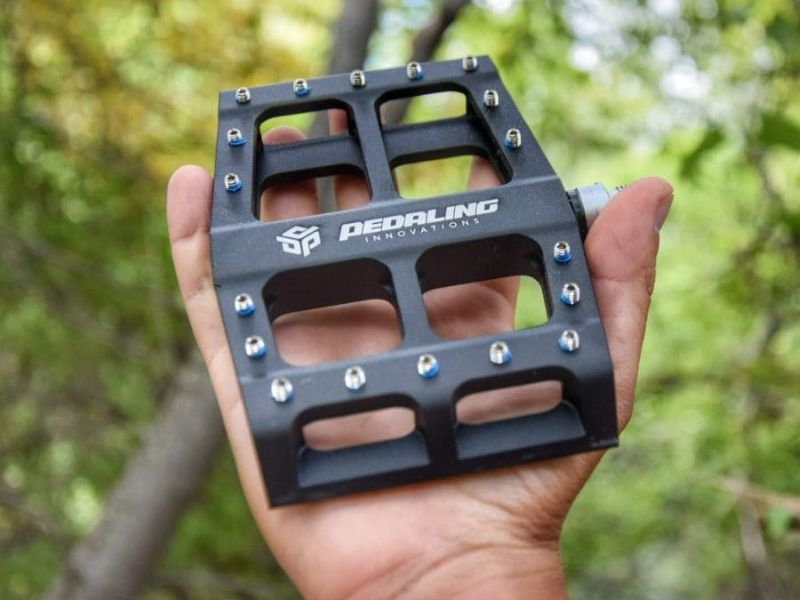
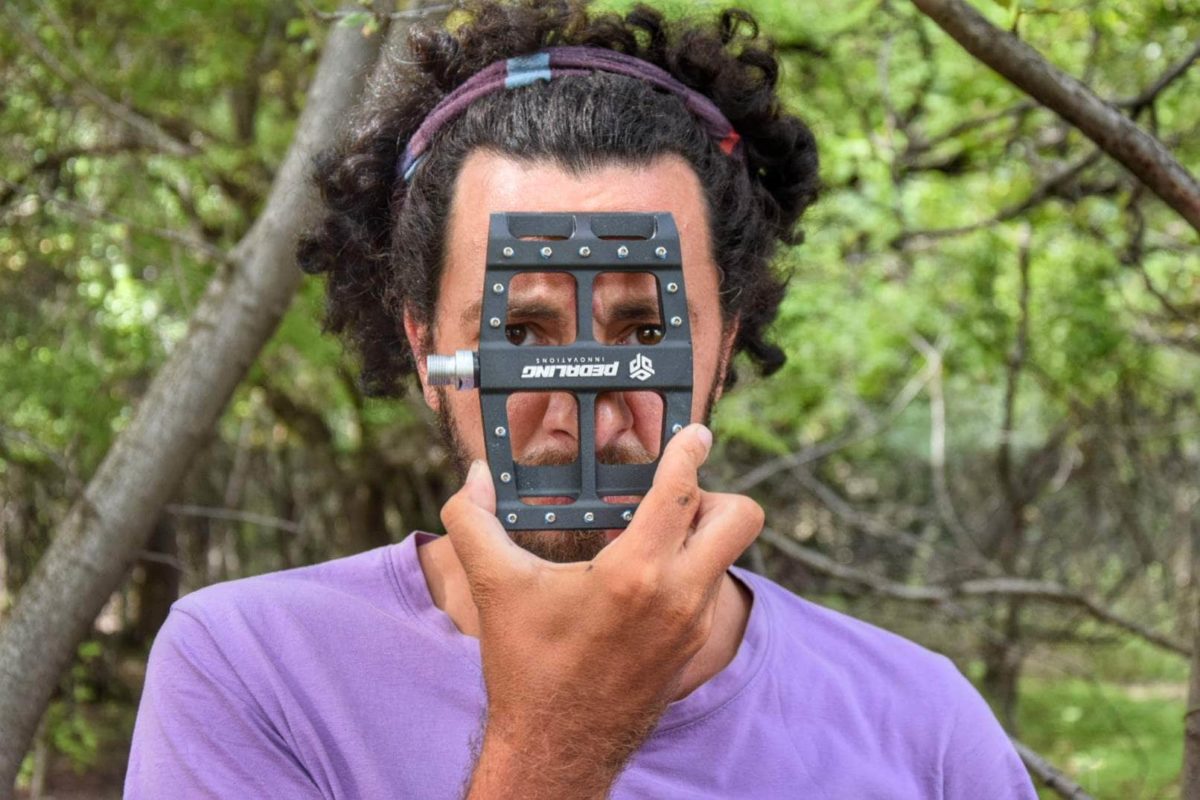
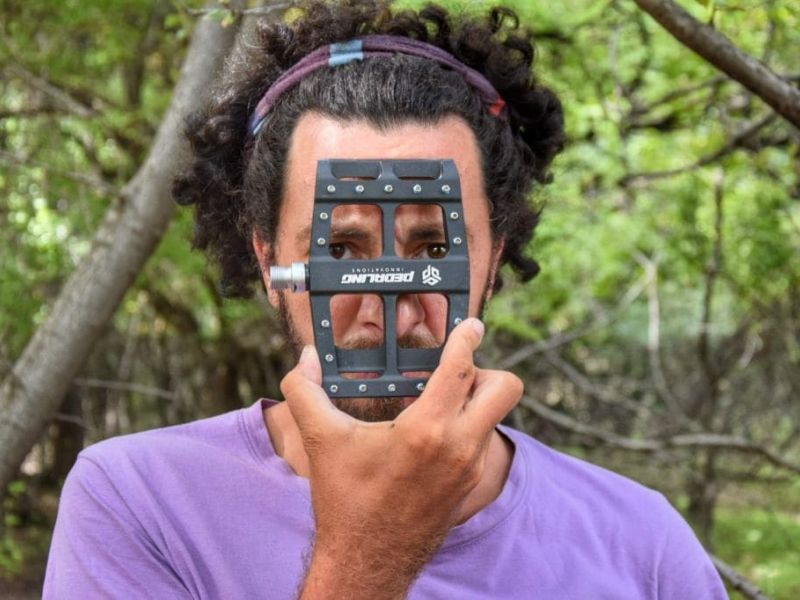
With a platform size of 143mm x 95mm, the length of the Catalyst Pedals is at least 18mm longer than the next largest pedal. They are 16mm thick and pretty heavy at 505g per pair. The grip is guaranteed by 18 pins per side, all on the edges and none in the middle. Pins are 4 mm long (2mm out), but the company provides spare pins that are twice as long (8 mm/4 mm out) for added grip.
Materials are an exclusive mold using 6061 Aluminum with T6 Heat Treatment. Manufactured by VP Components using parts and materials with a proven track record for durability and quality.
Heat-treated Cr-Mo Spindle that is compatible with a standard 15mm wrench or 6mm hex key. Dual sealed bearings and DU Bushing internals.
- PLATFORM SIZE – 128mm x 95mm
- OVERALL PEDAL SIZE – 143mm length, 105mm width, from the crank arm
- THICKNESS – 16mm
- NUMBER OF PINS – 18 x side
- PIN LENGTH – 4mm (2mm out)/8mm (4mm out)
- WEIGHT – 505g/pair
- BEARING ARCHITECTURE – inboard bushing plus two outboard bearings
- PRICE – $149
- COLOURS AVAILABLE – Black, Grey, Red, Blue
Ergonomics – Where is the Real Innovation?
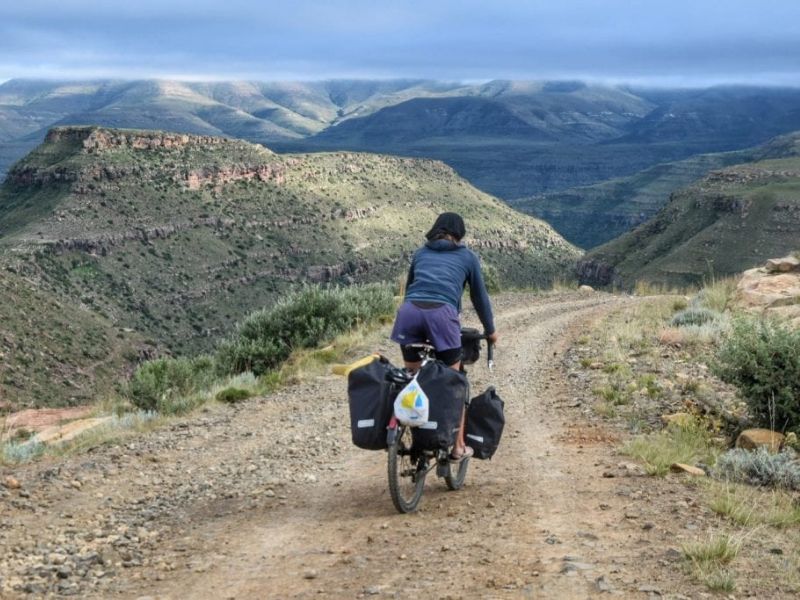
The whole point of the Catalyst Pedals might make more than a few riders turn up their noses and flinch: changing the foot position on the pedals and how to apply force to the stroke.
Indeed, the Catalyst Pedals are the first bicycle pedals designed to be pushed with the whole foot, in what they call the mid-foot position, rather than the ball of the foot, as anyone has probably done so far.
“A study by J.R. Van Sickle Jr, M.L. Hull, published in the Journal of Biomechanics in 2007, showed no difference between the ball of the foot or the mid-foot position in power or economy. It also showed that the mid-foot position placed less stress on the calf and Achilles tendon, suggesting that the stress was placed on the hips instead.
This means that the mid-foot position better recruits the hips and that the ball of the foot isn’t “better”. If it were, it would have won, not just tied. In fact, from a functional movement standpoint, taking the stress off the smaller ankle joint and putting it on the stronger, bigger hip joint is how the body is meant to move.
Your calf needs to act as a stabilizer for the ankle, helping transfer power from the hips, and when you try to move it to “add” power, you decrease that power transfer and place extra stress on a more sensitive joint.
And if you look at how kids pedal, they are almost always mid-foot on the pedals – this is the natural riding position, and unless someone at some point told you that you needed to push through the ball of the foot, odds are you wouldn’t have learned it.” from the Pedaling Innovation Website
See the picture at the end of the article for the correct foot position to ride with the Catalyst Pedals
Changing the rider’s position, bike fit, and frame geometry – What you should be aware of
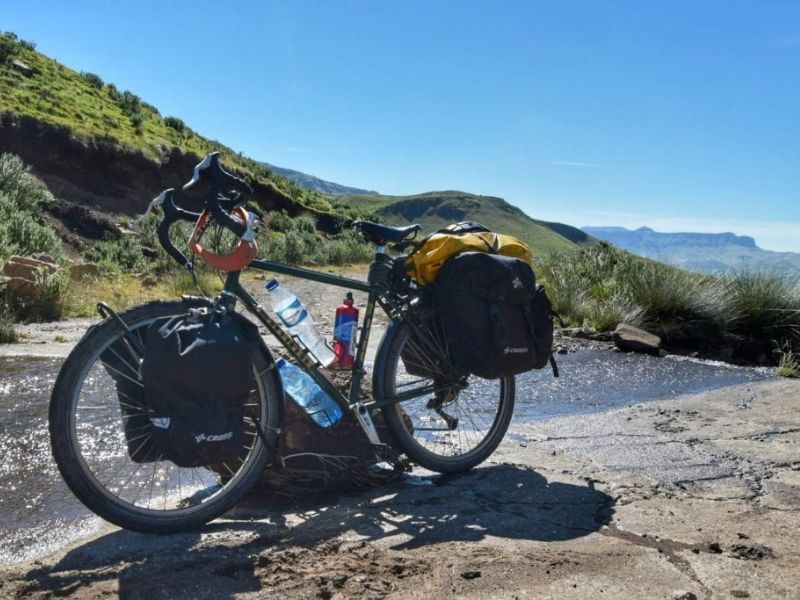
What I immediately noticed once I got the Catalyst Pedals on my Stanforth Kibo was that something felt just not right – the whole relationship between bike and rider had changed.
Indeed, placing the mid-foot on the spindle, rather than the ball of the foot, moves your position forward towards the handlebars, reducing reach and virtually lowering the angle of the seat tube. This means your bike basically becomes “shorter” while the horizontal distance between the pedal at the power stroke (when the crank is pointed forward) is more extended.
This might seem, to an inexperienced eye, a minor change, but it’s not – it’s pretty big! You will need to completely redo your bike fitting, possibly going for a longer stem and setting your seat back a few millimeters. In my case, since I prefer a steeper seat tube angle, I had to source a setback seatpost to maintain that angle.
Flat Platform Pedals VS Clipless Cleat Pedals
The almost-universal belief that being clipped-in gives the rider a more effective use of their energy, because of the pulling up of the pedal through the cleat, has been debunked already quite some time ago.
Korff (et al. Med Sci Sports Exerc 2007; 39:991-995) and Mornieux (et al. Int J Sports Med 2008; 29:817-822) Cycling Efficiency Studies clearly show that pulling up on the backstroke produces less power and burns more energy than simply driving hard on the downstroke and letting the trail leg come up just hard enough to get ready for the next hard downstroke push.
This video showed a rider who tried to prove he needed to pull up on the backstroke, only to prove he was more efficient when he couldn’t.
In this sense, a flat pedal is as efficient as a clipless pedal; choosing between the two comes down to personal preference.
Our Experience with the Catalyst Pedals
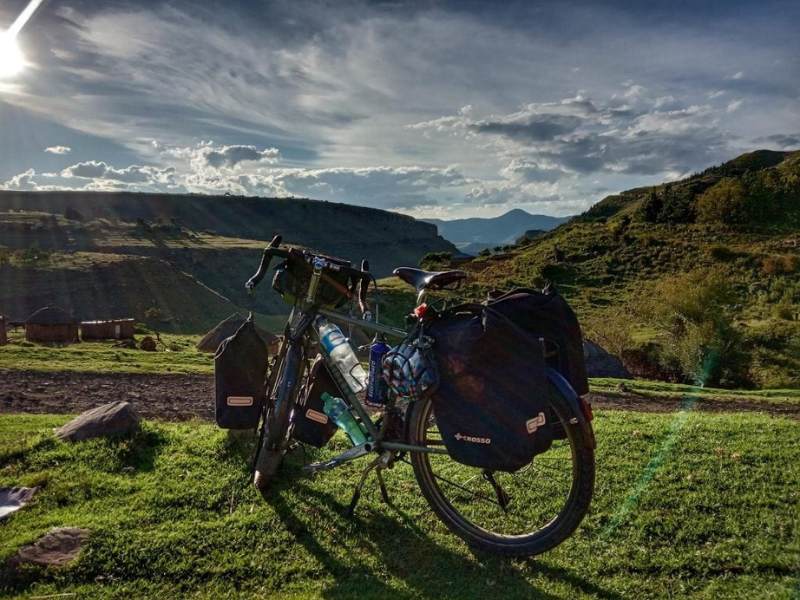
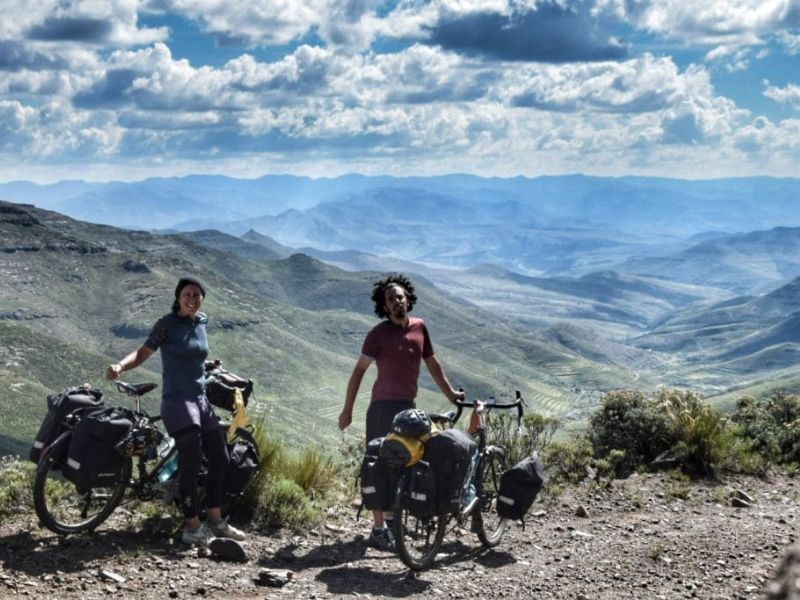
In the last 5 months before writing this review, we have been cycling fully loaded through Lesotho, South Africa, Mozambique, Zimbabwe, and Zambia – getting on almost any kind of road, the thick sand of Mozambique, the bumpy and dusty streets of Zambia, the steep tacks of Zimbabwe, the well-paved highways of Kwa-Zulu Natal in SA, the vertical slopes of Lesotho.
The improvement given by the Catalyst Pedals has been tremendous. The flat foot position on the pedal provides a significantly greater grip, with no need for central pins. The surface of the shoe was always glued to the pedal, even when riding with flip-flops or Crocs-style shoes.
We never lost contact with the pedal, even under very wet conditions (which honestly happened very rarely) or in technical downhills. On the steepest rocky sections, the efficiency gain was most evident; we could climb some slopes that would have been much harder on our previous pedals. On flat and smooth tarmac, the stroke feels softer, and we feel like reaching our average cruise speed with much less effort.
As for the durability, the pedals look very strong, and anyway, they are backed by a Limited Lifetime Warranty and a Crash Replacement Plan. A 30 Day Money-Back Guarantee lets you test them and see if you like the Catalyst.
Conclusions
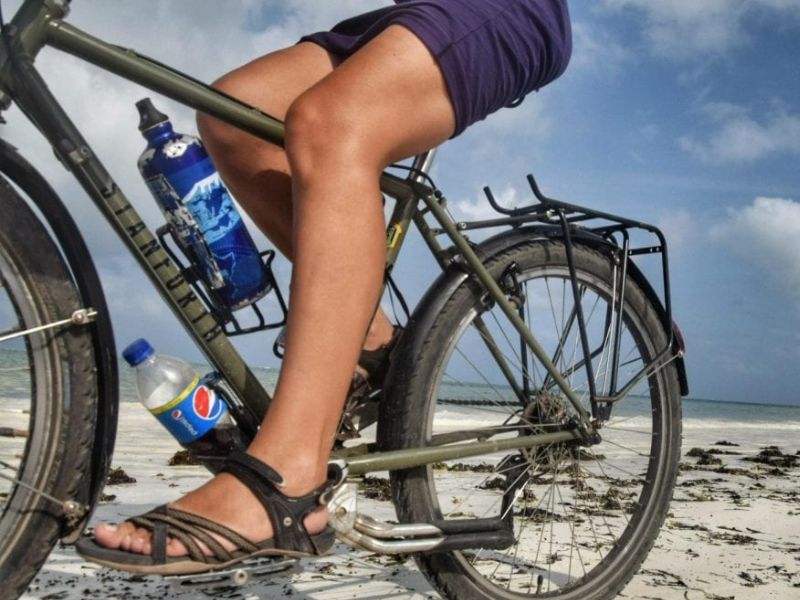
So far, we are loving our Catalyst Pedals and don’t see ourselves going anywhere else in the near future. They might not be for everyone, but they are definitely for us.
Pro
- Grippy
- The mid-foot position really works
- Hard to lose contact with the pedal
Cons
- You’ll have to change your bike fit
- It might be challenging to get used to at first
- A bit pricey
Check Also
MSX Mainstream Panniers and Saddlebag – Our First Impressions
The Safest Bike Helmets Compared
How to choose the best sunglasses for cycling
The 20 Best Touring Bikes under 2,000$
Ribble Adventure 725 Backpacking Bike – First Impressions