

Last Updated on 17 January 2026 by Cycloscope
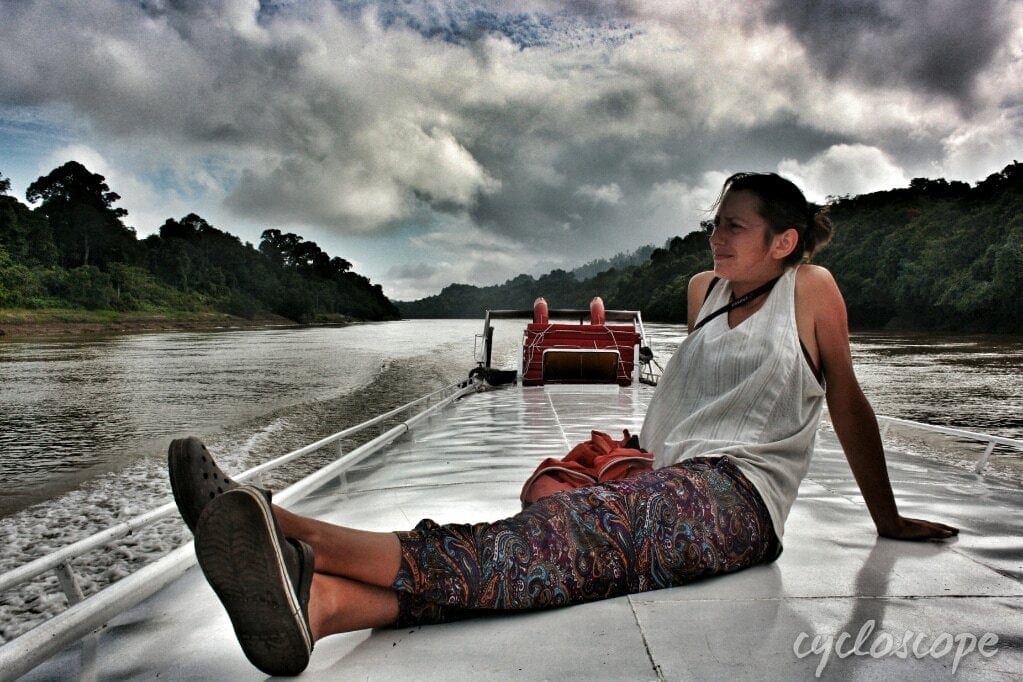
A low-cost river trip on a cheap ferry, along the biggest river in Borneo
Borneo evokes myths of adventure, and although a bicycle trip in Sabah and Sarawak nowadays would mostly be cycling through palm oil plantations, there are still ways to experience some adventurous stuff.
Disclosure: Some of our articles contain affiliate links. This comes at no additional cost for you and helps us keep this website up and running. (as Amazon Associates we earn commission from qualifying purchases)
A riverboat trip is a great way to see what’s left of the jungle and to catch a glimpse of the traditional lifestyle of the Borneo people (Dayak).
For the budget traveler, though, a private river cruise is not an option; there are still a bunch of routes connected by public boats at very low fares.
The “fast” boat connecting Belaga, Kapit, and Sibu is probably the last public riverboat in Sarawak, from Sibu though, it’s still possible to get to Kuching by boat, a short part of it is the estuary of the Rajang, and the rest on the sea.
The boat ride from Kapit to Belaga is especially marvelous, a true adventure, and has been a highlight of our bicycle touring trip in Malaysian Borneo.
This article is part of our Borneo series. Check out our hints for budget travel in Borneo (by bicycle or not)
The Road to Belaga
We got to Belaga from Bakun dam, where we had been reporting on the devastation caused by hydroelectric projects in Sarawak. The road running from the coast, north of Bintulu, connects to Highway 1 and continues onward to Bakun.
This road used to be a dirt track but is now paved, “thanks” to the huge amount of logging trucks going down from the Bakun area to the coastal cities. Indeed, we saw hundreds of those while riding this road, scary shit.
About 20km before the Bakun dam, the junction to Belaga is located. This is an old military road, built by soldiers rather than professionals, and you can see that.
It’s 40km of crazily steep up-and-downs, something like a few hundred meters up on a 25% slope, then down at the same rate, seamlessly. Doing this road by bicycle means pushing almost all the way, a tough one.
Luckily for us, just at the beginning of this mess, a pickup stopped, wondering what the hell we think we’re doing. The driver told us it would have taken two days to reach Belaga.
We trusted him and accepted the lift on his truck. Malaysian people are just wonderful! When we saw what lay ahead, we were thankful.
Belaga
Belaga is a nice little town (37.000 inhabitants) upstream of the Rajang River, the longest river in Borneo. There are a few guesthouses and a couple of restaurants.
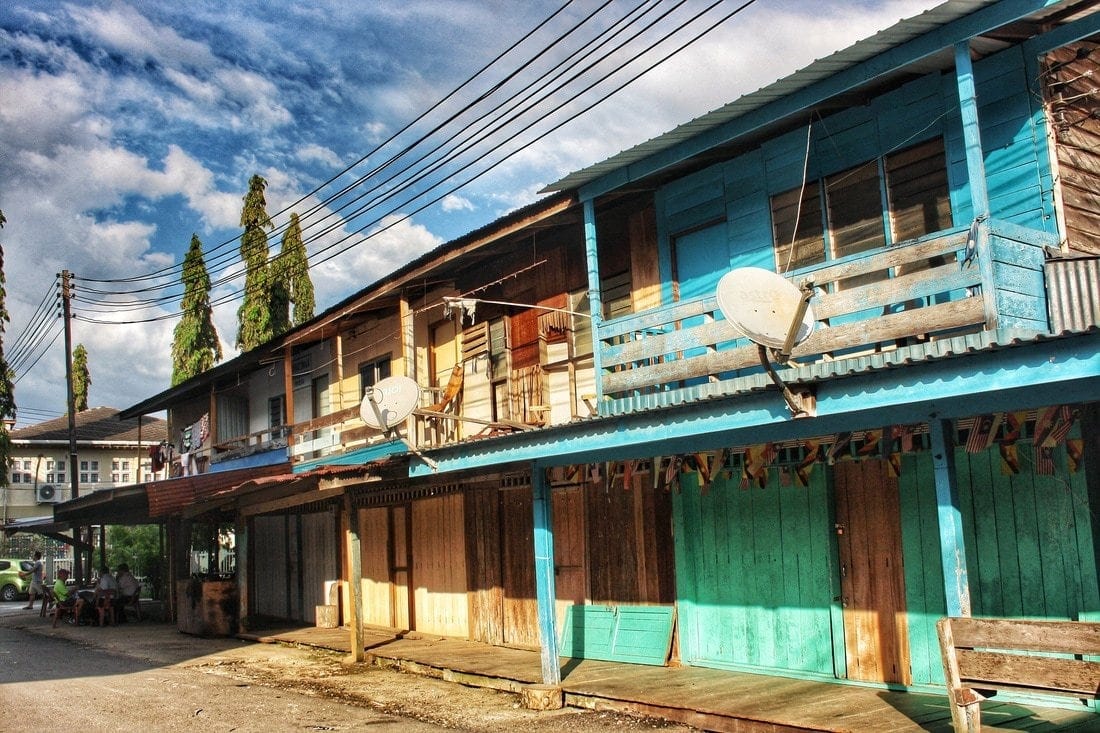
The town itself has some cute, colorful wooden houses in a style typical of this region. If you’re up for a tour of the interior, this is a good starting point. Ask around if you want to get a guide.
Speedboat connections on the Rajang River
There used to be a speedboat connection upstream to the Bakun Dam site, but, unfortunately, due to the dam’s destructive impact on the environment, the waters are now too shallow, and the service has been suspended.
The dam affects the entire Rajang River, and the trip downstream to Kapit can become unsafe due to low water levels, so the boat service might be shut down during the dry season. Check before, usually, The Borneo Post is a good source for this kind of info.
This is a serious issue for people living along the river, since the express boat is the only way they connect to so-called “civilization” (hospitals, for example). There are no roads there, so when the service is shut down, they have to rely on their longboats.
Price, Schedule, and length of the boat trip
- The boat fee from Belaga to Kapit (or the other way around) is 55RM, and from Kapit to Sibu, the price is 20RM.
- The Kapit-Sibu stretch will take around 4-5 hours upstream and about 1 hour less downstream.
- From Kapit to Belaga time spent on the boat varies from 6 to 7 hours upstream to roughly 5 hours downstream.
- The total length of the boat trip is 576km. The time can vary depending on the weather and river conditions.
We took the boat at 8 am from the Belaga jetty, with many stairs to reach it, so it was not very comfortable with bikes and luggage.
A sort of schedule can be found on the Official Website of Sarawak River Boards, but I won’t rely on that, ask at the port if you’re in Sibu or just some locals in Belaga, they all know.
Arriving in Kapit, you must change boats, hopping on a slightly bigger one, so more stairs for you and your luggage.
Belaga to Kapit by boat
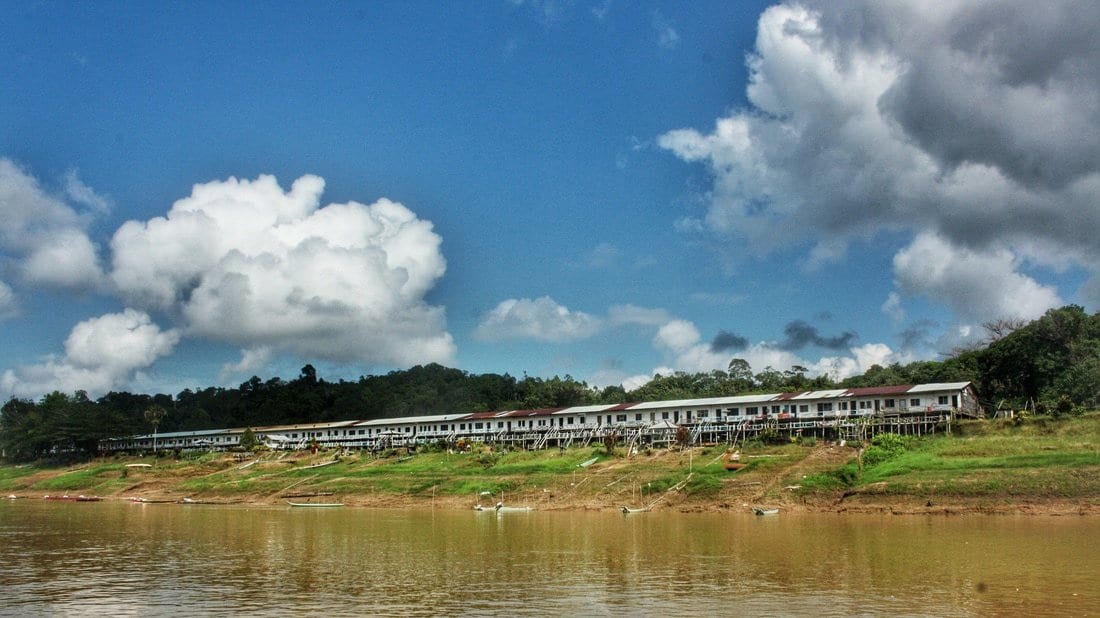
8:30 am: Here comes the boat, slightly late. It’s a sunny January morning, with the usually spectacular clouds of Borneo’s monsoon season towering above the fast-flowing river.
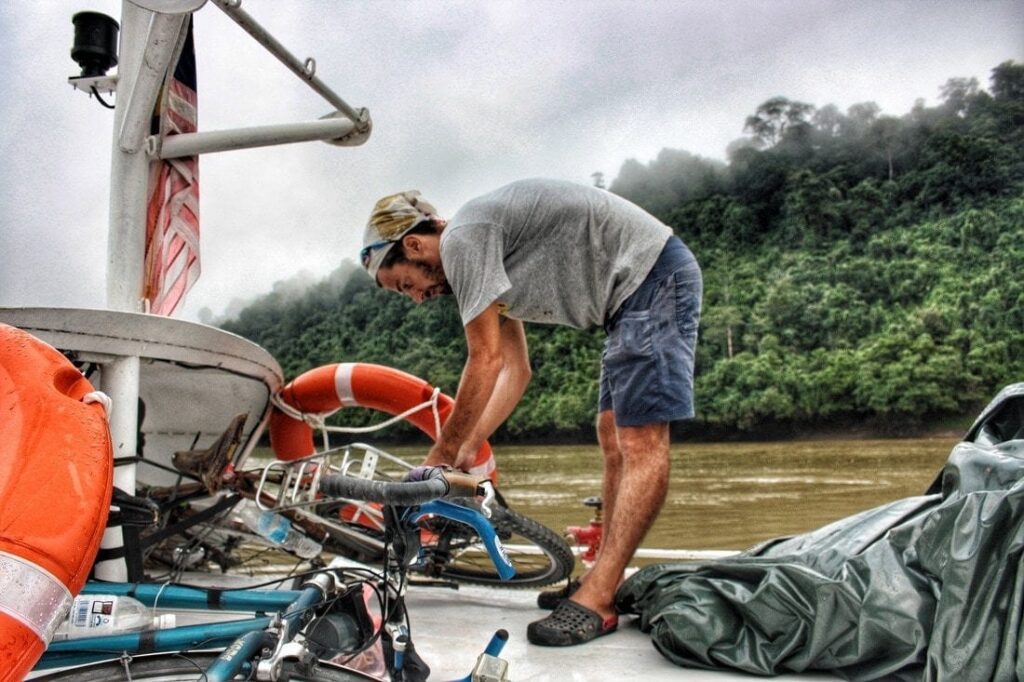
The ferry is narrow and long, with a slightly curved roof where to store the baggage, which the crew will cover with waterproof canvas. Here we put all our bags and bicycles.
No extra fee is charged for any amount of luggage, but loading and securing the stuff is up to the passenger, luckily we have ropes, never forget your ropes.
The boat has bus-style seats inside, the air-con is at 15 Celsius, need a jacket. Windows are narrow and dirty, making them unsuitable for enjoying the view. But here comes the great fun!
On this kind of speedboat, locals usually stay on the roof, and that is a completely different story. As soon as we see the first passenger heading there, we follow, and we won’t move from there until we reach Kapit (safety concerns are below). Sunscreen is a must on sunny days.
Finally, in the Borneo of the adventure novels, the Rajang is a majestic river, and its shores are lined with what looks like a jungle. It may be that just behind that line of trees a palm oil plantation lies, but you won’t know, so…
The boat goes fast, around 50km/h, but does many stops, basically every village along the river, but this is the interesting part. Punan, Sekapan, Kejaman, and Tanjung longhouses are all around, each so different from the others, some stories, some very colorful.
People fish and move goods in small longboats, plant or harvest pepper; everywhere is human activity, as if this were a city, and the Rajang River is its main road.
As all of these settlements have no roads, they are very isolated, with the river as the only connection between them. Here, the traditional lifestyle that the people resettled from Bakun long for is to be found.
Halfway to Kapit are the Pelagus rapids, nice but not so spectacular. We meet a boat going upstream, which struggles a bit, and passengers greet each other from the roof. There’s an overturned old boat near the shore, which states how tricky these rapids can become.
Kapit to Sibu
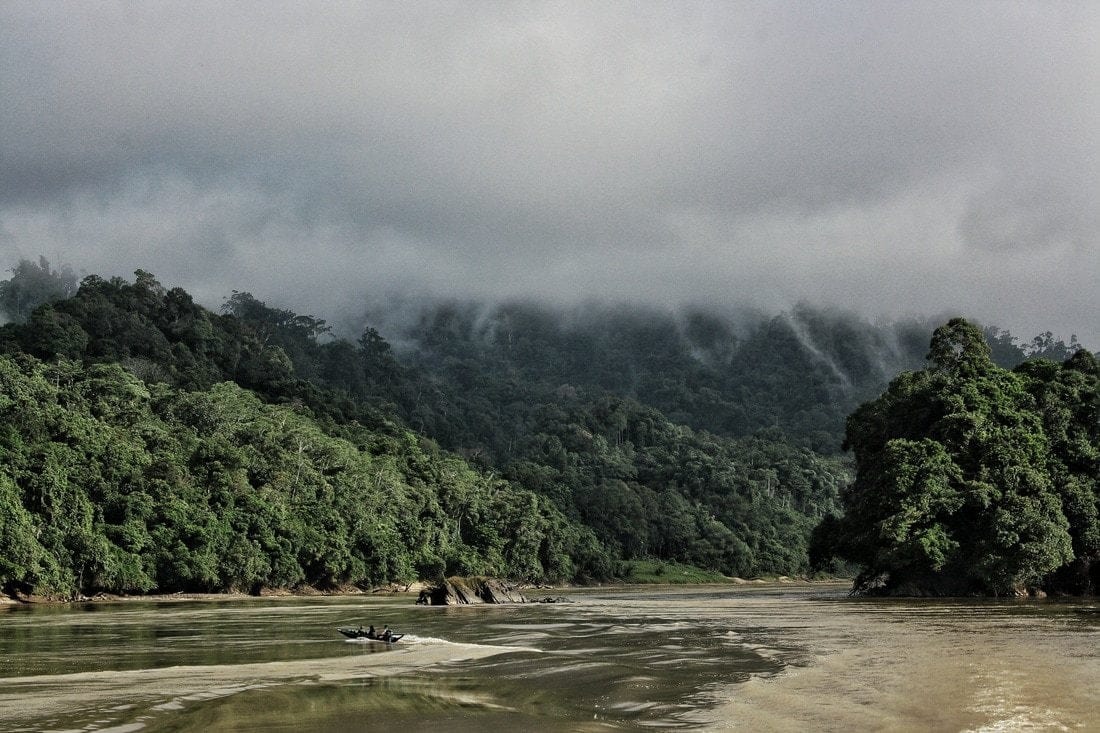
Arriving in Kapit the river becomes larger, busy with logging barges, and some industrial complexes surround the city, we decided not to stop over there and just waited 40 minutes for the new boat.
This time we are forbidden to stay on the roof, the boat goes fast and does just one more stop, no more longhouses around. This part of the ride is boring, and the air conditioning freezes our brains. We arrive at Sibu at around 6 pm.
Homestay in a Longhouse
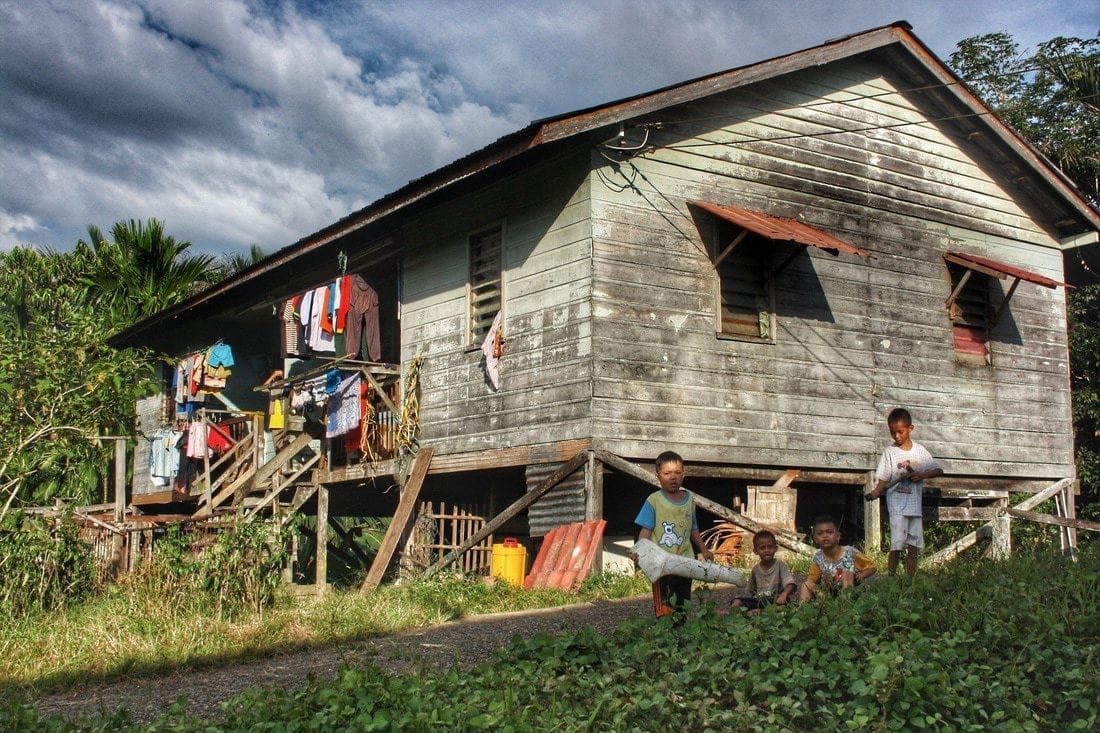
Longhouses (Rumah panjang/Rumah Betang) are the traditional houses of Borneo natives (generically called Dayaks, which include many different ethnic groups).
Most of these are made of timber, raised off the ground on stilts, and divided into a more or less public area along one side and a row of private living areas along the other. This allows many families to live in close quarters, usually relatives, but not necessarily.
Staying in one of those houses is a great way to experience the real Borneo lifestyle. Though we haven’t done that there, a great area to do this is the shores of the Rajang River: the public boat makes many stops at several longhouse villages where no road leads.
Just go off at one of these stops and ask around; most likely, someone will be willing to make an extra few bucks. If not, they will probably point you somewhere else.
We stayed in a Long House in Sungai Asap, the area where many Dayaks were relocated for the construction of the Bakun Dam. Check our reportage in the linked articles.
From Sibu to Kuching by speedboat
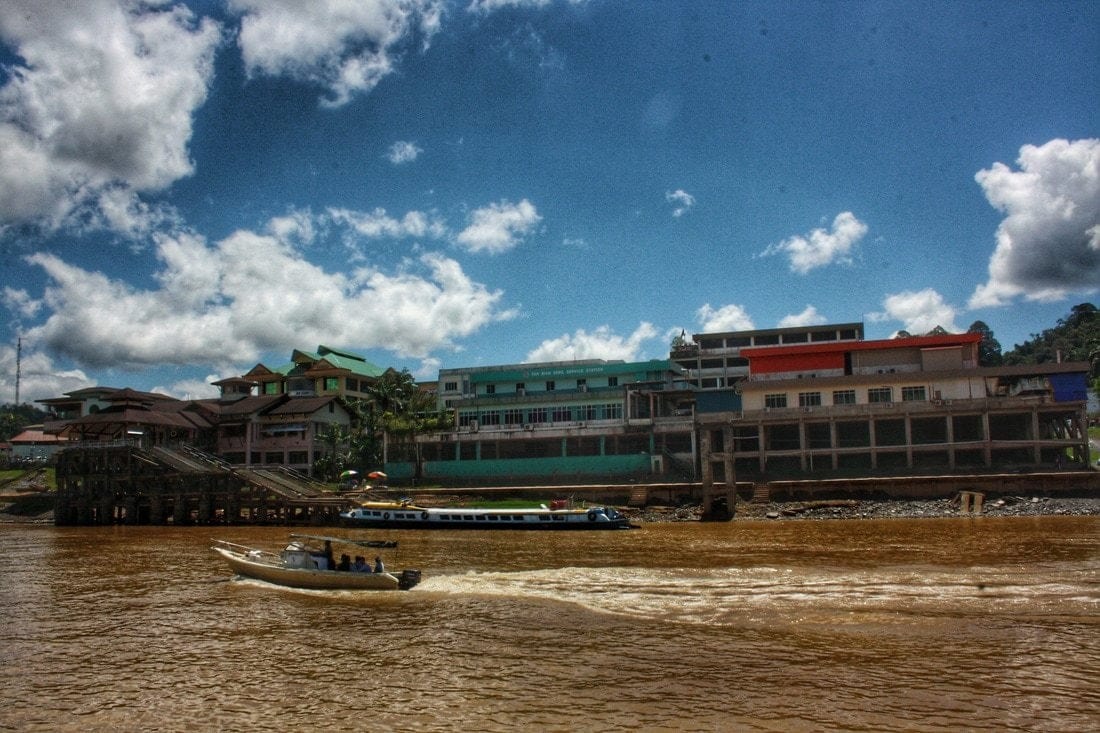
As mentioned before, it’s possible to get to Kuching by boat, and that’s what we did after spending a few days in Sibu. The price is 45RM, it’s not possible to book in advance, so you need to be at the port at least 30 minutes before departure.
Schedules are ever-changing so ask at the port office, when we were there, there was just one boat per day setting off at 11 a.m. The distance is about 300km, most of which is on the sea.
The first part of the Rajang delta is nice, lined with mangroves. The sea part, though, was quite scary; it was monsoon season, and the sea was rough, the boat heavily rolling from side to side. Not for seasick people.
The boat is similar to the river one but bigger, with two floors. The top one has a nicer view and an open deck on the stern with wooden benches; this is where the luggage goes. Keep in mind you’ll feel the sea more on the upper deck, of course.
Safety concerns
There are many records of sunken speedboats; this mainly happens when the boat is overloaded, so avoid this trip during special holidays. Staying on the roof is at your own risk; don’t mess around or stand on your feet.
If staying outside is too dangerous, usually the crew will forbid it. On the boat from Sibu to Kuching, we were quite scared, and so were some other passengers; maybe avoid it in the monsoon season.
Have you had this experience? Please comment to add value to the article! If you enjoyed this article, follow us on Social Networks.
Our adventures in Borneo
pt1: from Kota Kinabalu to Tenom, crossing the Crocker range
pt2: Jungle Train, from Tenom to Beaufort
pt3: crossing Brunei by bicycle
pt4: around Miri, Lambir Hills and Logan Bunut national parks and Tusan Beach
pt5: the caves of Niah National Park
pt6: from Belaga to Kuching by boat (you are here)
pt7: Kuching and Bako National Park
pt8: Rafflesia in Gunung Gading National Park
pt9: Overland Border crossing from Sarawak into Kalimantan, the secret Aruk border
pt10: Sambas, the wooden Venice of Indonesian Borneo
Reportages
Chap Go Meh in Singkawang:
piercing yourself with swords to please your Gods
Hydroelectric devastation in Borneo
part 1: Interview with SaveRivers
part2: a visit to Sungai Asap
here are some general hints to budget travel in Borneo (by bicycle or not)