

Last Updated on 17 January 2026 by Cycloscope
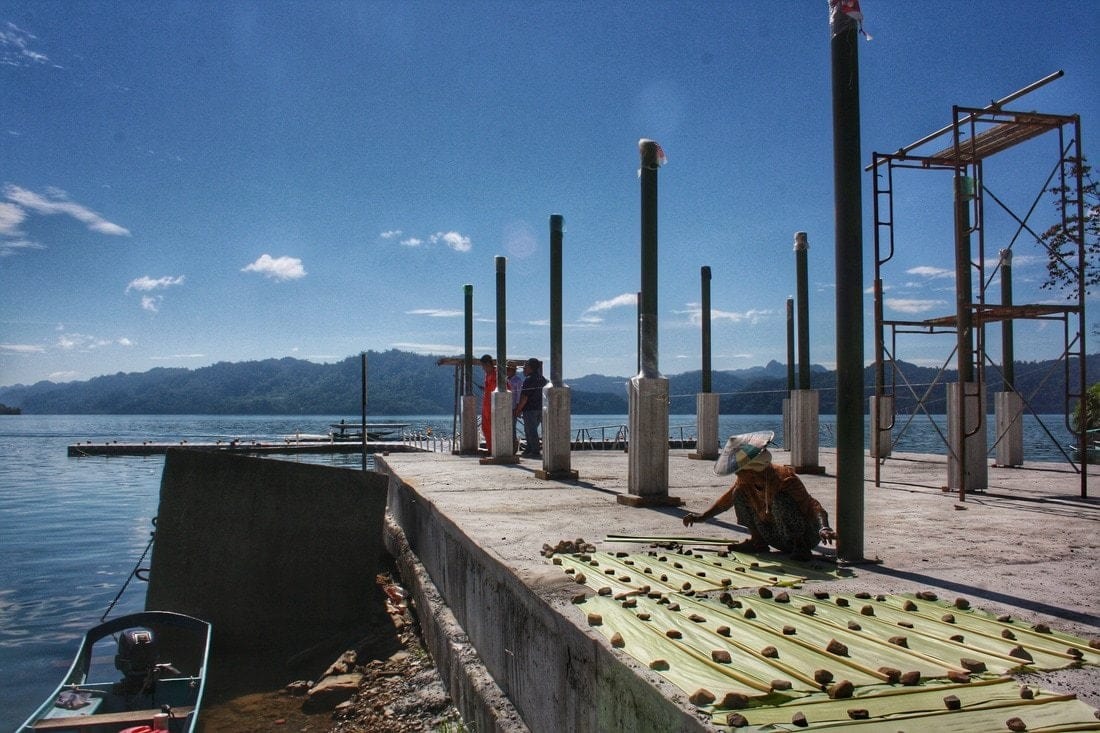
The Bakun Dam controversy
and the longhouse resettlement of Sungai Asap
Sungai Asap is the site where the people from the Bakun area have been resettled to build the huge Bakun dam.
Disclosure: Some of our articles contain affiliate links. This comes at no additional cost for you and helps us keep this website up and running. (as Amazon Associates we earn commission from qualifying purchases)
Their ancestral homes and lands have been flooded, and they were sent here, in the middle of an oil palm plantation, very far from both their original territories and any notable town.
We came here thanks to Peter Kallang from SaveRivers, whom we interviewed for the 1st part of our reportage.
Peter gave us the contact of Alex, who is one untiring activist, having lived the resettlement on his own skin, and is now trying to raise awareness of the issue of the new mega-dam projects.
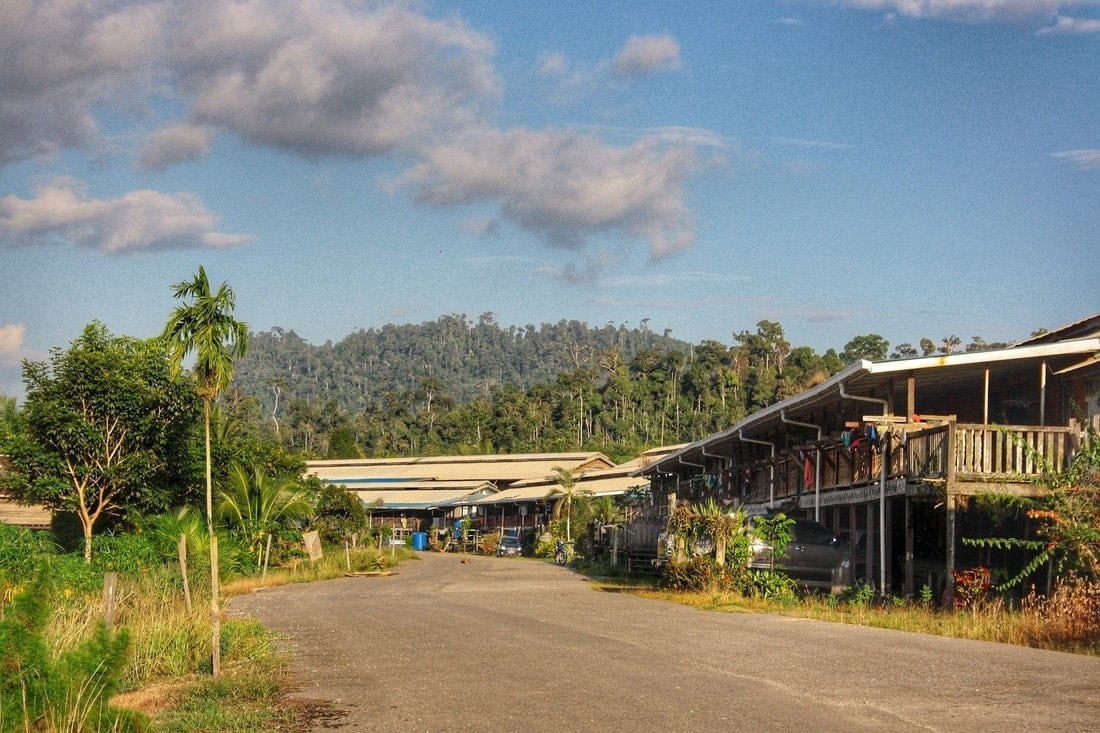
We meet him at his home, in block D. What were once many different villages of different ethnic groups, separated from each other by a dozen kilometers of dense jungle, is now concentrated in a few square miles.
In cheap longhouses named with letters, block D is where we are, and here is the 2nd part of the reportage about the hydroelectric devastation in Borneo.
To fully understand the matter we discuss with Alex in this article, we strongly recommend that you read the 1st part, the interview with Peter
If you want to know more about our adventures in Borneo, check out the rest of our articles here
Here are some general
Things to Know About Travel Borneo on a Budget.
Check also
31 highlights to include in your Borneo itinerary
In the longhouse resettlement of Sungai Asap
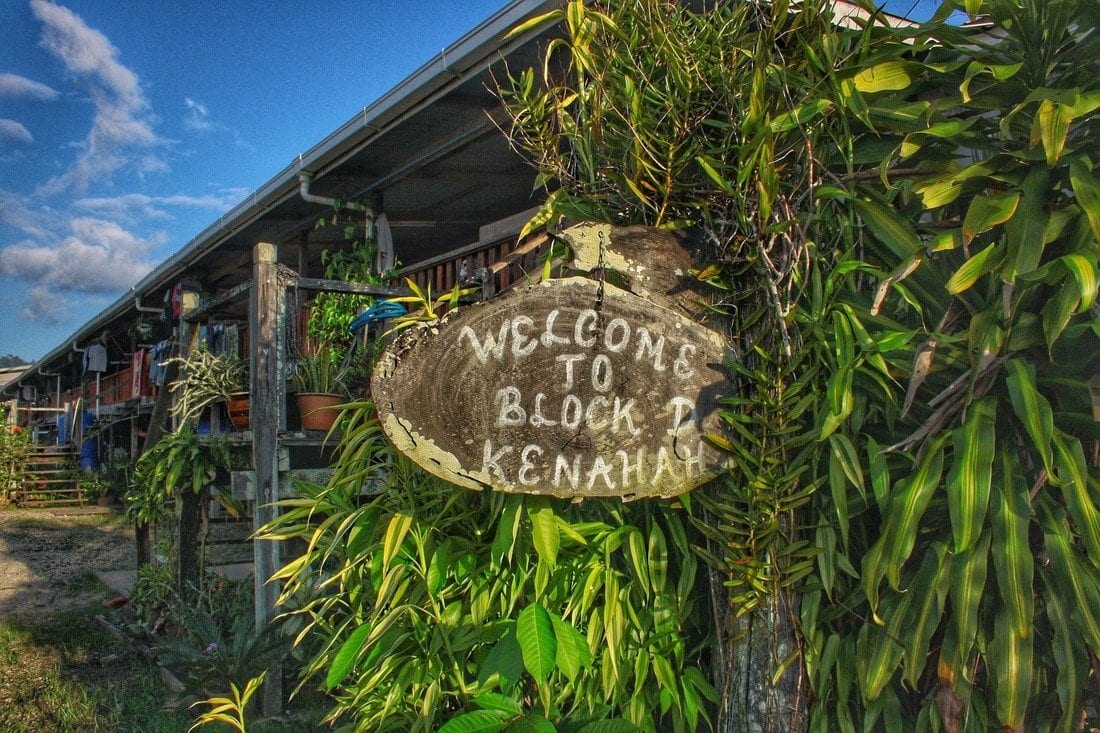
Alex was very welcoming to us from the start. We had the occasion to stay in his house for 3 days and experience a bit of life in a longhouse in a resettlement area, a good chance to experience community-based tourism in a DIY fashion.
We had long, deep, and pleasant conversations about many topics while trying to smoke the thick tobacco, rolled in banana leaves, that the women traditionally smoke.
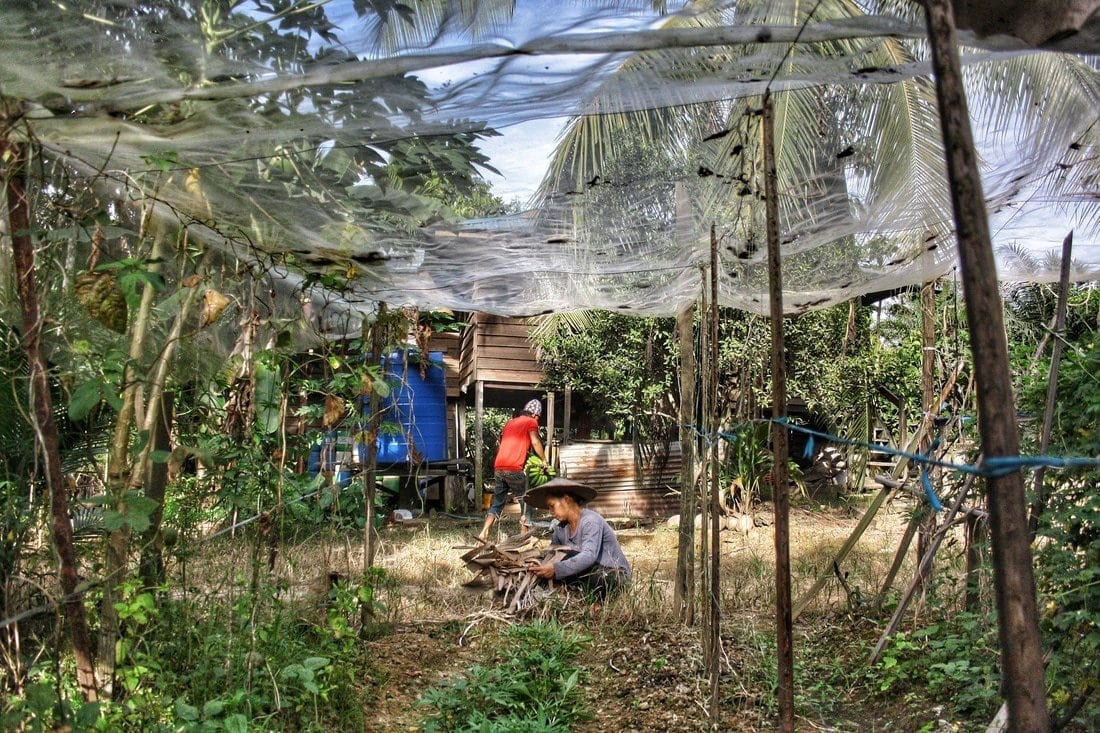
We met his sister, who’s managing the family’s land; thus, with 4 times the 3 hectares she’s entitled to, she can make a little profit.
She grows fruit (rambutan, coconut, banana), but the main source of income sadly comes from oil palm. She also makes a very good Tuah, a local liquor made from various ingredients, usually palm or rice, and sells it in the local market.
Our days in Sungai Asap were very pleasant but somehow sad. What shone through the eyes of the people, especially, but not only, the oldest, was a sunken feeling of loss and resignation to wait for the end in a place where they do not belong.
We interviewed Alex, and this is what he told us:
Interview with Alex
The Bakun Dam and the Borneo people’s lives in the Sungai Asap resettlement
Alex, when were you relocated here? How many of you and to which ethnic group do you belong?
In 1999, we were four brothers and two sisters, and our parents are now gone. We’re Kayan.
How many people live here in total?
There are 15 longhouses. I think the population of Sungai Asap is around 10,000.
What was promised and what was given to these people?
During the negotiation process, I remember, they said that everything would be easier. But it was a broken promise because everything that would have been easy is not easy at all. Indeed, for many people here, it is really hard to survive.
Why?
The change of lifestyle. Because we are indigenous, we live very close to the jungle, and we have a large area where we can hunt, rivers for fishing, and we have everything in the jungle, not only food but also medicine.
We can not live so close to each other. Now, they have taken all of us and brought us here, all very close, at most a kilometer away from a longhouse and another.
Before, we lived at least 18/20 kilometers away from our closest neighbors. If we lived so close, the resources would end up very quickly, so we split into groups to survive.
But here there are 15 longhouses and 10,000 people. There are no rivers to fish in, and no jungle to hunt in.
And even if there were, the little fish or wild animals would end very quickly. Here, we have no natural resources. This is the main problem.
I understand. Then how do people survive here, not being able to fish and hunt?
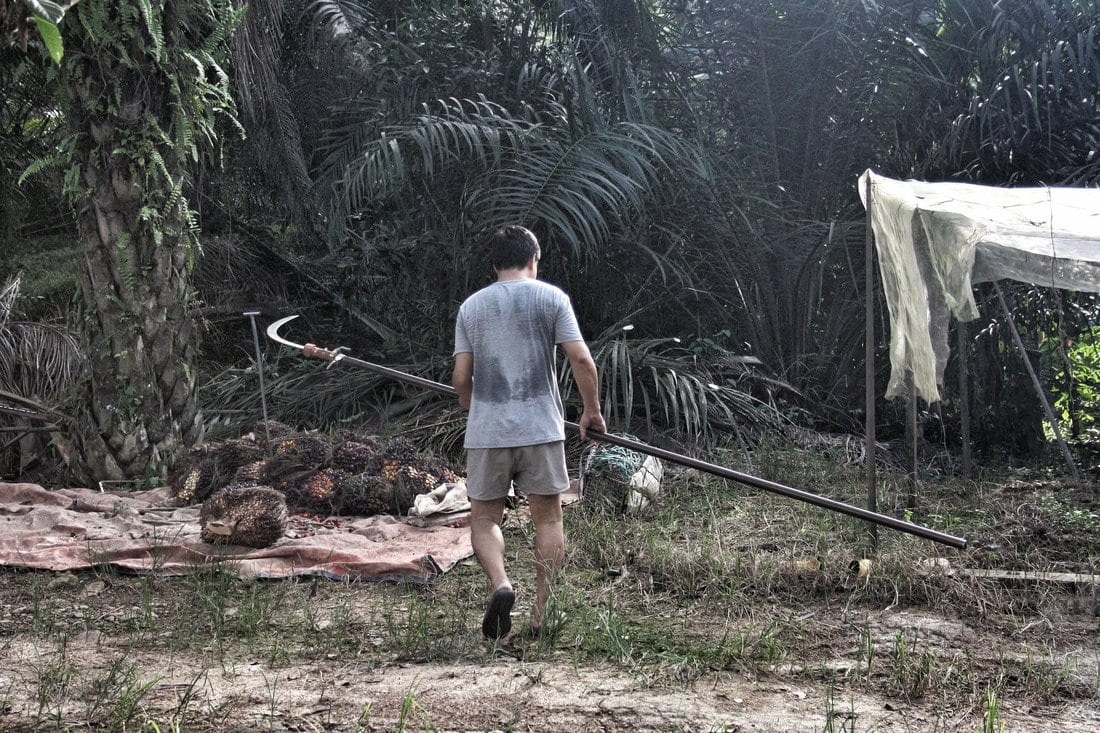
Most of the people in this longhouse grow and sell vegetables at the Sungai Asap market. The government has given us 3 hectares of land, a very small piece of land.
It is not enough to grow for commercial purposes; it only serves the family’s survival. The gains are trifling, and people live in poverty.
If we plant oil palm trees, we could get around 600/700 ringgit per month (120/140€), which is absolutely not enough for a family’s survival.
So the first problem is that the land is too small. Also, those whose land isn’t near the main road have to walk to their fields because there are no roads to get there. The transport of the products thus becomes exhausting.
Do people still live here, or is there migration to the big cities?
If you look around in this longhouse, you’ll see just old folks and a few men of my age, who found work in plantations around here.
Young people, especially those who have studied, live in the city and work in offices. They come back for Christmas or other festive occasions.
So, can we say the Bakun people are disappearing?
We can still maintain our culture and our traditions, but the way we live, the way we earn our living, is lost.
Now we have to live a new life, very similar to that of people living in the city: we have to work and earn money every day, which we use to pay for electricity, water, and transport.
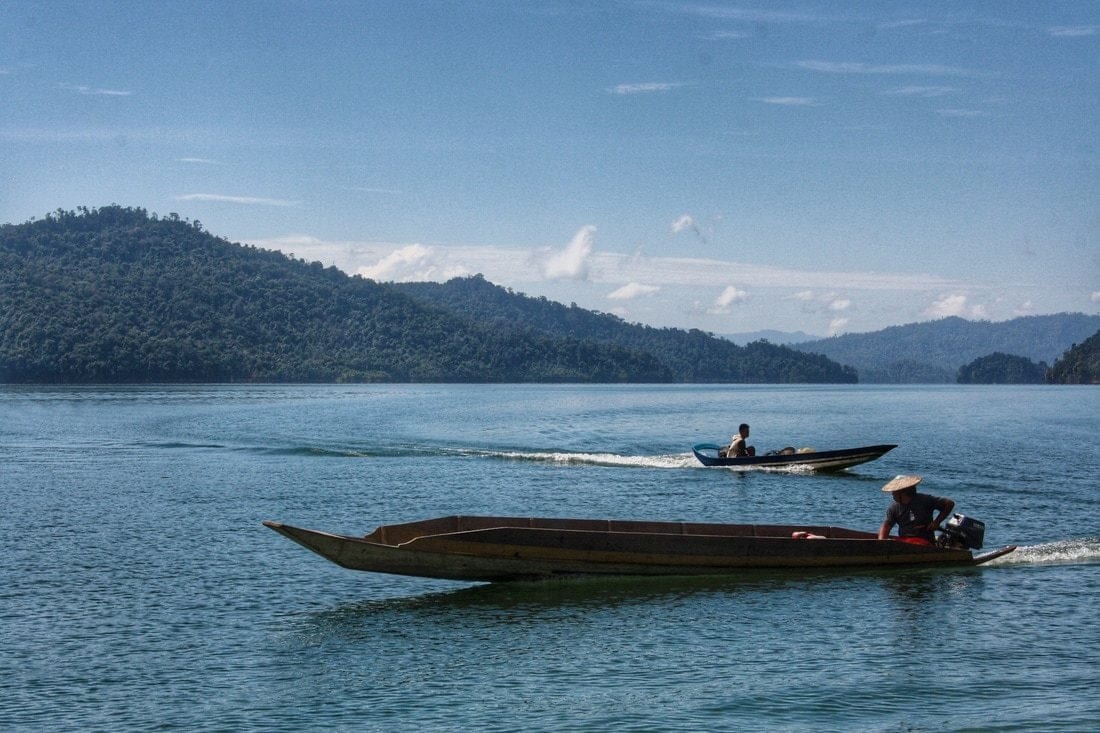
Before, the river was our way of transportation, and we used boats, but now we need cars and motorcycles.
This is a big problem for older people who cannot drive and are effectively blocked at home unless someone accompanies them. By “old,” I don’t mean just the elderly, but also people in their 50s who are trying to drive for the first time at 50.
We know of other projects, what can people do so that what happened to you won’t happen again and to preserve the people of Sarawak and the environment?
What we can do is to inform and educate people so that they are aware of and can oppose these ill-considered projects.
Our lifestyle requires us to stay next to a large river for fishing, on a large piece of land for hunting, and near a small river for water. This should be taken into account when people are moved from their land.
Many people who live here still fish and hunt, but to do this, they have to return to what was once our land (now the Dam reservoir), driving for an hour. This requires money, the car, the boat, and the gas, and if you do not catch anything that day, the money is lost.
That’s why someone decided to build houseboats in the reservoir and why they continue to live there, because we have nothing to live on here in Sungai Asap.
Liked this article. Do you want to support the cause of the Borneo people? Share it!
Have thoughts about it? Comment!
Didn’t get it all?
Read the 1st part, the interview with Peter
There are also many other ways to do some good when visiting Borneo: check this
Family volunteering opportunities in Borneo
Our previous adventures in Borneo
pt1: from Kota Kinabalu to Tenom, crossing the Crocker range
pt2: Jungle Train, from Tenom to Beaufort
pt3: crossing Brunei by bicycle
pt4: Around Miri, Lambir Hills, Logan Bunut National parks and Tusan Beach
pt5: the caves of Niah National Park
pt6: From Belaga to Kuching by boat
pt7: Kuching and Bako National Park
pt8: Rafflesia in Gunung Gading National Park
pt9: Overland Border crossing from Sarawak into Kalimantan, the secret Aruk border
pt10: Sambas, the wooden Venice of Indonesian Borneo
If you want to know how to reach Sungai Asap, check out pt5 and pt6
Reportages
Chap Go Meh in Singkawang: piercing yourself with swords to please your Gods
Hydroelectric devastation in Borneo
Part 1: Interview with SaveRivers
part2: A visit to Sungai Asap (you are here)
Here are some general hints for budget travel in Borneo (by bicycle or not)