

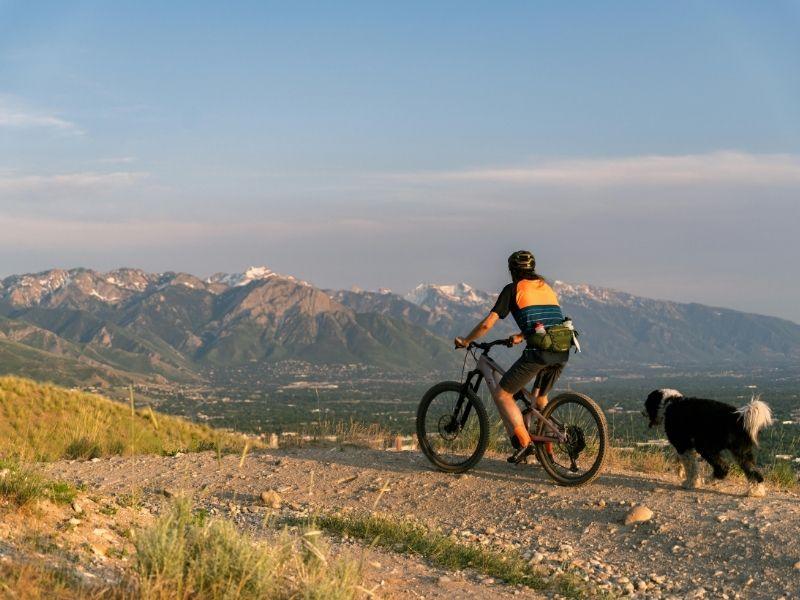
The top mountain bike waist packs of 2026, including hydration and bottle-carry options for trail riding, enduro, and all-day adventures.
The right MTB hip pack keeps the weight low and central, your back dry, and your shoulders free to move.
Why Use a Hip Pack Instead of a Backpack?
Disclosure: Some of our articles contain affiliate links. This comes at no additional cost for you and helps us keep this website up and running. (as Amazon Associates we earn commission from qualifying purchases)
How we compile our gear guides: during the almost 10 years of cycloscope.net our team personally tested dozens of similar pieces of gear. For what we can't test personally, we involve other people in the cycling community to give their feedback and opinion about gear they have used. Our decade-long experience in bicycle touring enables us to find the key cons and pros of every product we mention.
Hip packs sit around your waist, keeping your center of gravity low and your upper body unrestricted. The payoff is huge on technical terrain: no shoulder fatigue, no sweaty back, and better bike-body separation.
They’re the go-to choice for trail riders on shorter to medium-length rides — typically anything under three to four hours, where you don’t need to carry a full layer kit or serious emergency gear.
If you’re planning an all-day epic or a bikepacking mission, a full hydration backpack may suit you better. But for most riders, most of the time, a hip pack nails the sweet spot.
What to Look for in an MTB Hip Pack
Capacity — Most hip packs fall between 2 and 6 liters. Under 3L is pure minimalist territory (tools, phone, snacks). 3–4L covers most trail rides comfortably. 5L+ is for longer adventures or riders who like to be prepared for anything.
Hydration — Look for either a bladder sleeve (typically 1.5–2L) or water bottle pockets. Some packs offer both, which is a genuine advantage on hot days or long rides.
Fit and stability — This is everything. A wide, stretchy waist belt with overlapping panels stays put under hard riding. Narrow belts tend to dig in when loaded and slip on climbs.
Organization — Think about what you actually carry: a multi-tool, a tube, a snack, your phone, maybe a thin shell. Good packs make all of these quickly accessible without unpacking everything.
Weight and breathability — Lighter is better, but not at the expense of fit. A well-ventilated back panel matters more than you’d think on warm days.
The Best MTB Hip Packs in 2026
1. Evoc Hip Pack Pro 3 — Best Overall
Capacity: 3L + 1.5L bladder | Price: ~$115
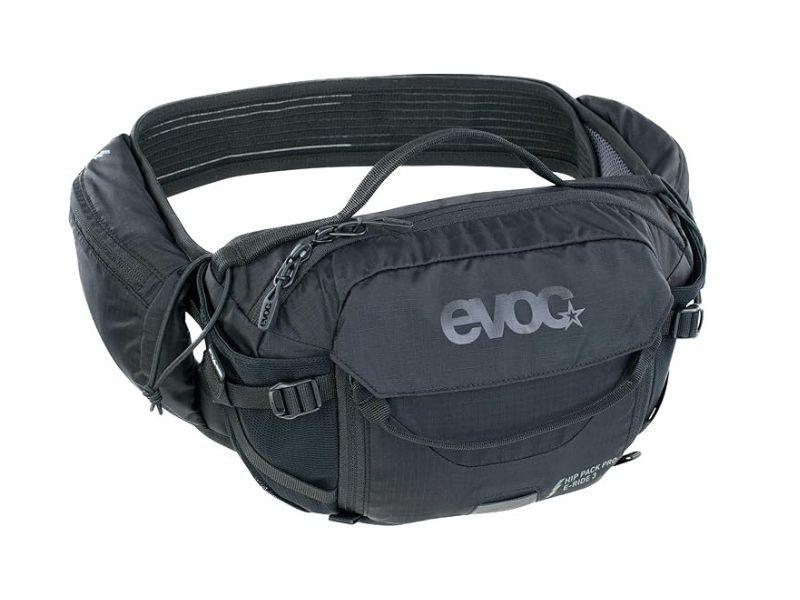
The Evoc Hip Pack Pro 3 has held the top spot in nearly every serious roundup for a reason. Its broad, stretchy, overlapping waist belt is what sets it apart — it hugs the body, distributes load beautifully, and stays firmly in place even on rough descents.
Storage is smartly organized, the 1.5L bladder is easy to fill and clean thanks to a quick-connect system, and you can also run water bottles alongside or instead of the bladder. Premium price, premium execution.
Best for: Riders who want the best and don’t mind paying for it.
Buy on BackCountry.
2. Patagonia Dirt Roamer Bike Waist Pack 3L — Best Value
Capacity: 3L | Price: ~$69
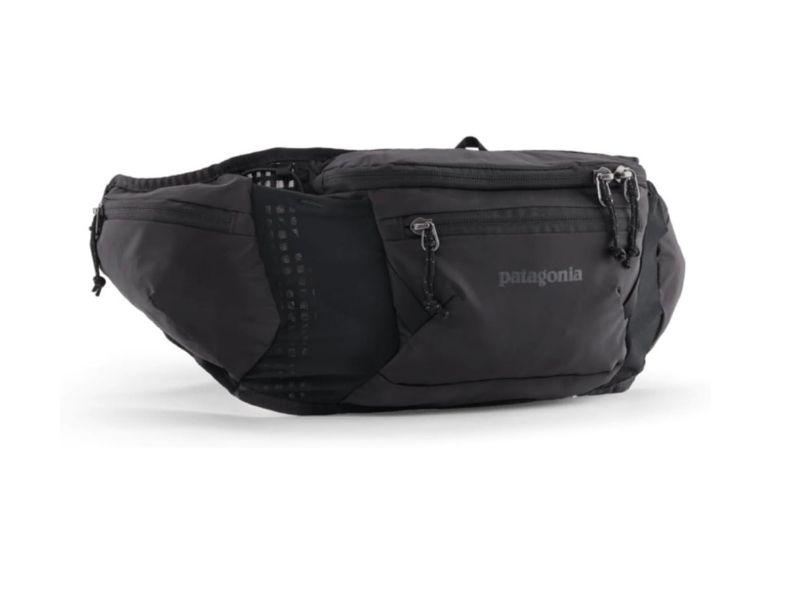
Patagonia’s entrance into MTB-specific gear has been impressive, and the Dirt Roamer is the proof. At less than half the price of the Evoc, it delivers excellent comfort, solid stability, two water bottle sleeves, a smart built-in external strap system, and sustainable materials (FairTrade Sewn, recycled nylon). Reviewers consistently note being surprised by how much fits inside despite the relatively slim profile. Backed by Patagonia’s Ironclad guarantee.
Buy on BackCountry or Amazon
Best for: Budget-conscious riders who refuse to compromise on quality.
3. Dakine Hot Laps 5L — Best for Longer Rides
Capacity: 5L + 2L bladder | Price: ~$85–95
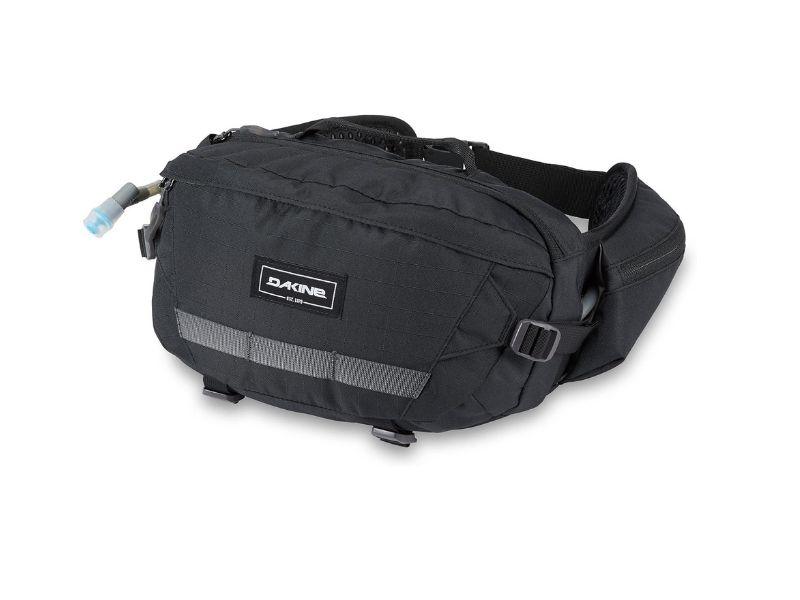
The Dakine Hot Laps is the workhorse of the hip pack world. The 5L version comes with a 2L bladder — the largest included bladder of any pack in its class — and offers enough storage for all-day adventures.
Customer satisfaction is exceptional, with a 4.6-star average across nearly 100 reviews on the Dakine site and hundreds of 5-star reviews on Amazon. The narrower waistband is less padded than the Evoc, which can dig in under heavy loads, but for most riders it’s a non-issue.
Best for: Riders who need more capacity or are heading out on bigger days.
Buy on Amazon or BackCountry
4. Osprey Savu 5 — Best Bottle-Only Pack
Capacity: 5L | Price: ~$75
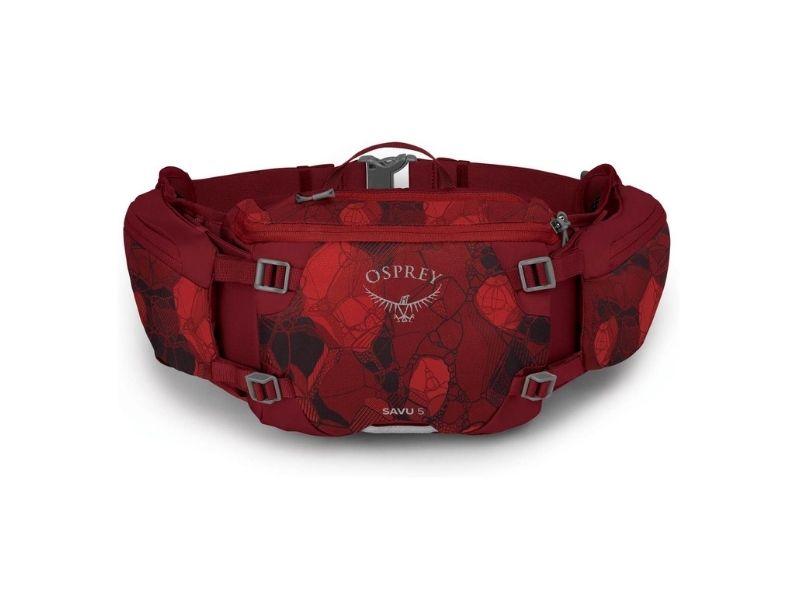
Not everyone wants a hydration bladder, and the Osprey Savu is built for exactly that rider. It carries two full-size water bottles in dedicated pockets, offers 5 liters of gear storage, and fits a wide range of waist sizes on an adjustable belt. It’s made with Bluesign-approved recycled materials, it’s light, and it’s genuinely comfortable on the bike. Simple, reliable, and reasonably priced.
Best for: Riders who prefer the simplicity of water bottles over a bladder.
Buy on Amazon
5. USWE Zulo 6 — Best for Heavy Loaders
Capacity: 6L + 1.5L bladder | Price: ~$120
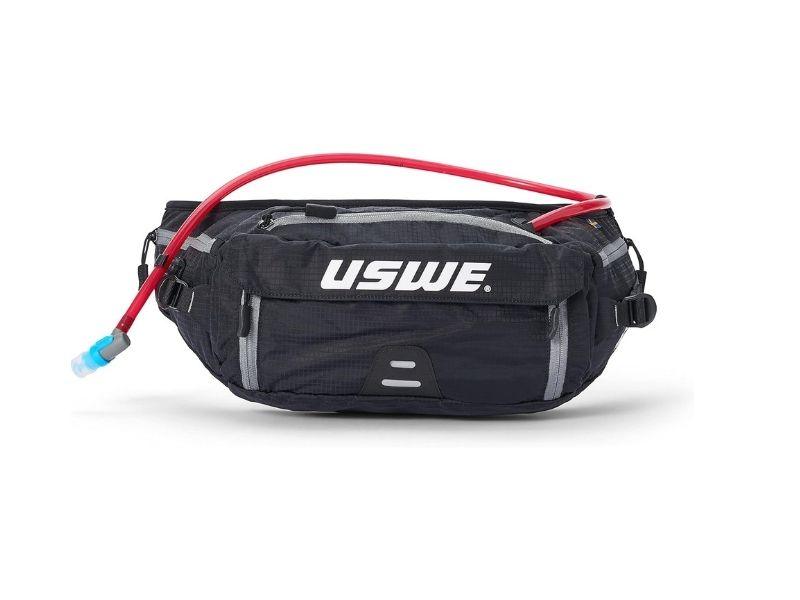
USWE is known for its no-bounce harness systems on hydration backpacks, and the Zulo 6 brings that same philosophy to hip packs. At 6 liters, it’s the largest on this list, and it handles a full load of water plus gear more gracefully than smaller packs when stuffed to the brim. If you run big rides with a big kit, this is where to look.
Best for: Enduro and all-mountain riders who need maximum carry capacity.
Buy on Amazon
6. Osprey Seral 4 — Best Mid-Range Bladder Pack
Capacity: 4L + 1.5L bladder | Price: ~$100
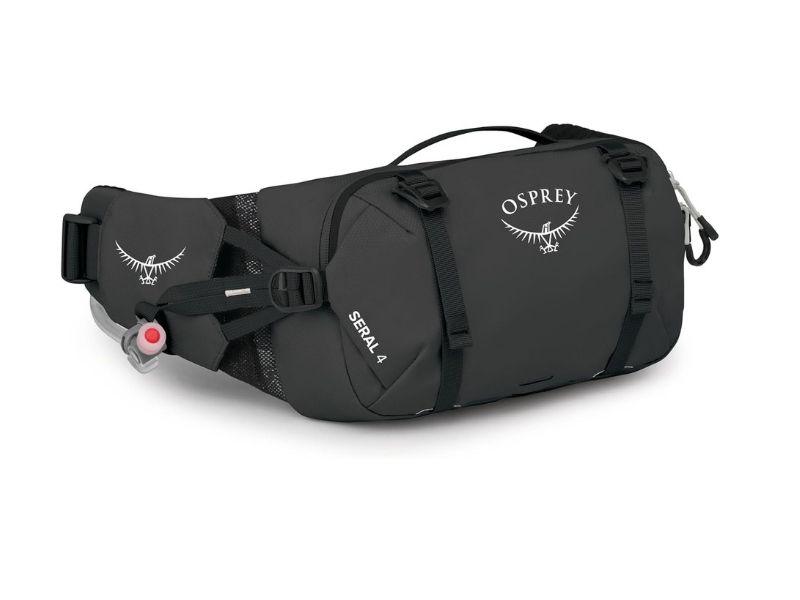
The Seral splits the difference nicely: more capacity than a pure minimalist pack, less bulk than a full-day rig. It includes a 1.5L bladder with a magnetic bite valve attachment, a bike-specific angled hipbelt, and compression straps for a stable, snug carry. A solid all-rounder that punches above its price.
Best for: Riders who want a bladder pack without going all-in on capacity or cost.
Buy on Amazon
7. Thule Rail 4 — Best Hydration System
Capacity: 4L + 1.5L bladder | Price: ~$115
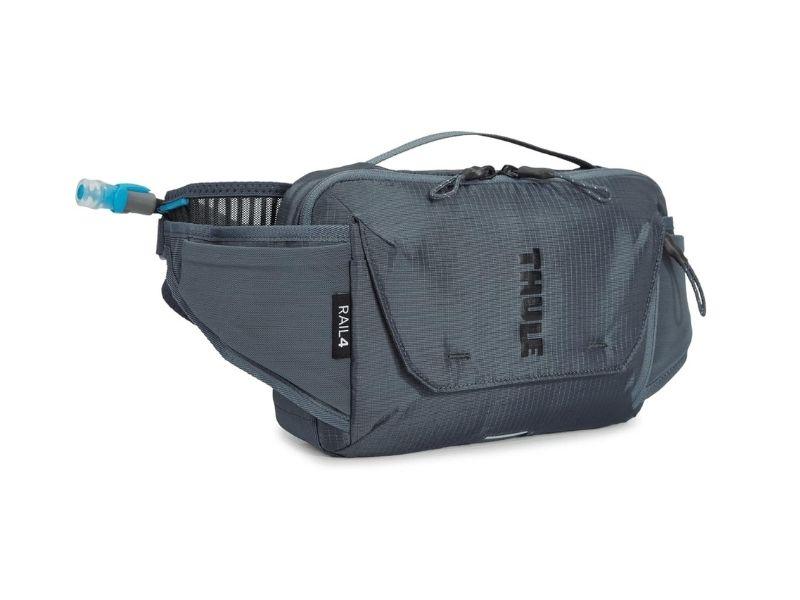
The Thule Rail stands out for one feature in particular: a unique magnetic strip hose connection that actually works brilliantly in the field. Riders who’ve struggled with fiddly bite valve clips will appreciate the elegance of this design. Beyond the hose system, it’s a well-constructed, stable pack with good organization and quality materials throughout.
Best for: Riders who want the cleanest, most functional hydration experience.
Buy on Amazon
Capacity Guide: How Much Do You Actually Need?
| Ride Type | Recommended Capacity | Pack to Consider |
|---|---|---|
| Hot laps / bike park | 2–3L | Patagonia Dirt Roamer 3L |
| Trail rides (1–3 hrs) | 3–4L | Evoc Hip Pack Pro 3, Osprey Seral 4 |
| All-day rides (3–5 hrs) | 5–6L | Dakine Hot Laps 5L, USWE Zulo 6 |
| Prefer bottles over bladder | Any | Osprey Savu 5 |
Hip Pack vs. Backpack: When to Choose Which
A hip pack wins when:
- Your ride is under 3–4 hours
- You value upper-body freedom on technical terrain
- You run hot and hate back sweat
- Weight is already carried on your bike (frame bag, top tube bag)
A backpack makes more sense when:
- You need to carry extra layers, a full tool kit, or first aid
- You’re riding in remote terrain where self-sufficiency matters
- Your ride is 5+ hours with no resupply
Final Thoughts
The Evoc Hip Pack Pro 3 remains the benchmark for most riders — the comfort, the stability, and the hydration flexibility are hard to beat. But if your budget is tighter, the Patagonia Dirt Roamer gives you 80% of the performance at half the price. And if you’re logging long days in the saddle, the Dakine Hot Laps 5L or USWE Zulo 6 deserve serious consideration.
Whatever you choose, fit comes first. A hip pack that shifts, bounces, or digs in is worse than no hip pack at all. If you can, try before you buy — load it with a water bottle and your usual kit, and take a walk around the shop. You’ll know pretty quickly if it’s the right one.
You might be interested in reading these articles: