

Last Updated on 16 January 2026 by Cycloscope
Xinaliq or Khinalug, The Highest Village in Europe – Azerbaijan
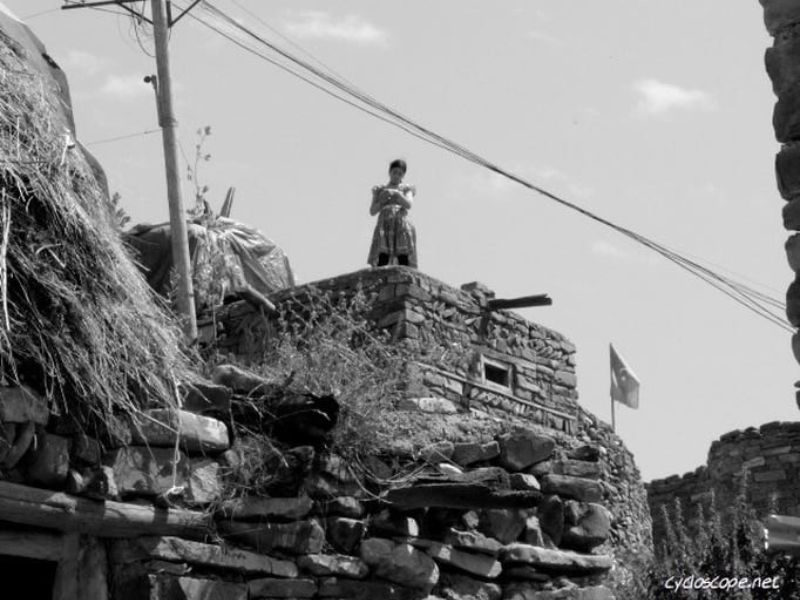
Khinalug, spelled Xinaliq in Azeri, is the real marvel of Azerbaijan. A remote and ancestral village set above the clouds at 2350msl, among the bare peaks of the northern Caucasus.
Disclosure: Some of our articles contain affiliate links. This comes at no additional cost for you and helps us keep this website up and running. (as Amazon Associates we earn commission from qualifying purchases)
Xinaliq’s origins go back to the Caucasian Albanian period, some 2000 years ago, and even before that, this is indeed one of the oldest continuously inhabited places in the world, with a history spanning over 5,000 years.
Just as Mestia in Georgia was practically impregnable, this village was kept safe by its remoteness, while invader after invader wreaked havoc in the valleys and desert below.
Check Also
- Ivanovka – the last kolkhoz of Azerbaijan
- Lahic – the reign of the Copper king
- A ferry across the Caspian Sea, from Baku to Aktau
- Cycling across the desert of Azerbaijan
Where is Khinalug
Khinalug is situated in the Northeast of Azerbaijan, on the Greater Caucasus. 220km from Baku and only 51km from the nearest town of Quba.
Until 2006, there was no road, and Xinaliq could be reached only on horseback or by a very bumpy 4-wheel-drive ride. Today, the road is still not paved and is very challenging (not for a Lada, of course), but also incredibly scenic. Khinalug’s remoteness and unique culture can be compelling reasons to travel to Azerbaijan.
Where to Stay in Xinaliq
There are a few guesthouses and a hostel in Xinaliq; they are cheap and offer a great insight into how people live here. Anyway, if you are like us and prefer camping under the stars, there’s no lack of places to pitch your tent around the village. Be ready to wake up by roaming cattle, though.
Zoroastrianism and Fire Worshipping in Khinalug
Even though the villagers here are allegedly Muslim, many still practice the ancestral Zoroastrian cult. In Khinalig, among the local mosques, there’s indeed a fire-worship tower, called “Atashgah”.
Like its counterpart near Baku, this tower marks a place where natural gas seeps from the ground, burning eternally without producing smoke.
Mosques in Xinaliq
Mosques in Xinaliq may go unnoticed by a distracted eye. They look like large houses and don’t have minarets. The Joma {Friday} mosque is the largest; it was renovated in 1968.
The mosque in the Gamk quarter has a curious feature, a narrow room called “zulmatkhana”, where a wrongdoer would spend time to be relieved of his sin.
This practice is not common in Islam, it might be possibly a belief preserved from an earlier religion. At the Sheikh Shalbuzbaba mosque, look for the carved wooden column with older local art.
Getting to Xinaliq
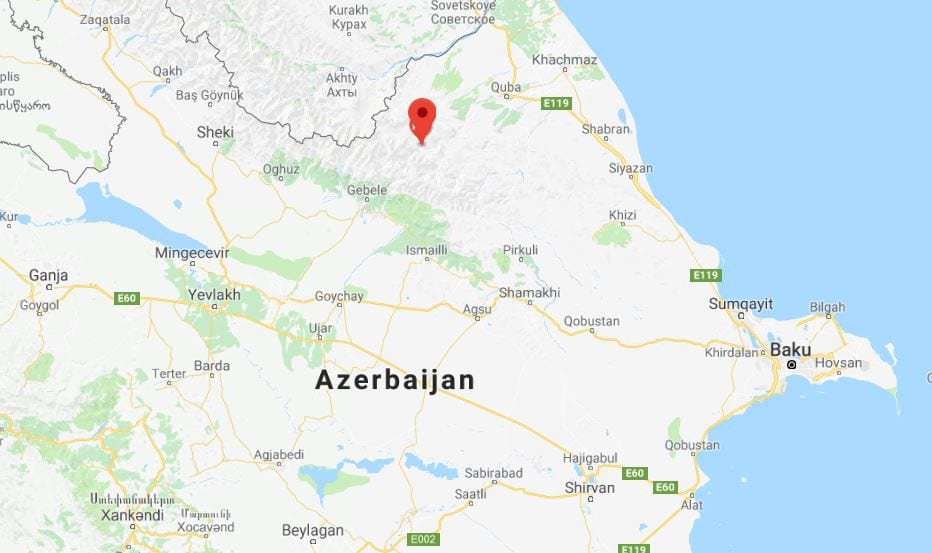
Today is Daniele’s birthday; he has reached the ripe old age of 32 years. We go to the Baku Avtogazal (bus station) and take a bus to Quba, a city from which there should be some way to reach Kinaliq (or Xinaliq, or Kinalug, or Khinalug, your choice).
The first bus is full, so we wait for the second one (there’s a bus every hour), it is small, with no air conditioning and no windows, not a godsend. In addition, the driver is a bit strange; we don’t understand why, but he began to argue with one of the passengers.
The road crosses the void, the desert to the left, and the desert to the right. The landscape, a little alien, is nice. At one point, the driver leaves the main road and takes a very busy alternative one, and passengers are quite pissed.
Especially after realizing that the detour was made to load some people in a small town, even though there were no seats on the bus. Don’t know where some of the stools come out, and these people are placed in the middle lane of the bus. Can’t breathe anymore. We take four hours to get to Quba, which is less than 200 kilometers away.
Hitchhiking from Quba to Xinaliq
When we finally arrive at the bus station, the city looks a bit desolate. It’s about 18:30. We are told there are no Marshrutkas (minibuses) to Xinaliq, only taxis. We take a bus to the bazaar, but there are only Lada taxis (private cars), and they charge 40 euros. Consequently hitchhiking.
We cross the city on foot. It’s not anything special as opposed to what we had heard. The hitchhiking starts quite well. First, we’re picked up by a car for about 10 kilometers, and we arrive in a very nice wooded area. Well, not just the desert, then. Even in Azerbaijan, there are trees. Amid this forest, there are tables scattered everywhere, picnic areas, and restaurants.
The second car takes us a little further, but we are still 40 kilometers away from the ultimate goal. The third car is a beat-up Lada 4×4, we get on, we’re on a steep slope and the car almost can’t restart.
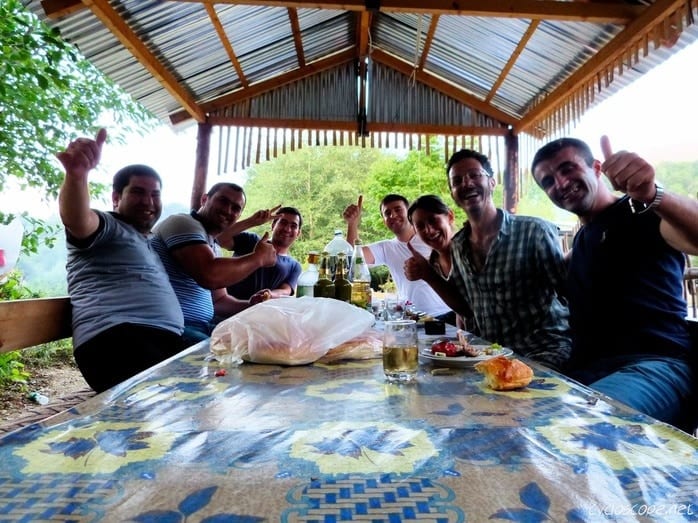
The driver is a guy about 35 years old who speaks Russian, we understand that he’s going to meet some friends somewhere and we can pitch the tent there. We arrive at one of these places with gazebos and tables, where the friends are.
One of them is celebrating his birthday too, so Daniele finds a surprise birthday party. We eat and drink for free and in good company. One of them brought a keyboard, so we also have live music! We put the tent in the grove, and tomorrow, another day of hitchhiking to get to an altitude of 2400 meters.
Still hitchhiking to Xinaliq
We wake up quite stoned. A guy who walks the cows shakes the tent. Half asleep, I think it is a bear. Ok, it’s time to go. We get a lift from a Mashukta full of women heading out for a jaunt. They eat chips and toss bags from the window, but then admire the beautiful landscape. Around us, the mountains are becoming higher and more vertical.
The all-women’s van (except for the driver, of course) stops at a “do a shot a photo” point and the tour is over. From there, we walk a bit; there are considerable ascents, and the few passing jeeps are almost all full.
Near a fountain, we spot an old military jeep stopped to let the engine breathe. They go up to about twenty kilometers from Xinaliq, and luckily, they give us a lift. The back seats are not there, removed to carry more cargo, probably.
Only two benches, and we grab bars to hold onto. The landscape is wonderful. We enter a canyon with vertical walls. Also, the road grows vertically.
Behind us, a Lada, old and stoic, at least five people on board, and two huge speakers (for music) on the roof! We’re sure they’ll make it. Ladas can do everything.
And with only 4 gears. The old military jeep leaves us, and less than a minute later, the umpteenth Lada 4×4, this time the new model, takes us on. Onboard, there are already 4 people, but somehow we manage to get in. They go to Xinaliq!
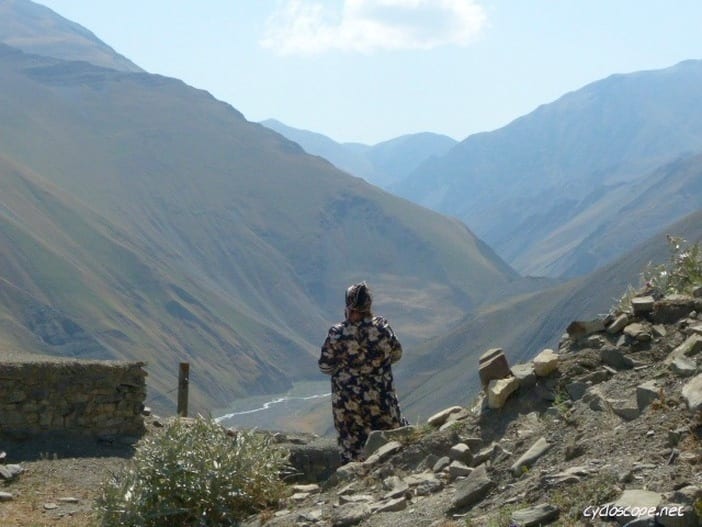
We arrive at the town center, where a large gazebo will host a wedding banquet. The only shop in town is closed. It’s Sunday. We hope in vain for someone to invite us to the banquet, but nothing. After an hour or so, a gentleman comes to open the shop, so we can buy some food.
Finally Xinaliq
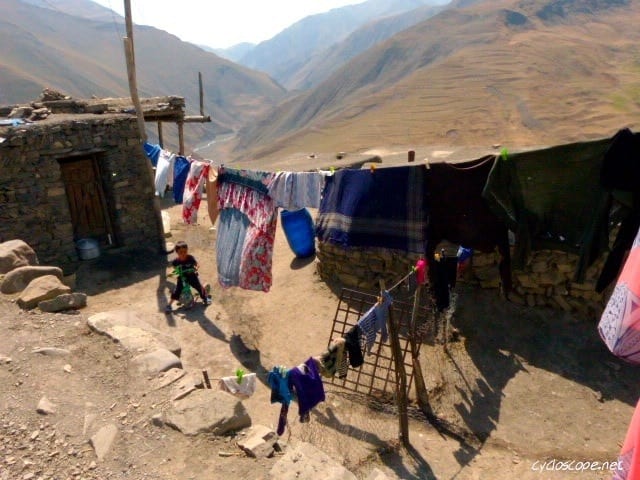
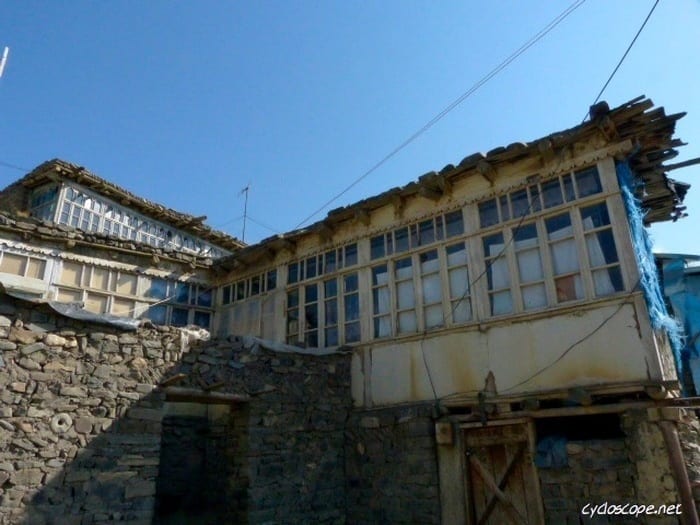
The town is spread over all of our heads. The houses are made of river stone, and the roofs are flat, so that the roofs of the houses below often serve as terraces and walkways for the houses above. There are no concrete or any other materials, besides some metal sheets, which arrived just a few years ago, in 2006, when the road was completed.
We move towards the valley to find a spot for the tent and be able to wander around without weights. At the end of the town, a dirt road leads to the entrance of the Şahdağ National Park, but there is not a living soul.
We set up the tent in the meadow along the river and head back to the village. This time, we climb among the narrow streets that lead to the top. The village is very lively, and it seems all of its 2000 dwellers are around.
All around, it’s full of walls made of tiles of dried cow dung and straw. They serve as fuel to warm in the cold winter. The view from the top of the village is truly stunning, and it is amazing to think that, for thousands of years, the people of this village have been doing well, just using what this remote piece of land, surrounded by impassable mountains, has to offer.
The river provides water and stones for the houses. Cows and sheep for food, clothes, and heating. No crops except for some barley, too cold, and not good soil. Since 2006, with the arrival of the road, a little has changed (but very little).
Some roofs of the new houses are made of metal. And then, of course, there are the cars. From the top of the village, we take a back road, or rather a path on a bare mountain that leads to one of the many cemeteries.
The mysterious graves of Khinalug
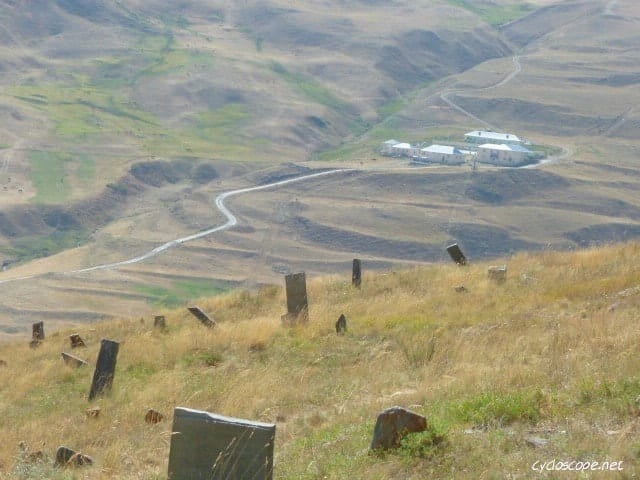
South of the village, visible from the highest spots, is an area of land where the ancestral cemeteries are, with many very old tombs. No archaeologist has dug here, so nobody knows. Some tombstones are just stone plates planted in the ground; others have inscriptions in ancient Turkish or other languages.
The oldest one might be Neolithic. Like Lahic, Xinaliq is part of the ancient Albanian tribes, so it also has its own language here.
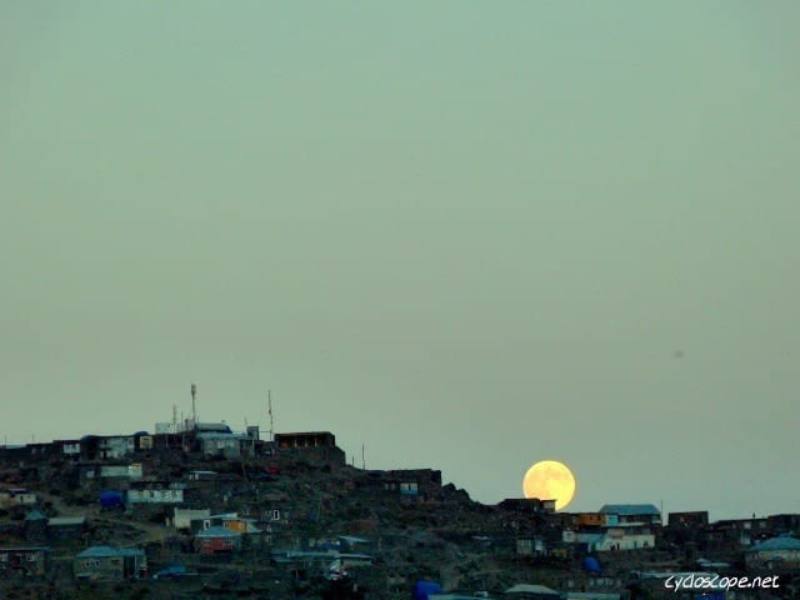
Back in town, we met two Italians who arrived there with a rental car, and so tomorrow we have the lift back to Baku. The night is astounding, with a full moon rising from the back of the village.