

Last Updated on 16 January 2026 by Cycloscope
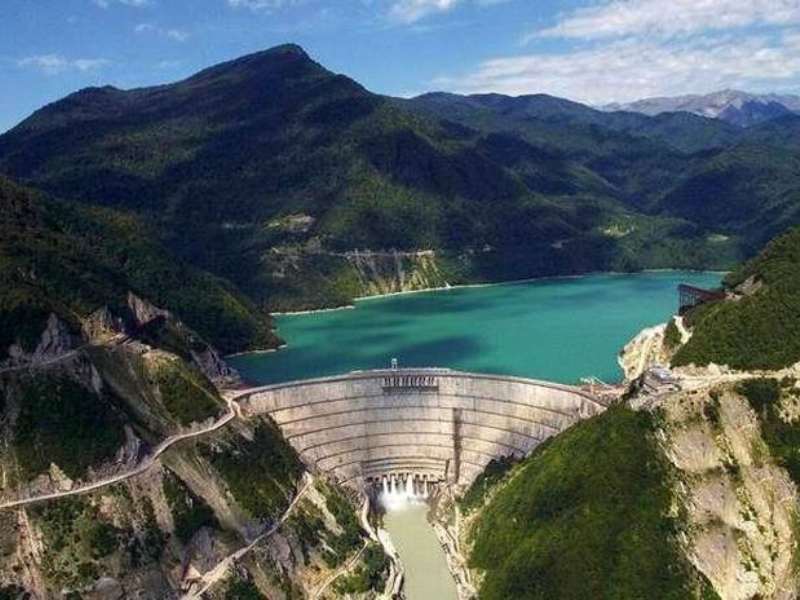
Svan people, their culture, dwellings, and crafts. All of this could disappear to produce so-called “clean energy,” as in the history of Svaneti and the Khudoni hydropower plant.
When people hear about Hydroelectric energy, most think of sustainability, but is that entirely true?
Disclosure: Some of our articles contain affiliate links. This comes at no additional cost for you and helps us keep this website up and running. (as Amazon Associates we earn commission from qualifying purchases)

As one of the world’s top five countries in per capita water resources, Georgia invests heavily in hydropower, producing 80% of its electricity from hydropower plants.
The Big One: Enguri Dam
At 271.5 meters, the Enguri Dam is the 4th-tallest concrete-arch dam in the world (and therefore the largest dam in Europe), ranking only behind Chinese dams.
With a nominal capacity of 1,320 MW and an average annual capacity of 3.8 TW · h, it supplied approximately 46% of Georgia’s total electricity consumption (as of 2007).
The history of this plant is long and winding. We provide a brief overview; this is not the article’s main topic.
History of Enguri Dam – the biggest dam in Georgia
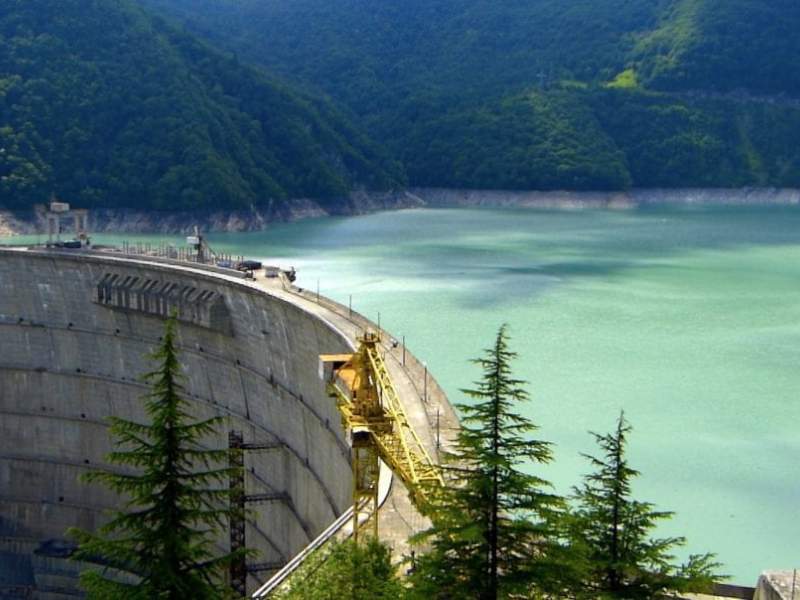
Conceived in 1961 under Nikita Khrushchev‘s government, it was completed in 1987, just in time to witness the Soviet Empire’s collapse.
After the end of the 1992/1993 Abkhazian-Georgian conflict, the forces of both sides faced each other across the Enguri River. They realized that this powerful generator could be useless without both sides working together.
Inextricably linked to other unresolved issues in the peace process, the ownership of the complex remains undecided.
But let’s come to the main topic of this article: the future.
The Georgian government is presently promoting two massive hydroelectric projects; here, we’ll focus on one of these.
What’s next: Khudoni Hydro Power Plant project
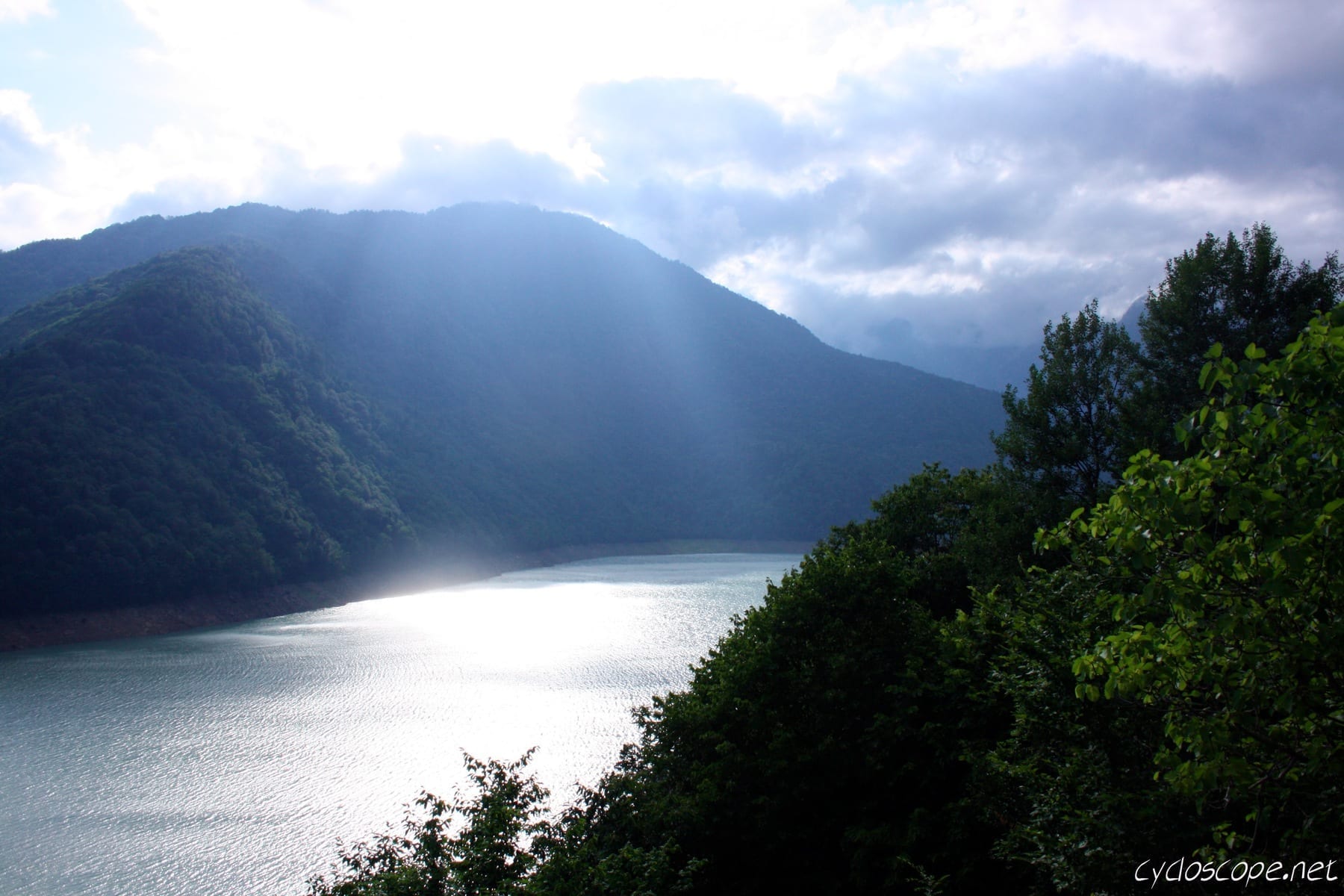
The Khudoni HPP is another project in the Enguri cascade system, which includes the Enguri HPP and the smaller Vardnili I, II, III, and IV (340MW in total).
The project envisages the construction of a 200-meter-high concrete arch dam located approximately 34 km upstream of the Enguri Dam.
The plan is for Khudoni HPP to have an installed capacity of 700 MW and an output of 1.5 billion kWh.
It will be further complemented by several other upstream hydropower plants on the River Enguri (Tobari Hydropower, installed capacity of 600 MW, projected generation of 2.2 billion kWh; Nenskra hydropower cascade, 300 MW).
According to government calculations, the construction of the Khudoni HPP would increase the country’s electricity generation by 20 percent, cost 1.2 billion USD, and last 5-6 years.
This appears to be an impressive project that could produce substantial clean energy, but is this energy clean? What’s the price, and who’s going to pay?
Consequences of the Khudoni Project
Let’s consider a few things:
The Khudoni project is not a brand-new idea. NGOs blocked it in the early 1990s; Green Alternative played a significant role.
Ecological consequences and impact on wildlife
According to this severe and experienced association, the Khudoni project:
“was shown to be a construction that contains extreme risks for ecological disaster. The Khudoni HPP would intensify the devastation of forests and wildlife habitat, the loss of river species populations and the degradation of upstream catchments areas, owing to the flooding of the reservoir area in one of the most amazing highland regions of Georgia.
The upper part of the River Enguri basin combines sub-alpine forests and meadows, rocks and alpine tundra. The area is well known for its endemic wildlife. This includes different forest bird species, a community of large raptors (golden eagle, griffon vulture and lammergeyer), and endemic birds including the Caucasian black grouse, the Caucasian snowcock and the Caucasian chiffchaff. Mountain goats, chamois, brown bear, wolf, lynx, roe deer, and wild boar are quite common.
The cumulative impact of the Khudoni, Enguri and Tobari hydroes will adversely affect water quality, natural flooding and species composition in the river”.
Impact on the local population and cultural heritage
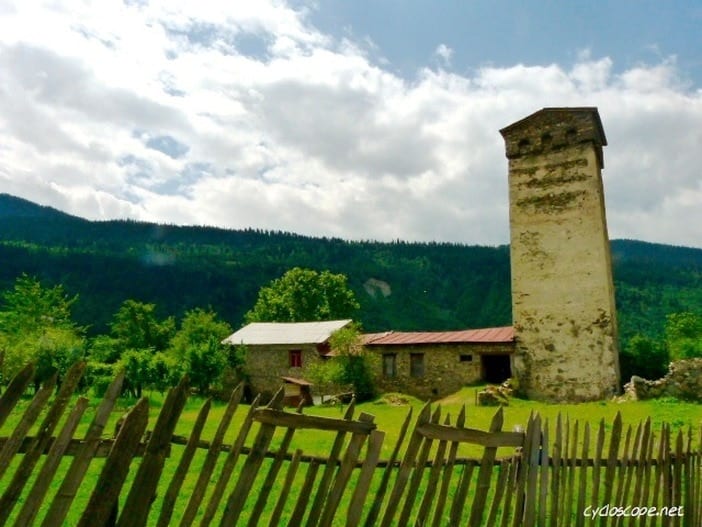
As this is not enough, the project “requires the resettlement of severalunique villages (including Khaishi).
The Khudoni HPP site is located in Zemo Svaneti (Upper Svaneti), an area of unique beauty.
Preserved by its long isolation, the Upper Svaneti region of the Caucasus is an exceptional example of mountain scenery, featuring medieval-style villages and tower houses.
The town of Khaishi still has more than 200 of its renowned, highly unusual houses, which were used both as dwellings and as defense posts against invaders who plagued the region in medieval times and earlier.
Resettlement issues and land ownership
The Zemo Svaneti region has been a UNESCO World Heritage Site area since 1996. According to the magazine Tabula.ge, 14 villages are to be flooded, affecting the homelands of 769 people and 524 Hectares of land. At the same time, a preliminary World Bank study indicates that more than 1,600 people are to be resettled.
The resettlement process is linked to another problem: the controversy over land ownership.
The state previously registered lands that did not officially belong to anyone as state property and subsequently transferred more than 1,500 hectares of land (including agricultural, estate, forest, road, and infrastructure) to the investor for a symbolic 1 USD.
According to Tabula, “Upon reaching an agreement with the government of Georgia, Trans Electrica decided to return those lands to the population, first helping locals to register them, at the company’s own cost, and only then commencing with the buyout of the land. To this end, the company hired a Canadian company, rePlan.”
But in the present day, these are all good intentions proclaimed.
Svan People
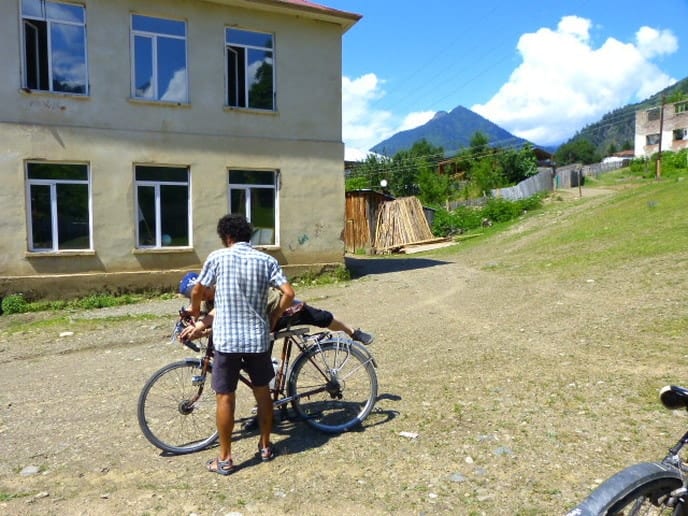
But who are these 769 or 1600 persons?
Svaneti, or Svanetia (Suania in ancient sources), is a historical province in Georgia, located in the northwestern part of the country. The Svans, an ethnic subgroup of the Georgians, inhabit it. The Svan self-designation is Mushüan.
The Svans are usually identified with the Sanni mentioned by the Greek geographer Strabo. Archaeological, toponymic, and linguistic evidence indicate that the ancestors of the Georgian people have inhabited the west-central part of the southern Caucasus region for at least 5000 years, and probably much longer.
In the third millennium BC, one group of Kartvelians migrated to the northwest, reaching the east coast of the Black Sea. Place names of Svanetian origin are found in this area. Subsequently, these ancestors of the Svans moved into the uplands that are now Svaneti.
Axes and other artifacts dating to the early Bronze Era have been discovered in Svaneti, along with the ruins of foundries for the production of bronze and iron. This indicates that the local population was engaged in metalworking in the 2nd and 1st millennia BC.
Svan military might
Strabo (end of 1st century BC) describes the Svans as a fierce, warlike mountain people, ruled by a king and a council of 300 elders, and capable of fielding an army of 200,000. (This figure may represent an exaggeration, or perhaps Strabo was including other Kartvelians under the designation “Svan”).
Beginning in the mid-13th century, successive waves of Mongol, Persian, and Turkish armies devastated Georgia’s lowlands.
Because of its remote location, much of Svaneti was never invaded. For this reason, many of the finest works of Georgian artistry, including icons, illuminated manuscripts, and gold and silver items, were preserved in Svanetian churches during this period.
The Svan villagers protected these treasures zealously (the theft of an icon was punishable by death, usually by stoning, even in recent times).
A sizeable number of objets d’art of foreign origin (Persian, Syrian, Italian, German) have also found their way into Svaneti, a testament to the wide-ranging cultural and trade contacts of medieval Georgia.
Svan religion
Svans also have their own religion, based upon an indigenous system, similar in many respects to those of other Caucasian tribes, which has been influenced by long and intensive contact with Mazdaism (presumably through the Ossetians) and Orthodox Christianity.
The chief Svan deities are Xosha ghêrbet ‘great god,’ Jg∂ræg ‘St George’ the chief protector of humanity, and Târingzel ‘archangel’.
Important female figures include Barbara, a fertility deity and healer of illnesses; Dæl, goddess of the hunt and protector of wildlife in the high mountains; and Lamæria, ‘St Mary, protector of women. Christ (Krisde or Matsxwær ‘savior’) presides over the world of the dead.
Crafts of the Svan people
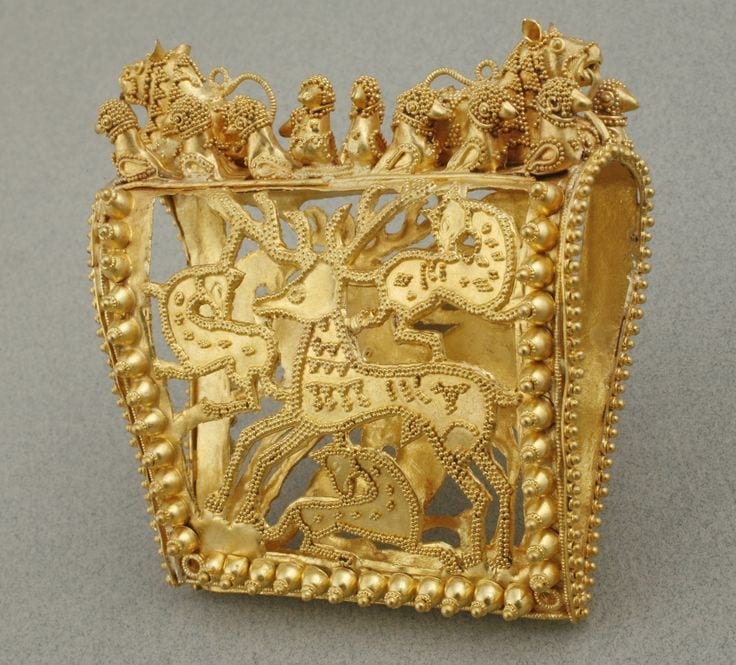
Svan artisans were especially renowned for their skill at producing finely detailed gold and silver icons, crosses, and drinking vessels.
It has been estimated that as much as one-fifth of the medieval Georgian metalwork preserved to the present day is of Svan origin.
There was also a distinctive local school of icon and fresco painting. Svan folk literature comprises a variety of genres: epics, ritual and lyric poetry, tales, myths, and fables.
Svan Music
Among the folk arts, special mention should be made of Svanetian music. A tradition of polyphonic a cappella singing has evolved in Svaneti, as in other parts of Georgia.
One distinctive feature of the music of this province is its greater use of dissonant intervals and striking harmonic progressions. These choral songs accompany certain religious rites and festivals. Songs accompanied by the chæng (harp) or the ch’unir (a three-string violin) are also frequently heard in Svaneti.
Anatomy of a Svan settlement
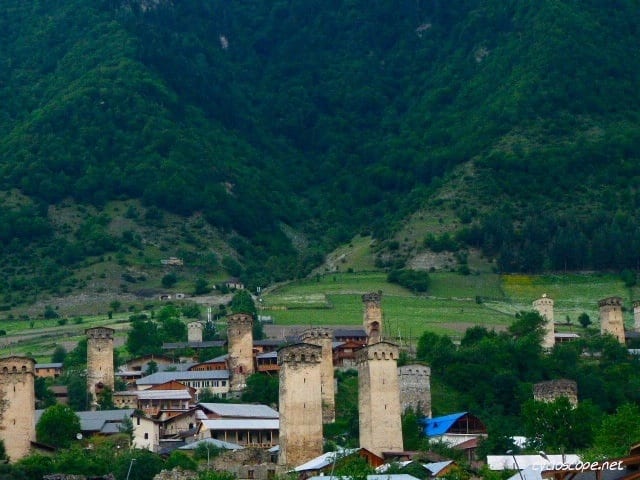
The traditional Svan settlements are exceptionally well preserved in Upper Svaneti, where Khaishi is one of the most important villages, often regarded as the Svanetian “door”.
The qew (or commune) comprises a group of hamlets, each inhabited by one or more clans. Within the hamlet are a few dozen homesteads, closely packed together, surrounded by farmland.
In the type believed to be most ancient, the family and livestock live under one roof in a fortress-like three-story stone structure. More often, there is a separate, adjoining defense tower (murq’wam) where the family and cattle take shelter in the event of an attack.
After the tragic winter of 1986-7, during which avalanches destroyed several villages in Upper Svaneti, many Svans were resettled in the Marneuli region south of Tbilisi, losing contact with their ancestral territory and facing significant challenges in maintaining their cultural expressions.
Avalanches and landslides are another significant risk for the Svaneti region, one that will increase with dam construction due to flooding and associated deforestation.
But will this at least give people cheaper energy?
What will people get in return
According to Green Alternative:
“The Khudoni dam will increase the electricity tariff due to the massive investment in the energy sector, while the people living near the Enguri Hydro, Georgia’s largest hydro project, producing 40% of Georgia’s electricity consumption, still experience problems with access to energy.
According to a leaked World Bank document, the project’s basic costs would be at least USD 780 million, the production tariff would be 5.84 US cents per kWh (compared to 0.7 cents for Enguri energy), and the economic return would be only 5%.
High electricity tariffs are already unaffordable for most Georgians; more than 50% of the population lives below the poverty line, and extreme poverty affects 17.4% of the population (according to World Bank data).
The construction of Khudoni would significantly increase the electricity tariff, thus harming the livelihoods of the majority of people.”
Project supporters ‘ arguments are well expressed by Tabula.ge:
The company planning to construct the Khudoni HPP since 2011 is Trans Electrica. The total amount of investment the company will make currently stands at USD 1.2 billion. Since 2011, the company has paid property taxes, and the Svaneti budget has received USD 600,000 annually for the third consecutive year.
The company’s tax burden will increase significantly once the hydropower plant is operational.
During the operation of the Khudoni HPP, the company will pay 20 million GEL in the form of annual profit tax; an income tax worth 20 million GEL will also be paid during the construction of the plant and an additional 4.5 million GEL after the completion of the building when some 350 people start working on the plant, each receiving an average salary of 1,700-1,800 GEL.
To use the power transmission line to carry electricity to Turkey, the company will pay 19 million GEL. The trade deficit will go down by 8 percent annually, whilst the country’s Gross Domestic Product will increase by 1.1%.”
According to Green Alternative, these numbers aren’t realistic.
But Khudoni HPP is not the only large hydroelectric project that the Georgian government is pursuing.
The construction of another large hydropower plant is envisaged in the Deriali gorge on the Tergi River. This project will be treated in the upcoming second part of this article.
All sources are linked in the article