
Last Updated on 18 January 2026 by Cycloscope
Kep, Cambodia – visiting the ghost villas
Kep is a fallen star, a dream that came untrue, an open wound, a memento, an unwilling memorial. Although to a distracted eye, none of this may show.
Disclosure: Some of our articles contain affiliate links. This comes at no additional cost for you and helps us keep this website up and running. (as Amazon Associates we earn commission from qualifying purchases)
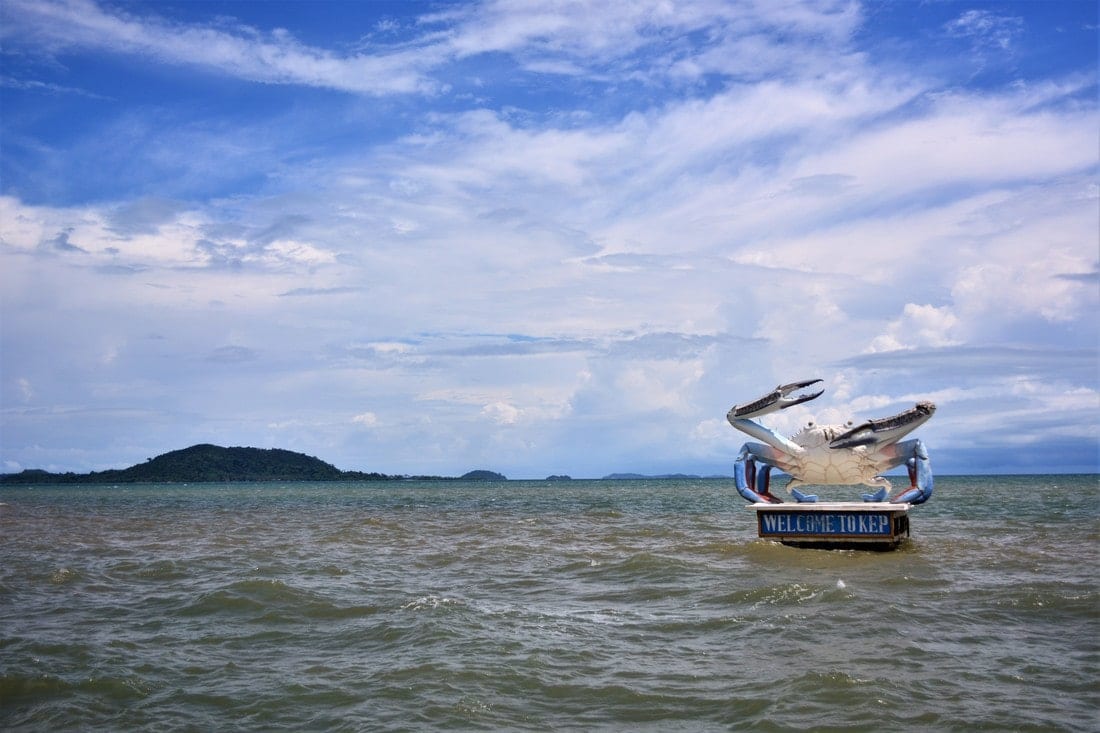
To the average backpacker, Kep is cheap and tasty crabs, a white sand beach (spoiler: it’s fake), and a sparsely populated town inexplicably spread wide.
As the tropical dream of a wealthy French class, pretending to be adventurous just for being colonists, Kep-sur-mer was founded in 1908 as a resort town where a few fishermen’s huts once stood.
Kep was a daring experiment, the vanguard of a new Cambodia, the avant-garde of the most modern country in Southeast Asia, the modernist country.
Here, King Sihanouk let loose his fantasy of a great Khmer nation, a guiding light for a cultural renaissance of Indochina, in newly independent Cambodia (1953), still de facto under the rule of a foreign power.
New Khmer Architecture, the name of the experiment, is a melting pot of Western modernist ideas from the Bauhaus, Richard Neutra, and Le Corbusier, and traditional Khmer architecture—stilted houses with impossible stairs, expansive windows with bizarre geometries, wide porches, and terraces.
Sihanouk and Molyvann
So many critics may be drawn to Sihanouk, and he certainly made many mistakes, acting naively and egocentrically.
Nevertheless, he was, in some ways, an enlightened king, with a genuine passion for the arts and creativity, and, in his own mistaken way, he always aimed for the nation’s good, providing ample space and resources for artists and creative people.
The protagonist of this era was Vann Molyvann, a Cambodian architect from Kampot who studied in France, a few years before many of the Khmer Rouge leaders ironically did the same.
Molyvann is undoubtedly the leading figure of New Khmer Architecture, having worked on more than 100 projects from 1953 to 1970, when he managed to escape after the Lon Nol coup and so lived through the Khmer Rouge era.
The Khmer Rouge years
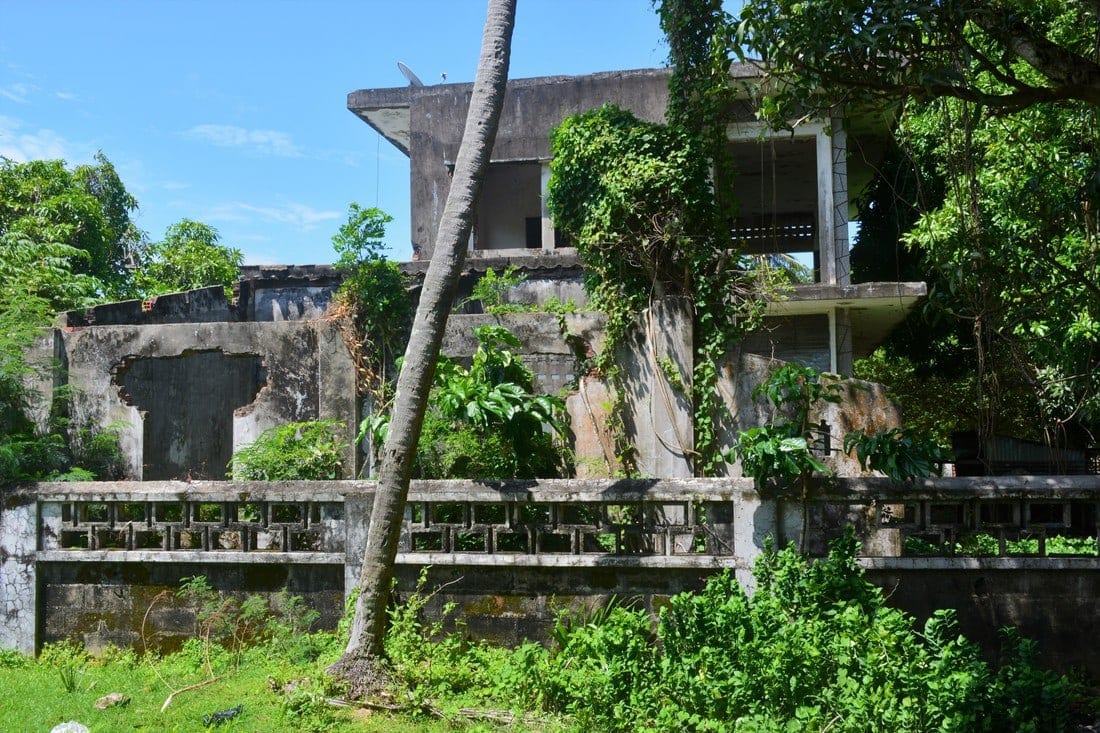
During the Khmer Rouge years, havoc fell upon Kep, a symbol of everything the Cambodian communists were fighting against: wealth, literacy, western influence, and leisure.
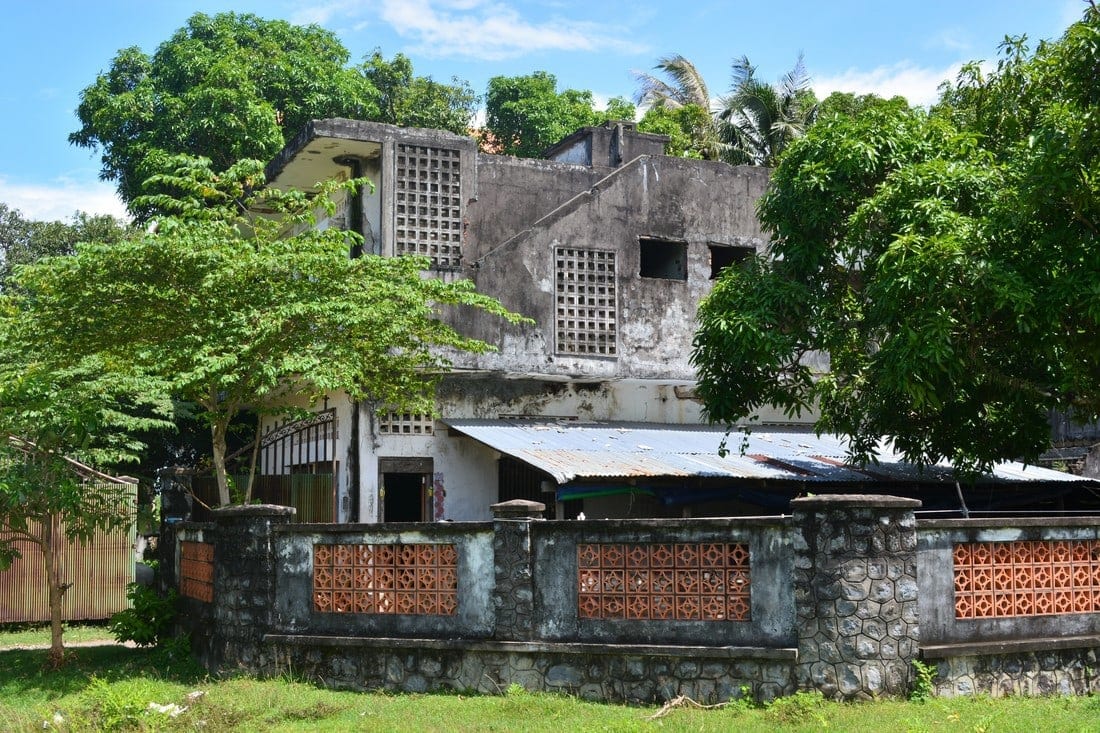
Like everywhere in Cambodia, people were forced out of their houses and driven to labor camps in the countryside. Few of these villas were taken over by Khmer Rouge cadres, setting up their headquarters, but most lay abandoned for years that became decades, and still, they are.
Nowadays, some are unmissable, still lining the boulevard where Catherine Deneuve drove her Cadillac during les années d’or.
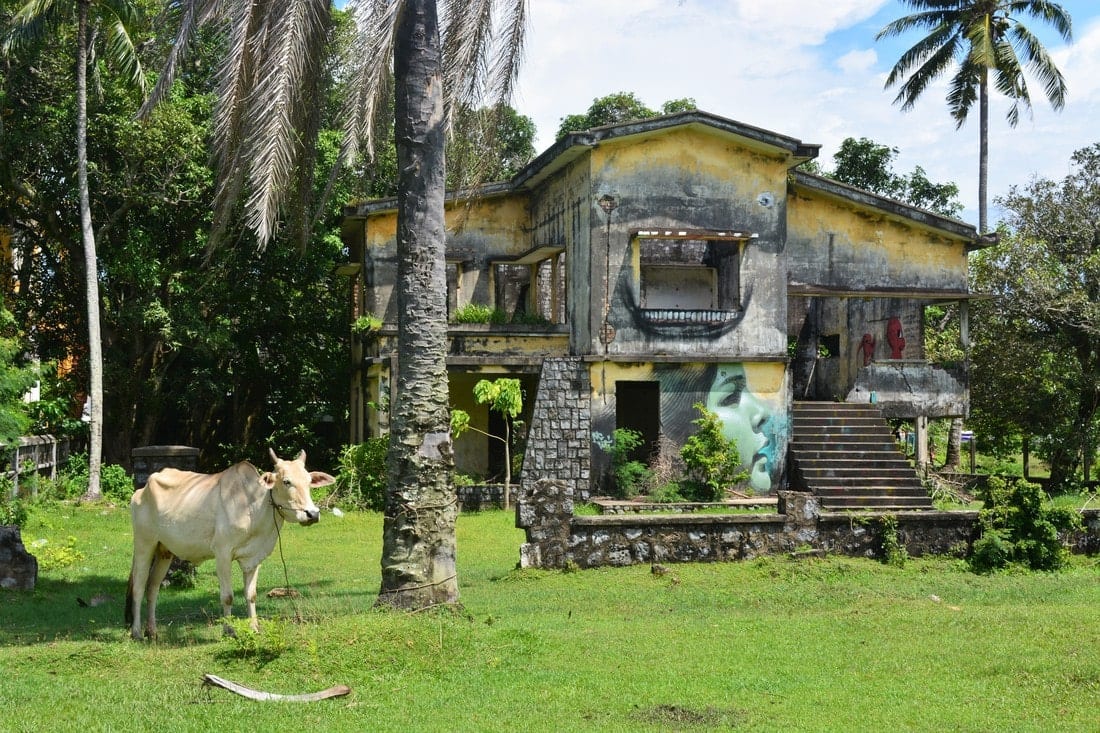
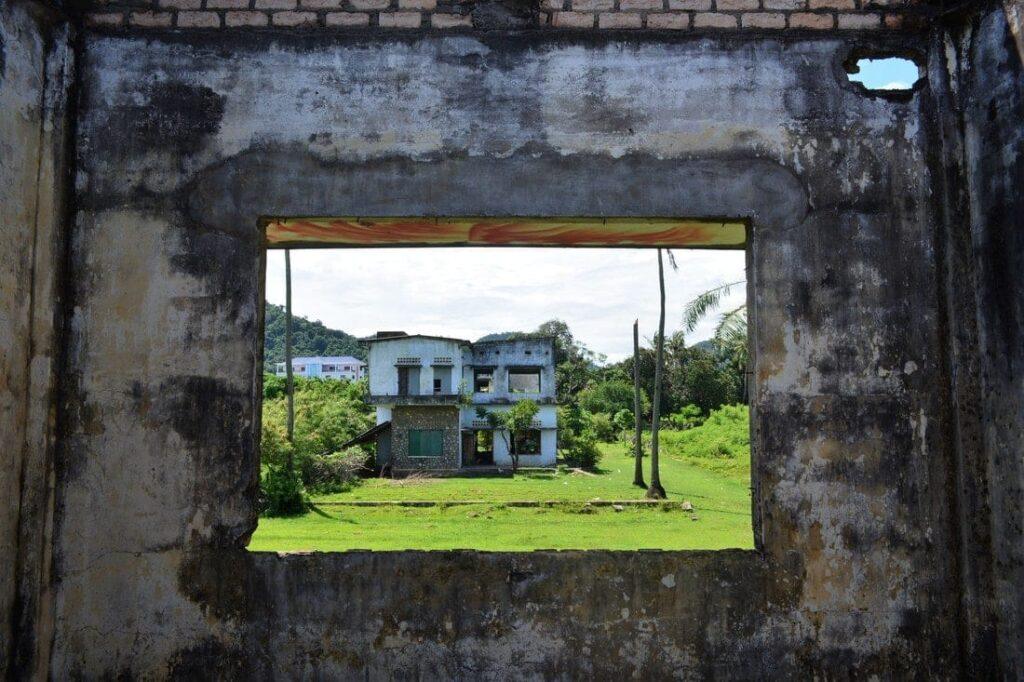
Some other villas are hidden in the bushes and require a bit of exploration to be seen; those are the worthiest. Tropical ivy crawling the twisting staircases, awkward graffiti decorating the walls, greenish for mosses and lichens, ageless, unfading rubbish scattered on the floor of wacky balconies.
Some others, instead, have been occupied by poor families, buffaloes eating the wet grass, clothes hung outside glassless windows, and children playing with handmade toys. Some more have been bought by wealthy people and are undergoing restoration.
The Modern Kep
Nowadays, Kep is a renewed promise: white sand has been brought in from the islands to create a fake but lovely beach, new roads are being built, and new resorts are opening.
Many lazy restaurants, where to eat while lying on hammocks, line the long seafront, and the market attracts locals and foreigners for its famous crabs.
Everything is so spread away, far from everything else, which makes it seem this town has grand ambitions, to become something big, to fill all this void. A quest to be South East Asia’s Saint Tropez. Godspeed.
A trip to Kep is a dip in Cambodian history, in the tragedy of his fallen grandeur, the tale of a bright future that never came true.
Kep is 20km east of Kampot, on the coast, very close to the Vietnamese border.
If you wish to know more about our bicycle trip in Cambodia, check out this series of articles
For hints about traveling in Cambodia, see our guide to traveling to Cambodia on a budget