Last Updated on 17 January 2026 by Cycloscope
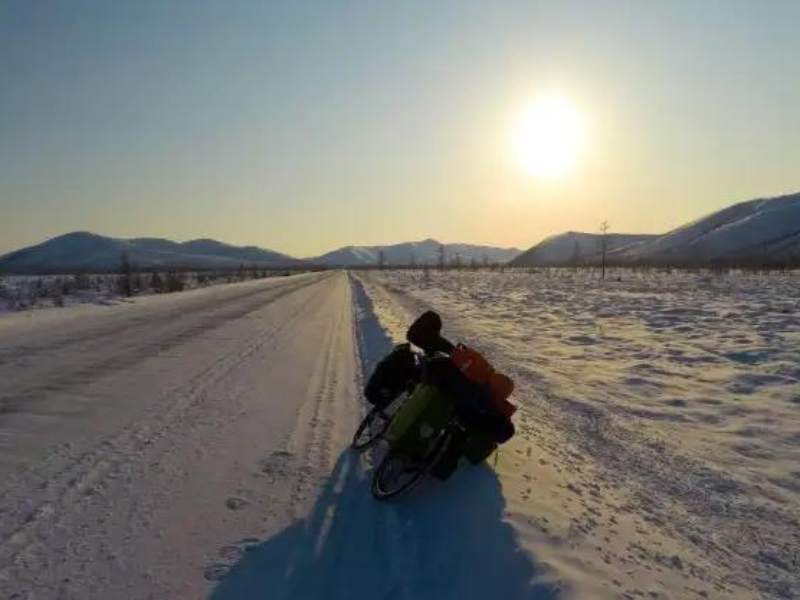
Cycling in winter, in the coldest places in the world
Trip to Siberia: an interview with Dino Lanzaretti
Cycling in winter is not pleasant for everyone; many await the arrival of the mild season to get the bike out of the garage, even to use it for commuting, let alone for long bike journeys.
Disclosure: Some of our articles contain affiliate links. This comes at no additional cost for you and helps us keep this website up and running. (as Amazon Associates we earn commission from qualifying purchases)
There are some, though, who love the cold, for whom a typical winter no longer suffices, those who go in search of the coldest winter in the world, who decide to take a trip to Siberia, by bike.
We never tire of reiterating that bicycle touring is for everyone, anyone can take a bike and leave, fortunately, this message seems to be passing, and more and more people decide to try the thrill of the bike trip.
Cycle tourism is for everyone, but not all bike rides are the same; some require uncommon determination and courage, and Siberia in winter is undoubtedly among them. It isn’t easy to imagine a more extreme journey.
Dino Lanzaretti had this courage, and his determination led him to ride the coldest winter in the world, overcoming difficulties and risks that “normal” bicycle travelers like us can hardly even conceive.
We asked Dino to tell us a little about himself, about this trip, and his story as a bike traveler, and that’s what came out of it.
Hmmm, what about something easier?
9 easy destinations for your first bicycle trip
If you’re approaching this world
How to start bicycle touring
Essential gear for bicycle touring and bikepacking
30 Rules (or advice) to follow when traveling by bike
How to turn a piece of junk into your next touring bike for less than 100$
11 of the best touring bikes under 2.000$
11 Touring Bikes under 1,000$
10 great bike panniers compared
14 lightweight tents under 200$
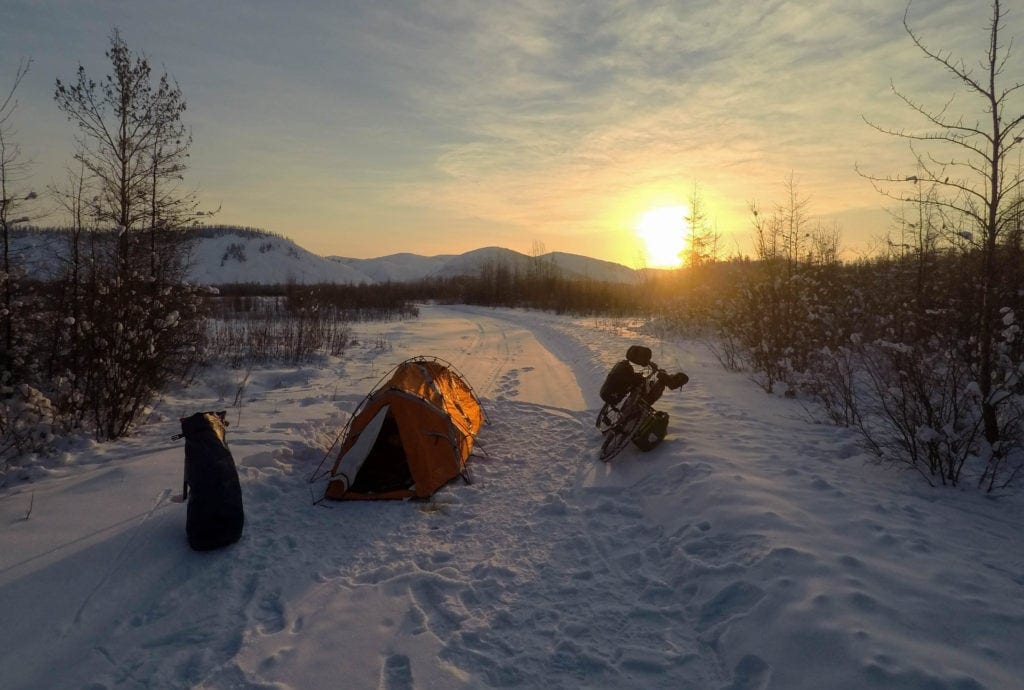
Hi Dino, and thank you for accepting this interview. First, tell us a bit about yourself and your relationship with bike touring. Where are you from? How old are you? When did you start traveling by bike?
I was born 40 years ago in Santorso, a small village at the foot of the Dolomites, in the province of Vicenza. When I was twenty, I took my backpack and started to wander the world on the wave of the old hippies of the sixties. Then, one day in India, I discovered a love for the mountains, and from that moment I dedicated my soul and body to mountaineering.
I began traveling to every corner of the planet to climb the highest mountains. In my backpack, I had no more books or ethnic clothes, only crampons and ice axes. I soon realized, however, that I did not have the fearless mountaineer’s attitude and therefore sought an alternative path to my happiness.
I wanted to continue struggling to savor the taste of getting somewhere, and the bike seemed interesting. I got a €100 busted bicycle as a gift and randomly went cycling in Asia. From the first ride, it was pure love. Since then, I haven’t come down from a bicycle!
Among all the trips made (list them), what was your favorite and why?
To date, I have cycled over 70,000km through Indochina, forbidden Tibet, the Americas, the Middle East, Africa, and now Siberia, all the way home. I have no doubt which is the best trip; surely the next one.
Let’s talk a bit about your last trip, from the extreme east of Siberia to Italy, to illustrate the route, the motivations, and tell us which part of the route has moved you the most and why.
To illustrate the path, I’ll be quicker, I am attaching an animation of the roads I have traveled: (above)
I needed a new destination, a place unknown to me. I wanted to learn again how to get by in an environment I had never seen before, and I wanted to go back to studying a new way of traveling.
After all those kilometers I’ve covered since then, I needed to return as a newbie to get back into the game. Traveling on easier lands had begun to bore me. This is why I wanted to try to cross the coldest lands on the planet, simply out of pure curiosity.
The most incredible emotion I will ever be able to identify, I have been machine-gunned every day by sensations so intense and new that making a choice is impossible for me. I could tell you about arriving in Yakutsk after 2200km at -50°C, but it almost pales in comparison to that night in a tent with nomads in Mongolia.
In certain situations of fatigue and stress, a smile from a child you meet on the road can really move you and unleash such joy as to be compared to the thrill of arriving on top of Everest.
Pedaling as we do, it is really easy to get upset by what happens on the street, just a meeting, a problematic situation passed, or a red sunset to relieve all the efforts of the day.We chose the bike because we are dependent on emotions. I don’t have to identify the most intense.
What are the most significant difficulties in traveling by bike in winter? What changes when temperatures drop so much below zero?
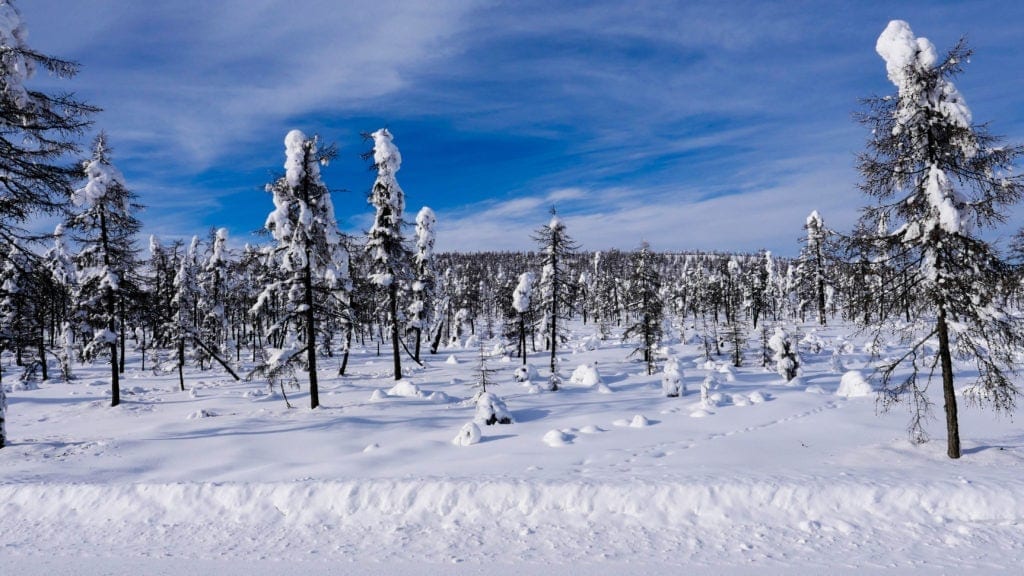
I think that up to -30°C it does not change much if you are well equipped. Cycling in the cold is pleasant, and you can sleep in the tent without too much difficulty if you have high-altitude mountaineering materials. However, there is an invisible wall against which you bang when temperatures fall below -35°C. It is a perceptible threshold, even without a thermometer, because everything changes in a second.
The air begins to pinch the nostrils, and breathing is painful. The eyeballs start to freeze, and you must constantly blink the eyelids to avoid being blinded. The breath coming out of the mouth freezes instantly and falls back on the body, covering you with ice.
By bike, you are submerged in snow even if it is not snowing, but the tragedy occurs in a tent when the body’s moisture freezes the inner wall. The sleeping bag greatly compromises the insulating capacity.
Melted snow takes much longer to melt, and removing the bulky gloves to handle the equipment is very dangerous and often painful. I could only remain with the work gloves for less than 30 seconds, after which I screamed from the pain of the chilblains.
In addition, even the gas freezes, and turning on the stove becomes impossible. Moreover, plastic first becomes as complicated as marble and then as fragile as crystal, making it challenging to handle any part of the equipment.
What did you eat?
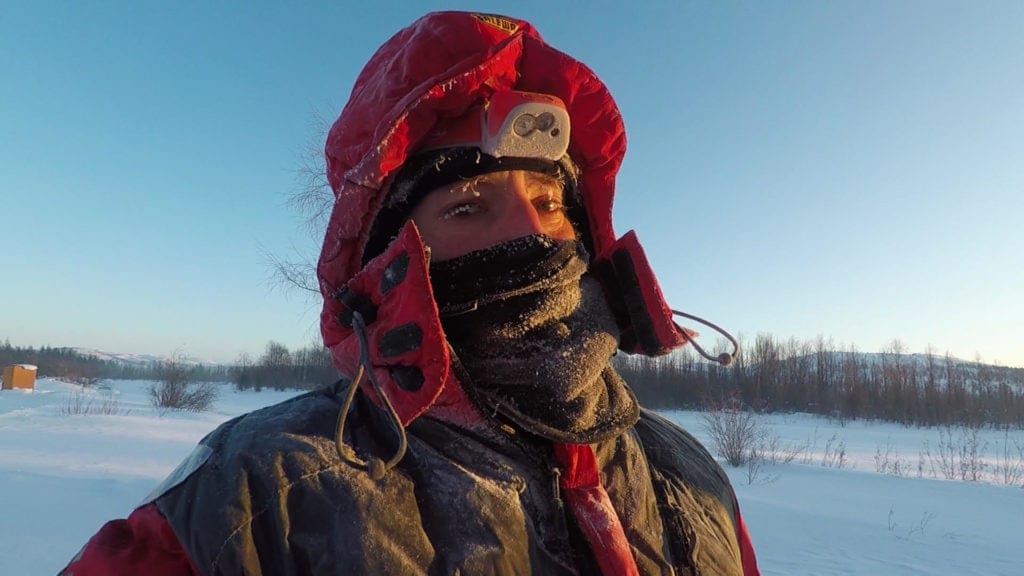
While I was in Siberia, I didn’t eat enough, and in fact, I lost more than 10kg. However, I could eat slices of salami and a kind of dry bread, breaking it into small pieces. I always bought food for 10/15 days, such as whole salami, sugar, chocolate, biscuits, and oats for breakfast.
The problem was that everything was frozen, so I put a frozen salami inside the sleeping bag when I went to sleep. In the morning, it unfroze, and then I could cut it into slices that froze in my hands. I kept it warm inside the boots so I could snap it while cycling.
To drink, I used to melt snow in the morning, and for two liters of water, I needed more than two hours over the stove. The chocolate helped me a lot, but the secret weapon was the oats that I consumed in quintals during the only hot meal of the day, breakfast, while I thawed the snow.
What happens to a bicycle at those temperatures? What are the most significant mechanical problems?
Everything in plastic is destroyed, and all that is lubricated is nailed. I replaced every plastic part with aluminum and bought a special extreme-temperature grease for cables, bearings, and chains.
At -55°, the gearshift springs no longer work properly, but the problem was not very serious because I hardly ever change gears. Then you must never touch the bicycle with only the first layer of gloves, because, being made of steel, it can burn you.
What tires did you use?
I used the unsurpassable Schwalbe Marathon Winter
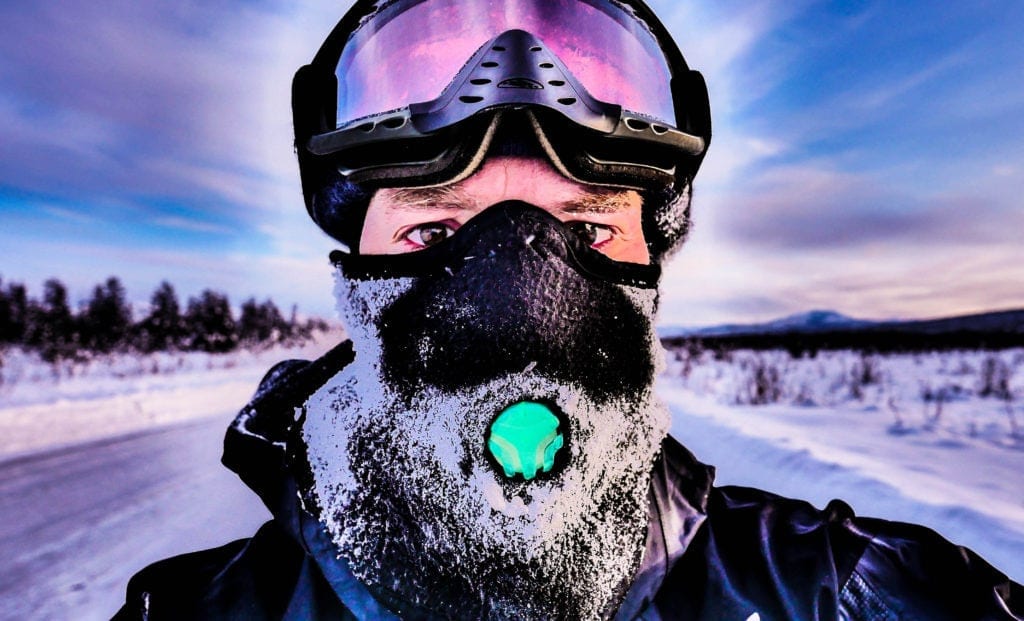
Cycling and camping when everything is covered in snow. What advice would you give to those who want to try?
The first advice I can give is to feel good in the snow. I come from alpinism, and the snow has been my element for many years. I have had many experiences at high altitudes and in extreme environments. That said, the use of high-quality materials not only makes the difference between an exciting adventure and a nightmare, but, in my case, between life and death.
First of all, you need a good sleeping bag and therefore you absolutely must invest in a goose-down product for mountaineering, to this day it is still the best insulating material. Then you have to keep your feet warm. I use special boots built for poles that withstand temperatures down to -100°C; they are undoubtedly the best investment of my entire trip.
In many cases, it is better not to use the tent, because it retains your body’s humidity, which then inevitably condenses into ice above the sleeping bag. Bivouacking outdoors can make a difference. But you need a good mattress to keep the body as far away from the frozen ground as possible. I usually use two of them, inflatable ones, since the air is the best insulation ever.
Obviously, you need a perfect multi-fuel stove; the only way to get water is to melt snow. It’s incredible how long this process takes, and I’m talking hours every morning with the stove set to maximum power. These are the basic materials for the so-called “normal” cold.
For anyone who wants to travel to Siberia in the middle of winter… it is better to have a chat in front of a good beer because their things are a damn lot more complicated and in addition to the world’s most coveted material you need a great lot of determination.
I’m sure our readers will be inquisitive about the equipment used. Can you make a list? What did you use the most, and what turned out to be useless?
Even here I would end up finishing tomorrow if I made you a list, here is a video that illustrates how I was dressed.
Obviously, everything I had with me was essential for the success of the trip, but my survival depended on some instruments in particular. The stove is undoubtedly the most important thing not to die; it is the only source of heat, and thanks to it, you can drink and eat. I had four with me to avoid any unexpected trouble.
But during one night at -60, all four were broken, and the rubber seals were shattered. A handy item was also an aluminum shield that I used every day to retain as much heat as possible from the stove.
A flint is needed for fire because matches and lighters do not work at these temperatures. I had four with me in case I lost them in the snow. The least-used piece of equipment was the backup batteries, which froze immediately and became unusable.
Worst moment and best moment of this last trip?
There were so many challenging moments while I was cycling in Siberia, I was afraid of dying more than once, especially at night in a tent at -60°C with the sleeping bag wrapped in ice. I spent several nights forcing myself to stay awake, afraid I wouldn’t wake up the next day. I even begged a bear to attack me so I could hug it and feel its warmth.
When I broke the stove, desperation attacked me, but I managed to put everything in order and, day after day, learn to survive those extreme temperatures and, above all, not to make fatal mistakes.
The best moment, as I said before, I cannot identify, and I do not want to identify it. It was a journey as incredible as it was difficult, and every moment of absolute happiness was the son of many difficult situations.
What was your budget for this trip? How did you finance it?
This trip was costly because I had to buy technical equipment. You do not survive with poor equipment, so I made a significant initial investment. But then I spent almost nothing sleeping, practically always in a tent, except in the big cities, where I stayed in hostels. I can say that my budget is always around 5$ a day.
I pay for my travels by working 12-hour days as a chef in Italy during the summer season. Since I don’t have time to spend what I earn, I always have the funds I need when I depart. I have never asked for support from sponsors or patrons because it seems to me that it would pollute my freedom. I prefer to put in an avalanche of hours at work and do not depend on anyone.
Going a little way back in time, there is another trip of yours that we can consider quite extreme: the “unauthorized” crossing of Tibet. Can you tell us about it?
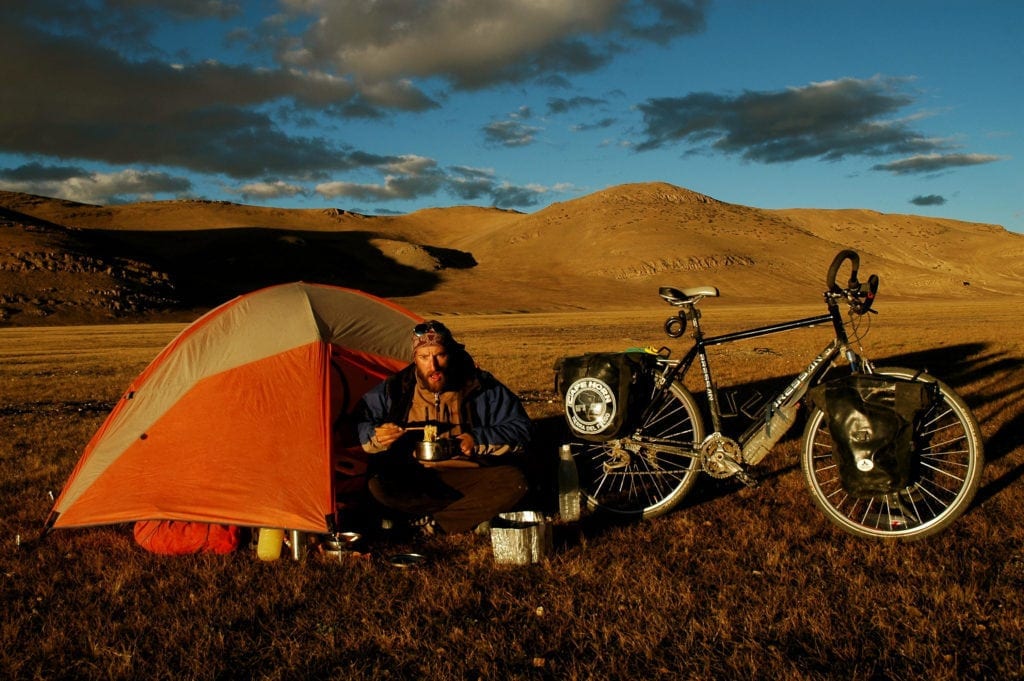
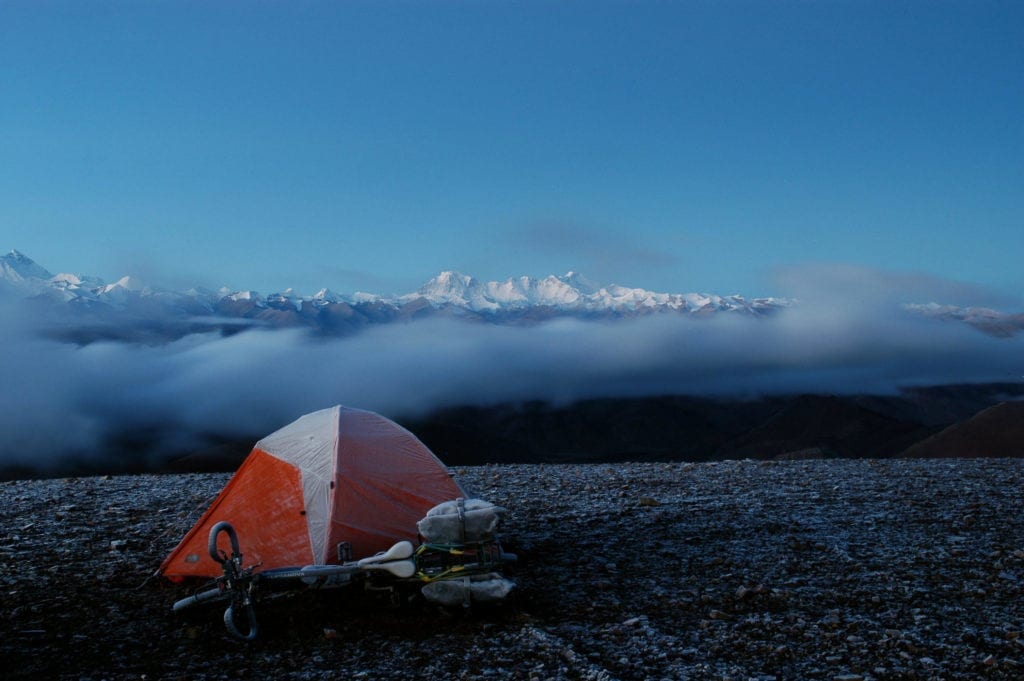
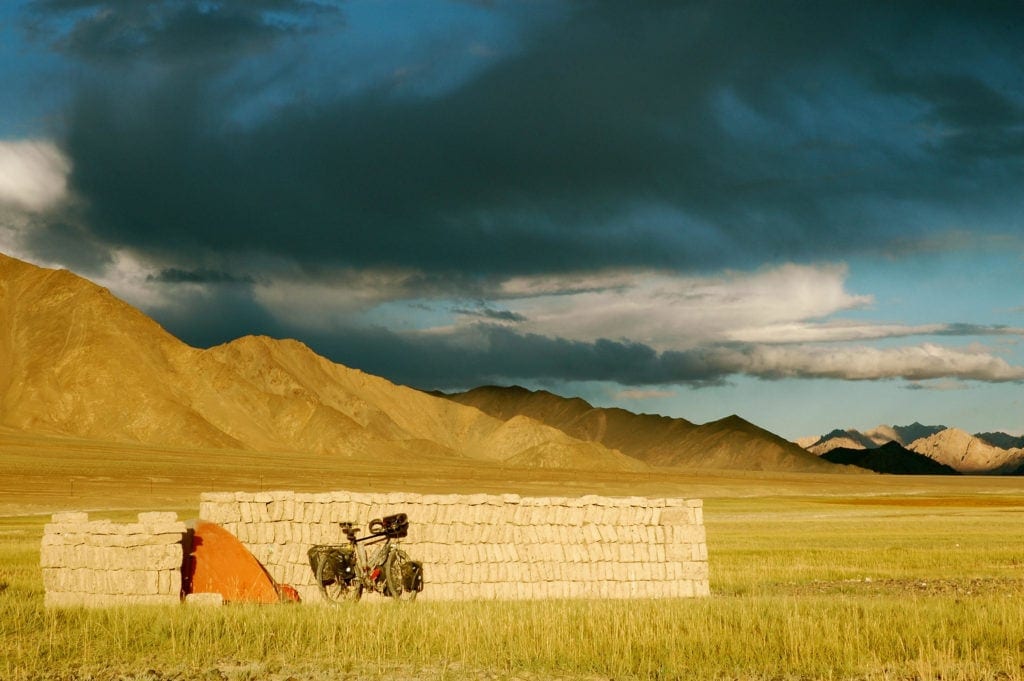
I crossed all of Tibet from west to east, from Kashgar to Kunming, in 6 months over absolutely dirt roads and climbing passes above 5000 meters. To enter the forbidden Tibet from Xinjiang, I had to pass more than ten checkpoints in the dark. I used to stand near the military garrisons and managed to crawl under the barriers while everyone was asleep.
Then I had to pass ten more days to get out of Tibet and return to Yunnan, China. Fatality wanted that: at the last blockade, the police patrol saw me for a trivial mistake and arrested me. With the payment of a ridiculous $20 bribe, I was released, as no one knew what to do or how to manage a foreigner on a bike in those remote lands.
It was a unique experience, I went through the whole of the Himalayas living with the Tibetan nomads and staying alone for entire months. More than a trip, it was a sort of daily meditation, and the unique landscape contributed to my absolute happiness.
The continued escape from the Chinese authorities, like the cat with the mouse, made this journey very difficult on one side, but really worthy of an epic adventure that has bound me inextricably to this way of traveling, bypassing regimes and boundaries only for the pure will to go and see what’s beyond that curve.
Would you do it again?
I will go again tomorrow. Unfortunately, however, the Chinese have intensified border controls and exacerbated penalties for foreigners discovered in Tibet without special permits. I know of dozens of other bicycle riders who have tried to sneak onto the plateau, but to this day, no one has succeeded. I was lucky because winter had closed the mountain passes, and the cars couldn’t chase me.
I think I was the last Westerner to have been lucky enough to succeed. The spring after, those who tried it were heavily rebuffed at the first checkpoint just after Kashgar.
Which of these two trips (Siberia and Tibet) has proved you the most? Both from a physical and an emotional point of view?
Without any doubt, my trip to Siberia. In Tibet, I never feared for my life, while the first weeks in Siberia I pedaled with the fear of sitting on a pole beside me. But this last trip is undoubtedly the son of that idyllic experience in Tibet; there I realized that the solitude and the extreme environment were congenial to me, and the desire to push me further and further was born between the Buddhist temples and the endless expanses of mountains.
Is there anything in your experience as a bicycle traveler that you regretted and would do differently?
In 2010, I cycled with a visually impaired guy from Italy to Uzbekistan on a very heavy tandem. Our motivations for that trip were starkly different, and the inspiration to ride to the other end of the world was not as intense. The result was that my dream turned into a nightmare from which I could not wake up because sponsors and families were expecting something else from us.
From that bad experience, I came out immediately, leaving for Patagonia and disavowing any external help for each of my trips. I do not think I would do it differently; I would start on my own, as was the original project, but who knows if things would have led to what they are today. So, in hindsight, it was an unfortunate experience, but what I am today has also passed from there.
What are the points in favor of traveling solo? What are the negative aspects?
Like you, I have traveled as a couple, and I must say I have spent some really incredible, intense moments. My biggest flaw, however, is that I have been on the road for many years and have developed a personal travel routine with inviolable timing, rhythms, and priorities. Logically, it is now much more challenging to adapt to a rhythm different from mine.
The essential thing to traveling in couples is to start from zero together, to develop the perfect journey, arising from the needs and pleasures of both. For me, changing now is difficult because I have chosen this way, to be as free as possible, and making compromises would seem to betray it.
It’s great to travel in just two, which is much more complicated than doing it by yourself, in my opinion. The only negative aspect of traveling as a couple is that sometimes we are too close to each other and do not open up to strangers.
A couple is together and gets company from the travel companion; if you’re alone, you’re more inspired to meet other people. There’s no doubt that when I travel alone, I meet many, many more people than when I travel with a mate.
Where are you now, and what are your next plans?
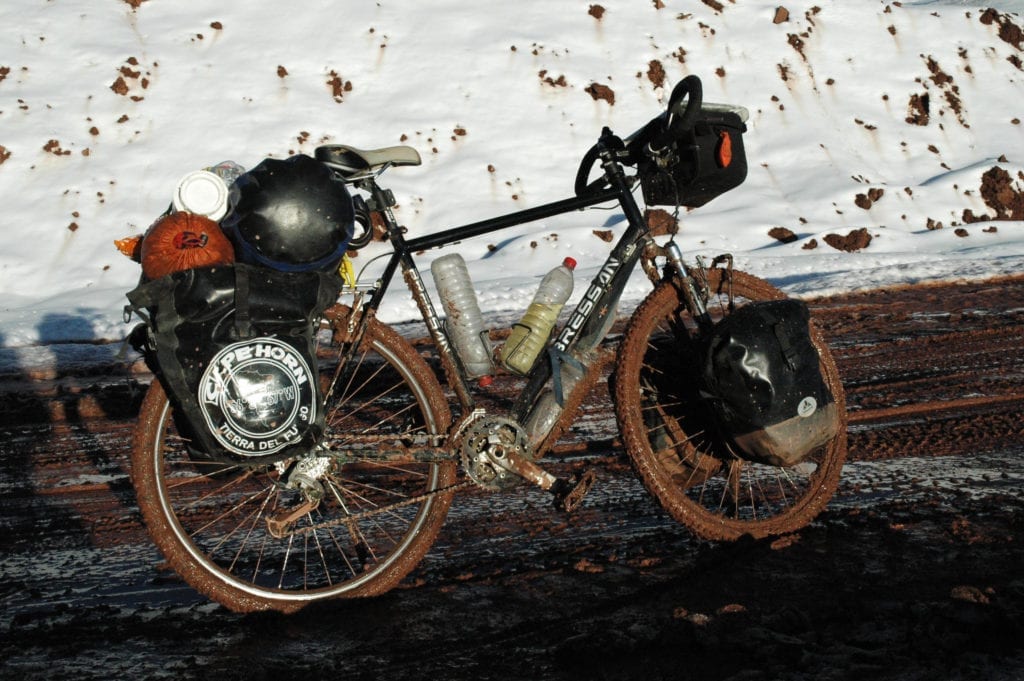
Now I’m back home for almost a month, and it’s like I’ve emptied a 20,000-piece puzzle on the table, and now I’m starting to build the edge. I want to help others like us to undertake journeys that will change their lives.
Today, I respond to social media messages from those who have doubts about equipment and roads. I want to seriously start publishing videos where I put to use what I learned on these 70,000km.
My life has changed since I started traveling by bicycle. This is why I would like everyone to be as happy as I am, and so I want to be the wind behind anyone who wants to leave.