

Last Updated on 17 January 2026 by Cycloscope
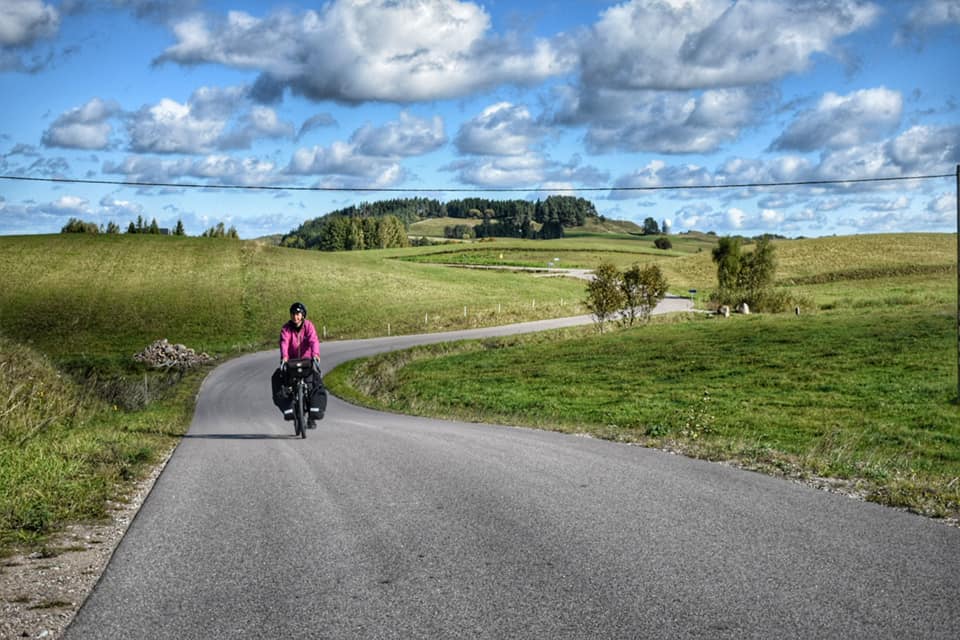
Bikepacking & bicycle touring trip in Poland. Climate, roads, where to sleep + the 8 best cycling routes. GreenVelo, EuroVelo, & more. Let’s go cycling in Poland!
Poland may not seem to be amongst the most popular tourist destinations, but over the years it has been riding an increasing wave of hype. The country’s investments in tourism are attracting a different type of traveler; those seeking cycling holidays are increasingly interested.
Disclosure: Some of our articles contain affiliate links. This comes at no additional cost for you and helps us keep this website up and running. (as Amazon Associates we earn commission from qualifying purchases)
Poland has been building cycling infrastructures for years; many international EuroVelo routes pass through the country, while the totally Polish GreenVelo crosses the nation from north to south.
Poland is a rather large country, with stunning, well-preserved, and dynamic cities, many UNESCO World Heritage sites, and the beauty of the Baltic Sea to the north and the Carpathians to the South.
Apart from the small mountainous part on the border with Slovakia, the Phodale region in Poland is primarily flat, ideal for cycling at any level of preparation and for families.
In this guide, you will find, hopefully, all the information you need to organize a cycling trip to Poland: what climate you will encounter, the road conditions, where to stay, and above all, a list of the most interesting cycling routes.
Planning a European Bike trip? Have a look at
Cycling Slovakia – all about your next bike trip
Estonia by bike – everything you need to know
Bikepacking Finland – Get ready for the adventure!
Riding the Atlantic Coast of Norway – the Ultimate Guide
Climate in Poland
The summer season, from June to August, can be very variable in Poland; you can expect intense, extended downpours, and sometimes it rains heavily for several days without stopping.
But you could also be lucky enough to get long weeks of really hot, dry weather. Winters, on the other hand, are relatively heavy, with lots of snow and temperatures often below freezing.
The beginning of autumn, in September and October, is characterized by sunny days and mild temperatures. In November, the cold and rain begin, and from December to February, snowfall is widespread.
Average temperatures vary widely by region. The north-eastern part (on the border with Belarus) and the south-eastern part (bordering Ukraine) are the colder ones, with average temperatures several degrees lower than the rest of the country. The Baltic coast and southern Poland have milder winters, though the Baltic experiences strong winds year-round.
Best season to cycle in Poland
The summer, especially July and August, is perfect for those who love warm days and nights. It’s also the best season to cross the generally colder areas and the mountains, as the weather is favorable.
May, June, and September are also favorable months; the climate will be cooler, but still warm and sunny.
April and October are wonderfully changeable and can be decidedly cold. We crossed Poland from the north in October.
The daytime temperatures were great, but at night they were just above zero. In addition, the days began to get shorter, and in the morning, you had to wait a few hours after sunrise for better temperatures.
We, however, love the warm climates; if you love the cold, you can try cycling in Poland in the winter, but it is definitely not for us.
Cycling the Roads of Poland
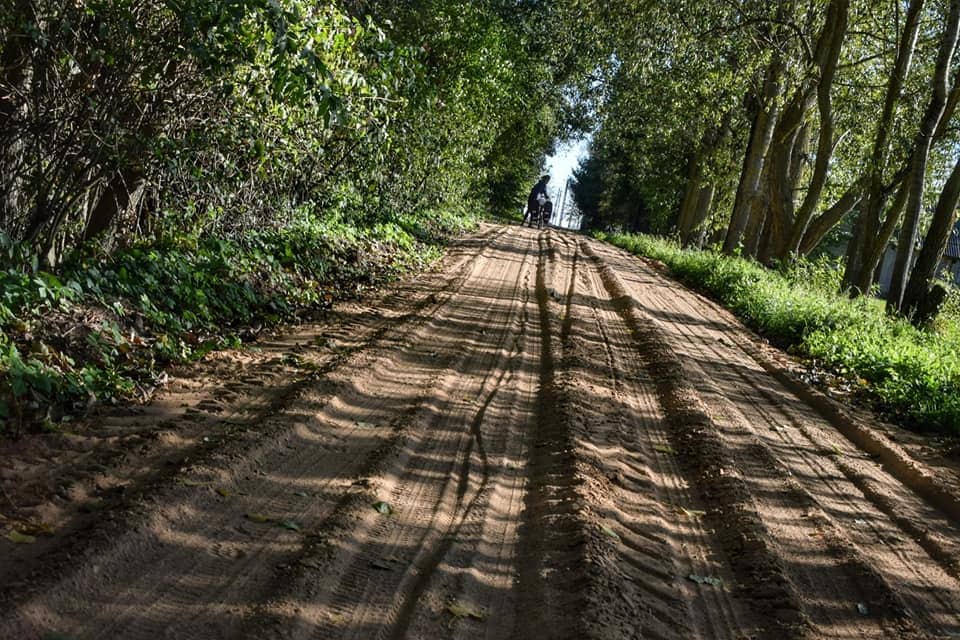
We have often heard about narrow, busy roads and careless drivers, but we did not have any problems with our itinerary in Poland.
We have, however, cycled the less inhabited part of the country, but the roads are mostly new and have an emergency lane that can be used by bicycles. Approaching villages or bigger cities, there is always a dedicated cycle path.
We happened to ride on roads full of trucks, but we did not notice any crazy driving style, nor was it common for drivers to overtake us too closely.
Most cycling routes are on secondary roads; dedicated cycling paths are mostly found near the towns. Those small roads are often open to motorized traffic, but you’ll mostly be alone. Sticking to a cycle route, while it might take away a bit of sense of adventure, will ensure you have a relaxing ride.
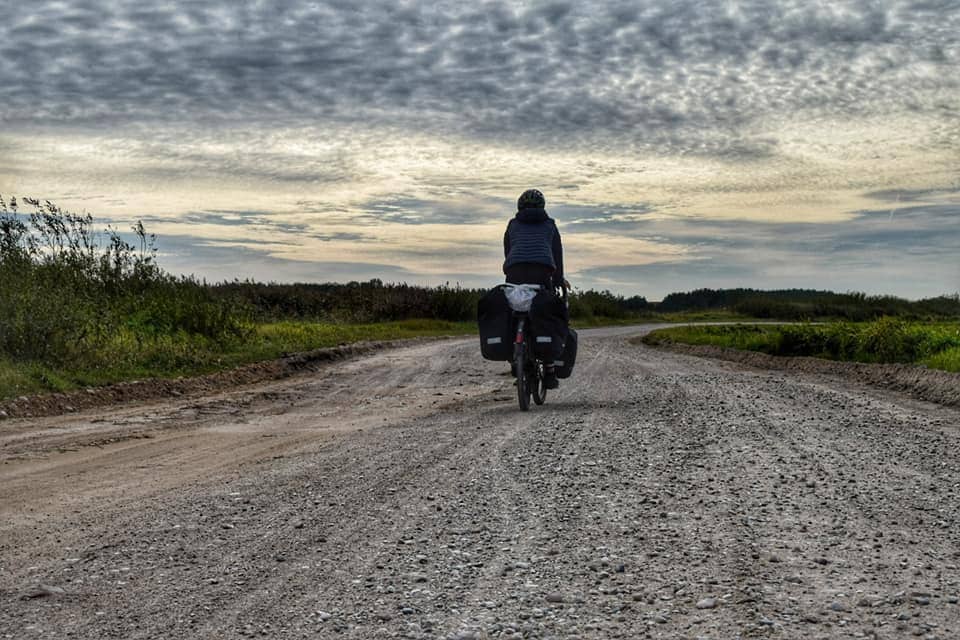
Some routes pass through unpaved sections; these can be either sandy or muddy. Keep that in mind if there has recently been any substantial rainfall.
As for the cycling rules in Poland, note that all the bikes need to have front and rear lights; according to the law, they should be visible at least from 150 meters, but you’ll hardly meet a police officer wanting to fine you for that. Also, a bell would be mandatory.
Riding a bike after drinking alcohol is forbidden, and keep in mind that the limit in Poland is 0.2. Hence, even a small beer is enough; the chances of getting checked in the countryside are slim, but we know it can happen in cities such as Warsaw or Krakow.
Bike shops and repairmen in Poland
Bicycle shops are usually well equipped, with most Shimano base parts, SRAMs, and other international brands. Outside big cities, though, do not generally expect an extensive choice; it would be better to travel on bicycles requiring standard spares, which can be found all over the place.
However, if you need special spare parts, bring them with you; otherwise, you may have to order them, which could mean waiting several days. Most tubes and tires are 700cc.
The bicycle shops are open from Monday to Friday, they close relatively early, between 5 pm and 7 pm, those open on Saturday close in the early afternoon, around 2 pm, and on Sundays they are all closed.
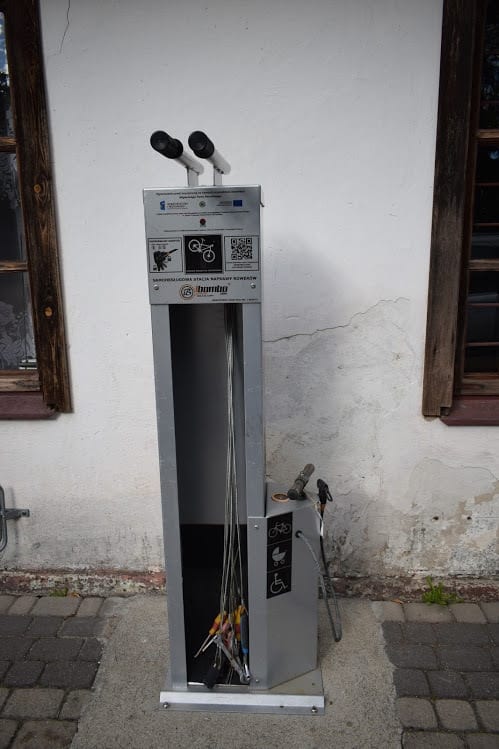
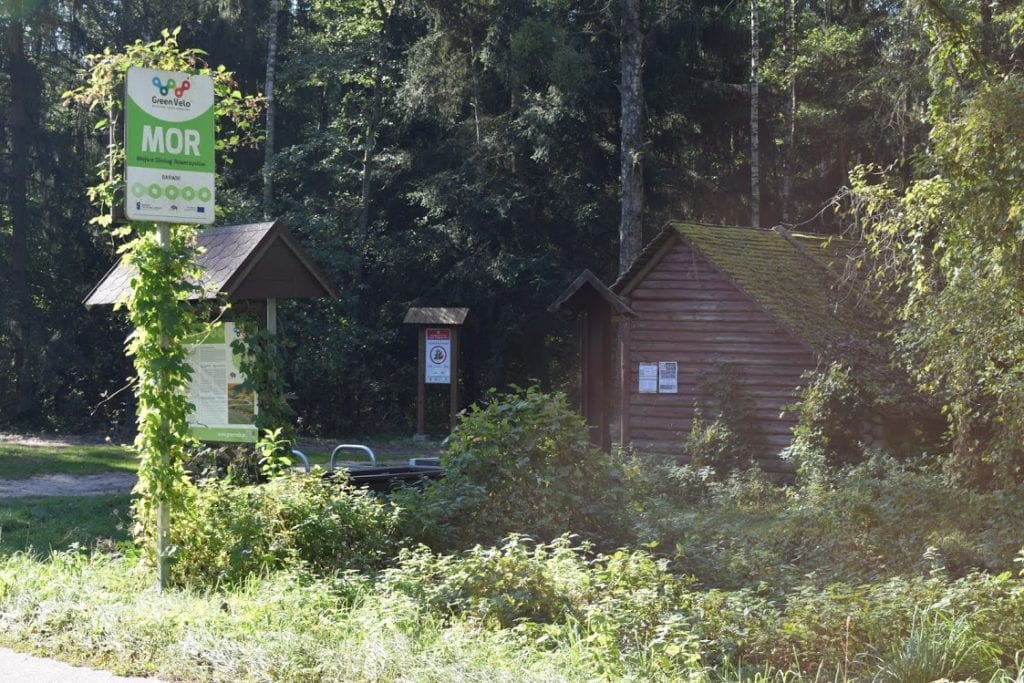
Basic tools can be found along the main cycle trails, as shown in the picture below.
Cycling Community and Critical Mass in Poland
In the Polish countryside, cycling is still seen as a means of transportation for poor people. In the city, however, there are many fans and many people who use bikes every day to get to work and run errands.
In some cities, particularly Warsaw, Critical Mass is frequently organized, often attracting more than 1,000 cyclists. The Critical Mass in Warsaw is the largest event of its kind in Central Europe and one of the largest in the world.
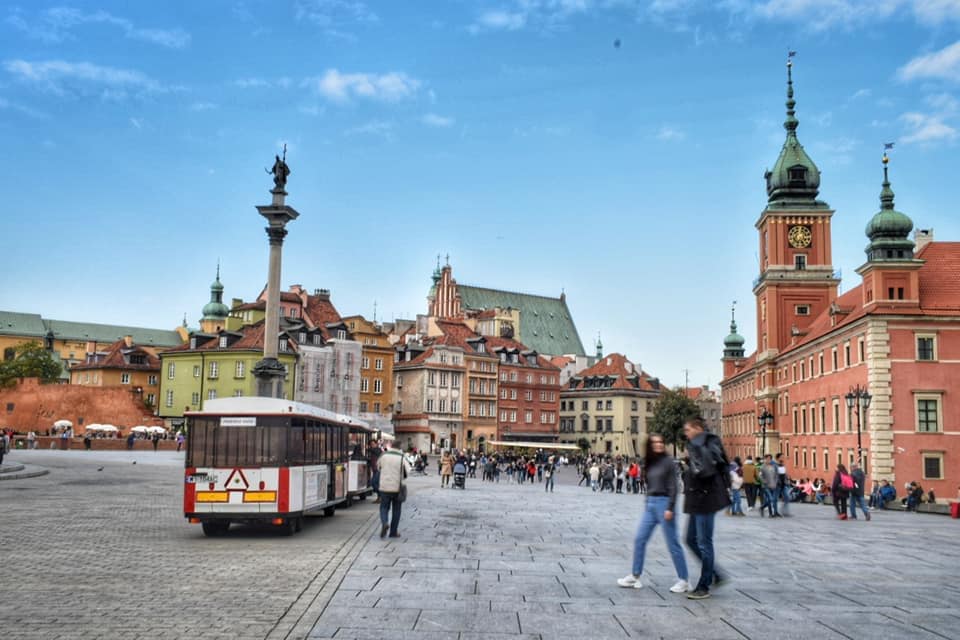
If you are in Warsaw on the last Friday of the month, take a look at 18.00 in Plac Zamkowy (Zamkowy Square), in the historic city center, and take part! Here you can find the contacts.
Geography of Poland
Poland is a central European state located to the east of Germany. In short, it is a vast plain, and the country’s average altitude is 173 meters. The southernmost part of the country, where the Carpathians are, is the only mountainous region, covering just 3% of the landmass.
Poland has a total extension of 312,683 km² and borders Germany, the Czech Republic, Slovakia, Ukraine, Belarus, Lithuania, and the Russian exclave of Kaliningrad. The highest point is Mount Rysy (2,499msl) in the Tatra chain, which is part of the Carpathians.
The principal rivers are the Oder River, along which there is a famous cycle path (more about it later), and the Vistula River, which cuts through the central and eastern part of Poland.
The Polesia primeval forest extends into the central-eastern region, between Białystok and Lublin. Poland has a combined wetland area of 145,075 ha, comprising 13 wetland-protected sites scattered across the country, making it a birdwatching paradise. Cycling these areas in late September, when the migrations are at their peak, is sure to offer a great show.
Do not be fooled by the fact that Poland is primarily flat; tracing the right path, you will come across many interesting places. Below are some ideas for itineraries, complete with GPX tracks to download, maps, and lists of the most interesting sights.
Where to sleep while cycling in Poland
Wild camping in Poland
Finding out about the regulations in different countries regarding free camping is not always easy. However, we can safely say that wild camping is generally forbidden in Poland, except in some national parks and beaches, and only during the autumn and winter.
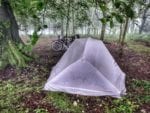
Apparently, anyway, the controls are not so strict, and outside the protected areas, it is tolerated. Especially in the sparsely inhabited, forest-rich northeastern part of the country, it is not very difficult to find a place to pitch a tent.
According to several travelers, we have not personally experienced this. Asking to pitch your tent in someone’s backyard is not a problem; the answer will most likely be positive.
Especially in summer, remember not to light fires in the woods; however careful you may be, it can be risky, and you could attract the attention and concern of the inhabitants.
Naturally, there are also equipped campsites, we crossed Poland in October and they were already almost all closed. If you are going through the country in a warmer season, consider the cost of a tent without electricity but with a shower included between 4 and 10€.
Hotels and Hostels in Poland
Hotels, Hostels, and Guest Houses are pretty cheap, ranging from 15€ up to, on average, 20€ per double room per night. Usually, the rooms are spacious and clean, and are almost always equipped with a shared kitchen for guests to use, which is great for traveling on a budget and helps you find cheap places to sleep even in areas without restaurants.
Couchsurfing and Warmshowers Poland
Both the Couchsurfing and Warmshowers communities are pretty well developed in Poland, not just in cities. In our experience, we have never had problems with having positive feedback, and we have met many interesting people.
Cost of cycling in Poland
Despite its quick economic growth, Poland is still a relatively cheap country; supermarkets are affordable, and so are restaurants, around 20 zlotys (4.5€) for a plate of delicious pierogi, ravioli stuffed with potatoes.
As we said, a camping night costs about 5€, and a room costs about 20€. Even the means of transport are cheap, and you can transport your bike on trains paying a fixed surcharge of 9.10 zlotys, no matter how many kilometers you travel.
Not including hotels or restaurant dinners, we feel like saying you can travel to Poland on a budget of 5€ per person per day.
7(+1) best bike routes in Poland
- GreenVelo
- Amber Cycle Trail – EuroVelo 9 (EV9)
- Est Europe Cycling Route – EuroVelo 11 (EV11)
- Baltic Sea Cycle Route – EuroVelo 10 (EV10)
- Szczecin Lagoon Cycleway
- Oder River Trail
- East Carpathian Cycle Route
- Dunajec River Gorge
1 – Green Velo: the Most Famous Polish Cycle Route
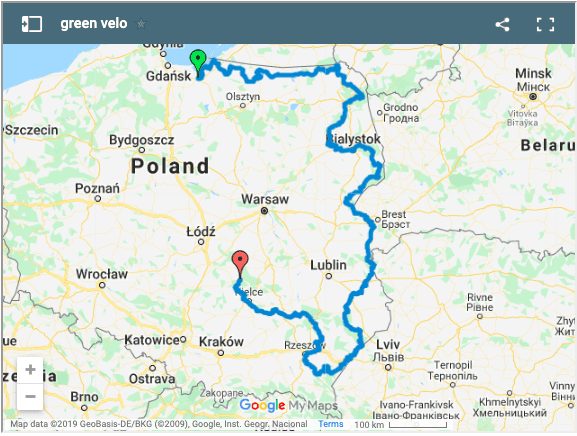
This track in the map above is the main route of the Green Velo cycle trail. Along the itinerary, you will find several bifurcations, which are alternative cycleways usually leading to particular cities or sights that the main route doesn’t touch. Find more information on alternative routes here.
In 2017, the Green Velo cycle track was named “Cycle Route of the Year”, the first time a cycle route in Poland was so named.
We have to say that an excellent job has been done, both for the care of the track itself and for the signage, always present and complete with a map and information, not to mention the refreshment points and the availability of free tools to fix minor mechanical problems along the way.
The Green Velo cycle project consists of constructing new cycle paths, but above all of using low-traffic roads and trails to create a route that crosses five Polish regions: Lublin, Podkarpackie, Podlaskie, Świętokrzyskie, and Warmia-Mazury, for a total of almost 2,000 kilometers.
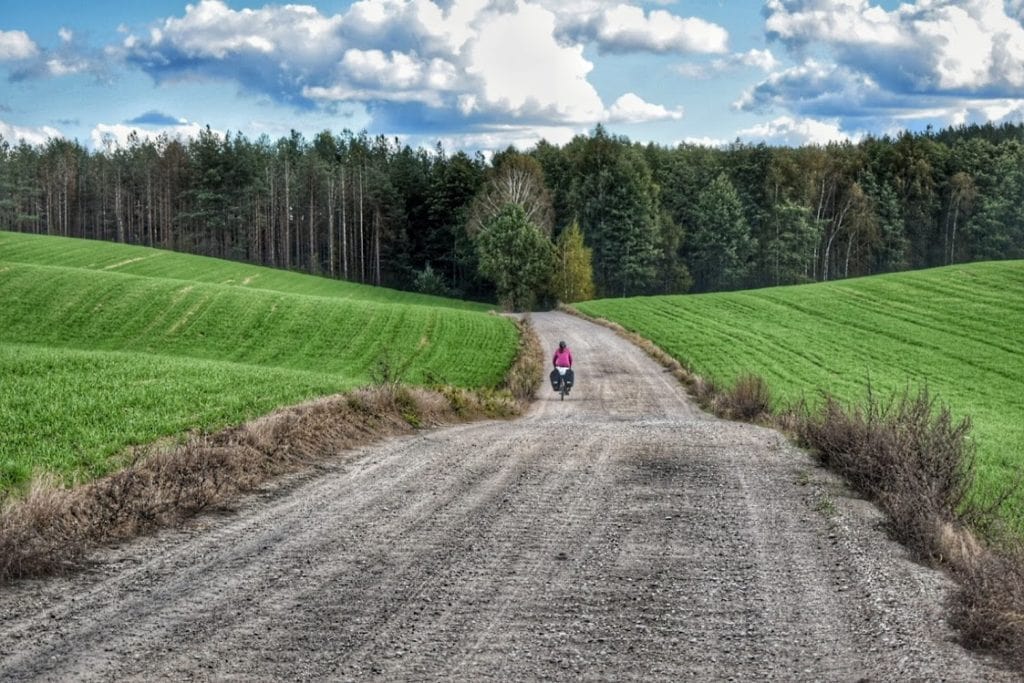
In the northern part, the bike path is mostly in the forest, is specifically marked, and has rest areas and points to fix the bike, equipped with the most common tools available free of charge. The only thing missing is public toilets, which are pretty rare along the path. Going south, you cross more cities and towns.
What to see along the Green Velo
Podkarpackie region
Here is the so-called “Wooden Architecture Route” where you will see more than 100 wooden buildings and six churches, also in wood, declared World Heritage by UNESCO.
These are the churches of Blizno, Haczow, Chotyniec, Radruż, Smolnik, and Turzańskil. The capital of the region is Rzeszów, where you can visit the castle and the underground city, the Rzeszowskie Piwnice.
Podlaskie region
It is the region that borders Belarus, the capital is the city of Białystok, a city of new development with a lovely central square, but nothing interesting.
The rest of the region is famous for its forests and national parks, including the Wigierski National Park, the Biebrzański National Park, the Narwiański National Park, and finally the Białowieża National Park, where you can spot the famous Bison.
Not far from Białystok, about forty kilometers away, is the village of Tykocin, one of the oldest settlements in the region. At the beginning of the Second World War, it was inhabited by about 2,000 Jewish inhabitants who were deported en masse to the nearby forest and killed in 1941.
A memorial for these people exists today. The village is very nice, and there are excellent restaurants.
Region of Świętokrzyskie
The capital is Kielce, famous for its statue of Miles Davis. The region is renowned for its four geological reserves with petrified seabeds, fossils, and, of course, dinosaurs.
If you are interested, you can visit the Jurassic Park of Baltowa. Then there are beautiful caves, the most beautiful of which is probably Raj’s, and the oldest oak in the country, almost 700 years old, in Bartek in Zagnansk.
Region of Warmian-Masurian
The capital is Olsztyn. This region is called the Land of the Thousand Lakes, and its landscape is dotted with many water bodies and numerous SPAs.
Frequented by water sports enthusiasts, this area of Poland is one of the favorite places for canoe lovers, even those less experienced.
There is a kayak trail of the Krutynia River about 100 km long. Along the river, there are reported shelters (PTTK) where you can park the canoe, eat, and sleep, in a tent or indoors.
2 – The Amber Route – EV9
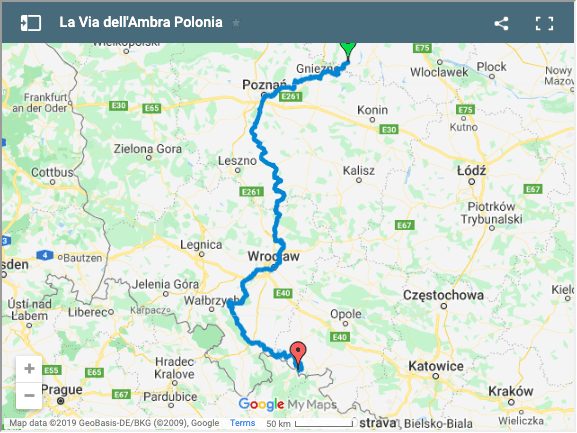
You can download the GPX track of the “Cycle Route EuroVelo 9: Amber Route – leg Poland” at this link.
The Polish section of the Amber Route (Euro Velo 9) is 534 kilometers long and has an average gradient of 0.63%, making it another family-friendly cycling holiday.
The Vamber route, or EuroVelo 9 (EV9), is a 1,900-kilometer cycling route that starts in the Polish city of Gdańsk on the Baltic Sea and reaches the Adriatic Sea in Croatia, in Pula.
The name Amber Route comes from the ancient route along which amber was transported, from its place of origin in the North Sea to the countries bordering the Mediterranean.
Amber has been used and worked with since ancient Egyptian times and was very common among the Romans, who used it to make objects and toiletries.
The Ambra cycle route crosses seven European countries: Poland, the Czech Republic, Austria, Slovenia, Italy, and Croatia.
The Polish part of the itinerary is almost entirely flat; the route is still undergoing refinement, and there may be several sections where we share the road with cars.
The signage in Poland is quite good. Above, you can consult and download the GPX track, but it may not be 100% accurate. Keep in mind that the Polish name of this cycle route is R9, so you might find it indicated as such.
What to see along the Amber Cycle Trail – EuroVelo 9
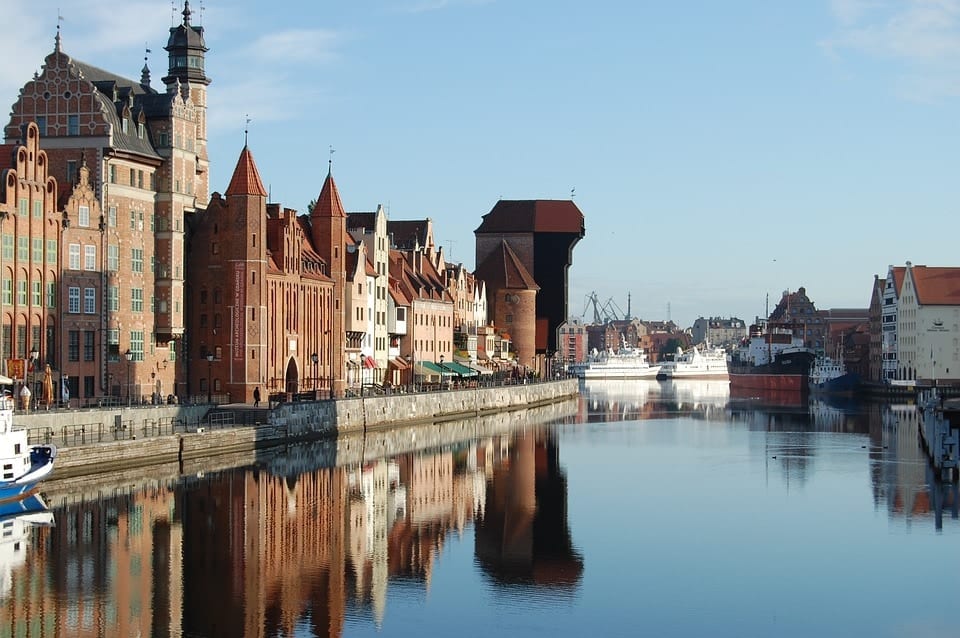
Gdansk
It is from here that the cycle path begins. The city of Gdansk was one of the crucial nodes of the Hanseatic League, the alliance of cities that, from the late Middle Ages to the modern era, held a monopoly on naval trade in Europe.
Gdansk is still one of the most important ports in the Baltic region. Despite being largely destroyed during the Second World War, the reconstruction work was magnificent, giving Poland its beautiful port city.
Famous for being the city where Solidarnosc was born, which significantly contributed to Poland’s liberation from the Soviet Union.
Not to be missed are the Old Town, which lies along the Motlawa River, the large crane of the port, built in wood in 1444, the largest in medieval Europe. And then the Long Market Square, the Gothic church of the Virgin Mary, where you can climb the bell tower and admire the city from above.
Gniezno
The old capital of Poland. From Gdańsk, the cycle path runs along the Vistula riverside, crossing the cities of Tczew, Grudziadz, Bydgoszcz, and Inowrocław, and reaching Gniezno.
Gniezno is one of the oldest cities in Poland, located within a natural defensive barrier consisting of lakes. A picturesque town where you can spend a few hours walking along the streets of the center.
Poznań
Shortly after Gniezno, the Ambra bicycle path gets to Poznań, the capital of the Wielkopolska region. The city’s symbol is the clock with the two goats, located in the town hall on the ancient Market Square. Every day at noon, the goats come out and bang their heads 12 times.
Also worth seeing is the Stary Browar, a center of art and commerce created inside an old nineteenth-century brewery. And then the Imperial Castle, the National Museum, and the basement of the cathedral on Ostrów Tumski.
Wroclaw
Continuing southwards, EuroVelo 9 arrives in Wroclaw, an important historical city on the Odra river, located on 12 islands connected by 112 bridges. The town’s historical center comprises the ancient Market Square (Rynek Starego Miasta), which features several UNESCO World Heritage Sites.
Wrocław is rich in Baroque buildings and churches, as well as important modernist buildings such as the Centennial Hall, designed by architect Max Berg and built in the first decade of the twentieth century.
Głuchołazy
Heading south, the EV9 crosses the town of Głuchołazy and heads towards the Sudeten Mountains, which mark the border between Poland and the Czech Republic.
If you are fond of hiking in the mountains, three long paths have been created: the Great Path of the Sudetes (350 km), the Grand Trail of the Beskidy (500 km), and the Great Trail of Świętokrzyskie (100 km).
3 – Est Europe Cycling Route – EuroVelo 11
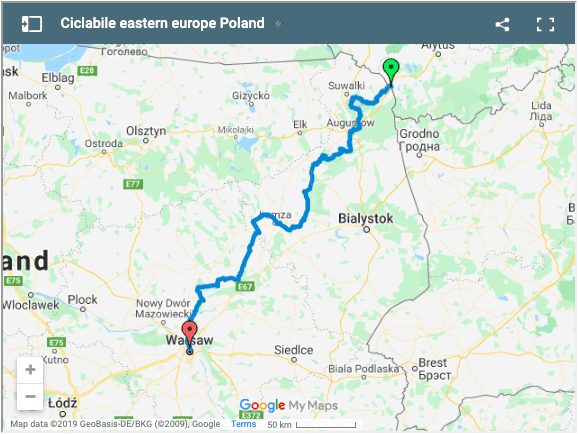
You can download the GPX track of the Cycle Route EuroVelo 11: Eastern Europe Route at this link.
We did not ride this path; we only crossed it in Augustow. However, given some knowledge of the area, we can say it is probably not one of the most beautiful cycling routes in Poland.
It is part of EuroVelo 11, the cycle touring route of Eastern Europe, which, from Greece, reaches the North Cape in Norway, crossing Macedonia, Serbia, Hungary, Slovakia, Poland, Lithuania, Latvia, Estonia, and Finland.
The Polish part of the EV11 is 762 kilometers long. Covering it from the north will be a very slight climb, practically imperceptible, and you’re more likely to suffer from strong winds.
The bike path is still a good choice if you are heading to Warsaw and want to avoid busy roads. Vast plains, forests, and a few lakes will always surround you.
Leaving Warsaw, the route continues to the beautiful city of Krakow, and is a good route if you are heading towards Slovakia and the Carpathians. It is also worth taking a detour to visit Auschwitz, situated 60km west of Krakow.
South of Krakow, the road becomes more hilly and scenic; don’t miss a visit to the Wieliczka Salt Mines.
What to see along the Eastern European Cycleway: EuroVelo 11 in Poland
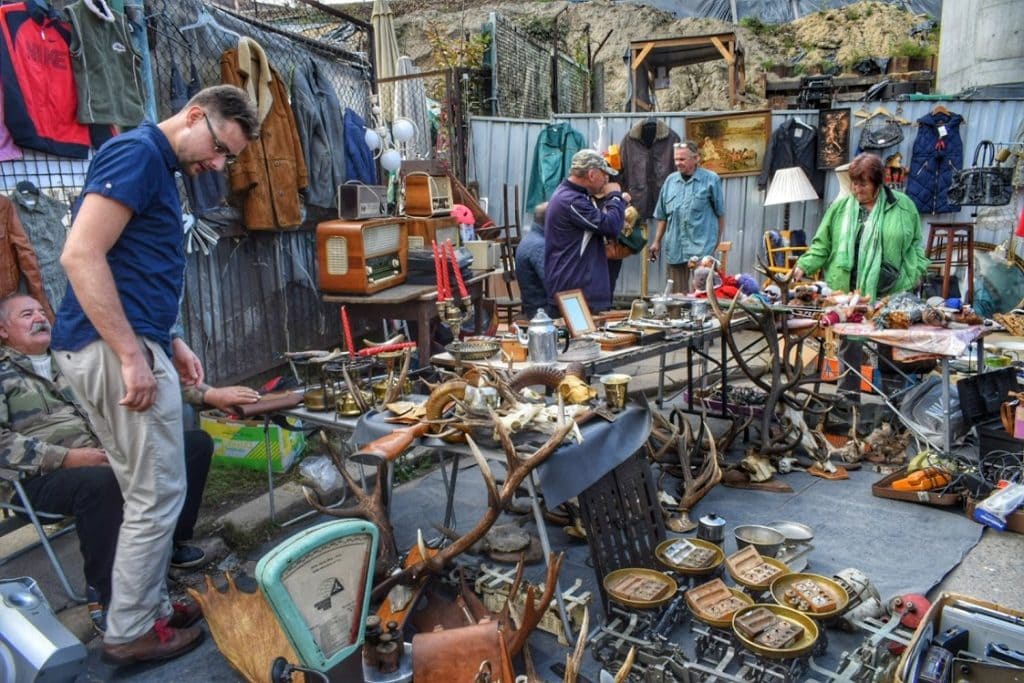
Augustow and its channels
Augustow is a town of about 30,000 inhabitants in western Poland. It was almost destroyed during the Second World War and remained largely uninhabited until the seventies, when it began attracting visitors and residents again after becoming a spa.
It is crossed by the Augustow Canal, 120 kilometers long, which connects the Biebrza River to the Neman River. The water levels in the Augustow Canal are regulated by 18 locks, of which 14 are in Poland. Most of them are kept in the same technical condition as when they were built in 1839.
In the city, you can also visit the Augustow Canal Museum. The town offers many accommodations at low prices.
Łomża
About 150 kilometers north of Warsaw, a pleasant town to stop overnight. In the vicinity of the city lies the Łomża Landscape Park of the Narew Valley (Polish: Łomżyński Park Krajobrazowy Doliny Narwi). In this unspoiled area, you can admire the beautiful wild valleys and swamps.
Also around the city, you can visit the Łomża Fortress, a series of fortifications used during the many battles fought in these parts, the last of which was during the Second World War. Guided tours are also organized, and if you are interested in the bunker network, there is a shooting range where you can shoot with an AK-47, the Kalashnikov, which is not our cup of tea.
Warsaw
A beautiful city that surprised us. Before we went, many told us it wasn’t worth it and that Krakow is much nicer. We found them both fascinating for different reasons.
Warsaw is the capital of Poland, and the atmosphere, as perhaps in all capitals, is different from that of other cities in the country. Warsaw was destroyed during the Second World War, and the reconstruction work that followed was titanic.
Thanks also to the paintings known as “The Views of Canaletto”, they were able to reproduce everything exactly as it was before the bombing, and who knows, maybe even better. Thu,s the old city, the historic center of the metropolis, has been recognized as a World Heritage Site by UNESCO.
Apart from the historical center, Warsaw is a vivacious city, full of university students and bars at acceptable prices.
We’ll add the Church of the Holy Cross (Kosciol Swietego Krzyza), where Chopin’s heart is kept (the composer was born in Warsaw), whose vicissitudes are one of the most famous legends in the history of music.
4 – Baltic Sea Cycle Route in Poland – EuroVelo 10
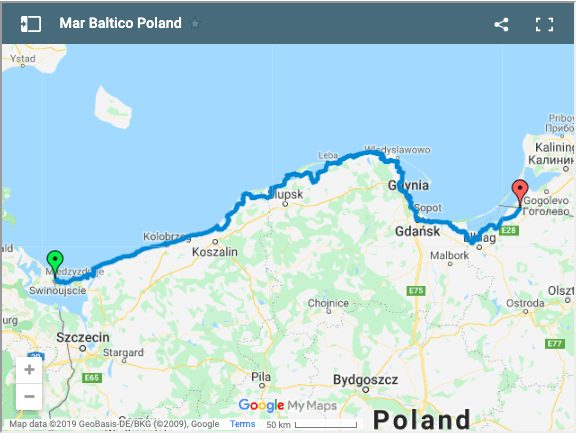
You can download the EuroVelo 10: Baltic Sea Cycle Route, Poland GPX track at this link
The Baltic Sea Cycle Route in Poland is part of EuroVelo Route 10 (EV10), which runs in a circular route along the Baltic coasts of Sweden, Denmark, Finland, Estonia, Latvia, Lithuania, Russia (Kaliningrad), and Poland. This route is also known as the Hansa Cycle Way.
The Polish part of the EV10 is 582 kilometers long and crosses beautiful cities and unique natural landscapes. Coming from the east, you will cross the Wislany Lagoon and the Vistula estuary, the beautiful city of Gdansk, and the lake region. The route is entirely flat, with an average slope of 0.60%.
At the end of the route, to the west, you can take the path to Szczecin(Stettin) that runs around the lagoon, or, on the east side, the Baltic Sea cycle path connects to the Euro Velo 9, which heads south to the Adriatic Sea.
Check Also
Cycling in Latvia – Everything you need to know!
What to see along the Baltic Sea bike path in Poland – EuroVelo 10
Wislany lagoon, or Vistula lagoon
It is a freshwater mirror within the Gdańsk Bay. It is separated from the waters of the Baltic Sea by a 70-kilometer-long strip of sand and borders the Kaliningrad Oblast in Russia.
The mouth of the Vistula River
A labyrinth of sandbars, dune spits, and beaches with water meadows constantly changing due to the material within the river itself after its meandering journey, and man’s intervention.
Concentration camp of Sztutowo
In the town of Sztutowo, the first concentration camp outside the borders of the Reich was established.
Gdansk
The city of Gdansk was one of the crucial hubs of theHanseatic League, the city alliance that, from the late Middle Ages to the modern era, held a monopoly on trade in Europe. Gdansk is still one of the most important ports in the Baltic region.
Despite being largely destroyed during the Second World War, the reconstruction work was magnificent, restoring Poland to a beautiful port city. Famous for being the city where Solidarnosc was born, which significantly contributed to Poland’s liberation from the Soviet Union.
Not to be missed is the Old Town, which lies along the Motlawa River. The large port crane, built in wood in 1444, was the largest in medieval Europe. And then the Long Market Square, the Gothic church of the Virgin Mary, where you can climb the bell tower and admire the city from above.
Westerplatte Peninsula
Located at the mouth of the so-called “Dead Vistula” (Martwa Wisła in Polish), this is where the 1st of September 1939 marked the beginning of the Second World War. The fighting, which lasted from 1 to 7 September 1939, is known as the Battle of the Westerplatte.
The peninsula is easily accessible by taking a ferry from the center of Gdansk. Ferries leave every hour, and once you arrive on the peninsula (about 40 minutes), there is a path through the woods with a sea view.
A charming itinerary, but it can evoke strong feelings about what this place represents. On a small hill stands the statue built in memory of all the fallen during the Second World War.
Lake Łebsko
The Polish region of Pomerania is characterized by numerous lakes, among them Lake Łebsko, one of the largest. It is located within the Słowiński National Park, a paradise for bird watchers.
Kołobrzeg
It is the only medium-sized city along the Polish Baltic coast (excluding Gdansk). It too was an important city of the Hanseatic League. It has a pleasant historical center to walk around and the Museum of Polish Arms in Kolobrzeg, one of the most important museums in the country, with a vast collection of historical treasures.
The Szczecin Bay
Zalew Szczecińskida in Polish. It’s a bay that also defines the border between Poland and Germany. From here, you can follow the cycle path around the bay (number 5 in this article). To the north of the lagoon, on the island of Wolin, is the Wolin National Park (Woliński Park Narodowy), which houses a sanctuary of the European bison.
5 – Cycle Route Around the Szczecin Lagoon
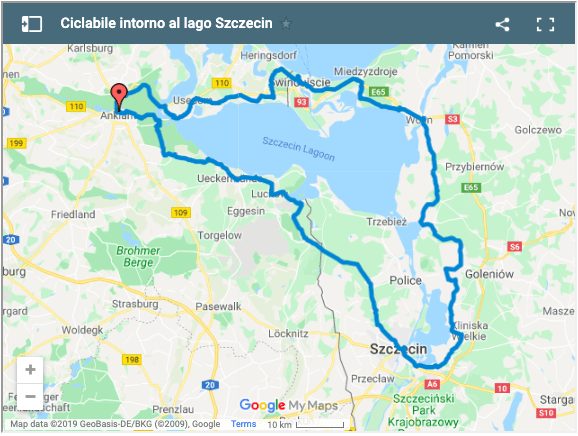
You can download the Szczecin Lagoon Cycle Route GPX track at this link.
It is a circular cycle path that runs along the Szczecin Lagoon, also known as the Oda Lagoon. The city of Szczecin, from which the lagoon takes its name, is about 10 kilometers away from the water.
Szczecin was, for a long time, one of the most essential ports in Poland, characterized by Prussian-style architecture. During the Second World War, the city suffered considerable damage that was not immediately repaired, as it was not particularly touristy. In recent years, however, thanks to the restoration work, many tourists are beginning to appreciate it.
From Szczecin, you can continue cycling south along the river Oder on the cycle path, which we will discuss in the following paragraph.
Points of interest along the Szczecin Lagoon Cycle Trail
The castle and the town hall
Among the few buildings not particularly damaged during the bombings
Cathedral of San Giacomo
On which the signs of the war are still visible. Going up the bell tower offers a nice view of the city.
The Underground City
The most popular attraction among visitors. The entrance to the underground Szczecin is near the station; from here, you descend and can travel 40 kilometers through tunnels, bunkers, and sheltersused during the Second World War and later during the tensest periods of the Cold War.
The beaches of the lagoon
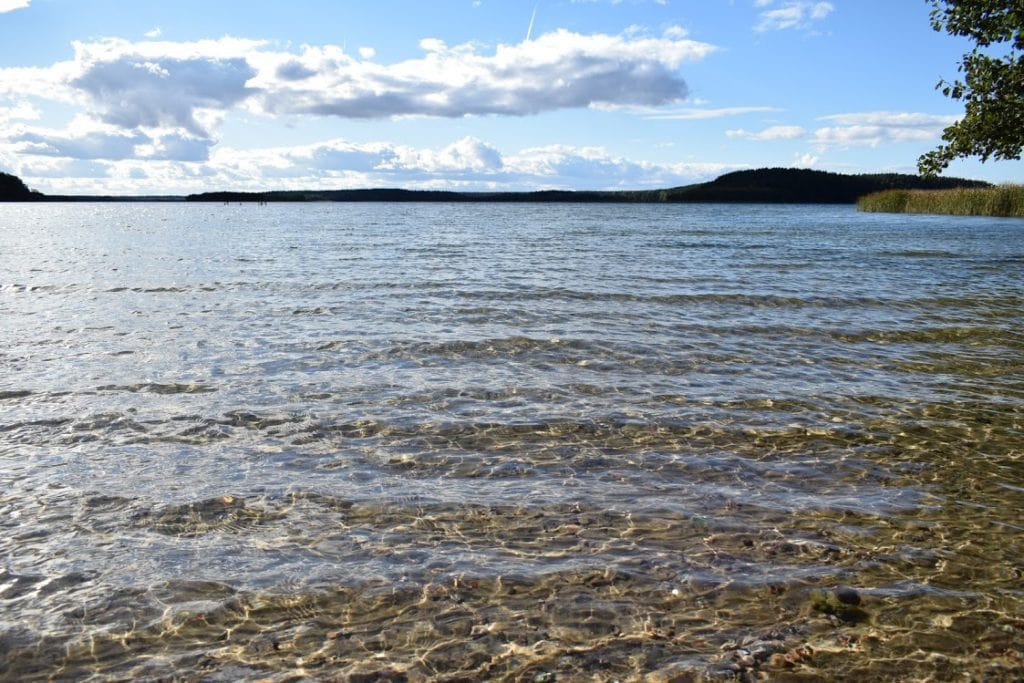
Pedaling along the banks of the lagoon, you can relax in some small villages and beaches along the way and, if you prefer, take a bath.
6 – Cycling in Poland along the Oder River
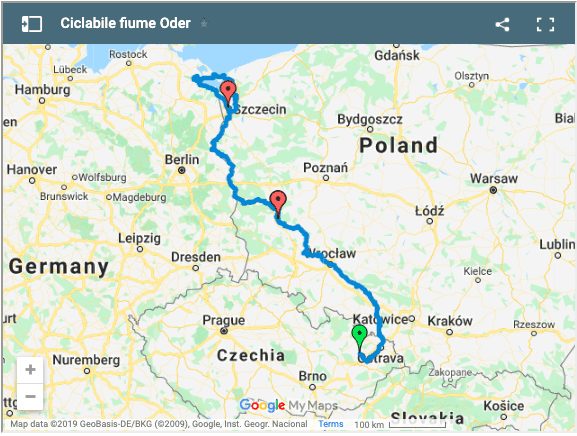
You can download the Cycle Route Oder River Trail GPX track at this link.
After completing the cycle path around the Szczecin Lagoon, you can continue cycling south on the cycle path along the Oder River, or the Oder-Neisse cycle path, which starts from the Szczecin Lagoon and heads south to the Czech Republic.
For the first part of the route, you will follow the border between Poland and Germany, before bending southeast to Wroclaw and then finishing in the Czech city of Ostrava
What to see along the Oder River path in Poland
The Oldest Oak in Poland
Before Lubin, there is the Krajobrazowy National Park. Within this protected park is Chrobry, the oldest (probably) oak in Poland, about 720 years old.
In the park, there are many rare animal and plant species, some of which are reintroduced for conservation purposes. The park is divided into four nature reserves, two ornithological and two floristic.
Przemęt Landscape Park
(in Polish Przemęcki Park Krajobrazowy) Do its swampy areas and lakes characterize a protected park? Here is the map of the park.
Wroclaw
An important historical city on the river Oder, located on 12 islands connected by 112 bridges. The town’s historical center comprises the ancient Market Square (Rynek Starego Miasta), which features several UNESCO World Heritage Sites.
Wrocław is rich in Baroque buildings and churches, as well as critical modernist buildings such as the Centennial Hall, designed by architect Max Berg and built in the first decade of the twentieth century.
Kletno Uranium Mine
One of the most interesting tours is the Underground Educational Tourist Route in the Old Uranium Mine in Kletno, south of Wroclaw, almost at the Czechoslovak border. It is not along this path, so you’ll need to make a detour or take an organized tour.
In 1947, the Soviets began searching for uranium ore in Poland, and between 1948 and 1953, they built the “Kopaliny” mine, whose excavations were about 37 km long. Over time, the deposits were declared exhausted, and the mine was used solely for fluorite extraction.
At the beginning of the 2000s, the Exploration Adit No. 18 was opened to the public; all uranium deposits were removed to ensure visitors’ complete protection from radiation.
The mine can be safely visited to admire the magnificent deposits of numerous minerals along its walls such as fluorite, amethyst, hematite, magnetite, quartz, and chrysocolla, the mine is also a venue for periodic performances.
7 – East Carpathian Greenway
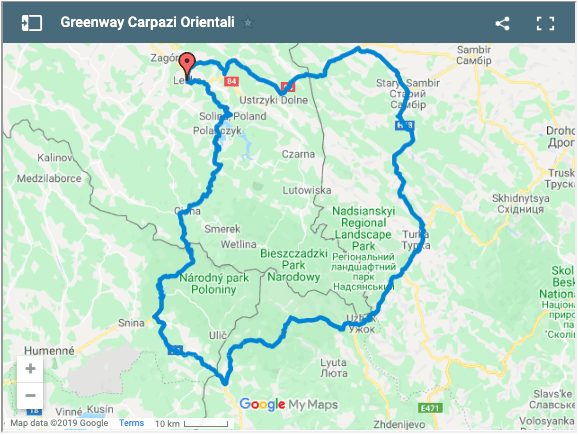
You can download the GPX track of the itinerary at this link
The East Carpathian Greenway is a 300-kilometer circular cycle path that crosses the Carpathians and three states: Poland, Ukraine, and Slovakia. Despite being a mountain route, it is very easy to ride and has few steep sections.
The highest part with the most climbs is Ukraine, where you still don’t get above 700 msl; the route’s average slope is 1.41%.
The Carpathians are very fascinating mountains, especially if, like us, you come here during the fall, which will give you splendid views of the magnificent colors. If you get the chance, you should absolutely try some hikes in the Tatra Mountains.
What to see along the Eastern Carpathian Cycle Route
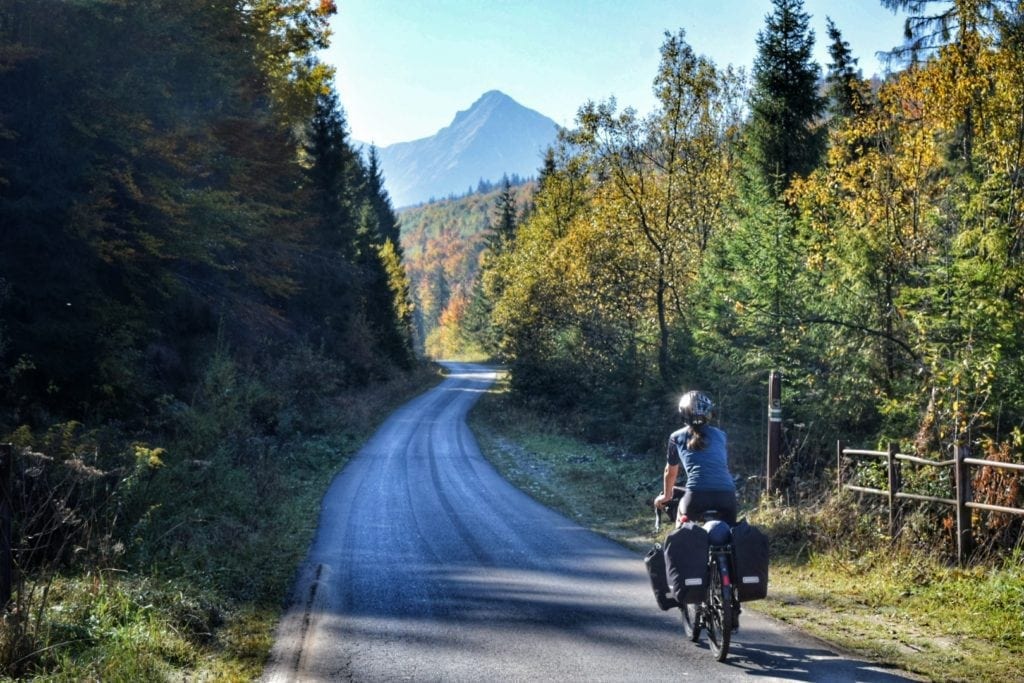
Bieszczady National Park
Bieszczadzki Park Narodowy is the third biggest National Park in Poland, occupying the highest areas of the Polish part of the Bieszczady Mountains. In 1992, the park and its surrounding areas were designated as part of the UNESCO Eastern Carpathian Biosphere Reserve.
It has abundant wildlife, including bears, wolves, wild boars, wildcats, lynx, elk, and otters. Keep in mind that most of the park requires a permit to walk specific paths, or you will have to go with a guide. The highest mountain in the Bieszczady National Park is Mount Tarnica, at 1,346 meters.
Poloniny National Park
A national park in the Slovak territory, bordering Poland and Ukraine. Selected areas of the park are part of the Carpathian primordial beech forests, which UNESCO has recognized as World Heritage Sites. Also, there are many of the animals mentioned above.
One of the most interesting paths in the park is the one that connects the beautiful eighteenth-century wooden churches in the villages of Topoľa, Uličské Krivé, and Ruský Potok.
Nadsiansky Regional Landscape Park and Uzhanian National Nature Park
In Ukraine, they are also part of the UNESCO Biosphere Reserve. It is possible to walk along 17 different paths inside the park; here, there are also wooden churches from the seventeenth and eighteenth centuries.
8 – Dunajec River Gorge
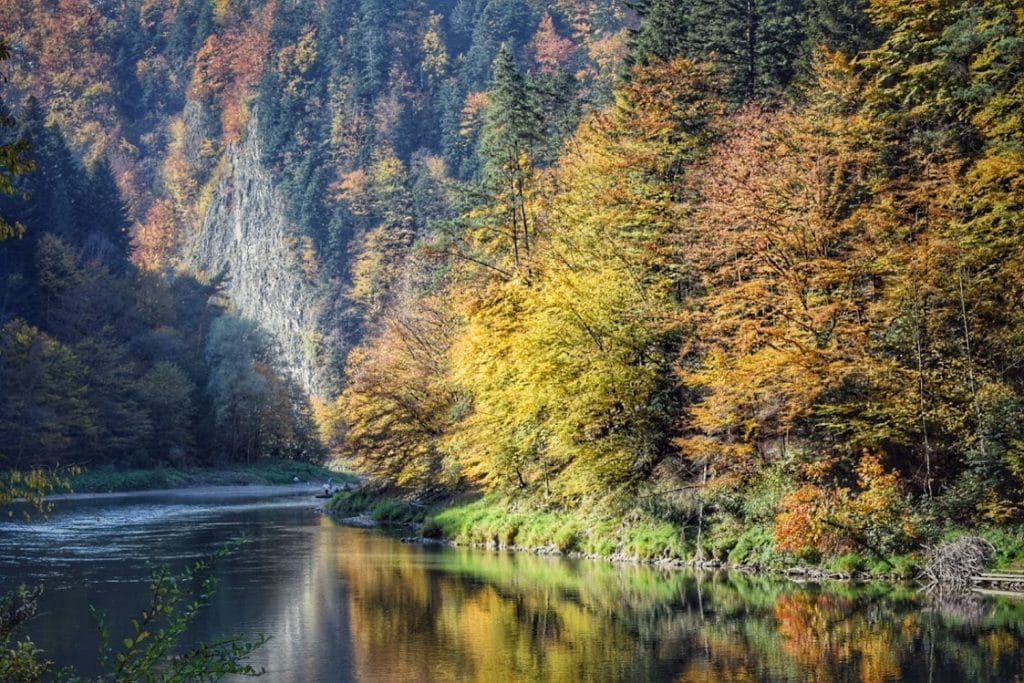
This is not a long-distance cycle route; more of a short stroll along the Slovakian border. The Dunajec River Gorge, though, is so beautiful that we decided to dedicate a whole article to it, with maps, tracks, rafting tips, history, and everything you might want to know.
Learn more about the Dunajec River Gorge
Planning a European Bike trip? Have a look at
Cycling Slovakia – all about your next bike trip
Bike Touring in Norway – everything you need to know
The Wild Atlantic Way of Ireland by bicycle
Did you find this article helpful? Do you have any other itineraries or sights to see in Poland you’d like to suggest?
Comment, share, and follow us on social networks.