

Last Updated on 16 January 2026 by Cycloscope
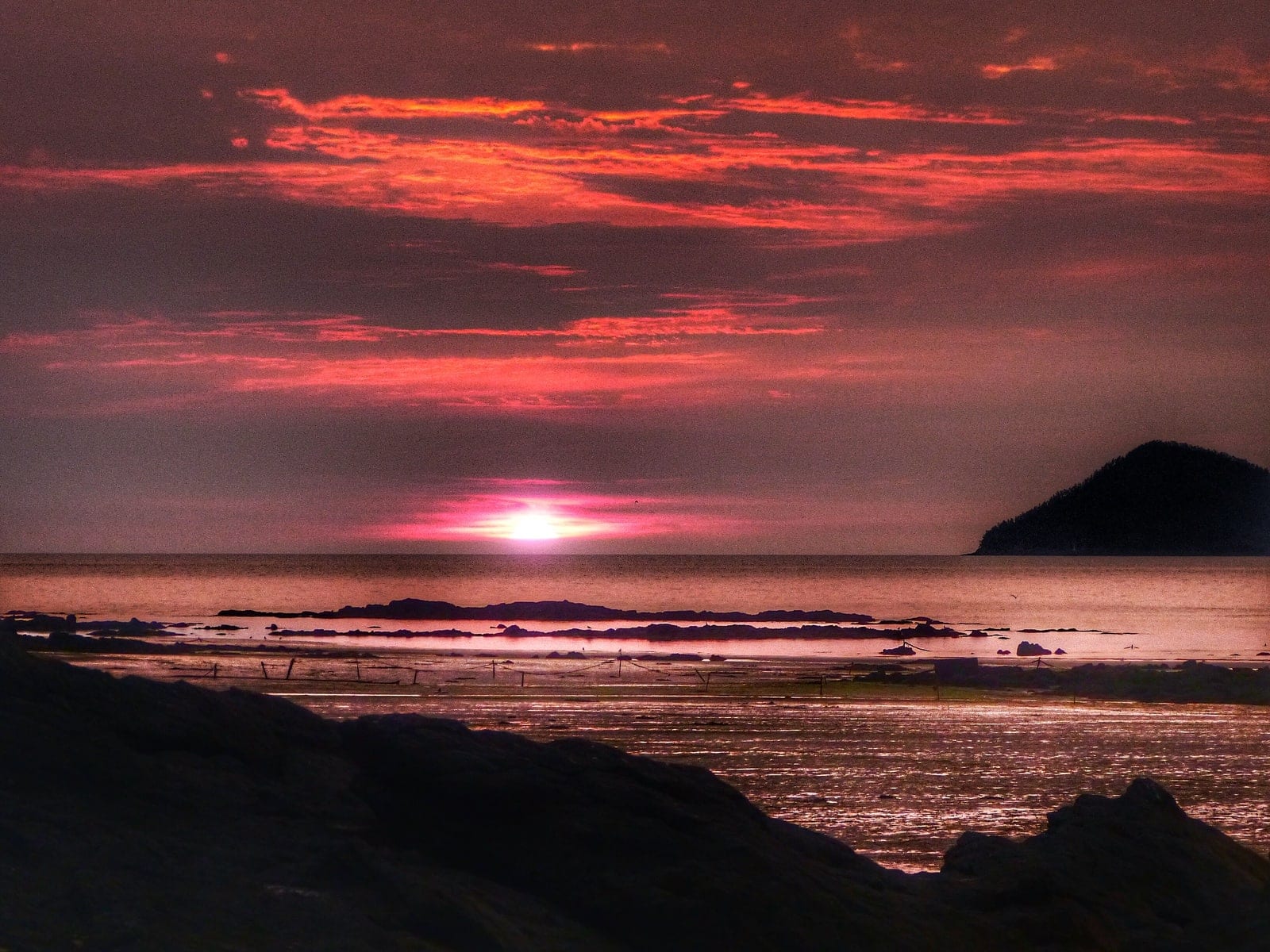
Byeonsan Peninsula and National Park. Naesosa Temple, Hanok village, Gyeokpo, Shamans, cemetery camping, and ball-washing
Bicycle touring in South Korea can be surprisingly awesome, as it lets you explore its off-the-beaten-path areas by any other means, giving you a certain freedom of movement.
Disclosure: Some of our articles contain affiliate links. This comes at no additional cost for you and helps us keep this website up and running. (as Amazon Associates we earn commission from qualifying purchases)
When we arrived in Seoul and the Incheon area, we were told to do the 6 rivers bike path, a long cycling highway that connects Seoul to Busan through the interior. People come from all around the globe to do that.
But this idea didn’t suit us; following a signposted path all the way to Busan didn’t sound really adventurous. Instead, we were drawn to the rugged profile of South Korea’s west coast, dotted with hundreds of islands.
When we asked locals about that coast, they all said there was nothing to see there. That made us finally decide to explore there.
Byeonsan Peninsula was one of the (many) highlights of our bicycle trip in South Korea. We spent almost 6 days in the area and never got bored, so we feel we really recommend it.
There’s a surprisingly high number of things to do and see in Byeonsan, here are some, of the ones we have done.
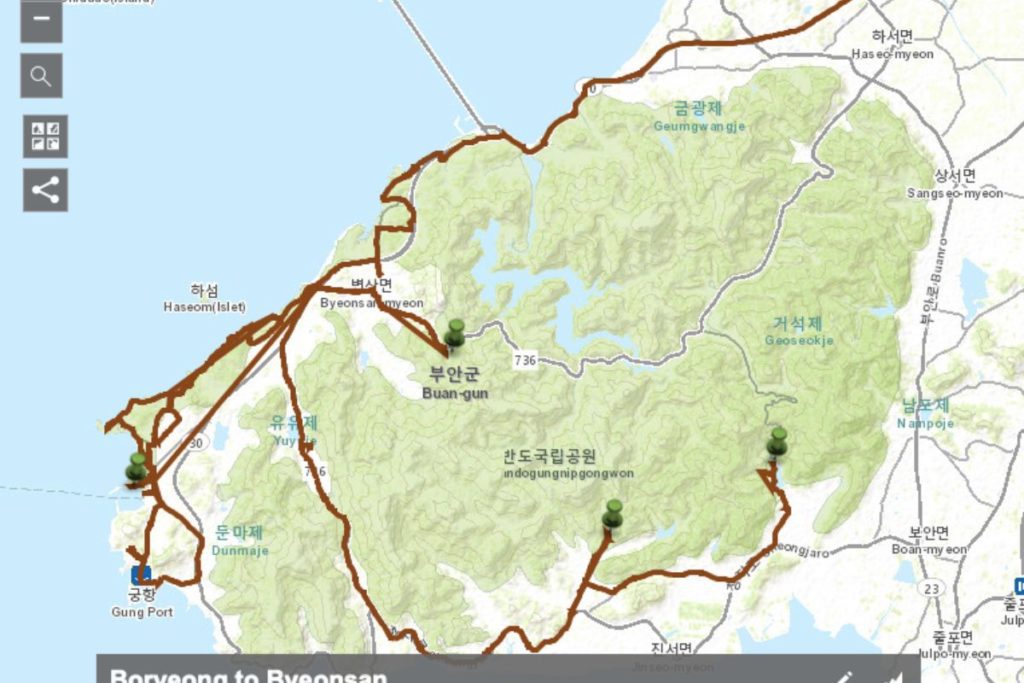
Check the map at the bottom for geographical references.
Getting to Byeonsan peninsula, Buan-Gun
We leave Yondo Beach and Boryeong province early in the morning. We are heading to the Byeonsan Peninsula in Buan-gun County. In the afternoon, it rains hard, and we find no suitable gazebo to pitch our tent in.
0.5 – Camping in a Korean cemetery
Near a small lake, there is a cemetery with big trees that could shelter us from the rain. The cemeteries here are not concrete boxes as in Italy.
They are usually in the woods or in the countryside. Above each tomb, there is a large mound of earth shaped like a hemisphere, where the grass grows. Often, there is no tombstone.
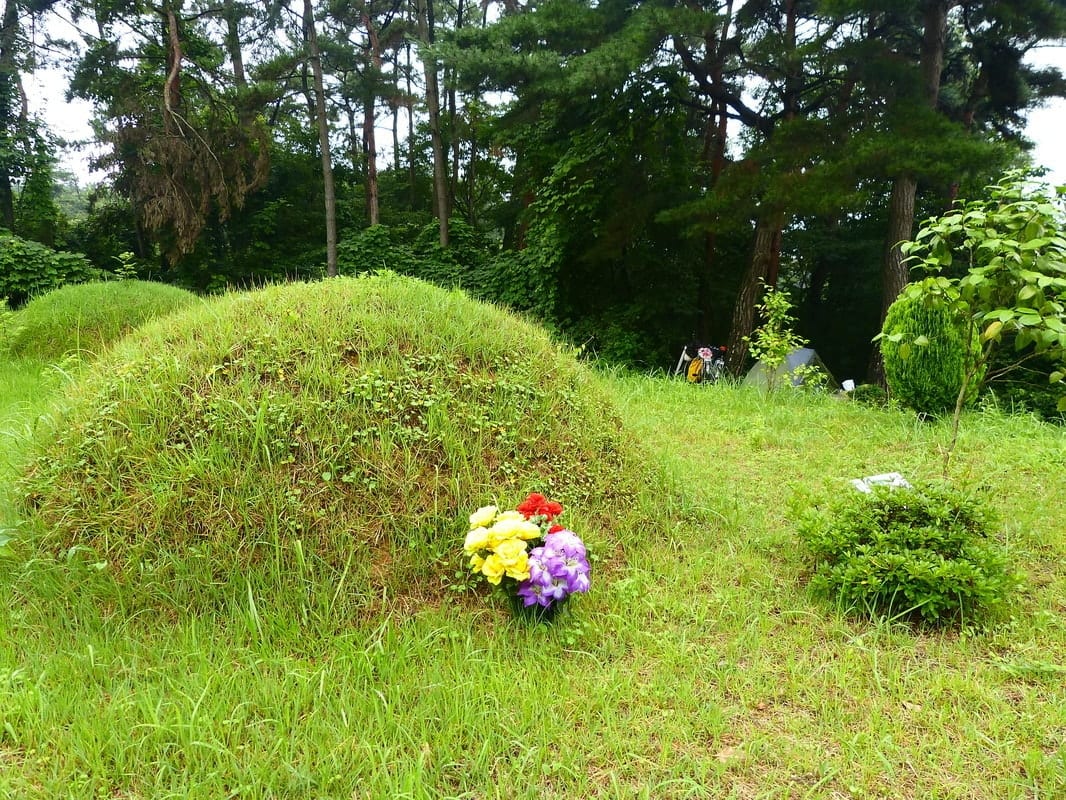
They are usually in couples, and never more than four or five tombs nearby. Thanks to the trees, we can cook the noodles and eat them outside the tent*.
Upon awakening, we cross the village near the lake (so many lakes here), which is very nice, with many traditional Korean houses. Then again, peaceful and verdant countryside, until we finally reach the peninsula of Byeonsan (Buan Gun County).
We stop to sleep on a nice little beach, the tide is low, and we are unable to swim because the water is far away and there is a lot of mud. As usual, we were welcomed and treated like stars, managers of a bar/restaurant that closed today offered us water and food. I like Koreans.
1 – Byeonsan beach
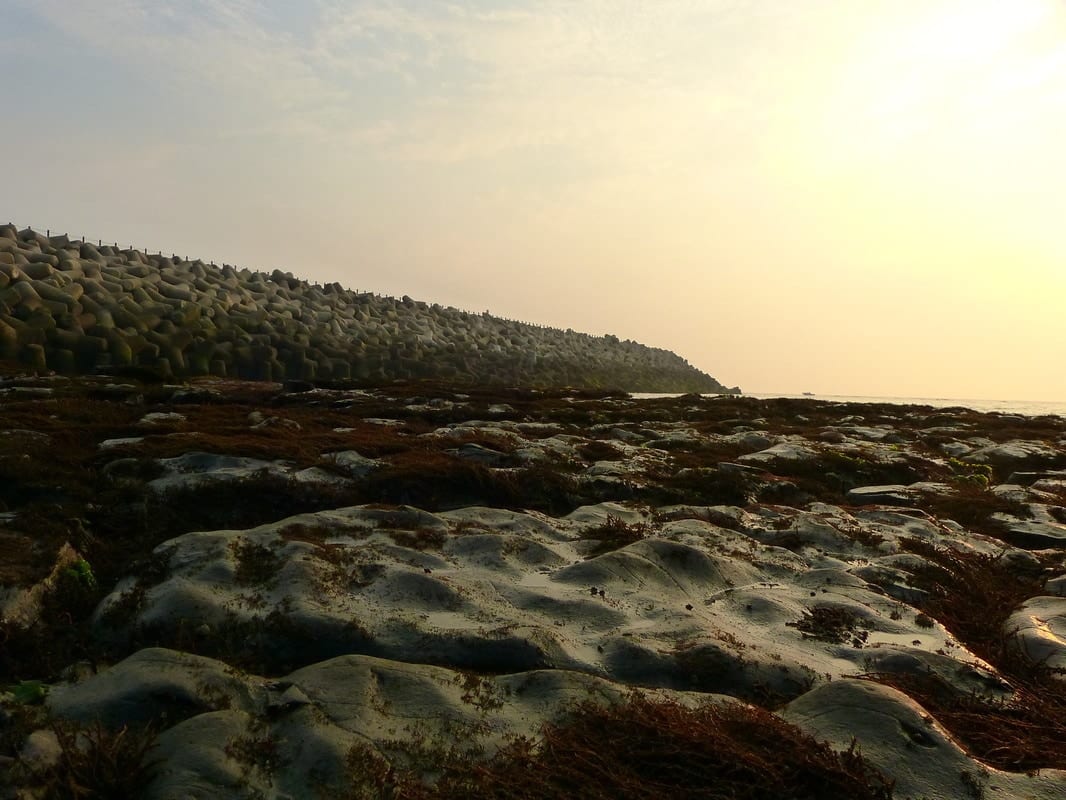
The purpose of today is to find a base camp where to leave bags and tents behind and explore the peninsula in a lighter fashion.
We come to a beautiful, big beach backed by a pine grove full of tents (Byeonsan Beach). This time it is true camping; however, it costs 8€ each, and the noodles cost twice the normal price. The beach, though, is really amazing, and we do a nice bath.
We keep on following the sea, and we must climb a steep hill, we reach the top and on our right, there is a path leading into the forest. We find a clearing in the woods that looks perfect for the tent, but there’s an unusually high mosquito density. Those are a plague in Korea during the summer.
2 – Gyokpo and Chaeseonkgang cliff
We are armed with fumigators found around. People go on a picnic on Sunday and then forget coils in the gazebos. Here we are trying to save on everything. We assemble the tent and, naked and graceful, equipped only with our bikes, we go look for food in the nearby village (Gyeokpo), about 5 km away.
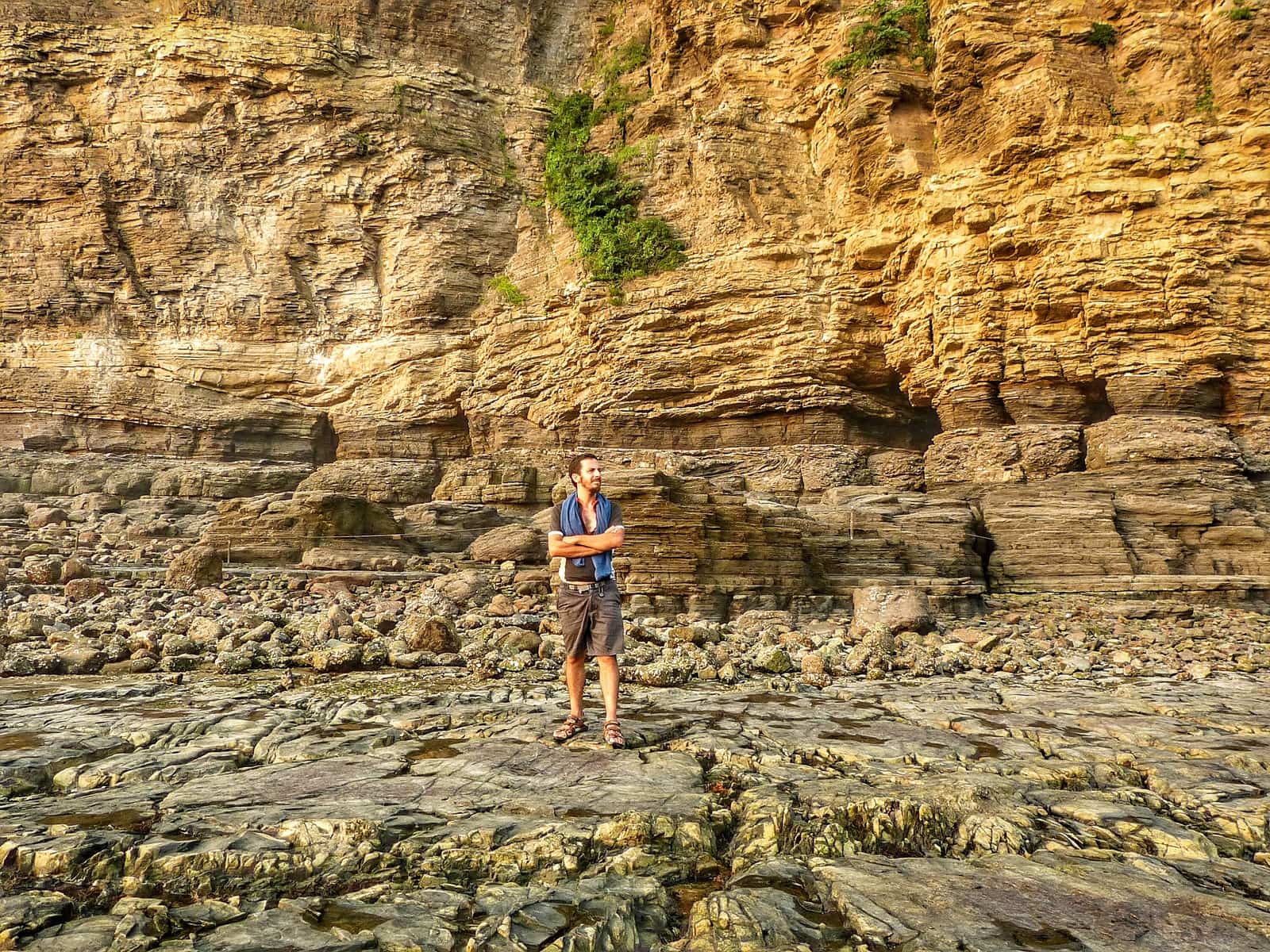
Here, in addition to food, there is a beautiful reef (Chaeseokgang cliff) from which you can see a scenic sunset, or take pictures in silly poses. One of the most Instagrammable places in South Korea, if you ask me.
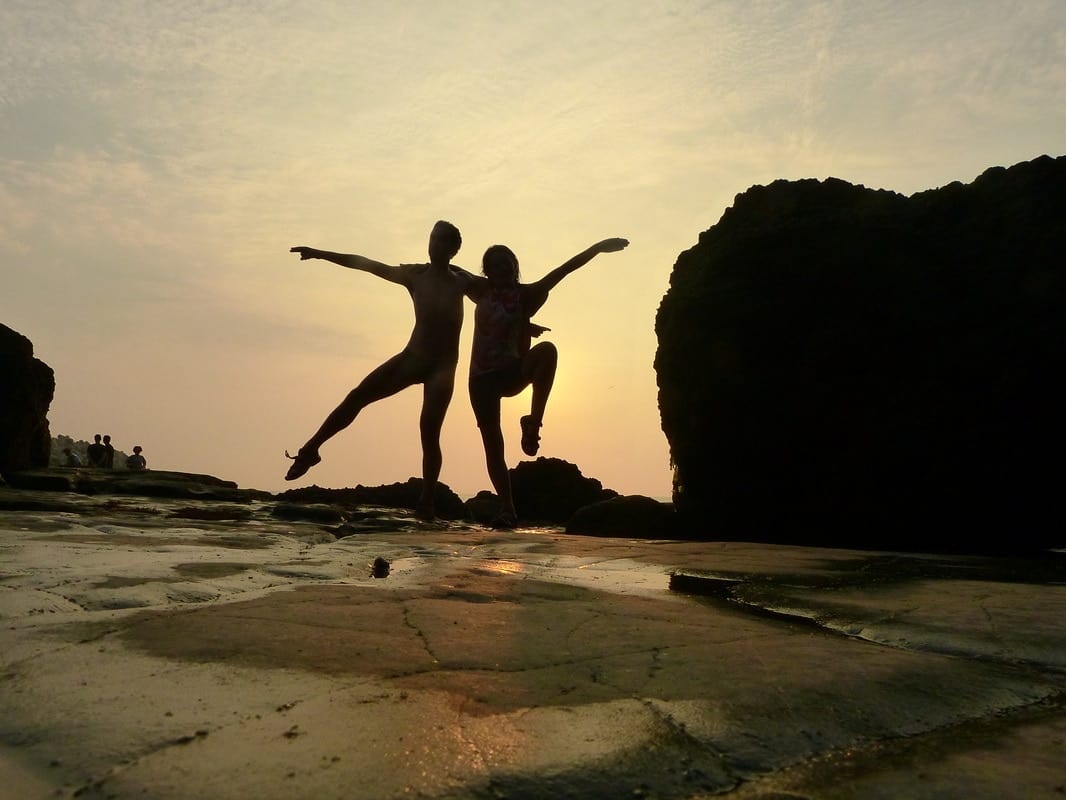
The town is full of shops selling dried fish and fish sauces; it’s a typical Korean seaside village, with a very tranquil atmosphere, a nice boardwalk, and fish restaurants.
The road along the sea is beautiful; there are so many small islands in this area, and it’s a very scenic bicycle ride. There is a low tide now, and we can walk to an islet in front of us. At sunset, it looks romantic.
We’re back to the tent when it’s almost dark. A sign informs us that a red crab with blue eyes lives here. Daniele spots one in the forest, but what’s it doing here? Aren’t the crabs usually found in the sea or on the beach?
3 – Walking to an Island (after getting drunk in the early morning)
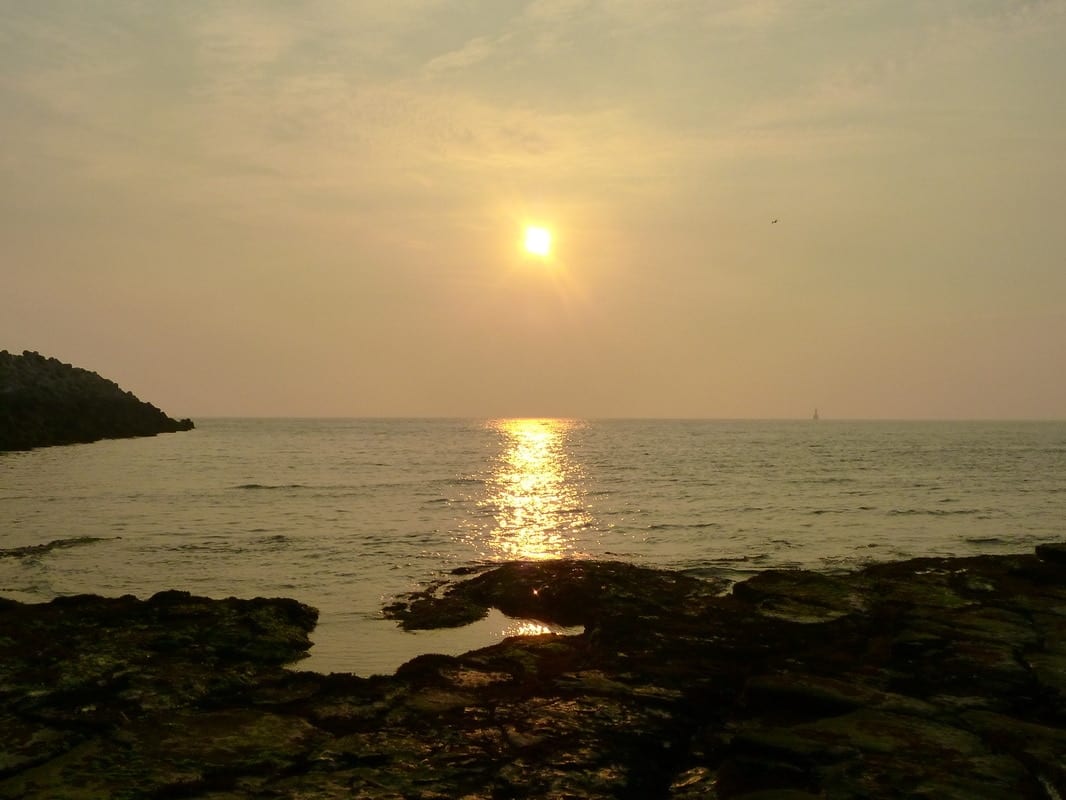
When we wake up, we go to eat breakfast at the beach in front of the small island accessible at low tide. Our tent is impossible because of mosquitoes; the beach is full of all kinds of insects, but there are no mosquitoes. They like the woods.
The tide is low, and we have to walk a long way to get the water up to our thighs. During the walk, we see many flying fish having a lot of fun. And even those fish that dig their burrow in the sand by spitting.
Meanwhile, there are Koreans on the beach who offer us rice wine, cherry tomatoes, peppers, and watermelon (a watermelon costs 20€…), altogether: tomatoes and peppers are fruits for them. But I like Koreans.
4 – cycling (or riding or walking) along the coast
After breakfast, we go for a swim at Byeonsan beach, the big beach we saw yesterday, then let’s go around the peninsula following the sea. There are many coves, and we take a bath whenever we can. The area is amazing, with verdant vegetation, clear water, cliffs, reefs, and islets everywhere. A true hidden jewel, barely mentioned in the tourist guides.
5 – The Temple of the Fishermen
We arrive at the head of the peninsula and see a sign that says “Temple of the Fishermen“. Intrigued, we go check what it is.
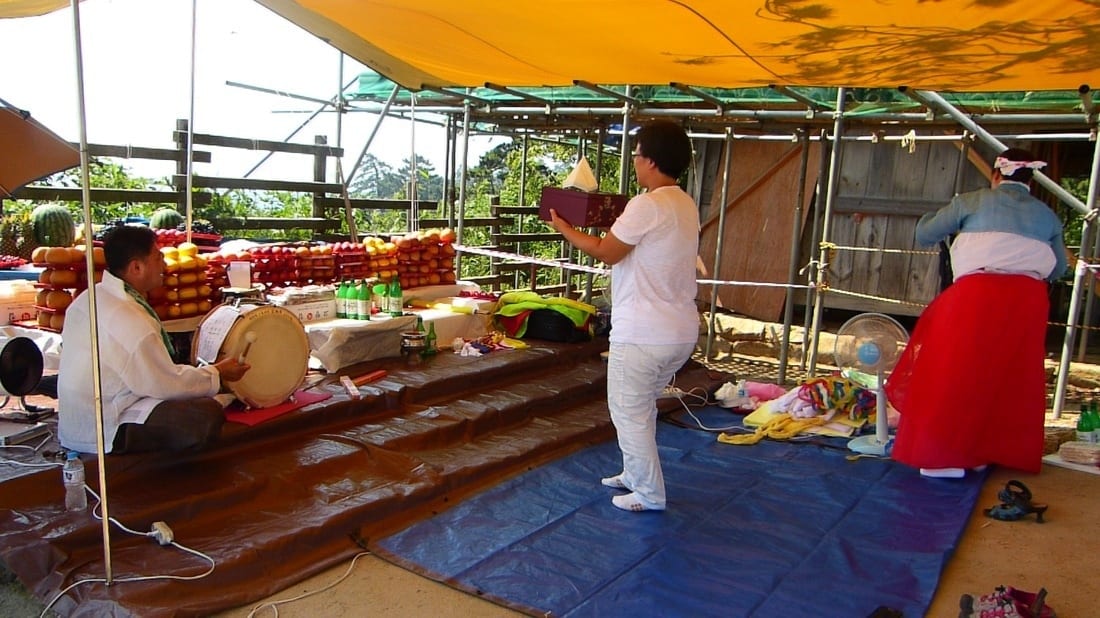
The temple is a small shed. Outside, a man (the “priest”) with his feet painted blue and white plays the drum, and a woman (the “priestess”) jumps like Totoro while playing bells. Then there are two faithful who jump too, one is holding a tray with the offerings, and is encouraged by the priestess.
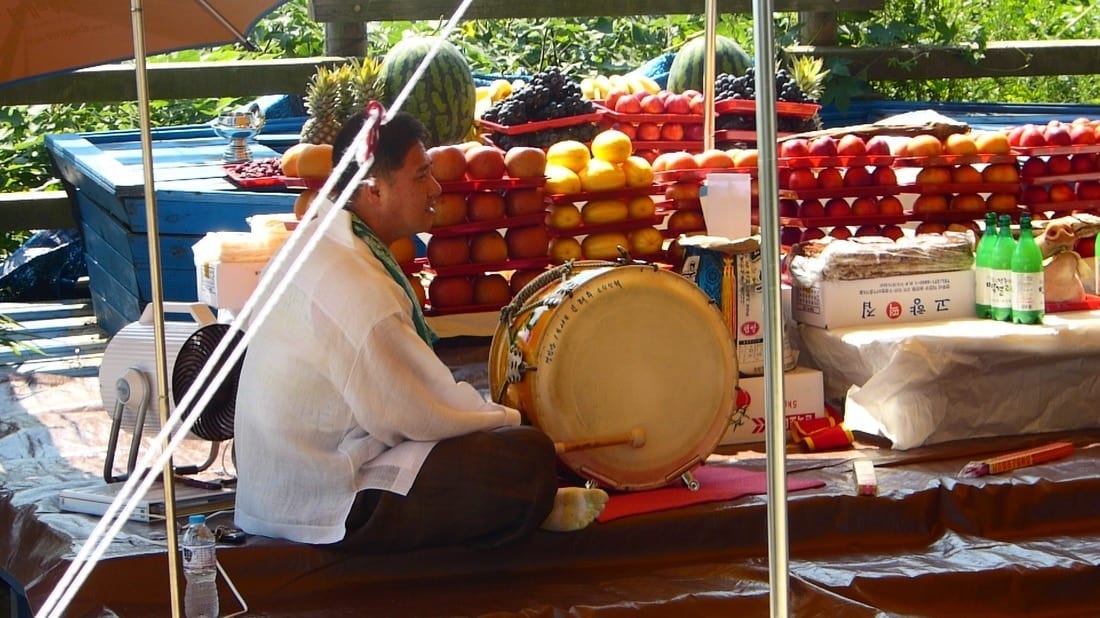
We infer this is a Shamanic temple. Korean Shamanism is the original religion of Koreans, almost forgotten nowadays, crushed by the many Christian sects coming from the USA.
6 – Fake Hanok village
After the temple of fishermen comes a reconstruction of an old traditional Korean village, fake but still very nice. It is famous for being the filming location of a popular historical Korean drama.
Hanok is the name for Korean traditional houses; there are many, and some also have the traditional thatched roofs.
It’s beside the sea. Before the entry, there is a car park with a fountain to which is attached the providential hose, and so, also tonight, we can wash our dirty selves.
Going back to our house in the woods, go through the village, and this time we identify a real supermarket, it isn’t written “supermarket” but an “NH bank”, a bank and a supermarket are often the same thing.
A Chinese laborer here treats us to coffee, and a Korean gives us red cobs. Let’s go back to the tent when it is almost dark again, there is a beautiful full moon.
7 – Byeonsan National Park (where we didn’t go)
Upon awakening, on the other side of the tent, a crab looks at me with bulging eyes. Korean crabs do prefer the mountains. At breakfast, we eat the corn given to us yesterday; some are yellow, and others have black and white grains.
Let’s go to the Byeonsan National Park, the most famous tourist attraction in the area. But there comes a path accessible only on foot, 9 km. At the entrance, a map shows the slopes, reaching 25%.
We could do that, but then we would need to come back here to pick up the bikes, the path ends on the other side of the peninsula. So we get rinsed in a nearby stream and ride our bikes along an alternative internal road that also brings us to the south of the peninsula. It’s scenic, and there are steep slopes; we’re happy anyway.
8 – Silkworm Museum (where we only get a shower)
We ran into the insect museum, which cost 3000 won. Not much, but we really are on a budget at the moment. The area is famous for the silkworms that Koreans eat; they are sold in cans everywhere, but I have never seen anybody eating or buying them.
Everything in this museum is shaped like a bug, and even the bathrooms are shaped like a big caterpillar. Inside, there is classical music. I will not explain how, but sometimes it helps. And we even do a nice shampoo in the sink. No bugs, but we are clean and fragrant. I like Korea.
9 – Naesosa Temple
Once in the south of the peninsula, there is a road to Naesosa Temple. Before going in, we stopped to eat some instant noodles.
An old lady asked us for 4000 won each, even though the price on the box was 2000, because she was convinced she had cooked them (she added the Water). Watch out for Korean old ladies! Every now and then, they try to cheat you, but men never do that (in our experience).
The entrance to the Naesosa Temple (Naesosa Temple) has a 3,000 won fee. It is not much but we cannot pay, the conductor sees us thinking about what to do, and so at the end lets us in for free. While we waited outside, people gave us cookies, coffee, and fruit juice, and one told us “FAITO” or “Fight”. I like the Koreans.
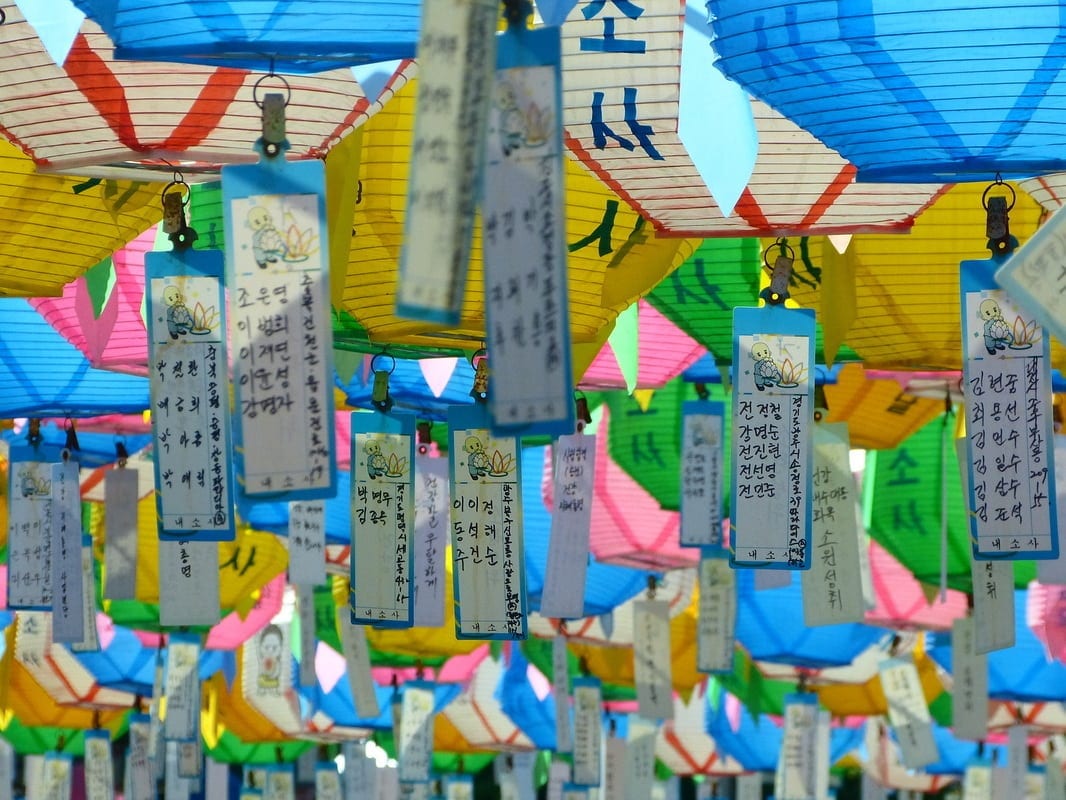
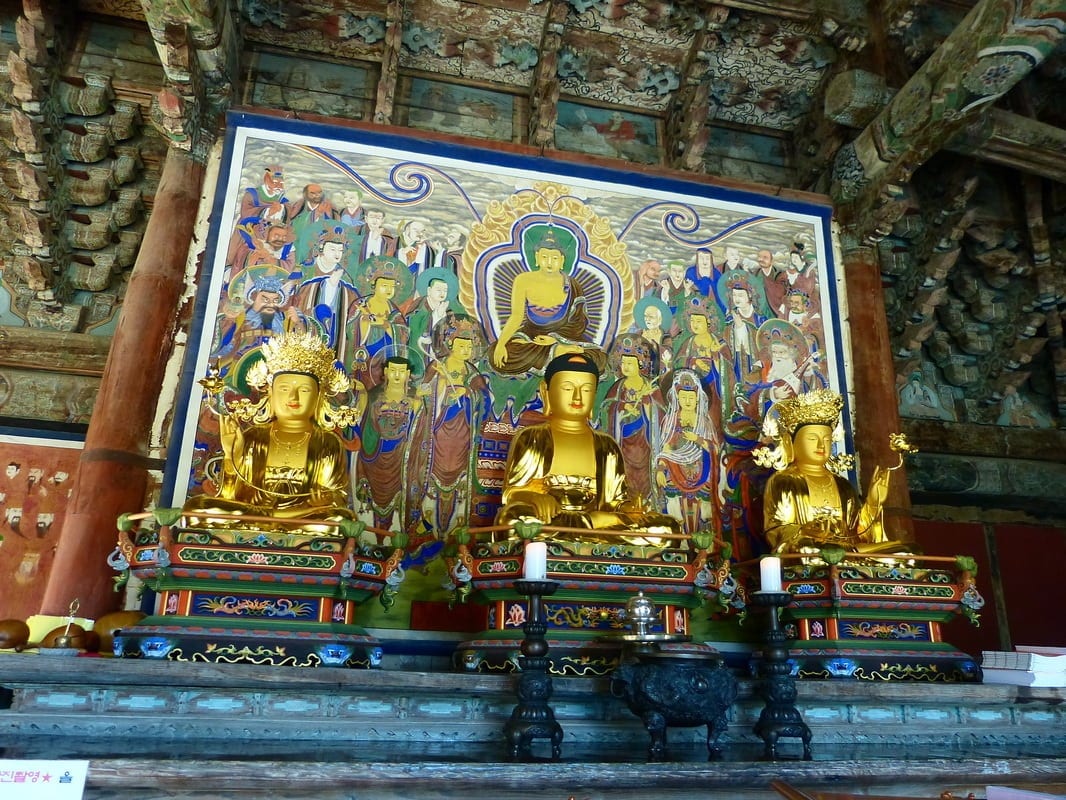
The temple is nice, but nothing exceptional. The wooden ceiling and paper lanterns are the only really nice things. The latter has some prayers or wishes written on small pieces of paper tied below the lanterns.
There are tourists dressed as monks, in baggy trousers and a gray shirt. You can pay to sleep here and do what the monks do (₩40,000-₩60,000). Your cup of tea if you like temple-stays.
From inside the temple garden, there is also a trail that leads to the waterfall and connects to the Byeonsan National Park trail.
9.5 Experience the “ball washer.”
We take the bicycles, it’s hot. We spot a SO-CALLED “ball washer”. I know it is not a fancy name, but it gives the idea. Basically, a fresh stream of water is channeled into concrete for irrigation. Like a vision when bicycle touring.
We dive with all the clothes on, and a permed old lady sees us from her window and comes out to offer us frozen homemade mulberry juice, redeeming the honor of the permed old ladies. Not only do men offer something.
10 – Udongje reservoir
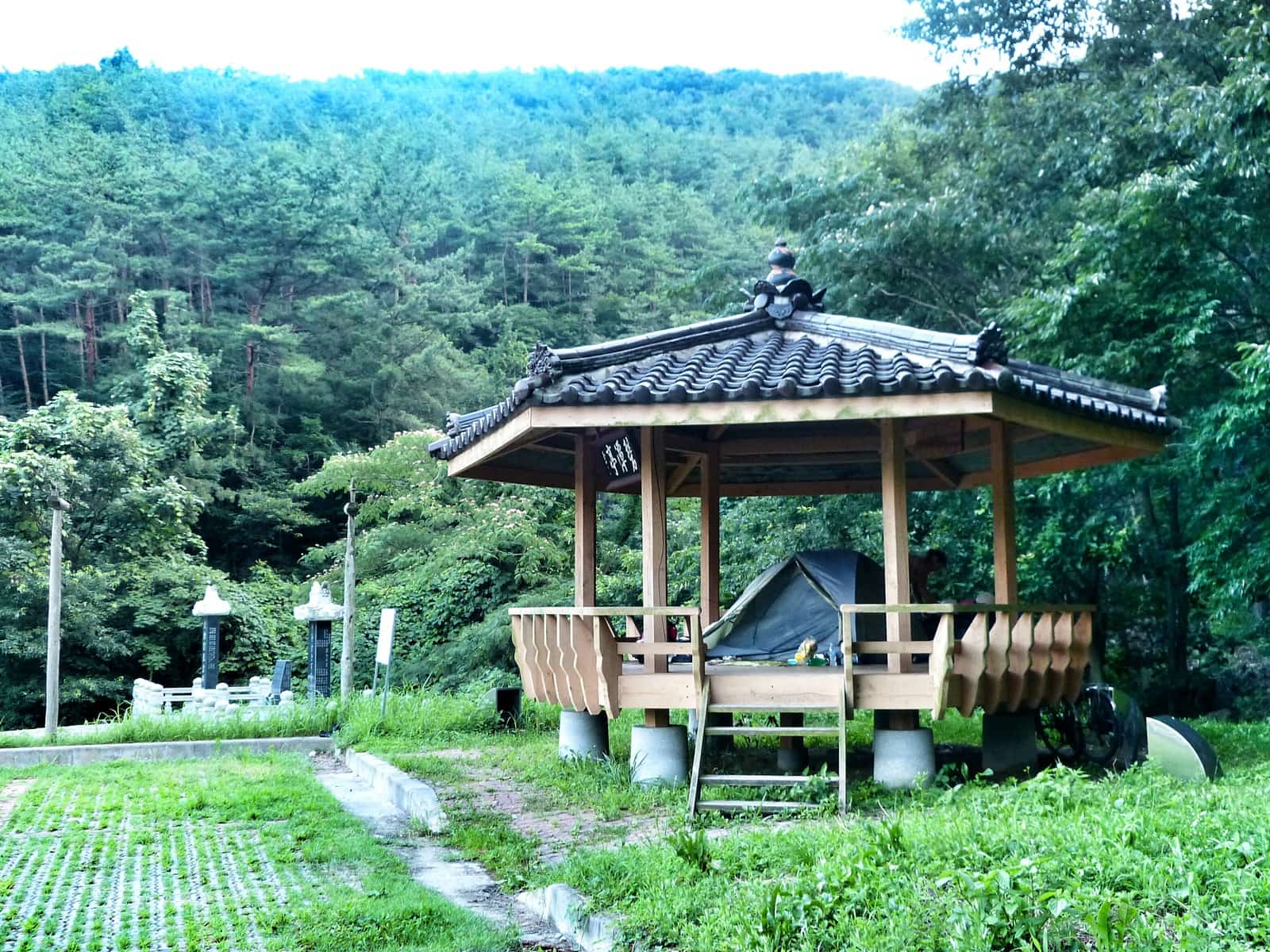
We ride up to a beautiful little artificial lake, Udongje Reservoir, enclosed by small mountains. Nearby, there’s another temple, which is not a tourist attraction and therefore is free, but is even more beautiful than the other.
We wanted to ask the monks to put the tent in the garden, but three watchdogs were barking constantly, so we opted for the gazebo seen just before the lake, which was wonderful. Tonight, the moon is at its full and really huge.
No more things to do in Byeonsan
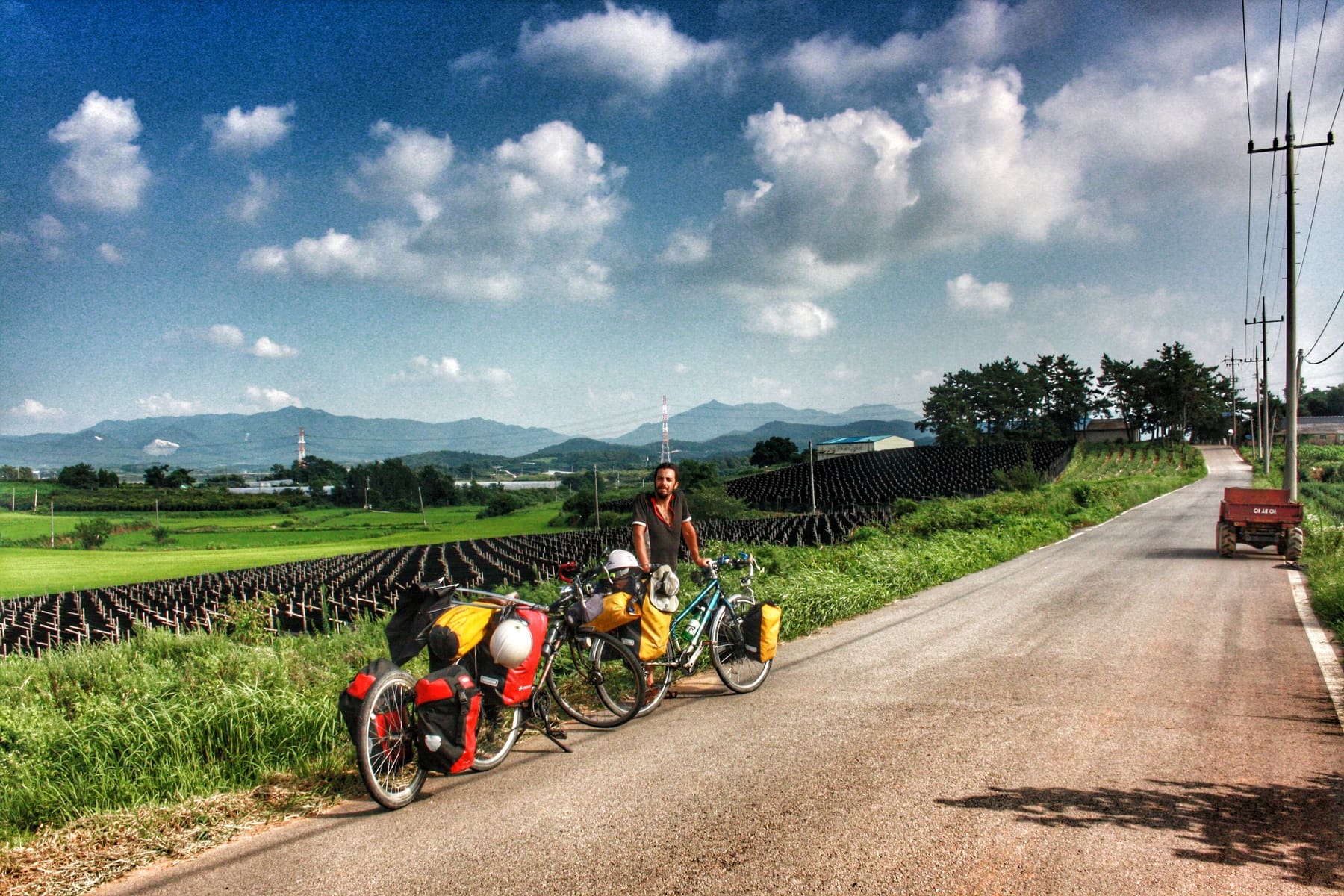
We cycle happily in rural Korea. Bicycle touring in the Byeonsan peninsula has been unforgettable. Now we leave it behind and head south.
The road is always up and down; the true plain does not exist in Korea. Hot hot. We stop for lunch in a very nice little town full of traditional houses. Many seem sadly abandoned.
We stopped to eat at one of these, under its large wooden porch: tofu with peas and soy sauce for me, and tofu with tuna for Daniele. For the second course, bread with paprika-flavored sauce.
The house is closed, only a room on the left side is open, and inside there are books and incense. It seems someone uses it; there is also a mattress. Not far from the house, there is an old Confucian school, about a hundred years old, also abandoned.
It’s weird because usually, it’s all very nice here; we have never seen anything abandoned or unfinished in South Korea before this.
We continue up and down the hills that make the Korean countryside so nice, with its rice fields always surrounded by mountains covered with lush trees.
Korea is really green and luxuriant, much more than we imagined.
Tonight, we face several options for sleep:
- The gazebo in the rice fields, which I like a lot, was rejected because a nearby motor pulls water and makes noise.
- A traditional house is uninhabited. I guess it’s someone’s house. Daniele says I’m paranoid.
- A beautiful grove: awarded.
And tomorrow we go to some island, not yet we know which one. some island, not yet known which one.
This article is part of our South Korea travel log series.
We spent two months bicycle touring off the beaten path in Korea, and we loved it. Check here if you want to learn some tricks for traveling to South Korea on a budget (less than $10 per day).
GPX track and map of Byeonsan peninsula
Follow our bicycle touring adventures