

Last Updated on 27 November 2025 by Cycloscope
Backpacking South Korea. A budget travel guide, Everything you need to know to travel Korea for cheap
Where to sleep, what to eat, how to stay connected, and much more
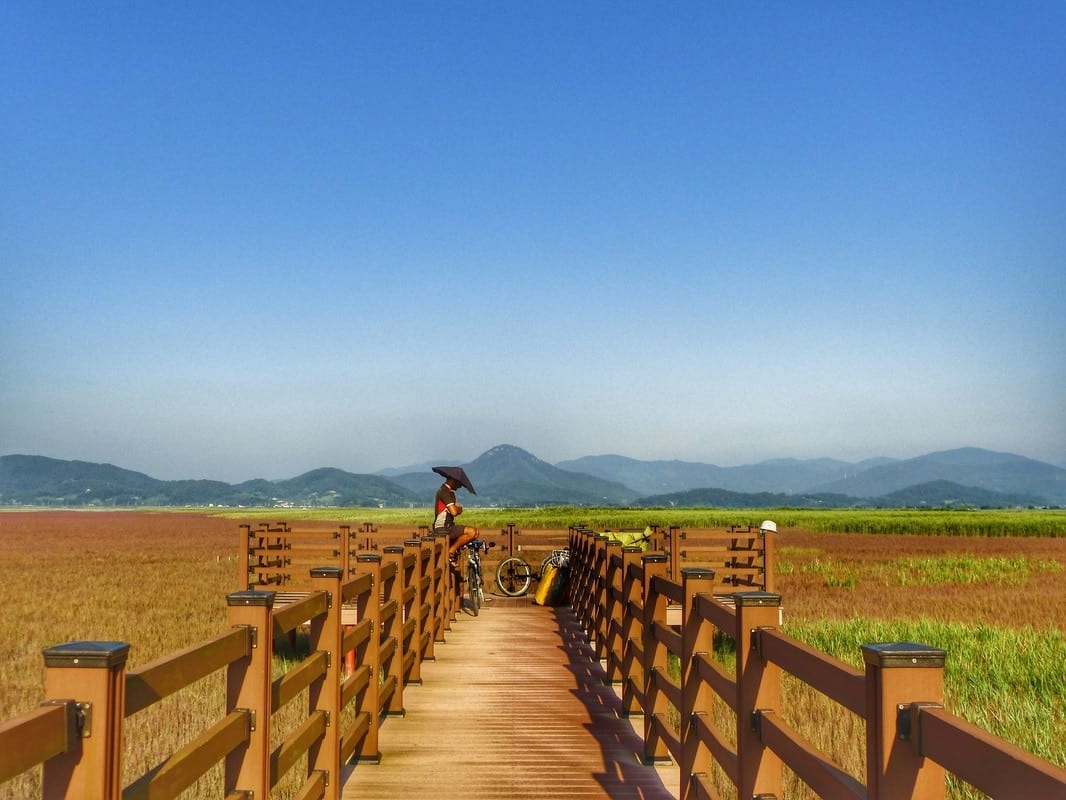
Backpacking in Korea on a budget is not easy. If you really want to keep it cheap, let’s say on a travel budget of less than 20 USD per day, you should really consider cycling and camping in South Korea.
Disclosure: Some of our articles contain affiliate links. This comes at no additional cost for you and helps us keep this website up and running. (as Amazon Associates we earn commission from qualifying purchases)
South Korea is not a top tourist destination like Japan or the Philippines, but it’s a fascinating country, really worth visiting. There’s much more there than Seoul and Busan, and as it goes for cycling in Korea, a lot more than the 4 rivers bike path.
However, things are changing, and more and more people are visiting Korea every year.
That said, there is only one problem with traveling here: South Korea is probably the most expensive country in Asia. Yes, even more than Japan. But don’t worry, this article aims to offer some tips on budget travel in Korea.
Maybe you’ll have to give up something – for example, activities that require a mandatory tour, such as visiting the DMZ Zone – but still enjoy and deeply experience this beautiful and underrated country.
“Take side roads, go where people tell you there’s nothing to see, and that’s where you will find the real South Korea.“
Where to go? Check these articles
13 great off-the-beaten-path destinations in Korea, a perfect itinerary
Check also
27 Super-interesting facts about South Korea
Ours was a 45-day cycling trip, and we spent a total of 500€ per person, so about 12$ per day. This guide can be used by hitchhikers, walkers, and all sorts of backpackers with a little adventurous spirit, and should enable you to enjoy South Korea on a low budget.
Nothing could beat the freedom of the bicycle. South Korea is a very easy destination for bicycle touring beginners, so consider buying a bike.
This guide is based on our sole experience, so please contribute in the comments!
If you want to experience things differently
Learn how to travel by bicycle
Backpacking Korea on a Budget
Where to sleep in South Korea
Free camping in South Korea
Nothing can beat free camping in South Korea! This is definitely the most camping-friendly country we have visited so far. Koreans love camping, and they do it whenever they get the chance. There are plenty of free camping structures in South Korea, literally everywhere. Usually, those structures are fully serviced with toilets, showers, and shaded tent spots.
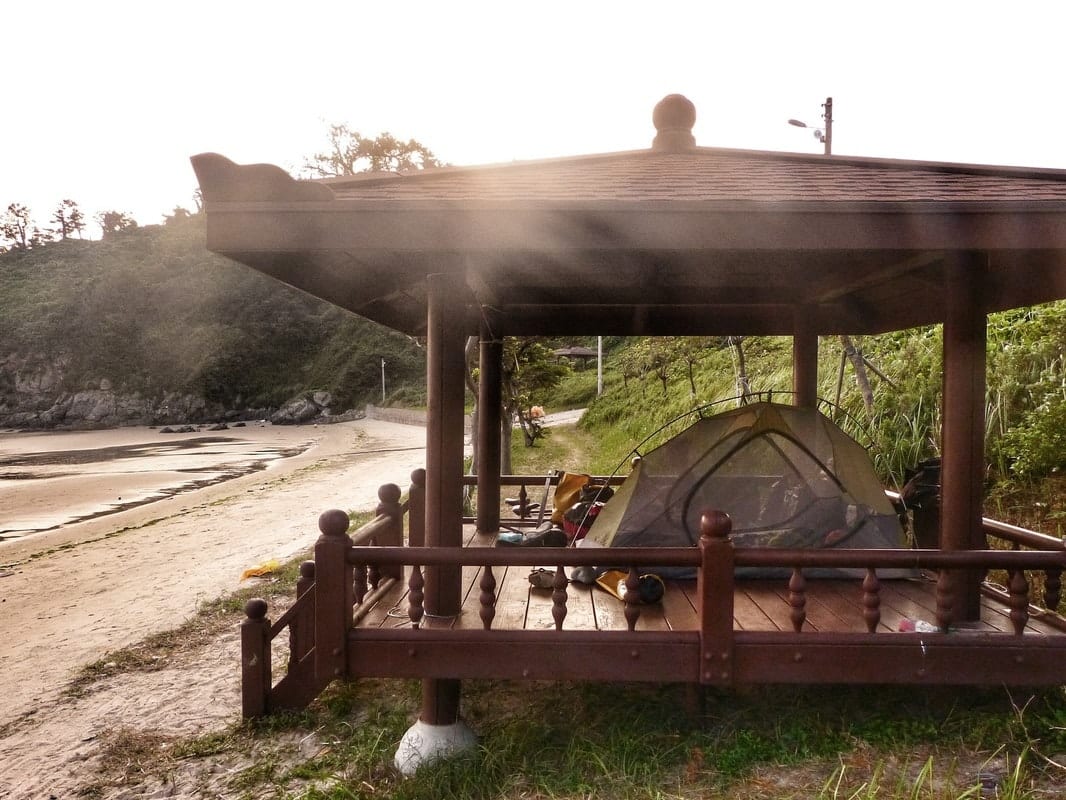
But even without such facilities, camping in South Korea is easy, legal, and can even help you meet new friends. The country is indeed full of beautiful wooden gazebos; you will find those at every corner, and they are purposely made for resting, so why don’t you rest there? We even camp in one of these gazebos in the center of Seoul!
Most of these are wide enough to pitch a small tent inside, providing a comfortable shelter to avoid getting wet or too hot. Even if these are in very exposed positions, don’t worry, you may have a pleasant surprise in the morning with a Korean bringing you coffee literally in your bed! This happened to us more than once.
If you really want to budget travel to South Korea, bring a tent! Free camping is also a really viable option for those backpacking in Korea; you’ll be surprised how easy it is.
Accommodation
When we say budget, we really mean it, so when it comes to hotels in South Korea, forget about it, you’re not going to find anything cheaper than 30€ per night (very, very rare) for one room. If you have a little more to spend on sleeping, check Airbnb or hostels.
Hostels can be indeed cheap in Seoul and Busan, you can get a bed in a dorm for less than 10US – There are fewer options out of major tourist destinations so we really recommend a tent – you’ll get to experience Korean camping, and barbecue culture, make local friends, get treated many dinners and save a lot of cash while staying in nature.
For a different experience and a full immersion into Korean culture, you could try to stay in a temple, several offer this opportunity, check here how to experience a Korean temple stay at Baekyangsa.
Check the Cheapest Hostels in Seoul
Sleeping in a Korean public bath (Jjimjilbang)
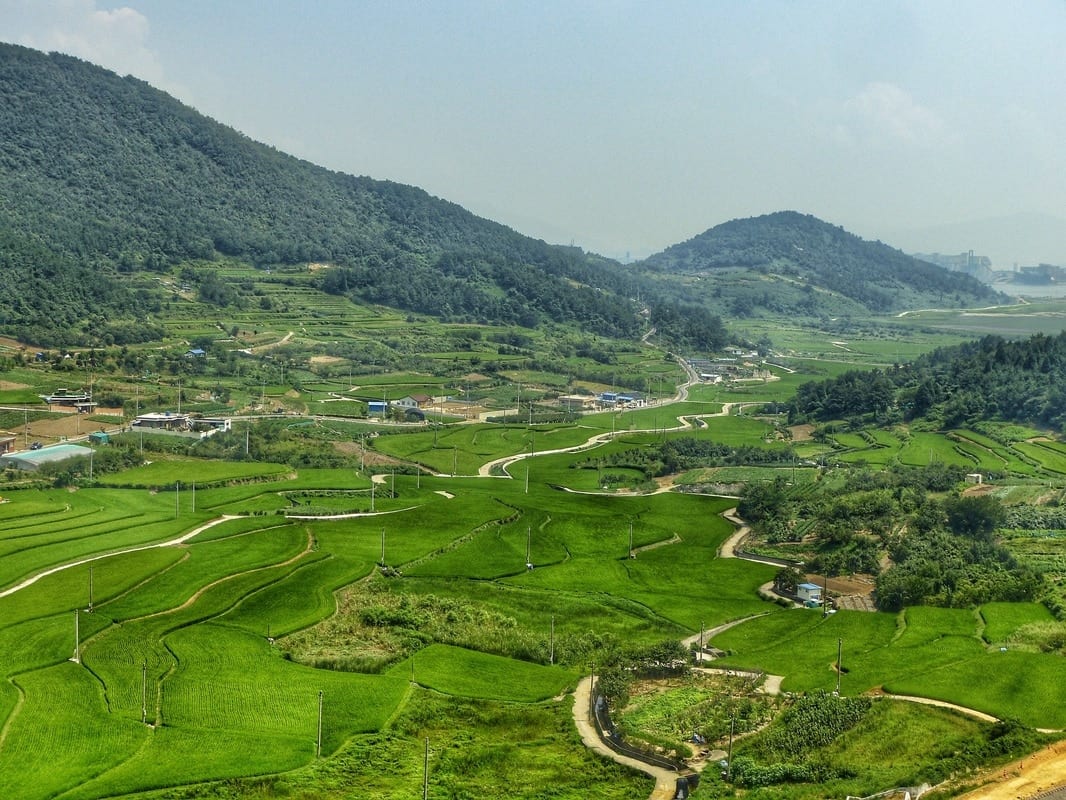
It looks weird, but this is actually the best option if you want to have a roof over your head for the night. Korean public baths are very widespread and most is 24h open.
You have to pay the entry fee, usually around 5$, and then you’re in, with nice hot water and a “comfortable floor” in a standard room to sleep on.
Some of these Jimjilbang have rooms separated by sex, some are mixed. Check this article if you want to know more about this exciting sleeping option.
Random host
Though Koreans are incredibly kind people, especially outside the big cities, it’s very rare to be invited to sleep at someone’s house. More than once, we had been treated to meals; a fellow cyclist even gave us some money (he didn’t have time to eat lunch with us), but we had never been invited to stay the night.
Warmshowers and Couchsurfing are widespread in Korea, but many members don’t speak English, and so often are just too shy to host you. Give it a try anyway, we met wonderful people.
Where to eat for cheap in South Korea
Korean Food
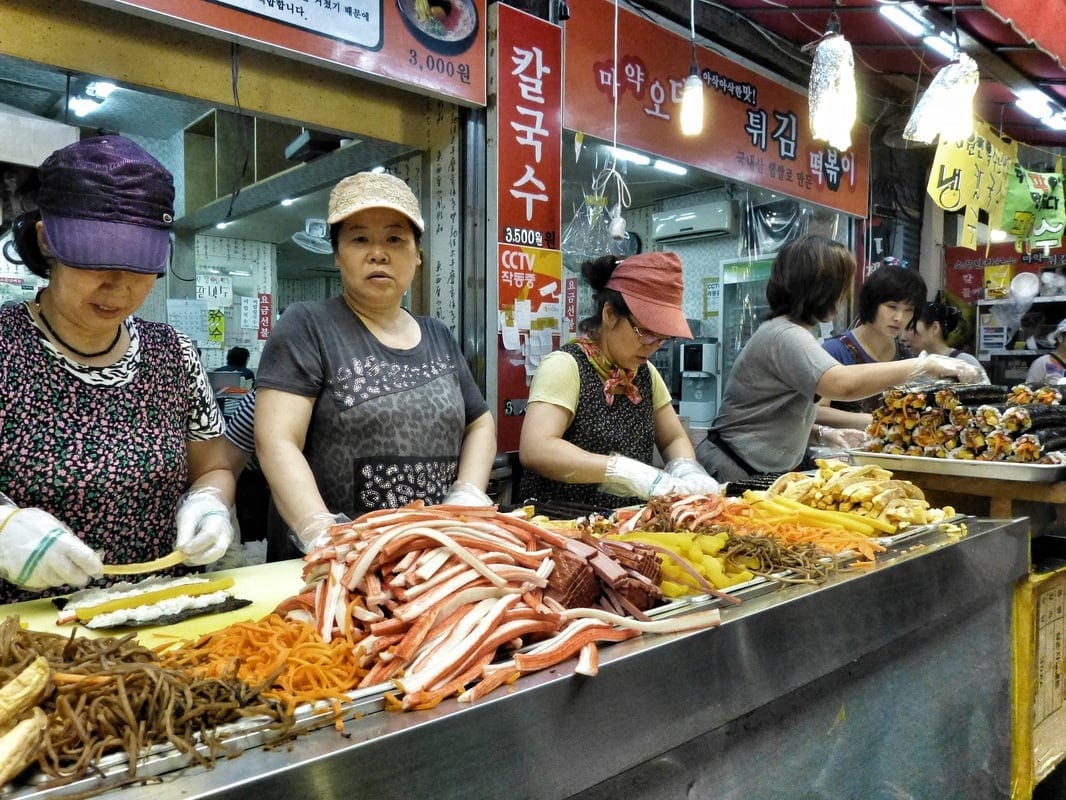
Korean food is delicious, but also very spicy! We once had been with an Indian guy in a restaurant, and he could not cope with it, an Indian! Anyway, the variety is so vast that we wouldn’t even attempt a list; there are many on the web, and this is one of the best.
Great meals are not cheap, though, compared to the Asian standards.
So, how do we experience Korean food on a budget?
No problems, there are many ways.
Restaurants in Korea
The average cost of a meal in a cheap restaurant can be compared to Western European prices, 10 to 15€ per person, so it’s not really a budget option. Anyway, it’s possible to find cheaper restaurants, especially in big cities, where you can find a basic meal for as low as 5$ per person.
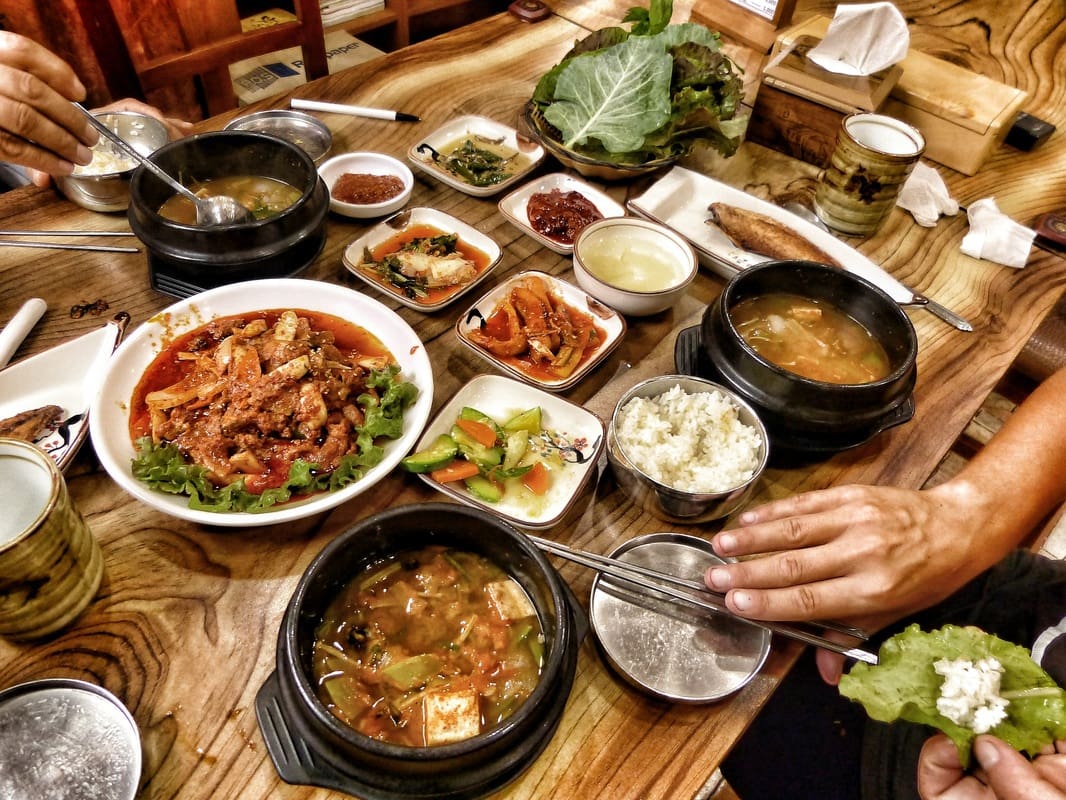
The great thing about this kind of restaurant is that by ordering just one dish, you get many side dishes for free, and you can ask for (almost) unlimited refills of them! This is still not what we call cheap, but it is really worth dining in one of these places at least a few times.
Convenience stores
There are a plethora of convenience stores in South Korea (7-Eleven, FamilyMart, and others), and they are everywhere. In these places, there’s a good selection of pre-cooked meals for relatively cheap (3€), but the quality isn’t excellent.
There are frozen meals, rice with meat, gimbap, and more, often with discounts on products nearing their expiration date. Hot water and a microwave are always available.
Instant noodles are definitely the cheapest option, but beware: don’t abuse them; they are very unhealthy (we experienced that ourselves after making them our primary food source for 2 months).
Cheap Korean food such as gimbap, sundae (blood sausage), and ddeokbokki is also available in market stalls, and affordable street food is always the best, much better than convenience stores.
Supermarkets in South Korea
Korean supermarkets are nothing like the Japanese ones, no bento (ready-made meals), no vast choices. There are, though, decent varieties of canned food, frozen tteokbokki, cold noodles with powdered sauces, cooked white rice and curry, and so on.
Unlike Japanese supermarkets, though, there are no microwaves here, so you’ll have to use your own cooking gear to heat this stuff.
Fresh fruit and vegetables are pretty expensive; beer is around 1.50€ for a 500cl can. For more specific product prices, check Numbeo.
But the best way to experience authentic Korean cuisine is to have a Korean person cooking especially for you, so make friends! Koreans are very hospitable people, and backpacking or cycling around off-the-beaten-path areas is likely to get you invitations for meals.
Water Supplies
Drinking water is available everywhere, and tap water is perfectly safe in South Korea. Gas stations also have toilets and sometimes showers or just a plastic hose.
Public baths are widespread but not so easy to recognize (memorize 찜질방). In the countryside, we often used to quickly soak in the irrigation channels of rice fields, which may not seem very polite, but Koreans usually laugh about it.
Communication in Korea
This is quite hard. Korea is still a little bit better than Japan regarding the number of English speakers, close to 5% probably (random number), similar to China.
Speaking very slowly and using straightforward sentences, and learn some basic Korean, numbers, and greetings will get you sincere smiles. The alphabet is not so complicated as it seems; if you have patience, you can learn it in a couple of weeks.
Connectivity
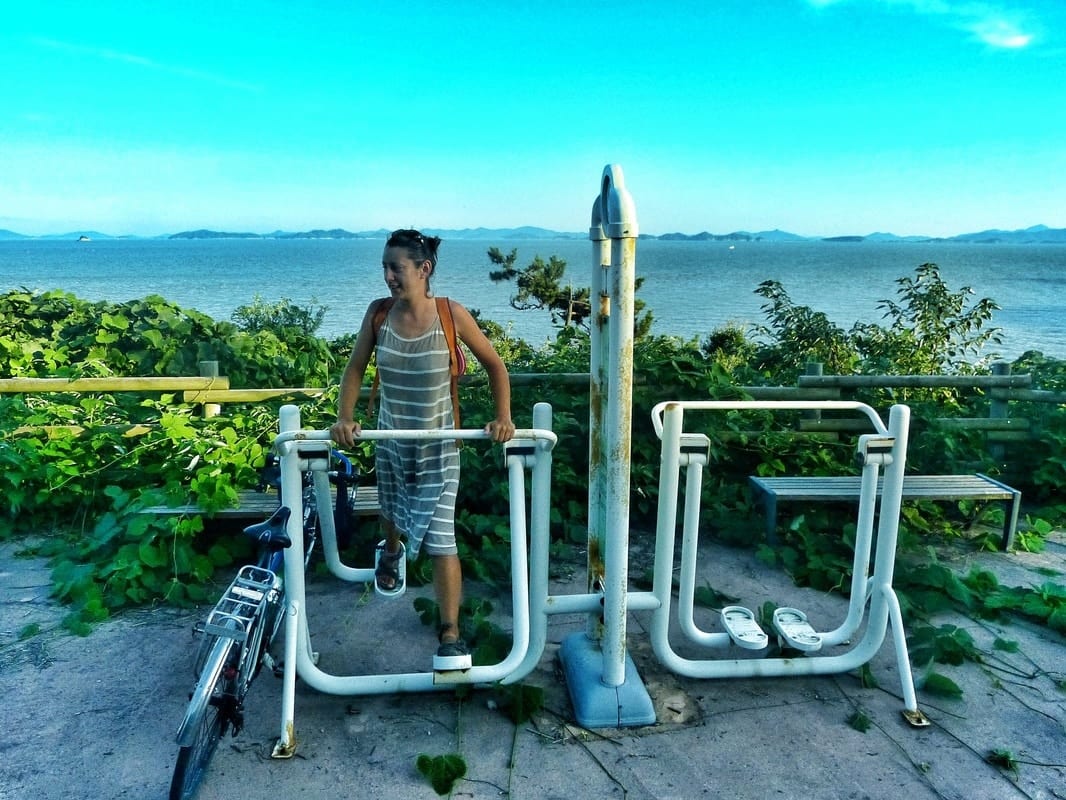
This is great! There’s free public WiFi literally everywhere in South Korea, even in the most remote islands.
It is also possible to purchase a Korean SIM card. Follow this guide for more details.
Hitchhiking and Roads in South Korea
Hitchhiking is undoubtedly a good option for backpacking in Korea on a budget. Koreans are less shy than the Japanese and are more likely to give you a ride.
There are tons of long-distance bike paths in Korea, and that’s great, but believe me, you don’t have to stick to them. Actually, Korea has a perfect road network, and it is so easy to find alternative roads that are almost all for you.
I find cycling on Korean bike paths quite dull and not really adventurous. Follow it, and that’s it. Not for me, thanks.
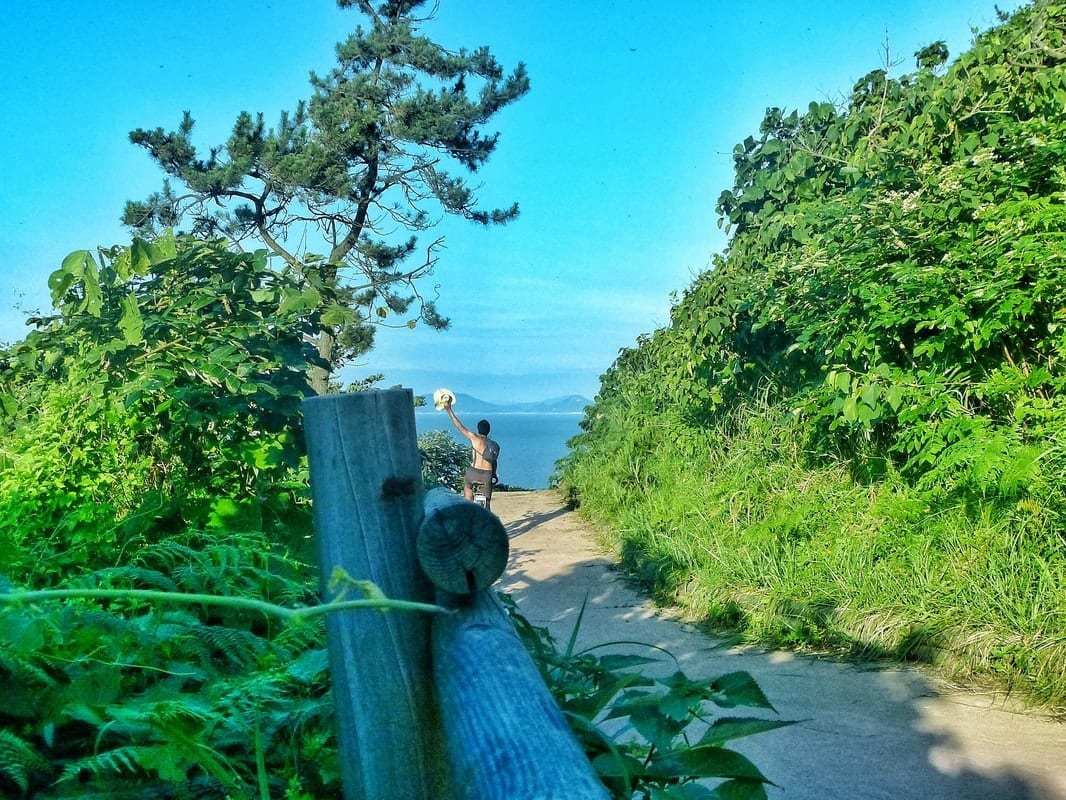
Take side roads, go where people tell you there’s nothing to see, and you will find the real South Korea. Anyway, roads are sealed and well-maintained; the only “real” mountains are in the north, but South Korea is a constant up-and-down that could be pretty challenging for your legs.
Safety concerns
Criminal threats are the least of your worries here; South Korea is one of the safest countries in the world. You can leave your wallet on the bar table and go for a walk, no problem.
South Korea is a great destination also for solo women traveling in Asia. Harassment is very rare, and, as opposed to most Asian countries, drinking is considered normal for girls in Korea; you don’t have to worry.
Getting to South Korea overland
If we literally mean “overland”, then this is almost impossible. North Korea is in the middle and there’s virtually no way to get across (I say “almost” because this couple did it, but I can’t even imagine how much they paid) if you are wondering why, maybe you should read some books about North Korea.
There are, though, exciting ferry connections with many cities in China (we came to Incheon by ferry from Qingdao), with Vladivostok in Russia, and a few ferry routes for Japan: we went from Busan to Fukuoka for less than 40€ on a beautiful ship.
Transportation in South Korea
Buses are plentiful and economical. A bike can go in the bus’s trunk for free, without any packaging. This is great for jumping between routes. The average price is ₩35,000 to cross the country by bus.
A very modern train takes you from inside the airport to the beginning of the cross-country bike path in 20 minutes. Stay on for 20 more minutes to Seoul. It’s just ₩8,000, and the bike goes abroad free and fully assembled. Weekends and holidays only.
Ferries connect all of the islands not served by bridges. Sometimes it can be hard to understand the routes, especially in minor ports where you’ll hardly find anyone speaking English.
But don’t let this put you down, explore the islands, especially the lesser-known ones, they are some of the most amazing and pure parts of South Korea. Once we took a random ferry, and one other time we pointed to a little island on a map and went there, and both times we didn’t regret it.
Small fees apply for bicycles, but they can go aboard fully assembled.
Did you like this article and want to know more? Check our full travel journal in South Korea! Don’t forget to follow us on Social Networks and share this post if you find it useful. Thanks!
Follow our bicycle touring and budget travel adventures