
Last Updated on 31 January 2026 by Cycloscope
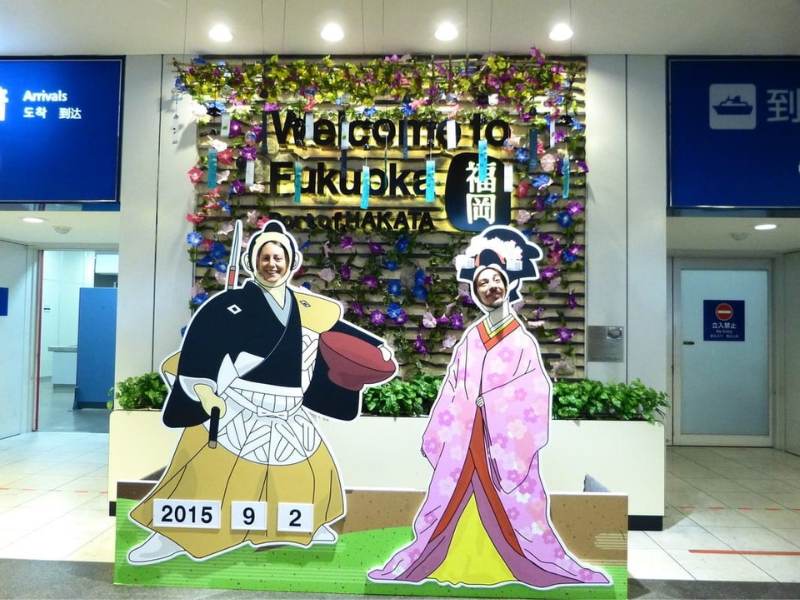
By ship from Busan to Fukuoka, leaving South Korea and entering the magic of Japan. Dancing robots, rare action figures, and wild camping in Shinto shrines
After two months in South Korea, it is time to finally leave this friendly country and sail to the land of our dreams, Japan.
Disclosure: Some of our articles contain affiliate links. This comes at no additional cost for you and helps us keep this website up and running. (as Amazon Associates we earn commission from qualifying purchases)

After two months in South Korea, it’s time to say goodbye to this friendly country and sail toward the land we’ve dreamed about for years: Japan.
By Ferry from Busan to Fukuoka — Entering Japan by Sea
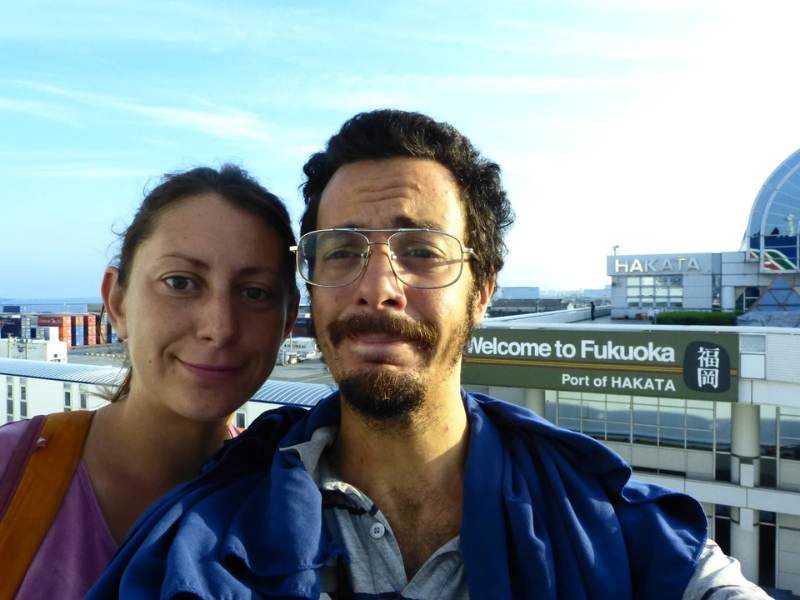
The ferry from Busan to Fukuoka is one of the few remaining sea routes between Korea and Japan. Flying would be faster, but arriving in Japan by ship feels symbolic — a slow transition between worlds. And no need to pack the bicycles.
The port hall is bigger than the one in Qingdao, from where we took the ferry from China to South Korea. Nice surprise, the bikes are now free! We don’t know why, probably just for today. Lucky strike.
Overall, we pay 43€ each, a great deal!
The international ferry departs from Busan Port International Passenger Terminal, a modern terminal dedicated to overseas sailings. Boarding is similar to an airport: passport control, security checks, and immigration formalities. It feels official — you are truly leaving one country and entering another.
The crossing is operated by the New Camellia overnight ferry. Unlike the old high-speed hydrofoils that once ran this route, today all sailings are overnight journeys of roughly 10–11 hours, departing in the evening and arriving in Japan early the next morning.
Tickets vary depending on season and cabin type. Budget travelers can choose shared tatami sleeping areas, while private cabins offer hotel-like comfort. Even the cheapest option is clean, quiet, and surprisingly comfortable.
Once onboard, the ship feels more like a floating hotel than a transport. There’s a restaurant, lounge areas, vending machines, and one of the most Japanese details imaginable: a public bath overlooking the sea.
Soaking in hot water while watching the dark ocean slide past is unforgettable. It transforms the crossing into a moment of calm between chapters of the journey.
We meet other travelers in the shared spaces — including cyclists we first met months earlier in Central Asia. The overland world is small. Encounters repeat across continents.
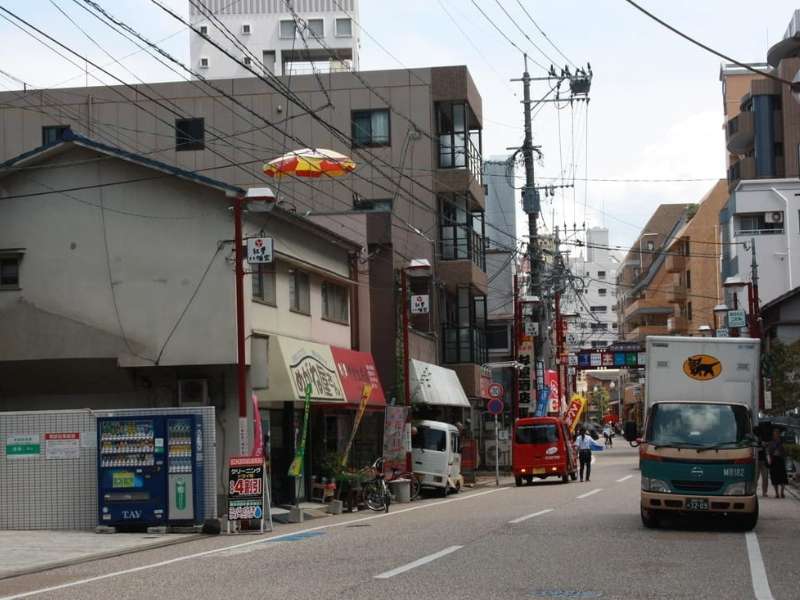
We dock at Hakata Port early in the morning.
Stepping off the ferry is surreal: quiet streets, immaculate order, signs in Japanese characters. After months on the road, Japan feels like entering another dimension.
Fukuoka sits on Kyushu, the southernmost of Japan’s main islands. We stay a couple of days to absorb the cultural shift. The city is friendly and manageable, a gentle introduction to Japan.
What strikes us most is everyday life: very young children walking alone, crossing busy roads confidently. A level of social trust that feels almost unbelievable to outsiders.
We visit Robot Square, where dancing robots perform free shows several times a day. It’s playful, futuristic, and slightly absurd — a perfect welcome to Japan.
Japan’s reputation for extreme expense turns out to be exaggerated.
It isn’t cheap, but supermarkets are comparable to those in Western Europe and sometimes cheaper than in Korea. Prepared food is affordable, high-quality, and everywhere. Only fruit remains in the luxury category.
Our biggest challenge is buying electrical adapters — a small reminder that even modern countries have their quirks.
Leaving the city by bicycle
After two days of rest, we ride out of Fukuoka toward Kumamoto.
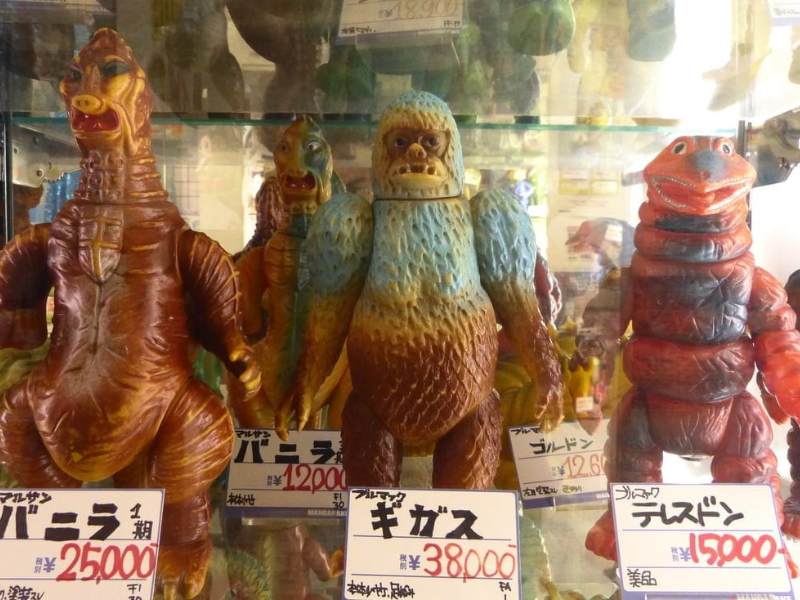
Before escaping the urban sprawl, we fall into an Otaku wonderland: a shop overflowing with vintage action figures, rare manga, and pop culture relics from the 50s, 60s, and 70s. Prices are collector-level, but browsing feels like a visit to a museum.
By the time we leave, the afternoon light is fading. We stop near a quiet Shinto shrine (jinja) and rest discreetly. These places radiate calm. We always camp respectfully, arriving late, leaving early, leaving no trace.
The next morning, we climb through bamboo forests. The vegetation is lush and completely different from Korea. Some roads include light toll sections, but traffic is minimal and drivers are courteous.
Discount stores become a discovery: cheap noodles, ready meals, and basic supplies make cycle touring easier than expected.
Storms roll in one night, thunder cracking above the shrine where we shelter. Rain pounds the roof while we sleep dry inside. Travel strips life down to essentials: food, shelter, rest, and movement.
The Japanese countryside
As we approach Kumamoto, the landscape softens into canals, tiny villages, terraced fields, elegant cemeteries, and endless small temples. Rural Japan feels curated yet deeply lived-in.
Everything is quiet. Clean. Intentional.
Tomorrow we head toward the Amakusa archipelago. But the real beginning of Japan was not the road — it was the sea crossing.
Arriving by ferry allowed the country to reveal itself slowly: first water, then port, then city, then countryside. A gradual immersion instead of a sudden landing.
And that makes all the difference.
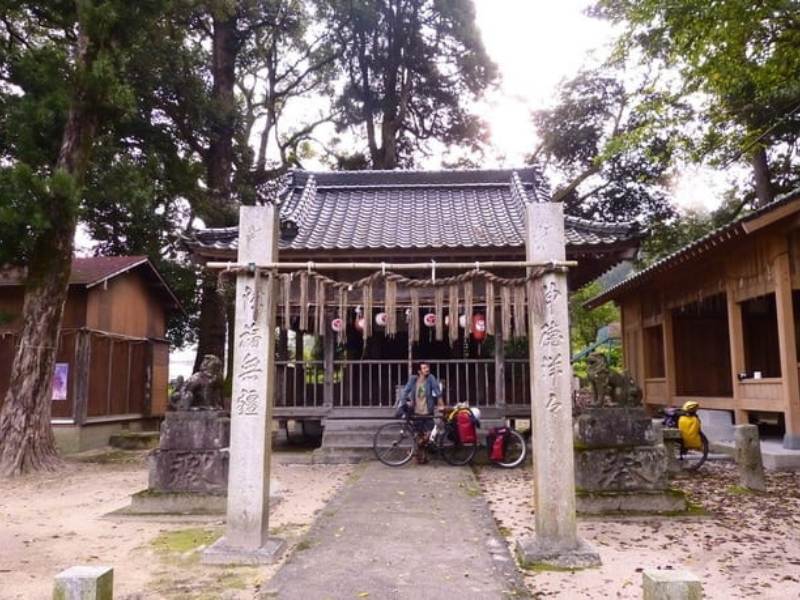
Tonight we sleep in another jinja. This one looks abandoned, but I’m sure that there lives an old woman with a white cat (I mean the God). Fortunately, we are sheltered from an impressive storm.
Continuous thunder and buckets of water from the sky. We just have to sleep. We start late when the rain seems to be over. After a little more plain, we arrive at the sea, which is brown here. No swimming.
The sun comes out again, we find a duct in the marina, and take a shower. We finally cross the Japanese countryside, with so many cute little villages full of canals, small temples, beautiful cemeteries, and terraced fields.
We arrive near Kumamoto, and we sleep in a shrine again. This is new and a little fancy, but it seems no god lives here (Elena is a psychic if you have not yet figured out). Tomorrow we’ll start our bike tour of the Amakusa archipelago.
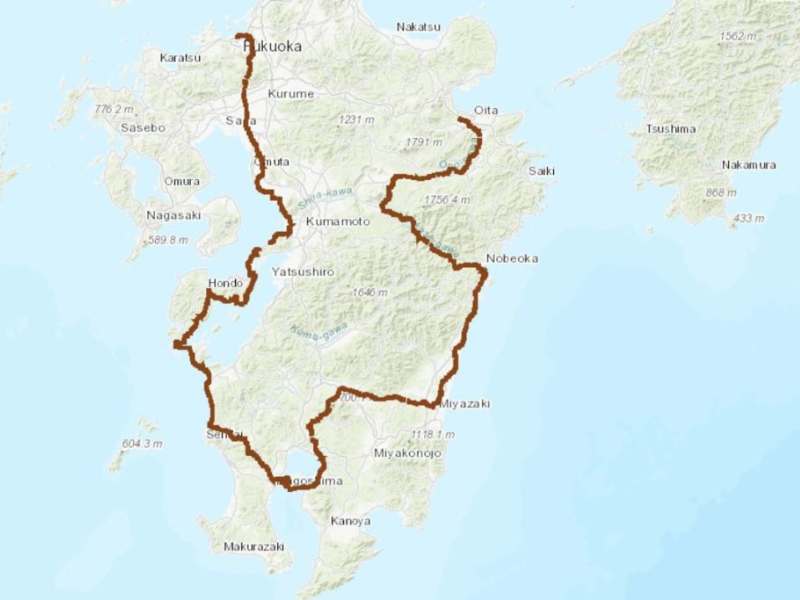
Below is the complete map of our bicycle trip to Kyushu. It’s the complete GPS recording of the journey.
Click on the track to get the elevation profile. You can also use the search tool to find a specific location and display the GPX track of reference.