

Last Updated on 17 January 2026 by Cycloscope
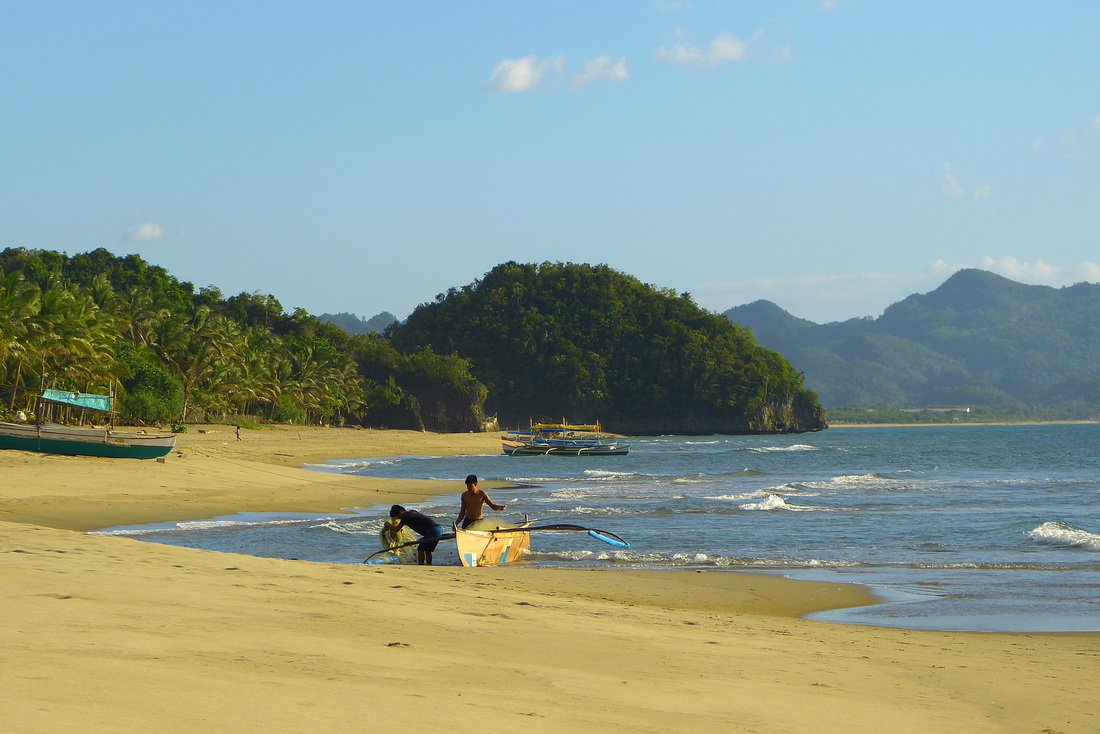
This article is part of our guide to budget adventure travel in the Philippines.
Disclosure: Some of our articles contain affiliate links. This comes at no additional cost for you and helps us keep this website up and running. (as Amazon Associates we earn commission from qualifying purchases)

Negros is not a famous destination in the Philippines, and that’s a pity. It’s a lovely island, grand to experience the authentic Filipino culture and lifestyle.
Negros Island is part of the Visayas archipelago, which constitutes the central part of the Philippines. Around 4.5 million people live here, not many, considering this is the 4th-largest island in the Philippines.
The coastline is again mostly flat, with a few climbs, never longer than 5km, and major roads are sealed and quite smooth. Some areas have very nice beaches, sometimes made of volcanic sand; indeed Negros is home to one of the most active volcanoes in the Philippines, the Kanlaon Volcano (2.465m).
Getting to Dumaguete from Bohol is quite straightforward: a 2-hour fast boat (7:00 PM). Check our general guide to adventure travel in the Philippines for more information on ferries, and this website for updated schedules.
Our itinerary was 320km long, and we made it in 8 days, including the ferry transfer. Below is the detailed map of our itinerary in Negros, with an elevation profile. It’s the GPX track recorded by our GPS during the whole journey. Check here for all four destinations for bicycle touring in the Philippines.
From Dumaguete

Dumaguete is a small (100.000 inhabitants) pleasant town that serves as the administrative center for the province of Negros Oriental (Eastern Negros). Anyway, there’s no reason to stay here more than one day, stock up on supplies, though, you’re not going to find supermarkets for a while.
From Dumaguete, you can go north along the west coast or south around the island, then along the east coast. Since the north route is the main road, it is busier, so we suggest going south, and that’s what we did. The first 30km are along the sea, not very inviting though, a little muddy. After that, there’s a short climb to 200 msl, nothing heavy.
All of this 88km up to Santa Catalina is not significantly developed; there are a few resorts before the climb, in front of Apo Island, where the sea gets better (not astounding but suitable for swimming), and the beaches are made of black volcanic sand.
Cycling Negros west coast
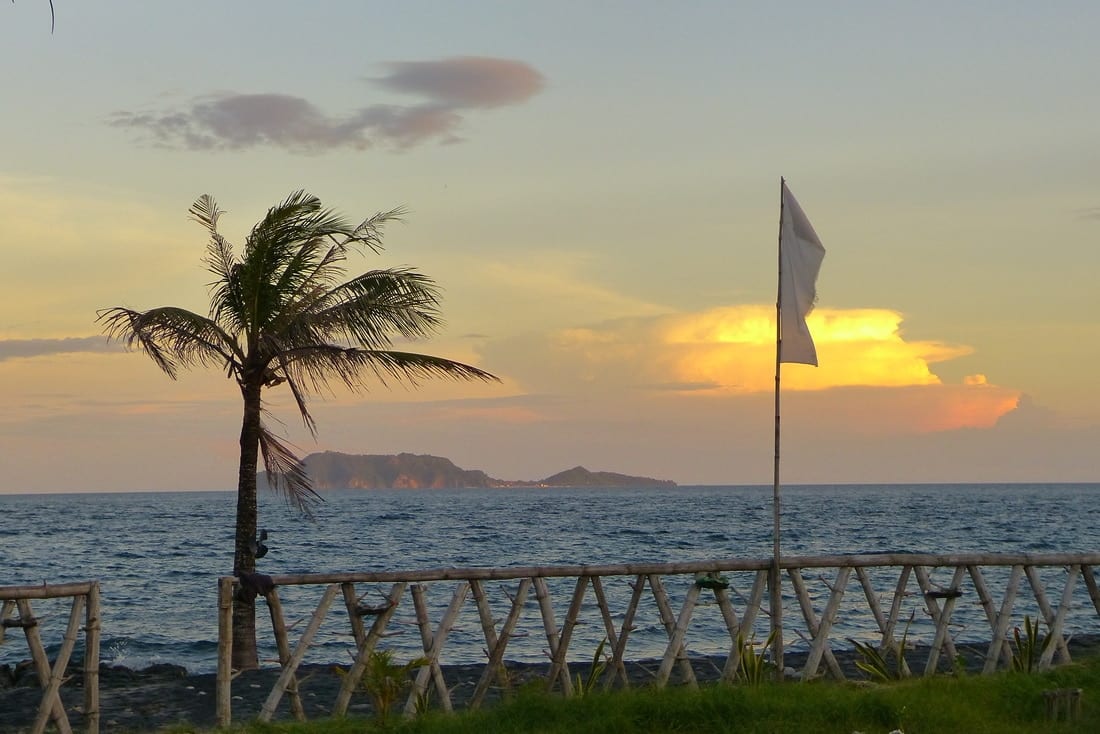
After returning to the seashore, the water quality improves, but for some unknown reason, there’s no infrastructure here; it’s even difficult to find an eatery. If you bathe in this area, be careful about the jellyfish; we saw plenty, but maybe it was just that season.
Santa Catalina is a small market town with a few accommodation options outside the town center. There seems to be nothing in the city. Some 50km north along the coast is Hinoba An, another small town, not much choice of accommodation here, but you can find something.
Ask for Noni in the market area if you want the cheapest (200P) room available; it’s not very clean or comfortable, but Noni is an interesting person to talk with.
Sipalay
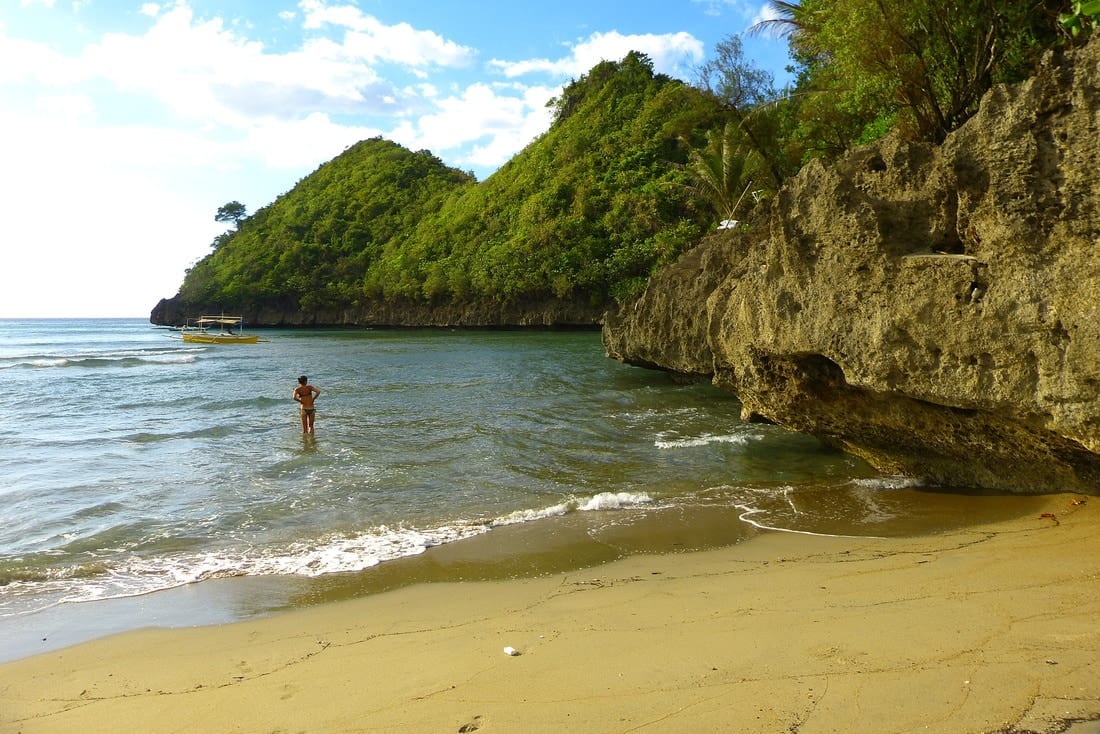
Sipalay is just 30km north, after another short climb that we recall as quite terrible, but probably just because it was midday and very hot. Sipalay is the most touristic town in Negros, but don’t expect many foreigners.
The town itself is small, with a pleasant beachfront, many seafood restaurants, and a pair of perfect beaches just around the corner.
We really advise you to go to Sugar Beach. There’s a short river crossing by boat, and to give a small tip to the local kids, you must leave your bicycle behind if you come here with it.
The beach itself is vast, with beautiful rocks, golden brown sand, and emerald green water, a paradise. Here are a few more expensive resorts, and most of the Western tourists. If you find it wavy (which can happen in the afternoon), walk to the end; there’s a lovely bay where the water is usually calmer.
In Sipalay, there’s also Fredrik, a French touring cyclist who settled here and runs a restaurant; you can contact him through warmshowers.org.
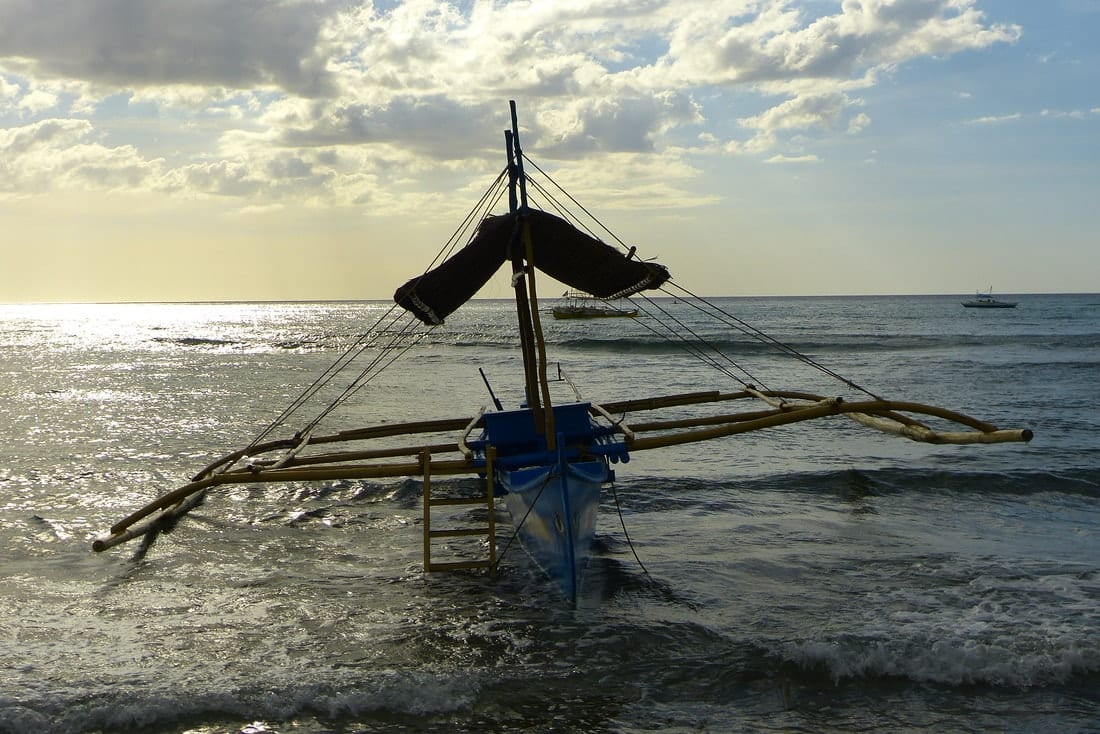
Going further north, some more perfect beaches (a little hidden; take the dirt tracks) are entirely unknown to tourists and really worth checking if you are willing to see the daily life of fishermen.
Most of the people who live here along the sea are very poor, there’s a law that allows building bamboo houses along the shore for free, where the land is public, good idea until the next big typhoon.

Another little climb awaits you, some 10km north of Sipalay. Reaching the top, you’re in the western corner of the island, with a lovely lighthouse and a great view.
Here, the road turns east, following the coast. Going west there’s not much more to see, the road gets busier with sugar cane-filled trucks, not many choices of accommodation either, be prepared to camp or ask people.
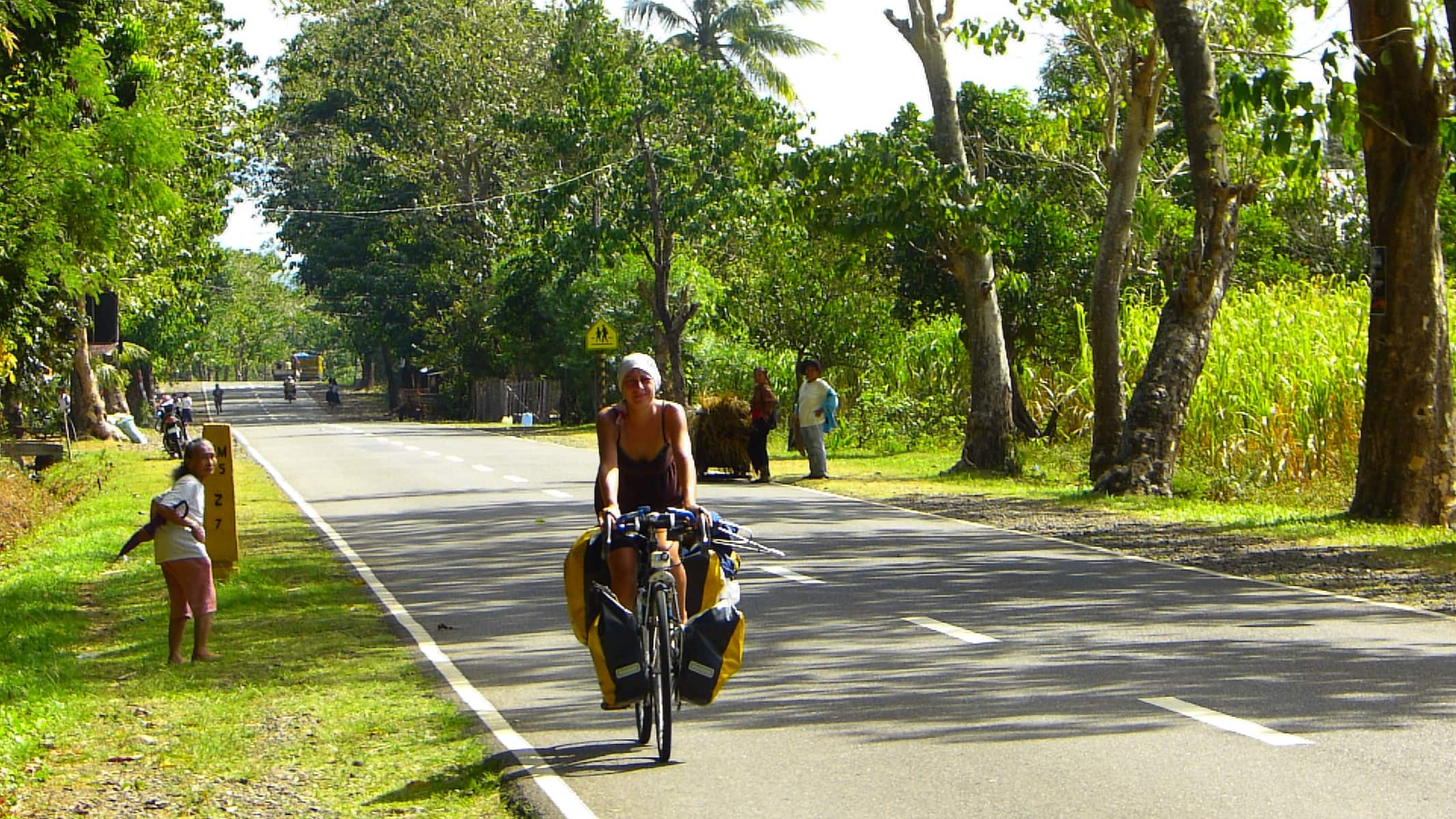
Before reaching the bigger town of Kabankalan, there’s a secondary road that bypasses the city and goes to Ilog and Binicuil. It’s a very nice one, but it was interrupted, so we had to come back and ask before taking it.
The last stretch, turning north to Bacolod, is the most boring. This is the same main road we tried to avoid in Dumaguete, which cuts across the island and then reaches Bacolod, the second-largest city in Negros. Very busy with trucks and lined with sugar cane plantations, it is flat anyway, and can be done very fast (around 100km).
If you wish to visit Guimaras Island, you can take a pump boat from Pulupandan, about 23km before Bacolod. For us, this was a terrifying experience; we really thought we were going to sink and die, so we had to check the weather conditions accurately or try to find another boat. There must be another way. However, everybody told us this was the only one.
Conclusions
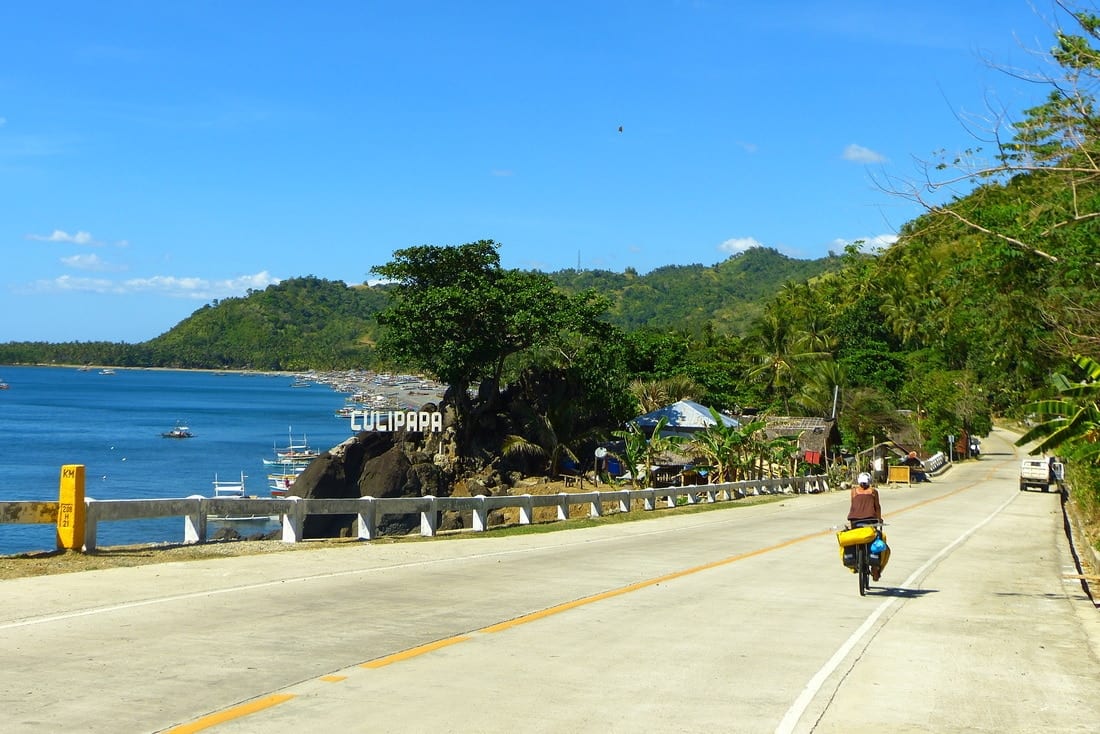
Negros is an incredible island, off the beaten path, but a real pearl in the Visayas. Include it in your Philippines itinerary if you can, it really deserves it.
If you’re planning to bicycle tour the Philippines, or want to know more about 4 off-the-beaten-path destinations in the Visayas, have a look at the linked articles.
If you have been to Negros and have something to say, please contribute to the comment section below.