

Last Updated on 19 December 2025 by Cycloscope
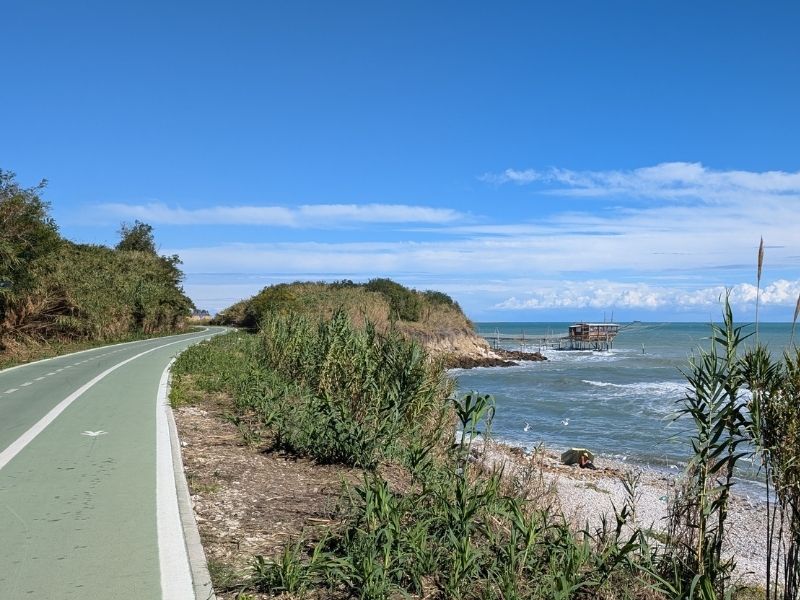
Bikepacking on the Trabocchi Green Way: nature, sea, and history among ancient trabocchi suspended over the water
Imagine cycling along the Adriatic Sea, with the salty breeze brushing your face and breathtaking views of ancient fishing machines suspended over the water.
Disclosure: Some of our articles contain affiliate links. This comes at no additional cost for you and helps us keep this website up and running. (as Amazon Associates we earn commission from qualifying purchases)
This is the experience offered by the Via Verde of the Costa dei Trabocchi, one of the most fascinating stretches of the Adriatic Cycle Route (also known as BI6), the great cycling itinerary that connects Trieste to Santa Maria di Leuca for over 1,400 km.
I had the pleasure of riding it in early October: the days were still warm, with ideal temperatures for cycling without the discomfort of summer heat, and the autumn light made the colors of the sea and the hills even more vivid.
A perfect time to discover this corner of Abruzzo in all its beauty. A few campgrounds are still open in October.
The trabocchi: living symbols of the Abruzzo coast
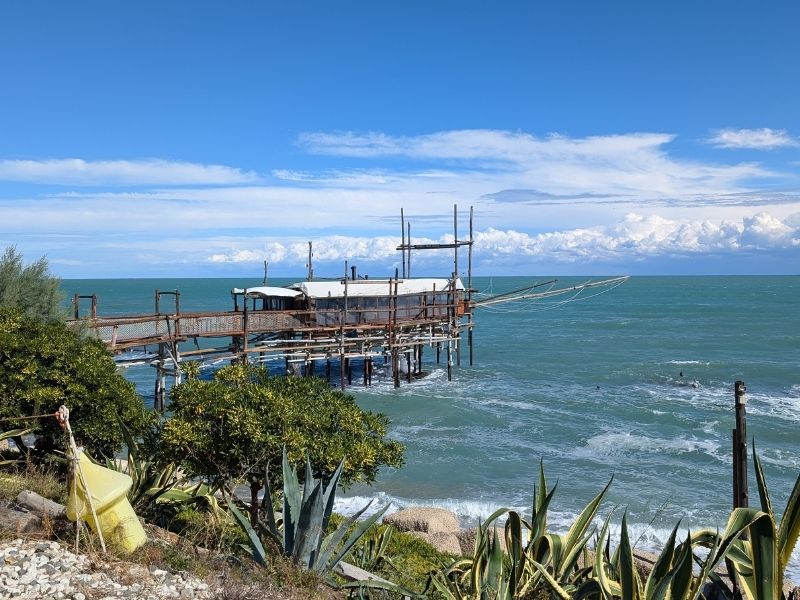
The trabocchi are ancient wooden fishing structures, built on stilts and anchored to the rocks, extending out over the sea with long arms that support large nets.
Created centuries ago to allow fishermen to catch fish without venturing into open waters, even in adverse weather conditions, they are now a cultural icon of Abruzzo.
Many have been restored and transformed into charming seaside restaurants, where you can enjoy fresh seafood dishes while admiring the view. A dinner on a trabocco at sunset is an unforgettable experience, combining history, nature, and local gastronomy.
The Trabocchi Cycle Path: the coastal route
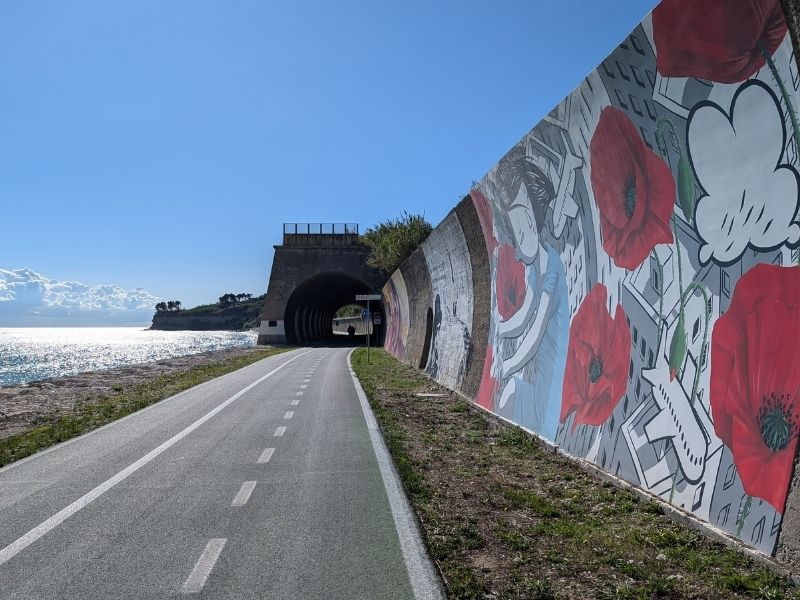
The Via Verde of the Costa dei Trabocchi (or Trabocchi Cycle Path) follows the route of the former Adriatic railway, passing through Ortona, San Vito Chietino, Rocca San Giovanni, Fossacesia, Torino di Sangro, Casalbordino, and Vasto.
It covers about 42 km, mostly flat and paved, making it perfect for cyclists of all levels, including families.
The route offers panoramic views of beaches, nature reserves, and, of course, the trabocchi. Bicycle rental services are available along the way, and there are rest areas where you can stop for a refreshing break.
I would say that the more touristy areas, such as around Ortona, can be busy during the high season or on weekends.
But the cycling network is much broader: it spans over 300 km in total and includes low-traffic secondary roads, farm tracks, dirt paths, gravel roads, river routes, vineyard-covered hills, nature reserves, and historic villages.
It is ideal for exploring the area in every season, following the changing colors and scents of the landscape.
The Coastal Route (or Route Zero) stretches for about 64 km, from Francavilla al Mare to San Salvo Marina, incorporating the 42 km of the Via Verde proper (from Ortona to Vasto Marina).
The areas of the cycling network
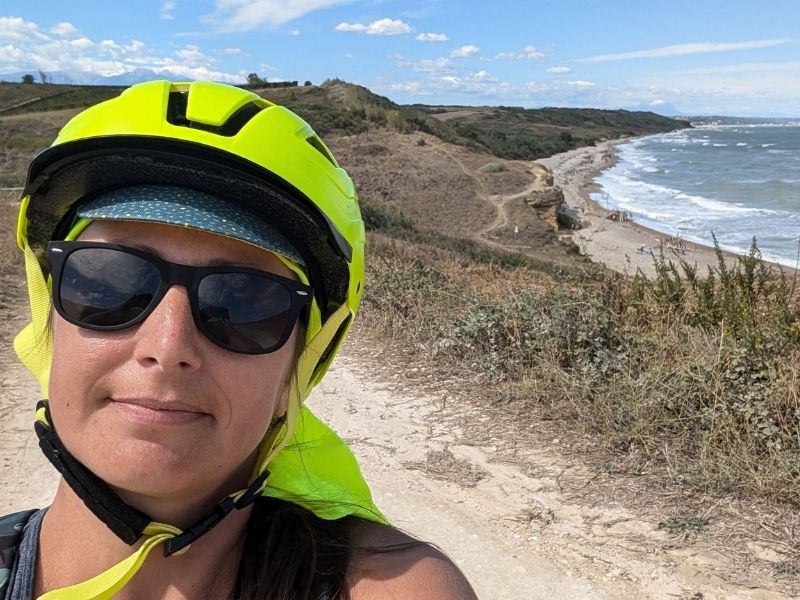
Northern Area: Beyond the main road, among dunes, the Valle del Foro with vineyards and olive groves, and the remains of ancient mills along the Arielli River. A mix of paved and dirt roads, with some gentle climbs.
Central Area: A dialogue between the coast and the ridges, passing through villages such as Rocca San Giovanni (one of the most beautiful in Italy), with medieval walls and a castle. Not far away, Lanciano has its historic center, rich in architectural treasures.

Southern Area: From Casalbordino, with its beach where sea chamomile blooms in spring, through the countryside and landscapes overlooking valleys and mountains.
Hills and Vineyards: Three routes running parallel to the coast, immersed in greenery. Ideal as loops or connectors, with steeper gradients – perfect for well-trained cyclists or e-bike riders.
You can view and download the complete GPX map on Komoot, and follow the official route page where any detours or updates to the itinerary are indicated
Bike + Train: the perfect intermodality
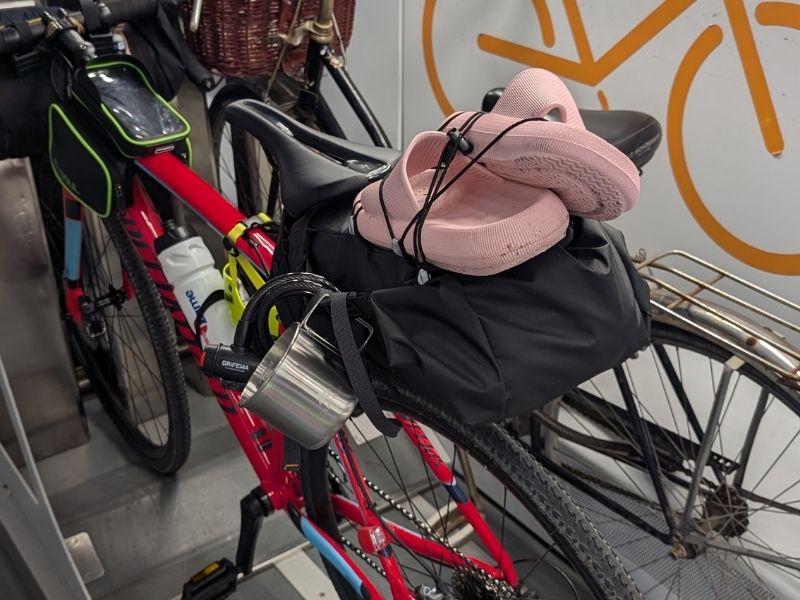
The train stations along the route make it easy to combine biking and rail travel: Pescara (main station with elevators), Francavilla al Mare, Tollo-Canosa Sannita, Ortona, San Vito-Lanciano, Fossacesia-Torino di Sangro, Casalbordino-Pollutri, Porto di Vasto, Vasto-San Salvo, and Lanciano inland.
In Abruzzo, on equipped regional trains (R/RV), bikes travel for free (look for the bike pictogram on Trenitalia). In summer, some coastal trains have carriages with up to 64 bike spaces. For Intercity trains (IC), there is a €3.50 supplement with reserved bike spaces.
The Via Verde dei Trabocchi is an invitation to slow travel, to discover an authentic Abruzzo between sea and hills. Whether you are an experienced cycle tourist or a family seeking adventure, this route will captivate you. Download the GPX tracks and set off: the sea is waiting!
You might also find these articles interesting: