

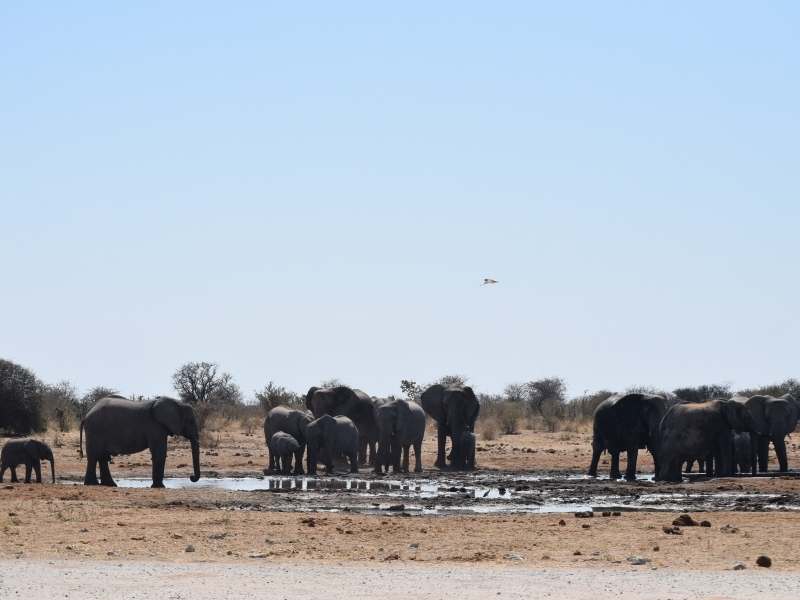
Plan an Etosha National Park self-drive safari with 2026 fees, itineraries, accommodation, wildlife, waterholes and the best season to visit.
Etosha National Park self-drive is one of the easiest ways to experience a major African safari independently.
Unlike some of Africa’s more remote parks, Etosha has an extensive network of tourist roads, several established camps and a remarkable concentration of wildlife around its waterholes. You don’t necessarily need a guide or a huge expedition vehicle: for the main routes, a normal car can work in dry conditions, although a higher-clearance 4×4 is a better choice in the rainy season and for the rougher western section.
Disclosure: Some of our articles contain affiliate links. This comes at no additional cost for you and helps us keep this website up and running. (as Amazon Associates we earn commission from qualifying purchases)
What makes Etosha particularly good for self-driving is that you can often find the animals yourself. Rather than following a guide who decides where to go, you can spend an hour sitting quietly beside a waterhole, move on when you want, or return to a place where you had a particularly good sighting.
And Etosha rewards patience.
Its enormous salt pan, open grasslands and scattered waterholes create a very different safari experience from the lush, river-based parks of East Africa. During the dry season, water becomes scarce and animals increasingly gather around reliable water sources, making self-drive wildlife watching surprisingly productive.
Here is everything you need to know to plan an Etosha National Park self-drive safari, including current 2026 fees, the best season, accommodation, wildlife, and our suggested itineraries.
Etosha National Park Self-Drive: Quick Guide
| Etosha self-drive | |
|---|---|
| Best season for wildlife | July–October |
| Good overall season | May–October |
| Green season | November–April |
| Park size | About 22,935 km² |
| Main gates | Anderson, Von Lindequist, Galton, King Nehale |
| Main camps | Okaukuejo, Halali, Namutoni, Dolomite, Olifantsrus |
| Foreign adult entrance fee | N$280/day from April 2026 |
| Vehicle ≤10 seats | N$60/day from April 2026 |
| Typical stay | 2–4 nights |
| Best vehicle | 2WD possible in dry season; 4×4 preferable for flexibility |
| Main wildlife | Elephant, lion, black & white rhino, giraffe, zebra, wildebeest, springbok, oryx, cheetah |
Etosha covers approximately 22,935 km², and its open landscape and waterholes are particularly well suited to game viewing from a private vehicle. Namibia’s Ministry of Environment lists elephant, black and white rhino, lion, giraffe, leopard, zebra, springbok, blue wildebeest, oryx and Damara dik-dik among the park’s wildlife, with more than 400 bird species recorded.
Etosha National Park Entrance Fees 2026
This is one area where you need to be careful with older travel blogs.
For many years the commonly quoted Etosha price was N$150 per foreign adult + N$50 per vehicle. From 1 April 2026, the published rates increased substantially.
Current 2026 figures are:
| Visitor | Daily fee |
|---|---|
| Foreign adult | N$280 |
| SADC adult | N$180 |
| Namibian adult | N$60 |
| Foreign child 8–under 16 | N$180 |
| SADC child 8–under 16 | N$100 |
| Children under 8 | Free |
| Vehicle up to 10 seats | N$60 |
| Vehicle 11–25 seats | N$150 |
| Vehicle 26–50 seats | N$600 |
| Vehicle 51+ seats | N$1,000 |
The 2026 Etosha fee schedule reports that the foreign-adult N$280 consists of N$140 entrance plus N$140 conservation fees. Fees are charged per day/24-hour period, so a multi-day stay requires multiple days of park fees.
Important: You’ll still find many websites quoting N$150 + N$50. Those are older rates and shouldn’t be used when calculating a 2026 trip.
For two foreign adults sharing a normal rental car, the basic park fee is therefore N$620 per day before accommodation:
- 2 × N$280 = N$560
- Vehicle = N$60
- Total = N$620/day
Rates can change again, so check the current official information immediately before travelling.
How Many Days Do You Need in Etosha?
You can technically drive through Etosha in a single day.
We wouldn’t recommend it.
The distances are substantial, the speed limits are relatively low and wildlife watching is inherently unpredictable.
You don’t want your Etosha self-drive safari to become:
Drive → photograph animal → drive → photograph animal → drive → exit.
The whole point is to slow down.
One night
Possible if you’re short on time, but not ideal.
Two nights
The minimum we’d recommend.
This gives you an arrival game drive, a full day in the park and at least one early morning or evening waterhole session.
Three nights
Our preferred option for a first visit.
You can spend time around Okaukuejo and Halali and then move towards Namutoni, rather than constantly retracing your route.
Four or more nights
Ideal if you want to include the western side around Galton and Dolomite or simply prefer a slower safari.
Etosha Self-Drive Itinerary: 2 Days
If you’re short on time, you can still have an excellent safari.
Day 1: Anderson Gate → Okaukuejo
Enter through Anderson Gate in the south.
Okaukuejo is only about 17 km from the gate, so don’t rush straight to camp.
Start exploring the surrounding waterholes.
Depending on the season and recent rainfall, you could encounter:
- Zebra
- Springbok
- Oryx
- Wildebeest
- Giraffe
- Elephants
- Rhino
- Lions
Check into Okaukuejo and spend the evening at the famous floodlit waterhole.
The waterhole is one of Etosha’s signature experiences, and Namibia’s Ministry of Environment specifically highlights opportunities to see black rhino, lions and elephants there at night.
Day 2: Okaukuejo → Halali → Namutoni
Start early.
Drive east through the central section, stopping at waterholes rather than trying to cover distance quickly.
Continue towards Halali and, if time permits, on to Namutoni.
If you’re staying outside the eastern gate, exit through Von Lindequist Gate.
Etosha Self-Drive Itinerary: 3 Days
This is the itinerary we’d recommend to most first-time visitors.
Day 1: Anderson Gate → Okaukuejo
Enter through Anderson Gate and explore the western/southern waterholes.
Stay at:
Okaukuejo
Spend the evening at the floodlit waterhole.
Day 2: Okaukuejo → Halali
This is your main wildlife day.
Rather than trying to drive directly from one camp to another, take your time.
Stop at waterholes, eat lunch at one of the designated picnic areas and allow yourself to sit for a while.
Stay at:
Halali
The camp is roughly in the central part of the park and makes a useful base for exploring the surrounding area.
Day 3: Halali → Namutoni
Continue east towards Namutoni.
The landscape changes as you approach the eastern side, with different vegetation and wildlife opportunities.
Stay at:
Namutoni, or exit through Von Lindequist Gate and stay outside the park.
This itinerary gives you three different bases/areas without making every day a marathon drive.
Etosha Self-Drive Itinerary: 4 Days
If you have four nights, I’d make the trip slower rather than simply adding more kilometres.
Day 1
Anderson Gate → Okaukuejo
Day 2
Full day around Okaukuejo and the western waterholes
Day 3
Okaukuejo → Halali
Day 4
Halali → Namutoni → Von Lindequist Gate
This works particularly well in the dry season because you can spend more time waiting at productive waterholes instead of constantly moving.
Should You Include Western Etosha?
If you have four or more days, yes.
The western section around Dolomite is less accessible and generally feels more remote.
Dolomite Camp is specifically described by the Ministry as opening up the restricted western side of the park to a limited number of visitors. It has permanent luxury tented accommodation and guided drives.
There’s also Olifantsrus, which is camping-only.
It has just 10 campsites and sits between Okaukuejo and Dolomite. NWR currently lists it at N$510 per person per night for July–October 2026.
The western section is a good choice if you’re looking for something quieter and don’t mind carrying more supplies and driving a more demanding route.
Etosha Accommodation
One of the biggest advantages of sleeping inside Etosha is simple:
You are already inside the park when the gates open.
That matters.
You don’t have to drive from a lodge outside the park to reach the gate, and you can spend your early morning hours where wildlife viewing is often most rewarding.
The main NWR camps are:
- Okaukuejo
- Halali
- Namutoni
- Dolomite
- Olifantsrus — camping only
There are accommodation and camping at Okaukuejo, Halali and Namutoni, as well as accommodation at Dolomite and camping at Olifantsrus.
Okaukuejo Accommodation
Okaukuejo is probably the best-known Etosha camp.
Its biggest attraction is the floodlit waterhole.
For a first-time visitor, this alone makes Okaukuejo an excellent base.
NWR’s current July–October 2026 rates include:
- Standard double room: N$2,380 per person sharing
- Bush chalet: N$2,680 per person sharing
- Waterhole chalet: N$3,480 per person sharing
- Campsite: N$560 per person
From November 2026 through June 2027, the published rates are lower for several categories, with camping at N$460 per person.
Okaukuejo also has:
- Restaurant
- Bar
- Shop
- Fuel station
- Swimming pool
- Guided morning, afternoon and night drives
Halali Accommodation
Halali is located approximately in the centre of the park and makes a good base for exploring the central area.
For July–October 2026, NWR lists:
- Double room: N$1,690 per person sharing
- Bush chalet: N$2,080 per person sharing
- Campsite: N$550 per person
For November 2026–June 2027, camping drops to N$460 per person.
Halali also has a floodlit waterhole and offers guided morning, afternoon and night drives.
Namutoni Accommodation
Namutoni is on the eastern side of Etosha and is built around a historic German fort.
It has:
- Double rooms
- Bush chalets
- Campsites
- Restaurant
- Bar
- Shop
- Fuel station
- Swimming pool
- Floodlit waterhole
For July–October 2026:
- Double room: N$2,310 per person sharing
- Bush chalet: N$2,680 per person sharing
- Camping: N$550 per person
From November 2026 to June 2027, camping is listed at N$460 per person.
Camping in Etosha
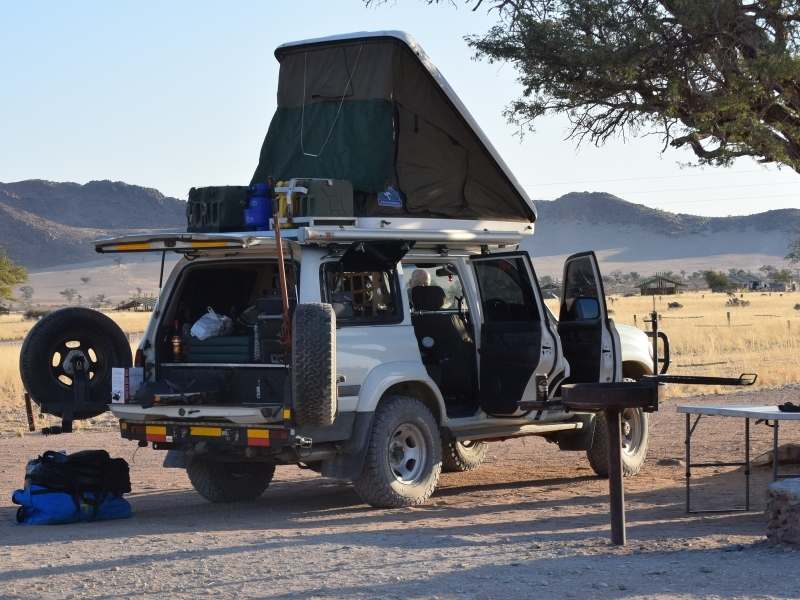
If you’re travelling Namibia with a camping-equipped 4×4, Etosha is particularly well suited to this style of travel.
Camping is available at:
- Okaukuejo
- Halali
- Namutoni
- Olifantsrus
The current 2026 NWR camping rates are approximately N$460–560 per person, depending on camp and season.
Camping is not just cheaper accommodation.
It’s also strategically useful.
You wake up inside the park.
You can have breakfast, pack the vehicle and be on the road without first driving from an outside lodge to the gate.
Etosha Wildlife: What Can You See?
Etosha has an impressive range of wildlife.
The Ministry of Environment lists:
- African elephant
- Black rhino
- White rhino
- Lion
- Leopard
- Giraffe
- Eland
- Burchell’s zebra
- Springbok
- Blue wildebeest
- Oryx
- Damara dik-dik
There are also more than 400 recorded bird species.
But Etosha is particularly famous for its waterhole wildlife viewing.
That’s what makes it so good for self-driving.
Elephants
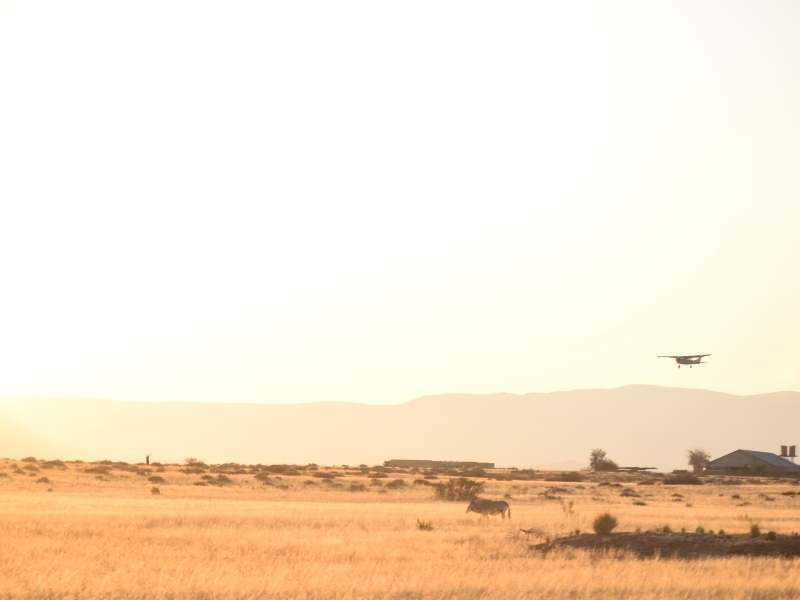
Elephants are regularly seen around Etosha’s water sources, particularly as the dry season progresses.
A group arriving at a waterhole can completely change the atmosphere.
If elephants are approaching, don’t try to squeeze closer for a photograph.
Give them space.
Remember that you’re inside their habitat.
Rhinos
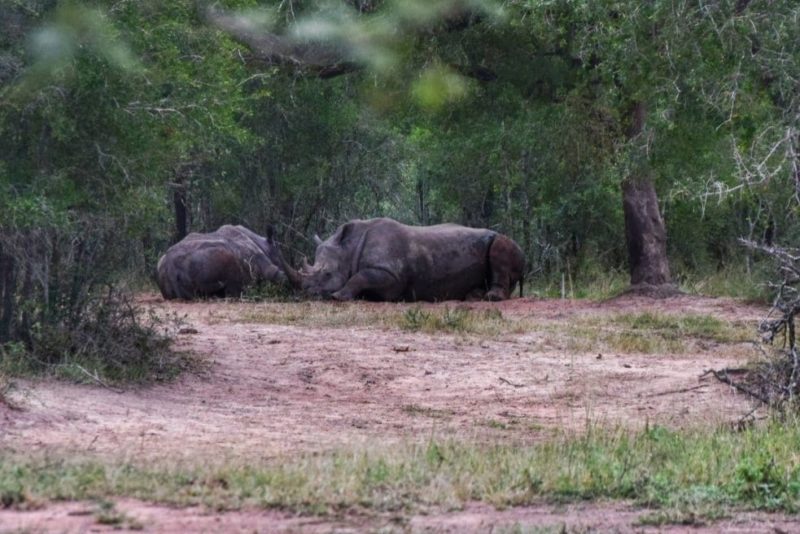
Etosha is particularly famous for its black rhinos.
Okaukuejo’s floodlit waterhole is one of the places where visitors have a good chance of seeing them after dark — although, as always with wildlife, there’s no guarantee. Namibia’s Ministry specifically mentions black rhino at the Okaukuejo waterhole.
This is one of the strongest arguments for staying inside the park rather than outside.
Lions
Lions occur throughout Etosha, but they’re not guaranteed.
Don’t expect the same kind of predictable lion sightings you might experience in smaller or more densely populated safari reserves.
The best strategy is to drive slowly, scan constantly and pay attention to other vehicles without blindly following them.
If several cars are stopped, there’s probably something worth looking at.
But don’t automatically assume it’s a lion.
It might be a jackal.
Or a bird.
Or a particularly photogenic springbok.
Giraffes
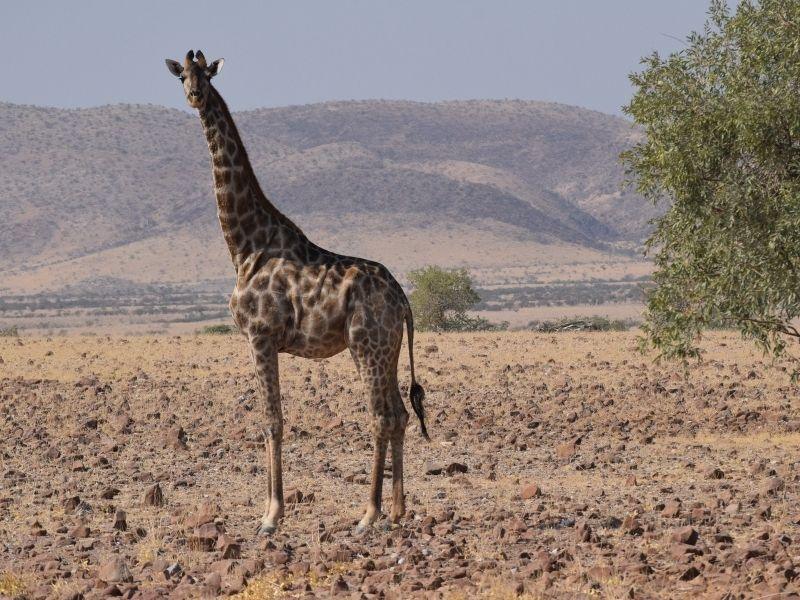
Giraffes are relatively easy to spot in Etosha’s more open woodland areas.
They’re especially impressive against the enormous white expanse of the pan.
They’re also one of the animals you can often identify from a considerable distance, making them good landmarks while you’re driving.
Zebra, wildebeest, springbok and oryx
These are some of the animals you’ll probably see most frequently.
Large herds of grazing animals are one of the defining features of Etosha.
Look particularly around waterholes and open plains.
And don’t forget the oryx.
The gemsbok is one of Namibia’s iconic animals and is perfectly adapted to the country’s dry environment.
Cheetahs and leopards
Both are present, but they are considerably harder to find.
Don’t come to Etosha expecting guaranteed big-cat sightings.
The open landscape can actually help you spot larger animals, but predators may be widely dispersed.
Patience is essential.
Birds
If you enjoy birding, Etosha is not just a big-game destination.
More than 400 bird species have been recorded in the park.
The green season can be particularly rewarding for birdwatchers, when rainfall brings increased water and seasonal bird activity.
So the “best” season depends on what you’re looking for.
Best Season for an Etosha Self-Drive
There are really two different Etosha experiences.
Dry season: May–October
This is the classic safari season.
As water becomes scarce, animals increasingly depend on permanent and artificial waterholes.
Vegetation also becomes thinner, making animals easier to see.
The later dry season, particularly July–October, is usually the strongest period for traditional Etosha wildlife viewing.
Advantages
- Excellent waterhole viewing
- Less vegetation
- Easier wildlife spotting
- Little rain
- Generally better gravel-road conditions
Disadvantages
- Cold mornings
- Increasing heat later in the season
- Dust
- More visitors
- Accommodation can sell out
July and August can be surprisingly cold before sunrise, so don’t make the mistake of packing only for an African summer.
Green Season: November–April
The rainy season transforms Etosha.
The landscape becomes greener, temporary water appears and animals are less concentrated around the permanent waterholes.
That can make wildlife harder to find.
But it creates a completely different experience.
You get:
- Green landscapes
- Dramatic thunderstorms
- Migratory birds
- More newborn animals
- Fewer visitors in some periods
- Incredible photographic conditions
If wildlife concentration is your absolute priority, choose the dry season.
If you want landscapes, birds and a different atmosphere, the green season can be fantastic.
May and June: The Sweet Spot?
If you don’t specifically need the driest conditions, May and June can be excellent compromise months.
The landscape is beginning to dry out, temperatures are generally more comfortable and wildlife viewing starts becoming increasingly waterhole-focused.
You may also avoid some of the peak-season pressure of July and August.
The main disadvantage is that the exact conditions depend on how much rain fell earlier in the year.
September and October: Best for Wildlife, Worst for Heat?
Late dry season can be spectacular.
By September and October, water is increasingly important and vegetation is often very sparse.
This can produce fantastic wildlife viewing.
But temperatures rise significantly.
October can be brutally hot in the middle of the day.
The solution is simple:
Get up early.
Do your main game drive in the morning, rest during the hottest hours and go out again in the late afternoon.
Etosha Gate Times
Etosha follows sunrise and sunset rather than operating like a 24-hour public road.
NWR’s current information states that park gates open at sunrise and close at sunset.
You therefore need to plan your driving accordingly.
Don’t calculate a route based purely on kilometres.
Ask:
Can I comfortably reach my camp before the gate closes?
This is particularly important when moving from one camp to another.
And absolutely don’t assume that you can continue driving through the park after dark.
The regulations prohibit travelling in the park between sunset and sunrise without permission.
How to Drive in Etosha
Etosha is not a racetrack.
The park has extensive gravel roads, and wildlife can appear anywhere.
Slow down.
The current Etosha road guidance lists speed limits of 60 km/h on main roads and 40 km/h near waterholes and inside camps.
But in practice, you will often drive much slower.
That’s because you’re not really trying to get somewhere.
You’re looking for movement.
A lion lying under a bush can be invisible at 40 km/h and obvious at 15 km/h.
Do You Need a 4×4 for Etosha?
Not necessarily.
This is another reason Etosha is such a good self-drive destination.
In the dry season, the main tourist roads can generally be driven in a normal 2WD vehicle.
A 4×4 becomes more attractive if:
- You’re travelling during the rainy season
- You want more clearance
- You’re using rougher western routes
- You’re carrying camping equipment
- You want additional security on remote roads
The western section around Dolomite is rougher than the main southern and eastern routes, so a 4×4 makes more sense there.
For a standard Okaukuejo–Halali–Namutoni itinerary during the dry season, you don’t necessarily need a hardcore expedition vehicle.
Food, Fuel and Supplies
Don’t expect Etosha to have supermarkets.
The main camps have shops and restaurants, but supplies are limited compared with a normal town.
Okaukuejo and Namutoni both have filling stations, while the main camps provide basic food and services.
Our advice:
Stock up before entering the park.
Bring:
- Plenty of drinking water
- Snacks
- Picnic food
- Coffee/tea
- Cooler box if possible
- Extra fuel planning
- Binoculars
- Camera batteries
- Offline maps
If you’re camping, you’re particularly dependent on what you bring with you.
Self-Drive or Guided Game Drive?
You don’t have to choose.
The best strategy can be to combine both.
During the day, explore Etosha yourself.
Then book a guided morning, afternoon or night drive from one of the camps.
NWR currently offers guided morning and afternoon drives for N$650 per person and guided night drives for N$750 per person at Okaukuejo, Halali and Namutoni.
That gives you two completely different perspectives.
Self-drive
You control the itinerary.
Guided drive
Someone else drives while you concentrate entirely on wildlife.
And a good guide can often find animals that you’d drive straight past.
Our Ideal Etosha Self-Drive
If we were planning our own Etosha trip today, we’d choose three nights inside the park.
Something like:
Night 1: Okaukuejo
Night 2: Halali
Night 3: Namutoni
Then:
Day 4: Exit through Von Lindequist Gate.
This gives you a natural west-to-east progression without repeatedly covering the same roads.
If you have a fourth night, we’d either add another night at the camp where wildlife has been best or extend the trip into western Etosha.
And we’d make sure at least one night is at Okaukuejo.
Not because it’s necessarily the best accommodation.
Because sitting beside that waterhole after dark is one of those Etosha experiences that makes the whole trip worthwhile.
Here you can read our articles about Namibia:
- Self Drive Namibia: Road Trip Itineraries and Ideas
- The 280 Million Years Old Petrified Forest of Namibia
- Bikepacking Namibia: 2 Namib Desert Cycle Routes + Info
- Twyfelfontein Rock Paintings: Namibia’s First UNESCO World Heritage Site
- The 7 Best Campsites in Namibia – a Guide to Sleep under the Most Beautiful Skies
Final Thoughts: Is Etosha Good for Self-Drive?
Absolutely.
In fact, Etosha is one of the best places in Africa to try a self-drive safari.
You don’t need to be an expert off-road driver.
You don’t necessarily need an expensive Land Cruiser.
You don’t need to hire a guide for every day.
What you need is patience, a sensible vehicle, enough time and a willingness to slow down.
The magic of Etosha isn’t necessarily driving hundreds of kilometres.
It’s parking beside a waterhole and waiting.
Eventually something happens.
An elephant arrives.
A herd of zebra appears.
A rhino walks quietly towards the water.
A lion crosses the road.
Or perhaps nothing happens for 45 minutes.
That’s safari.
And that’s why Etosha National Park self drive works so well.
You’re not simply being transported around looking for animals.
You’re part of the process.
2026 Etosha Self-Drive Quick Facts
Best wildlife season: July–October
Best compromise: May–June or September
Best green-season experience: November–April
Foreign adult park fee: N$280/day from April 2026
Vehicle ≤10 seats: N$60/day
Recommended stay: 3 nights
Best first camp: Okaukuejo
Best central camp: Halali
Best eastern camp: Namutoni
Best western option: Dolomite / Olifantsrus
4×4 required? No for the main dry-season routes; useful for wet conditions and western sections.
Main wildlife: elephants, black and white rhino, lions, giraffes, zebras, wildebeest, springbok, oryx, leopard, cheetah and more.
Main rule: stay in your vehicle except at designated areas and never drive after park closing time.
Best advice: don’t rush. Spend more time at fewer waterholes rather than trying to cover the entire park.
Note on current information: Etosha’s fees, accommodation rates, road conditions and access arrangements can change. The 2026 figures above are based on current published information and should be reconfirmed with Namibia Wildlife Resorts/MEFT before departure.