

Last Updated on 12 September 2026 by Cycloscope
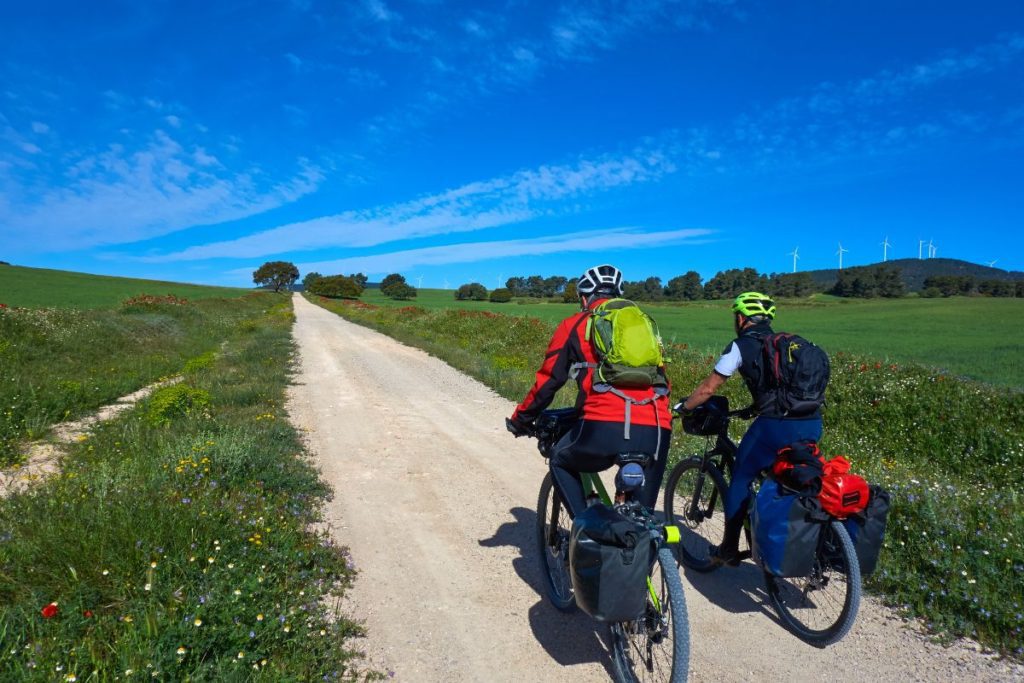
The best self-guided bike tours in Portugal, from EuroVelo 1 and the Algarve to the Vicentine Coast, Alentejo, Porto and Lisbon.
Portugal is one of the easiest countries in Europe to explore by bicycle. Within a relatively small area, you can ride Atlantic beaches, dramatic coastal cliffs, cork-oak forests, vineyards, medieval villages and quiet rural roads, often without having to deal with the heavy traffic found in other popular European cycling destinations.
Disclosure: Some of our articles contain affiliate links. This comes at no additional cost for you and helps us keep this website up and running. (as Amazon Associates we earn commission from qualifying purchases)
It is also particularly well suited to self-guided cycling holidays.
You can follow established long-distance routes such as EuroVelo 1, download GPS tracks, organise your own accommodation and luggage, or combine independent cycling with occasional organised experiences. This flexibility makes Portugal interesting both for experienced bicycle tourists who want complete independence and for travellers looking for a more comfortable self-guided cycling holiday.
The best route depends on what you are looking for. The Algarve is ideal for a shorter winter cycling trip, the Vicentine Coast offers some of Portugal’s wildest scenery, the Alentejo is perfect for quiet roads and rural landscapes, while EuroVelo 1 provides the framework for a much longer journey along the Atlantic coast.
Below are some of the best options for cycling in Portugal independently.
The best self-guided bike tours in Portugal
| Route | Approx. distance | Difficulty | Ideal for |
|---|---|---|---|
| EuroVelo 1 | 700+ km in Portugal | Moderate | Long-distance cycling |
| Porto to Lisbon | 350–400 km | Easy–Moderate | First cycling tour |
| Vicentine Coast | 200–350 km | Moderate | Wild coastal scenery |
| Algarve | 200–250 km | Easy–Moderate | Winter cycling |
| Lisbon to Sagres | 400–500 km | Moderate | A complete coastal adventure |
| Alentejo | Variable | Easy–Moderate | Quiet roads and countryside |
| Porto to Santiago | 250–300 km | Moderate | Cycling and culture |
| Northern Portugal | Variable | Moderate–Hard | Hills, wine and villages |
Distances depend on the exact itinerary because most of these routes can be adapted considerably.
EuroVelo 1: the ultimate Portuguese cycling adventure
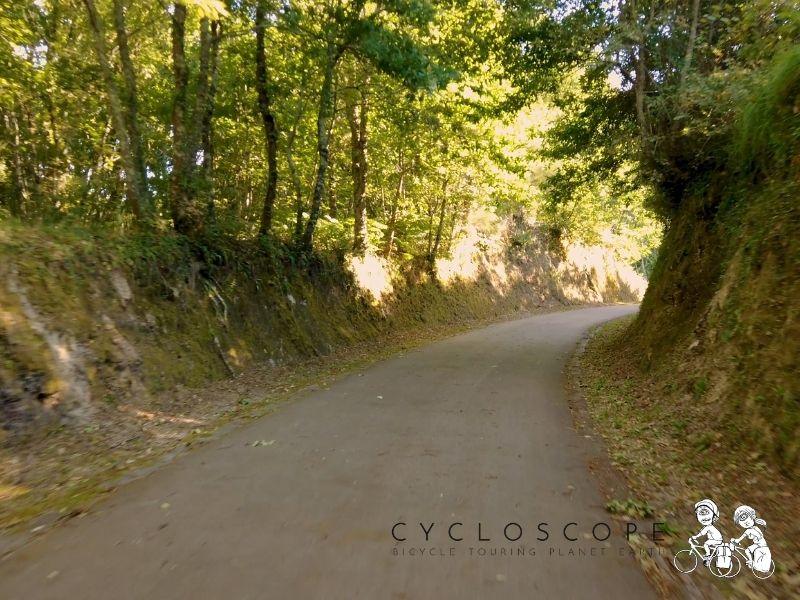
If you want to experience Portugal on a proper long-distance bicycle tour, EuroVelo 1 is the obvious starting point.
The Atlantic Coast Route crosses Portugal from the Spanish border in the Algarve to Valença in the north. It passes through or near many of the country’s most interesting cycling destinations, including Faro, Sagres, the Vicentine Coast, Lisbon, Peniche, Nazaré, Figueira da Foz, Aveiro, Porto and the Minho.
The Portuguese section is divided into 30 stages, making it particularly convenient for independent cyclists who want to build their own itinerary rather than buy a predetermined tour. Official route information and GPS tracks are available through the Portuguese EuroVelo network.
EuroVelo 1 Portugal – official route and stages
You don’t need to cycle the entire route.
A week could be devoted to the Algarve and Vicentine Coast. Another cyclist might start in Porto and ride south towards Lisbon. With two or three weeks, however, you can begin to appreciate just how diverse Portugal becomes as you travel north.
This is probably the best option for cyclists who want the freedom of a self-guided tour without having to invent an entire route from scratch.
Best for: experienced bike tourists and independent travellers.
Bike: touring bike, gravel bike or e-bike.
Time: one week to three weeks or more.
Porto to Lisbon by bike
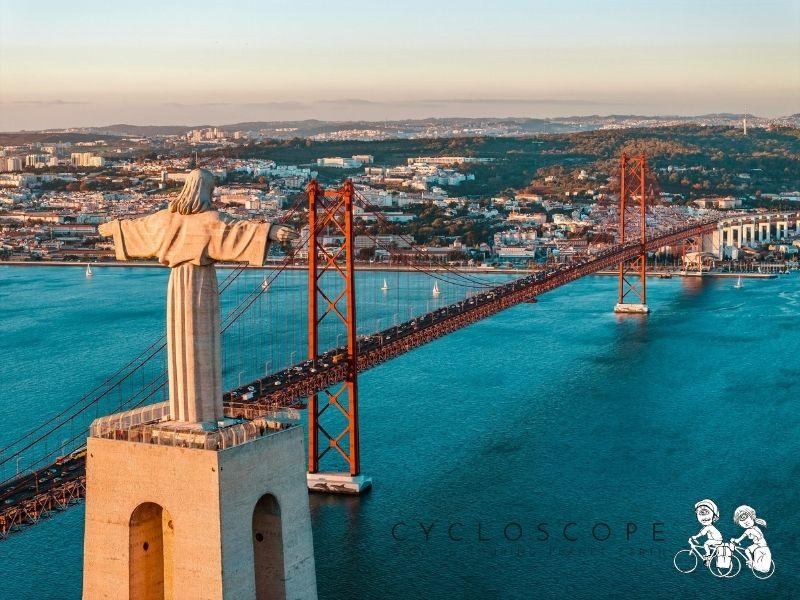
For a first cycling holiday in Portugal, Porto to Lisbon is arguably the easiest route to recommend.
The journey connects two of the country’s most interesting cities while allowing you to spend most of the trip away from urban environments. A coastal itinerary can pass through Aveiro, Figueira da Foz, Nazaré and Peniche before reaching Lisbon.
The great advantage is flexibility. You can make the trip a relatively relaxed eight-day tour or increase the daily distances and complete it in five or six days.
The landscape changes gradually as you travel south. Around Porto, the coast is green and relatively cool. Further south, beaches become broader and the landscape increasingly Mediterranean.
Nazaré and Peniche are obvious stops for travellers interested in Portugal’s surfing culture, while Aveiro provides a pleasant break between Porto and the central coast.
This route also works well if you are not travelling with a dedicated cycling company. You can book hotels independently, carry your own luggage and use the EuroVelo GPS tracks to construct your own itinerary.
Best for: first-time bicycle tourists.
Bike: touring, gravel, hybrid or e-bike.
Time: 5–8 days.
The Vicentine Coast: Portugal’s wild side
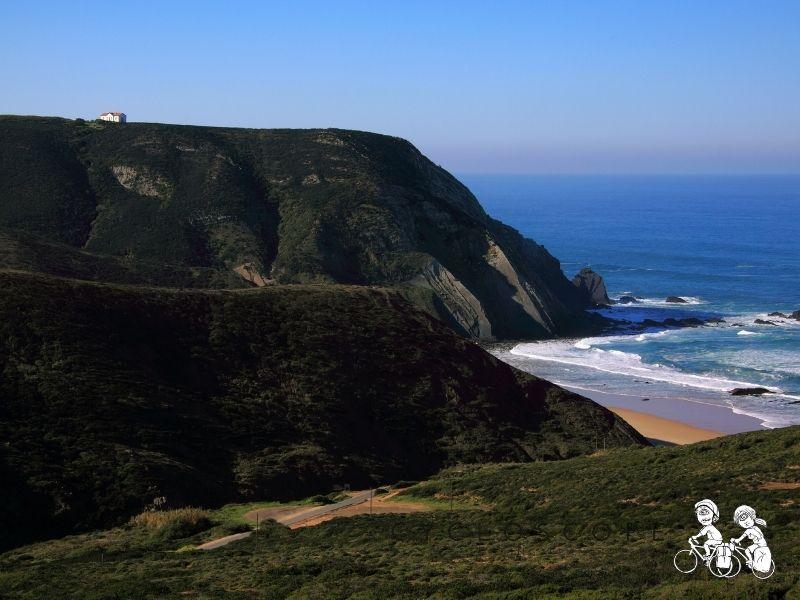
For many cyclists, the Vicentine Coast is the most beautiful section of Portugal.
The coastline between Sagres and Sines is dramatically different from the resort-heavy image often associated with the Algarve. The Atlantic is powerful, beaches are separated by cliffs and dunes, and large sections of the coast remain remarkably undeveloped.
A typical cycling journey could connect:
Sagres → Carrapateira → Aljezur → Odeceixe → Vila Nova de Milfontes → Sines
This can be combined with EuroVelo 1 and adapted according to your available time.
The terrain isn’t completely flat, and Atlantic wind can make some days substantially harder than the distance suggests. But that’s part of the attraction: this is a route for cyclists who want the feeling of travelling through a landscape rather than simply moving between tourist attractions.
For a self-guided tour, I would allow around 50–70 km per day and leave enough time for beaches, viewpoints and the small towns along the way.
Best for: bikepacking, gravel riding and dramatic scenery.
Bike: gravel or touring.
Time: 4–7 days.
Cycling the Algarve
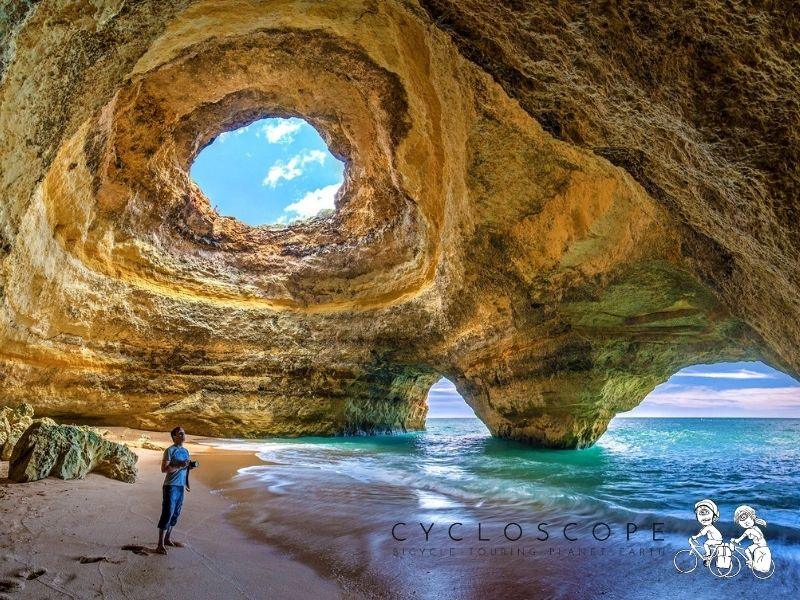
The Algarve is probably the easiest region in Portugal for a short independent cycling holiday.
The Ecovia do Litoral crosses the Algarve from Cape São Vicente towards Vila Real de Santo António, following a mixture of cycle paths, rural tracks and roads.
It also forms part of EuroVelo 1, so the Algarve can be incorporated into a much longer Portuguese cycling adventure.
A classic west-to-east itinerary could look like:
Sagres → Lagos → Portimão → Albufeira → Faro → Tavira → Vila Real de Santo António
The scenery changes considerably along the way. The western Algarve is characterised by cliffs and exposed Atlantic landscapes, while the eastern Algarve becomes flatter and is dominated by beaches, lagoons and the Ria Formosa.
The Algarve is particularly interesting for cyclists from northern Europe because it remains a viable cycling destination during the winter months.
Summer, on the other hand, can be extremely hot, particularly inland.
Best for: winter cycling, beginners and short trips.
Bike: hybrid, touring, gravel or e-bike.
Time: 4–7 days.
Lisbon to Sagres
If you want something more adventurous than a short Algarve tour, cycling from Lisbon to Sagres makes an excellent self-guided journey.
The route gradually leaves the capital behind and moves through Setúbal, the Alentejo coast and the Vicentine Coast before reaching the southwestern tip of Portugal.
One possible itinerary is:
Lisbon → Setúbal → Sines → Vila Nova de Milfontes → Odeceixe → Aljezur → Sagres
This is one of the best routes for combining different aspects of Portugal in a single trip.
You start in one of Europe’s most atmospheric capitals, cross the Sado region, enter the quieter Alentejo and eventually reach the wild Atlantic landscapes around Sagres.
It is also possible to shorten the journey by starting in Setúbal or Sines.
Best for: cyclists who want a genuine point-to-point adventure.
Bike: gravel or touring.
Time: 6–9 days.
Cycling in the Alentejo
The Alentejo is what I would recommend to cyclists who don’t particularly care about following the coast.
This huge region of southern Portugal is characterised by cork oak, olive trees, vineyards, white villages and enormous horizons.
Traffic is generally lighter than around Portugal’s major coastal destinations, and the landscape lends itself beautifully to slow bicycle touring.
Instead of following one famous route, you can create your own itinerary around towns such as Évora, Estremoz, Vila Viçosa and Monsaraz.
This is particularly attractive for experienced self-guided cyclists because the objective isn’t necessarily to reach a famous endpoint every evening. The pleasure comes from spending several days moving through rural Portugal.
A good Alentejo tour could be based around 50–80 km stages, with enough time to stop at wineries, villages and historical sites.
Best for: independent road and touring cyclists.
Bike: road, touring or gravel.
Time: 3–10 days.
Porto to Santiago de Compostela
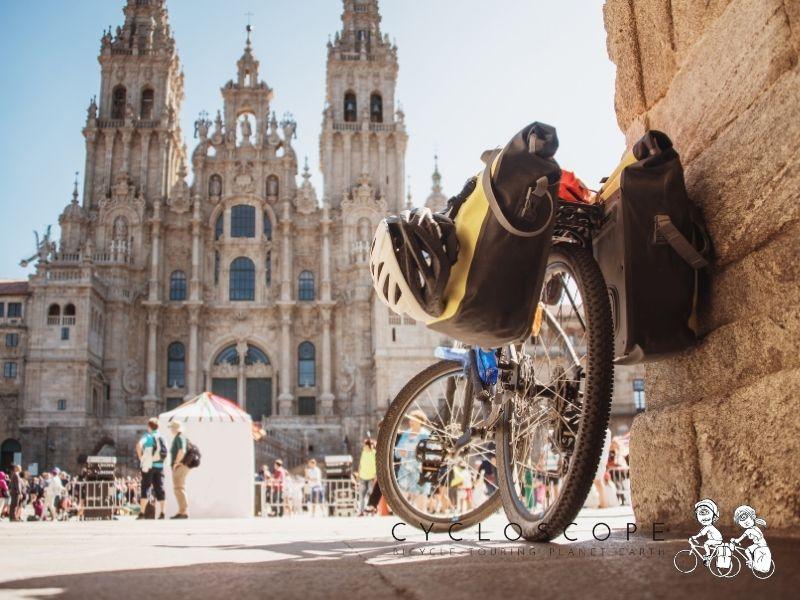
A cycling holiday from Porto to Santiago de Compostela crosses two countries but makes a very natural extension to a Portuguese cycling trip.
The Portuguese Way of St James provides a ready-made itinerary, while the northern Portuguese coast offers the opportunity to combine pilgrimage routes with Atlantic scenery.
Porto is a fantastic starting point, and the route towards Galicia passes through historic towns and rural landscapes before entering Spain.
This isn’t necessarily the route I’d choose if your only objective is spectacular cycling. It is more interesting if you enjoy the combination of cycling, history, food and culture.
Best for: cultural travellers and cyclists interested in pilgrimage routes.
Bike: touring or gravel.
Time: around 5–7 days.
Northern Portugal and the Minho
Northern Portugal is where the cycling becomes more demanding.
The Minho around Viana do Castelo, Ponte de Lima, Braga and Valença is greener and hillier than the Algarve or central coast.
The coastal EuroVelo 1 sections provide a relatively accessible introduction. The official route includes stages such as Vila do Conde–Esposende, Esposende–Caminha and Caminha–Valença.
But head inland, and the elevation increases quickly.
This makes northern Portugal a better destination for cyclists who actually enjoy climbing. In return, you get vineyards, granite villages, forests, historic towns and a much greener landscape.

Best for: stronger cyclists and road/gravel riders.
Bike: road, gravel or touring.
Time: 4–8 days.
Can you book a self-guided cycling tour in Portugal?
Yes, but there is an important distinction between the different types of cycling experiences available online.
A true self-guided cycling holiday usually means several days of riding between destinations, with accommodation, route planning and sometimes luggage transfers organised for you. You ride independently, normally using a GPS track or route book.
Platforms such as Viator and GetYourGuide are more heavily oriented towards single-day cycling experiences, including private and small-group rides.
For example, GetYourGuide currently lists an e-bike experience from Sintra to Cascais and Cabo da Roca, with transfers from Lisbon, while Porto has a range of guided and private cycling experiences.
For travellers who want a self-guided experience, check the booking conditions carefully. Some tours offer a self-guided option while others are explicitly guided. Viator, for example, lists individual experiences but does not itself create customised tours.
For a multi-day independent tour, specialist cycling-holiday companies can actually be a better option than the large activity marketplaces. They tend to provide what matters to cyclists: GPX files, bike rental, luggage transfers, accommodation, and route notes.
Self-guided vs independent cycling in Portugal
There are really two ways to approach a cycling holiday in Portugal.
With a self-guided cycling tour, somebody else does most of the logistical work. You normally receive a route, accommodation is booked, and luggage transfers may be included. You still ride independently, without a guide or group.
With an independent bike tour, you organise everything yourself.
Portugal is particularly good for the second option because the EuroVelo network provides a ready-made framework and downloadable GPS information.
For experienced bike travellers, organising the trip yourself can also substantially reduce the cost.
You can choose your own accommodation, decide how far to ride each day and change the itinerary when the weather or your legs tell you to.
When is the best time to cycle in Portugal?
Portugal is unusual in Europe because different parts of the country work well at different times of year.
For most of the country, spring and autumn are the best seasons.
The Algarve is particularly attractive from October through April, when temperatures are much more comfortable for cycling than during the summer.
For a long north-south tour, April–May and September–October are probably the safest choices.
Summer can be excellent in northern Portugal but can become brutally hot in the Algarve and Alentejo. If you are cycling in July or August, early starts and carefully planned accommodation become much more important.
Rain is another consideration. Northern Portugal is substantially wetter than the Algarve, especially during the cooler months.
What type of bike do you need?
For the major Portuguese routes, a gravel bike or touring bike is probably the most versatile choice.
A road bike makes sense if you’re deliberately designing a route around paved roads, while an e-bike can make the hillier sections of northern Portugal considerably easier.
For the Vicentine Coast and mixed-surface routes, I would favour a gravel bike with relatively wide tyres.
For a traditional pannier-based tour, a sturdy touring bike remains difficult to beat.
How much should you cycle each day?
Don’t plan your Portuguese cycling holiday exclusively around kilometres.
A day of 70 km along a relatively flat coast can be easier than 50 km through the hills of northern Portugal.
Wind also matters enormously on the Atlantic coast.
For a relaxed holiday, 50–70 km per day is a good starting point. Stronger cyclists can comfortably plan 80–100 km stages, particularly on flatter terrain.
The advantage of travelling independently is that you can build in shorter days whenever there is somewhere particularly interesting to stop.
Which Portugal cycling tour should you choose?
If you have never toured Portugal before, I would start with Porto to Lisbon.
If you want the most dramatic scenery, choose the Vicentine Coast.
If you’re looking for a winter cycling destination, choose the Algarve.
If you want quiet roads and rural Portugal, head inland to the Alentejo.
If you want a proper long-distance adventure, follow EuroVelo 1.
And if you enjoy climbing and want something less obviously touristy, explore northern Portugal and the Minho.
The real advantage of Portugal is that these aren’t isolated cycling destinations. They can be connected into a much longer journey, allowing you to start in the Algarve, follow the Atlantic coast through Lisbon and Porto, and eventually reach the Spanish border.
That makes Portugal one of the few European countries where you can arrive with a bike, a GPS track and a couple of weeks available and simply start riding north.