

Last Updated on 14 January 2026 by Cycloscope
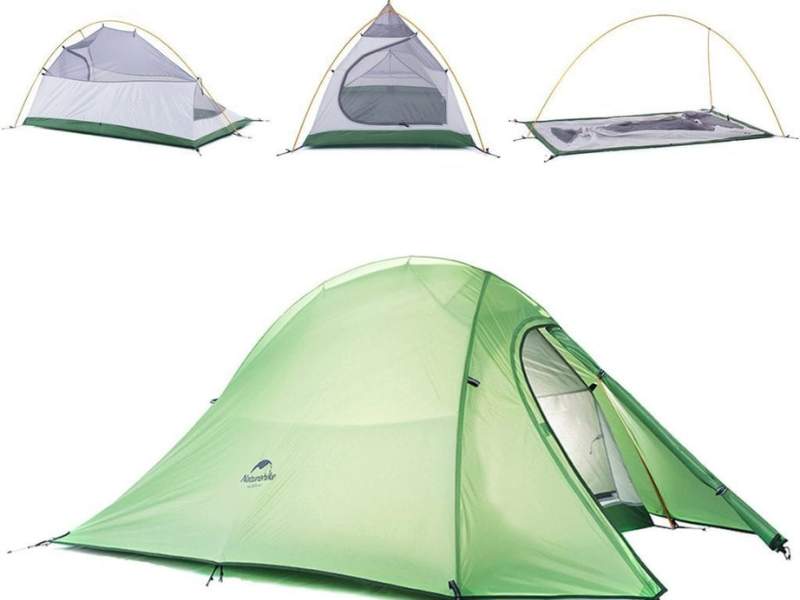
Naturehike Cloud-Up 1 VS 2 VS 3 person! An opinion review after a 3-year test, 4 seasons vs 3 seasons
Is this the best budget lightweight tent?
If you landed on this page, you’re probably wondering if the Naturehike Cloud Up is a good tent or not… then look no further and dive into our Naturehike Cloud-Up review!
Disclosure: Some of our articles contain affiliate links. This comes at no additional cost for you and helps us keep this website up and running. (as Amazon Associates we earn commission from qualifying purchases)

We have tested the Nature Hike Cloud Up 2- and 3-person versions for a total of 3 years of bike touring through Europe and Southern Africa, and in this review, we’ll give you our unbiased, expert opinion on the Naturehike Cloud Up camping tents.
NatureHike is a Chinese brand that is quickly making its way in the outdoor world thanks to the high quality of its products, its low price tags, and great customer service.
If you want to have a look at more of their options, check our Naturehike Tents REVIEW! 11 Tents Compared for 2026.
In this review, we compare the more popular Naturehike Cloud-Up 2-person tent with the Cloud-Up 1-man and Cloud-Up 3-person tents.
We’ll also analyze the difference between the 3-season and 4-season versions.
We’ll go through the materials, design strengths and flaws, performance, durability, and all the other info you might need to decide if the Cloud-Up is the right tent for you. So keep on reading!
Naturehike Cloud Up Review
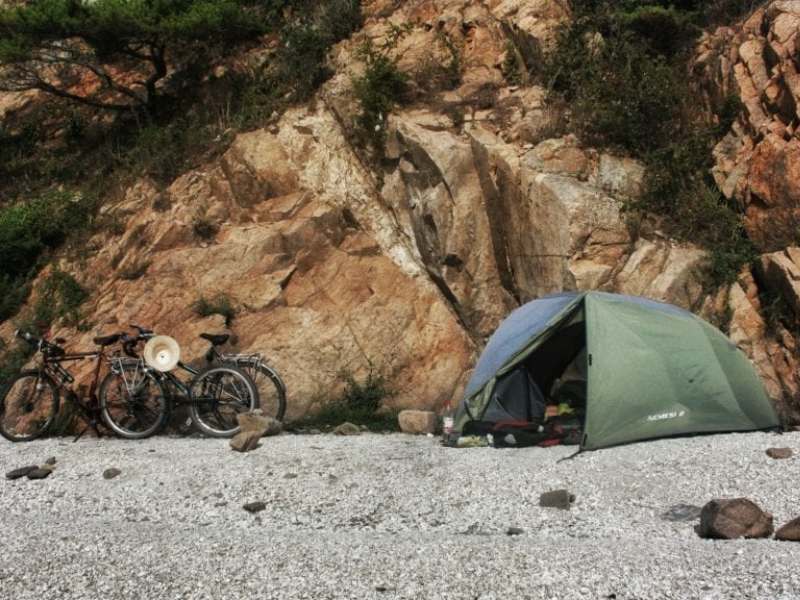
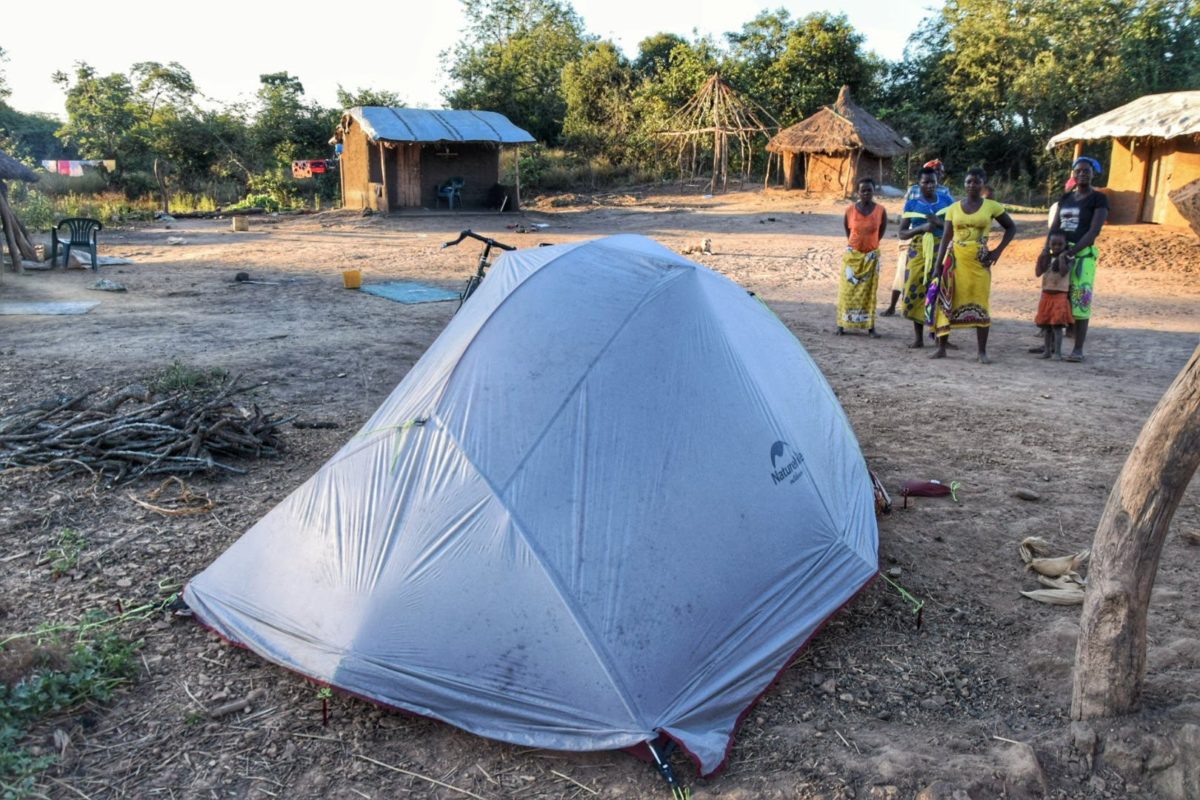
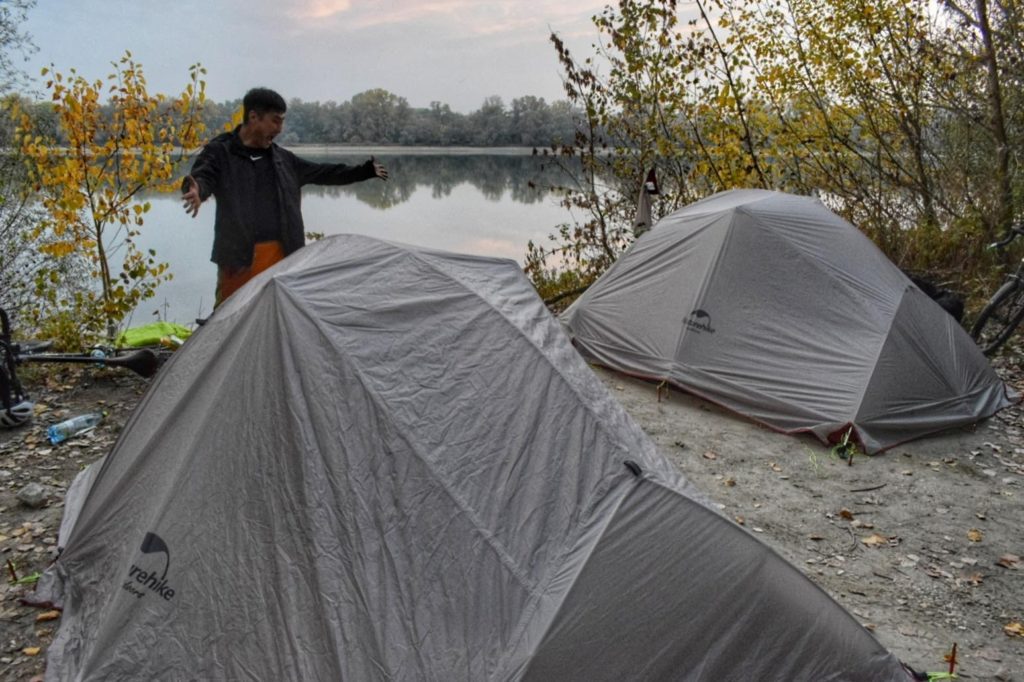
Although we briefly tested the 2-man version, this field test will refer mostly to the Naturehike Cloud Up 3, which we have used extensively for about 3 years, from the Arctic Circle to the heat of the Southern African savannah.
How to set up a Naturehike Cloud Up tent
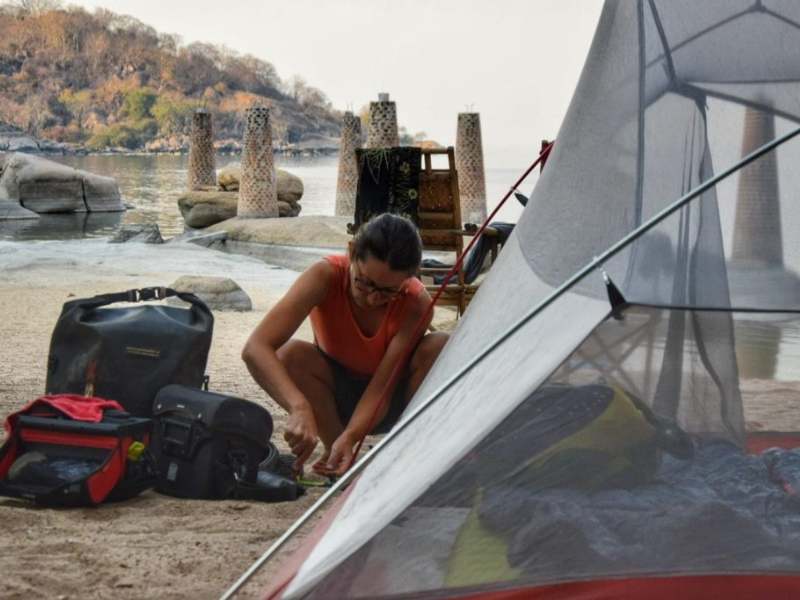
The setup of a Cloud Up is really easy; even the 3-person version can be pitched by one person in less than 10 minutes, and 5 minutes will be enough once you get used to it.
The poles are all connected in one single bundle: a central rod that keeps the roof up and splits into two diagonal poles, both at the front end (longer rods) and at the back (shorter).
A short, perpendicular pole is hinged at the center of the long central pole and has the function of tensing the upper end of the tent.
The poles come together when released/unfolded, requiring the user to secure them in place.
The inner tent and fly sheet have aluminum-laminated holes attached to a short but sturdy fabric strip at the corners; it’s here that the pole’s ends are inserted, forcing them to bend into shape.
The inner fly is then connected to the poles with simple plastic hooks (recently upgraded to double-sided hooks). Those lift the inner mesh and put the tent in shape.
The rainfly is then positioned on top of the poles and secured with hooks, pegs, and, eventually, the included tension ropes if wind is a concern.
The same procedure is used for the 1-, 2-, and 3-person versions, with the only difference being that the 1-man Cloud Up doesn’t have the “back legs” and thus needs to be tensioned with pegs (or pulling ropes).
Is the Naturehike Cloud Up waterproof?
The short answer is yes; the proper answer will require a few more words.
We slept in our Cloud-Up through the most hectic thunderstorms and downpours and never experienced any leaks of the sort for three whole years, so I would say the waterproofness is quite durable!
What we mention about condensation in the 3-season VS 4-season paragraph below, though, is especially true for the tent floor, both for the skirt and the non-skirted version.
If put in direct contact with even slightly wet ground, condensation will happen, and you’ll have a wet tent floor.
That’s one of the two main reasons you should always use the included footprint when pitching your tent on a natural surface: the other is to protect the tent floor from punctures, which will compromise overall performance.
Cloud Up against the wind
The only real failure our Naturehike Cloud Up encountered in its long and successful career is indeed against the wind – only one failure, but an important one.
Under a terrible wind storm in the Arctic Circle in Norway, a pole snapped and tore the flysheet. The pole was irreparably broken in two, with small splinters.
That said, our Cloud-Up endured a lot in Norway, especially another strong storm about a week before that might have snapped the pole.
Also, there might have been some over-tensioning, which can cause problems with strong, irregular winds.
Naturehike, anyway, replaced the flysheet within a few days and even contributed to the nights we couldn’t camp and had to pay for accommodation.
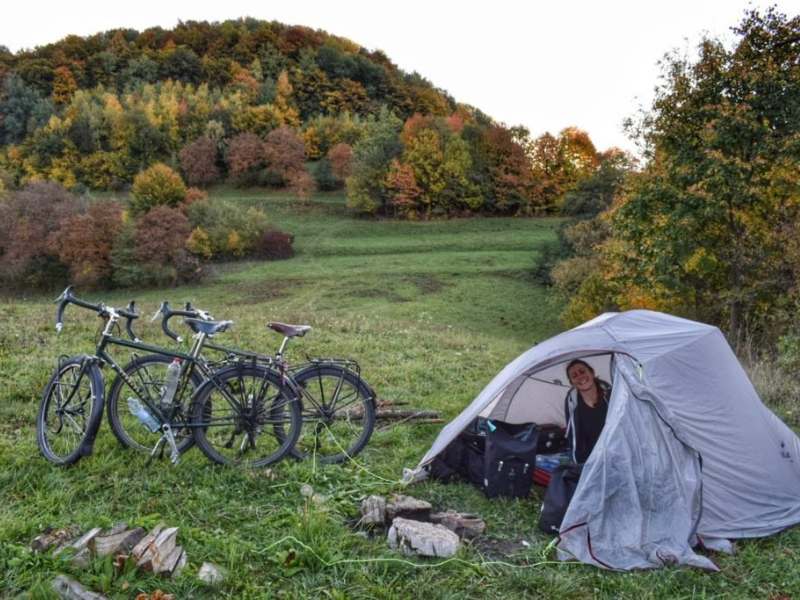
Naturehike Cloud Up Materials
Like most Naturehike tents, the Cloud Up comes in two versions that differ in materials. A cheaper 210T polyester fabric or a slightly more pricey 20D nylon version.
The Taffeta-210T is a high-quality polyester fabric – fast-drying, light, soft, and durable.
When we see 20D nylon, we are looking at a nylon fabric where the D stands for denier, so 20D is 20 denier nylon.
Denier is a unit used to measure the density of a fabric, based on the length and weight of yarn or fiber. A single strand of silk is considered 1 denier.
The fibers in a 20-denier nylon fabric have diameters over 4 times those of the silk strand.
So what’s better, 20D or 210T?
20D is lighter and more durable for its weight. 20D nylon has a waterproofness rating of 4000mm, meaning it can withstand a 4-meter (4000mm) column of water before it starts to leak through the fabric.
210T polyester can only withstand 3000mm of water pressure, despite being much thicker.
One downside of 20D is its slipperiness. It’s very common to find yourself sliding around a 20D tent floor – which is very annoying when your tent is pitched on slightly sloppy terrain.
Nylon also expands when wet, by as much as 3.5% when soaked, while polyester does not expand or gain weight when wet.
This problem is solved in most camping tents by treating the nylon fabric with a water-repellent such as silicone or DWR.
Moreover, nylon dries much faster than polyester, thanks to its thinner, more breathable nature.
The inner igloo is the same across all Cloud-Up models, made of high-density mesh and nylon, with nylon only on the floor and lower sides.
Poles are made of 7001 Aluminum alloy, lightweight, flexible, and reasonably strong. The pegs have a cross-section and are quite sturdy; it’s rare to bend one, and they can always be put back in shape with a hammer or a hard rock.
Naturehike Cloud Up 4-seasons VS 3-seasons
The only difference between the 4-season and 3-season versions of the Cloud-Up is the presence of a “skirt” that Naturehike calls a “skirt”.
This is simply an extension of the fly sheet that reaches the lower part of the tent, all the way to the ground, while the 3-season version ends a few centimeters above the ground, allowing for air exchange.
This simple expedient is meant to insulate the inner igloo from the air outside by reducing, or totally blocking, the flow of external air – the good thing is… it works.
The long rainfly gown acts as a wall, insulating the air inside from the outside.
As you stay inside your tent, your breath and body heat warm the air inside, raising the tent’s internal temperature.
The more experienced among you might have a word floating around your mind: condensation.
And, unfortunately, you’re not wrong. Inhibiting air exchange with the outside brings up a temperature differential on the rainfly surface, which in turn causes condensation – basic science baby.
The good thing is that the condensation remains on the flysheet walls and never drips, so you and your gear won’t get wet, just a bit more humid.
Needless to say, the 3-season version doesn’t have this issue.
If you’re debating whether to purchase the 4-seasons or 3-season version of the Naturehike Cloud Up, check out:
> 3-Season Tents VS 4-Season Tents – What Should You Bring With You?
Cloud Up 1-Person VS 2-Persons VS 3P
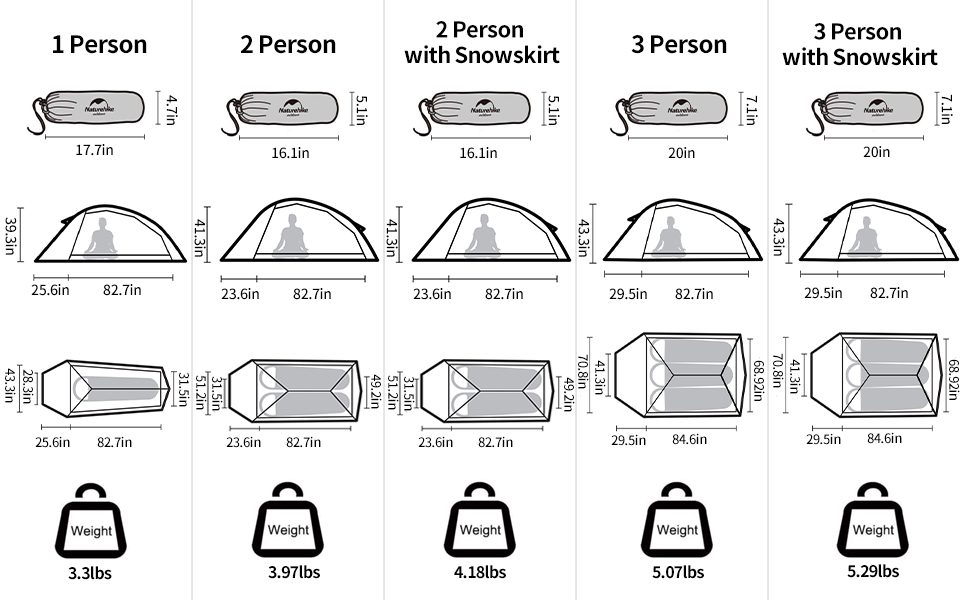
The Cloud Up by Naturehike comes in three different sizes.
A compact 1-person version – ideal for bikepacking and minimalist hiking – a two-person model – great for small couples – and a large 3-person version – the best option for couples’ extended trips.
The Cloud Up 1-person measures 82.7″ (210cm) in length, 43.3″ (110cm) in width at the head, 31.5″ (80cm) at the foot, and 39.3″ (100cm) at its highest inner point.
The Cloud Up 2-person measures 82.7″ (210cm) in length, 51.2″ (130cm) in width at the head, 49.2″ (125cm) at the foot, and 41.3″ (105cm) at its highest inner point.
The Cloud Up 3-person measures 82.7″ (210cm) in length, 70.8″ (180cm) in width on the head side, and 68.9″ (175cm) on the foot side, and 43.3″ (110cm) at its highest inner point.
The weights of the different models of Cloud Up are:
- 1-person: 3.3lbs (1.5kg)
- 2-persons: 3.09 (1.4kg) 20D version / 3.97lbs (1.8kg) 210T version / 4.18 (1.9kg) 4-seasons
- 3-persons: 4.62 (2.1kg) 20D / 5.07lbs (2.3kg) 210T / 5.29lbs (2.4kg) 4-seasons
Actual (mid-2023) prices for the Naturehike Cloud-Up go as follows:
- 1-person $134.95 (20D version) / $119.95 (210T)
- 2-persons $169.95 (20D version) / $129.95 (210T) / $179.95 (4-seasons)
- 3-persons $228.00 (20D version) / $165.00 (210T) / $242.00 (4-seasons)
The color choices for the Naturehike Cloud Up
The Naturehike Cloud-Up comes in a decent selection of colors. Gray, Navy Blue, Olive Green, and Light Green for the 20D version – and Orange or Green for the 210T version.
Only the 4-season version with the skirt is available in Gray.
If you’re purchasing this tent to do some wild or stealth camping, we recommend the less visible green version.
Naturehike Cloud-Up 2: Technical Specs
Naturehike Cloud-Up Review – Wrap Up
Overall, this is one of the best budget backpacking tents, and certainly the best Naturehike tent so far.
How waterproof is the Naturehike Cloud Up?
The tent uses silicone-coated nylon (typically 20D) with taped seams, providing reliable waterproofing for most touring and backpacking scenarios. In prolonged rain, performance is solid, especially when paired with the included or optional footprint to protect the floor.
Does the Naturehike Cloud Up have condensation issues?
Condensation is generally well-controlled thanks to the mesh inner tent and ventilation design, but, like most lightweight tents, condensation can still occur in humid or poorly ventilated conditions. Proper site selection and airflow help minimize this.
How durable is the Naturehike Cloud Up for long trips?
For its weight and price, durability is good, but it’s still an ultralight tent. The fabrics and poles should be handled with care, particularly during setup and packing. Using a footprint and avoiding abrasive surfaces will extend its lifespan on long tours.
What are the main differences between Cloud Up 1, 2, and 3?
The main differences are interior space, weight, and packed size. The Cloud Up 1 is ideal for solo riders prioritizing minimal weight, while the Cloud Up 2 and 3 offer more room for gear or shared use at the cost of extra weight and volume.
Is the Naturehike Cloud Up a good value compared to premium brands?
Yes. While it doesn’t match the materials or long-term durability of top-tier brands, the Cloud Up offers excellent value for money, delivering reliable performance at a much lower price, making it popular among budget-conscious bikepackers and touring cyclists.