

Last Updated on 27 January 2026 by Cycloscope
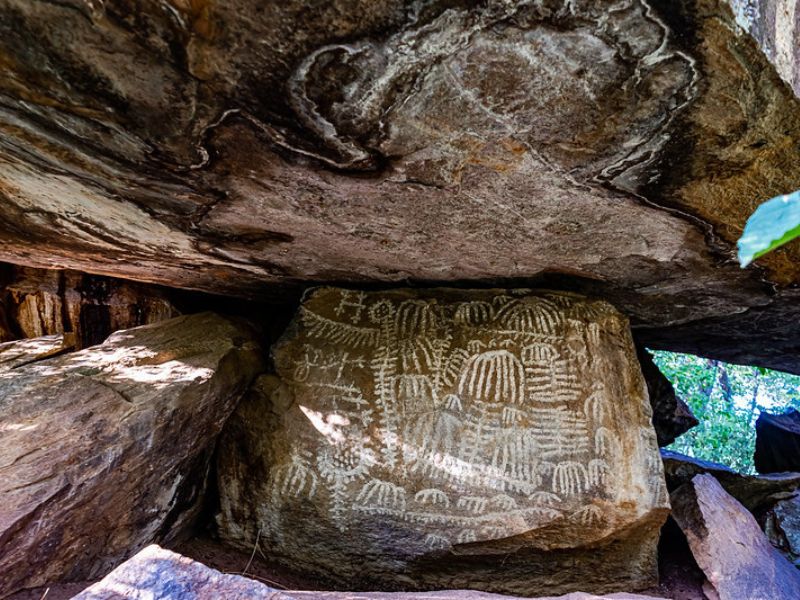
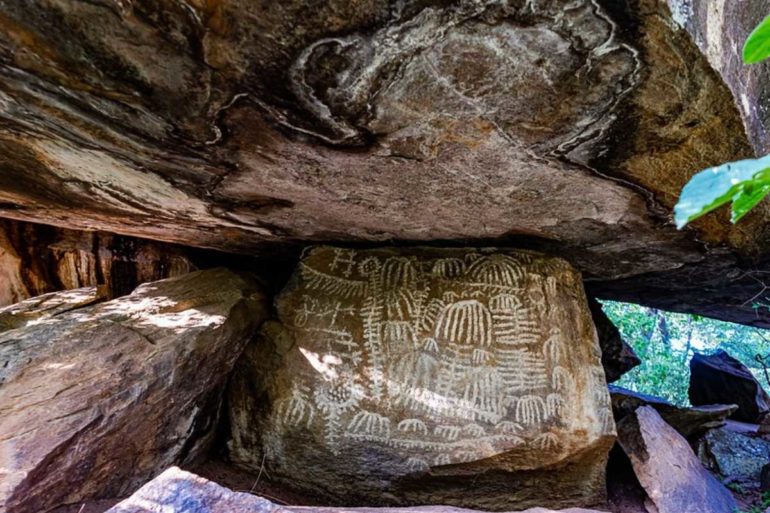
Kondoa Irangi Rock Paintings are thousands of years old, well-preserved, and easily accessible; they tell the story of our ancestors in the heart of Africa. Their perception of the world, their everyday life, and their beliefs.
The Kondoa Irangi rock paintings are located about halfway between Dodoma, Tanzania’s former capital, and Ngorongoro National Park.
Disclosure: Some of our articles contain affiliate links. This comes at no additional cost for you and helps us keep this website up and running. (as Amazon Associates we earn commission from qualifying purchases)
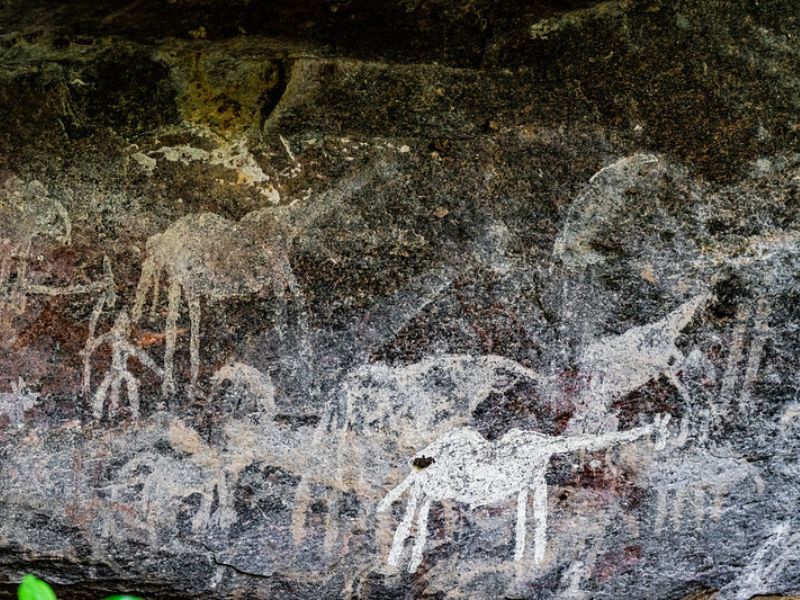
The exact number of cave paintings is not known; estimates range from 150 to 450 in the area. The subjects of the paintings range from animals and plants to scenes of daily life and hunting.
In the 1950s, Mary Leakey, a British paleoanthropologist, began documenting these rock paintings and reported that they were the second-most-extensive rock art sites in Africa, after Tassili N’Ajjer in Algeria.
This is absolutely one of the most fascinating places we visited in Tanzania.
How old are the Kondoa Irangi rock paintings?
The tradition of rock paintings has survived until very recent times, some of which date back to the 1960s, and today the site is still used by the Irangi tribes, Warangi, and Wasi
communities, for their rituals.
This is probably one of the most fascinating things about this unique UNESCO World Heritage Site.
Dating is not easy; the paintings were initially thought to be dated to between 1500 and 6000 years ago on average, but recent technologies have dated them to between 19000 and 30000 years ago.
Considering that some of them are very recent, this region contains the history of the area’s population over the past thousand years.
How to visit Kondoa Rock Paintings
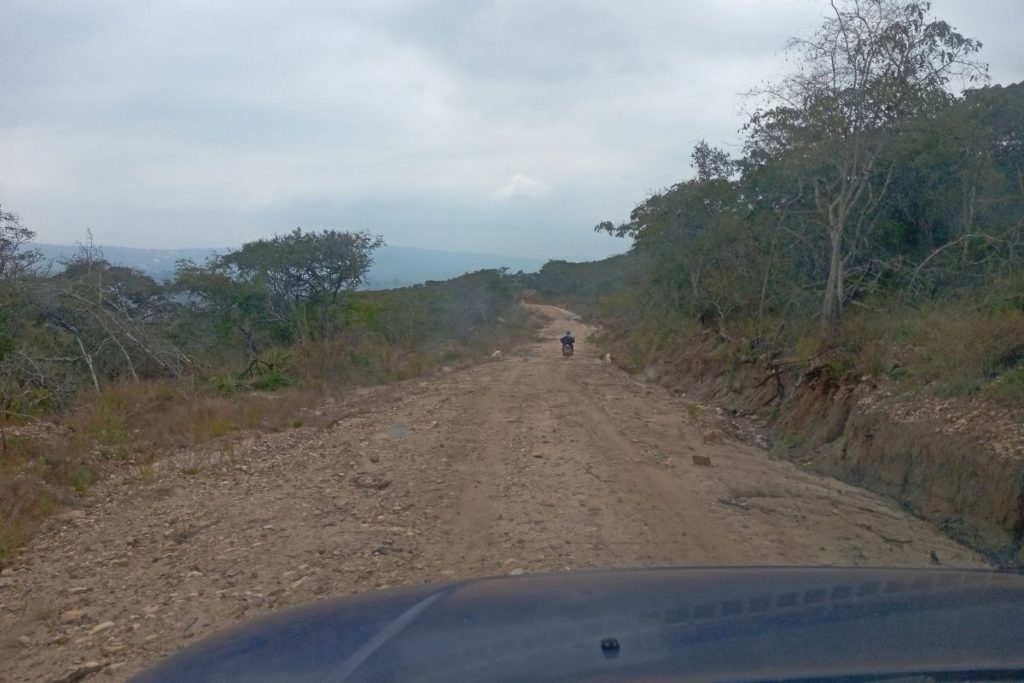
On the road going from Dodoma to Ngorongoro Crater (the gateway to the African Great Migration) is the village of Kolo, north of Kondoa.
On the main road, you will see a tourist office where you can buy the entrance ticket and visit the small museum. A guide will accompany you to the cave paintings.
The shortest visit is usually about 2 hours; you will see 3 sites: B1, B2, and B3. Taking pictures is not allowed; for this article, we used what was available online.
In our experience, the guide arrived on a motorbike, and we followed him in our car. The road to the site’s parking lot is about 8 km, on a pretty bad but not impossible road, and probably worse during the rainy season.
We made it with our very old RAV4, so with a bigger car it shouldn’t be a problem. If you don’t have a car, you can organise the tour with a tour operator or hire a local motorbike taxi.
The entrance fee is 27000 Tanzanian Shelling (12 USD) per person and 30000 (13 USD) for the guide even tho they will ask you a tip anyways.
It seems not all the guides know a lot about the paintings. You can check TripAdvisor, where people have shared phone numbers for good local guides. You can contact them in advance and meet them at the office.
It is also possible to visit other sites if you have a couple of days. This is absolutely one of the most fascinating places we visited in Tanzania. Otherwise, it is a perfect stopover on the otherwise pretty boring road to Dodoma or Babati.
Different kinds of paintings: red, black, and white
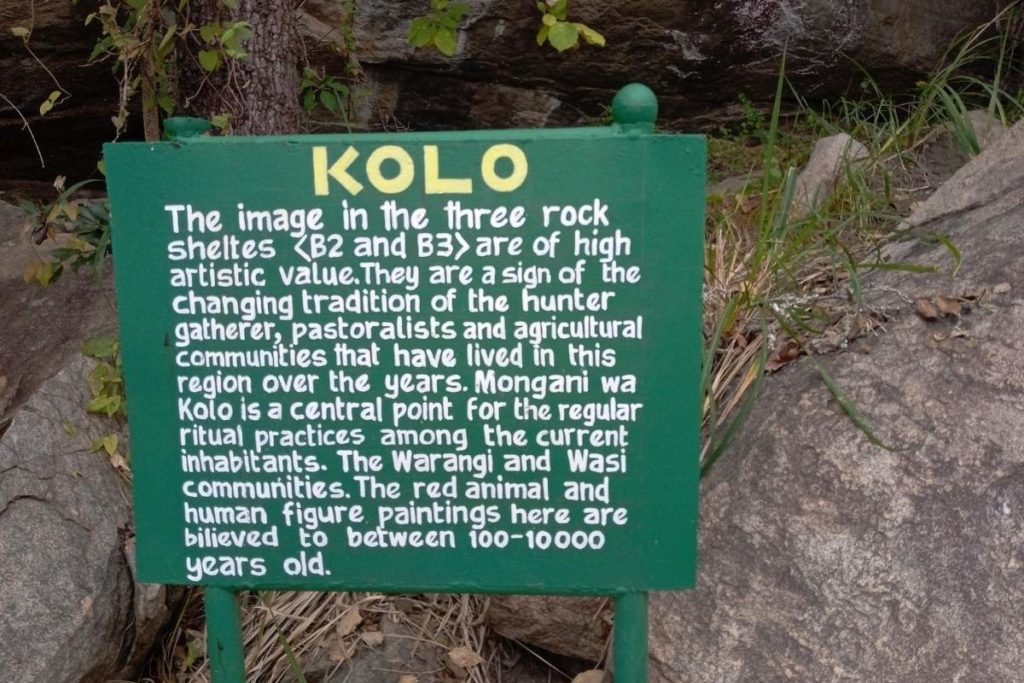
The population was not static; indeed, the paintings’ characteristics reveal who made them.
The red paintings are associated with hunter-gatherer people in Kondoa and throughout the Arusha, Manyara, Mara, and Singida areas of Tanzania, while the white paintings were made by the Bantu people during their expansion into this region. The white and red paintings have been attributed to the Nilotic and Cushitic tribes.
The black paintings are considered more recent compared to the red and white ones.
The area is rich in geometric paintings; we are not sure what they mean, but there are several interpretations. The more common is that this is a rudimentary form of writing system.
Modern Rituals and People of the Kondoa Irangi Area
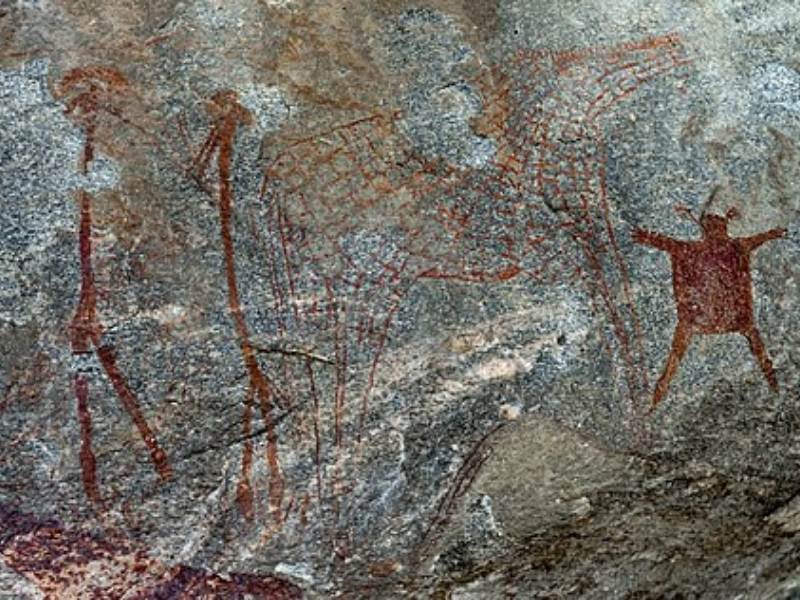
As we mentioned, the cave paintings of Kondoa are the result of the art of different populations from different areas of the continent.
One of the most important in central Tanzania is the Sandawe. It seems that about 50,000 years ago, the hunter-gatherer populations of central Tanzania separated.
From this separation, two groups emerged: the Hadza, who still live on Lake Eyasi and are unfortunately at risk of extinction, and the Sandawe. The earliest rock paintings at the Kondoa site have been attributed to the Sandawe and mainly depict humans and animals.
Sandawe believe that rock shelters and baobabs symbolize the womb and, thus, the origin and creation of life. It is from here that the god Barase made men and animals emerge.
It is here you have to go to connect with the ancestors or to ask for the rain. Some of the still practiced rituals are the symbo and Iyari rituals. You can read more about these traditions here.
Check Also
Visiting the Amboni Caves in Tanga, Tanzania
Diving Zanzibar and Pemba Island
Guide to Lake Eyasi [Tanzania]: Hadzabe Bushmen, Walking Safaris, & More