

Last Updated on 17 February 2026 by Cycloscope
Bicycle touring and Cycling Holidays in Croatia. The Best Bike Routes and Cycling Advice in Croatia.
Have you ever considered a cycling trip to Croatia? I guess you did, since you ended up here.
Disclosure: Some of our articles contain affiliate links. This comes at no additional cost for you and helps us keep this website up and running. (as Amazon Associates we earn commission from qualifying purchases)
Whether you’re planning a longer cycle touring route across Europe or just have a couple of weeks off for a cycling holiday, we’ll do our best to provide all the information you need to organize a bike trip in Croatia.
Croatia is the wealthiest among the former Yugoslavia countries, and probably the one with the highest concentration of tourist attractions.
Its long and spectacular coastline is dotted with thousands of islands, some of which make for great cycling destinations.
The Adriatic Sea is crystal clear and always quiet here, and the coastal cities are gems of history and architecture: Split, Zadar, and Dubrovnik are all well worth visiting.
The north is mountainous in the west, with thick forests and the idyllic, fairy-tale spots of Krka (down south) and Plitvice.
Costs of a cycling trip in Croatia
Despite being one of the most expensive countries in Eastern Europe, Croatia is still relatively cheap when compared to central and northern European nations.
- Double room: from 20 €
- Bed in Dorm: from 10 €
- Campsite: from 10 to 20 € (x small tent)
- Meal: from 2,5 to 15 € pp (inexpensive restaurant)
- Beer: 2 €
Accommodation in Croatia
Campsites are ubiquitous along the coast; they are usually small, cozy, and pleasant, though they may lack infrastructure such as a communal kitchen or laundry.
Camping is also possible in the mountains near Plitvice and Krka.
For the rest of the country, you’ll have to rely on local guesthouses or occasional stealth camps, as wild camping is not permitted in Croatia.
Along the coast and in the tourist spots, there are cheap hostels. Outside the main tourist areas, it might become slightly more complicated to meet English speakers, but learning some Croatian phrases will certainly earn you some smiles.
Choosing a bike route – Cycling itineraries in Croatia
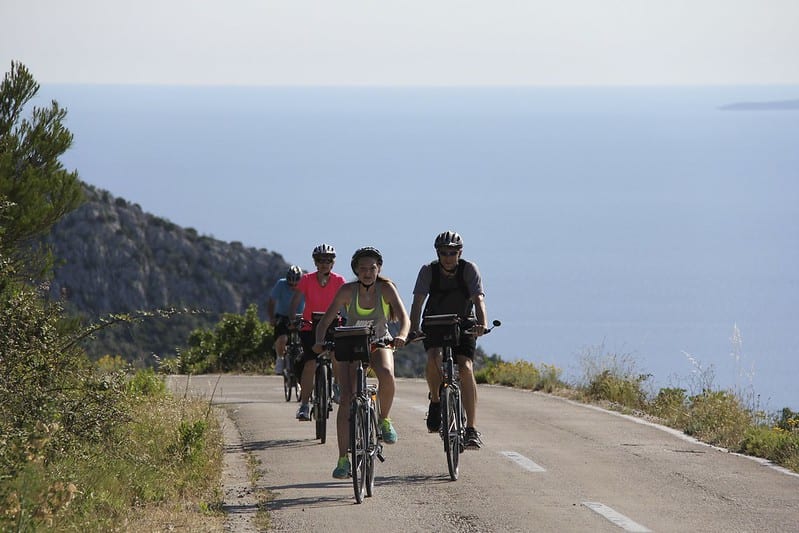
Croatia is not a big nation; its most interesting parts can be thoroughly explored by bike in 2/3 weeks.
Here we propose two bike routes that are definitely not the best for everyone; we invite you to research and plan according to your preferences.
You could also combine these two bike routes with sections of the so-called Adriatic Crest, a gravel route suited for adventure bikepacking or mountain bikers.
Route 1. Bike Touring the Coast of Croatia
Croatia is famous for its Islands. With over 1000 Islands in the Adriatic Sea, it’s not easy to decide what to visit.
Crystal water, good food, wine, and plenty of day and night activities. Here are our suggested cycling routes in Southern Croatia.
Start in Dubrovnik

Dubrovnik is one of the most popular tourist destinations in the Mediterranean Sea.
It was chosen as a filming location for Game of Thrones; the famous Cersei’s Walk of Shame was filmed in the narrow alleys of the city, and Dubrovnik Castle is in the fictional King’s Landing.
This sudden fame had a huge impact on tourism, with a 10% annual growth.
But the beauty of Dubrovnik was no secret; it has been listed as a UNESCO World Heritage Site since 1979.
Stage 1. From Dubrovnik to Mljet Island
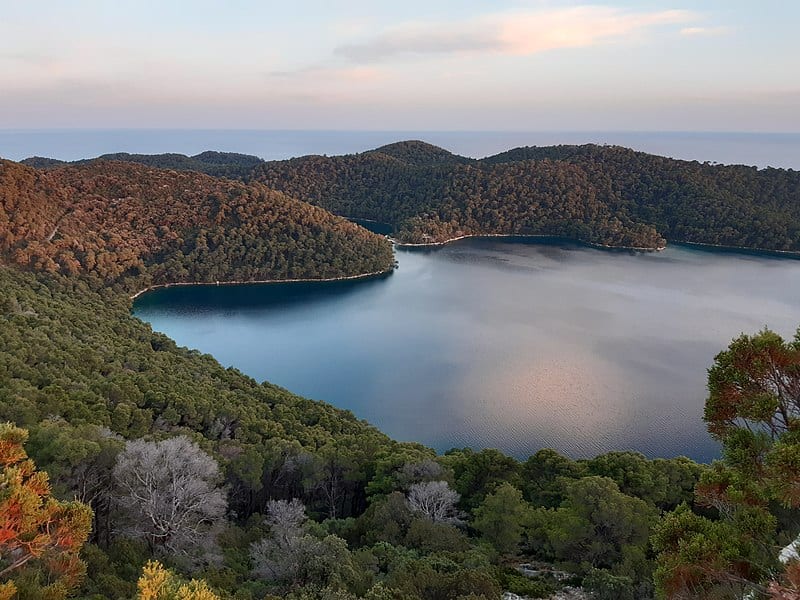
From Dubrovnik, it’s possible to take a ferry to Mljet Island, the southernmost Croatian Island. It is considered to be the greenest Island and one of the most beautiful.
Typical Mediterranean vegetation, amazing local wine and cheese, and clear water made Mljet a perfect tourist destination.
The beautiful, calm lakes are ideal for canoeing or kayaking.
Cycling around the lakes and into the National Park is the perfect way to explore the island; there aren’t any cycling paths, but the road traffic is very low.
Avoid the midday heat during the hottest months (July and August). You can find more information about cycling on Mljet Island here.
Stage 2. From Mljet to Korcula

From Mljet, you can travel by ferry to Korcula Island. This is possible only during the peak season, from April to October.
Korcula Old Town is a medieval walled city with narrow streets that branch off the spine of the main street like a fishbone. The fishbone shape was used in the Korcula Old Town design to reduce the effects of wind and sun.
Among the most important cultural spots to visit on Korcula Island are St. Mark’s Cathedral, Bishop’s treasury, Town Museum, and Arneri Palace.
It is also believed that Marco Polo was born here.
Stage 3. Korcula to Hvar
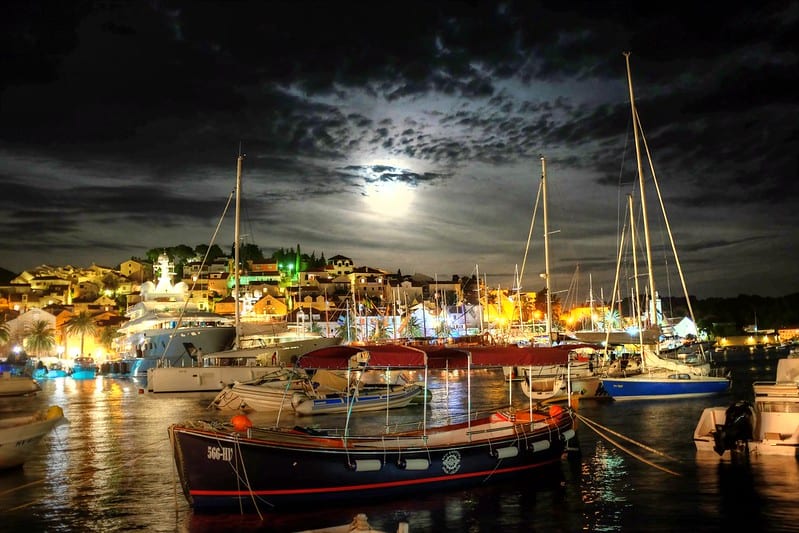
Hvar is another beautiful Croatian Island, but if you want to take a break from the beach life, this Island is ideal for those looking for nightlife.
Here is a guide to the best bars and clubs to hop in Hvar.
Despite being very close to Split, one of the main cities in Croatia, Brac is less touristic than the other Islands we mentioned.
Stage 4. Hvar to Brac
If you are looking for some authentic island life, head into the interior of Brac and climb Vidova Gora (778m) for a nice view.
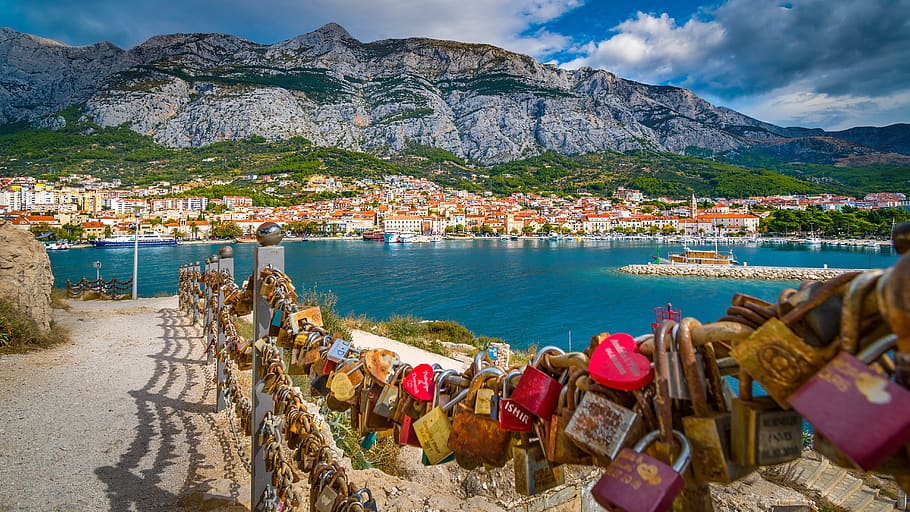
Stage 5. Brac to Split or Makarska
From Brac, you can take a ferry back to the mainland, in Split, or to Makarska, 60 km south of Split. From here you can keep on cycling along the coast and go back to the starting point, Dubrovnik.
Route 2. The Central Mountains Loop and Plitvice
This is a short but challenging cycling route among the densely forested Croatian mountains. With more than 4,500 meters of elevation gain in only 320 km, this is an itinerary for hill-lovers.
Start in Rijeka or in Pula?

Although our track starts in Rijeka, you could easily add the Istrian Peninsula to this loop, with flat, pleasant landscapes that merit a day or two.
Rijeka is maybe not the most charming in Croatia, but that’s just because the competition is so harsh.
It is indeed a pleasant town with an interesting historical heritage.
Plitvice
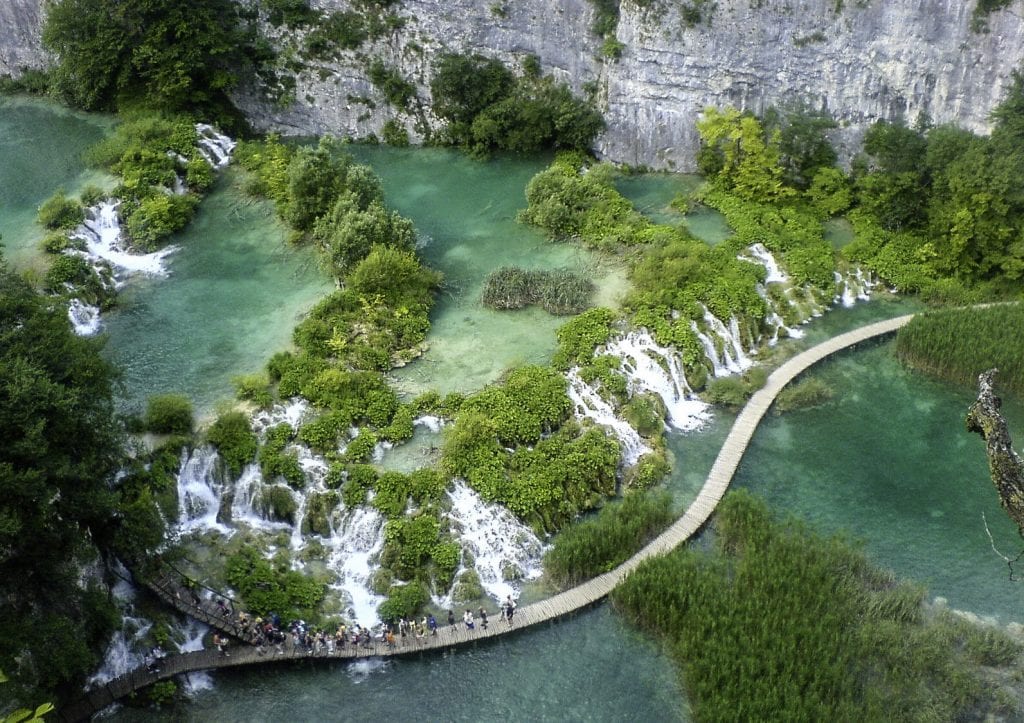
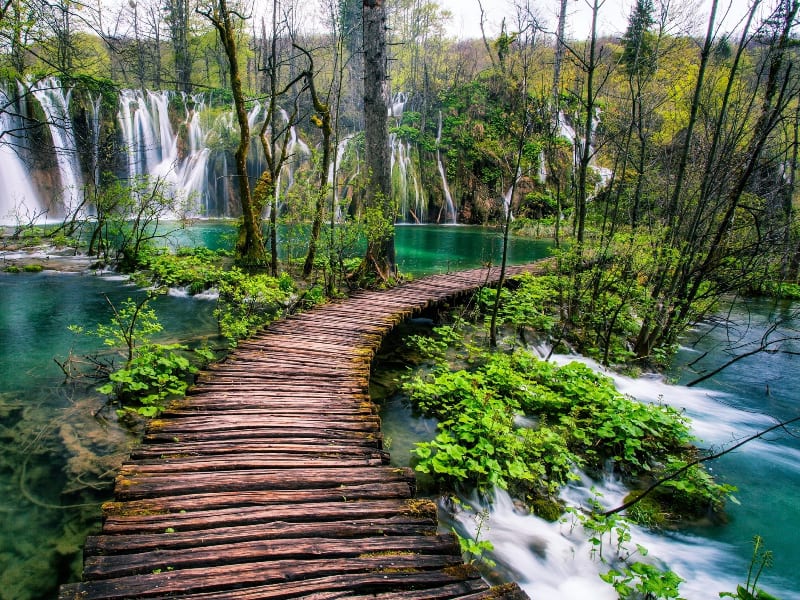
Plitvice Lakes National Park is one of the most amazing places we have visited. Listed as a UNESCO World Heritage in 1979, the oldest Croatian National Park (1949) is.
There are 16 lakes, created over thousands of years by natural dams. In the forest surrounding the lakes, bears, wolves, and many rare bird species live.
A very well-made walking path will bring you around the park. To preserve the environment is now forbidden to swim in Plitvice.
Getting into Croatia
Northern Croatia cities like Rijeka and Zagreb are connected by train and bus to the neighboring countries.
Railway connections are more sporadic in the south, and totally absent south of Split. Coaches, though, are frequent (see FAQs at the bottom).
Most trains in Croatia do accept a maximum of 10 bicycles (unpacked); you will pay for the bicycle transport directly on the train, in the range of 10-35 kuna, depending on the distance.
Flying into Croatia
Croatia has several international airports, connected to major and minor hubs across Europe.
Ranked by traffic:
- Zagreb
- Split
- Dubrovnik
- Zadar
- Pula
- Rijeka
Ferry connections between Croatia and Italy
There are 4 ferry companies with a combined offering of 15 Ferry Routes connecting
- Pula to Venice & Pesaro,
- Porec to Venice,
- Rovinj to Venice & Cesenatico,
- Umag to Venice,
- Split to Ancona,
- Zadar to Ancona,
- Dubrovnik to Bari,
- Mali Losinj to Cesenatico & Pesaro,
- Rab to Pesaro & Cesenatico
- Novalja a Pesaro & Cesenatico.
The fastest route between Croatia and Italy is Umag to Venice with a crossing duration of around 2 hours and 30 minutes.
Is wild camping legal in Croatia?
Wild camping is officially forbidden throughout Croatia. In the more rural areas, however, it is tolerated (ask first or hide well). In tourist areas, on the coast, on the islands, and in national parks, the ban on wild camping is regularly enforced.
What is the best season for a cycling holiday in Croatia?
Spring and early autumn are definitely the best times of the year for a bicycle trip in Croatia. Summer can be extremely hot, and in winter, you’ll miss swimming in pristine waters.
Can you bring your bike on a bus in Croatia?
There is no absolute answer to this question; the bus service in Croatia is operated by more than 40 companies, each with its own policies regarding bike transport. As a rule of thumb, during July and August, most companies do not accept bikes or cannot guarantee there will be space on a specific departure, so you will have to go to the bus station and ask the drivers. At other times of the year, it is normally possible to bring a bike if there is space on the bus.
Interested in Eastern Europe By Bicycle? Have a look at our articles
- Cycling Europe: The Ultimate Guide to Biking Routes and Tours from Easy to Long Distance
- Cycling in Austria – Perfect Destination for Fun & Picturesque Cycle Touring
- Biking in Slovenia: Everything you need to know & a lot of bike itineraries
- Cycling Poland – GreenVelo and EuroVelo routes (tips and maps)
- Hiking Tatra Mountain National Park in Poland: 3 stunning trails
- Eurovelo 13 and Cycling Latvia
- Cycling Slovakia – Why it Should Be Your Next Destination
- Danube Cycling Path – The Ultimate Guide
Read also: