
Last Updated on 2 January 2026 by Cycloscope

Before going to Kazakhstan, we asked ourselves: are there still Kazakh nomads? Or the Soviet Union wiped them all out?
Under Stalin’s regime, between 1928 and ’31, Kazak nomads, who constituted the majority of the population, were forced to settle as farmers.
Disclosure: Some of our articles contain affiliate links. This comes at no additional cost for you and helps us keep this website up and running. (as Amazon Associates we earn commission from qualifying purchases)

Hundreds of breeders’ families were deported in the internal regions, and the nomads’ herds were brutally seized.
The results of those sedentarization attempts were starvation of the livestock and the nomads’ unorganized diaspora. By the autumn of 1931, the famine had become widespread, prompting a mass exodus of the population to Siberia and China.
Within two years, the population of Kazakhstan declined by more than 2 million (to 6,5 million).
The majority of them had moved in search of food, but most died before reaching the nearest cities or while attempting to cross mountains or rivers.
According to the late ‘30s census, 1,5 million nomads, more than one-third of the entire population, were dead. At the same time, hundreds of thousands remained in China, Siberia, and other regions they had fled.
Often, those regions’ administrations did everything to get rid of those refugees, coming to organize re-deportations to their homelands, in fact, condemning them to death by starvation.
However, approximately 1% of Kazakhstan’s population still leads a nomadic lifestyle. Investigating the remnants of ancient nomadic traditions and their evolution will be the focus of our exploration of central Kazakhstan.

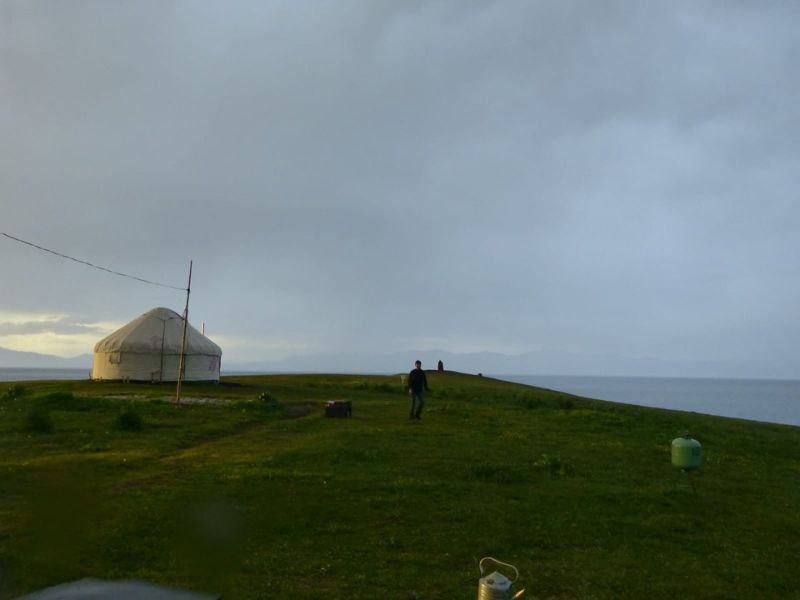
After visiting Kazakhstan twice, we were unable to find any nomads living in the Kazakh territory today. Except for a few tourist-oriented yurts, it seems that the Nomad culture has disappeared.
However, Kazakhstan is so large, and some areas so remote, that some families may still be living a nomadic or seminomadic life.
Instead, we found many ethnic Kazakh nomads in the mountains of Western China, around Sayram Lake in Xinjiang, and on the high plateau of Qinghai.