

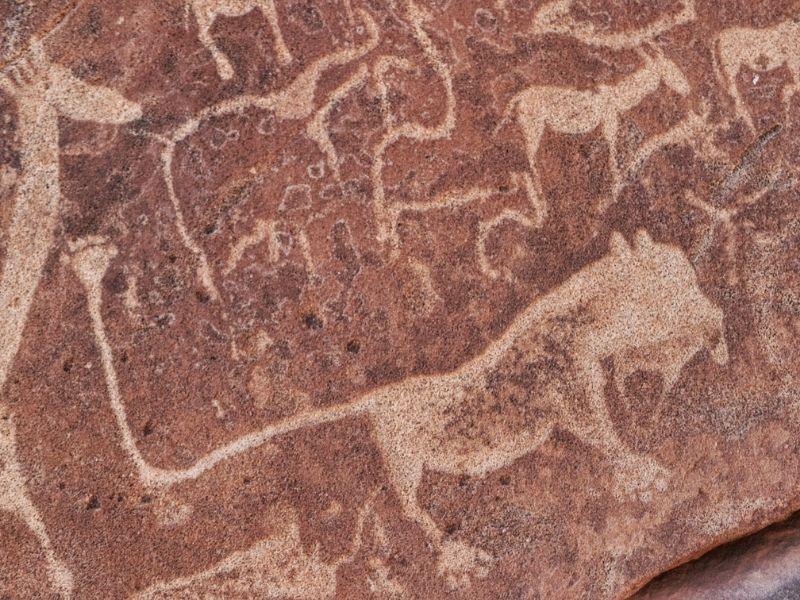
Twyfelfontein Rock Paintings, Namibia’s first UNESCO Site. 2,500 San rock engravings in Damaraland — opening hours, entrance fees, info, and nearby attractions.
We visited the Twyfelfontein rock paintings during our road trip from Namibia to Malawi. You can visit both this site and the nearby Petrified Forest in half a day. We loved both.
Twyfelfontein is hidden in the rust-coloured valleys of Damaraland, in northwestern Namibia. It is one of Africa’s most extraordinary open-air galleries.
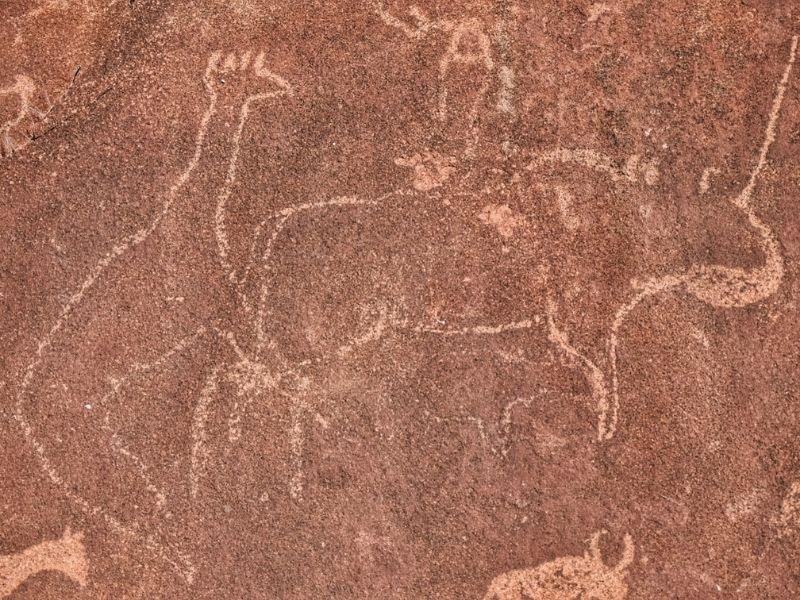
Twyfelfontein — Afrikaans for “Doubtful Spring”, officially known in Khoekhoegowab as |Ui-ǁAis (“Jumping Spring”) — is home to more than 2,500 rock engravings (petroglyphs) carved into sandstone by the San Bushmen over a period spanning thousands of years.
Disclosure: Some of our articles contain affiliate links. This comes at no additional cost for you and helps us keep this website up and running. (as Amazon Associates we earn commission from qualifying purchases)

In 2007, it became Namibia’s first UNESCO World Heritage Site, recognising it as one of the most significant concentrations of rock art on the African continent.
Ancient Art Carved in Stone
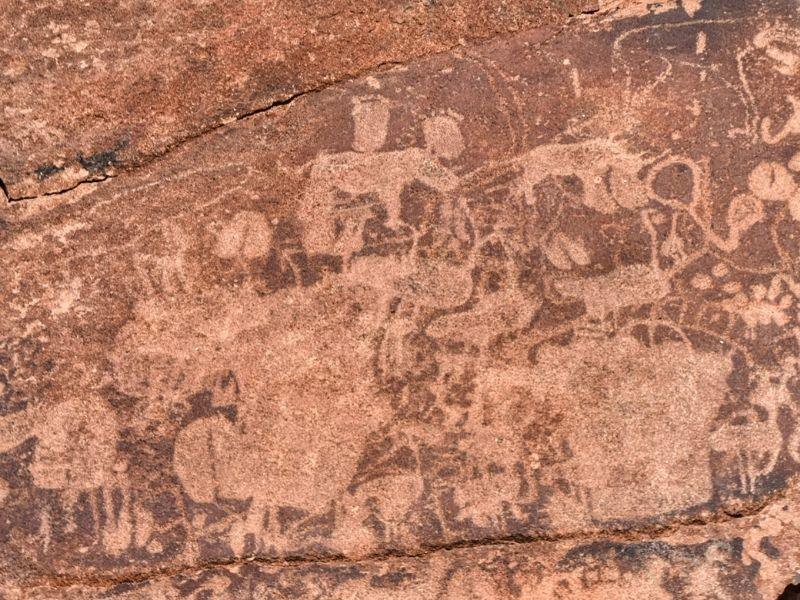
The engravings at Twyfelfontein were created by San hunter-gatherers who inhabited this valley as far back as 6,000 years ago — some estimates push that figure even further, to 10,000 years. Using quartz tools (not metal, which had not yet arrived in the region), they chiselled through the dark outer surface of the sandstone boulders to reveal the lighter, yellowish rock beneath, leaving behind precise and detailed figures.
The imagery is rich and varied: giraffe, rhino, elephant, oryx, ostrich, zebra, lion, and even sea lion and penguin appear on the rock faces — a remarkable detail suggesting the artists may have travelled to the coast, or that knowledge was shared across vast distances.
Human footprints, animal tracks, and geometric patterns are also visible, often layered on top of each other as generation after generation returned to the same sacred stones.
These were not mere decorations. Researchers believe the engravings served ritual and spiritual purposes — maps of the spirit world, records of shamanic journeys, or encoded knowledge passed between communities.
Twyfelfontein Location and How to Get There
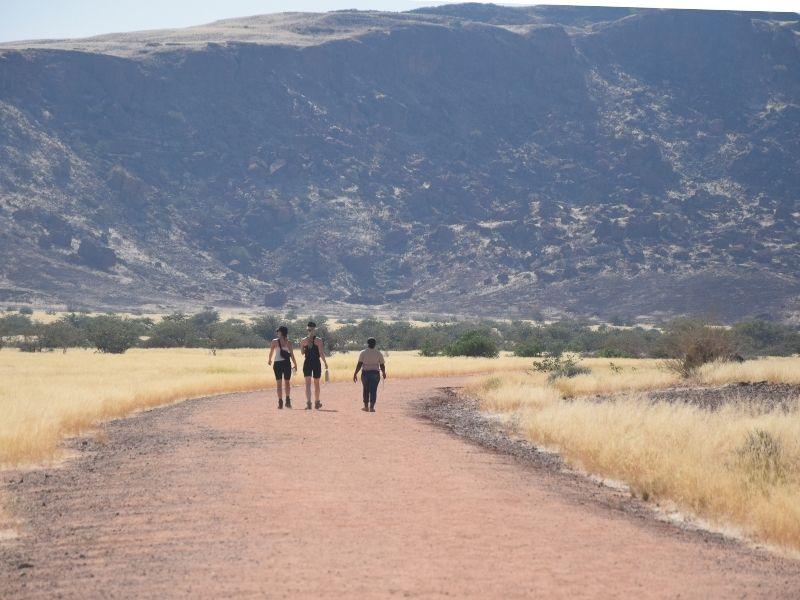
Twyfelfontein is located in the Kunene Region of northwestern Namibia, approximately 100 km northeast of Khorixas and around 250 km southeast of Swakopmund. The site sits along the D3254 gravel road in the Aba Huab valley.
To reach the site, follow the D3254 and pass Twyfelfontein Country Lodge — the covered parking area is signposted from there. Note that, as with many remote Namibian attractions, road signs leading to the site can be sparse.
GPS coordinates: approximately 20°35′S, 14°22′E
Opening Hours
The Twyfelfontein Visitor Centre is open daily from 08:00 to 17:00, seven days a week. Early morning visits are highly recommended — not only to beat the midday heat in this exposed desert valley, but also to enjoy the warm morning light that beautifully illuminates the sandstone engravings.
Entrance Fee and Guide
The entrance fee is NAD 270 per person (as of early 2026). Note that only cash is accepted, so it is important to withdraw money before arriving — the nearest ATMs are in Khorixas or Swakopmund.
A guide is mandatory for visiting the site, and the cost is included in the entrance fee. This is no mere formality: the guides are knowledgeable, friendly, and genuinely visit. They explain the stories behind individual engravings, provide context on San culture and Damaraland history, and navigate what is otherwise a confusing maze of sandstone boulders.
Tours typically last 45 minutes to 1 hour, though you should budget around 2 hours total, including the 500-metre walk from the parking area to the reception and time to take in the surroundings. Tipping your guide at the end of the tour is warmly appreciated.
Parking
A covered parking area is provided near the visitor centre, free of charge. From the car park, it is roughly a 500-metre walk to the entrance reception where you pay and meet your guide.
Nearby Attractions
Twyfelfontein sits at the heart of a remarkable cluster of geological and archaeological wonders in Damaraland. While you’re in the area, don’t miss:
The Organ Pipes — Just a short drive from Twyfelfontein, the Organ Pipes are a dramatic geological formation of parallel basalt columns, formed around 120 million years ago when volcanic rock cooled and fractured into vertical shafts. The entrance fee is NAD 250 per person.
The Petrified Forest — Around 40 km from Twyfelfontein on the road toward Khorixas, the Petrified Forest is another extraordinary natural site where ancient tree trunks — some up to 34 metres long — were turned to stone over 260 million years. [Read our full article on the Petrified Forest]. Please be aware that there are several signs along the road indicating the “Petrified Forest,” and these are not the official website.
Burnt Mountain — Visible from the Organ Pipes, this eerie hill of volcanic ash glows purple, orange, and black at sunrise and sunset.
Accommodation in Twyfelfontein
Given the remoteness of the area, spending at least one night nearby is not just practical — it’s one of the highlights of the visit. Waking up in Damaraland with the desert silence and the vast night skies makes the journey infinitely more rewarding.
The closest and most convenient option is Twyfelfontein Country Lodge, situated just a few kilometres from the rock engravings site.
The lodge blends into the sandstone landscape with thatched cottages, mountain views, an outdoor swimming pool, a restaurant serving African cuisine, and activities including stargazing and guided drives into the Aba Huab riverbed in search of desert-adapted elephants.
For a wilder experience, Camp Kipwe and Mowani Mountain Camp both offer spectacular settings tucked between granite boulders. Budget travellers and self-drivers may prefer Twyfelfontein Adventure Camp or Desert Elephant Camp, which offer campsites and simple tent accommodation at more accessible price points. We slept at Haisra Tented camp.
Whichever you choose, book well in advance during the Namibian high season (June to October). Check our article about The 7 Best Campsites in Namibia – a Guide to Sleep under the Most Beautiful Skies.
Practical Tips
- Bring plenty of water — the valley is exposed and hot, and there are no facilities along the trail.
- Wear closed-toe shoes — the terrain is rocky and uneven.
- Sun protection is essential — hat, sunscreen, and long sleeves are highly recommended.
- Cash only at the entrance — the nearest ATM is far away.
- Photography is permitted, and the engravings photograph beautifully in morning and late afternoon light.
- Respect the site — touching the engravings is not allowed and causes irreversible damage.
Twyfelfontein is a place that lingers. Standing before a rock face covered in animals carved six millennia ago — by hands that held quartz tools instead of smartphones, but eyes that saw the same desert light — is one of those rare travel experiences that puts the human timeline in perspective.
Interested in planning a self-drive tour to Namibia? Read also:
- Self-Drive Namibia: Road Trip Itineraries and Ideas
- The 280 Million-Year-Old Petrified Forest of Namibia
- The 7 Best Campsites in Namibia – a Guide to Sleep under the Most Beautiful Skies
What about a Namibia Bikepacking Itinerary?
Have you visited Twyfelfontein? Share your experience in the comments below.